
House debates Bills
Workplace Gender Equality Amendment (Setting Gender Equality Targets) Bill 2024; Second Reading

Peter Khalil Wills, Australian Labor Party
10:00 am
Under the Labor government, the gender pay gap is actually shrinking. This was the news last week from the Workplace Gender Equality Agency, which reported that the gender pay gap has dropped to a record low. The Albanese Labor government has been absolutely committed to driving progress on economic equality. One of the main reasons behind the decrease in the gender pay gap is Labor's lift in wages for lower paid workers, especially in highly feminised sectors like aged care and early education. Many of us have been involved in both of those campaigns over the last couple of years.
Our government wants to work with all employers to close the gender pay gap—
A division having been called in the House of Representatives—
Sitting suspended from 10:01 to 10:15
As I was saying, under Labor the gender pay gap is shrinking. That was the news from the Workplace Gender Equality Agency last week, which is reporting that the gender pay gap has dropped to a record low. The Albanese Labor government has been absolutely committed to driving progress on gender and economic equality.
One of the main reasons behind the decrease that we've seen in the gender pay gap is Labor's lift in wages for lower paid workers, especially in highly feminised sectors like aged care and early education. As I said, many of us have been involved in the campaigns for increasing the wages for early educators and aged-care workers. Our government wants to work with all employers to close the gender pay gap and ensure workplaces are fair, respectful, flexible and safe.
The Workplace Gender Equality Amendment (Setting Gender Equality Targets) Bill will enable us to work alongside employers to increase transparency and accountability in workplaces and, in doing so, help propel further action to close the gender pay gap. It will introduce a target scheme to accelerate action on gender equality by large Australian employers, and it will require organisations of 500 or more employees in Australia to commit to achieve, or at a minimum improve on, measurable targets that address gender equality in their workplaces.
The targets will include both numeric targets, such as reducing the gender pay gap or improving gender composition roles or occupations, and action based targets, such as introducing a paid parental leave program where there isn't one in place or enhancing flexible work offerings. Despite the current high level of transparency in reporting to the WGEA, only 68 per cent of organisations have undertaken a gender pay analysis, and of these organisations, 75 per cent took action to close the identified gap.
Requiring organisations to set targets can drive real change, as employers will be accountable for improving their results. The Labor government is committed to working with organisations to support them in our shared goal of workplace gender equality, because this is not simply about equality and fairness for individuals; it's also about the companies themselves, the economy and the society more broadly.
The gender pay gap represents an estimated cost of $51.8 billion a year to the Australian economy. That's a remarkable figure. We know, intrinsically, how important gender equality targets are for addressing this problem and we know their flow-on effects. It's why we introduced quotas in our political party for women in winnable seats all the way back in 1994—a long time ago. It was actually the Hawke government who released the world's first Women's Budget Statement in the 1980s, receiving international acclaim and pioneering gender-responsive budgeting around the world. We are all witness to that foresight and vision of Labor and Labor women back then.
Today, 52 per cent of our caucus are women, as it should be. That is a true reflection of Australian society. I also am very encouraged by the diversity in our parliament now, especially in our caucus. We not only have 52 per cent of women in our caucus; we have a real diversity of people from many different multicultural backgrounds as well. I'm one of those people. It is a much better reflection of the Australia that we represent. When women and people of all different backgrounds are represented—both socioeconomic differences and ethnic and faith differences—it is reflective of the people that we represent. That means better decision-making. It means better perspectives on the lawmaking that we do in this place, and that is as it should be.
While the gender pay gap is shrinking because of the work of Labor, the recent dataset from the Workplace Gender Equality Agency has enabled the government to track progress and increase transparency on workplace gender equality and the pay gap. It show that there's still work to be done, which is why we have introduced this bill. It shows that the total remuneration gender pay gap reported by the agency is 21.1 per cent for 2023-24. As of May 2024, the average full-time earnings of women in Australia was lower than the equivalent for men by $231.50 per week. By the time they reach retirement age, women have 25 per cent less super than men—and we all know some of the reasons for that. Women also continue to be underrepresented in leadership positions, as they represent only 22 per cent of CEOs across corporate Australia. This is despite research finding a causal relationship between increasing the proportion of women in the most senior levels and higher company performance in productivity and profitability.
I've looked at some of these studies. When you add more gender diversity and more ethnic diversity into leadership positions you start to see increases in performance, profitability and productivity and also—another metric—better decision-making. There's lots of research around that. Why is that? It's because women bring different perspectives to the table. People of different backgrounds bring different perspectives. They challenge ideas. There's a synthesis that occurs where better decision-making is encouraged and facilitated, and that can only be good for the organisation and for the people that benefit from that better decision making.
Under this bill, the agency will work with employers to set and achieve targets, helping to build their capacity to achieve that change. The agency will deliver education resources and provide direct support to employers to undertake analysis, develop action plans and build internal capability to improve gender equality.
Workplace gender equality also means equality in parental leave and superannuation. Labor has expanded our parental leave scheme, to a full six months by 2026, made it easier for parents to share care with a single gender-neutral entitlement, and added superannuation to the scheme. We know that women, on average, retire with 25 per cent less superannuation than men and are still overwhelmingly the primary caregivers, especially when a baby is born or a child is young. With our new paid parental leave, PPL, reforms we're bridging the superannuation pay gap whilst ensuring that working parents don't have to trade off their parenting years or grandparenting dreams, because every moment counts—
A division having been called in the House of Representatives—
Sitting suspended from 10:22 to 10:34
I was talking about paid parental leave and the fact that the government is working very hard on our reforms to ensure that we bridge the superannuation pay gap for women, ensuring that parents don't have to trade off their parenting years for the grandparenting dreams, because every moment counts, both now and in their retirements. We all know how vital it is for parents to have time to care for and bond with their child. This is for the wellbeing of the children, the parents and the broader community. It's a bit of a cliche, that it takes a village to raise a child, but it is true. Our hope is that with our superannuation and PPL schemes this village can remain large, loving and open and that parents can build and shape that village of support.
There is still a lot of work to be done, which is why Labor has been driving equality for women across a number of spheres, and I will mention two of these. The Albanese Labor government delivered a tax cut for every woman taxpayer across the country this year. This was a tax cut of $1,649, on average, for Australian women. Under the Albanese Labor government, 97 per cent of women working in women-dominated or feminised industries—like early education, disability care and aged care—received a bigger tax cut compared with under the Liberal-Nationals proposed tax cuts. We also funded a 15 per cent pay rise for early childhood educators and aged-care workers, which, as you know, are both highly feminised sectors.
It would be remiss of me today to speak about workplace gender equality and equality for women more broadly without acknowledging and paying my respects to the too many women who've died or been impacted by male violence against them—some 87 women just this year; it is a shocking statistic. When we talk about gender equality, we can't achieve this without the fundamental respect for women and for their lives that should be part of our normative framework as a society.
This week saw the International Day for the Elimination of Violence against Women, as we all know, and I want to reiterate my commitment—as an MP, as a member of the government and as a male in my own community—to be a role model for boys and other men in the behaviours modelled around respect in order to break this cycle. In a speech I made on that day, earlier in the week, I mentioned a story about one of my young female staffers. She's now 30, but she's never forgotten that when she was 17 she was walking down the street and a car pulled up and a bloke wound down the passenger-side window, leant over a small boy and wolf-whistled her and said a few things to her and then drove off. She was shaken. She felt disrespected. She felt unsafe. But also, think about what was going through the mind of that little boy. What kind of behaviour was that little kid being shown or having modelled?
So, when we talk about trying to end that kind of behaviour and trying to model respectful behaviour, it's not just about stopping that—that's just a neutral point—but I think also about how we have to model positive, respectful behaviours towards women. That's our responsibility as men in our community, working with the boys and the younger males in our community, whether at sporting clubs, at schools or wherever boys and men congregate, to continually offer that positive role-modelling behaviour.
It's hard to do, but it's important work, because there's a tsunami of negative models, if you like, on social media. We know the influence of social media on young boys and men and the effect it's having on them. So, everything that we can do, not just as a government but also as individuals and as members of society taking our responsibility really seriously, is important.
I've always said that every time we can disagree peacefully or respectfully, even if we have a big disagreement, we add to social cohesion. Every time we can demonstrate positive male behaviour to a young boy, we're adding to that effort to make larger the range of respectful behaviours that boys and men should show towards women, and the onus is on all of us to do that work. I genuinely believe that the National Action Plan to End Violence against Women and Children in a generation will help end what is a national crisis. For my part, I'm going to continue to work tirelessly—both in a personal sense, as I've said, and in a professional sense as a lawmaker here—to make that contribution.
And I want to be clear: this bill represents a world-first scheme. It's unique. It's a world-first. No other country in the world requires businesses to commit to gender equality targets. Australia and the Albanese Labor government will be leading the way if we pass this bill. I hope that we get support from the crossbench and from the opposition to accelerate action on gender equality in workplaces. This scheme is a reflection of the visionary values that only Labor governs by—equality of opportunity for all, regardless of gender, ethnicity, faith or social or economic station. It's about making sure that there is that equality of opportunity for all Australians. I encourage my colleagues to support this very important bill and have it pass through both houses.

Zoe Daniel Goldstein, Independent
10:40 am
I thank the member for Wills for his comments, particularly in relation to involving men and boys in the process that we are trying to achieve, which is to keep women and girls safe. Of course, women in Goldstein and across the country want secure work and respect. This is what the Women's Economic Equality Taskforce found when it interviewed thousands of Australian women, and to achieve this we must, as a nation, advance gender equality in the workplace.
As it stands, we're still a long way off. Despite some progress in recent years, Australian women don't have economic equality. Australia ranks equal first for women's education but is much lower down the list for women's economic opportunity. Australian women are much less likely to work full-time than women in many other OECD countries. Gender segregation persists across the economy. Most casual workers are women. Women do most of the care work, which is generally low paying. In the early childhood education and care sector, for example, 92 per cent of workers are women. And there is a stubborn gender pay gap of 21.1 per cent.
The moral argument for gender equality in the workplace speaks for itself. Women and men should have a right to equal participation in work, and all employees should have access to equal opportunities in advancing their careers. It's simply the right thing to do, and it also makes really good economic sense. A broader talent pool creates a better environment for generating ideas and better decision-making, and this improves the bottom line.
But creating a culture that values diversity and equality doesn't just magically happen. Systemic barriers and attitudes that stop women from advancing their careers don't just disappear by themselves. This requires intervention. Targets provide a disciplined approach to drive change. They help focus attention on change and keep organisations on track to achieving that change.
Setting targets also creates competition between industry peers and makes very clear to any potential employee which businesses are creating an equal and respectful environment. Research by economist Dr Leonora Risse found that target setting for gender equality promotes accountability, transparency and organisational confidence.
The Workplace Gender Equality Amendment (Setting Gender Equality Targets) Bill 2024 amends the Workplace Gender Equality Act 2012 to improve gender equality in employment and in the workplace, and it does this by implementing the recommendations of the 2021 review into the act. The bill would require employers with 500 or more employees to commit to achieve, or at a minimum improve on, measurable genuine targets to improve gender equality in their workplaces and accelerate progress in closing the gender pay gap.
Employers will select at least three targets from the menu of targets which are aligned to the Workplace Gender Equality Agency's gender equality indicators. The targets include both numeric targets, such as reducing the gender pay gap and improving gender composition in roles or occupations, and action based targets, such as introducing a paid parental leave program or enhancing flexible work conditions. Employers will then have three years to improve on or achieve the targets. The selection of targets and the timeframe will give employers the flexibility to act in the areas that require the most attention in their workplaces.
I note that some in the business sector are concerned about large employers having to meet their targets to secure government contracts. Their concern is that it's an unnecessary additional requirement. It's important that business is supportive of and supported to participate in this. Systems change requires all of us to step into the process, and I strongly encourage government and business to work together to iron out any bumps. However, this information is already being captured and provided to WGEA, so it's not really an additional burden. It's about setting a target to work towards and providing a bit more rigour and structure around the information already being collected by businesses. I do believe that targets are needed so we all clearly know where we're trying to go.
This bill extends the work that WGEA is already doing to create equality in the workplace, including the publishing of gender pay gaps for private sector employers with more than 100 staff. The data, which covers almost 5,000 Australian companies, reveals wide gaps across all sectors. The latest annual employer census by WGEA shows female chief executives and heads of business are paid an average of $158,632 less than their male counterparts. Pay gap transparency is something I called for at the Jobs and Skills Summit in 2022, very soon after the last election. I did this because publishing employer pay gaps creates the transparency and accountability needed to close the gap more quickly. Piece by piece, the government is building towards gender equality in the workplace, but we must step up the pace. There is still a mountain of work to do, if women are to have the same rights and opportunities as men.
At the most basic level, we need to value the care economy and harness its potential. The care sector is undervalued because it's an area of the economy that we don't think of as being productive or about investment. This attitude is slowly changing and it must, for the sake of the country. It's not widely understood that the care economy is the largest single employer in Australia, with over 1.8 million people, 80 per cent of whom are women, currently working in care economy jobs. It's also our fastest-growing sector, as measured by job growth, by a long way.
Building from that, we must accelerate the steps towards a universal early childhood education and care system. The Productivity Commission report recommends three days of free or low-cost set-fee early childhood education and care by 2036. I agree that we should be working towards three days of free or low-cost ECEC as a first step, but this time line isn't nearly ambitious enough. This should be a legislated entitlement. Without it being legislated, the cost to parents will continue to skyrocket due to there being no limit on the out-of-pocket fees that providers can charge. Tinkering around the edges will not deliver the kinds of changes that we need to see to make ECEC accessible and affordable. We need to reshape the system.
As I keep saying in this place and elsewhere, accessible, affordable, high-quality early childhood education and care is a win for children, families, women and the economy. We must also take action to address the gender super gap. Leading up to retirement, the median superannuation balance for women is a third less than that of men. This translates to around $50,000 less, on average.
I'd like to finish with some bold leadership targets. Despite some progress in the last few years, women are still significantly underrepresented in leadership positions in the Australian workforce. Women make up just 22 per cent of CEOs, 37 per cent of key management personnel and 42 per cent of managers in Australia, according to 2023 figures from WGEA. The same figures show that 34 per cent of board members are women, while one-in-four boards have no women at all. It's what the agency calls 'seniority drop-off', where the proportion of women decreases as the level of management and responsibility increases. To address this, Chief Executive Women is advocating for all executive leadership teams to be comprised of 40 per cent women and 40 per cent men, with the remaining 20 per cent flexible to any gender: 40:40:20 by 2030. We need to be ambitious and embrace this target.
I read in a newspaper article last week that gender equality targets risk generating blowback among men who feel they're blamed for what's happened in the past. This view fails to recognise that inequality in the workplace is not just something from a bygone era; it continues today. Setting targets is not about apportioning blame. Targets are about addressing imbalances and creating fair workplaces for women and business to thrive, which will benefit all of us. The Goldstein community elected me on a platform of gender equality, and at every opportunity I will continue to work with the government to improve women's economic security and opportunities and, by extension, women's safety. It is appropriate to be debating this legislation amid the 16 Days of Activism against Gender-Based Violence. Setting gender equality targets in workplaces is another piece of this very important picture, and I commend this bill to the House.

Graham Perrett Moreton, Australian Labor Party
10:49 am
In May 2022, the Albanese Labor government received a mandate from the country to progress gender equity issues in Australia. We've been working hard ever since to do just that. We've been focused on putting women and gender equality front and centre of Australia's economic plan and we're determined to make women's lives safer, fairer and more equal. Labor leads by example. The Labor Party, in this 47th Parliament, is comprised of 53 per cent women, and it is a privilege to work alongside them.
The Working For Women: A Strategy for Gender Equality was released in March this year. It details the actions required over a decade to reach the government's vision for gender equality, which is 'an Australia where people are safe, treated with respect, have choices and have access to resources and equal outcomes no matter their gender'.
This bill is part of a wider framework of Albanese Labor government action on gender equality. We've increased the wages in the predominantly female sectors of aged care and early childhood care. These dedicated and hardworking Australians are finally being recognised for their crucial roles in supporting and educating our loved ones.
We've made child care cheaper, which has provided greater flexibility for working families, as well as helped the family budget. Of course, we've made sweeping reforms to paid parental leave. These include expanding the leave to 26 weeks, more flexibility around the leave and also, crucially, the payment of superannuation while on leave—three great initiatives. This is what happens when you elect a Labor government.
Today I rise also in support of the Workplace Gender Equality Amendment (Setting Gender Equality Targets) Bill 2024, part of the ongoing work which addresses the recommendations of the 2021 review of the Workplace Gender Equality Act 2012. Specifically, it concerns the implementation of a gender equality target setting scheme to be administered by the Workplace Gender Equality Agency. WGEA is a Commonwealth government agency established by the Workplace Gender Equality Act 2012. The act's primary purpose is to promote and improve gender equality, including equal remuneration between women and men in employment and in the workplace.
The act is also focused on supporting employers to remove barriers to the equal participation of women in the workforce and ending gender discrimination, especially in the context of family and care responsibilities. It promotes dialogue between employers and employees on gender equality issues and looks to improve productivity through the advancement of gender equality in employment.
We would all agree on these aims, and this bill makes progress towards them. It enables the government to work with employers to increase transparency and accountability, with the aim of closing the gender pay gap. That's why the bill requires businesses to set targets for gender equality. If you're not convinced of the need for this, you only need to consider the gender pay gap statistics. WGEA reported that the total gender pay gap was 21.1 per cent in 2023-24. That includes base salary, overtime bonuses and additional payments. When CEO pay is added, it increases to 21.8 per cent.
In May this year, an average full-time woman worker in Australia was earning less than an average full-time male worker by over $231 per week. Obviously, this compounds over time, and, when you add time off for raising a family, it means that women reach retirement age with 25 per cent less in their superannuation accounts than males. As the Women's Budget Statement in May this year reflected:
This gap is driven by a range of factors, including differences in gender representation and remuneration across occupations and industries, the impact of caring responsibilities on patterns of work, and gender discrimination and bias. These factors are complex, interrelated and can often compound over a woman's lifetime.
We all know what the term 'glass ceiling' means, and, unfortunately, it's still an apt description of the experience of many women in the workplace. Women continue to be underrepresented in leadership positions in companies. Currently, sadly, only 22 per cent of CEOs are women and they only hold 20 per cent of chair positions and 32 per cent of board member positions. A staggering 25 per cent of organisations have no women on their boards at all. These figures are why this bill is so important. It puts in place a scheme to require large Australian employers to incorporate gender equality targets. That's organisations with 500 or more employees. They will then have to commit to measurable targets to improve gender equality. Over time, this will positively impact workplace culture, produce change in these companies and, dare I say, trickle down to smaller companies as well.
There is flexibility for employers when it comes to the targets. They can be numerically based or action based. They include the gender composition of boards and the workforce as a whole and also narrowing the gender pay gap. There are options regarding flexible working arrangements and support for those juggling parenting and caring roles. There are targets for the promotion of workplace consultation on these matters and, obviously, in relation to workplace sexual harassment. The WGEA notes that these focuses align with gender equality indicators and are areas that can be improved through target setting. In fact, target setting and action planning are demonstrated to drive positive outcomes when it comes to gender equality. This approach is evidence based and promotes accountability, transparency and confidence in the employer.
The WGEA will be there to support organisations on their journeys towards gender equality. They will help employers set and achieve targets, and embed a culture of gender equality. There are resources as well as direct consultation services available. I encourage all organisations to take advantage of these services, especially as only 68 per cent of organisations have undertaken that simple thing: a gender pay analysis. Three-quarters of these organisations subsequently took actions to address the gap.
You can see that there is work to be done, and this bill will ensure that work is undertaken. The government intends to work with organisations to achieve their gender-equality aims because we know that productivity receives a boost along the way. Businesses which set ambitious targets but do not fully meet them within a three-year period will not be found non-compliant if they've made progress towards these targets. Achieving gender equality in the workplace is not a punitive process. Rather, it is an encouraging and positive one. Of course, we do expect all large organisations to get on board with these sensible, moderate reforms. If organisations fail to set and improve upon their targets without valid reasons, they may be named publicly as non-compliant. Accountability is key when driving cultural change and improving gender equality in workplaces. Organisations which do make progress towards targets will qualify for a certificate of compliance from WGEA. This will be required as part of an organisation's eligibility to be considered for Australian government contracts.
You can see that Labor is serious about driving gender equality; there are plenty of carrots and not really too many sticks. Businesses that promote gender equality benefit from improved retention. They improve productivity and safety and, obviously, they also have that enhanced reputation in the community. This is reflected by the range of stakeholders who were consulted on the bill, including the business sector quite extensively, the not-for-profit sector, the higher education providers and, of course, the women's sector.
The Albanese Labor government intends for Australia to become a world leader in gender equality. In fact, no other country in the world requires businesses to commit to gender equality targets. This bill represents a key step along the pathway to gender equality in our lifetime, and I commend it to the House.
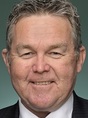
Colin Boyce Flynn, Liberal National Party
10:58 am
I rise to make a contribution to the Workplace Gender Equality Amendment (Setting Gender Equality Targets) Bill 2024. I'd like to start with an overview of what this bill actually does and what it hopes to achieve. The bill amends the Workplace Gender Equality Act 2012 to require employers who have 500 or more employees, inclusive of subsidiaries, to select and meet certain gender equality targets and to report on their progress to the Workplace Gender Equality Agency. The bill also provides the Minister for Women with new powers to set targets and specify the rules in relation to the selection of gender equality targets, via a legislative instrument. It provides that, where an employer has not met the selected gender equality targets or demonstrated improvements within the relevant period of three years, they will be considered to have failed to comply with their obligations under the act. Under the Workplace Gender Equality Procurement Principles, relevant employers seeking to supply goods and services to government at or above $80,000 must provide a certificate of compliance issued by the agency as part of the procurement process. Consequently, such employees would be unable to provide the compliance certificate. It implements recommendation 3.1a of the 2021 review of the Workplace Gender Equality Act, which was a review conducted under the Morrison government. Recommendation 3.1a adds:
… a new minimum standard to require relevant employers with 500 or more employees to commit to, achieve and report to the WGEA on measurable genuine targets to improve gender equality in their workplace against three of the six gender equality indicators.
The review made 10 recommendations to accelerate change for workplace gender equality. Both the previous Morrison government and the current government have committed to implementing the recommendations of the review.
This bill introduces new requirements for employers with 500 or more employees—designated 'relevant employers'—to commit to, achieve, or at a minimum provide on and report to the agency on measurable targets to progress gender equality in their workplace against the six gender equality indicators. The bill amends the definition of 'relevant employer' to explicitly include subsidiaries of parent companies with a 100 or more employees and clarifies that in a corporate structure a parent corporation is also taken to employ each of the employees of any of its subsidiaries.
The bill also introduces a new power for the minister to set targets and rules in relation to the selection of gender equality targets. The bill gives power to the minister to set out the category of target which can be selected and how many of the targets to select. The menu of targets will be set out in an instrument to the act and will offer a choice to relevant employers to select targets that are achievable for them within the three-year cycle. In practice, the cycle for the target scheme is intended to operate as follows: year zero is target selection, and employers publicly report their selection of three targets to achieve over the next three years; years 1 and 2, the employer lodges their public report as usual; and year 3, the employer lodges their public report and selects their next three targets, which will be compared to the year 2 reporting data. From the data submitted, it will be possible to see whether the employer has improved upon or achieved their targets, and the WGEA will assess their compliance.
Businesses with over 100 employees are already required to promote and improve gender equality in the workplace, including through the lodgement of annual reports containing certain information relating to GEIs. This information is contained in the Workplace Gender Equality Instrument 2023. This bill will only impose additional reporting requirements on businesses with over 500 employees. If an employer does not have a reasonable excuse for the failure to meet its obligations or demonstrate improvements within the relevant period, they are considered to have failed to comply with their obligations under the act. The WGEA may name the employee in their report to the minister, and the employer may not be able to participate in government procurement. Neither the bill nor the explanatory memorandum provide guidance on what would constitute a reasonable excuse.
There are some issues. The legislation will affect over 1,650 of Australia's largest companies b potentially precluding them from supplying goods and services to the Commonwealth government at or above $80,000 in the following essential areas: accommodation and food services; agriculture, forestry and fishing; construction; education and training; electricity, gas, water and waste services; financial and insurance services; health care and social assistance; manufacturing; mining; and several others. Major contractors that the government rely upon would be impacted by these changes.
The other thing this bill does is impose excessive ministerial powers, and the minister has also personal powers to set targets and rules of their own choosing by a legislative instrument with no scrutiny from impacted businesses. This creates the possibility of even more erroneous complication and burdens on business. The bill introduces substantial compliance requirements for businesses. Reporting requirements add red tape to the operation of Australia's largest corporations, driving down productivity in an economy that's already struggling under the compliance bill of the Albanese government's radical industrial relations and energy policies. Adding compliance burdens to businesses will also inevitably be inflationary, adding to the Albanese government's homegrown inflation crisis.
Large corporates are captured in this bill, but what will be government go for next? It is estimated that this bill will create a further compliance issue for over 1,650 of Australia's largest companies. Should the government want to go further, next in line are small and medium enterprises, who are struggling with significant red tape and compliance burdens under the Albanese government. Whilst no big businesses have declared any meaningful opposition to this bill, they will likely contribute to the committee process in early 2025.
I've got some issues with this bill. In my working career I spent many occasions working with women and working without women, and I have absolutely no qualms about women wanting to do anything they like. In fact, they should be paid equally to men. But the simple fact of the matter is that what we miss here is that we are not comparing apples with apples. Many women don't want to be CEOs of companies or take leadership roles. You cannot possibly compare women who are working in the childcare sector, as an example, to men who work in the construction industry. It's simply not the same thing. I've got no problems whatsoever with women wanting to be progressive and attain whatever career they want to, but the reality of it is that, everywhere that I have been, with whatever jobs I've done, women who participate get paid equally and the same as men do. Here we are in Canberra. We are all legislators. We are part of the parliament of Australia. All of us are on equal footing when it comes to being remunerated under terms and conditions in the workplace. Some of these things get forgotten in the whole process of where we're going with gender equality, equal pay and so forth.
I think this bill is providing another level of bureaucratic regime oversight or erroneous red tape that will actually achieve very little in the respect of what women actually want to do.

Carina Garland Chisholm, Australian Labor Party
11:07 am
Honestly, I don't know if I'd ever heard more backwards attitudes about gender before in my life than what I just sat through today. I'm thinking back to my ancestors in the 19th century who were campaigners for women's suffrage in Victoria. I think they would be appalled that in the 21st century we are still hearing these views about women and women's work espoused by those opposite. I think they would be truly appalled and dismayed, as am I. I think that we should be really concerned, really worried about what it would mean if those opposite ever were in government again, because some of the changes that we've implemented that were deemed 'radical' by the previous speaker include paying low-paid workers in feminised industries a wage that they can get by with. We are talking about legislating a climate target and building a renewable industry that provides well-paying, secure jobs for people as 'radical'. It's really chilling and worrying to me that those opposite hold these attitudes. We have put forward the notion that equal work should be treated with equal value. Again, that is a preposterous, radical proposition according to the previous speaker.
I am really worried about the attitudes of those opposite towards women, and I know people in my community are too. When I was campaigning ahead of the last election, gender equality came up time and time again when I was talking to voters in community. It was coming from men, women—people from all demographics and walks of life. They really wanted to see equal opportunities in this country for their children and for themselves.
I'm really pleased that since the election of our government—the first majority female government in Australia's history—we've been working every day to drive progress on gender equality. We're taking action to narrow the gender pay gap, including through lifting wages in feminised industries such as aged care and early childhood education. I think all of us in this place can agree that those are really important industries. These are industries where the people who care for our loved ones work. These are people who keep our communities going and enable other people to be able to go out into the workforce and to participate.
We've introduced cheaper child care to help take the pressure off families' household budgets and to provide greater flexibility for working parents. We've also delivered significant reforms to paid parental leave—these are reforms that Labor are really proud of—and we've expanded it to 26 weeks. There is now greater ability for parents to take leave when it works for their family and for parents to make decisions about who takes leave and when.
We're introducing superannuation being paid on government paid parental leave. This is really important in terms of addressing economic inequality in a number of different ways. We know that when women are not able to accumulate superannuation in their caring years it puts them at a significant disadvantage in their retirement years. We've seen growth, unfortunately, in the number of women of retirement age who are living in poverty and for whom access to housing is a challenge. So when we are able to better create provisions for people's retirement savings we know that that will be good for them in the long term.
We are doing a lot to support women's economic equality through improving gender equality in Australian workplaces, and that's what this bill is all about. Our government wants to work with all employers to close the gender pay gap and ensure workplaces are fair, respectful, flexible and safe. This bill will enable us to work alongside employers to increase transparency and accountability in workplaces and, in doing so, help to propel further action to close the gender pay gap.
We know that when we set targets and are accountable to those targets it helps us reach those targets, and we've seen that in relation to affirmative action in the political party that I am a member of. Businesses will soon have to set targets for gender equality. This change will benefit not only employees but also employers, because we know that with gender equality in workplaces there are benefits such as improved retention, productivity, safety and enhanced reputation in the community. As I mentioned, people in my community really care about this issue and reward businesses who demonstrate gender equality in their workforce.
In March, our government released Working for Women, a strategy for gender equality, to set a path to achieve our vision for gender equality over the next 10 years. Key to this vision is the government's commitment to close the gender pay and retirement income gaps through increasing accountability and raising the bar for large employers to take action.
The dataset of the Workplace Gender Equality Agency, WGEA, has enabled the government to track progress and increase transparency on workplace gender equality, including on the gender pay gap. The total remuneration gender pay gap reported by WGEA is 21.1 per cent for 2023-24, which includes base salary, overtime, bonuses and additional payments. When CEO pay is added, the gender pay gap is 21.8 per cent. As of May this year, the average full-time earnings of women in Australia was lower than the equivalent for men by $231.50 per week. This means that by the time people reach retirement age women will have 25 per cent less superannuation than men. As I previously noted, we are unfortunately seeing real gender inequality when it comes to those who are living in poverty in their later years.
Women also continue to be underrepresented in leadership positions, as they represent only 22 per cent of CEOs. Women hold 20 per cent of chair positions and 32 per cent of board member positions. One in four organisations have no women board members, and that's despite research finding a causal relationship between increasing the proportion of women in the most senior levels and higher company performance, productivity and profitability.
We can see there are real gains to be made in achieving gender equality not just for individuals but for companies, the economy and society more broadly, because we know that the gender pay gap represents an estimated cost of $51.8 billion a year to the Australian economy.
A division having been called in the House of Representatives—
Sitting suspended from 11:15 to 11:52
Before the suspension, I was talking about the gender equality. We know that equality cannot be achieved while the gender pay gap persists. That's why our government is absolutely committed to creating a better, gender equal Australia for everyone. This Workplace Gender Equality Amendment (Setting Gender Equality Targets) Bill 2024 will introduce a target scheme to accelerate action by large Australian employers on gender equality.
This bill will require organisations with 500 or more employees in Australia to commit to achieve or, at a minimum, improve on, measurable targets to progress gender equality in their workplaces. We know that target-setting and action-planning are levers for improving gender equality outcomes in the workplace, and there's plenty of research and evidence to support this. Research by Dr Leonora Risse, an economist and one of Australia's leading gender equality researchers, found that target-setting for gender equality promotes accountability, transparency and organisational confidence. Her research indicates that taking this kind of data-driven approach is itself a mechanism for change.
Regardless of which targets employers select, the act of requiring them to take targeted action will drive a shift in behaviour by embedding practices that are likely to create positive and lasting cultural change in workplaces. The suite of targets that employers can choose from will focus on the gender make-up of boards in the workforce, the gender pay gap, flexible working arrangements in support of parents and carers, workplace consultation on gender equality and efforts to prevent and address sexual harassment. These areas align with WGEA's Gender Equality Indicators—the six key areas where workplace gender inequality unfortunately persists and where progress can be achieved through focused action.
The targets include numeric targets, such as reducing the gender pay gap or improving gender composition in roles or occupations, and action based targets, such as introducing a paid parental leave program where there is not already one in place or enhancing flexible work offerings. The targets will draw on information that employers already provide to WGEA against the gender equality indicators. WGEA will work with employers to set and achieve targets, helping to build their capacity and to achieve change. WGEA will deliver education resources and provide direct support to employers in order to undertake analysis, develop action plans and build internal capability to improve gender equality.
In creating obligations to set and achieve targets, this bill seeks to cement Australia's status as a global leader in gender equality. Targets will lead to a more ambitious scheme which meets community expectations and is in line with the broader momentum towards gender equality in Australia. As I indicated earlier, people in my community really care that we are leaders when it comes to gender equality. This is a world-first scheme. No other country in the world requires businesses to commit to gender equality targets, so Australia will be leading the way in accelerating action on gender equality in workplaces.
The inclusion of a gender equality targets scheme further supports the Albanese Labor government's 2022 election commitment to close the gender pay gap by encouraging employers to taking action to close these and other gaps that have been identified in workplaces. Despite the current high level of transparency in reporting to WGEA, only 68 per cent of organisations have undertaken a gender pay analysis, and of these organisations 75 per cent took action to close the identified gap. Requiring organisations to set targets can drive real change, as employers will be accountable for improving their results.
While the bill provides the opportunity for employers to make ambitious commitments through the targets scheme it also ensures that employers are acknowledged for the efforts they make towards progress against their targets. In addition, it ensures that they are not found to be non-compliant if they set ambitious targets and make progress towards them but are not able to meet them within the three-year period.
The targets menu has been developed by WGEA following consultation with key groups of stakeholders to make sure that the menu targets are both genuine and measurable. These targets have been designed in consultation with stakeholders, including the business sector, the not-for-profit sector, higher education providers and people working in the women's sector.
This bill raises the bar and the obligations on large employers who may also be publicly named as non-compliant if they do not set, improve upon or meet the targets without reasonable excuse. Large employers will be required to follow the targets scheme to obtain a certificate of compliance from WGEA. The existence of a certificate of compliance will be considered part of the employer's eligibility to contract with the Australian government through a procurement process. In this way we're using the lever of purchasing power to drive gender equality outcomes and boost women's economic equality. Effectively, that policy lever is worth $70 billion each year, so this is really significant.
We know that we need to accelerate the pace of change, and now is the time to do it. The introduction of gender equality targets will build on the progress that has come before and position Australia for success to close the gender pay gap and improve equality for all in Australia.

Elizabeth Watson-Brown Ryan, Australian Greens
11:58 am
The gender pay gap data is out, and it's mostly the same old story, sadly—a tiny improvement, but women are still earning just 78c for every dollar men take home. That's almost $30,000 less every year. This is a staggering amount, especially in a cost-of-living crisis. The small progress we have seen is thanks to aged-care workers, 80 per cent of whom are women, fighting for a modest pay rise. Let's be clear: it's not as much as they asked for and it's not what they deserve, but it's just enough to shift that needle slightly. It's progress, but it's not nearly enough.
It shouldn't be this hard. It shouldn't be this much of an endless slog to actually pay women more, to value their work equally. The sad reality is that every single occupation and industry still has a gender pay gap in favour of men.
For years we've been calling for an obligation to not only identify the gender pay gap but actually close it, particularly for large employers, so it's disappointing that today's bill, the Workplace Gender Equality Amendment (Setting Gender Equality Targets) Bill 2024, requires only employers with over 500 workers to take action. If you're a woman in a company that has fewer than 500 workers, the government says to you, 'Too bad.' In our view, that number should be reduced to 100 workers. We need more workplaces to be obligated to take this action.
I do want to acknowledge that some employers are stepping up, many of them of their own accord, which is great. The proportion of employers that are conducting a gender pay gap analysis has actually increased, and the majority are taking meaningful action, based on the results. Nearly half of all employers are setting targets, and 68 per cent of them are aiming to increase the number of women in management—another good thing.
We're moving in the right direction, but it's 2024; surely we can do better than this! We still have a leadership gap. Women make up just one in four CEOs and heads of business, and the gender pay gap for these roles is absolutely massive. We need more women in senior positions, and we need the pay to reflect the value of their work. In boardrooms, one in four boards still have no women. In male dominated industries, one of which I spent five decades in myself, that rises to 41 per cent, which is unacceptable. The government needs to be doing much, much more.
As one example, the government could stop giving contracts to employers who maintain a gender pay gap and are doing nothing to close it. Unfortunately, though, this bill makes complying with gender pay rules only one consideration when awarding government contracts, and that's outrageous. Labor shouldn't be subsidising discrimination. If you're not closing your gender pay gap, you shouldn't get a contract. It's as simple as that.
The Liberal and National parties aren't even supporting this bill—the bare-minimum ask of them, and they're not even able to do that. Are we surprised, though? This is from a party that has an abysmal record on women's rights, a party that has railed against a woman's right to choose, a party that has repeatedly allowed hateful and misogynistic behaviour within these very walls. I mean, come on: appointing Tony Abbott as Minister for Women's Affairs? Who can forget Tony Abbott's exhortation to 'ditch the witch'—referring to the then Prime Minister, Julia Gillard? 'Disgusting' is the only word for that—Tony Abbott, who has so little regard for a woman's right to choose or for women's health that he said, 'abortion is the easy way out', a callous, cruel and untrue comment.
What about the last time the coalition was in government? They cut millions of dollars in funding to frontline services for women. They presided over a decade of inaction on gender based violence and economic inequality. Under their watch, the gender pay gap stagnated, and access to affordable child care remained out of reach for all but a privileged few—a problem that I want to acknowledge we still have today, sadly. But let's be clear: the Liberal and National parties have repeatedly shown their disdain for women. We can't risk going backwards. We cannot risk another decade of Liberal-National inaction, ever. It's time to stop the half-measures. Women are absolutely over it. Women are tired of waiting for fairness. The Greens will keep pushing for real action to close the gap—not in 15 years, but right now. Women need to be paid what they deserve across every industry, at every level and in every role.
While we believe this bill is a step in the right direction, we also know it doesn't go far enough. We support the bill, because it acknowledges that large employers must take responsibility for closing the gender pay gap. For years, the Greens have called for this action, and it's a massive win that some employers will finally be held accountable. But this is not the end of the conversation; it's a starting point. We'll continue to push for stronger measures to ensure that all employers are required to take meaningful steps towards closing the still-yawning gap.

David Gillespie Lyne, National Party
12:04 pm
The Workplace Gender Equality Amendment (Setting Gender Equality Targets) Bill 2024 amends the Workplace Gender Equality Act 2012, and I would like to highlight that there are many practical impossibilities for parts of the Australian workforce and non-government, private employers, particularly in my rural and regional electorate. Admittedly, we don't have Microsoft, EY and SAP in my electorate, but we have plenty of big employers where this will really cause huge problems through either the gender target or the selection of the three items described, from the list of what will become mandatory.
We have some very significant big businesses with several hundred employees, like the Wingham Beef Exports abattoir. There is no way in my known calculation that we will get gender equity among abattoir workers. It is a very horrific and challenging experience working in the slaughter room or in the boning room. Most women that I know couldn't think of anything worse, and that's why 99 per cent of workers in that side of the business are generally male. There is more of a gender split for people in management and in executive positions, but to put these unrealistic targets on some industries—I've been underground in coalmines and I can tell you it's rare to find a woman who wants to be stuck underground, but that's what the vast majority of the people working there do.
In fact, all of my childcare centres are overwhelmingly employing women in childcare positions. That will mean they will have to set targets to get a whole lot of men to work in their business, which is totally unrealistic. Look, there are some men who work in child care—great. I think part of the problem for some of our children is that we don't have enough men in these caring roles; in the old days we had many more male teachers in the system. Does that mean that all the government schools and private schools—some of them have easily a hundred teachers on their payroll—will have to get many more men? They won't be able to, so they'll be in breach.
I'm talking about boilermakers, steelworkers and workers like that. Human nature means that males tend to do this work because of its nature; it's physical, it's hard, it's dirty and it's relentless. Traditionally, they would have great trouble getting a lot of women to meet these targets. Sure, you can have targets for boardrooms, white-collar jobs and things like that, but, in the real world out in my electorate, we have many people who aren't in that space—and that's the problem.
In the big cities of Australia now, even in this wonderful capital of Australia, there are two or three generations that haven't had anyone in their immediate family or extended family who's been in a greasy, blue-collar, hard, ugly workplace called a factory. In Sydney—or over in Queanbeyan, where I grew up—we used to have heaps of people working in factories. Now everything comes from China, and we order it online. We have a laptop economy, and people are working in air-conditioned buildings. It's part of the reason we are so vulnerable: we've lost a lot of that industry.
I think you need a bit of a reality check, because, in my world, this won't fly. It will fly in some places, but I don't know if forcing companies to mandate that they have gender targets and penalising them if they don't by removing contracts will fly for these companies like EY and SAP. Even the minister mentioned in her second reading speech that we are going to use $70 billion worth of contracting to force people to employ people and to meet gender targets and all the other lists. I think that's going to be a bit of an interesting challenge.
In her own words—I will just get her second reading speech—she outlined that no-one else in the world is doing this. Is that not telling you something? This really needs a reality check. There's going to have to be much more flexibility in this for many private employers who have more than 100 people. I know some colleagues here ran big civil constructing companies and got workers from all around the world when we built all the gas infrastructure in Queensland and the Northern Territory. Just about every one of those companies down the line would be in breach of this law. There is no way that they could maintain it. So this needs a total rethink, a touch of reality. By all means, get more pay equity, but in the businesses I have worked in—in health and administration—there is no pay gap. There's a pay rate that everyone gets. It's gender blind. Admittedly, in the corporate world, people get different salaries, but, when you look at part-time versus full-time work, because of the nature of how families have set up since time immemorial, generally a lot of women don't want to have a full-time job. It works for their family, their partner and their own personal choices; they would prefer part-time work. In the same vein, I would not be in a rush to take up all the parts of this bill. I would accept some of them, but, really, it needs a rethink.

Allegra Spender Wentworth, Independent
12:11 pm
Workplace gender equality is extremely close to my heart. I've sat in boardrooms and, indeed, parliamentary groups where there have certainly been too few women. Gender equality is about more than just motherhood statements; it's about ensuring a diversity of ideas and methods and getting the best out of businesses and organisations.
Our economy is more productive for it. For the past number of years, one of the leading drivers in Australia's economic growth has been the increasing participation of women across the economy. Economists from Stanford and the University of Chicago estimate the dividend from increased female participation and workforce allocation to be between 20 and 40 per cent of the rise in living standards since 1960.
However, I am conflicted by the Workplace Gender Equality Amendment (Setting Gender Equality Targets) Bill 2024. On the one side, I am hugely supportive of the work of WGEA. Their data creates transparency around gender pay and equity in Australian companies, which has really lit a fire, frankly, under many businesses that I am aware of. This is something that I know the businesses I talk to think about, and there is much more transparency here in the Australian economy now than there ever was in the past. It is actually achieving results. We are seeing more continually dropping gaps in gender disparity, pay and other things than we have seen at any time in the past. I think this is absolutely fabulous, so congratulations to WGEA both for the data they collect and for the way that they demonstrate this and share it with the community.
However, I do have concerns about the practical arrangements in this bill. I'll be honest: I'm not sure that what is being outlined in this bill will actually make a significant difference to gender equity and genuine differences in the pay and conditions and opportunities for women.
This bill sits alongside previous legislation to implement 10 recommendations of the 2022 review of the WGEA act. Last year, this government passed the 'closing the gender pay gap' legislation—which I supported—that moved on recommendations 2, 3, 5 and 9 of that review. As part of that legislation, the government released a schedule of the recommendations, showing progress or completion against all of the other 10 recommendations. This bill seeks to implement recommendation 3.1 of the review of workplace gender equality and will require companies with 500 or more employees to select and meet gender equality targets and report progress to the agency. These targets will operate on a three-year rolling basis where new targets from the menu will be selected at the start of each cycle. While there are no penalties included in the legislation, the EM infers that failure to meet targets will have implications on government procurement.
I have a number of concerns in relation to this. Firstly, I think the application of these targets is not overly scientific, and I'm concerned that it has the potential to become another tick-box exercise for business. For good reason, the list of targets is long, but it also relies on self-selection and self-reporting. It is unclear to me whether this would meaningfully shift the dial on workplace equality and whether it would start to be gamed by businesses on the basis that it might affect procurement.
I am also concerned that, while WGEA has taken some really significant and positive steps in trying to improve the efficiency and simplicity of its reporting, it is still a very difficult reporting framework for companies to provide that data. I think the transparency that WGEA provides is excellent. However, I know that, in many businesses, it takes senior people a significant amount of time to complete the WGEA framework. My concern is that this is going to add to that without necessarily driving better outcomes.
I am also concerned that it's not clear to me—and certainly not clear in our conversations to date with WGEA—how this works in different businesses that might be skewed more towards women. There are industries out there where women are a significant proportion of the workforce, in certain workplaces. I'm still trying to understand, from WGEA whether the purpose is to have fifty-fifty in every single industry, in every single business. What do you do with a business that has, for instance, 80 per cent women? How is that treated? To be honest, when we've had some of those conversations, we haven't had particularly clear outcomes and advice. So, as I said, I very much support the work of WGEA, and I would certainly be in support of businesses voluntarily setting and publishing these targets. But I do think the transparency and accountability that the current WGEA framework provides is actually the best way to get our companies, particularly our big companies, to move further on gender equity. I think that is much more powerful than what is being proposed in this bill.
One other, additional question that has been raised with me by community members, in examining WGEA, is around partnership organisations such as law firms and accountancies, where different types of partners get remunerated in different ways. The equity schemes around partnerships mean that some aspects of gender inequity aren't really coming out in these statistics, particularly if partners are salaried versus equity partners. We might need to have slightly different reporting frameworks to do the right thing by this area.
Those are some potential opportunities for improvement that I think we can make. As I said at the start, I really do think that WGEA does incredible work, and I think it is that transparency—shining a light on businesses—that is the best chance for us to drive gender equity, particularly in a tight labour market where people have real choices about where they work. I am concerned about some aspects of this bill which are really more about ticking boxes—which I think can be gamed and aren't actually particularly scientific or, in my mind, necessarily going to drive the outcomes.

Zali Steggall Warringah, Independent
12:18 pm
I rise to speak to and support this government's Workplace Gender Equality Amendment (Setting Gender Equality Targets) Bill. Now, you can't be what you can't see. This bill creates a requirement to set gender targets and actually achieve them. I do welcome that.
But it's not just about setting targets. It's about setting a standard. We—as a society, but business in particular—are moving too slowly in relation to changing and increasing equality and diversity within organisations. Women continue to be underrepresented in leadership positions, representing only 22 per cent of CEOs. Women hold 20 per cent of chair positions and 32 per cent of board member positions. One in four organisations have no women board members. This is simply not good enough. We know that there is a relationship between women being in the senior and higher executive levels of companies within the ranks and results in higher company performance, productivity and profitability. It is a win-win. According to a 2020 report by McKinsey & Company, companies in the top quartile of gender diversity on executive teams were 25 per cent more likely to achieve above-average profitability compared to those in the bottom quartile. Additionally, organisations with a strong commitment to diversity benefit from improved innovation, better decision-making and increased employee satisfaction and retention.
That's why I do welcome this bill and the government's action on progressing equity in Australian workplaces. It is by no means perfect, and there are questions in relation to how it will work and whether it will drive that meaningful change. But we know that the current system is not working adequately. Despite repeated good intentions and a lot of talk, we're not seeing the progress that needs to happen. I do welcome changing the dial and increasing the accountability of big business.
The reform in this bill can help to achieve greater gender equality and help keep businesses accountable for improving gender equality in their workplaces. The amendment will require employers with over 500 employees to set, achieve and report on gender equality targets including employee composition, equal remuneration, and the availability of flexible employment options and support for parents and carers. I think this is all really important data. I think it's really important for when people are looking at places of employment to understand the culture and the standards of a company. This will make it all the more transparent and hold those larger companies to account. Ensuring transparency is a key step in achieving better outcomes for women. By mandating reporting on gender targets, this legislation holds organisations accountable and fosters meaningful progress. Now I know many in business will say it is yet another reporting requirement, that it's burdensome and adds complexity. But, with respect, leaving it to business to do in a voluntary way is not achieving the results that are necessary. You've had years to progress this, and too many have given it lip-service for too long. That is why I support that this now be mandatory.
The bill implements recommendations 3.1a of the 2022 review of the Workplace Gender Equality Act to bridge the action gap through the development of a gender equality target scheme for certain employees. This scheme will be the first of its kind globally. But let's be clear—it's not a silver bullet. As of August 2024, the Workplace Gender Equality Agency reported that for total remuneration the average gender pay gap is still 21.8 per cent. It means that for every $1 on average a man makes, a woman earns only 78c. That is not good enough in 2024. For older women, the disparity is even starker. Women aged 55 to 59 years are earning $53,000 less each year than men—a gap of 32.6 per cent. This becomes more pronounced when we consider that women over 55 are the fastest growing group facing homelessness due to their financial circumstances, and often have very little superannuation to fall back on. The gender pay gap is more pronounced when we consider the superannuation impacts of the gap. In 2023, the Association of Superannuation Funds Australia released data that found that the gap in superannuation balances between men and women began to widen from age 30 onwards. By the time they reach retirement age, women have on average 25 per cent less superannuation than men. That is a massive problem in our society.
Gender equity isn't just about equal pay; it's about fairness in opportunity and support throughout everyone's careers—women's careers in particular. And what we're finding far too often is that women of a certain age have paid the price of being relied upon by society to be the carers—child-bearing and child rearing, but also as the carers of parents and older generations and taking time out of that workforce and that career trajectory. What we do need is more support to ensure that gender equality piece is there. Women need more pronounced workplace cultural change to embrace greater flexibility in work arrangements, as well as greater support for caring responsibilities. It is still something that as a society we rely on—the incredible amount of caring that occurs, which is not recognised or valued or remunerated in any way.
When workplaces embrace this, we know it encourages a more equitable workforce participation and career progression, both of which can lead to reduced gender pay gaps and, ultimately, a better, fairer society. That's why the outcomes of this bill will be not just about a matter of fairness but about creating stronger, more productive workplaces and an overall stronger economy.
The bill introduces essential targets, but targets alone can't deliver that transformation. Targets must be accompanied by genuine cultural change—accountability, mentoring and policies that support workplaces. That absolutely needs to happen for this to be effective. Then those targets can be effective. Achieving workplace gender equality is not just about fairness; it's about unlocking the full potential of our workforce and building a stronger, more resilient society. I do see that this bill represents a chance to set a new benchmark where ambition is met with opportunity and contribution is recognised equally regardless of gender.
Question unresolved.
The DEPUTY SPEAKER (Ms Chesters): As it is necessary to resolve this question to enable further questions to be considered in relation to this bill, in accordance with standing order 197, the bill will return to the House for further consideration.