
House debates Matters of Public Importance
Agriculture Industry, Small Business

Milton Dick Speaker
3:19 pm
I have received a letter from the honourable member for Page proposing that a definite matter of public importance be submitted to the House for discussion, namely:
The impact of the Government's policies on Australia's farmers and small business owners.
I call upon those honourable members who approve of the proposed discussion to rise in their places.
More than the number of members required by the standing orders having risen in their places—
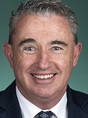
Kevin Hogan Page, National Party, Deputy Manager of Opposition Business in the House
3:20 pm
I rise to talk about some of the very bad mistakes that this government has made. I think there's going to be a defining moment, when we look back at the last parliament and this parliament, that's going to be measured in history, and that's the budget that was brought down this year. What happened when the budget was brought down this year was that it was like the straw that broke the camel's back and the complete trust of the Australian public in this government. That happened that night. There were many reasons for it: the changes to the capital gains tax, the changes to trusts and the changes to negative gearing, which this government said they wouldn't do. When they made those changes in this year's budget, that was the straw that broke the camel's back, and the trust of the Australian public in this government was lost that night.
I want to just share one story. We on this side all went back to our communities the week after the budget and heard lots of examples of people in despair about the fact that these changes had been made deceitfully, as we know, because they weren't made as part of their election commitments. I actually got my hair cut the week after the budget—I'm glad I still have to have a haircut—and was talking to my barber; she's been cutting my hair for over 10 years. She was asking me questions about what this would mean for her, because they are the typical family that this side of the parliament wants to support and a typical family that that side of the chamber used to support and now doesn't, because she's a hairdresser. She runs her own business. She doesn't get a salary. She has her own small business that she runs. Her husband is a diesel mechanic. Again, he's not on a salary; he is running his own business as a diesel mechanic. They also have bought a bus run because they want to get ahead. They're aspiring Australians. Again, usually that side of politics would have supported a diesel mechanic. Usually that side of politics would have supported a hairdresser and people who went and bought a small business, but no more. None of her family earn salaries. What they've set up is a trust structure. She was, as you may know, one of 350,000 small businesses in Australia that have set up a trust structure. She was in despair: 'What does this mean for me and what impact will this have for me?'
I've obviously had a number of chats with her since then, and it's not good, because, basically, when the Treasurer talks about tax reform, what he's always talking about on that side of the parliament is tax increases. So her tax bill and the tax bill for her family is going up because of this. They've done it in good faith. A good, aspiring Australian family—a diesel mechanic and a hairdresser. They've bought a small business, as well, to try and get ahead and they work really, really hard. All this government does is want to tax them more and make things even harder. That's the bottom line. She said, 'Why would they do that?' I then explained to her the lack of small business experience on that side of the chamber. I'll stand corrected if anyone ever wants to get up on that side and say: 'Do you know what? I've been a small business operator and had a trust structure.'
It didn't take me long. I said, 'I'll explain to you, and it's a bit disappointing, about the employment history of our Prime Minister and our Treasurer and why they don't understand it.' You see, they don't understand it, because they've never done it. They've never rolled up the doors or put out a shingle, or worked in private enterprise, the Prime Minister or the Treasurer. They've never done that. They've never even worked in private enterprise and never owned their own small business. I explained to her: 'The Prime Minister's first job out of university was to work for a Labor minister, Tom Uren. His second job out of university was to be the assistant general of the New South Wales branch of the Labor Party. The Prime Minister's third job after university was as a staffer for Bob Carr. Then, of course, his fourth job was actually to be an MP.' And then I said, 'And the Treasurer probably is a little bit worse.' Let's think about the job for a second. The Treasurer, who's just made some radical decisions—again, not tax reform, just tax increases—is responsible for the economy. He calls himself a doctor. He has a PhD—not in economics. He hasn't done economics degree. Never mind, does his work history help?
I explained to her that his first job out of university was to work for Wayne Swan as a political staffer. His second job was to work for another Labor MP, Kim Beazley. His third job was to work for Morris Iemma, another state MP. Again, his fourth job was to be a Labor MP. She then obviously understood. She went: 'Okay, I get it. None of them have worked in small business.' I said, 'Well, they haven't worked in private enterprise, let alone in small business and certainly would never have run a trust structure or had a trust structure for their family or for multiple family businesses that they may run, so they just don't understand it. This is just esoteric stuff on pieces of paper that's given to them by a bureaucrat, and they don't live and breathe it and don't understand in their DNA how this works.'
I also did lament with her, saying, 'The great shame about this is that every member over there should hang their head in shame.' As we say, you should all hang your heads in shame, because, if there's one thing you can say, it is that they decided to do this, but they did it in a first budget after an election in which they promised not to do it. If there's one thing you can say, it is that maybe they changed their minds after the election. They had this idea, this brainstorm. They said, 'We know what a good idea is.' But they were actually asked about the policies during the election campaign and they said they wouldn't do it. There's great shame in that. Besides it being the bad policy that it is, that was a moment when the Australian public lost all their trust and faith in this government, and that is what we're seeing.
Obviously, we have the compliance costs for this. There have been models done. There have been unintended consequences. We're seeing carve-outs. We're seeing charities and a whole lot of other things go to the government and say why this isn't a good idea. But we're talking about policies that are harming farmers and small businesses, and therefore the budget of every family in this country is being harmed by these policies.
I can't talk today without mentioning the net zero 2050 costs and the policies that this government is following, which are destroying Australian families and Australian budgets. The one thing I always want to stress and remind the other side of when we talk about net zero 2050 is that this is about carbon emission reductions. Okay, we understand that. Deputy Speaker Claydon, you would know that the three biggest carbon emitters in the world are the US, China and India. And, Deputy Speaker, I know that you know that none of them have signed up to net zero 2050. Who would have thought? Australia has one per cent of carbon emission reductions. Those three emitters are the vast majority of emitters, but this government is putting on us the cost of adhering to these policies, which is bankrupting Australian families and Australian business. We're seeing bailouts. You were at one, Deputy Speaker, just a month or two ago. It was for Tomago, a company that's very important to the Australian economy. Again, what do they need? What do the Whyalla steel works need? What do the tin smelters need? What does every major manufacturing company in this country at the moment need? They need a bailout. That's because of the folly of this government and its net zero 2050 policies. And, as I say, it's not going to change the temperature one bit.
The minister responsible for all this, by the way—I'm sure you heard this too, Deputy Speaker—just three or four weeks ago said he never believed in the folly of green hydrogen. I agree—neither have I! But, unfortunately, he committed $9 billion of taxpayer money to the folly. I hate to think what he would have committed if he actually believed in it. Again, this just highlights that, when they talk about taxpayer money, this money is like monopoly money for them, not having been in private enterprise and not having run their own small businesses, because they've never had to generate their own money from their own businesses.
The other thing that we need to comment on today is the IMF report. The member for Gippsland just raised an issue today about the government accepting responsibility. I'd like the Prime Minister to stand up and accept responsibility for anything that might not be going well. Sure, international factors have an effect. None of us are denying that over here. But what the report showed this week is that the inflation rate in this country is one of the top five or six among countries in the developed world. Our inflation rates are higher than most other developed countries in the world. Our interest rates are higher because of that, and mortgage costs are higher because of that. But the IMF report is also saying that our unemployment rate is forecast to go up, while in many other countries around the world it's forecast to go down. They can't blame international comparisons where we're worse on international things that are going on in the world. So shame on this government for making life harder for our businesses and life harder for Australian families.

Kristy McBain Eden-Monaro, Australian Labor Party, Minister for Regional Development, Local Government and Territories
3:30 pm
It's always a pleasure to stand up and talk about small businesses and the farming sector—communities that I represent in the great electorate of Eden-Monaro.
Our government is backing small businesses across the country. We're delivering $3.8 billion in new measures that lower taxes for businesses, including making the $20,000 instant asset write-off permanent. It had become a bit of a thing in the Senate that those opposite would stall the passing of the instant asset write-off each and every year so that small businesses would be left hanging, wondering whether it was going to happen for the next financial year. So we've made that permanent in our budget. Around 300,000 small businesses claimed that instant asset write-off in the 2024-25 financial year. They used it to invest in tools, in technology and in equipment that they need to grow. And we're introducing a permanent two-year loss carry back to support cash flow investment and resilience.
We're also cutting $10.2 billion a year in regulatory costs across the economy, because small-business owners should be able to spend more time building their businesses and less time dealing with the unnecessary red tape. Our government is backing those 2.7 million small businesses with the certainty and the support that they need to invest, to grow and to create more jobs across our country. That's why reducing that regulatory burden is so important. Modernising outdated requirements and delivering a reduction is something that is incredibly important to us—reducing that regulatory burden. Because when small businesses do invest, we know that they create jobs across the whole economy, and the country benefits.
How do I know this? Because I'm a small-business owner. My husband runs a small business. My parents ran a small business.

Michael McCormack Riverina, National Party
He's a good man, your husband.
Kristy McBain Eden-Monaro, Australian Labor Party, Minister for Regional Development, Local Government and Territories
My husband is a terrific man. That's correct, member for Riverina. And there are small-business owners across this side of the House: the member for Bullwinkel, the member for Macquarie, the member for Parramatta, the small-business minister. There is a whole range—
A government member: Sarah Witty.
Exactly right! The member for—
A government member: Hasluck.
The member for Hasluck runs a fantastic small business.
Unidentified interjection - Hansard doesn't record who said this
Hon. Members:
Honourable members interjecting—
Kristy McBain Eden-Monaro, Australian Labor Party, Minister for Regional Development, Local Government and Territories
Well, I can't name her—runs a fantastic small business. So when those opposite stand up and say just gross mistruths that no-one has run a small business it's absolutely ridiculous. Actually, the member that was just speaking, the member for Page, has never run a small business. I do note though, in his bio that he'd been a bond trader in a big bank. Interesting. But please, lecture us about small businesses because I'm sure bond traders know all about them!
But as I said, we are backing small businesses across this country, and the most important thing we can do is consult with small businesses. That's exactly what this side of the House have said we will do. We know these tax changes will have impacts across the economy, and it's one of the reasons we said we would consult widely on them, and we will continue to do that. Each and every member of this House—the Treasurer, the small-business minister—are all consulting with members of our electorates and members of the small-business community.
As a member of a regional electorate, I want to touch on our farmers. They face a range of challenges, and they are after practical solutions. Throughout fires, floods and global uncertainty, our government has been providing support through a whole range of different policy settings. We know that the conflict in the Middle East creates a whole range of uncertainty and instability, and that has affected market prices at home. It's put pressure on families, farmers and small businesses. We know that the price of fuel has been escalating and the cost of fertiliser has gone up, and our government has responded to those changing conditions and their impact on regional Australians. We put in this budget a $14.8 billion Australian Fuel Security and Resilience Package for the establishment of a permanent government owned Australian Fuel Security reserve of around one billion litres, with a focus on regional stock outs and supply constraints for essential users in the event of another supply crisis.
We've got trade initiatives like the Australia-European Union Free Trade Agreement, access to concessional loans through the Regional Investment Corporation and the Economic Resilience program, which all are insulating our farmers and regional businesses from the impacts of tariffs and other market disruptions. We'll continue to work with importers to secure more fuel and more fertiliser across our community.
We're also supporting farmers with initiatives such as the On Farm Connectivity Program, which provides rebates of up to 50 per cent of the purchase price for eligible on farm connectivity and connected agricultural equipment. We know how important it is to make sure our farmers have the best technology available to them so that they can yield more from their properties, and this is a really practical investment to help farmers across the country.
As I said, our government has invested in the Regional Investment Corporation. We've got year-round support available, including hardship and concessional loans through an additional $1 billion that we've added to the Regional Investment Corporation. We've committed that additional loan funding because we know how important it is to ensure that farmers and producers can access concessional lending during times of need. We know farmers across the country at this point in time are experiencing challenging drought conditions. Through the RIC, the government has established our Drought Hardship Loan. It opened in March this year, and that provides some short-term financial relief to assist with essential operating costs of our farmers.
It is incredibly important also to support our communities when they face uncertainty every day, balancing a range of risks from weather to market fluctuations to disruptions of supply chains and biosecurity. We're supporting our farmers through investments in biosecurity, including safeguarding the country against the impacts of the H5 bird flu. Our government's total investment in bird flu now is more than $270 million, and we'll always support farmers, producers and small businesses during tough times, particularly in a natural disaster. We know this season we are going to face a particularly difficult, high risk weather season. We know the industry is closely monitoring the El Nino event and what that will mean on the ground. Last season we saw 60 severe weather events impacting more than 190 local government areas, with some communities impacted back to back. And I saw first-hand the immense impact on communities, on homes, on livestock, on businesses and the damage to our infrastructure.
Following the Queensland floods, which saw more than 50,000 head of livestock lost, the Albanese government joined with the Queensland government to deliver funding targeting recovery for primary producers, small businesses, flood clean up and mental health support. We funded the aerial shooting of feral pigs, which we know cause extensive damage to crops, pasture, fencing and waterways. They pose an ongoing risk to animal health and biosecurity. We made sure that primary producers in Queensland were able to access grants of up to $75,000 during that event, because we know primary producers are integral to our economy and to communities to bounce back quickly from events like this. We also work closely with Victorian government to provide Primary Producer Bushfire Recovery Grants of up to $75,000 as well. We know primary producers are the lifeblood of regional communities, and it's important to support them during their time of need. As Minister for Emergency Management, I'm always committed to delivering that vital but more importantly practical support on the ground to help individuals businesses and communities to recover during a devastating disaster.
I want to make it clear that our government is backing farmers. We are backing primary producers. They feed millions, and they generate billions for our economy. Our government has work tirelessly since we came to office to back innovation, to back ingenuity and to back Australian farmers and producers so that they can continue to succeed. Australia's farmgate production exceeded $100 billion last financial year, four years ahead of the National Farmers' Federation's 2030 target. That record result was proudly backed by our government, and I don't want to see anyone talking down our ag sector or running a scare campaign on small businesses. We should be working together to make sure that we are putting small businesses, primary producers and—in my case, regional—economies first. It is really important that we not only back our own but also ask people to be as ingenious and innovative as possible and to take those risks because we will back them and support them. And our government will continue to do that.
Michael McCormack Riverina, National Party
3:40 pm
The topic of this matter of public importance debate is the impact of the government's policies on Australia's farmers and small business owners. It was moved by the member for Page, who, I might just point out, was also a beef producer. Yes, a bond trader, no doubt, but beef production involves small business. I will put that on the record for and on behalf of my colleague and friend.
I just want to add a couple of dollar amounts. They are eye-watering amounts for the benefit of this debate, but not to the benefit of Australian farmers. The first came in a media release on 11 May 2024. It talked about the federal government announcing it would end Australia's live sheep export trade by 2028. It referred to a $107 million transition package for the industry. So just remember that $107 million.
Recently, we had another statement by the government that it was buying more water back so that it could reach that illusory target of 450 gigalitres of water out of the Murray-Darling Basin. The figure was $430 million to purchase 86 gigalitres of water. Eighty-six gigalitres of water is the equivalent of 34,400 Olympic sized swimming pools.
Now, take those two figures: $107 million and $430 million. That is a lot of money to stop farmers farming, because that is essentially what it is for. The federal government announced in 2024 that it was stopping live sheep exports from 1 May 2028. That's when the industry will be phased out. I've not heard any of the Western Australian Labor members arcing up about that, as they should be while unveiling a $107 million package to help the industry transition. 'Transition' is code for stopping farmers farming. It's code for getting out of the industry and finding something else to do. And the four hundred—


Sharon Claydon Newcastle, Australian Labor Party
The member for Bullwinkel, don't interject from your seat. It's disorderly, and we're interrupting the debate.
Michael McCormack Riverina, National Party
Thank you, Deputy Speaker. Minister Watt, who was the federal agriculture minister, announced this from the sanctity and safety of Perth. He should have gone out to the regions—plenty of regions in Western Australia. Last time I looked, it was the biggest state of the six that we have. It's a big, big state. There are big, big regions and big, big sheep-farming stations. But, no, he had to make the announcement from the safety and security of the state capital.
Then, of course, we have $430 million being spent on water buybacks. Again, it's stopping irrigators irrigating, but it's actually helping the nation's largest irrigator to do more irrigating. And who is the nation's largest irrigator, member for Nicholls?
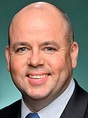
Sam Birrell Nicholls, National Party, Shadow Assistant Minister for Regional Health
The federal government!
Michael McCormack Riverina, National Party
The federal government it is, through the Commonwealth Environmental Water Holder. The fun fact here is that they already have 72 per cent of the water in the Murray-Darling Basin. And there is the great fear that there is about to be yet another purchase so that Labor can again get to that 450-gigalitre target and again stop irrigators irrigating.
When farmers irrigate—when irrigators put water into the channels and across the landscape—they are actually growing food; they are actually producing fibre; they're actually getting on with doing what the nation asks them to do, and those farmers are small-business people. What we're doing with that $107 million in the west and that $430 million in the southern connected system is stopping farmers from doing what we should be getting them to do, and that is farm. We have got the best farmers in all of the world. Why are we spending hundreds of millions of dollars stopping them from doing what they do best in all of the world? It's a nonsense; it's a folly; it's a farce. I just don't understand it, and nor do our farmers. They are desperate for good government. They're not getting it from this federal Labor government.

Marion Scrymgour Lingiari, Australian Labor Party
3:45 pm
I'm glad to have the opportunity today to speak about what our government has been doing to ease pressures on small business and primary producers, who keep my electorate of Lingiari moving. The remote nature of my electorate means that we rely on small business to make sure that people have enough food to eat, enough petrol to keep driving and places to stay when travelling. Without our small and family businesses, Lingiari would stop and jobs would disappear. Our government knows this and we know how tough it can be for small businesses. We've delivered $3.8 billion in new measures to reduce taxes for small business and made the $20,000 instant asset write-off permanent. In the Territory, businesses are investing in the tools and equipment they need to grow. Recent data has shown that 2,200 instant asset write-off claims worth $47.5 million were made in the 2024-25 financial year in the Territory alone. Farmers are embracing this too. Across the country, agriculture was the largest sector claimed on the instant asset write-off. This is some of the tangible help we're delivering across the country.
The introduction of a permanent two-year loss carry-back arrangement will also help lift some of the pressure off small businesses, who contribute so much to our local and national economies. I notice that the member for Page didn't mention that, when the coalition were in office, they wound back both the instant asset write-off and the loss carry-back introduced when Labor was last in office. I'm glad we've backed in these programs for small business.
We're engaging directly with small businesses, including through the Small Business Consultative Group. We've invested more than $30 million to implement faster payment times. We've changed the procurement rules to ensure government not only buys goods and services from Australian small businesses but also helps them grow. We've boosted the Australian Competition and Consumer Commission to ensure a more transparent and effective regulatory framework for the franchising sector. We've invested $2.9 million to assist fresh produce suppliers to understand and enforce their rights under the Food and Grocery Code of Conduct.
I note that October is Indigenous Business Month, which also includes so many small businesses, particularly in the Northern Territory but expanding right across Australia, that are First Nations owned and led. I encourage everyone to support Indigenous businesses wherever they are. I recognise and congratulate the innovation and leadership of those First Nations businesses. If we look right across Australia, one of the biggest small businesses and industries that's coming out is the cloth industry. Certainly that is becoming a big enterprise for a lot of those communities.
I take this opportunity to acknowledge our Minister for Small Business and the hard work that she's been doing in this space. She is an outstanding minister, and I, like all my colleagues on this side, was particularly offended by the comments directed towards her yesterday. Whilst the opposition comes in here to criticise and play politics, we're the party backing small businesses and primary producers, our pastoralists, our agriculture industry and our horticulturists. I know that, in parts of Lingiari, we wouldn't survive without all of those industries, and we need to continue to support them.
I also acknowledge the Minister for Emergency Management, who has responded efficiently and effectively with the Northern Territory government. I don't know if everyone has seen it, but small businesses in Alice Springs have been absolutely smashed over the last week. There have been some terrible storms that that've happened. A lot of people have lost their businesses and livelihoods. There've been houses wrecked. I'm looking forward to going home to assist in a lot of the clean-up. My thoughts are with those small businesses. With the community of Alice Springs, we've had three floods in the last year and now the storms that have occurred over the last couple of days. It's been quite an impact on a lot of the community. The small business community in particular has been hard, but the community has come together.
Alice Springs is a resilient, tough community, and our government will work together with the Northern Territory government to make sure that that community can come back.
Sam Birrell Nicholls, National Party, Shadow Assistant Minister for Regional Health
3:50 pm
A lot of people, certainly on this side of the chamber but around Australia, are very confused as to why the government appears to be waging war on small business. They're asking us, and if they're not asking you they will be soon.
I just don't understand it myself, but I've got a hint yesterday when we had the start of question time and we asked the Prime Minister a question about small business. The body language and the words were instructive. It was a motherhood statement about how the Albanese government backs small business. He said it in a very quiet voice. He didn't seem to really believe it. The next question was a question about political events and Josh Frydenberg. All of a sudden, the Prime Minister was animated: 'Oh, Josh Frydenberg!' I wish the Prime Minister would get as animated about the plight of people in private enterprise around Australia as he does about people who are serving, or who have served, in this place. It was instructive.
Small businesses across Australia are having very, very difficult conversations with their financial advisers at the moment. They're coming into my office. If they're not coming into yours, they soon will be. People who don't really get involved in politics much at all are suddenly discovering with horror what some of these changes to trust arrangements and taxation arrangements actually mean for their business. I had a business owner in my office yesterday who has spent 45 years building this business up almost in tears because of what these changes mean. This person followed the rules and set his business up in a way with trusts, as has been legal, and all of a sudden the rug has been pulled out from underneath.
I don't know whether this person voted Labor or who he voted for to be honest, but he said, 'They didn't tell us that this was on the table before the election.' 'That's fundamentally deceitful,' this small business owner said to me, and he's right. Small business is basically putting your own effort, your own labour, your own capital and in many cases your credit on the line and hoping that you can manage input costs of an operation so that the income will be enough to turn a small profit or get a small margin. We should be helping them in that endeavour, not treating them like a cash register for the government coffers. They are suffering energy costs, which are going up despite being them told that they were going to be reduced.
We're talking about farmers. Farmers in my part of the world are also suffering, as the member for Riverina said, from rising temporary water prices. Why is that? It's because the government has taken so much water out of what we call the consumptive pool that the prices are going up, and it's making it very, very difficult for farmers to be able to purchase that water and irrigate fruit trees, dairy pastures and other crops. In many cases, they're getting less for their commodities as well. Those small businesses are under pressure, and the Labor government has put them under more pressure with these policies.
The amount of red tape that businesses report having to go through with state and federal governments—and I'm from Victoria, so I know what a state Labor government looks like. I hope we are in the last 30 or 40 days of this one, I can tell you. People who put their, as I said, labour, capital, credit and effort on the line get very upset when the government wants to clip the ticket on everything they do. The margins are so tight. An example of the government not understanding margins at all is thinking that if you ban a credit card surcharge then somehow the cost goes away, that the bank will say, 'Oh well; there's no charge for that anymore.' They can't pass that on. They have to absorb it or they have to lift their prices.
Here in Canberra, here in the ACT, there is some small business and some capitalism going on—thank goodness—and a restaurant owner told me: 'It's so hard, because what do we do? We have to absorb all we have to lift our prices, but it's a competitive environment.' It's so difficult. I don't understand why the Labor government is making it more difficult for small business, but the juxtaposition between the Prime Minister talking about small business and Josh Frydenberg gave us a hint.
Trish Cook Bullwinkel, Australian Labor Party
3:55 pm
We're here today to talk about farmers and small businesses, and I'm more than happy to talk about that. When you travel across the electorate of Bullwinkel, from the hills right down through the Avon Valley, through Toodyay, York, Beverley and Northam and right across our agricultural heartland, you see the two pillars of the Western Australian economy working side by side: our farmers and our small business owners. The Albanese Labor government knows that real support for our regions means showing up in every portfolio, and I'd like to talk about some of those portfolios: education, health, transport, tax relief and, in opening up markets, telecommunications and regional economy.
But let's talk about education. For a long time, if our young people in regional WA wanted to pursue higher education they faced an impossible choice: to pack up their lives and move to the city or to give up on their ambitions. We're changing that, and I was incredibly proud to join the education minister, Jason Clare, to officially open the new Regional University Study Hub in Northam. This builds on the tremendous success of the study hub that we've already put in York, which has been open longer and has already proven that when you give locals the space, the technology and the support to study locally it means our kids can stay connected to their regional families and communities and keep their talent and that local businesses get the skilled workforce they need to grow. We are applying the same practical commitment to the regional areas in the health department.
We also know the immense pressures on our farmers, primary producers and regional small-business operators—pressures driven by the seasonal markets and the everyday demands of running an enterprise, which a lot of us on this side are fully aware of. Mental health support cannot be something that you can access only by driving two hours away. That's why we opened the Medicare mental health urgent care clinic in Northam to support the regional people. It is 100 per cent bulk-billed. You don't need a referral. You don't need an appointment. If you or a loved one are doing it tough you can simply walk through the door and get free professional, compassionate care when you need it. That sits alongside our historic expansion of Medicare, delivering more bulk-billed GP visits and waiving the HECS debt for doctors and nurses who commit to working in the regions for five years—more doctors and nurses where we need them in the regions.
We're also fixing vital transport arteries that our primary producers rely on every day to get their grain, livestock and goods to freight depots and ports. This includes a major investment in Bullwinkel in Toodyay Road, which is a major road to get from the city to the shire of Toodyay, and I happened to be there on Saturday for the Toodyday Agricultural Show. We are making upgrades to that road, for road safety, worth $112 million from the federal government plus an additional $28 million from the state Labor governments. We are making these freight routes safer and more efficient for heavy vehicles, local families and of course tourists. And across the nation we have backed that up by doubling Roads to Recovery funding to $4.4 billion, with 85 per cent going directly into regional Australia.
We have also, of course, reached a record high with our farmers of over $100 billion worth of farm-gate production, hitting that national milestone four years ahead of schedule. We've had 286 market access achievements, opening 40 brand new overseas markets and tearing down trade barriers so WA grain, livestock and produce can reach the world. And for the 2.7 million small businesses that power our economy—the tradies, the shopfronts, the local service operators—we've delivered practical bottom-line certainty, of which my fellow speakers have already spoken.
Our farmers and small-business owners do not ask for handouts. They ask for fair access, reliable infrastructure, affordable health care and a government that respects the contribution that they make to our nation's prosperity. And that is what the Albanese Labor government is delivering.

Tom Venning Grey, Liberal Party
4:00 pm
As a farmer, I've been bitterly disappointed by the way our farmers have been treated by this hapless Albanese Labor government. South Australian farmers are heading into what is forecast to be the second biggest harvest on record. The next few months are when we earn our income for the whole year. This is when they need every advantage. Instead, this government keeps making it harder.
Take fuel, for example. In November 2021, the now prime minister made a tweet saying:
Do you reckon Scott Morrison has been to a petrol station lately? Petrol prices are surging on his watch.
In that post, the petrol in question was $1.79 per litre. Who wants to guess how much diesel costs in many parts of my electorate today—$1.80, $2.80? Diesel is costing $3.50 in many parts of my electorate on this prime minister's watch. So, Prime Minister, have you been paying attention to petrol prices lately? Those fuel costs hit every farm, every family, every truckie and every small business.
Then there's the Treasurer's tax on unrealised gains in superannuation—Labor's attempt to tax paper gains on farmland that has never been sold. This would have pushed generational farmers off the land. Only after sustained pressure from the coalition and farmers did the Treasurer back down. It was the first of many backflips, and, since then, the Treasurer has become somewhat of a gymnast. Next came a capital gains tax and then a 30 per cent minimum tax on trusts—new taxes which were never brought to the election. Labor says farm income is carved out, but farmland leased to family and income from the farm will still be caught. Families who thought their succession plans were done now have to start again.
Labor's taxes are like a lazy Susan; you turn them around and a new tax pops up. It is so significant, I'm now having to run tax and trust sessions in my electorate, and, I can tell you, farmers are white-hot with anger. A coalition government will scrap Labor's capital gains and trust changes. We will scrap Labor's toxic taxes.

Tom Venning Grey, Liberal Party
Over the last couple of months, Labor has completely botched the Working Holiday Maker program. First they delayed and now they're set to deny. Labor's ballot system for our second- and third-year working holiday-makers is having significant implications for regional Australia. This one has hit my own family farm. We had a European backpacker set to come last week. Disappointingly, we had to tell him not to board his flight—and that was at his expense.
That story is the same right across the sector. GrainGrowers says working holiday-makers make up 31 per cent of the grain industry workforce. Another farming family in my electorate wrote to me. In their words, 'It's been stressful playing the waiting game, not having clear information to work with, and feeling like we've settled for the next best option.' A coalition government will reverse Labor's backpacker cap, reverse their ballot system and start making policy decisions for regional Australia, not against it.
It is not only Canberra. In South Australia, Labor is rezoning more than 7,000 hectares of protected farmland around Adelaide for housing. Across the state, prime agricultural land is going to wind turbines, solar panels and transmission lines. According to Labor, only seven per cent of South Australia is considered prime agricultural land—seven per cent! Once farmland is built on, it never comes back. We can always build more houses. We cannot make more farmland. I've had young farmers call me in real distress, some even suicidal, because of this. Farmers do not ask for much. They just want government to get out of the way. They want fuel that they can afford, workers to bring in the crop and a government that backs them, instead of taxing them. Under Labor, they are getting none of it.

Anne Urquhart Braddon, Australian Labor Party
4:05 pm
Australian farmers and small-business owners do not need slogans. They need practical support, reliable water, strong biosecurity, skilled workers, access to markets and help when the seasons turn against them. That is what the Albanese Labor government is delivering. Farming is a way of life and an economic backbone of regional communities in my electorate of Braddon. When farmers in my electorate succeed, contractors, transport operators, manufacturers, retailers and hospitality businesses succeed too.
We are making practical investments to support farmers—for example, in water security. In my neck of the woods, north-west Tasmania, the government is contributing more than $62 million to expand the Sassafras Wesley Vale irrigation scheme. It will provide up to an additional 9.2 gigalitres of water across communities, from Sassafras to East Devonport, supporting high-value crops, value adding and really important regional jobs. We are building resilience before the drought hits. Yes, we do get droughts in Tasmania, in case anyone was wondering. The Future Drought Fund provides $519.1 million over eight years for climate resilience projects. It has supported Tasmania's Farming Forecaster, helping producers make better decisions about feed and seasonal conditions. Since July 2022, the government has invested more than $1.3 billion in rural support and drought resilience.
Backing farmers also means protecting what they produce. We have provided more than $2 billion in additional biosecurity resourcing, strengthening surveillance and responses to threats, including the H5 bird flu. Government investment in the bird flu response now exceeds $270 million. This protects livestock, crops, native wildlife, regional jobs and Australia's clean, safe reputation. We are helping producers manage global disruption.
More than one million tonnes of imported urea was cleared through strict but streamlined biosecurity processes from February to June, helping maintain supplies of this vital fertiliser. Farmers facing hardship can access an additional $1 billion in concessional finance through the Regional Investment Corporation and rural financial counselling. We have also made the $20,000 instant asset write-off permanent, giving agriculture related small businesses greater certainty to invest.
We're also standing up for farmers in the supermarket supply chain. The mandatory food and grocery code requires major supermarkets and wholesalers to deal with suppliers lawfully and in good faith. It provides stronger protection against retribution, better dispute resolution and anonymous reporting to the ACCC. Serious breaches can attract penalties of at least $10 million. For Tasmanian fruit, vegetable, dairy and fresh food suppliers, that means a stronger voice and a fairer deal.
Under the leadership of trade minister Don Farrell, we are opening more doors to global markets. Since mid-2022, Australia's two-way trade has grown by $301.7 billion, reaching a record $1.37 trillion in 2025-26. Tasmania exported $4.6 billion in goods in 2025, including $95.5 million to the European Union. The Australian-EU free trade agreement will remove or lock in duty-free access for most Tasmanian goods, including seafood, dairy, wood products, vegetables and cherries. Tariffs will be removed on salmon, cherries and cheese, while beef and sheepmeat producers gain preferential access—practical gains for Tasmanian producers, processors and small businesses.
These policies are helping agriculture remain strong. Nearly 10,000 Tasmanians have enrolled in free TAFE, including more than 1,400 in agriculture and more than 900 in construction, helping regional employers find the work they need. No government can control the weather or every global shock, but a responsible government stands beside producers and plans for the future. From Tasmanian irrigation to stronger biosecurity, drought preparation, skills and export opportunities, the Albanese Labor government is delivering practical support to keep farming and regional communities strong.

Anne Webster Mallee, National Party, Shadow Minister for Regional Development, Local Government and Territories
4:10 pm
I will speak about this government's utter disregard for our farmers shortly, but I want to focus now on small businesses because the warning lights are flashing and the sirens are going off. Labor's attacks on small business have reached emergency levels. Over 29,000 companies have entered external administration for the first time in the last two years, and nearly 25 per cent of those companies are in construction. I thought that was important to this government. Accommodation and food service accounted for nearly 15 per cent. This equates to about 39 companies per day going into administration. While the Treasurer wants to tell us and his party what a magnificent job he's doing, the facts do not lie. I want to point out to those opposite that the figures I've just quoted are about people. They're about families. They're about communities. When a business closes its doors, it impacts many, who no longer can have a job and can no longer pay their mortgage or their rent or children's school fees.
New COSBOA research released today paints a sobering picture. The typical small-business revenue has been swallowed up by inflation—revenue, not profit, for those opposite that are business illiterate. Only around one in four owners are paying themselves more than they were a year ago. What are the other three quarters actually paying themselves? Those opposite like to go on about minimum wages. Is there a minimum wage for a small-business owner? No, there isn't. Around two in five small-business owners are working more hours, and one in four worked longer hours for no additional pay. It's little wonder business owners turned to AI after Labor's toxic taxes on trusts to depict their new business partner, the Prime Minister, demanding his cut of the business. All the while, the Albanese Labor government has presided over 16 interest rate rises since taking office, which again undermines business profitability through higher debt costs and makes supplies more expensive.
Those opposite appear to be utterly against business profit altogether, as though even one cent of profit is a bad thing. Of course, none of the Labor cabinet have small-business experience. Talk about a lack of diversity! Small-business owners have rapidly shrinking profits to draw a wage for their own labour in the business and that of their spouse, partner or other family members. Even if they take some wage from the business, can the small-business owner deliver some return on the family's investment and the risk they carry, like putting their savings or home on the line?
And now the Albanese Labor government is forcing small-business owners to absorb more costs. Nobody likes credit card surcharges, but abolishing the surcharge does not abolish the merchant fee. The Reserve Bank says small businesses tend to pay the highest card payment fees. Banning businesses imposing surcharges from 1 October is not immediately matched with the savings intended for small businesses—the quid pro quo, if you like, to reduce interchange fees and similar costs. Over 97 per cent of all Australian businesses are small businesses. There are over 2.6 million of them employing 5.1 million people and generating $600 billion in economic value. Small businesses are left with no choice but to raise prices.
This toxic, untruthful Albanese Labor government is adding insult to injury, at first defending the ATO's credit card payment ban, which would mean more costs brought forward for small businesses. Following the backlash, Labor has reached into taxpayer pockets to postpone that ATO policy bomb until 30 June 2027. They have the power to call it off for six months. That means they have the power to stop it altogether. Where is the Treasurer on this? Labor is starving small business to death.

Fiona Phillips Gilmore, Australian Labor Party
4:15 pm
I grew up, raised my family and live in a beautiful part of our country, the New South Wales South Coast, which is home to thousands of small businesses, food producers and tourism operators. We have longstanding and proud fishing, dairy and timber industries and, more recently, very successful aquaculture and wine producers. Gilmore is home to defence and to a huge defence industry, supporting local small to medium manufacturing businesses and thousands of local jobs. Our region is growing, with new homes popping up in almost every town and village and with community infrastructure such as new hospitals, schools and roads being built to support the growing population.
Our region is thriving, and I'm proud to be part of a government that is supporting local farmers, producers and small businesses in so many ways. I come from a farming family and grew up on a dairy farm, so I understand those very struggles our farmers face every day, whether from drought, fire, flood, disease, transport costs or securing workers. I'm on the Standing Committee on Primary Industries because I want to stay connected with farmers and producers and help safeguard our food security, grow sustainability and prepare for future challenges so they can continue producing world-class products.
Since coming to government, we have been delivering for Australian farmers, fishers and producers. We have stepped up our biosecurity, opened new trade opportunities and improved farm sustainability. We are continuing to support industry and small businesses through the challenges facing our country and the world. We are not resting on our laurels. We are addressing these challenges so our farmers can continue to succeed. The latest forecast shows the value of Australia's agricultural production this financial year is set to be the second highest on record, which is a testament to the hard work and resilience of our farmers. We know people on the land work hard every single day to ensure the success of their businesses, and we're providing a helping hand when they need it. I'm pleased to say that our skilled migration program supports priority processing so our agriculture, aquaculture and fishing industries have the workers they desperately need to harvest crops, milk the cows and catch the fish we put on our dinner tables. The program is helping building companies, health centres, defence businesses and manufacturing businesses get the staff they need, especially in rural and regional areas. My husband's a chippie and runs a small business, so I know just how important it is to have those skilled workers in the construction industry and to train more homegrown tradies so we can keep up with the demand for new homes.
Energy costs are a huge part of running a small business or agricultural operation. That's why we're helping businesses and farmers save on their energy bills by cutting the cost of solar systems by 20 per cent, and small businesses in my region have benefited greatly from Commonwealth energy efficiency grants to put solar on roofs and install energy efficient appliances. This government has acted swiftly to protect our farmers and producers from the worst impacts of the war in the Middle East, including by allocating more than $14 billion towards strengthening Australia's fuel resilience package and, importantly, securing fuel supplies for our farmers and regional organisations. Year-round support is available for farmers, fishers and producers facing hardship, including concessional loans through an additional $1 billion being delivered to the Regional Investment Corporation. We will always stand up for our farmers and regional communities because keeping our farmers safe means keeping food on our tables.
Through the development of Feeding Australia: a national food security strategy, we're investing to help prepare the agricultural community for future challenges by ensuring our farmers have the tools and support they need. As chair of the Joint Standing Committee on Foreign Affairs and Trade's trade subcommittee, I'm looking at more ways to strengthen our trade and investment relations with neighbouring countries to expand opportunities for local producers to export our world-class products. We're getting the relationships back on track and opening new opportunities for our farmers.
Sharon Claydon Newcastle, Australian Labor Party
The time for this discussion has concluded.