
House debates Matters of Public Importance
Agriculture Industry, Small Business
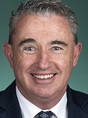
Kevin Hogan Page, National Party, Deputy Manager of Opposition Business in the House
3:20 pm
I rise to talk about some of the very bad mistakes that this government has made. I think there's going to be a defining moment, when we look back at the last parliament and this parliament, that's going to be measured in history, and that's the budget that was brought down this year. What happened when the budget was brought down this year was that it was like the straw that broke the camel's back and the complete trust of the Australian public in this government. That happened that night. There were many reasons for it: the changes to the capital gains tax, the changes to trusts and the changes to negative gearing, which this government said they wouldn't do. When they made those changes in this year's budget, that was the straw that broke the camel's back, and the trust of the Australian public in this government was lost that night.
I want to just share one story. We on this side all went back to our communities the week after the budget and heard lots of examples of people in despair about the fact that these changes had been made deceitfully, as we know, because they weren't made as part of their election commitments. I actually got my hair cut the week after the budget—I'm glad I still have to have a haircut—and was talking to my barber; she's been cutting my hair for over 10 years. She was asking me questions about what this would mean for her, because they are the typical family that this side of the parliament wants to support and a typical family that that side of the chamber used to support and now doesn't, because she's a hairdresser. She runs her own business. She doesn't get a salary. She has her own small business that she runs. Her husband is a diesel mechanic. Again, he's not on a salary; he is running his own business as a diesel mechanic. They also have bought a bus run because they want to get ahead. They're aspiring Australians. Again, usually that side of politics would have supported a diesel mechanic. Usually that side of politics would have supported a hairdresser and people who went and bought a small business, but no more. None of her family earn salaries. What they've set up is a trust structure. She was, as you may know, one of 350,000 small businesses in Australia that have set up a trust structure. She was in despair: 'What does this mean for me and what impact will this have for me?'
I've obviously had a number of chats with her since then, and it's not good, because, basically, when the Treasurer talks about tax reform, what he's always talking about on that side of the parliament is tax increases. So her tax bill and the tax bill for her family is going up because of this. They've done it in good faith. A good, aspiring Australian family—a diesel mechanic and a hairdresser. They've bought a small business, as well, to try and get ahead and they work really, really hard. All this government does is want to tax them more and make things even harder. That's the bottom line. She said, 'Why would they do that?' I then explained to her the lack of small business experience on that side of the chamber. I'll stand corrected if anyone ever wants to get up on that side and say: 'Do you know what? I've been a small business operator and had a trust structure.'
It didn't take me long. I said, 'I'll explain to you, and it's a bit disappointing, about the employment history of our Prime Minister and our Treasurer and why they don't understand it.' You see, they don't understand it, because they've never done it. They've never rolled up the doors or put out a shingle, or worked in private enterprise, the Prime Minister or the Treasurer. They've never done that. They've never even worked in private enterprise and never owned their own small business. I explained to her: 'The Prime Minister's first job out of university was to work for a Labor minister, Tom Uren. His second job out of university was to be the assistant general of the New South Wales branch of the Labor Party. The Prime Minister's third job after university was as a staffer for Bob Carr. Then, of course, his fourth job was actually to be an MP.' And then I said, 'And the Treasurer probably is a little bit worse.' Let's think about the job for a second. The Treasurer, who's just made some radical decisions—again, not tax reform, just tax increases—is responsible for the economy. He calls himself a doctor. He has a PhD—not in economics. He hasn't done economics degree. Never mind, does his work history help?
I explained to her that his first job out of university was to work for Wayne Swan as a political staffer. His second job was to work for another Labor MP, Kim Beazley. His third job was to work for Morris Iemma, another state MP. Again, his fourth job was to be a Labor MP. She then obviously understood. She went: 'Okay, I get it. None of them have worked in small business.' I said, 'Well, they haven't worked in private enterprise, let alone in small business and certainly would never have run a trust structure or had a trust structure for their family or for multiple family businesses that they may run, so they just don't understand it. This is just esoteric stuff on pieces of paper that's given to them by a bureaucrat, and they don't live and breathe it and don't understand in their DNA how this works.'
I also did lament with her, saying, 'The great shame about this is that every member over there should hang their head in shame.' As we say, you should all hang your heads in shame, because, if there's one thing you can say, it is that they decided to do this, but they did it in a first budget after an election in which they promised not to do it. If there's one thing you can say, it is that maybe they changed their minds after the election. They had this idea, this brainstorm. They said, 'We know what a good idea is.' But they were actually asked about the policies during the election campaign and they said they wouldn't do it. There's great shame in that. Besides it being the bad policy that it is, that was a moment when the Australian public lost all their trust and faith in this government, and that is what we're seeing.
Obviously, we have the compliance costs for this. There have been models done. There have been unintended consequences. We're seeing carve-outs. We're seeing charities and a whole lot of other things go to the government and say why this isn't a good idea. But we're talking about policies that are harming farmers and small businesses, and therefore the budget of every family in this country is being harmed by these policies.
I can't talk today without mentioning the net zero 2050 costs and the policies that this government is following, which are destroying Australian families and Australian budgets. The one thing I always want to stress and remind the other side of when we talk about net zero 2050 is that this is about carbon emission reductions. Okay, we understand that. Deputy Speaker Claydon, you would know that the three biggest carbon emitters in the world are the US, China and India. And, Deputy Speaker, I know that you know that none of them have signed up to net zero 2050. Who would have thought? Australia has one per cent of carbon emission reductions. Those three emitters are the vast majority of emitters, but this government is putting on us the cost of adhering to these policies, which is bankrupting Australian families and Australian business. We're seeing bailouts. You were at one, Deputy Speaker, just a month or two ago. It was for Tomago, a company that's very important to the Australian economy. Again, what do they need? What do the Whyalla steel works need? What do the tin smelters need? What does every major manufacturing company in this country at the moment need? They need a bailout. That's because of the folly of this government and its net zero 2050 policies. And, as I say, it's not going to change the temperature one bit.
The minister responsible for all this, by the way—I'm sure you heard this too, Deputy Speaker—just three or four weeks ago said he never believed in the folly of green hydrogen. I agree—neither have I! But, unfortunately, he committed $9 billion of taxpayer money to the folly. I hate to think what he would have committed if he actually believed in it. Again, this just highlights that, when they talk about taxpayer money, this money is like monopoly money for them, not having been in private enterprise and not having run their own small businesses, because they've never had to generate their own money from their own businesses.
The other thing that we need to comment on today is the IMF report. The member for Gippsland just raised an issue today about the government accepting responsibility. I'd like the Prime Minister to stand up and accept responsibility for anything that might not be going well. Sure, international factors have an effect. None of us are denying that over here. But what the report showed this week is that the inflation rate in this country is one of the top five or six among countries in the developed world. Our inflation rates are higher than most other developed countries in the world. Our interest rates are higher because of that, and mortgage costs are higher because of that. But the IMF report is also saying that our unemployment rate is forecast to go up, while in many other countries around the world it's forecast to go down. They can't blame international comparisons where we're worse on international things that are going on in the world. So shame on this government for making life harder for our businesses and life harder for Australian families.
No comments