
House debates Bills
Private Health Insurance Amendment (Modernising the Private Health Insurance Rebate) Bill 2026; Second Reading

Monique Ryan Kooyong, Independent
5:57 pm
This is punching down on vulnerable Australians rather than finding savings in legitimate places in the budget. I'm proposing that the government carves out recipients of the age pension from this bill if it's serious about delivering on Australian values.
I support funding aged care. I support reforming the private health insurance system. But more than three million older Australians are being asked to pay more for their private health insurance without the government demonstrating to anyone's satisfaction and with appropriate transparency that this measure is a net positive for the health system as a whole and that it has a plan if its assumptions prove wrong. The government has not done that, and so I move the second reading amendment as circulated in my name:
That all words after "That" be omitted with a view to substituting the following words:
"the House declines to give the bill a second reading and:
(1) notes that the Government developed this reform without adequate consultation with industry or state and territory governments and has failed to publish its full net fiscal impact, including the cost of increased demand on public hospitals and the potential impact of downgrades to private health insurance cover; and
(2) calls on the Government to:
(a) publish the net fiscal impact of this measure, including forgone Medicare Levy Surcharge revenue and the projected cost shift to state and territory public hospital systems, rather than relying solely on the gross $2.994 billion rebate headline saving; and
(b) exempt Age Pension recipients from the removal of the age-based rebate uplift, noting the Parliamentary Budget Office's budget analysis that Age Pension recipients will account for $1.563 billion, or around half, of the $2.994 billion in projected savings to 2029-30".

Mike Freelander Macarthur, Australian Labor Party
Is the amendment seconded?

Kate Chaney Curtin, Independent
I second the amendment and reserve my right to speak.
Mike Freelander Macarthur, Australian Labor Party
The original question was that this bill be now read a second time. To this the honourable member for Kooyong has moved as an amendment that all words after 'That' be omitted with a view to substituting other words. The question therefore now is that the amendment be agreed to.

Zoe McKenzie Flinders, Liberal Party, Shadow Cabinet Secretary
5:58 pm
Imagine paying for private health insurance for 40 years, 50 years, even 60 years only for the government to wait until you really need it and then smash your ability to hold on to it. That is exactly what the Albanese Labor government is proposing to do to older Australians with this legislation, the Private Health Insurance Amendment (Modernising the Private Health Insurance Rebate) Bill 2026. The people who live in my electorate who have saved and planned to provide for their own healthcare costs in old age have now had the carpet ripped out from under them by this cruel, cold and cynical move by the Prime Minister and his grinning health minister.
Over the weekend, I attended the opening of the Dromana Bowls Club season. I had a chat to the 100-odd people who were there on a beautiful southern peninsula spring day, and two topics came up over and over again: the callous cap of $5,000 in allied health care support for our returned service men and women and this snatching of support from those over 65 as they approach their hour of need for the healthcare system. But this particular move really got their goat, because this one literally makes no sense from a budgetary perspective. These insurance holders aren't rich; they make huge sacrifices to be able to sustain private health care. For decades, my constituents have been encouraged to take responsibility for their own health care, to find the means to pay thousands of dollars each year in private health insurance premiums, and they have done exactly as society asked of them.
I have one of the highest incidences of private health insurance in Australia, with over 33,500 of my constituents holding private health insurance. Insurers also contribute massively to covering the cost of the delivery of health care in my electorate, funding some 41,000 individual hospitalisations for older Australians in the Flinders electorate—the third-highest usage rate in the nation. In maintaining private health insurance, so many of my older constituents have relieved pressure on Medicare and our public hospitals. And it is just as well that they do that, because, over its 12 years in power, the Labor government in Victoria has refused to fund an upgrade of the Rosebud Hospital in my electorate. Today, it remains a hospital which is high on human care but low on fit-for-purpose infrastructure, with roofs collapsing, doors too narrow for a standard hospital bed to be pushed through, no surgery and no maternity services. When my constituents give up their private health care, as so many of them are now facing the prospect of doing, our public healthcare system will be swamped.
My community of Flinders is older than most; 27.8 per cent of residents in Flinders are aged 65 or over—almost double the national average—so the measure to crush private health insurance rates among the over-65 cohort will hit my community harder than almost anywhere else in the country. A few months ago, I asked my community what this change would mean for them, and more than 1,200 people responded. Tonight, I want to use their words because they say it better than any politician could here. Rowan, from Mount Martha, wrote:
My wife & I married in 1979 and have paid private health continuously without any claims.
I now have serious cancer, and quite frankly cannot risk being without it.
I have had major surgery, in Feb 2022 9 and half hours, then radiation, and other ongoing treatments .
Since then I have had 6 further surgeries.
I consider we paid private health for many years & now is when we need it.
Labour in the last budget hitting us with this extra cost, is a real kick in the teeth
We also ran a local business for many years employing people and paying our taxes considering we would be looked after in our later life.
I worked from the age of 18 till 68 when the cancer struck me down.
I consider I cant afford to cancel it.. because I cannot go into the public system .. it would to much of a risk for me & to my life
My wife also has some health issues
Thank you for listening
This is what this policy looks like in the real world.
In respect of the likely increased premiums, Gwendoline from Rosebud said:
Yes I could not afford it. I have just changed my long time health insurance to a cheaper one, which is still hard financially for me. I have to be insured as I have had 5 major opps in past 15 months and need another three.—does Labor want us to die!!!
With other insurances; electricity (even with solar), house, car insurance and rates going up each year—I now live off $100.00 per week even though I own my own modest 1970 ish house. And I do not have much super left as I have spent over 30 thousand $ over the past 3 years on my health, of out of pocket expenses.
Thank you for asking.
Let me repeat what she just said. She's living on $100 a week after spending more than $30,000 on her health over three years.
Virginia from Rye wrote:
We have had private health insurance for over 60 years, and now we are at that stage in life where having choices and immediate health support is so important and necessary. Over the years, we have made sacrifices just to stay in private cover and even have just recently changed from our long time provider to one that was more flexible.
Virginia added:
Now we are seriously going to have to consider our options if it means the government implements these changes, and that really hits home. As usual, it is those with the most to lose who are going to suffer.
My husband is due in hospital next Friday for a surgery that will involve an overnight stay. If we hadn't had private insurance, he would be on a waiting list and in a lot of discomfort for goodness knows how long.
Stephanie from Mornington said:
I have had private health insurance since I started work in the 1960's. Like so many of my generation, in the last 10 years I have experienced my first cancer. I fractured my spine in the 1990's and although recovered, this has ongoing associated problems requiring physiotherapy. Both medical conditions require constant imaging and monitoring. I will no longer be able to afford the high level of cover on hospital and extra's I need.
This is an appalling decision literally discriminating against older Australians who have paid their way. My insurers are financially well in positive territory given I have lived a relatively able bodied, healthy life. Please do your utmost to have this budget proposal defeated.
There is a phrase in there that the government needs to hear: 'older Australians who have paid their way'. This is who the policy hits.
Susan from Portsea wrote:
I will have to forgo other things that I have a right to expect after a lifetime of work, (I am 79 and still work a little), paying taxes and private health insurance.
I have fortunately always had good health insurance, claiming only during pregnancy and a knee reconstruction.
However, I am now seeing a cardiologist,
And needing much more health maintenance..
I consider my health a priority, so will pay for that over holidays or home help.
I feel as though my lifetime investment is being stolen from me.
Thank you for your care Zoe.
This response is especially important because Susan answered that she might be able to afford the increase, but affording that means giving up on holidays, giving up on home help. It means sacrificing the very things a 79-year-old who has worked all her life should be able to enjoy after a lifetime of contribution. So when this government says older Australians can absorb this cost, I ask: at what cost?
Monique from Mornington wrote:
I have held private health insurance for 47 yrs since my first job.
Thought about cancelling at one stage of my life & then the government introduced the age-based supplement if you were entering or re- joining private health insurance & decided this would cost me excessive $$$ for many years. So I have continued to keep this private insurance to the cost of other things I cannot do.. I've only ever made I major claim in my entire life so far. I am a healthy, fit 69 yr old now & this is when I will possibly need it.
So here I sit terrified I will not be able to sustain this insurance & become a statistic waiting on hospital lists for years to have a procedure I need but will not necessarily be deemed life threatening. My insurance keeps me out of the public system & allows more needy people to gain more to access public health. As a part pensioner now this is not viable for me to incur.
I hope we can see a turn around on this decision. My retirement years do not look so great now on top of general cost of living increases, as well as not earning an income any longer & that's so tragic for us.
Roy from Bittern put it even more simply:
We can't afford not to have private health at our age as we are both going through treatment. We have had private health cover for 50 years and at 79 and 81 years old we need it more than ever.
They cannot afford the increase but they cannot afford not to be insured.
Angela from Capel Sound wrote:
I feel that older Australians are being squeezed into poverty.
Increased health insurance, more tax on capital gains. Increased cost of living.
I have no superannuation so I am trying my best to preserve any funds that I have or try to get some capital gain to live on. I am a part pension so have to dip into my funds every month.
Even if you are on a full pension it doesn't pay the bills.
I have worked hard and feel totally depressed by what the government is doing to the older Australians who are invisible and a 'burden on taxes'
Increased health insurance squeezes us into an overcrowded and underfunded public hospital system. This also leads to elderly people clogging up hospital beds and unable to afford aged care
And another respondent from Mornington wrote:
Why are we being penalised when we aren't posing a burden on the public health system, which is already struggling.
Whatever money is saved by this will have to be found to cover the extra people switching to public and we don't have many hospitals on the Mornington Peninsula as it is!
My constituent Barry commented on Facebook from his hospital bed:
Keep up the pressure Zoe! I'm typing this from Beleura Private Hospital, where I've just had a knee replacement, using my private health fund.
I shudder to think of the waiting list under public system if I didn't have the choice.
Seems to me a classic 'Rob Peter to Pay Paul' situation, if those of us on private have to switch, all at once to the already overburdened public system!
James, on Facebook, wrote:
For over 50 years I have had private health, mainly funded from my savings in my senior years. I haven't used the public health system in all that time, but will now need to use it after I cancel my private health insurance, due to the $1600 annual increase, plus the usual annual increase in April.
After a lifetime of doing the right thing, older Australians should not receive a bill from Canberra for the privilege. The government needs to scrap this cut. It needs to keep the over 65-year-old cohort in private health insurance. Respect their hard work. Respect their sacrifice and their deferral of other costs, other choices and other opportunities to maintain their health insurance and lessen their dependence on the public system at a time when their health needs start to grow. Respect older Australians. Respect my electorate.
Leon Rebello McPherson, Liberal National Party
6:11 pm
This bill that we are asked to debate right now, the Private Health Insurance Amendment (Modernising the Private Health Insurance Rebate) Bill 2026, goes to the essence of the kind of country that we want to be, because we have a choice. The government has a choice, and it's still not too late for them to make the right choice. But we need to make sure that we understand exactly what that choice is that we are being asked to make and what this government is putting us through, and it is a choice that is asking the government whether we're going to reward those Australians who have not just done the right thing but done what the government has asked them to do.
If we start to unpack what these changes mean and what this bill is actually asking this parliament to consider, many years ago, under the Howard government, John Howard and that government implemented this higher rebate for older Australians—65 plus. The purpose of this was to incentivise those people who at the time were not older Australians. They were younger Australians who were in the workforce and probably trying to manage their finances quite prudently. He was asking them to save a bit extra and invest that into private health insurance not just for them but for the country. If they did so, they'd be doing two things.
Firstly, they'd be easing the burden or guaranteed easier access to private health insurance when they got to those years, 65 plus, when they would need to rely on Australia's health system and our private health system. But they would also do a second thing: take pressure off the public system. Those on that side of the House—and I think it's really telling. I know I've listened to some incredible contributions from some of my colleagues, including the member for Flinders just before. It's telling that in this place the government talks about their love of Medicare, their love of what they're doing for the Australian people and fairness in terms of health care but there are very few government speakers on the speaking list for this.
I think that's telling because at the end of the day this motion or this bill goes to the heart of making sure that we have not just a sustainable private health system but a sustainable public health system. When we look at who this is actually going to affect—yes, it's going to affect older Australians. But there is a misconception here that the government is trying to play on. It's not affecting the top end of town, not at all. It's affecting those who are most vulnerable. Not only are they most vulnerable because they're at the stage of their life where they actually need to rely on these health services—you can look at the facts.
There was some modelling done by the Parliamentary Budget Office as recently as this week. It says that around 1.5 million people received the age pension, and they're the ones who are involved in the private health insurance schemes. It's actually affecting those who are most vulnerable and who are quite frankly in a desperate situation that this government has put them in. Like I said, it goes to the kind of country that we want to be. In my view—and I said this in my first speech in this place—we want to be a country where we incentivise people who are going to do the right thing to not only secure its own future but also take the pressure off the government to make sure we reward aspiration and reward people who are going to be self-reliant. All of these people have done that. They've proven themselves. They've done exactly what the government asked them to do. Now we've got a government that wants to change the rules.
I, like many of my colleagues, ran a survey in my electorate on this matter. We run surveys on a whole range of different topics, but the response to the changes to the private health insurance rebate was insane. We had thousands of people write to me to tell me not only their stories and their experiences but also whether they will be able to deal with the consequences of these changes and afford the cost. We saw a situation where the majority said very clearly that they were not going to be able to afford these changes.
I've shared with this place many times in the past some of the contributions of members of the community in McPherson, but I also want to talk about a forum. We invited a lot of older Australians aged 65-plus to meet with me and with the shadow minister for health and aged care, Anne Ruston. We met at the Currumbin RSL. It was an opportunity to bring people together to understand and unpack what these changes mean for them. Not only that, but it was the week before a sitting week, so I was able to say to a lot of these older Australians, 'If you'd like me to send a message to the Prime Minister in Canberra about this, please let me know.' So we had a number of those people write down some messages.
The forum was quite interesting and quite concerning. We saw a lot of Australians from different backgrounds and with different past professions. Some of them had done incredible things. They've contributed to society. They've built this country. And they came to this forum because one vulnerability bound them together. That's the situation that this government has put them in as a result of this bill. We heard people sharing their stories. We heard people sharing their frustration. We also heard people share their lack of belief that we would have a government that could be so cruel. What was interesting was that it wasn't just about these older Australians. People shared stories about how they felt that this was yet another example of government pitting them and their generation against the generation of their kids and the generation of their grandkids. We had people contributing to the conversation who were saying that as a result of this the financial situation will be worse for their kids and their grandkids.
I think it's a cultural thing. In Australia, we believe in the importance of the family unit. We stick by each other. We stick by our mates. We stick by our family. When government is making lives more difficult for older Australians, somebody is going to have to foot the bill. At the moment, older Australians are not able to do so. These older Australians said to me that, in many cases, it will be their kids and their grandkids who will have that responsibility and will have to cover that cost. This is in the middle of a cost-of-living crisis that this government has perpetuated. On top of that, they're adding salt to the wound by putting forward this legislation.
I said something very clear to the people in the room. I asked them what their message is to the Prime Minister. Their responses were honestly quite telling. I'll read out a few for you for the benefit of this place. We heard people say, 'Don't be cruel, Prime Minister; respect the seniors of Australia.' Another said, 'I've been in the private health system for over 45 years. All you're doing is hindering us and causing more people to drop out, thereby putting additional pressure on the public system. It's about time you took responsibility for your government's actions. We don't all want to live in a socialist country.' Somebody else said, 'Never in my wildest dreams or my 76 years would I feel never supported by the Labor government. Australia has certainly changed since growing up. Older Australians feel deserted and obviously let down only by growing old. Where is the Australia I loved so much—gone. I know it has gone down the drain.'
These are the words of people who attended my forum and who shared their stories. But we're seeing it time and time again. It's coming through in the emails. It's probably why those opposite don't want to be in this place—because they know that the tide is against this. They know that they're doing the wrong thing by Australians—by the very people that they are supposed to represent.
I had someone named Rosalind, from Burleigh, who said, 'I was most interested to receive your survey. It seems to be the only avenue to express my extreme disappointment regarding this proposal. It is absolutely disgraceful to crush older people, and younger people who will become older one day, in this horrible way. The Labor Party's treating the older sector with absolute contempt and disdain, as would be expected from a ruling class who stamp all over those beneath them—in this case, grinding them to dust.' I'm going to skip to the last part of this contribution, which I think was very revealing. 'Please listen. Provide a strong opposition. Be our avenue for protection and trust and not some easy target. It's not just me but anyone who has tried to lift themselves out of welfare dependence into a new, unexpected kind of poverty.' This is the situation that people in my community are facing. They are now finding themselves, at the most vulnerable stage of their life, in that unexpected kind of poverty.
I started this contribution speaking about the kind of country we want to be and why this bill is fracturing everything that I and the people that I represent have in our minds when we think of the country that we want to be. We have people who have done the right thing, who have worked hard, who have saved and who have invested. They've sacrificed, and what this does is it punishes that sacrifice.
It doesn't even make sense from an economic perspective, and this is what I don't understand. We're not just taking people out of private health insurance, all of those who can no longer afford it, and saying, 'Some magical creature's going to come and fund your health system.' We're actually pushing them onto the public system, which is already buckling under pressure. We see it every single day. Every member on this side of the chamber and, I'm sure, every member on that side of the chamber would be receiving complaints and hearing from people about their experiences in accessing health care—and older Australians need it more than anyone else.
The fact that this government is being rock solid in its determination to continue with these changes to the private health insurance rebate and with this proposal to crush Australians at the most vulnerable stage of their life is telling in terms of the character of not only the Prime Minister, not only the Minister for Health and Ageing, but all of those opposite who sit idle and support this going through.
Mike Freelander Macarthur, Australian Labor Party
Order! I think the speaker has already made aspersions on the character of members, and I think you probably should withdraw that comment.
Leon Rebello McPherson, Liberal National Party
Sorry, what was the comment you'd like me to withdraw?
Mike Freelander Macarthur, Australian Labor Party
You're reflecting on the character of members.
Tony Pasin Barker, Liberal Party, Shadow Minister Assisting for Fisheries and Forestry
I seek the call.
Mike Freelander Macarthur, Australian Labor Party
Sure, Member for Barker.
Tony Pasin Barker, Liberal Party, Shadow Minister Assisting for Fisheries and Forestry
Earlier today during question time a member opposite said the words 'walking on the graves of those workers'. 'Rejoicing', I think, was the word—'rejoicing in standing on the graves of those workers', talking about the Whyalla workers. If that's permissible during question time, surely my friend's contribution is also.
Mike Freelander Macarthur, Australian Labor Party
Well, it's up to your friend. But I do think that that comment was not appropriate.
Leon Rebello McPherson, Liberal National Party
Thank you, Deputy Speaker. So—

Julian Hill Bruce, Australian Labor Party, Assistant Minister for Citizenship, Customs and Multicultural Affairs
Can't be bothered; nobody listens to you anyway.
Leon Rebello McPherson, Liberal National Party
I'm going to take that interjection from the minister opposite, who just said that he 'can't be bothered because nobody listens to you anyway'.
Julian Hill Bruce, Australian Labor Party, Assistant Minister for Citizenship, Customs and Multicultural Affairs
I wasn't going to contribute, because I was making the point that you can make whatever character smears you want at this time of the night, as you did, on the entire government—attributed improper motives to us. You know there are other forms of the House to do so. The member should also know that debate in question time has a greater degree of elasticity and robustness, which is also well established by practice. But I'd ask the speaker then not to verbal me and encourage him to reflect further on the Deputy Speaker's polite request that you make a withdrawal for the imputation that you made. The point was that, at the end of the day, I don't think people are here listening to your antics, but it was an improper set of imputations on the character of the entire government, and you should withdraw.
Leon Rebello McPherson, Liberal National Party
I'm going to continue my contribution, but the interjection that we saw from the minister opposite is indicative not only of the level of contempt that they have for those on this side of the chamber but of their lack of reverence for this issue. It is an important issue. It's something that affects all older Australians. It's something that so many people have spoken to me about. If those opposite are going to get touchy when it comes to hearing the truth on these matters then that's not my problem.
This is something the government should be ashamed of. This bill should not be supported, because of the effect that it's going to have on older Australians in my electorate and across the country.
Tim Wilson Goldstein, Liberal Party, Shadow Treasurer
6:26 pm
I'd like to begin where the member for McPherson finished off, which—apart from his excellent speech—is the contempt and disdain that this government has for older Australians who are simply saving and sacrificing to, according to this government, do horrific things: take care of their health and wellbeing and make sure they have security in their retirement.
We just heard from the member for Bruce, the minister. He said that he was dismissing commentary and that he didn't mind criticism because no-one was really listening to it anyway. I remember this experience in the lead-up to the 2019 election. I remember when we continually reminded Labor how their policy around refundable franking credits would push older Australians down the financial stairs. And the response, of course we all remember, from the then aspirational treasurer was, 'Well, if you don't like it, you're perfectly entitled to vote against us.' And boy oh boy did the Australian people send them a message.
The problem is that this government doesn't listen. They don't care. They're not interested in the health and wellbeing of the Australian people. And, even worse than that, the thing they want to target most is the private health insurance of Australians. If we have a strong competitive private health sector, not only does it provide health security for Australians; it improves access and improves excellence. Their view, in their sort of zero-sum binary context, is that it leads to an outcome which means worse public health, which is a form of delusion that only a mad socialist could believe—or, of course, a member of the Australian Labor Party.
The problem we've got is a government that is not interested in listening to Australians. When we have 60-year-olds, 70-year-olds, 80-year-olds and 90-year-olds saying, 'What this government is doing is directly attacking my financial and health security,' the response of the government is simply to turn around and say, 'We see nothing, we hear nothing and we certainly aren't going to be speaking about it.' In fact, what we're seeing from all of the Labor members who are signing up to the minister for health's plan is them betraying their own voters. They're selling out their communities for their own political benefit.
The Minister for Health and Ageing should be aware of this. I know he's deputising and getting ready for his run to the prime ministership once and as soon as, of course, the Prime Minister's run—God help us!—is over. But, as soon as it's over, he is racing towards that job. Well, I've got a message for the minister for health: attacking older Australians and their private health insurance isn't a good audition for getting into a position to one day become Prime Minister. But that's not going to stop them.
What the member for McPherson has done is bring the stories of real Australians being attacked by this government—that the government does not want to hear—into this chamber. Of course, he is not alone; every electorate around the country has people. The only question is whether the Labor MPs are listening—whether Labor MPs are bothering to read the emails from their constituents. I'm quite sure the member for Bruce would have some too. I'm quite sure he'd shred them or not pay any attention to what's being said. But we know that this is happening across the country. And what are the stories? The stories are of people who have saved and sacrificed their entire adult lives so they can be in a position in retirement to have security.
I don't know about you, Deputy Speaker—I would have thought having older Australians in a position of economic security was a good thing. Don't you think, Deputy Speaker? I'd certainly hope you'd think so. In fact, we want economic security, I would have thought, as much as possible for people at all stages of life—but not under the Albanese government. They only look at the Australian people as a honeypot to raid, because they cannot control their spending or inflation addiction.
Let me tell you some of the stories from the Goldstein electorate of what we've got. One says:
My wife and I are on the full pension. I'm 90 years old, my wife, 84 years …
We have been members of HBA/Bupa for 65 years.
My super has two months before running out and our cash reserves are not great but I have always saved to pay our Bupa premium.
I have just been diagnosed with stage 4 lung cancer and I've had two hospital visits this year, my wife has had one … If we did not have private health we would not receive this prompt attention in a public hospital.
What's the response the Albanese government? It's not to listen to that story. It's to dismiss their concerns and their health and wellbeing. We'll never take lectures from this government about health care and delivery for the Australian people, because the Labor Party only sees health care through the prism of what they can control and what they can deliver, and they like to ration it out to people so that they can keep people under control.
Another constituent says:
I'm an 80year old non-earning part-pensioner, relying on a modest super balance, a small share portfolio and some Centrelink payments.
Labor is going after Centrelink recipients, now.
We have recently upgraded our health insurance policy in view of advancing age and health needs. In so doing we have reduced not only our dependence, but also any pressure on public hospitals services …
Amen!
Now, with the Government's proposed reduction in rebates, we will be hit with about 8 per cent increase in out-of-pocket premium costs. This is basically is a tax-hike of 8 per cent for us.
That’s for 80-year-olds. Where does the government get its priorities from?
This works out on our current premium an increase of approximately $618.00 per year. Add this to the 4 per cent annual increase announced for 2027. On our current rebated premium amount this works out to another $208.54. A total tax levy of $816.00 on non-earning pensioners.
Great job, well done and fantastic move, Prime Minister.
Here's another story. With the new increases, another constituent writes that they'll be paying $823 a month in private health insurance. The self funded retiree believes this is going to put a huge strain on the public health system. Yes!
And, of course, we have so many others. Another woman who wrote to us said:
I started work in 1966 at the age of 15 1/2 and have worked continuously until my retirement at the age of 68.
They've worked for the last 40 years in the law as a personal assistant and conveyancing clerk. They took out private health cover at age 21, and they've worked consistently since then and continued to have private health insurance since then. They were at the top level of their cover, and it was costing them $239.45 per month. Not shockingly, they've paid their taxes. They've done the right thing. And they thought that, with superannuation, they'd be in a position to be stable. I quote:
I am absolutely horrified that Mark Butler MP has decided—with the Labor Party—to throw our aged citizens to the kerb and remove the private health insurance rebate.
The effect on our struggling and overwhelmed general hospital … will have catastrophic outcomes for many people.
It will have a direct impact on the quality of care.
But what is really being shouted and screamed out on behalf of many elderly Australians who will be affected by this change is that it was done sneakily before the budget was delivered and, no doubt, in the hope that the Australian people would forget. So, yes—in the lead-up to the budget, the government decided they were going to punch down on small businesses. They were going to punch down on innovators. They were going to punch down on Australians who are backing themselves, working hard to get ahead. And they've decided to punch down on older Australians who simply want to take care of themselves and make sure they have health security.
Here's another story:
We are a retired couple—69/68 years of age—living on a fixed income and receiving the Commonwealth Low Income Health Care Card.
How proud the Labor Party must be punching down on people on low-income healthcare cards.
We have no assets other than the family home and find it difficult to pay increasing costs—
of course, because the government continues to stoke inflation and undermine and kneecap every Australian to be able to afford basic costs.
As a consequence, they maintain private health insurance because their personal health circumstances require it. They've undergone a number of surgeries and medical procedures, and they need timely medical intervention at times. At a time when the cost of living remains high, the single most pressing issue for most older Australians is to make sure that they can address their significant health needs so they can have a decent quality of life. They fundamentally disagree with the approach that government is taking and how much they have been pushed aside.
This is the problem, because the quiet promise of the Australian way of life was that, if you worked hard, looked after yourself and took some responsibility, you'd never be a burden on anyone and, in return, the government wouldn't punish you for doing the right thing. But we know that isn't what this Albanese government is doing. Millions of older Australians kept their side of the promise for more than 50 years, but the government has broken its promise, because the Albanese government can't control its spending and inflation addiction.
This bill is not about the budget; it's about people—particularly those people in places like Bayside, Glen Eira and Kingston—who have done the right thing. They are not necessarily wealthy, and they're certainly not gaming the system. They held on to the cover throughout their working life for a simple reason: they wanted to stay off the public waiting list and they wanted to have control and choice over their health care, particularly as they moved to the later stages of life. It's couples like so many that I've outlined already, where they're in a vulnerable situation and they need security. The government has tried to kick the Zimmer frame effectively out from beneath them. It is the widow down the road on a single pension who keeps her extra cover so she can make sure she can get physio. It's the man who retired from the trades and never once made a claim he could avoid and, of course, in the latter stage of life needs higher levels of care. They did the right thing.
In Goldstein we actually have even more private health insurance policies than we do voters. That's how important it is for communities—not that Labor, of course, ever cares about electorates like mine, because it represents the beating heart of aspiration across this country. This is the problem. This is who the government is now taking from. They are the people that Labor has decided they want to target and—I think we need to be honest—attack.
The government is stripping back the private health insurance rebate that older Australians have relied on to make sure that they can make decisions and control their own health care. They're taking it away, and the government's own minister admits the change will hit about 3.2 million Australians aged 65 and over. On the government's own numbers, the average hit is at least 250 bucks a year, but for many people it could be substantially higher. The government has a word for all of this. It calls it 'modernising'. It talks about it in the context of the budget and the rubbish narrative that it's pushing out there, which is doing nothing to improve the welfare of the Australian people and in fact is destroying the wealth and wages of the Australian people—particularly young Australians.
This is the cruelty of it. This change forces a genuinely difficult choice on people at the most vulnerable stages of their lives. Do they make a choice to cut back on essentials—food, gas—or do they downgrade their health cover or drop it altogether? No moral government would turn around and make the case that they should punish older Australians like this—particularly those who've made decisions about their long-term financial wellbeing and their health care.
Unsurprisingly, National Seniors Australia has found that as many as 45 per cent of people whose sole source of income is the age pension still also hold private health insurance. Let's think about that. Forty-five per cent of people whose sole source of income is the age pension still hold private health insurance. This is how important it is to economic security and for health security for older Australians. Former Australian Medical Association president Dr Michael Gannon put it plainly: 'This will hit people who choose to put their health above their holidays and their leisure pursuits.'
These are people who went without so they could not be a burden, and Labor's answer is to make them pay more, make choices and live a lower quality of life, including potentially in pain. This is part of something the government doesn't want to talk about: when people drop private health cover, the costs don't disappear. We know they get pushed onto the state system. Increasingly, state governments are turning around and saying: 'We're calling time on the federal government's assault on older Australians. It'll push up costs. It'll make it harder to get health care for every Australian.' Let's be honest about what this policy actually is. It does not cut costs; it shifts costs onto states and means lower-quality health outcomes for Australians. This is why we'll never take a lecture from Labor again.
To all those people across the country who need private health insurance: we get it and we're on your side. We understand that Labor's intention is to make sure you live a lower quality of life, particularly in the latter stages of your life. We have a plan, and we are going to make sure that we fight for your capacity to access private health insurance and that we don't again face a Labor government that assaults directly the economic security and the health security of older Australians. This government is not interested in listening to the Australian people.
Rick Wilson O'Connor, Liberal Party
6:41 pm
I rise today to speak against the Private Health Insurance Amendment (Modernising the Private Health Insurance Rebate) Bill 2026. Behind the government's modelling, talking points and proposed budget savings are real people. They are older Australians who have worked hard, paid taxes, contributed to their communities and done exactly what governments have encouraged them to do for decades—taken responsibility for their own health care. Instead of rewarding that responsibility, the Albanese government is proposing to reduce the private health insurance rebate for older Australians. Australians aged 65 to 69, and those aged 70 and over, currently receive a higher rebate because the government has long recognised a simple fact: as people age, healthcare needs increase and the cost of maintaining private health insurance on a restricted income becomes harder and harder. This bill takes that support away.
Independent analysis suggests around three million Australians aged 65 and over will be affected, and the government is booking savings of around $3 billion. Many will face an effective premium increase of hundreds of dollars a year, and in some cases increases exceeding over $1,000 annually. Importantly, around 70 per cent of those impacted are on incomes below $55,000. These are not wealthy Australians; these are pensioners, self-funded retirees and seniors on fixed incomes. The government argues this is a sensible reform. But I ask: sensible for whom? Certainly not the 23,000 seniors of my electorate who have private health insurance. The health insurance cover has delivered almost $50 million per annum in health rebates for hospitalisations that would otherwise be the remit of the state.
I'm in the process of collating the results of my O'Connor Seniors Survey, designed to give a voice to the older constituents of one of Australia's most vast and varied electorates. We've had an overwhelming response, with nearly a thousand people responding to the survey. Nearly nine out of 10 said they either could not afford the proposed increase to their private health cover or were uncertain whether they could afford it. Almost three-quarters indicated they would either cancel their cover or downgrade it, or were unsure if they could keep it up. These are not just statistics; these are real people. These are the voices of O'Connor's senior citizens, and they deserve to be heard.
One respondent, Irene, from Southern Forests, told me:
I feel I will have to drop my private health cover that I have had for the last 60 years … this additional proposed cost is mean-spirited and very short sighted.
Sixty years! Imagine paying into a system for six decades, only to be told at the stage of life when health care becomes more important that government support is being withdrawn.
Elizabeth, from Albany, wrote:
We have been in HBF for 58 years and have just cancelled it as we cannot afford to stay in it, plus cost of living.
That should alarm every member of this House. Once people like Elizabeth leave private health insurance, they do not simply disappear from the healthcare system. They enter the public system, and they join already lengthy waiting lists. They place additional pressure on public hospitals, like the Albany Health Campus, and nowhere is that pressure felt more acutely than in regional Australia.
Roslyn from Collie put it perfectly:
What happens if all the elderly cancel their private health insurance? Our hospitals are on the brink of collapse now.
That is the question the federal government has failed to answer. State government leaders of all political persuasions have raised concerns about this policy because they understand where these patients will go. Even Labor state governments have questioned the wisdom of shifting costs from the Commonwealth to the already strained public hospital systems. The irony is breathtaking. The government claims this policy will save money, but, if tens of thousands of older Australians leave private cover, the burden simply shifts to taxpayers through the state funded public hospitals. That's not reform; that's just cost shifting. Regional Australians know what happens when the public health system comes under further pressure: longer waiting lists, more travel, more delays and more uncertainty. Jennifer, another respondent to my survey, captured the main concern many seniors feel:
Changes to the Private Health Care rebates will make Private Health Care too expensive for retirees, who will then be forced to use the public health care system, which is already overloaded.
In Perth, additional pressure on an already overloaded public hospital system is a serious prospect. In O'Connor, this will become a crisis of epic proportions. Regional Western Australians already travel hundreds of kilometres for treatment. They already face higher costs simply because of where they live. David from Albany told me:
If we want to use our private cover we need to go to Perth which means accommodation and travel costs. Why are the regions missing out?
Philip from remote WA, who is battling cancer, said:
I have nearly exhausted my superannuation just to get treatment in Perth.
The senior citizens of O'Connor are already paying for fuel, accommodation and specialist appointments simply to access care. Now the government wants to increase the cost of maintaining private cover as well. It's impossible to understand how anybody could view that as fair.
This survey also highlighted the growing burden of out-of-pocket medical costs. Pamela told me:
Daily healthcare fees are more than I can afford.
Her solution is, 'I just don't see a doctor.' Think about that. When seniors like Pamela choose cost savings over care, that should horrify every member in this chamber. Robyn described her life under the current cost-of-living crisis as 'treading water just to keep my head above water'. This is the unfortunate reality for many retirees on fixed incomes. Power bills are higher. Insurance premiums are higher. Groceries are higher. Fuel is higher. And now this government wants to increase healthcare costs as well.
The seniors responding to my survey repeatedly made the same point. They're not asking for special treatment. They are asking for fairness. Kaye from Esperance said:
I have paid Private Health Insurance since 1983 … why am I being penalised for acting in a responsible way?
That sentiment was repeated over and over by people who saved, by people who brought private health insurance precisely because successive governments encouraged them to do so. And now those same Australians feel betrayed.
Beyond health care, there is another element that should concern us all: home support and ultimately aged care. I back the older Australians in my electorate who want to remain in their homes and the communities they have contributed to all their lives. My survey found that only 19 per cent of respondents were currently receiving or eligible for Support at Home packages, while hundreds provided feedback about service shortages and waiting lists.
Back to the challenges of health care in the regions, Judith from the south coast said:
Living in the country 5 hours from the city and my age makes travelling more and more difficult.
Kathy summed up many concerns regarding the public system by saying:
The wait for treatment is long and you would probably die before getting well.
Whether members agree with that statement or not, it reflects a genuine fear many seniors have about their access to care. When seniors lose confidence in the system, that in itself becomes a problem. The federal government should be reassuring older Australians. Instead, it's creating anxiety.
The coalition believes in choice. We believe that Australians who have spent decades paying for private health insurance should be encouraged, not punished. We believe that people who have worked hard to provide for themselves should not be treated as a convenient source of additional revenue. We believe regional Australians should not be forced into even longer public hospital queues in the regions and in Perth because of decisions made in Canberra. More importantly, we believe older Australians deserve respect—respect for their contribution, respect for the taxes they've paid, respect for the sacrifices they have made and respect for the choices they have made to reduce the pressure on our public health system. This bill fails that test.
My survey demonstrated clearly that seniors across O'Connor are worried. They're worried about affordability. They are worried about access to health care. They are worried about hospital waiting times. They are worried about the future. The Albanese government should listen to them. Listen to Irene in Manjimup. Listen to Elizabeth in Albany. Listen to Roslyn in Collie. Listen to Kaye in Esperance. Listen to the hundreds of regional Western Australians who have said overwhelmingly that this policy will hurt them. Ultimately it will hurt the public health system as well. I urge the government to withdraw this misguided measure and abandon their attack on older Australians.
Older Australians deserve better, and it's not just me who feels this way. You have heard the impassioned pleas from my colleagues and now me. But, if the parliament won't listen to us, perhaps Labor should look at their own modelling—modelling that revealed this cut to the private health insurance rebate for older Australians will place financial pressure on around 1.2 million pensioners. By its own admission, the department still does not have a reliable figure despite health minister Butler's announcing this $11 billion tax grab in April.
Medibank, Australia's biggest private health insurer, has also disputed the government's modelling. Where the government projects around 44,000 seniors will drop their cover, Medibank points to external modelling which suggests the figure could be more than double that at up to 91,000. Medibank HCF and Bupa have jointly warned that any change will fall hardest on poorer retirees and older Australians in the region and that a resulting shrinking pool of privately insured people will push higher premiums for everyone who remains. The Australian Medical Association says it's unconvinced that the measure will deliver genuine net savings once the flow and pressure to public hospitals are accounted for.
Finally, maybe the Prime Minister should listen to his state government counterparts, the majority of whom are lined up against this measure. Even South Australia's Labor government in health minister Butler's own state has joined the Labor governments of New South Wales and Victoria and the coalition governments of Queensland and Tasmania in opposing this change. When the very state governments that actually run our public hospitals are all telling the Commonwealth that this policy shifts costs and they don't listen, the federal government has run out of people to blame. There has been a recurring pattern of the Albanese government not doing their homework, and every single time it is older and more vulnerable Australians who are left to pay for the government's mistakes. So, while I stand here stating irrefutable facts that defy logic, I close by re-emphasising my defence of the seniors of O'Connor, on whom there will rain all manner of pain should this ill conceived private health insurance amendment pass this House. I vehemently oppose this bill.
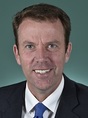
Dan Tehan Wannon, Liberal Party, Shadow Minister for Energy and Emissions Reduction
6:53 pm
I support what the previous member has said. There is just no justification for this—none whatsoever. It is hard to believe that the Albanese Labor government would want to do this to 1.5 million pensioners.
Tony Pasin Barker, Liberal Party, Shadow Minister Assisting for Fisheries and Forestry
Like veterans.
Dan Tehan Wannon, Liberal Party, Shadow Minister for Energy and Emissions Reduction
It is! It's sort of similar to taking $750 million off our veterans, who have served us so well. I wonder who they'll go after next—$750 million ripped out of our veterans, $1.5 million ripped from pensioners. Who else will they go after?
Rick Wilson O'Connor, Liberal Party
The NDIS—they'll go after disabled people.
Dan Tehan Wannon, Liberal Party, Shadow Minister for Energy and Emissions Reduction
Well, yes! It's just like—I don't know. Do you reckon it's the arrogance of the Prime Minister? It's—
Dan Tehan Wannon, Liberal Party, Shadow Minister for Energy and Emissions Reduction
It's the hubris of the Prime Minister. He just doesn't seem to care, and I think a few of his other ministers are a bit the same. It's like, 'Priorities? What are priorities? As long as I can have my $150 million presidential pre-COP conference, I'm alright. I don't care if the money comes out of 1.5 million pensioners' pockets.' It beggars belief. 'I don't care if $750 million comes out of veterans as long as I can keep doing what I want to be doing.'
We saw it today. The hubris from the Prime Minister was quite extraordinary. He got a question on the 600 workers in Whyalla who had lost their jobs. Would he front up and answer it? No—just flick it.
Tony Pasin Barker, Liberal Party, Shadow Minister Assisting for Fisheries and Forestry
The once proud Labor Party.
Dan Tehan Wannon, Liberal Party, Shadow Minister for Energy and Emissions Reduction
Yes, this is Labor. This is the Labor Party. They're meant to stick up for workers, and yet they'll do this.
I say to the 1.5 million pensioners who are going to be hit by this private health insurance change—I'm apologising to you from the Albanese Labor government. First of all, at the Expenditure Review Committee of cabinet, they would have said, 'Jeez, the budget's in a bit of trouble. We haven't been able to turn things around. We're heading towards a trillion dollars. We need money so we can keep our pet projects going. Who should we go after?' I don't know whether we'll hear it from any of the speakers on the other side; there don't seem to be many. But someone must have arced up and said, 'Let's go after the pensioners.'
Tony Pasin Barker, Liberal Party, Shadow Minister Assisting for Fisheries and Forestry
They vote Liberal!
Tony Pasin Barker, Liberal Party, Shadow Minister Assisting for Fisheries and Forestry
The next prime minister—the health minister?
Dan Tehan Wannon, Liberal Party, Shadow Minister for Energy and Emissions Reduction
Yes. Well, the health minister would have had to be there because he would have had to put the submission in. I'll tell you what; if I was thinking about being the next prime minister, I don't think I'd be wanting to say, 'I'm going to take,' what is it, $800-odd—
Tony Pasin Barker, Liberal Party, Shadow Minister Assisting for Fisheries and Forestry
For a single.
Dan Tehan Wannon, Liberal Party, Shadow Minister for Energy and Emissions Reduction
for a single—from pensioners. 'Here, I've got a good idea, Expenditure Review Committee. Let's take 850 bucks off pensioners.' I'm sure the Prime Minister would have sat there and thought, 'This is the bloke who thinks he's going to be the next prime minister,' and said, 'Yes, that's a good idea, Minister for Health; you do that,' thinking, 'Because that'll keep you at bay for a little while.'
Dan Tehan Wannon, Liberal Party, Shadow Minister for Energy and Emissions Reduction
Yes, the bus driver! 'You get hit by a bus; I think that might be the end of you.' And the Treasurer would have sat there and thought, 'I need my budget balanced. My opponent here, the minister for health'—
Dan Tehan Wannon, Liberal Party, Shadow Minister for Energy and Emissions Reduction
Yes. 'My competition is going to cop it, so I'll let that go.' I mean, seriously. I don't know who else is on the Expenditure Review Committee of cabinet, but, whoever was there, someone should have said something.
Then, of course, it would have gone to cabinet because cabinet would have had to give it the final tick. Do you reckon anyone would have stood up for pensioners in that cabinet? I don't know. I'm trying to think who would have said, 'What about the age pensioners who are doing it tough in a cost-of-living crisis?' Do you think someone would have done that? It doesn't seem like they did, sadly.
Can I say to all those pensioners in Australia, 1.5 million of them, I'm sorry for you. I'm sorry that the Albanese Labor government is doing this to you. But I give you a commitment. We will fight it all the way. The coalition think this is appalling public policy, and there are two reasons why we think it's appalling public policy. The first is they're hitting those who are doing it the hardest. They are hitting, and hitting hard, those who the cost-of-living crisis is really impacting. As I've said, for a single, it's about $800; for a double, it is more—it is over a thousand. Now, when you've seen your electricity bill go up by 40 per cent, when you've seen your gas bill go up by way over 20 per cent, when you've seen your insurance go through the roof, when you've seen a basket of groceries go through the roof, the last thing you need to see is your private health insurance rebate hit. But that is what is happening here. It's bad, because this isn't a cost-of-living relief measure. This is an adding to the cost-of-living measure. In a cost-of-living crisis, what's the Albanese Labor government's big brainwave? It's to add to the cost of living even more for 1.5 million pensioners.
Then there's the other bad public policy aspect of this. The public health system is stretched to near breaking point. People can't get in to get treatment, and the Albanese Labor government have been warned about this. Who have they been warned by? The Western Australian state premier, who's Labor; the Northern Territory leader, who is coalition; the South Australian premier, Labor; the Queensland premier, LNP; the New South Wales premier, Labor; the ACT leader, Labor; the Victorian premier, Labor; and the Tasmanian premier, Liberal. Every single state and territory leader across the board has said this policy is nuts. As a matter of fact, at the state and territory leaders meeting with the health minister every single one of them tore him a new one. They said this is madness. And what's the government's response? We're still here tonight and we're still debating this bill. You'd think they'd listen when every single one of them, one after another, lines up—
Tony Pasin Barker, Liberal Party, Shadow Minister Assisting for Fisheries and Forestry
No speakers here.
Dan Tehan Wannon, Liberal Party, Shadow Minister for Energy and Emissions Reduction
Oh, there are no speakers on their side. They're courageous as well, aren't they?
Every state and territory leader said: 'This isn't good. This isn't smart. This is bad. This is going to just cost-shift from your budget onto ours. This is madness.' Yet, do they listen to every single one of these state and territory leaders? No, they don't.
I hadn't realised this. Here's the speakers list for the House of Representatives. It says, 'Tuesday 15 September 2026, Private Health Insurance Amendment (Modernising the Private Health Insurance Rebate) Bill'—that's what they called it! Oh, this is 'modern' Australia, hitting 1.5 million pensioners in a cost-of-living crisis with $800 if you're a single and over $1,000 if you're a double! This is 'modernising' Australia. Well, I'll tell you what: I don't want to be a part of modern Australia under the Albanese Labor government. This is not modernising.
It's funny because I thought that all of them would be in here defending their 'modernising' of the private health insurance rebate. I thought they would all be in here defending this, because this is obviously really important. If you truly believe that you're modernising the private health insurance rebate, you'd be singing from the rafters about it.
I wonder how many of them have put out in their electorates that they're doing this. Do you reckon they've had direct mail-outs to over-65s saying, 'We're about to hit you with an $800 extra fee for your private health insurance and, if you're a couple, over $1,000'? Do you think they've done that? I wonder whether the member opposite, the member for Bruce, has let all his—
Tony Pasin Barker, Liberal Party, Shadow Minister Assisting for Fisheries and Forestry
He's a good communicator!
Dan Tehan Wannon, Liberal Party, Shadow Minister for Energy and Emissions Reduction
Oh, he is, just ask him. Do you reckon he's let all his constituents know? I don't think so, somehow. Even though this is all about modernising Australia, I've got a funny feeling that he would not have communicated with all his constituents about this. I wonder why! This list says it all. You're all embarrassed by this. You're all absolutely embarrassed about this. I get it. If I was ripping that money away from 1.5 million pensioners during a cost-of-living crisis, I'd be embarrassed as well. I'd be so embarrassed that I wouldn't even want to come to the chamber and speak. And the funny thing is—have a look—none of them are here to speak. Have a look at the one, two, three, four, five, six, seven, eight, nine, 10, 11, 12, 13, 14, 15, 16, 17, 18, 19, 20, 21 lining up to oppose this. Who's for it?
Tony Pasin Barker, Liberal Party, Shadow Minister Assisting for Fisheries and Forestry
Silence.
Dan Tehan Wannon, Liberal Party, Shadow Minister for Energy and Emissions Reduction
Silence. And yet this is modernising private health insurance. The great modern Labor Party—1.5 million pensioners. They're unbelievable! The funny thing about this was that they didn't even know what their policy had changed or what their modernising of Australia was going to do. Not only is this bad public policy, but no-one did the work. No-one actually thought about what this was going to do. The sad thing for the 1.5 million pensioners of Australia is that, not only are they going to be hit with this extra cost to their private health insurance; sadly, if they have to give their private health insurance up—which some of them will be forced to do, and the modelling says that—guess where they have to go, then, to get the treatment they need? They have to go to the public hospital system. And guess what every leader in the state and territory has said is going to happen? That's going to be stretched even further, and those poor pensioners won't be able to get the treatment that they need when they need it.
I hope all of you are really proud of this; I really do. I hope you all think that this is what you got into government for—to do this to pensioners. I hope tomorrow, when you walk back into this chamber, you all say, 'Oh, isn't this great how we're modernising Australia? We're ripping money out of pensioners' pockets.' When those poor pensioners have to give up their private health insurance, they're going to have to go to an even more stretched public health system because all you've done is cost shift from the federal government onto every state and territory. It's hard to believe how we got here. But, sadly, there is nothing about this Albanese Labor government now that I don't find appalling.
Tony Pasin Barker, Liberal Party, Shadow Minister Assisting for Fisheries and Forestry
7:08 pm
This is probably one of the most mean-spirited approaches to public policy that I've seen in my time in this House. Let's be clear. We heard from the member for Wannon. We're talking about 1.5 million older Australians, with a measure which will ultimately 'save', if we accept what the Minister for Health and Ageing says repeatedly during question time—be rediverted to other services but 'saved'—or, as I would like to say, cost those 1.5 million older Australians $3 billion.
Dan Tehan Wannon, Liberal Party, Shadow Minister for Energy and Emissions Reduction
$3 billion overall!
Tony Pasin Barker, Liberal Party, Shadow Minister Assisting for Fisheries and Forestry
$3 billion.
Dan Tehan Wannon, Liberal Party, Shadow Minister for Energy and Emissions Reduction
That's what they're ripping off pensioners.
Tony Pasin Barker, Liberal Party, Shadow Minister Assisting for Fisheries and Forestry
Correct—off the 1.5 million pensioners that this is slated to impact. So I'm not surprised that those opposite aren't clamouring to make contributions. Those opposite have a hypermajority. They could spend a lot of time in this place extolling the virtues of this particular provision and this Private Health Insurance Amendment (Modernising the Private Health Insurance Rebate) Bill 2026, but, instead, they're hunkered down in their suites, very keen for this debate to be over and over quickly.
The bad news for those opposite, particularly those who are perhaps standing on the green carpet of the House of Representatives for the first time, in this their first term, is that, whilst this debate might soon end in this place, I can assure those opposite that we will spend a good part of the next 12 to 16 months telling older Australians about this change. What's worse for those opposite is that at some point over the next 12 months these pensioners will be introduced to this change—because it doesn't come into effect, of course, until next year. Not only will they find themselves out of pocket an additional $800 for a single and $1,600 for a couple should they wish to continue their private health insurance, which we'll talk about in a minute; they'll also be dealing with another round of cost increases from the private health insurers. And, courtesy of those opposite and their inability to manage the economy and hold on to the levers of expenditure, that, of course, will go up by a factor that's not insignificant because, as you'd be well aware, Deputy Speaker Scrymgour, inflation is out of control.
The member for Wannon put it well, because this would be mean spirited enough if all it was was an exercise in cost shifting from the private individual to the state, in the sense that, if pensioners are forced into the public health system, then that bill is picked up by state governments. But the problem here is it's not just a simple transfer, because these public health systems are under incredible pressure. The truth is that, in electorates like the one the member for Wannon so well represents and the one I represent as the member for Barker, our constituents disproportionately, unfortunately, do not have the survivability rates from serious illness that are enjoyed by people who live in metropolitan settings.
Let me paint you a picture. In my electorate, one takes out private health insurance not because one will get access to private hospital services in my regional electorate, because there aren't any, but simply so that when you make the decision, or are required or forced, to travel to Adelaide, you might be able to be in a private hospital—get there a little earlier, be serviced more quickly—not be on public health waiting lists.
For many people in my electorate, the choice between private health insurance and no private health insurance is the choice between life and death. You might say, 'The member for Barker is catastrophising,' but I'm not, because, unlike many, when individuals in my electorate are forced to travel to metropolitan settings for health treatment, they need to meet their own costs associated with these things, and, too many times, whether it comes to radiation therapy or other forms of treatment, they decide, in effect, that they're not going to have that treatment. That's why people who are diagnosed with cancer in my electorate die much sooner than those metropolitan people, sadly. It's a shocking statistic in a First World country like ours, but it is real.
Rather than wax lyrical about the pressures that are on the public health system or perhaps refer to the South Australian Minister for Health and Wellbeing, Blair Boyer, who called on this government, and indeed his colleagues in the left of the Labor Party from South Australia, to reverse this decision—rather than talk about those things, I thought I might, as the radio jocks refer to it, open the lines up. So what I've done, unfiltered, and perhaps unlike those opposite, is I have written to everyone in my electorate above the age of 65, all 23,800 people, to tell them about this situation—this impending challenge to the maintenance of their private health insurance.
What did they say in response? I thought I might share that with the House. It might be of interest. Grant responds: 'Hi there, Tony. Stay with it. My wife and myself will be hit if it goes through. Several of our elderly neighbours are thinking of ditching health cover and going on the public system. We've had private cover for as long as I've been married, and we got married in 1983.' This is no small thing—1983. They maintained private health insurance during that period and, I expect, enjoyed reasonably good health. But now, when Grant and his good wife need it the most, those opposite have decided to make it unattainable.
Valma writes: 'My only income is the age pension. I'm almost 88 and pretty fit, but I think I'm going to have to drop my private health cover.' The member for Wannon talks about who around the Expenditure Review Committee, who around cabinet, made these decisions. I'm not as generous as the member for Wannon. I think the member for Wannon is too kind when he says that people sitting around that table, perhaps in an act of negligence or oversight, didn't think of the pensioners of Australia. I think individuals opposite, sitting around those important committee tables, are a bit more deliberate about how they go about these things.
Dan Tehan Wannon, Liberal Party, Shadow Minister for Energy and Emissions Reduction
Do you think they deliberately targeted the pensioners?
Tony Pasin Barker, Liberal Party, Shadow Minister Assisting for Fisheries and Forestry
I think what those opposite do is participate in the politics of punishment. That means they sit around and consider which cohort of Australians don't vote for them. How else could you explain why they would seek to recover $750 million from Australian veterans other than perhaps the suggestion that people who have served this nation in uniform disproportionately vote for centre-right candidates, the Liberal and National parties? Why else would you look to save $3 billion—billion with a 'b'—from the 1.5 million pensioners other than if perhaps you had coldly calculated that, disproportionately, those 1.5 million Australians vote for centre-right political parties? You can see it in the polling. You don't have to take my word for it. Over a long period of time, older Australians have tended to lean Right.
Dan Tehan Wannon, Liberal Party, Shadow Minister for Energy and Emissions Reduction
But I thought the Prime Minister wanted to govern for all Australians!
Tony Pasin Barker, Liberal Party, Shadow Minister Assisting for Fisheries and Forestry
I said in my maiden speech, Dan, that, between the saying and the doing, there's the ocean between. Often, I think, the Prime Minister says one thing but does the other.
Dan Tehan Wannon, Liberal Party, Shadow Minister for Energy and Emissions Reduction
No!
Tony Pasin Barker, Liberal Party, Shadow Minister Assisting for Fisheries and Forestry
That's true. But let us get back to these responses. Julie says: 'Absolutely disgusting, and most people don't even know about it. I've lost my husband, so, for one, will not be able to afford private health insurance. We've had private health insurance for nearly 40 years, and it's been a real struggle financially to continue over the last couple of years. This kind of legislation will force a whole lot more people into the public health system, which is clearly way overstretched. It doesn't make much sense.' Julie, I wish you had been elected to a seat in this place, perhaps over on the other side, or had been a member of the ERC or cabinet, because that kind of insight might have been helpful.
I'll continue. Ian says: 'This is madness. A lot of people over 65 will struggle to pay the extra premiums if it takes effect and put even more pressure on the public hospital system, which in the end will mean more money will have to be spent on the health outcomes for people that really need care. It'll be diminished, and there'll be less resources to go around again.' Ian gets it.
Chris says: 'Thank you for this info. Life under federal Labor is Albo-not-so-easy! This guy'—presumably he means the Prime Minister; I'll use his correct title—'surely will go down in history as Australia's worst prime minister. He's so far out of touch. Old-school Labor pollies must be turning in their graves.' I think what Chris is trying to say is the once-proud Labor Party has turned on older Australians.
'Hi Tony. Thank you so much for trying to help pensioners. It means so much to us. Keep up the fight.' Wayne's contribution—'Hi Tony. Signing a petition, which I've just done, I feel is a waste. The socialists control the system and don't like those of us who have operated outside their control for many years to accumulate funds to pay for private health cover, which the socialists want to abolish so that they can control us when we need health care. This won't change until socialist supporters realise the error of their ways and return the government that the voters lost big time.' Glenda said, 'Thank you for your concern about the unbelievable issue confronting us as pensioners who just survive fortnight to fortnight.' I don't think Glenda is someone who's well heeled. She's talking about living fortnight to fortnight. 'How would the Prime Minister manage for 14 days on what we get and the bills we have to pay? No idea, I guess.'
I'm reading some of these to make the point that Australians get this. Australians understand how mean-spirited this approach is. Australians understand this is a product of the politics of punishment. I just wonder whether those opposite get it. Unlike the member for Wannon, I'm encouraged by the fact that the Labor Party and members of the backbench are either embarrassed or unwilling to make contributions to this bill. That tells me that not the current alumni, the current leadership cohort that luxuriate on the frontbench during question time and occupy the ministerial suites, but perhaps those that sit behind them are still devotees of a Labor Party that cares about older Australians. Perhaps today, on world democracy day, those people who are too embarrassed to come in here and defend the position that's been determined by others, the exalted few that sit on that frontbench, understand that their responsibility in being in government is not just to govern for those Australians that voted for them but rather to govern for all Australians, including those that perhaps the pollsters tell us disproportionately don't vote for them.
I might end with this, a final contribution from Malcolm, living in the Riverland. 'I often wonder about the intelligence of those that voted for those opposite. Not many of the federal Labor politicians that I can see have ever held a real job in their lives. In my instance, I've wanted to be completely independent of government, and I've had private health insurance for 60 years.' Those opposite are driving Malcolm and others like him out of private health insurance. (Time expired)

Melissa Price Durack, Liberal Party
7:23 pm
I rise to speak on the Private Health Insurance Amendment (Modernising the Private Health Insurance Rebate) Bill 2026 and state my absolute opposition to the changes from the outset. These changes will have very real consequences for senior Australians, particularly for those living on fixed incomes. At the centre of this is a debate about choice, and it is a debate about fairness for 1.5 million Australians. The issue is whether Australians who have worked hard throughout their lives, paid their taxes, planned for retirement, done what they were told to do and taken out private health insurance should be punished now for doing so. It is also a test of whether the government understands the pressure that senior regional Western Australians are already facing with the rising cost of living.
The government's cruel decision to strip back the private health insurance rebate will leave many older regional Western Australians facing extremely difficult choices. They will have to decide whether to stop paying for essentials such as heating, downgrade their private health cover or drop it altogether. This discussion is not an abstract policy debate. If those opposite have their way and these changes pass, there will be thousands of regional Western Australians choosing between maintaining their health insurance and paying for other necessities of life.
Beyond this, there is a consequence that every Australian and the government will feel. If Australians over the age of 65 years drop their private health insurance, there will be greater pressure placed on our public health system. The last thing we want in regional Australia is to push older Australians onto the public health queues. Whether you have private health cover or not, you will also be paying for this cash grab from those opposite. The health minister has said that there is 'no good policy reason' to give over-65s a higher tax rebate on their private health cover. What? Minister, really? Private health insurance plays an important role in helping take the pressure off our public hospitals and health services. As people get older, they are more likely to require health care. That is one of the reasons that seniors receive a higher rebate on their private health—to encourage them to continue to pay for their private health cover. This isn't about giving seniors some special privilege; it recognises the reality that the need for health care increases with age. It doesn't decrease. And, if we maintain a strong private health system, this helps to take pressure off our public system. This is a good policy reason for all Australians.
National Seniors Australia has found that as many as 45 per cent of people whose sole source of income is the age pension hold private health insurance. That shows just the sort of demographic that is being targeted by this government's changes. They're not wealthy Australians with enormous disposable incomes, off to Europe every year, living large; they are pensioners who have made the decision to prioritise their health and maintain their private cover.
I, like many of those on this side, have heard from numerous people who have been paying their cover for decades. They were told to invest in it, and now they would just feel like the rug is being pulled out from underneath them. Former Australian Medical Association president Dr Michael Gannon has described those people as 'individuals who have decided to put their health above the holidays and their leisure', and I think there are literally hundreds of thousands of Australians out there who have done that. That observation tells us everything: we should not be treating this group of Australians as an easy source of additional government revenue. People who have made responsible decisions about their health should not be punished for doing so.
This issue matters deeply to people across Durack. Following the budget in May, I created a survey which was sent directly to all those 65 years and over in Durack asking if they could or could not afford the extra costs and if the changes to the rebate would force them to cancel their private health cover. I want to firstly thank all of those who took the time to complete the survey and return it to my office. The response was significant. At the last count, we had received 2,355 responses from Durack constituents. Out of the responses, there were 2,312 who said they cannot afford the extra and either will or may cancel their private health cover. Just 43 told me they can afford to pay extra for their health insurance.
With the time remaining, I would like to give a sample of some of the comments that people made. Stephen, aged 69, from Warrnambool, said: 'Private health costs increase every year, and this alone is difficult to afford. Every year we have to assess if we can afford to keep paying for private health.' Norman, aged 79, from Moora, said, 'Get rid of Labor!' Thomas, aged 94, from Geraldton, said, 'My bank balance goes south very fast.' And John Anderson, aged 69, from Drummond, said: 'The government's mishandling of the economy and the NDIS means they are looking at ways to save money and raise more taxes with their capital gains changes. As usual, Labor has stuffed up again.' Let's finish on Annette, 72 years, from West End, Geraldton. She said: 'Absolute disgrace that over-65s are being penalised with reduced rebates—generally, over-65s have less income from employment, and this reduces again as they age, as opposed to younger private health participants, who have greater access to employment opportunities.'
I thank you all for taking the time to complete the survey—and it's not too late to complete the survey. We need to send a message to this government that their mean and nasty changes to people over the age of 65 have not gone unnoticed, and this government will be punished.
Debate interrupted.