House debates Motions
Minister for Veterans' Affairs
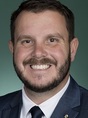
Phillip Thompson Herbert, Liberal National Party, Shadow Minister for Defence Industry
3:15 pm
I move:
That so much of the standing and sessional orders be suspended as would prevent the Member for Herbert from moving the following motion immediately—That this House:
(1) notes that the Minister for Veterans' Affairs and Defence Personnel has, through his own cruel and reckless actions:
(a) undermined the safety and welfare of our veterans;
(b) refused to meet with ex-service organisations concerning the Government's cruel cuts to allied health services;
(c) disgraced himself by failing to uphold the Australian Defence Force Veterans' Covenant Oath; and
(d) failed to demonstrate due respect to veterans and their families who have served our country selflessly; and
(2) therefore, has no confidence in the Minister for Veterans' Affairs and Defence Personnel.
Nothing in this place is more abhorrent than the actions of the Minister for Veterans' Affairs. This prime minister should demand that the veterans' affairs minister sit in here now and answer for his failings instead of walking off, on his phone, with no care in the world. I can tell you, Mr Speaker, that veterans have lost faith in this veterans' affairs minister, and this prime minister should sack him today. He is out of his depth, he is nowhere to be seen, he refuses to meet those brave men and women who serve this nation and now he can't even stay in here and answer for his actions. He is a disgrace.
As I was getting up to read this suspension motion, an important moment, I saw the Leader of the House whoosh everyone away, telling everyone to get out, leave, don't stay—what a disgraceful action! We're talking about veterans' affairs. We're talking about those who serve this nation. But they all run off! There's no minister at the table—no care in the world. No-one cares. This is absolutely disgraceful.
The veterans' covenant is:
We, the people of Australia, respect and give thanks to all who have served in our defence force and their families.
We acknowledge the unique nature of military service and the sacrifice demanded of all who commit to defend our nation.
We undertake to preserve the memory and deeds of all who have served and promise to welcome, embrace and support all military veterans as respected and valued members of our community.
For what they have done, this we will do.
It is not just a piece of paper; it is a commitment. It is a promise that we give, and it is a bond that we have with our veteran community. And this minister for veterans' affairs has failed that. He has failed the veteran community and their families. He has betrayed those who have served, and he is not fit to hold office.
The Prime Minister lacks the gumption to take action. He can't stand up and sack a hopeless minister who refuses to meet those who have been wounded in action, who've been hurt in service—those who vote for him and those who don't. People's political persuasion shouldn't matter. This minister is failing all. As with how this Labor government normally goes, he'll probably fall up into another position.
We have veterans today who are reaching out to members across the aisle. I've had Labor members come and see me and say how disgraceful the actions of this minister have been. This is not good enough anymore.
We haven't even got through the week and this minister can't answer a question and can't meet with a bunch of veterans—because he has to go to Government House! This minister is not fit to hold the position of veterans' affairs minister—the person who's supposed to have their back, the person who's supposed to stand up and fight for them and the person who is supposed to be their person in government and make sure that they and their families are supported. Instead, the veterans' affairs minister would rather go drink champagne at Government House and can't meet with the families. I'm baffled. I just can't understand how a minister who has such an important care role—this is a care role—couldn't care less and couldn't meet with those that have served.
Now, some of those veterans who I met with have been serving for more than 20-odd years. We had sexual assault survivors. We had representatives from across the country—those whose family members have died by suicide, a mother who held a photo of her son who died by suicide. And it took this opposition, it took members from the crossbench in the other place, to stand up and demand that this minister take a meeting. When he did, he walked in, couldn't shake a hand, didn't look the veterans in the eye, sat down, arms crossed, leant back and said, 'What do you want?' That is not good enough. And then he complained and told these veterans about how he should be at Government House—for the address-in-reply, mind you. This is a ceremonial part of the parliament. I can tell you what. If a bunch of veterans came and saw a veterans' affairs minister in the coalition and said, 'On Saturday, we want to meet,' if that minister didn't meet with them on that Saturday and stay back here in Canberra, I would say they're not fit to hold office. This minister had the opportunity during the parliament—had weeks of notice—and couldn't do it.
When you're thinking and talking about what were the substantive issue here is, it's about healthcare. It's about supporting those who need it. Veterans have different injuries, whether it's a shoulder, whether it's a knee, whether it's from combat or whether it's from peacetime. They have post-traumatic stress disorder. It gets tough. It gets a bit much. You feel everything closing in, and the light that you're looking at is where your treatment is. Then you reach a cap of $5,000. Your treatment goes away and so does that light. As that light goes away, what does the veteran do? I've been told that it will just somehow roll over and they'll get support. Well, that's not what someone from the Department of Veterans' Affairs told me. They told me that they would have to make a phone call and wait for about four hours on hold, and then several months later they may get approved. But what happens for those months? I can tell you what could happen. It could be me and my friends attending another funeral. This is not good enough.
This government, this Labor government, made a commitment, and they have failed it. They have gone back on it, and all the minister keeps trying to do is pivot step and say we're talking about access or funding to allied health professionals, but that's not what we're talking about. We're talking about access. We're talking about a $5,000 cap that's going to leave our people—my people—worse off. I take the phone calls at 2 am. I'm the one in the morning, like other veterans around the country, talking to mates who aren't doing too well. The minister's not. The Prime Minister's not either. At the end of this parliament sitting, they'll both fly home to their respective areas. They won't give this another thought. I'll be receiving the phone calls. The Prime Minister and the Minister for Veterans' Affairs will leave this parliament at the end of the week and go home with not a care or thought in the world, but our veterans and their families will be worried. The family members will be thinking: 'What happens next? Why can't we get rid of this cut? Why is there a $5,000 cap on allied health for my loved one?' The only action that we want to see today is two things from this Prime Minister: sack the Minister for Veterans' Affairs and abolish this $5,000 cap.
This minister is not up to standard. This minister is just not capable. I'm sure the Minister for Veterans' Affairs is a nice person, but he's not capable of holding this portfolio. People's lives are at stake here. This matters. Instead of taking it seriously, the Leader of the House told everyone to leave this debate. This is an important part of history. We need the Minister for Veterans' Affairs to do their job, and, because they can't, because this minister isn't competent enough, I believe and the coalition believes this Prime Minister only has one thing left to do today, and that is to sack that minister. Get him out. Get someone in who cares. Get a minister who wants to put veterans first—someone who's not more worried about going to Government House, someone who puts veterans and the families of those who have served this nation at the forefront of their mind. And do policy that benefits them, not cuts that are trying to get a saving somewhere. It's simply not good enough.
On behalf of the veterans who have reached out to me, I want to say: I'm sorry; this minister is incompetent, and he shouldn't have a job.

Michael McCormack Riverina, National Party
3:25 pm
I second the motion. And it is with a heavy heart, because the once-great Labor Party once would have actually been here for a suspension of standing and sessional orders. But do you know what this Labor Party will do—this weak, mean spirited Labor Party? They'll shut down this debate as soon as I finish speaking, in 4½ minutes time. What do you think previous Labor veterans' affairs ministers—such as Warren Snowdon, Con Sciacca and John Faulkner—would have done? They would have been in here, sitting at the chair, and champing at the bit to defend their position, to defend their honour, to defend veterans—because they stood up for veterans. They stood up for what is right. They stood up for those men and women who put a military uniform on when this parliament told them to go and fight for this country, to deploy to peacekeeping missions. And when those people came back, those ministers defended their rights; they stood up for them.
Yet this government turns its back on those men and women who have worn a military uniform, who have done the right thing by this country, who have served, who have sacrificed and whose memories we should uphold, whose service we should respect. And respect is earned. This minister has not earned the respect of veterans, who have bombarded my office with complaints. They feel let down. They feel disappointed. I bet that those three Labor veterans' affairs ministers I mentioned never got those calls, because they did the right thing. They knew that when veterans needed the help, the care, the support, the wraparound services and the love it was there, because this is generally a bipartisan thing. Generally, the House of Representatives, members of parliament, stand alongside our veterans and are proud to do so and give them the support and the backing they need.
Not all our veterans are broken. Not all our veterans need support. But those who do need it need a minister who cares. They need a minister who stands up in the Expenditure Review Committee and in cabinet—if he were in cabinet, but when he's seconded to cabinet—to say: 'I'm not going to stand for a $5,000 cap on allied health services. I'm not going to tolerate it when the Prime Minister or indeed the Treasury officials say we can make a saving here because there is a saving.' When there's a saving, you know there are going to be cuts. You know there are going to be fewer services available for our veterans—less physiotherapy, less physical help, less psychology.
Our veterans need those services, and they feel so let down. And all they asked for, those veterans who came here on Monday, was 15 to 20 minutes, and the minister had to be dragged kicking and screaming to a meeting with them. Then, when they got that meeting, he rolled his eyes, he folded his arms, he threw his hands back; he wasn't interested at all. All he was interested in was the pate and the bubbly out at Yarralumla; that's all he cared about—and he told them. I mean, it's all well and good to think that, but don't tell those veterans that you just want to get out to Government House. Don't make them feel less worthy.
And they are worthy. I had those Veterans' Voices in my office, and they were outstanding people. They were fine people, and all they wanted was help. The opposition leader had them, too, and the Leader of the Nationals. Many members met them. Labor members met them; they gave them the time. But would the minister give them the time? Finally he did. And when he gave them the time, he showed them contempt. This is simply not good enough.
The Prime Minister needs to do two things today. First of all, he has to scrap this insidious cap—this dreadful insult to our veterans. He needs to get rid of it. He could do it easily. He could find savings elsewhere in the budget. Second, he needs to get rid of the minister. He needs to replace the minister with someone who cares—someone who won't show contempt for our veterans. Labor should also take this suspension motion on: Speak to it. Defend your minister. If he's worth defending, then speak to this motion before the House on why standing and sessional orders need to be suspended. Man up!

Madeleine King Brand, Australian Labor Party, Minister for Northern Australia
3:30 pm
I move:
That the debate be adjourned.