
House debates Matters of Public Importance
Veterans
Milton Dick Speaker
3:38 pm
I have received a letter from the honourable member for Riverina proposing that a definite matter of public importance be submitted to the House for discussion today, namely:
The Government's neglect of veterans and their needs.
I call upon the honourable members who approve of the proposed discussion to rise in their places.
More than the number of members required by the standing orders having risen in their places—

Michael McCormack Riverina, National Party
3:39 pm
This is volume 3 of the final report of the Royal Commission into Defence and Veteran Suicide, entitled Military sexual violence, unacceptable behaviour and military justice. It runs to 600 or so pages. There are seven volumes of a similar size. There were 122 recommendations from that royal commission. Not one of those recommendations said that there should be a cap on allied health services for our veterans—not a single one. And, yet, in this year's budget, brought down in May right at that spot by the Treasurer, there was a cap introduced for our veterans, for those brave men and women who had the courage, wherewithal, tenacity and determination to put on a uniform and go and represent us in the Australian Army, the Royal Australian Air Force and the Royal Australian Navy, something that our nation asked them to do to help our nation in its time of need, to serve our nation, to protect our people. That is the first order of government—to protect its people. This government has neglected its duty to protect the people who protected us. Those veterans had our backs when we needed them most and, when they need us most, this government has turned its back on them.
This government has introduced an unnecessary and unjust $5,000 cap on the allied health services that care for our veterans, for those who've served our nation, for those whose service and sacrifice we should uphold. When we say 'Lest we forget' that should carry meaning. That should carry worth. It shouldn't be just on 25 April or 11 November that we say, 'Lest we forget'; we should say it every day. We should say it in our hearts, we should say it in our minds and we should say it in our actions.
But our veterans have been let down. They have told us, this week particularly, how badly they feel they have been let down. A group of those veterans came to parliament on Monday seeking a meeting, seeking to be heard—not much given their service and sacrifice. It's little to ask—just a favour. They asked the minister if they could have a meeting. Initially, he said no. He then, after pressure, had a meeting with them, and they felt let down in that meeting because of the minister's demeanour. They felt that the minister showed reckless disregard in his body language in that meeting. That is a shame to hear, Minister, because I felt you were better than that. They feel let down because they came here to ask questions, to ask why the $5,000 allied health cap had been introduced. I know the minister has said on many occasions since the budget, defending this unjust cap, that there will be consultation and that veterans groups will be asked. Well, here was your opportunity, Minister, to have some consultation and to get the feedback from veterans. These were decorated veterans who have served tri-services, veterans who just wanted to be heard. They didn't ask for much. They didn't ask for you to roll your eyes, fold your arms or throw your hands back in the air. They just wanted to be heard.
When, Minister, you talk about consultation, why wasn't the consultation on the allied healthcare cap done prior to the May budget? That is a fair and genuine question. Why wasn't the consultation with stakeholder groups widespread? Why weren't veteran groups consulted? There are many of them. Why weren't the widows guild and so many others asked? Why weren't they consulted?
Then we have veteran mums, such as Julie-Ann Finney. She's the mother of a veteran. I've met Julie-Ann on many, many occasions, and I know you have too, Minister. She feels very badly let down by the lack of consultation and by the lack of respect and care. It comes back to respect. She has lost everything. I don't know what it's like to be in the shoes of a mum's who's lost their son. No parent should ever lose a son, let alone in those circumstances. That is why we had a royal commission. That is why the royal commission went right around this wide brown land, consulting, listening and making recommendations, yet, out of 122 recommendations, not one of them said there should have been an allied health cap.
Interestingly, on the front page of the actual royal commission volumes, there is a sculpture, and it is For Every Drop Shed in Anguish. The dedication on the plaque of that sculpture says that it was opened by the Minister for Veterans' Affairs, but he wasn't there. I don't know whether he insisted on his name being on the plaque, but the member for Kingsford Smith opened that particular sculpture. Again, you might shake your head, Minister—and that's what you did to the veterans the other day, and that's the issue.
That's the problem. Sometimes, when you don't like the truth—sometimes, when a minister doesn't like what he or she hears—you just have to cop it. I know. I've been in meetings where it hasn't been that nice, where I haven't liked what I've heard. But you've got to listen. And we're not just talking about your regular stakeholder groups. We're not just talking about your constituents who might come in with a grievance. We're talking about veterans. We're talking about people who are broken, people who have mental health, anguish and anxiety.
We've already heard from members of that group who have claimed that four people—four veterans, four wonderful heroes of this nation—have taken their own lives because of the anxiety brought about by the allied health cap, the $5,000 cap on veterans. They've already taken their lives. If that doesn't fill us with dread about what might come when the policy actually comes into play next year, then I don't know what will and we're in the wrong caper.
Minister, your job is to help, protect and serve those who served us. It's not to be served. The minister's answers in question time left a lot to be desired, because he was blaming what happened in the past. He was blaming the department. Sometimes you have to take responsibility for your own actions. Sometimes you have to fess up. Sometimes you have to know that you've done the wrong thing. And sometimes, when you are a minister and you are going into those big roundtable meetings where the money is being issued prior to a budget, you have to defend and you have to yell and you have to bang on the table and say, 'I'm not going to cop a cut to veterans. I'm not going to take this.'
Prime Minister, do you know what this is going to mean to our veteran community? Never mind the politics. People have to come before politics, and veterans have to come first, and our veterans have been let down. Our veterans feel let down, and they feel let down by the government. They feel let down by this minister and they feel let down by the nation that they served, that they put on the uniform for, that they went out and, in some cases, gave their lives for—their brothers, in the case of one of these members who gave his life. It's just simply not good enough, because our veterans deserve better.
If we've got one job to do in this place, it's to help our veterans to get back into civilian life and to give them every care, support, love and wraparound service they need. It's not to say to them, 'Your service is now going to be so limited that your access to health care is going to be $5,000 and you'll have to go back every time.' The minister will no doubt come to the dispatch box and explain away in talking point form exactly why he thinks the allied health cap is necessary. But it's not necessary, and don't take my word for it, and certainly don't take the minister's word for it. Take the veterans' word, because they're the ones who matter, and they're the ones we should be serving, not ourselves, Minister.
Matt Keogh Burt, Australian Labor Party, Minister for Veterans’ Affairs
3:49 pm
I think everybody in this parliament accepts the very real obligation that sits upon all of us as members and on any government to live up to the solemn obligation to make sure that those who serve our nation in our uniform are properly looked after during their service and after their service and that the families they that support them are also properly looked after.
When I became the Minister for Veterans' Affairs and Defence Personnel, the first people that I contacted were some of the mothers who had endured the hellish tragedy of having their children who had served in our Defence force take their own lives. I'll never properly understand what that would feel like, but I did understand the importance of the campaign that they had run to ensure that there was a Royal Commission into Defence and Veteran Suicide. I wanted them to know that I took that very seriously and that I would continue to engage with them in relation to the royal commission as it was being undertaken and to make sure that we lived up to what they were campaigning for in implementing recommendations from that royal commission. I also then set about making sure that I was regularly engaging with our serving personnel, our veterans and their families, not just at the senior level, not just in national organisations and peak bodies and generals and admirals but the vast majority who have served and are still serving.
At the first base that I visited I made sure that I got to have an informal engagement with our enlisted Army members. We had a barbecue, and I was really touched by one of the Army personnel there who had taken it upon himself to go around all his mates and bring up a list of their grievances and concerns. You'd make a good shop steward. I get why he did it, because no-one necessarily wanted to come and front the minister with 'these are all of my things'. But I was really glad that he did it because the purpose of the visit was to be able to talk to our personnel and understand their gripes on the ground. What were the things that were seeing them leave the Defence Force? What were the things that were causing them harm? What were the things that we could do better?
I've continued to do that in my visits around the country, visiting subbranches of RSLs, Vietnam Veterans Association, new younger ex-service organisations representing our contemporary veterans, service providers and advocates—meeting people where they are so they can share with me their story so that I can build what it is that we need to be doing to make things better for them. That's an obligation that I mentioned before. That is a national obligation.
The reality is service has touched all parts of our country. One of the things that I really like about the local war memorial in Armidale, a town that really grew because of its brickworks, is that the war memorial is made of bricks. It lists the names of those who passed away, who made the ultimate sacrifice in World War I. When you look at those names and at those last names, they're prominent families of the district, but they're also the names that lakes and parks and streets are all named after. That reflects the impact of that conflict has had across our country for over a century where real families were impacted by service, not just by losing a loved one, whether it was a son or a daughter or a father or mother or sister or brother, but the flow-on effect that that can have throughout a community.
It's engaging with those stories that has certainly made me even more determined to make sure that our government improves the story for our veteran community and for our serving personnel. It's why, when I became minister, one of the first things that I did at this dispatch box was say sorry to our defence members and our serving personnel and their families for where things hadn't worked, because the first step is acknowledging those failures. It's why, after being sworn in in June and receiving an interim report from the royal commission in August, we provided the government's response in September. We moved quickly, making sure that we were delivering additional funding to DVA—it is now the best funded it has been in three decades—so it could employ the additional people to make sure we got through that claims backlog of nearly 42,000 claims of veterans that had not even been looked at by someone in the department.
Since that time, we have seen claims move quicker. And we're seeing more claims come into the system. During the financial year before last, nearly double the number of determinations were made than in 2022. The financial year just closed saw an increase of nearly 20 per cent, and there is still more work to do. The result of that has meant that the funding, the money going out to support our veteran community with health services, support services, rehabilitation, treatment and compensation has increased by 50 per cent. Yet there is still more to do. That's why we undertook the really important and complex work of making sure we fixed up the veterans entitlement system through the VETS act, moving to a single system so that, for veterans and their families, it would be clearer what they are entitled to, easier to access those support services and quicker to have their claims processed, delivering better overall service and support to our veteran community and their families.
It's why we've delivered, in the areas of Australia that have got the highest concentration of our veteran community, veteran and family hubs so people could have coordinated access to care. It's why we delivered, for the first time in decades, funding specifically for housing and wraparound support services to support our veteran community that were experiencing homelessness. Of course, we also invested in a veteran employment program. And I find it so wonderful when businesses come up to me and say, 'How can I employ a veteran?' because they recognise the value of having veterans working in their businesses.
It's why we did such swift work in delivering our government's response to the final report of the royal commission. That wasn't the only report of the royal commission. Its second report was about the lived experience of those that came and gave evidence to the royal commission. It is truly tragic reading. People should not have had to experience the things that those people experienced. We are so grateful that they shared those stories with the royal commission. Frankly, in parts, it makes you really angry at some of the things those people and their family members had to put up with—and they should not have had to.
The royal commission handed down that final report in September 2024. In December 2024, we provided the government's response—a pathway forward on over 100 of the recommendations and commitment to work through the remaining recommendations. By the end of last year, we had implemented a quarter of those recommendations, and we're on track for two-thirds to be implemented by the end of this year. That included delivering what the royal commission itself said was its most important recommendation: the Defence and Veterans' Service Commission, which has been up and running since September last year, providing oversight on how government goes about implementing those recommendations. It's already doing its work.
We've also made a significant change by delivering the Veteran and Family Wellbeing Agency. The agency is tasked with those broader wellbeing supports. It's not just about processing claims through DVA, though incredibly important that is, but making sure that people who need assistance in accessing employment services, education services or homelessness services—the range of different supports—are able to do that. There's a place for them to go to get that assistance. The agency is already doing that work, and it's great to see that it is delivering.
I've never said that what government has done is closed and we don't need to do any more. We are working at pace to deliver the recommendations of the royal commission so that we can make the real change that our veteran community need and deserve so that they will have better access to services and support that our country owes them, because that's what they deserve as part of our obligation to our serving men and women.
Phillip Thompson Herbert, Liberal National Party, Shadow Minister for Defence Industry
To all those who continue to serve this nation in uniform, our veterans and their families: I note that the freedoms that we have today are on the back of hard-fought battles and wars and of sacrifices that you have made, and, today, I want to say I'm sorry. I'm sorry that you've been let down. I'm sorry that the government has placed this $5,000 cap on your allied health. This isn't about political partisanship; this is about a government that has let you down.
Veterans from around the country have reached out to many of us in this place. They have lost faith in the veterans' affairs minister, and I have too. His position is untenable. When you lose the faith of those that you're supposed to support and when you refuse to meet with those brave men and women who have served this nation, then you have lost the support of all veterans from around the country—veterans not just in Townsville and not just in Tassie but even in the Northern Territory, in Palmerston.
Veteran Shane Pascoe-Bell has a long list of mental and physical injuries dating back to his service with the 3rd Battalion, Royal Australian Regiment, which was a parachute infantry battalion in 1999 in East Timor, where he served. He said:
When you are parachuting, you are hitting the ground at 7 metres a second with 50-plus kilos of equipment.
I've just had surgery on my knee, I've got a plate in my neck, and I have to have a few more artificial disks put into my lower back—the workload just eventually broke me down.
I am already asking myself whether I am going to have to go without physio for a couple of months, or not see the counsellor for a couple of months.
You start to weigh up what part of you, health-wise, is the most important, so that's driving up anxiety among everyone at the moment.
Veterans shouldn't have to ration their medical treatment. Veterans shouldn't have to be picking whether it's mental health support or whether it's physio. It's just not what our bravest—those we sent into war, into peacekeeping and into humanitarian disasters—should have to be worried about. This veteran went on to say:
This is just another kick in the guts where veterans will potentially be in a worse-off situation than they would have been before the Royal Commission …
Like, today I went and had my hearing aids maintained and I had a psych appointment; I have an osteopath appointment once a week, so what do I drop off?
Just my physiology once a week would use 80 per cent of that $5,000.
I won't get through it all, but I received a message. It says:
I am a survivor of Military Sexual Trauma.
I required two inpatient psychiatric admissions.
In the first 12 months following my discharge, well over $10,000 was spent on my mental health treatment alone.
That was not excessive treatment.
That was necessary treatment.
Military Sexual Trauma is a whole-of-body injury.
It can affect psychological and physical health, the nervous system, relationships, employment, trust, identity and the ability to function long after a person leaves Defence.
I am angry and in disbelief …
These are the types of messages that I receive nearly every day from heartbroken and distressed veterans and family members who, at this dispatch box just now, still did not get an answer from the Minister for Veterans' Affairs.
We moved a suspension motion; the minister could have addressed the parliament. The minister just had 10 minutes to talk on this MPI but didn't talk about the substance of what people are nervous and scared about. Veterans around the country have lost faith in this minister and his ability to do his job, and I have too.
The Prime Minister needs to be putting veterans and their families first today. He needs to scrap this $5,000 cap on allied health, and he needs to sack the Minister for Veterans' Affairs. He must listen to those that he may, sometime, have to send to war. We must listen to our veterans; our veterans want Minister Matt Keogh gone.

Gordon Reid Robertson, Australian Labor Party
4:04 pm
Before anything else, I want to say something that should never need qualification or explanation. To every Australian who has worn the uniform of this nation: Thank you. Thank you for your service, thank you for the sacrifices that you and your families have made, and thank you for accepting a responsibility that very few of us will ever be asked to carry. When a person raises their hand and swears an oath to serve Australia, they do something that is quite extraordinary. They place the interests of their country and the interests of their fellow Australians alongside but more often ahead of their own. We owe them our gratitude, and we owe them more than gratitude expressed in ceremonial occasions. We owe them our respect and our remembrance, and we owe them a commitment that when their service is completed they will never be forgotten.
Every veteran has a story, some who served in times of war and conflict and others in times of peace. Some spent years away from home, and others carried responsibilities that may never be fully understood by those of us who did not wear the uniform and who did not serve. But they share something important, and that is that they answered the call to service. Their families also served. They carried the uncertainty of separation. They carried the worry of deployment and the challenges that come with a life of service, and they also deserve our thanks.
Australia has been fortunate to have generations of men and women willing to stand in defence of our country and of our values. We should be grateful for that service, and we should never allow gratitude to become simply a word that we constantly repeat. Our veterans should know that their country remembers what they gave, respects what they did and values the contribution they continue to make for Australia and for their local communities.
I want to briefly talk about some of that local support that our government has provided to our veteran community, particularly on the Central Coast. And when I make reference to the Central Coast I talk about the electorate of Robertson in the south, the electorate of Dobell in the north and also the bottom third of the electorate of Shortland. One example of that support from this government has been the Building Excellence in Support and Training funding, or the BEST funding. This program supports those ESOs, ex-service organisations, to deliver free compensation and wellbeing advocacy services, and there are some amazing organisations on the Central Coast that provide this service. Recently, in the 2026 funding round for BEST funding, we saw that the Central Coast New South Wales Legacy received funding, as did the Vietnam Veterans Peacekeepers and Peacemakers Association of Australia Central Coast Sub-Branch, who do amazing work for our Vietnam veterans, amazing work for our peacekeepers and peacemakers on the Central Coast.
More broadly, our government has increased the TPI pension and tripled the GP veteran access payment. It's so important that our veterans can access primary care where they are, when they need it. We've boosted veteran home care and improved access to crisis support. But one thing I'm particularly proud of and that I know the member for Dobell is also particularly proud of is the Veterans' and Families' Hubs that have opened across Australia, including the one that opened on the Central Coast in the electorate of Dobell, in the suburb of Wyong.
So really this government is providing support to our veteran community. But I think it is also important that we provide our thanks, that we provide our gratitude for those who have served our nation and who have served their local communities in times of war and conflict as well as in times of peace.

Anne Webster Mallee, National Party, Shadow Minister for Regional Development, Local Government and Territories
4:09 pm
This week, Australia marked 60 years since the Battle of Long Tan. On 18 August 1966, 105 young Australians and three New Zealanders of D company, 6RAR, faced an enemy force many times their size. Eighteen Australians were killed and 24 wounded. We honour their courage with the words 'lest we forget'.
We cannot honour service at a memorial and then ration care when veterans need their country, yet this is exactly what Labor is proposing. From 1 July 2027, veteran card holders face a $5,000 annual limit for allied health services. That's psychology, physiotherapy, occupational therapy, exercise physiology, podiatry, dietetics, social work and more all within one $5,000 envelope.
Let's remember who Labor's $5,000 cap affects: gold card holders, white card holders, war widows and dependents. It affects Mallee residents, from my electorate, one of whom I am seeing next Wednesday back in my electorate office. From Mildura to Daisy Hill and from Brim to Merbein, I have heard loud and clear the outcry within Mallee and, even just beyond, from Maiden Gully, in the Labor held electorate of Bendigo, about Labor's cruel cap on allied health services for veterans.
The gold card represented a promise that this nation would care for those who served their country. Labor has now put a cap on that promise—a price tag. Labor booked $748 million in savings from veterans and their families in the 12 May budget. The DVA calls the cap 'a threshold for review of clinical effectiveness'. Changing the word 'cap' to bureaucratic gobbledegook and capping allied health services with a dollar figure does not change the complex needs of veterans.
Labor is complicating this policy gaffe by increasing provider fees while fixing the veterans' annual allied health envelope at $5,000. A standard psychology consultation rises from $163.40 to $260. At that rate, $5,000 buys around 19 sessions a year—less than one session a fortnight—assuming that's the only service they need. For a veteran living with complex trauma, that matters. For a veteran managing both PTSD and a service related physical injury, as we heard earlier, the question becomes brutally simple: do I see my psychologist, or do I see my physiotherapist? That is not integrated health care; it is care rationing.
The Royal Commission into Defence and Veteran Suicide made 122 recommendations after hearing devastating evidence about systems, bureaucracy and delays that failed serving and former ADF members. Its lesson was not that veterans needed another administrative hurdle. Yet the process for approving treatment beyond the $5,000 cap has not been finalised. Veterans may require further medical justification and prior financial approval. That means more forms, more uncertainty and more bureaucracy.
Ten national veterans service organisations have told the Minister for Veterans' Affairs they do not support the cap. RSL Australia has warned of constraints and contradictory messages about access to care. Julie-Ann Finney, whose advocacy following the death of her son David helped secure the royal commission, has described capping treatment as unfathomable. Yet veterans advocates who travelled to Canberra had their first request to meet with Minister Keogh refused. Veterans and their advocates are still telling us they are not being heard. A veterans affairs minister should not need political pressure before making time to hear from our veterans. Lest we forget.

Fiona Phillips Gilmore, Australian Labor Party
4:14 pm
Gilmore is proudly home to 5,775 veterans, the highest number of veterans of any electorate in New South Wales. As home to Australia's only naval air station, HMAS Albatross, Gilmore has more than 7½ thousand serving members, also the highest number of any electorate in New South Wales. It's important to note that figure doesn't include all the local defence members working in the nearby Jervis Bay Territory at HMAS Creswell, home to the Royal Australian Naval College.
Defence and defence industry are our biggest employers, and I am immensely proud of the sacrifices our current and former serving defence members have made and continue to make for our country and our community. I have worked in Defence at HMAS Albatross, I'm the mum of an Army veteran and I'm involved on the ground with many of our defence and veteran organisations, so I know how important it is to support health and wellbeing. I've always supported our veterans, our defence members and their families, and I will continue to do so.
I'm extremely proud to be part of a government that is investing $5.7 billion in 2026-27 to support our veterans and is delivering on the recommendations of the Royal Commission into Defence and Veteran Suicide. Importantly, we're delivering $169.7 million in funding over five years to increase fees for allied health providers from 1 July 2027. This is the largest investment in allied health fees for veterans in more than 20 years.
The changes to the veterans support system that came into effect on 1 July this year have simplified the veterans compensation system. They have made it easier for veterans and families to know what they are entitled to and make it quicker for DVA to process their claims.
There has been a lot said about the $5,000 annual threshold, but veterans can rest assured that there will be pathways to access additional support for those who need it. For most veterans and families, there will be little or no change to their current situation. In fact, the current 12-session treatment cycle will be removed, which means veterans can access more than 12 allied health sessions without needing an additional referral, which is a real bonus in my regional area. These changes aim to make it easier to access care, reduce unnecessary approvals and improve the veterans support system.
I will always stand up for our veterans. I campaigned heavily for Invictus funding, which is vitally important for veterans in my community. I've advocated for local veteran organisations. Recently, I was proud to deliver federal funding for two Shoalhaven community organisations for grassroots wellbeing programs to support local veterans and their families. RSL LifeCare received funding to hold two Indigenous engagement workshops at the Shoalhaven Veteran and Family Hub, which also houses Invictus Australia, Open Arms and veterans and families counselling services. The workshops will provide a fantastic opportunity for local Indigenous veterans and will also promote the role of First Nations veterans and their families in our local community. The Sussex Inlet RSL sub-Branch members were also thrilled to receive funding to improve accessibility to their memorial hall.
I'm also proud to have supported three community projects across Gilmore under the Albanese Labor government's Saluting Their Service Commemorative Grants Program. The Bomaderry RSL sub-Branch members will upgrade their war memorial with custom benches that pay tribute to military personnel and will honour past and present defence members, their commitment and their sacrifice. The Kiama-Jamberoo RSL sub-Branch will restore the wheels on its Japanese cannon to preserve a solid reminder of the challenges faced during wartime and the efforts made to defend Australia. The Jamberoo RFS will install a new flagpole and do landscaping for local remembrance services in the village. I thank the local veterans that have contacted me about allied health, and I encourage them to participate in the consultation sessions.
Andrew Wallace Fisher, Liberal National Party
4:19 pm
I want to acknowledge the veterans that came and saw me yesterday in my parliamentary office for their service. Kirk from Nirimba was injured while serving our country, and he still requires ongoing physiotherapy for that service related injury. He's calculated that physiotherapy just once a fortnight could exhaust his treatment allocation, forcing him back through another approval process simply to continue care already prescribed by his doctor. Minister, why should Kirk have to keep asking permission to treat an injury he received serving this country?
Mark from Little Mountain is a retired Air Force firefighter. He lives with chronic pain, complex injuries and multiple service related conditions. His health needs are not confined to one neat category. Different conditions require different providers and different forms of treatment. Under the system, he faces separate referrals and repeated trips back through the medical bureaucracy just to continue managing injuries the Commonwealth already accepts as service related.
Veterans with complex conditions are precisely the people who will feel these changes most heavily. How many times, Minister, should a veteran have to prove that he or she is still injured before this government simply lets their doctors treat them?
Ellie from Meridan Plains served for seven years in the Royal Australian Navy, including two Middle East deployments and service in the South China Sea. She now needs psychology, physiotherapy and dietetics to manage injuries resulting from that service. From July 2027, Labor proposes to place all of that allied health treatment inside the same $5,000 envelope. That means veterans with both physical and psychological injuries are effectively being asked to make a choice between different parts of their health care. Ellie should not be forced to decide whether her mental health, her physical rehabilitation or another clinically necessary treatment matters most. Which treatment does this government expect Ellie to give up first?
Mark from Parrearra has only recently been medically discharged from the Royal Australian Navy. He's living with lung disease, physical injuries and mental health conditions arising from his service. His recovery is only just beginning. Yet before that recovery is properly started, he already knows that the government intends to put a $5,000 cap around his allied health treatment. For a recently discharged veteran dealing with multiple serious conditions, that creates uncertainty at exactly the point when the system should be giving him certainty and support. We should be helping veterans transition from Defence into civilian life, not telling them from day one where the financial limit on their treatment sits. Minister, what does this government say to a veteran whose recovery has barely begun but who already knows where this government's financial limit is?
Joe from Palmwoods is an Afghanistan and Iraq veteran. Joe was medically discharged in 2011 and is TPI with multiple accepted service related conditions. He requires around 20 allied health appointments each month and expects to reach the $5,000 cap very quickly. His GP considers his treatment clinically necessary, and it is coordinated across the treatment team. He fears the exemption process will add bureaucracy and interrupt treatment that has helped him make significant progress. Joe believes DVA should target providers who rort the system rather than impose blanket caps on veterans with genuine complex needs.
And Teresa from Little Mountain relies on regular psychology, TMS, dietetics and exercise physiology treatment to manage PTSD. She estimates the $5,000 allied cap would be exhausted within months.
Why are we imposing a cap? Why is this government imposing a cap on treatment that is helping veterans stay well and preventing greater healthcare costs later?
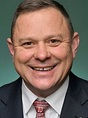
Matt Burnell Spence, Australian Labor Party
4:24 pm
Not too far from this chamber, just down the corridor and up a couple of flights of stairs, is my office. When you walk through the door of my office, hanging on the wall in my part of my suite is a quilt that has the history of some of my family's service, dating back more than 100 years: sacrifice in World War I, service and sacrifice in World War II, my service, my uncle's, great uncle's—and there is a lot more service that is not recognised on that quilt.
When I walk through the streets of my electorate, whether I'm in Gawler, in Elizabeth or in Salisbury, veterans are at my every turn. I am extremely fortunate to have an electorate, in the seat of Spence, that has a very high number of serving personnel and a very high number of veterans. It's no surprise, because we have RAAF Bass Edinburgh that sits at the very heart of my electorate and from there emanate stories of service on a daily basis. Whether you sit at the St George's cafe opposite the Coles DC, just down the road from the base, over at the Elizabeth Shopping Centre, or in the local boozer at the Gawler RSL, you're never too far away from a conversation about someone's service.
So, when I come to this place, people's service is always front of mind. I remember that, when I was elected to this place, the royal commission was underway. Nick Kaldas put a challenge to each and every single one of us in this place—that we must do better—because for more than three decades we haven't delivered the level of service that our veterans have expected. Unfortunately, whether we like it or not, the Department of Veterans' Affairs was failing veterans abhorrently.
When I look at the MPI statement—'The government's neglect of veterans and their needs'—I go straight to the fact that, when we came to office here, the first order of business was to put all of our resources into dealing with the backlog of claims. Now, I'm not apportioning blame to either side of the chamber in this debate regarding that backlog. It was allowed to fester for far too long. The veterans deserved better. And so we skilled up and we delivered a much bigger workforce to work through that list of claims that was frustrating not just veterans but also their families. That's not neglect. That's meeting people where they're at and answering their call. That's what we did.
In the lead-up to my election, I stood with the member for Blair as the shadow minister for veterans' affairs, and we announced that we would be investing in a veterans and family wellbeing hub in my electorate, and I'm proud to say that, in a week and a half's time, we will celebrate the one-year anniversary of that being delivered. The best thing about that veterans and wellbeing hub is that it was designed by the people and for the people. It is so, so successful. We have people walking through those doors every single day. I met up with one of my ESO leaders just yesterday in the Speaker's Courtyard to talk about how successful the veterans and family wellbeing hub has been for our community. That's not neglect. This government has been doing everything it can to better help our veterans and thank them for their service.
I want to provide some content and detail to people out there that want to be engaged in this debate, shape the consultation feedback process to the minister and provide constructive feedback. You can do that via the DVA consultation hub and you can do that via the direct feedback form at dva.gov.au. Be involved in the discussion and help shape a better system to honour your service.

Alison Penfold Lyne, National Party
4:29 pm
The purpose of the Department of Veterans' Affairs should be very simple: to support the men and women who've served our country and to ensure they are treated with dignity and respect. That premise should be at the heart of every DVA process and procedure and every decision that the minister and the government take. But clearly with this government and with this minister it isn't.
Labor's decision to impose a $5,000 annual allied healthcare cap from July next year doesn't treat veterans with dignity or respect. Instead, it's the ultimate show of disrespect. It's heartless. It's shameful. This is not how you treat veterans. Where is the dignity and respect in a policy that effectively denies veterans the health care they need, the health care they deserve? When members of the Coalition of Veterans' Voices came to Canberra to raise their concerns about the policy, Minister Keogh, the Minister for Veterans' Affairs, initially refused to meet with them. He refused to even look them in the eye when speaking about them when they were standing in this chamber. How can the very person whose one job it is to listen to and represent the interests of veterans treat them with such contempt?
I thank the veteran advocates that came to see me this week and all those from my own electorate that have written to me advocating to ensure their fellow veterans get the support they deserve. I'd like to share what some of those veterans have said to me about this policy. Matthew from Coopernook said that $5,000 cut would be exhausted in approximately six weeks due to the level of treatment he genuinely requires. After six weeks, Matthew will have to wait weeks or months for the DVA to assess and approve additional treatment whilst he goes without any care. Continuity of treatment is critical. Mental health recovery and physical rehabilitation should not be interrupted by administrative processes. Delays increase anxiety, worsen symptoms and reduce functional capacity and will potentially lead to more expensive interventions or hospital admissions in the future. Ian from Tuncurry encapsulates the failure of this policy well. He said that the suggestion that additional funding may be available in exceptional circumstances introduces uncertainty, additional approvals and delay into an already overstretched system. Veterans should not be placed in a position where necessary treatment is interrupted while administrative processes determine whether care can continue. Vikki from Karuah perhaps best summarises the government's appalling policy. She said:
Veterans are not a line item. They are Australians who put their lives, bodies and futures on the line for this country. They served when Australia asked them to serve. When they come home injured, the least we can do is make sure they can access the care they need.
The Royal Commission into Defence and Veteran Suicide told us that veterans need greater choice and autonomy, not more obstacles between them and the support they need. The government itself acknowledges that around one in 10 veteran card holders who use allied health services will exceed the cap. Veterans have lived with DVA bureaucracy. They know what delays mean. They know what happens when a provider decides dealing with DVA is simply too difficult. They know that every additional administrative hurdle can become another barrier to care.
DVA processes exist to serve veterans. Veterans do not exist to serve DVA processes. So, Minister Keogh, scrap the arbitrary $5,000 threshold, fix the provider and payment problems, give veterans genuine choice over their care and ensure that every process, every procedure and every decision made by DVA reflects the Australian Defence Veterans Covenant oath which has been said here numerous times today. I'll repeat it:
We, the people of Australia, respect and give thanks to all who have served in our defence force and their families.
We acknowledge the unique nature of military service and the sacrifice demanded of all who commit to defend our nation.
We undertake to preserve the memory and deeds of all who have served and promise to welcome, embrace and support all military veterans as respected and valued members of our community.
For what they have done, this we will do.
Minister, I ask you to serve the people of Australia by serving these words in what you do. Take action now. Scrap the cap.

Tania Lawrence Hasluck, Australian Labor Party
4:35 pm
Let me start by thanking the veterans and the RSLs serving the veterans in Hasluck at Ellenbrook, Bassendean and Bellevue and also the families, the volunteers, the committee members and the advocates who give so much of themselves to support those who have served. They understand better than most that supporting veterans is not something we only do a few days of the year.
I've spoken previously in this House about my own service in the Army Reserve. I have always been careful not to overstate that experience. Compared to those who have deployed, served overseas or faced conflict, my experience was very limited, but it gave me an appreciation for the culture of service. It taught me about duty, it taught me about teamwork and it taught me that military service affects not only the individual who wears the uniform but entire families and communities. It's always easy for people to remember just the Anzacs, but the veterans of today are those who served more recently, in conflicts such as Vietnam—the nashos—the gulf and Afghanistan, and those peacekeepers, as well as those who have served in disasters here at home.
Next week, I will join with the ADF for parliamentary exchange, as I have done before, and in September I will host my fourth ADF intern. I carry their stories and their perspectives into my work. One of the first stories I told in this parliament was about a veteran from the Perth Hills—a 30-year-old veteran, a man whose body was riddled with shrapnel, a man who was physically and mentally broken, a man who asked me why he could not access the support he needed. That story has stayed with me because it captures what this debate should really be about.
Under Minister Matt Keogh, the government has implemented 32 royal commission recommendations already, with two-thirds now expected to be completed by the year's end. He has consolidated the VETS act in the biggest reform in a century. He has committed more than $770 million in additional funding to support the implementation of these royal commission recommendations. He has invested hundreds of additional staff in DVA to reduce the claims backlogs and improve decision-making times. He has improved treatment and rehabilitation pathways for veterans through a wellbeing focused approach. He has increased support for mental health interventions for earlier access to care. He has established consultation mechanisms to strengthen veterans advocacy. He has made the largest investment in allied health fees for veterans in more than two decades, and there's a lot more.
Are these reforms complete? No. Is more work required? Absolutely. But, unlike those opposite, we are getting on to do the work. The member for Riverina's MPI is strident, but I find myself asking a simple question: if they were so important, why didn't the coalition do them when they had the chance? They were in government for almost a decade. They left a backlog of 42,000 claims. They could have increased DVA staffing and reduced the claims backlog years earlier. They didn't. They could have driven cultural reform within Veterans' Affairs years earlier, and they didn't. They could have expanded wraparound support services for veterans and families years earlier. They didn't. They could have acted on longstanding concerns from veterans about delays and bureaucracies years earlier. They didn't. They could have embraced a prevention and wellbeing approach to veteran support years earlier. They didn't. Instead, many veterans spent years battling a system that too often treated them like a problem to be managed rather than Australians to be supported.
Supporting veterans should never be partisan. Every member of this House owes a debt to those who have worn Australia's uniform. It's a debt we can never fully repay, as those who serve write us a blank cheque when they put on that uniform, and every government carries the responsibility to try to work to repay that debt through practical action. To the veterans of Hasluck, to the members of my Bassendean, Ellenbrook and Bellevue RSLs, and to veterans right across Australia, I say this: your service is valued. Your voices are absolutely important; the consultation process is open, and they will be heard there. This government remains committed to ensuring you get the support you have earned and to ensuring that it's actually delivered.
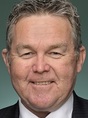
Colin Boyce Flynn, Liberal National Party
The discussion is now concluded.