
House debates Condolences
Scolyer, Professor Richard, AO

Monique Ryan Kooyong, Independent
11:00 am
I rise to support this motion. Professor Richard Scolyer, who died on 7 June aged 59, three years after being diagnosed with a glioblastoma, was by any measure one of the most consequential clinician scientists this country has produced. He was a friend and he was the very best of us.
I'd like to read some words that his brother spoke at the funeral. Richard's brother, Mark, has been a dear friend of mine throughout my adult life, and it's a huge privilege to read what he said about his brother. Mark said:
I've been thinking about the essence of Rich, and what he is to me. Richard, my brother, my blonde haired brother, cheeky, annoying, funny, fun, showing off for the camera, spitting the dummy, being naughty, stuffing up, stubborn, determined, exploring, finding his own way to do things—like using the toilet facing backwards instead of facing to the front—challenging, succeeding, sometimes not succeeding, but always trying. Having a crack.
Our parents were always caring and supportive. Rich and I grew up learning to look after each other. We were shaped by challenges when we were young. We had to learn to look after mum when she needed it. We were always surrounded by family and friends, too many to mention. We were lucky to grow up in Tasmania in the sixties and seventies, and we loved it. We had a great public education. We were fortunate to have people in our lives who gave us a sense of what was possible—doctors, engineers, teachers and scientists. We learnt the importance and the wonder of learning and science.
There was always plenty of sport. We participated in everything, but particularly footy. Rich and I grew up loving being part of teams and learning the value of teamwork. We had great family trips, holidays and celebrations with cousins, uncles and aunts, even a summer holiday visiting family in South Africa. We learnt a love of bushwalking and spent eight summers camping at Ulverstone. In 2022 I walked with Rich into the walls of Jerusalem again, this time with our kids. It felt good escaping again as brothers and dads with our kids in the Tassie bush. Cousins are so important growing up. They're special relationships, the glue that holds us together. For Emily, Matt and Lucy, Noah and Maia, Millie and Rory—I know you share those special relationships and I know that they'll continue. I know that Rich knew that too.
Parkrun is something we all do together. It's really symbolic of Rich. We ran parkrun the last two Saturdays. It'll always give me the feeling of Rich. But Rich was competitive, too. He was always happy talking training, improving PBs, commenting on what you'd been doing, talking about races and his training with his great mates. The Tour de Cure was such a special thing to do with Rich. Less than two weeks after I got my first bike, I spent a week cycling with him. The last two rides started at 5.30 in the morning at the Harbour Bridge for his favourite ride out to West Head. Selfless as ever, he had a banana and a squashed peanut butter sandwich to share with me. It was a special week. We also pushed each other, running two full pace parkruns. He told me it was the best week we'd ever had together. I said, 'What about when we were kids?' He said, 'I've got brain cancer, so this is the best week.'
It was a privilege just being his brother. Being able to drive Rich to treatment was special time together, chatting and reminiscing, having fun, even with both Rich and Anna backseat-driving.
I've met many of his long-time colleagues and collaborators, particularly his friend and mentor, John Thompson. I learnt from so many how respected and valued he was. People shared stories about how he went out of his way to help them, to create opportunities for them and how much they appreciated it, how much they valued Rich as a colleague and a friend. He was in every way a great public servant and scientist, an example of why we should value science and public servants. He was a wonderful brother and a fantastic dad. Mark finishes, '"So what is the essence of Rich to me? I find it all around me—at parkrun, in the bush, riding solo, in family, in friendship. I'll keep asking myself: "What would Rich do?" His answer would be simple: 'Think of others. Contribute. Make a difference.'"
The country is poorer for losing Rich Scolyer. He was the very best and brightest of us all. I commend this motion to the House.

Jess Teesdale Bass, Australian Labor Party
11:06 am
Today I rise to honour Professor Richard Scolyer ATO, a remarkable Australian and a deeply loved son of Tasmania. I didn't have the privilege of knowing Richard personally, but seeing how all of those who were able to interact with him throughout his life have reacted to his passing tells me that he was a truly great man. Many Australians knew Richard as one of the world's leading melanoma researchers. They knew him as the 2024 Joint Australian of the Year. They knew him as a cancer specialist who, when faced with his own devastating diagnosis, kept working, kept sharing and kept trying to help others.
But before all of that, Richard was one of ours. He was born in Launceston, he grew up in Riverside, he attended Riverside High School and went on to study medicine at the University of Tasmania. Even as his work took him to Sydney, to hospitals, laboratories and research institutions across the world, he remained proudly connected to our beautiful state, proudly connected to home. That connection was seen clearly at Bridgnorth Football Club, a club tied to his family for generations. Richard was their no. 1 ticket holder. He loved that club. He loved the community and the community loved him back. Because, for all of his brilliance, what so many people remember about Richard is not only what he achieved but how he carried himself—curious, brave, generous and humble. We should all aim for such lofty heights as these.
A person can change the world but still belong to a place, a school, a club, a family and to the people who knew them first. And Richard did change the world. Through his work with Professor Georgina Long and Melanoma Institute Australia, he helped to transform melanoma treatment. Advanced melanoma, once so often a death sentence, particularly in Tasmania, where we have the highest rates across the country, became survivable for many more people because of the work and the science that he helped to lead.
Then in 2023, in the face of being diagnosed with glioblastoma, an aggressive and incurable brain cancer, Richard did something extraordinary that I don't think many people could. He became a patient. He did not stop being a scientist. He became the world's first brain cancer patient to have pre-surgery combination immunotherapy, an experimental treatment based on the breakthroughs that he had helped to pioneer in melanoma. He shared that journey with honesty and generosity, not because that made it easier and not because it would take away the fear but because he knew that what he learnt from his treatment might help the next patient, the next family, hopefully even the next breakthrough. That is courage and that is service and that is love in action.
Our thoughts, all of Tasmania's thoughts, are with Richard's wife, Dr Katie Nicholl; his children Emily, Mathew and Lucy, who were here yesterday in parliament; his parents Jenny and Maurice; his brother, Mark; his colleagues and everyone in northern Tasmania who had the privilege to know him not as just a national figure but simply as Richard. We are really proud that one of our own has managed to change the world, and may we honour him by continuing to back science, support medical research, care for each other and, as Richard would say, always giving it a crack. I commend this motion to the House.
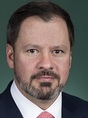
Ed Husic Chifley, Australian Labor Party
11:09 am
As a nation we are often engaged in an examination of who we are as Australians. We're going through another episode of that right now. I think there are a lot of elements of what it means to be Australian that we reflect on at these times. When I think about this question I think quite often about the respect I have for our forebears, from First Nations to First Fleet, and the fact that when many of us take a moment to think about what our forebears had to do in this nation—with the climate, the environment that was there, to be able to survive when the odds were against them—it is something that should generate profound respect for a number of things. These things include not just our toughness and not just the fact that so often the Australian character is defined by a very heavy physical element, of being able to survive the elements themselves. One of the big things that's helped this nation survive is our know-how and smarts.
Know-how and smarts is not just something to make people think, 'I do not possess that; that is for someone who is much better than me.' Australians have a view that, whatever our walk of life, we've been able to make it in this country by thinking deeply about what it takes to survive. Again, I say that in the sense that, from First Nations to the First Fleet and beyond, we have had the odds against us. We've had poets write about our sunburnt country. The tragedy of that poem has befallen generations from then to now—the fact that we enjoy being in the sun so much. In many respects we have paid for that enjoyment, and in many cases we've paid for it with our lives, with the cancers that have emerged, particularly melanoma.
I think about the contributions by the member for Bass, the member for Kooyong and others who've spoken on this condolence motion today about Professor Richard Scolyer and the fact that he threw himself into trying to ease the burden and the dread that comes with a diagnosis. You are facing one of your most difficult challenges in life. He had spent the bulk of his time thinking about how we could beat melanoma and how we could free people from that death sentence—because, more often than not, that is exactly what it amounts to.
A lot has been said about what Richard Scolyer has done in terms of his professional, scientific and research background. But I want to come back, if I may, to the remarks I just reflected on. When we think of the Australian character we think of our ability to overcome with physical attributes. We also obviously think of our sporting prowess, and we've got a lot to be proud of there. But I think about how most people who've achieved an Order of Australia have come from a science and research background. Rightly, we give accolades for what occurs on the sporting field. But it's not just the physical that has led to heroism; it has also been the fact that Australians have dedicated their smarts and their know-how to helping their fellow Australians.
When I paid my condolences to Richard's wife, Katie—and Katie, Emily, Matt and Lucy were on the floor of the chamber with us yesterday—I expressed the view to Katie that her husband was a national hero. National heroes don't always attain that description of heroism because they've been successful. It is the journey and the struggle that they have undertaken that marks them out. In the case of Richard Scolyer, he became, as the member for Bass and others have observed, his own patient. When he had that seizure two years ago and he knew what was going to befall him, he said he did not want to die; he wanted to live. He threw everything into it, including his own body, not just to save himself but to save others. It's been that sacrifice that he made combined with the observation that, in so much of what he did, there was an absence of gravitas and ego.
Richard was us. He walked amongst us all, containing that special talent and gift that he had, with desire to save others. That, I think, marks him out. He was not successful in the journey he wanted so desperately to be successful in, but what he did and how he did it should mark him out as a national hero. My words to his wife, his widow, I gave from the bottom of my heart because this bloke was a national hero. I think it's right that we recognise that in this chamber—devoid of politics, devoid of division and united in the respect we have for a fellow Australian and what they're prepared to do for others. Richard Scolyer did that in spades.
I don't think any of us would not have been touched by that final letter that he penned, knowing how hard it would have been to write those words—every single letter in those words, every apostrophe and particularly the full stop. When he said we should commit to doing whatever we can to back science and research, he wasn't just saying that from a simple, mechanistic point of view. He was speaking to the Australian character, of which know-how is such a big part, and saying that we can get it done. It's not just about the know-how; it's about having faith in who we are. We are often the underdog and often underestimated, but we often achieve, and he wants to see more of that. If we honour this bloke, if we honour this national hero, in any way—if we are serious about honouring, in faithful regard, what he has done—we will pick up that challenge he set. That is to invest in science and in research, but also to invest in who we are as a country, who we are as a people and what we can do for the rest of the world.
I want to honour Richard Scolyer for what he did. I am but one voice, but, like many other voices in this country that wanted to honour him, I want to honour him in awe, in respect and in commitment to fulfilling what he asked of us—to pick up from where he left off and to deliver for others. Richard Scolyer was a national hero. Vale.
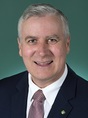
Michael McCormack Riverina, National Party
11:17 am
Those were beautiful, powerful and heartfelt words from the member for Chifley. We all share his raw emotion. I can tell by looking at him that he is very touched, as we all are and will go on being, by Richard Scolyer's life. Australia has lost two giants in recent weeks: Neale Daniher AO and Richard Scolyer AO. Both should be posthumously awarded ACs because they are the best of the best—two 'ordinary men', in their own words, who've done extraordinary things for Australia, particularly in fighting insidious diseases. As members of parliament, we should do—and do do, I think—everything we can to increase funding for diseases which beset our nation. These two men have done so much to raise awareness and the stakes, in making sure that we—in Neale Daniher's case—fight motor neurone disease.
I'll speak more about Richard Scolyer and his battles against melanoma and other cancers in this contribution, but we can ill afford to lose two men of their ilk and calibre and credentials at such a young age. Richard Scolyer was 59; Neale Daniher was 65. They probably lived a lot longer than some of the sufferers of the diseases which took both of those fine gentlemen, but they still went way too soon. They were still way too young, and they still had so much more to give. But their memory and legacy will live on thanks to their courage and the unique way that they both campaigned and advocated for and on behalf of the communities of people who are bedevilled by their suffering from MND and melanoma. The member for Chifley mentioned our sunburnt country, and, yes, we are.
I'm so very pleased that Annette St Clair, a wonderful human being from Wagga Wagga, has been asked to attend the state funeral service for Richard at the Sydney Opera House on 13 July, and she's quite moved by that invitation. Richard Scolyer and Annette St Clair met about eight years ago through Melanoma Institute Australia. Just two years ago, Professor Scolyer came to Wagga Wagga as a guest speaker at the annual Amie St Clair Melanoma Ball, held in honour of Annette and Peter's beautiful daughter, Amie, who died of melanoma in 2009. She was taken way, way too soon.
The world renowned pathologist and 2024 Australian of the Year passed away on 7 June. Annette said it was inspiring to hear his story throughout his journey. She told the local newspaper, the Daily Advertiser:
He shared his personal story and he was just such a brave, compassionate man—
and we heard that from the member for Chifley a moment ago. She continued:
He was the most warm, caring, generous man.
On Saturday, about lunchtime, I received an invitation that has come from his wife, Katie, and his family to invite us, which was lovely.
My husband and I feel very humbled to be invited to his state funeral.
Annette, the Wagga Wagga community and, indeed, the nation have been so touched and are mourning the loss of Richard. No-one is mourning it more than his wife and children. They shouldn't have lost their dad. He's fought the good fight. He's finished the race. He's kept the faith to make sure that people know about this disease and other cancers and know to do something about it. My thoughts and love and condolences go out to Katie and his children, Emily, Matthew and Lucy. It is a profound loss that they have suffered. I listened closely to the words of the Prime Minister, the Leader of the Opposition and the Minister for Health and Ageing yesterday before question time. I think everybody shared their deep and meaningful words about what a loss this nation has suffered.
As the member for Chifley has just pointed out, the letter that Richard Scolyer wrote just prior to his death should be required reading in our schools. It shared the journey, the emotion and, you could almost argue, the Australian larrikin spirit of this bloke, and I'll call him a bloke because he was just one of us, but, then again, he was so much more special than most of us, because he knew what lay ahead. He knew that he was going to succumb to the diseases that were afflicting his body, and yet he used his final months, weeks, days and hours to send a message to the nation about what can be done, what should be done and how we should act. That is extraordinary, when, as the Prime Minister said, as did the member for Hume, most people would use those moments to shrink away from society, to spend them with family and perhaps to feel sorry for themselves, but not Richard Scolyer, not this man, not this bloke. Wow! What an amazing human being he was and is, quite frankly. I used the present tense there because he will continue to be a name that will resonate throughout this nation. Whenever melanoma is discussed, whenever funding is required and whenever awareness needs to be raised, the name Richard Scolyer will live on. Vale to a brave and warm and amazing Australian.

Alicia Payne Canberra, Australian Labor Party
I understand it is the wish of honourable members to signify at this stage their respect and sympathy by rising in their places, and I ask all present to do so.
Honourable members having stood in their places—
I thank the Federation Chamber.
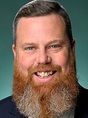
Dan Repacholi Hunter, Australian Labor Party
11:25 am
by leave—I move:
That further proceedings be conducted in the House.
Question agreed to.