
House debates Bills
Appropriation Bill (No. 3) 2025-2026, Appropriation Bill (No. 4) 2025-2026, Appropriation (Parliamentary Departments) Bill (No. 2) 2025-2026; Second Reading

Jo Briskey Maribyrnong, Australian Labor Party
5:37 pm
I rise today with a profound sense of purpose, because what we are delivering as a Labor government is not an abstraction; it's a statement of values, a declaration of the kind of country we are choosing to build and a reflection of who we are as a people. When I first stood in this place, I spoke about the community that sent me here—about Flemington, where migrant and refugee families are writing new chapters of the Australian story; about Moonee Ponds where pensioners and uni students share the same footpaths and the same hopes, and where a Puckle Street cafe is as likely to host a first date as it is a retirement lunch; about Airport West and Gladstone Park, where working families get up early, work hard and ask fairly that their effort be rewarded and that the economy be on their side, not working against them.
My electorate is not a postcode; it is a living, breathing argument for what Australia can be at its best: diverse, aspirational and fundamentally kind. Every decision that I make in this place I make with those streets and those people in mind. When I go doorknocking, the conversations are almost always the same: the cost of living, access to health care, education and decent jobs. They are not political talking points but the lived daily reality. It is the single mum in Avondale Heights wondering whether to fill the prescription or to fill the fridge. It is the young couple in Flemington doing the maths on a mortgage and quietly deciding not to bother, not because of lack of ambition but because the numbers just don't add up. It is the pensioner in Moonee Ponds rationing medication across the fortnight because the pension doesn't stretch as far as it used to.
These are not edge cases. They are the stories that sit with me long after the conversation has ended. They represent the central moral test of our time, a test that demands a government capable of being both focused and compassionate—not one or the other but both. That is what this government is delivering, and I am proud to play my part.
To understand where we are going, we must first be honest about where we started. In 2022 we did not inherit a strong economy. We inherited a decade of drift, of denial and delay and of hollowed-out services that were quietly degraded while the government of the day congratulated itself on management it never actually delivered. We walked into a huge housing crisis left entirely unaddressed, a national debt approaching $1 trillion and inflation with a six in front of it and climbing. We inherited the legacy of a government that promised a surplus every single year and failed every single time. The 'back in black' mugs became a symbol not of competence but of delusion, and Australians knew it. It fell to Labor to do the work of repair. It took a Labor treasurer and a Labor minister for finance to deliver back-to-back surpluses for the first time in nearly two decades. But we did not pursue these surpluses as a mug to be displayed. We did it to give us the capacity to invest in Medicare, housing and education. Responsible management is not the opposite of compassion; it is what makes compassion sustainable.
Every single Australian taxpayer is receiving a tax cut, with further rounds coming this July and the one next. For the workers at the distribution centres in Tullamarine, the healthcare workers at Western Health and the teachers in our local schools, this means real money back in their pockets—not a promise, but real relief in real pay packets. The contrast with what came before us is worth reflecting on. The previous government's approach to tax relief was an ideological choice: concentrating benefits at the top, rewarding those who needed it least and dressing it up as economic reform. Labor made a different choice. Our cuts are weighted toward the cleaners and carers, the nurses and the teachers, the logistics workers and tradies who keep this country running. We believe the people who build Australia should be the ones who benefit from its growth. That is not radical; it's simply fair.
Health care is one of the most important, powerful and personal conversations that I have in my electorate. Almost every time I hold a mobile office or knock on a door, someone raises it, not in the context of policy, but in the context of their own life: a parent who delayed going to the doctor because they couldn't afford the gap, a pensioner splitting tablets to make a script last longer, an older resident who stopped seeing the specialist because the out-of-pocket costs had become impossible to justify. For a decade, the coalition conducted an ideological war of attrition against Medicare. They froze rebates. Bulk-billing rates fell. Out-of-pocket costs climbed. And there are those who still sit opposite who would genuinely prefer an Americanised health system, one where access to care is determined by your credit card rather than your Medicare card. They tried hard to get us there, but Australians understand that there is nothing more quintessentially Aussie than a universal healthcare system underpinned by that green and gold Medicare card.
Labor is restoring that promise. We have delivered the largest investment into Medicare in its history, tripling the bulk-billing incentive, which means, in Maribyrnong alone, we have doubled the number of fully bulk-billing GP practices in just over three months. We've capped the PBS scripts at $25—the lowest it's been in two decades—and frozen prescription costs entirely for pensioners because dignity in retirement should not come with financial penalty. For families in my community, this means no longer choosing between a doctor's visit and putting food on the table. It means a healthcare system that lives up to the values it was built on.
On housing, the record of the previous government is one of total abdication. Year after year, as a generation of young Australians were locked out of the market and renters were pushed to the edge, those opposite offered thought bubbles and slogans without even appointing a minister responsible. They proposed letting young people raid their superannuation—not a solution to the housing crisis but a way of making it worse while pretending to care.
Labor is actually building. I was recently at the Swift Walk redevelopment in Kensington—the largest project completed under the Housing Australia Future Fund to date—where a total of 272 social and affordable homes now stand where there were once only a waiting list and a sense of despair. I walked through these homes and met residents who had spent years in insecure rentals, unable to put down roots or make plans. What struck me was not the buildings themselves, impressive as they are, but the quiet relief on people's faces—that sense that finally, after years of uncertainty, they had somewhere to call home, somewhere to raise a family. That is what government is for.
But bricks alone are not enough. At Essendon Fields, companies like Modscape + Modbotics are pioneering modular construction that can help us build faster and smarter. Through fee-free TAFE and $10,000 apprentice support payments, we are training the plumbers, electricians and carpenters who will deliver the 1.2 million homes we have committed to, creating lasting careers in the process. This is how you solve a housing crisis: with investment, workforce development and the political will to follow through.
The most enduring investment we can make against the cost of living, against inequality, against the idea that your postcode determines your destiny is to invest in our people—in education. The coalition treated early childhood education as babysitting. We treat it as the economic and social infrastructure it is. Our 15 per cent pay rise for early childhood educators was long overdue and long overdue recognition for the professionals that are shaping the minds of our youngest Australians, including the remarkable educators I've had the pleasure of meeting at Goodstart Moonee Ponds and Goodstart in Flemington, who bring genuine skill, dedication and love to the work that they do every day.
For those carrying a student debt, we heard you. That debt had become an anchor on life, on buying a first car, starting a family, saving for a deposit. We wiped 20 per cent off student debt, directly benefiting over 25,000 people in Maribyrnong and three million Australians nationally. The message is clear: your ambition should not be limited by your bank balance. The fair go extended to generations before you belongs to you as well.
Beyond the national agenda, I'm proud to be delivering on the commitments I made to the people who sent me here. There is $3.7 million in sporting facility upgrades: a new pavilion at Walter Street Reserve, a scoreboard at Boeing Reserve, a bowls superhub at Cooper Street, new greens and a shade at Gladstone Park Bowls Club and upgrades at Maribyrnong Park. These are the places where our community comes together across the generations. They deserve to be world class.
There is the Commonwealth prac payment for trainee nurses and carers at Kangan Institute Essendon because no-one training to care for others should have to choose between rent and dinner whilst they're trying to get the skills that they need for the work that we desperately need in our communities. There is a new headspace youth mental health service here in Moonee Valley, to be operated by Orygen, a global leader in the field, because the mental wellbeing of our young people is not a secondary concern; it is foundational.
The divide in this House has rarely been starker. On one side sits a coalition that voted against tax cuts for working Australians, against cheaper medicines, against social housing, against a future it seemed either unable or unwilling to imagine. A party that once claimed to champion Menzies's forgotten Australians has spent years chasing the extremes, trading vision for grievance and offering nothing to the people actually doing it.
On this side sits a Labor government with a plan, a record and a deep sense of responsibility to the people we serve. We came to office to repair what had been broken, and we're doing that. We came to office to ease the cost of living for working families, and we're doing that. And we came to office with a vision of a country where hard work is rewarded, health care is universal, housing is within reach and every child, regardless of postcode or background, has a chance to succeed and thrive. This is the Australia I see every day in Flemington and Moonee Ponds and Airport West and Gladstone Park. It is the Australia these communities deserve and it is Australia that we're building.

Andrew Willcox Dawson, Liberal National Party, Shadow Assistant Minister for Manufacturing and Sovereign Capability
5:49 pm
An appropriations bill is about where government spends the money, and let me tell you from the outset that they're not spending it very wisely. This government's priorities are all wrong. The No. 1 priority for any government should be to keep the people safe and their border secure. Well, clearly the Albanese Labor government is failing on that.
But let's move on to the No. 2 priority, nation building: building dams, building roads—building infrastructure that everybody can use to then make a quid out of. What are the government doing? They're not nation building; they are bureaucracy building.
One of the very first things that the Albanese Labor government did on coming to office was to slash all the funding for the dams. There was a project just near me called the Urannah Dam. The money was in the budget. It was also matched by private equity money. But, no, that money was then withdrawn by the government. Urannah Dam was obviously going to be a dam for water. Newsflash: we have a dry continent, so building dams should be very high on the list of priorities. Urannah Dam would have provided water for mining; it would have provided water for urban use; it would have provided water for tourism. There was a way to have a pipeline that would've gone from Urannah Dam into Peter Faust Dam, near Proserpine, to make sure that that dam never ran dry. There was also going to be capability for putting a hydro component on the dam. But, no, that was scrapped.
And, while we're talking about infrastructure, let's talk about the Bruce Highway debacle. That has been mentioned many times in this place. Prime Minister Albanese stood up before the election and committed $7.2 billion to go towards the Bruce Highway, and I thanked him for that. That was really good. Unfortunately, Minister Gallagher jumped up and said, 'The money's not there.' That was a bit of a problem. We looked a bit further into this, and Senate estimates then revealed that there was only $432 million available over the next three years—only. That's far different. When you're talking about $7.2 billion—and a billion is 1,000 million—$432 million is less than 10 per cent, so let's not get too carried away.
What's happening with the Bruce Highway in my neck of the woods? The Bruce Highway is starting to crumble, because it just hasn't had the maintenance and the infrastructure. But that money could have been used towards overtaking lanes or some separation within the middle section; it could have been used to fix the many potholes that we seem to have and that are getting worse, as, in the wet season we're currently experiencing, the pavement is starting to fail.
The member for Forde is not here, but I listened to his speech in the Federation Chamber the other day where he said, 'Energy is the economy,' and I couldn't agree more. Well done for that. Energy is certainly the economy. However, the $9 trillion failed energy plan of those opposite is nothing more than a pipedream.
I need to explain exactly why that is. It's all to do with capex—capital expenditure. When you've got the premises and you've got your solar panels, you've spent your capital on the solar panels. But then, as we know, when clouds come over or it's night time, solar panels don't work. In order to firm the solar panels, those opposite say, 'Okay, we'll get some wind turbines.' Righto; say we get the wind turbines. You have to pay for them as well, so that's more capital expenditure. And then, when the wind doesn't blow, they think: 'The sun's not shining; the wind isn't blowing; we've still got no power. What do we do? I know. We'll add some hydro to it.' Again, that's more capital expenditure on the hydro. But, as we know, sometimes that can be weather dependent as well, if the dam's not full and you can't release water. So what's the next thing? Gas—and gas has only been mentioned lately, I might add, as a way of firming the power. But, again, that's more capital expenditure.
While all that is going on, once you've got the solar arrays and the wind turbines you actually need to connect those to the grid somehow so that people can use the power. What are we doing there? The proposal of those opposite is to have 28,000 kilometres of poles and wires. It's absolutely crazy. So let's have a look at this. Everyone gets their power bill. When you have a look at your power bill—let's talk about generation and network charges. Let's talk about generation. That's one component. It's about fifty-fifty. So what do you think is going to happen with the bill when you add 28,000 kilometres of poles and wires that then have to be maintained forever? It's just crazy, and it can't work. And for what—to lower emissions? We're supportive of lowering emissions. That's why the people on this side of the House have got a cheaper, better, fairer plan for energy use. So we will do that, but it'll be cheaper because we'll use the existing assets we've got. We won't have to use all this new capex that we spoke about—multiple capexes to try to get reliable power. And it'll be fairer because we all will share the burden. We'll share the same amount of burden as all the other OECD countries. Currently, we're going way above those.
Currently, for the emissions, how those opposite have created 90 per cent of their emissions is by locking up farming land, land that should be used for growing the food and fibre of this country. But, no, it's being locked up. What do you think happens when it gets locked up? When it gets locked up, it breeds pests and diseases. All the weeds stay in that ground that's been locked up because farmers aren't coming in, killing the weeds and looking after it. All the pigs, all the feral animals, are all in that locked-up area, and they don't get the memo. They don't stay on their side of the fence. So what they do is then come in to the farmer's paddock, wreck all their fruit and veggies and destroy everything. And the pests and the weeds? The weeds seed and then blow all the seeds into the farmer's paddock. They actually have to then eradicate those weeds, because as we know—I'm a farmer myself—one year's weeds ends up seven years seeds. So then you have to go and actually kill all those weeds. It's an absolute nightmare.
What will this mean for the average Australian? It will increase their prices at the check-out. So then, every time they go there, fruit and veggies and all the agricultural commodities are going to get more expensive. The Australian dream is rapidly becoming an Australian nightmare, and the fingerprints of this Labor government are all over the crime scene. Every morning, families in my electorate of Dawson wake up and have a kitchen table conversation that no-one should have in a country as rich as ours. They're sitting there with their bank apps open, looking at mortgages that have just been hiked up 13 times, looking at grocery bills that have jumped up 16 per cent and looking at insurance premiums that have skyrocketed 39 per cent. And they're looking for someone to blame, and they don't have to look much further than the Treasury benches in this place.
We're talking about these appropriation bills today, a request for another $12.7 billion in taxpayer funds, because this government has a serious spending problem. It would actually make a five-year-old in a lolly shop look disciplined. They are spending money they don't have to fund programs we don't need and to satisfy inner-city ideology that the average Australian just can't afford. The Treasurer likes to stand up and talk about restraint. What restraint? This is the highest-spending government outside of a pandemic in 40 years. They are outstripping record levels of revenue with record levels of waste. In 2025, this Commonwealth raised $717 billion in receipts, the highest in 25 years. They are swimming in taxpayer cash like Scrooge McDuck. Yet those opposites are still running deficits. They're like a household that gets a massive pay increase but still manage to max out the credit card.
Every dollar they print and every dollar they borrow is a bucket of debt petrol poured onto the inflation fire. While the rest of the world is seeing inflation fall, Australia is seeing inflation take off. Our inflation is higher than the UK, higher than the US, higher than Canada and nearly double that of Japan. This isn't a global phenomenon. It is an Australian, Albanese Labor government failure. It is a failure made right here in Canberra by this government, which has let the fiscal guardrails fall off.
Let's look at where the actual money is going. The Department of Climate Change, Energy, the Environment and Water is set to receive over $2.9 billion in this round of appropriations. A massive chunk of that is earmarked for the Cheaper Home Batteries Program, and we've certainly heard a lot about that. $2.9 billion is a staggering amount of money to throw at a net zero fantasy while ignoring the fundamental bread and butter of affordable, reliable baseload power. This government's answer to the energy crisis is to subsidise a luxury battery that only the wealthy can afford in the first place.
In my electorate of Dawson, to buy one of these batteries, a family is looking at out-of-pocket expenses of around $15,000. I have to tell the minister, in the suburbs of Mackay, in the streets of Bowen or out in Townsville, there aren't many families with a lazy 15 grand just sitting around. This policy is reverse Robin Hood. It takes tax dollars from the battlers who are struggling to pay their quarterly power bill—which has already gone up by close to 40 per cent—and then hands them to higher income earners who cannot afford the upfront costs. It's a shocking way to run an energy policy. If you can't afford the 15 grand, you're left paying higher prices for a grid that is becoming increasingly more unstable.
The Minister for Climate Change and Energy has an ideological obsession. He wants to reach net zero by 2050 at an estimated cost of $9 trillion. But he won't actually tell the people of regional Australia what that looks like on the ground. Well, I'll tell you what it looks like. It looks like 60 million solar panels and 20,000 wind turbines. The minister for energy stands up in this place and says, 'Renewable energy is the cheapest form of energy.' Well, my question to the minister is, 'Why are electricity prices going through the roof?' That to me does not make sense. As I said before, he's ignoring the 28,000 kilometres of new transmission lines that are required because of this government's obsession with building generation where there are no poles or wires. The delivery costs, like I said before, make up 50 per cent of the bill.
And what about manufacturing? These are our heavy industries—the smelters, the refineries, the lifeblood of our industrial base. They're crying out for help. They are energy intensive. They need consistent power to keep the furnaces burning. Instead of providing baseload security, this government is forcing them to pause operation or beg for subsidies just to survive. We see it in the copper industry, the zinc industry and the steelworks. All of them are saying they need government assistance to keep going. Why? It's because of the government's obsession with emissions reduction at any cost. It's just a blank cheque.
We are leading the world in the race to the bottom while China, India and the United States watch from the sidelines. China's emissions go up every single year. We make just over one per cent of global emissions. Nothing we do will change the temperature of the globe. We should all do our fair share, but we shouldn't commit economic suicide to satisfy an inner-city ideology. Energy policy we see in this place hits the kitchen table every single day. Those opposite need to do better, spend the money in the right place and get Australia back on track.

Patrick Gorman Perth, Australian Labor Party, Assistant Minister to the Prime Minister
6:04 pm
I am proudly the member for Perth. I'm proudly a Western Australian. I am proudly a federationist. I believe that secession is false hope. It's a fringe idea with real-world costs. And, as we read in the Australian this week, we're seeing in Western Australia a new generation of secessionists launching a 400-page, 15-chapter book entitled Secession by Western Australia. Now, that sounds like a very painful read for anyone—but, I'll tell you, nothing compared with the pain of separating Western Australia from the federation. As you look around the world in 2026, now is not the time for idiotic ideas like secession. Global conflict is a sobering reminder that Australia is stronger together. One hundred and twenty-five years ago this year, we federated to make sure we were better off together than we were as separate colonies. Back then, our trains didn't connect, it was very hard to post a letter from one side of the country to the other, and we clearly were not reaching our economic potential.
I don't want to see my constituents left worse off through these nutty ideas of secession, and I look forward to the fight against them. Those on the side of federation have won these fights many times over the years. I note that it was the Liberal Party in Western Australia who in 2017 passed motions urging that Western Australia leave the Commonwealth. That wouldn't have set Western Australia up for the sort of success we're seeing today.
In my remarks on this bill I want to talk about what the Commonwealth is delivering for Perth, in my electorate. I was there at the WA Cricket Association grounds just the other week, opening the significant redevelopment of the WACA grounds, giving a new community centre for my community in East Perth, along with a fantastic waterslide, buckets to tip water on the kids, a fabulous swimming pool and a new home for cricket in the west. I'm so proud the Albanese government has supported that. I also went to the welcoming of the students at ECU's City Campus on top of the Perth City Link, a project the Prime Minister himself championed, making sure we now have some 10,000 students and education staff in the heart of Perth, revitalising our city, giving young Australians those benefits of education that come from further education.
I was proudly there at the Angela Wright Bennett Centre, celebrating their first year of operation—again, something that was funded by the Commonwealth, investing in support for women and children leaving violent partners. I'm really proud of the work we've done. I want to commend the now Minister for Employment and Workplace Relations and former Minister for Social Services for her championing of that project.
Similarly, in the Perth electorate we have a massive investment from the Commonwealth in Leederville Oval, some $1.5 million to make sure that women and girls who play AFL there can get the changing facilities they need so we can use that oval to its full potential. In the next decade, Leederville is going to pop, because we're going to see thousands and thousands of new homes built thanks to the planning money we've provided to the city of Vincent. I want to make sure there's a good oval with good changing facilities for the young people who want to play there. As a former—I'm still coming to terms with that!—Auskick coach, I know how great footy is for young people in recognising all their skills and building up not just their sporting skills but their self-confidence. I want to make sure that's available to every young person in my electorate. And I want to thank Mayor Alison Zamon for championing that project and making it possible.
If, like me, you realise early in life that maybe footy isn't your thing and your skills maybe aren't going to get you to the top grade, there are outstanding STEM careers in Western Australia. We understand that there are some 247,000 STEM workers in Western Australia, contributing some $87 billion to our local economy. It's one of the driving reasons that this Albanese Labor government is investing in the next generation of STEM workers with a significant investment in Scitech, Western Australia's science education centre. One in three of those STEM workers attribute Scitech as having influenced them to choose a STEM career. We need those workers, and we need people to see the opportunities that are there for the future. That's why we're spending $100 million, working with the WA state government, to build a new forever home for Scitech, making sure the next generation of young scientists and mathematicians can see the amazing careers in the west and experience the joy of understanding a little bit more about how our universe works.
If you're more into natural beauty, then come and join me at Hyde Park in the months ahead as we do replanting of our islands and of the banks of the beautiful Hyde Park lakes. People in my community were devastated when the shot-hole borer meant that we had to tear down hundreds of trees in Hyde Park, but I'm pleased to have announced, alongside the member for Sydney, significant investment in Hyde Park, some half a million dollars to help with the replanting of Hyde Park to make sure that it can be a venue for weddings, birthdays and family celebrations for many years to come.
Similarly, if you love the outdoors and you love public transport and you want to bring those two loves together, then we've got significant investments that this appropriation bill will support in supporting expansion of the Perth ferry network. We've done the METRONET train line. It's now time for 'metro wet', the ferry service that will ensure that people can get around Perth, including to the electorate of my good colleague the member for Tangney. We've committed some $60 million to make sure that we can get those ferries on the Swan River, and part of that will contribute $10 million to stage 2 to plan the future expansion of the network, hopefully up to Optus Stadium, Maylands, Bayswater and beyond.
So that's a little bit about the benefits we have of this federation, where we can do real-world things that make a difference for people every day, and it comes on top of all of those things that you'd lose if you took away the federation agreement and you left the states on their own—or, in the case of Western Australia, left Western Australia on its own. Not only do you lose all of the trade negotiations and all of the defence services, but you lose all those things that people rely on every day. You lose Medicare. You lose the PBS. You lose free TAFE. You lose the school funding deals. And, ultimately, if the secessionists win, Western Australia loses. But I think in this place we can be fortunate that very few people buy into those ideas these days. There have been people of this place in the past who've championed them. Thankfully, we're in a different era, and these views can stay on the fringe, where they belong.
I'm proud to be in a government focused on delivery, a government that is focused on delivering for the Australian people and supporting them in practical ways with everything from their household budgets to getting the jobs and opportunities that they want. But it couldn't be lost on me, as I'm sure it's not lost on anyone else in this chamber, that it was at this very dispatch box that a very important document was tabled to the parliament, and I rushed to the table office. They do very efficient work. I got my copy from the table office of tabled parliamentary papers of the parliament, which was the review of the campaign run by the Liberal Party of Australia in 2025. This is a review that the Liberal Party never wanted their own people to see. It tells a story of, in their own words, 'policy failures' and 'lack of a values statement and a comprehensive policy package'. The submissions received were clearly desperate, having experienced such an awful campaign where those submissions 'urged a more empathetic and modern presentation of leadership'. Having received the review for a more empathetic and more modern presentation of leadership, what was the first thing that the Liberal Party did on receiving this review? Naturally, they rolled their leader.
I think a word that you see a few times in this review is the word 'incoherent'. That is how they describe their own policy agenda at the last election. It's also how I would describe some of their actions over the last few weeks—and even they themselves. Pretty much every person who still sits opposite put out flyers in their electorates and put out social media that said, 'Here's the nuclear plan, and here's the plan to end work from home.' They all campaigned on it. What did their own review tell them about that? It was 'politically mistimed or alienating'. They would often tell us about just how good they were when it came to economic management, and you'd see it again on the flyers that the Liberal Party put out in my electorate and other electorates, telling us how they had this great economic plan. What does their own review say about their economic plan? It describes it as 'confused and short term'. So, having had that confused, short-term economic plan, what is the solution that the Liberal Party of Australia come up with? They make the architect of that plan their leader.
We now see huge confusion about what it is that the Liberal Party stand for. We know that they stood for higher taxes. We know that the tax cut that's coming in, in just a few months, is a tax cut that they didn't want Australians to have in their pocket. In fact, the Liberal Party were so mean that they didn't want Australians to have a tax cut in their pocket this year and they didn't want them to have a tax cut in their pocket next year. It's no wonder that their standing with so many Australians has fallen—as the review itself says, 'persistent concern over the party's standing with young people, women and multicultural Australians'. When it comes to the proposal from the person they've now made their deputy leader, Senator Jane Hume—architect of a policy to end work from home—their own review said it was 'so deeply unpopular' that they had to can it within weeks.
There've been a lot of challenges in the Liberal Party and even in the National Party over the last few weeks, but every now and then I give credit to those opposite. Sometimes you get someone who actually talks the truth about how they feel about their colleagues. I am, of course, talking about the member for Canning. Now, I have many policy disagreements with the member for Canning. I think he was treated appallingly in some of the backgrounding by the now leader of the opposition's supporters in their trying to push him out of the race. But I would give advice to the member for Canning that, as much as I enjoy him being honest about his colleagues, it might not be a great vote-winning strategy.
When you call your own coalition colleagues cowards—they're not my words; this is a comment that the member for Canning posted on his social media, which he spends a lot of time on. He called his own coalition colleagues cowards. And then, in case they didn't quite get the message that he wasn't particularly happy with them, he also went on to call them muppets. I think that calling them muppets was what I actually found the most offensive of all, because I was in this place when then prime minister Scott Morrison assured us the 'muppet show' was over. Clearly, the muppet show is still going on the other side. But I do give the member for Canning serious credit for being absolutely upfront with the Australian people about what he thinks of his own colleagues.
Of course, clearly, some of those comments might have upset others. We did see comments from a former member of this place, Mr Peter Dutton, who accused the member for Canning of 'going on strike' during the campaign. I'd note that, actually, industrial disputes are down under this government compared to under the previous government, but there are still some industrial disputes happening in the coalition party room.
I think it's a fascinating read, but, having quoted from it extensively, I do think it's appropriate that I recognise that others, including Mr Dutton, said that this is a gratuitous and personal hit job—but it's not a hit job from anyone outside of the Liberal Party. This is a blue-on-blue attack. This is a Liberal-on-Liberal attack. I think it says a lot as well that it did leak out within moments of the attempts from the new leader of the opposition to keep it secret.
I think that tells you a lot about where we are when it comes to the sad state of some parts of those who, I think, in other times, we would have to rely upon to defend the federation from the lunatic secessionists that exist within the fringes of Western Australia, including in the Western Australian Liberal Party, as I said earlier. It was the WA Liberals who put this through as a policy motion at their conference. I'm happy to fight the Liberals against secession, I'm happy to fight the authors of this tortuous 400-page book about secession, and I'm happy to fight to make sure that we have a government focused on the Australian people, focused on delivering for the Australian people and focused on building Australia's future.
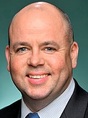
Sam Birrell Nicholls, National Party, Shadow Assistant Minister for Regional Health
6:19 pm
These are appropriation bills, and I think it's interesting to think about one of the things I think we all enjoy in parliament, and that's when the grade 6s come from our electorates. They come here to the home of democracy in Australia and they ask us what we do, and we talk about what we do. It's good to talk to the grade 6s because you can distil what we're here for. Essentially, we're here to represent our areas, and we're here to make rules, pass laws. Probably the most important law that we make is the appropriation of money. Fifty years ago, when I was born, a government tried to govern without the ability to appropriate money, but that's a historical debate that we can have. The appropriation of money is a very important role of this parliament because it leads on to everything else that we do. We can't make the laws and the regulations we make without the ability to put the resources behind them to enact them, whether it's building things or paying people or paying for defence or whatever it is.
The appropriation bill gives us an opportunity. It gives me an opportunity, and what I'd like to do is reflect on the time that I've been here. I had the great honour of being elected to this place in the 2022 election. Before, as a representative in agricultural science, and then serving as the CEO of the Committee for Greater Shepparton, I was advocating to the then coalition government for support for our regional community in Nicholls. I found that support to be very forthcoming and very constructive. I thought people were doing quite well under that government, which is why I was very proud to run as the National Party candidate for Nicholls, succeeding Damian Drum. On the first day of August in 2022, I had the great honour of giving my first speech, as those opposite have recently given their first speeches. It's a great moment in your career, and it's also an opportunity to set out some parameters of what you believe. So I'm going back to my maiden speech a little bit, in the context of appropriations, to see how we're doing now, how we were doing then and how we could have done.
One word I used all through my maiden speech, my first speech, was 'opportunity'. I wanted to see opportunity for regional people. I talked about my grandparents, who didn't have as much opportunity in regional Australia because of when they were born and the things they went through—the war, the Depression. They worked hard to make sure my parents had the opportunity for tertiary education. My parents had that tertiary education opportunity in the late sixties, which was when there was a coalition government. I talked about what they then did for us.
I did talk a lot about regional education, which is something I'm really passionate about; I have the great honour of having the shadow portfolio in regional education. A couple of things have happened very recently which relate to appropriations that were made not in this parliament but quite a few parliaments ago. One of them was the upgrade of the La Trobe University campus in Shepparton. I was a proud MBA student who studied at La Trobe University Shepparton. I go to Latrobe University Shepparton and I see so many people who, if they'd had to go to the big cities for university, just wouldn't do university. I'm very proud of what the coalition government was able to do in supporting that upgrade.
The other thing that's happened recently is the graduation of a number of regional medical students with medical degrees from a combined degree, a Bachelor of Biomedical Science and a postgraduate Doctor of Medicine at the Shepparton campus of the Department of Rural Health. That was put in place by the previous coalition government in 2018, and now we're starting to see the graduates come through. I think that will do more than almost anything else to improve the doctor shortage that we've had.
So regional education is important. Are we better off in terms of regional education than we were? I think we are, but I think it's because of those initiatives that I advocated for and that came together in that previous coalition government.
I also said in my maiden speech that I love agriculture, because I studied agricultural science at the Dookie Campus of University of Melbourne. I worked as an agronomist. I worked with people in agriculture. I worked for an Israeli firm that had great water-saving technology. I've worked in horticulture, and I've always been very interested and concerned about whether we make enough irrigation water available to grow the great horticultural crops that we have in this region. So I came in here and I wanted to talk about the Murray-Darling Basin Plan, what had happened and the way it could have been rolled out.
I couldn't be more disappointed in what the Labor government has done in relation to the Murray-Darling Basin Plan. It's not based on science. It's not based on an understanding of the economic activity and the power of irrigated agriculture in the Murray-Darling Basin. It's based on an ideology. When you get the people who use the environmental water saying that they can't use what they've got and asking why you are buying more—and this is the catchment management authorities; people who know what they're doing—why would the government go and buy more? That's having a real effect on confidence and investment in my electorate. I gave that speech on 1 August 2022. It's very disappointing to see where we've now got to in 2026. In relation to that policy, the restoring our rivers bill is the worst bill I've seen go through this place, and the damage will only continue.
In that maiden speech, I also talked about the fantastic infrastructure that had been funded by the federal coalition government. I thought: 'This is a government that understands that building infrastructure is important. It understands the productivity dividend of building infrastructure, and it wants to do it in the regions, where a lot of the wealth is created.' One of those infrastructure projects was really driven by the now new deputy leader of the Nationals, the member for Gippsland, when he was in that portfolio. It's the Echuca-Moama bridge, which was opened with great pride.
I haven't seen as much productivity-enabling infrastructure funding for regional areas since the Albanese government came to power in 2022. What we were able to do—this is before I came into parliament—was access to Building Better Regions Fund. Now the Labor government has got rid of the Building Better Regions Fund and they've created their own fund. They call it by a different name. That's okay. I don't mind the government coming in and saying, 'We want to change the name of the fund.' What I do mind is when they fail in successive budgets to put any money into it, because local councils come to me and say, 'We've got nowhere to go.'
One example of this is a piece of infrastructure called Kirwans bridge, which was damaged in the 2022 floods. It was something I had to deal with very early on in my career as an MP. A key bridge was damaged and had to be shut down to traffic at the end of 2022. I have tried three times to find a way to get the funding—and it's not a huge amount of money in the scheme of things—to enable that bridge to be reopened, and everywhere I go I get duckshoved. They say, 'Go here. Go there.' I do as I'm told—I go here; I go there—and every time the answer is no. It's emblematic of a government that's not really serious about building infrastructure.
While he's one of those opposite, I'll give a shout-out to the member for Riverina, because the member for Riverina, as the Deputy Prime Minister, worked constructively with the Victorian government to fund 80 per cent of an infrastructure project, the Shepparton to Melbourne rail upgrade. What that means is that, due to all of the signalling upgrades and the passing lanes and all of that infrastructure—and it's big money; I think the Commonwealth contribution was $320 million—there will now be nine return services between Shepparton and Melbourne. I can't tell you what that means for people who live in the city of Shepparton and want to get to the metropolitan area of Melbourne.
I talked in my maiden speech back in 2022 about us having to have a big conversation in this country about population rebalance. I used the example of Germany. I talked about the population of Germany being 80 million people. The population of the biggest city in Germany, Berlin, is only about three million. It is a really good, interconnected hub of cities, all with industry—although energy policy is threatening that, and I'll come to that in a second—that is connected by high-speed rail. This element of what the then deputy prime minister did, funding this Shepparton-to-Melbourne rail, is enabling that population rebalance. That's important for housing, and it's important for regional industry. But we've got to make sure that regional industry can thrive.
We had conversations today about those regional industries struggling with fuel. I thought we asked a lot of reasonable questions of the Minister for Climate Change and Energy. And I do take the Minister for Climate Change and Energy at his word when he's saying that there's enough fuel in Australia, and we don't want to be scaremongering for panic buying. I accept that, but we're coming up with real-life examples of people in our regions who are not getting the fuel they need to run their businesses. I think the minister's got to come clean and say, 'I know this is a problem, and this is what we're doing about it.'
That brings me to energy. I did talk about climate change being a real challenge. It's a challenge we can't run away from or pretend is not happening. We do have to act. But, as I said at the time, it's not about if we act but how we act. If we act in a really reckless way, with reckless timelines, and we don't do it in a measured way, we could see business and, therefore, emissions move offshore. As someone who cares about global emissions, I worry that policies that move business offshore move emissions offshore. That's a real issue. I do think that the better, fairer plan that we've come up with—where we tie our emissions to comparative nations, and we use a suite of technologies and be technology agnostic—is a really good plan, and I implore everyone to look through it. It does advocate for emissions reduction, and I believe in emissions reduction. But, as I've studied a lot of the literature and what's happened overseas, I do see an overreliance on intermittent power generation—that is, wind and solar. I'm not going to demonise those technologies, because, in the right place and in the right percentage of the grid, they're actually pretty good. But I think that the policy that the Labor government are embarking on will lead us to an overreliance on that.
One last thing: I said that Shepparton—the town I grew up in, the town I live in and the town I love—is the greatest example of successful multiculturalism in Australia. I do worry about where social cohesion is going in this country. We've seen some tragic things happen. I want to reiterate what I said at the time, not as a point scoring thing but as a genuine contribution to the debate that I think we need to have about us all living together in this beautiful country. My observation, as a member of the Greater Shepparton community, as to why multiculturalism works was:
… we seem to do better when we celebrate each other's different cultural identity but moreover embrace each other's humanity, the humanity being a stronger bond between us than any divisions that tend to be amplified by race, gender, sexual orientation or religious view.
I stand by that, and I'll continue to say that. It is a great honour to represent all of the people of Nicholls.
In the context of appropriation, we are appropriating money to help people right across the country, and we should do it in regions as well as cities to make our country as great as it can be.

Renee Coffey Griffith, Australian Labor Party
6:34 pm
While we can discuss appropriation bills in terms of numbers, line items and balance sheets, at the heart they're about our national priorities. They tell us what we value, what we are prepared to build and what kind of country we want to be.
For me, one of the clearest tests of any spending is whether it strengthens the foundations of our democracy. Democracy itself is not self-sustaining. It does not run on inertia nor does it endure simply because we inherited it. It depends on people understanding it, trusting in it and believing that they have a place in it. In Griffith, we see that every day. We see it in our schools, in our community halls, in the questions people ask at local forums and in the care people take before they cast a vote. We see it in the pride young people feel when they first learn how a bill becomes law, and we see it when local families want their children to know not just what Australia is but how Australia works. That's why I want to speak today about civics education, media literacy and democratic participation. If we want a stronger democracy, we must invest in people's capacity to take part in it.
In my first speech to this place, I spoke about the importance of civics education and media literacy in upholding our democracy. Australia is rightly proud of our compulsory voting. It is one of the great strengths of our democratic system. But compulsory voting on its own is not enough. Asking people to vote is not the same as equipping them to participate fully, confidently and critically. As the chair of the Joint Standing Committee on Electoral Matters, the member for Bennelong said when releasing the From Classroom to Community report that all Australians need to be informed to participate in our democracy and elections, particularly at a time of rising disengagement, distrust and misinformation.'
That same report found that the quality of formal civics education varies considerably across jurisdictions and across schools, and the warning signs are clear. The 2024 national assessment program report from the Australian Curriculum, Assessment and Reporting Authority, ACARA, showed that 43 per cent of year 6 students and 28 per cent of year 10 students reached the proficient standards in civics and citizenship. That's down from 53 per cent and 38 per cent respectively in 2019, and the results were described as the lowest since the assessment began in 2004.
The report also showed a decline in participation in school based civics activities, especially at year 10 level, with the largest drop in excursions to parliaments and law courts. That should concern all of us, and it is not because young people don't care. The same ACARA material makes it clear that students continue to value learning about our civics and their institutions. The problem is the gap between interest and access, between concern and understanding, and between wanting to participate and being shown how.
An important scheme in place to support this work is the Parliament and Civics Education Rebate, PACER. The PACER program provides financial assistance to support students' on-site learning about national, democratic, historical and cultural institutions here in Canberra. That matters, because educational opportunity should not depend on a school's postcode or budget. In 2023, rebates for students from disadvantaged areas increased significantly, with rebates of up to $1,275 per student available depending on the distance travelled. That increased support has also been extended through 2026 and 2027. Programs like PACER help more young Australians experience our national institutions first-hand, and that kind of access can leave a lasting impression.
If we want stronger democratic engagement, we cannot stop at classroom learning. Participation also has to be practised. Young people need to build confidence in democracy, and they do that when they are given genuine opportunities to take part, to speak, to contribute and to be taken seriously. That's why the National Youth Parliament is so important and such a fantastic new initiative that will be run for the first time later this year. Bringing together one person from each electorate across Australia to take part in a hands-on parliamentary program is exactly the kind of investment we should be making. It will gives young Australians a chance to experience the processes of parliament directly, to see how ideas are debated, how legislation is considered and how representation works in practice. Just as importantly, it will show them that democracy is not something done to them; it is something that they can help shape. Programs like this can be life-changing. They can open the door for future leadership, community advocacy, public service or simply a deeper sense of civic confidence.
Constituents often ask me when I first imagined that I might one day represent our community here in Canberra. The truth is I had not really thought about it until I visited this place as a school student in 1999 and had a chance to meet one of my absolute heroes, former Democrat Senator Natasha Stott Despoja. Experiences like that stay with you. They can turn parliament from something distant and abstract into something real, human and possible.
The National Youth Forum is another important part of this work. Held for the first time last year by the Minister for Youth, the forum creates space for young people to engage directly with government policy questions and decision-makers. It sends a simple but powerful message: young Australians are not just the subjects of policies; they are stakeholders in it. I am proud that the Albanese Labor government reinstated funding for this program after it was discontinued under the previous coalition government.
If we are serious about participation, access has to be broad and inclusive. Democracy is its healthiest when pathways into public life are open to young people from all backgrounds, all communities and all parts of this wonderful country. That's why the Work Exposure in Government program, the WEX program, matters. Initiated by a former Labor government and the Australian Indigenous Education Foundation in 2010, the WEX program provides Aboriginal and Torres Strait Islander students with a hands-on experience and knowledge about career pathways in the Australian government. It helps young people see that there is a place for them in public institutions, in policy, in leadership and in service. That is powerful, because representation is not only about who sits in this chamber but also about who can imagine themselves contributing to the institutions that shape our country. Programs like WEX help make that possible. They widen the pipeline, broaden aspiration, create opportunity and strengthen democracy by ensuring more young Australians can see themselves reflected in the systems that govern them. It was great to meet students Bridget and Harmony from Townsville late last year and answer their questions about being in parliament, and also to catch up with Dwayne, one of the organisers, and Uncle Benny, who has been a mentor in the program for so many years. I was so proud to have been involved with the first WEX program and it is great to now be involved as a parliamentarian.
But civics education is not only about bringing students to Canberra; it's also about bringing parliament to students. It is strongest when it is practical, when students can see institutions up close, ask questions directly and understand that democracy is not remote or inaccessible. That's why the Parliament in Schools program, run by the Speaker of the House alongside the APH Flag Roadshow, is such an important initiative. Across these programs, the Speaker works with local members to visit schools and make civics education accessible to more students, especially those who cannot visit Canberra. Since February last year, the program has already reached more than 145 schools across Australia, including regional and remote schools. The member for Riverina was just discussing how much he enjoyed the visit by the Speaker to a school in his electorate. If a young person cannot get to Canberra, then taking parliament into schools and communities is a practical and meaningful way to close that gap.
Last September I was proud also to host the Parliament in Schools and APH Flag Roadshow at Cooperoo State School with the Speaker of the House. It was a terrific opportunity for local students to engage directly with our democracy in a way that was hands-on, tangible and memorable. Students learned about Federation, the parliament and the democratic process, not in the abstract but in their own school community. They had a chance to ask questions, to take part directly and to connect those lessons to the symbols and institutions that shape our national life. That is what good civics education should do. It should not leave students feeling that parliament is a faraway building occupied by other people; it should help them see that our democracy belongs to them too. When a student can ask the Speaker a question in their own classroom and when the Australian Parliament House flag is brought onto their school oval for us as the starting point for broader conversations about citizenship, something shifts. Parliament becomes less distant, politics becomes less intimidating, and public life becomes something that they can imagine themselves participating in.
Programs like these help young people understand that democracy is not only about election day; it's about participation, responsibility, respect and shared ownership of our public life. They create moments that can begin a much deeper connection to civic life. I also want to acknowledge the extraordinary passion and commitment of the Speaker of the House that he has shown in delivering these programs in electorates right across the country, and to thank him for his tireless work in ensuring our next generation has the skills, tools and knowledge to lead us through the challenges ahead.
In Griffith, we have a strong example of what democratic education can look like when it's practical, engaging and built for the real world. Squiz Kids is a homegrown Griffith story and one I am so proud to talk about. It's smart, accessible, age-appropriate journalism for young people. It takes the news seriously, and it takes children seriously too. If we want the next generation to value democracy, we need to invite them into it early. We need to help them build the habit of asking questions and teach them how to sort fact from spin, evidence from assertion and reporting from rumour. Programs like Squiz Kids and their Newshounds podcast do exactly that. They make big national and global events understandable without talking down to children. They foster curiosity, build context and show young people that being informed is not intimidating but empowering. Squiz Kids is also running a 'PM for a Day' competition right now, which asks Australian children aged seven to 13 to consider what would be the one thing they would do to make Australia a better place. The winning student and their parent or guardian will travel to Canberra later this month, which will include a visit here to question time and a visit to Government House hosted by the Governor-General herself. Applications close this Friday, so I encourage any young people out there listening to get their applications in before it closes.
I want to acknowledge the incredible work of Bryce Corbett and the entire team behind this project. Bryce completed his fellowship with the Winston Churchill Trust in 2025, and his work on international best practice in teaching media literacy to primary school children is a valuable contribution to the national conversation. Today, civics education cannot be separated from media literacy and digital literacy. That's why it matters that the Australian curriculum includes civics and citizenship across years 3 to 10, supported by the government's Civics and Citizenship Education Hub. In 2026, being an informed citizen means more than knowing the three levels of government or understanding how a bill becomes law. It means also knowing how information reaches you, questioning what you see online, recognising manipulation, checking sources and understanding the difference between reporting, commentary and misinformation.
Strengthening democracy also means supporting informed choice. At the last election, when I was out doorknocking across Griffith, there were times people told me they were still unsure, still weighing things up or did not know where they stood. In these conversations I often encourage people to take the time to read widely, compare policies and use trusted public information, including tools like ABC's Vote Compass, to help them think through the issues before casting their vote. Democracy is strongest when people vote with confidence and understanding. An informed vote is not about following habit or noise. It's about taking the time to weigh the facts, consider the choices before you and decide what matters most to you and your community.
When we debate appropriations, we should understand that this is not only about funding services in the narrow sense; it is about whether we are properly funding the habits, institutions and pathways that keep our democratic life healthy. That means backing teachers with resources and professional development. It means making sure civics learning is not left to chance or postcode, and it means supporting school visits, outreach programs and practical democratic experiences. In Griffith, we know that strong communities are built when we feel informed, included and heard. The same is true for our nation. A healthy democracy needs more than just laws and institutions. It needs citizens who understand those laws, trust those institutions enough to engage with them and feel confident that their voice matters. That confidence does not appear by accident. We build it, we teach it, we model it, and, yes, we fund it.
As we consider these appropriations, I support the investments that strengthen civics education, democratic participation and media literacy across the country, because every time we help a child understand parliament, every time we give a young person a meaningful say and every time we teach someone how to test what they are being told online, we do more than fund a program. We strengthen the democratic fabric of Australia, and that is good investment, indeed. I am so proud of the work that is happening across the country to strengthen our civics education, our media literacy and ultimately our democracy. I am incredibly passionate about so much of that happening in my community of Griffith.
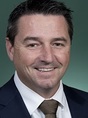
Pat Conaghan Cowper, National Party, Shadow Assistant Treasurer
6:49 pm
I'm very pleased to rise to speak on the appropriation bill. For those who are listening or watching, this is an opportunity for us to talk about how the government is spending your money—not its money, your money—where it's spending it and whether it's being spent properly. It's also about where it's not being spent, which most of my speech will be about. But I'm going to do something quite unorthodox. I'm going to start by complimenting somebody from the other side. That is the Minister for Health and Ageing, and it is in relation to the decision by the minister to backflip on a proposal to stop intravitreal eye injections from being claimable under private health insurance. I have no doubt that you're aware of that, Deputy Speaker, with your—

Mike Freelander Macarthur, Australian Labor Party
Very important in my electorate.
Pat Conaghan Cowper, National Party, Shadow Assistant Treasurer
Absolutely. Tens of thousands of people around Australia were facing the prospect of either going blind or going broke. That was because, if the decision to remove it from private health had proceeded, it would have cost them anywhere between $600 and $800 a month for the eye injections. People simply can't afford that. They can afford their private insurance, which is nowhere near that. It was some 18 months ago that people in my electorate came to me and raised the issue. I raised it with the minister, we worked together and the minister deferred it for 12 months, which was very well received. And then, leading up to the end of last year—so six months ago—we recommenced negotiations with the minister. To his credit, he consulted with the industry and he consulted with his own constituents and came to the decision only this week that the government would not proceed with that. So there are tens of thousands of people out there who now have the relief of knowing that they won't go broke or won't go blind. In his absence, I thank the minister through you, Deputy Speaker.
Mike Freelander Macarthur, Australian Labor Party
Or through the assistant minister.
Pat Conaghan Cowper, National Party, Shadow Assistant Treasurer
Or through the assistant minister as well. Thank you.
That's where the thanks ends!
Mike Freelander Macarthur, Australian Labor Party
They're often elderly people as well.
Pat Conaghan Cowper, National Party, Shadow Assistant Treasurer
The public know—the Australian people know—that this government is about to rack up $1.2 trillion in debt, and that amounts to $67 million a day in interest. That's $160 billion higher than when this government first came into power. Now, I've been listening to a number of these speeches—I was here for an hour on table duty earlier—and I heard countless stories from the other side that I would love to be able to tell about my electorate: sports stadiums and infrastructure and funding for roads—

Pat Conaghan Cowper, National Party, Shadow Assistant Treasurer
and mobile towers. Thank you, Member for Riverina. There were all these projects that have happened in their electorates not just over the first four years but even over the last year. I sat here with great envy. I just thought, 'If only I could get for my electorate just a smidgen of that.' And I thought back to all those years ago when we were in government and to the small projects that we delivered into Cowper, into Riverina, that were then described as pork-barrelling by the other side. But, when they do it, it's delivering for their communities.
I just want to highlight a few of the issues in my electorate that not only haven't been funded but had funding taken away from them when this government came into power in 2022. I want to start with something that's very close to my heart, and that is veterans. In Cowper we have one of the largest cohorts of veterans in New South Wales—around 9,000 veterans, compared to other places, let's say, further north in Richmond, where they have only 4½ thousand.
In 2022 we had earmarked $5 million for a veterans centre, which was a hub-and-spoke model. The other models are just $5 million for one centre. This would have provided four centres throughout the electorate, so people weren't driving two hours from Coffs Harbour down to Port Macquarie, if that were the case, or vice versa—wherever it was going to be located. There would have been four. We know that the hardest part of getting veterans into care is for them to actually attend. It's so hard, and we rely heavily on the veterans' families.
After we lost the election in 2022, that $5 million was ripped away and given to the electorate of Richmond, where there's half the number of veterans. The panel that I worked with and the veterans that I worked with were literally heartbroken. I mean that. They had worked so hard, and we had celebrated the fact that there was going to be this hub-and-spoke model. Those people that they were working for—hundreds of files—would not get the attention that they deserved. Fortunately, I have great constituents and great businesses in Cowper, including the Coffs Harbour C.ex, the ex-servicemen's club. They pooled together the money for a veterans centre in Coffs Harbour. There was not one federal dollar that went in there. But for the generosity of our locals, we wouldn't have any veterans centre at all. That doesn't fix the problem down in Port Macquarie or Kempsey or Nambucca. But I'm so grateful to the C.ex and those local business people that have supported this for our veterans.
Then the next issue is probably the No. 1 issue that people approach me about. That is the state of our roads—the fact that they are falling apart. The councils can't afford to put them back together. When you look at the density in a city and the rates that they pay, it's no wonder that their roads are of a fairly satisfactory condition. Then you look at the tens of thousands of kilometres of road network just in Cowper alone and the pittance that the council gets to maintain those roads. Time after time, people walk up to me and say, 'Can't you fix those damn roads?' But you can replace the word 'damn' with a lot of other expletives that we can't use here.
One road springs to mind, and that is Waterfall Way. Waterfall Way runs from Coffs Harbour to Bellingen and then up to Dorrigo. It's about 140 kilometres. We have had a number of slips there, but recently there has been a significant one that is now stopping the freight, businesses and workers from getting up or down the hill to go and do their daily business. We are seeing farmers pour their milk out on a daily basis because they can't access the road network. Now, this government has provided $3.2 million for two bridges on a very unsafe alternative way. But in 2022 we had the money set aside for an upgrade of Summervilles Road, which was an alternative route in the event that we had further spills. I've had people on the phone crying that they now have a three-hour round trip, one way, to go to work and back down to Coffs Harbour. I met up with the school students at the Steiner school. It's adding an extra two to three hours in a bus every single day—because this government won't listen to their pleas for funding to fix this road.
On another road topic—Wrights Road in Port Macquarie. If you live in Port Macquarie, Wauchope or anywhere near there, you'll know what I'm talking about when I say that it's not only a significant congestion spot but it will extend your drive into work or out from work by at least 30 minutes a day. Now, I appreciate the minister has already said that it's not a priority, but this congestion spot is right smack-bang in the middle of the health precinct. It stops ambulances and health professionals from getting in and out of that precinct quickly and efficiently. I've heard stories of nurses finishing their shift, going out to the roundabout and constantly driving around the roundabout to let their colleagues get out of the hospital. That's how bad it is. And sooner or later—and I'm not being melodramatic—a patient will die because that ambulance cannot get through that traffic quick enough. This government needs to look at its priorities for where it wants to spend money.
We hear the other side talk about child care, that it's subsidised and you can earn up to $530,000 as a couple, but that's no good if you can't access it. Prior to this last election, we put in a plea for government funding to help Kempsey Children's Services purchase a building. It was about $600,000—not much; a drop in the bucket—and it would have provided child care for at least 60 or 70 children. There is a waiting list of 280 children for that particular child care while this government says, 'We're doing everything we can to make sure people get access to child care.' I know of police officers who arrange their shifts so they can look after each other's children because they can't get into child care. That's disgraceful. We should be looking at these examples on the ground, but we don't.
I'll now go to telecommunications. The last round, or it might have been the round before, of the black spot telecommunications program was a disaster funding round. Cowper's had plenty of disasters, but I can tell you now that 28 of the 28 towers in that funding round went to Labor seats—not to Liberal seats, not to National seats—and some of them were in seats that haven't seen any disasters for years.
Thank you for your contribution, Member for Riverina! It is serious. This is not just convenience. When we have disasters, we need to be able to communicate with the people who live in the area, with the frontline workers, with the SES, with the RFS. The fact that 28 out of 28 towers went to Labor seats is just a disgrace. Even more disgraceful was that five of them were deemed inappropriate for the areas they went to. I would like to see more decent funding in our regions. I would like to see equitable funding in our regions. And I would like to see the other side, when we work with you, to compliment our side, just the way I complimented your side when I started my speech.

Alice Jordan-Baird Gorton, Australian Labor Party
7:04 pm
I rise to speak on Appropriation Bill (No. 3) 2025-2026, Appropriation Bill (No. 4) 2025-2026 and Appropriation (Parliamentary Departments) Bill (No. 2) 2025-2026, brought forward by the Assistant Treasurer and Minister for Financial Services, and I commend him for doing so. These bills underpin our government's expenditure decisions made since the 2025-26 budget, the commitments that we took to the 2025 election and that we have been able to deliver in my home in Melbourne's western suburbs, in Sydenham, as well as for Australians right across the country. We introduced a number of really important reforms that are already making a difference in the lives of everyday Australians.
Australians didn't vote just for a Labor government. They voted for a government with priorities in health care, education and infrastructure. They voted for a government with a clear economic plan. But, most importantly, they voted for a government that puts the Australian people first, because that's what a Labor government does. Australians have been doing it tough. Household budgets are tight, and many families are working harder than ever just to get by. There have been devastating global events, which have a hand in current economic tides. But there's also the role of governments. In times like these, people look to their government for support, and they expect us to make change, not just in words but in action.
When we got elected, that's exactly what we did. When Labor first came to government after the coalition's Morrison era, the inflation rate had a six in front of it; now it has just a three in front of it. That's because of everything this Labor government has done to improve Australia's economic environment to make life easier for everyday Aussies. We have delivered real cost-of-living relief. But, more than that, we're laying the groundwork for a stronger and fairer future by investing in the services people rely on every day and in the local infrastructure that keeps our communities moving—in health care, education, energy, workforce skills, and local communities like mine, in Melbourne's western suburbs. And we are building for the next generation of Australians.
I'm so proud to represent such a beautiful, diverse community in the west. We are one of the youngest electorates in the country, with a median age of just 35. In the city of Melton alone, nearly 80 babies are born every week. It's full of young families, setting up their futures in the western suburbs, and they've chosen our community to call home. The Albanese Labor government is doing everything it can to support young families in the west. We are rolling out real cost-of-living relief, help that makes a difference at the checkout and to power bills, at doctor's appointments, in rent and in mortgage payments.
I've fought really hard to make sure our community receives its fair share—every announcement, every dollar, every project. We push for Gorton because I know how much it mattered, and I'm really proud of what we will be delivering. We're installing a new roundabout at the intersection of Mount Cottrell Road and Greigs Road. We're upgrading the Caroline Springs Recreation Reserve, Keilor Recreation Reserve and Lionheart Reserve. We're helping the Sri Durga Temple build a new community and education centre. We've opened a new childcare centre in Brimbank, in Kings Park. We're helping the St Michael Ethiopian church expand programs for language assistance and youth outreach. And we are providing important infrastructure upgrades to strengthen community safety right across Gorton.
These are the places where our kids play sport and learn, where families gather, where communities come together. These upgrades really matter, and this is what delivering for our community looks like. Infrastructure is really important. It matters because in my electorate, in the western suburbs, we are seeing so much growth in our community. That's a good thing, but it comes with its own set of challenges. A growing community means things like more people in more cars on our roads—roads like the Western Freeway and the Calder Freeway. The Western Freeway is a critical transport route for passengers and freight. It links in with major freight routes throughout our state, including the Midland, Sunraysia, Pyrenees, Henty and Wimmera highways. Approximately 86,000 vehicles travel on the Western Freeway stretch between Melton and Caroline Springs every day, and we're expecting that figure to rise to about 113,000 by 2031. That's why we've invested $1 billion to upgrade the Western Freeway between Melton and Caroline Springs, all towards improving capacity and safety along the freeway for our community in the west.
Then there's Calder Park drive. If you're a westie like me, regularly driving these roads, you already know that the Calder Freeway has a really dangerous intersection at Calder Park Drive. That is exactly why, in March last year, we announced $300 million to upgrade this interchange on the Calder Freeway. This diamond interchange will make things a lot safer for my community. Early planning stages are underway with the department, and they're currently refining the interchange design scope. They're speaking to stakeholders about how the works may impact them and what this might look like. This project is about improving access between our roads and about community safety.
Better planning means getting the basics right: building roads to withstand the tens of thousands of cars driving on them day and night. And our westies—our locals—travel on them every single day. They spend more hours of the day away from their families, sitting in traffic—more hours at risk of road accidents. And westies deserve better than that. We deserve to get home safely and efficiently. That's why I'm advocating for these changes, which will mean less time on the road and more time at home with our families. And we're making those changes.
Around 26,000 people in my electorate have student debt. They're the same people who are trying to save for a deposit to get into the housing market, or paying a mortgage; they're paying bills; they're starting their own families; they're working hard, trying to get ahead. But many people still face barriers to education and training—barriers that the generations before us simply didn't face. I hear it from young people in the families in my community all the time. I speak regularly with so many young people in the west: students at uni or TAFE or in schools, all across my community, and they keep telling me the same thing. They're facing cost-of-living pressures that their parents' generation simply didn't have. It's not fair, and the younger generations of Aussies deserve better.
That's why we've made HECS fairer. It's why we've cut 20 per cent off student debt for young people pursuing an education, whether it's at uni or TAFE, in VET or apprenticeships. Wiping 20 per cent off every student's debt was the first piece of legislation this Labor government introduced to parliament after we came in last year. By Christmas, millions of Australians had seen that reduction for themselves the next time they'd logged into their myGov account. Those with an average debt of $27,600 have seen a reduction of $5,520 in their outstanding debt. This means that students can keep more of what they earn. There are no applications and no forms, just real cost-of-living relief.
We've capped the interest, so that young people's student debt doesn't spiral out of control, and we've raised the minimum repayment threshold, so students aren't forced to pay back more than they can afford. This means that, for example, if you earn $27,000 a year, you'll save over $1,000 a year in repayments. You can still pay off more if you want to. But this makes the system fairer for everyone, no matter what their income is. This 20 per cent cut will be especially important for VET students. It applies to more than 280,000 VET student loans and Australian Apprenticeship Support Loan accounts, and it will remove $500 million from those balances. That's a huge boost for apprentices and trainees starting out in the workforce.
But this isn't a one-off change. It's about making the whole system fairer for the students who'll study tomorrow as well. It's about long-term structural change. Reducing student-debt burden helps graduates build a better future for themselves and for their families. It's about intergenerational fairness, because getting an education here in Australia should not leave young people with a lifetime of debt. For the more than 26,000 people in Gorton who currently have student debt, this is real change, real cost-of-living relief and real fairness. And that's what this Labor government is delivering.
A young community like mine means a community building their futures, starting families and buying their first homes. Right now, Australia is facing a housing challenge that has been a generation in the making. When the coalition were in government for almost a decade, they were negligent when it came to housing. They didn't take responsibility. They didn't step in. They didn't deliver. This problem can't be tackled overnight. But, unlike previous coalition governments, we are addressing this issue. We're not leaving the struggle for homeownership to an entire generation. We're not leaving it to the states. We're taking a hand in it. We have brought the federal government back to the table, where it always should have been.
That's why I'm so proud to report on the success of the Albanese Labor government's five per cent deposit scheme. My electorate of Gorton has one of the highest uptakes in the country. Since we came to government, more than 3,000 people in Gorton have bought their first homes with just a five per cent deposit. And this scheme is simple: no income limits, no limits on places, no house price caps. It's just real help for real people.
But helping people into a home is just one part. We also need to build more homes. In Labor's last term, we built 500,000 homes across the country. Right now, 28,000 social and affordable homes, funded by our government, are in planning and construction. And we are aiming even higher. This term, we are working towards a bold national goal: 1.2 million new homes in five years. We are also building the workforce to deliver them. In Gorton, more than 400 construction apprentices are getting $5,000 incentive payments to train in the trades. These young workers will help build the homes that our community so desperately needs. This just shows that the contrast between us could not be clearer. The Liberals wanted young people to raid their super. They voted against Help to Buy. They voted against building 100,000 homes for first home buyers. Labor is delivering, Labor is building and Labor is giving young Australians a fair shot at homeownership.
The Albanese Labor government is laser focused on the health care of all Australians. We've introduced a suite of reforms to strengthen Medicare, boost our healthcare workforce and make health care more readily accessible to all Australians. When it comes to securing affordable and accessible health care, we're making sure that no Australian is left behind. We have made record investments in Medicare, like our landmark agreement to deliver record funding to state and territory hospitals, with $25 billion in additional funding for public hospitals. That is three times more additional funding for public hospitals than under the last five-year agreement. There are now 23 Medicare bulk-billing clinics in my electorate of Gorton in Melbourne's west. Seventy per cent of GP clinics in Gorton are fully bulk-billed. I visited some of these clinics, including Our Medical Caroline Springs and the Taylors Hill Medical Clinic. We also have two urgent care clinics nearby in our community, in Melton and in Sunshine. They're amongst the 90 urgent care clinics Labor has opened across the country, with another 50 still coming. We've cut the cost of PBS listed medicines at just $25.
We've done so much in women's health. We've added new contraceptives to the PBS for the first time in 30 years—Yaz, Yasmin and Slinda—we've introduced the first new menopause treatments on the PBS for the first time in 20 years, and we're ensuring there's better access to IUDs and birth control implants as well. We've opened endometriosis and pelvic pain clinics across the country. Let me be clear: this does not happen by accident. It happens because we have a Labor government with a majority female Labor caucus, unlike those opposite, who fail to elect enough women and who then undermine the ones who are elected and do manage to break the glass ceiling. We are a government who understands the challenges faced by Australian women because that's who we are. For that reason, we make changes for women right across the country, like expanding paid parental leave to 26 weeks so that Australian women are supported in getting back into the workforce. We're also paying super on paid parental leave. We've brought in cheaper child care and the three-day childcare guarantee, and we've secured a 15 per cent pay rise for early childhood educators. This is about closing the gender super gap so that Australian women can retire with more super.
When we were elected, we committed to delivering on the issues that matter to Australians, like better infrastructure, health and education outcomes. I am proud that we are delivering real changes and real cost-of-living relief for Australians in my community in the west and for those right around the country. On doing so, I commend this bill to the House.

Tom Venning Grey, Liberal Party
7:18 pm
I rise to speak on the Appropriation Bill (No. 3) 2025-2026, the Appropriation Bill (No. 4) 2025-2026 and the Appropriation (Parliamentary Departments) Bill (No. 2) 2025-2026. The Albanese government has made history as the highest spending government outside of the pandemic in 40 years. In coming years, it is projected, they will break their own record. I've said it many times, and I'll keep saying it: this Labor government is run by politics, not by policy, and they have no respect for the taxpayer. They answer only to their union boss. They have no respect for the small-business owner. The national accounts show this. The government debt shows this. Our inflation shows this—it's the highest in the OECD. Spend, spend, spend, spend, spend, and then, one day, the next Liberal-National government will fix it.
Spending as a percentage of GDP is predicted to reach 26.9 per cent at the end of this financial year. More than a quarter of all dollars in our economy is spent by this government. That is ridiculous, and it is not good enough. This is big government territory. This government is running deficits because record levels of revenue are being outstripped by record levels of spending and record levels of spending growth. This socialist Labor government is breaking records all around at the cost of Australians.
These spending habits do not reflect the restraint that the Treasurer so often speaks about. This restraint is setting up the next generation to pay off even more Labor debt—$1.2 trillion of debt. That's $1,200 billion. It's $1,200,000 million. That's how much money this is.
That's a lot of money, but it's hard to comprehend what that means on a per-worker basis. If I combine the South Australian Labor government debt and the Australian Labor government debt and I divide it by the workforce, we reached a milestone in 2025 in South Australia. There is over $100,000 per worker on their individual government debt credit card. Every South Australian worker now owes their government more than $100,000 in debt. That is significant, and that will be paid off by their children and their children's children.
Until Pyro Jim gets spending under control, Australians will keep paying through higher prices, higher mortgages and weaker living standards. This is the first generation in Australian history where your children will be poorer than you, and that is unacceptable.
Labor's reckless spending habits are also part of the reason the RBA have raised interest rates again. The Treasurer has got his foot on the gas of government spending. The RBA have their foot on the brake, raising interest rates. If you press the gas and the brake too hard, what do you do? You do a burnout. Maybe we should start calling our Treasurer Burnout Jim.
The RBA raised interest rates in February by 25 basis points, making it now sit at 3.85 per cent. Pundits predict the RBA will increase rates again when they next meet and even again when they next meet after that, putting more pressure on your mortgage repayments and more pressure on the cost of everything.
At the House Economics Committee on 6 February, the RBA governor said:
… to the extent that aggregate demand is above aggregate supply, which we think it is, that's contributing to inflationary pressures.
She also said:
Mathematically, you're right; public demand expenditure and private sector—all of that—adds to demand.
The government cannot escape the laws of economics. Higher government spending always results in higher inflation. Higher inflation demands higher interest rates.
I always come back to my high school economics teacher—economics 101; thank you, Mr Maguire—who said that governments act in a countercyclical fashion to the private sector. When the private sector is doing poorly, government spends more. When the private sector is doing well, government restrains itself. What have we seen with this government? We've seen it spend, spend, spend, spend, spend. We've seen inflation and debt go through the roof. It is as simple as that.
After nearly four years of Labor, Australians are paying more for everything because of Labor's reckless spending, which is fuelling the inflation fire. Insurance is up 39 per cent. Energy is up 40 per cent. Mind you, the $275 reduction in our power bills never came. Rent is up 22 per cent. Health is up 18 per cent. Education is up 17 per cent. Food is up 16 per cent. Throw in the recent floods in outback South Australia, which is causing some councils to estimate $10 million in damages, with no support announced at the state or federal level. Or how about the recent fuel shortages, which are causing transport operators to pay more than $1,350 on fuel? That is a 38 per cent increase on what they were paying just last week.
These figures add up when Australians are being forced to pay more for essentials because of this government's spending habits. You only have to look at Labor's upgrade to the BOM website to see how they manage their money. That was $96.5 million for a website upgrade. My fiance builds websites. The cheapest website is about $2,000. A Rolls-Royce website is about $40,000. How on earth did the Bureau of Meteorology spend $96.5 million on a website that no-one asked for? Indeed, there was clearly no user acceptance testing, because the farmers that I speak to don't use it. They don't like it. We've had to reinstate the old one and share that link with all of my community. This waste of taxpayer money has resulted in our primary producers, the backbone of our economy, having an important resource taken away. That mistake was a completely unacceptable use of taxpayer money by Labor, and it's just one example. I've been fighting for a Doppler radar on the lower Eyre Peninsula. Minister Watt told me there is 'no capacity'. To be frank, 'no capacity' is political speak for 'no cash'. How is it that this government can spend so much money yet not spend any of it where it is actually needed on physical infrastructure like Doppler radar as opposed to an expensive website?
Labor's out-of-control spending is hurting all Australians by fuelling higher inflation and higher interest rates. Australia's inflation rate is now higher than the United Kingdom, the United States, Canada, Japan, Germany and so many other countries. This is a problem specific to Australia, fuelled by government spending being the highest in 40 years outside of a recession. Why is it that we are the only country with this problem? The worst part is that Labor have been warned by industry experts. This is not new news. AMP chief economist Diana Mousina confirmed it when she said:
So it appears that directly, the government has been adding to inflation in recent years, as you would expect in an environment of public spending lifting to a record high.
AMP chief economist Shane Oliver only last week said, 'A lot of factors driving (inflation) relate to government spending.' IFM Investors' chief economist Alex Joiner said:
We already have fiscal policy getting looser, but it could be even looser than we expect. The fiscal guard rails have come off.
And HSBC chief economist Paul Bloxham said:
… the primary driver of the pick-up in inflation is not strong demand. To the extent that demand is playing much of a role, it is that public demand growth has been strong, due to government spending.
The government has lost support from its friends in the industry super sector.
Spending growth is running at four times the rate of growth in the economy, and debt under the Albanese government is set to reach $1.2 trillion. Spending is now $160 billion higher than when this government came to office. That is $16,000 for every household in Australia. Since coming to office, the Albanese government has added $100 billion to the national debt. That is impacting Australians. We saw some news come out last week that Australia has the highest rates of bureaucrats per capita—another interesting point. Australians are spending $50,000 a minute on the interest of Labor's debt alone—$50,000 a minute—and I'm sure that's increasing as well.
Under Labor, Australians are worse off. Under Labor, living standards have declined. Australia has the biggest fall in living standards in the developed world. As Liberals, we stand for lower inflation, lower interest rates and lower taxes. You will always get that from the Liberal Party. It is clear Labor's reckless spending is keeping inflation higher for longer. We will fight for lower costs and for disciplined economic management. We must unapologetic, unapologetic—I can't even say it, Deputy Speaker Freelander.
Tom Venning Grey, Liberal Party
We must defend Australian values. Speaker Freelander, it's getting late in the day. We want our country once again to be one of opportunity and aspiration. All Australians, especially young Australians, deserve the stability that comes from owning a home. They deserve the opportunity it provides. They cannot do that under Labor with its reckless spending habits. We will reduce financial pressures for families, expand childcare choice and give children the best start in life, not force every family into a universal system. We will fix Labor's bad taxes, including a tax on your home, a tax on your super, and a tax on you and your children's future. We'll get rid of Labor's carbon taxes that are pushing up the costs of food, cars and housing. We know the government must live within its means so Australians have the means to live.
Debate interrupted.