
House debates Bills
Appropriation Bill (No. 3) 2025-2026, Appropriation Bill (No. 4) 2025-2026, Appropriation (Parliamentary Departments) Bill (No. 2) 2025-2026; Second Reading
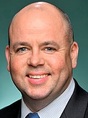
Sam Birrell Nicholls, National Party, Shadow Assistant Minister for Regional Health
6:19 pm
These are appropriation bills, and I think it's interesting to think about one of the things I think we all enjoy in parliament, and that's when the grade 6s come from our electorates. They come here to the home of democracy in Australia and they ask us what we do, and we talk about what we do. It's good to talk to the grade 6s because you can distil what we're here for. Essentially, we're here to represent our areas, and we're here to make rules, pass laws. Probably the most important law that we make is the appropriation of money. Fifty years ago, when I was born, a government tried to govern without the ability to appropriate money, but that's a historical debate that we can have. The appropriation of money is a very important role of this parliament because it leads on to everything else that we do. We can't make the laws and the regulations we make without the ability to put the resources behind them to enact them, whether it's building things or paying people or paying for defence or whatever it is.
The appropriation bill gives us an opportunity. It gives me an opportunity, and what I'd like to do is reflect on the time that I've been here. I had the great honour of being elected to this place in the 2022 election. Before, as a representative in agricultural science, and then serving as the CEO of the Committee for Greater Shepparton, I was advocating to the then coalition government for support for our regional community in Nicholls. I found that support to be very forthcoming and very constructive. I thought people were doing quite well under that government, which is why I was very proud to run as the National Party candidate for Nicholls, succeeding Damian Drum. On the first day of August in 2022, I had the great honour of giving my first speech, as those opposite have recently given their first speeches. It's a great moment in your career, and it's also an opportunity to set out some parameters of what you believe. So I'm going back to my maiden speech a little bit, in the context of appropriations, to see how we're doing now, how we were doing then and how we could have done.
One word I used all through my maiden speech, my first speech, was 'opportunity'. I wanted to see opportunity for regional people. I talked about my grandparents, who didn't have as much opportunity in regional Australia because of when they were born and the things they went through—the war, the Depression. They worked hard to make sure my parents had the opportunity for tertiary education. My parents had that tertiary education opportunity in the late sixties, which was when there was a coalition government. I talked about what they then did for us.
I did talk a lot about regional education, which is something I'm really passionate about; I have the great honour of having the shadow portfolio in regional education. A couple of things have happened very recently which relate to appropriations that were made not in this parliament but quite a few parliaments ago. One of them was the upgrade of the La Trobe University campus in Shepparton. I was a proud MBA student who studied at La Trobe University Shepparton. I go to Latrobe University Shepparton and I see so many people who, if they'd had to go to the big cities for university, just wouldn't do university. I'm very proud of what the coalition government was able to do in supporting that upgrade.
The other thing that's happened recently is the graduation of a number of regional medical students with medical degrees from a combined degree, a Bachelor of Biomedical Science and a postgraduate Doctor of Medicine at the Shepparton campus of the Department of Rural Health. That was put in place by the previous coalition government in 2018, and now we're starting to see the graduates come through. I think that will do more than almost anything else to improve the doctor shortage that we've had.
So regional education is important. Are we better off in terms of regional education than we were? I think we are, but I think it's because of those initiatives that I advocated for and that came together in that previous coalition government.
I also said in my maiden speech that I love agriculture, because I studied agricultural science at the Dookie Campus of University of Melbourne. I worked as an agronomist. I worked with people in agriculture. I worked for an Israeli firm that had great water-saving technology. I've worked in horticulture, and I've always been very interested and concerned about whether we make enough irrigation water available to grow the great horticultural crops that we have in this region. So I came in here and I wanted to talk about the Murray-Darling Basin Plan, what had happened and the way it could have been rolled out.
I couldn't be more disappointed in what the Labor government has done in relation to the Murray-Darling Basin Plan. It's not based on science. It's not based on an understanding of the economic activity and the power of irrigated agriculture in the Murray-Darling Basin. It's based on an ideology. When you get the people who use the environmental water saying that they can't use what they've got and asking why you are buying more—and this is the catchment management authorities; people who know what they're doing—why would the government go and buy more? That's having a real effect on confidence and investment in my electorate. I gave that speech on 1 August 2022. It's very disappointing to see where we've now got to in 2026. In relation to that policy, the restoring our rivers bill is the worst bill I've seen go through this place, and the damage will only continue.
In that maiden speech, I also talked about the fantastic infrastructure that had been funded by the federal coalition government. I thought: 'This is a government that understands that building infrastructure is important. It understands the productivity dividend of building infrastructure, and it wants to do it in the regions, where a lot of the wealth is created.' One of those infrastructure projects was really driven by the now new deputy leader of the Nationals, the member for Gippsland, when he was in that portfolio. It's the Echuca-Moama bridge, which was opened with great pride.
I haven't seen as much productivity-enabling infrastructure funding for regional areas since the Albanese government came to power in 2022. What we were able to do—this is before I came into parliament—was access to Building Better Regions Fund. Now the Labor government has got rid of the Building Better Regions Fund and they've created their own fund. They call it by a different name. That's okay. I don't mind the government coming in and saying, 'We want to change the name of the fund.' What I do mind is when they fail in successive budgets to put any money into it, because local councils come to me and say, 'We've got nowhere to go.'
One example of this is a piece of infrastructure called Kirwans bridge, which was damaged in the 2022 floods. It was something I had to deal with very early on in my career as an MP. A key bridge was damaged and had to be shut down to traffic at the end of 2022. I have tried three times to find a way to get the funding—and it's not a huge amount of money in the scheme of things—to enable that bridge to be reopened, and everywhere I go I get duckshoved. They say, 'Go here. Go there.' I do as I'm told—I go here; I go there—and every time the answer is no. It's emblematic of a government that's not really serious about building infrastructure.
While he's one of those opposite, I'll give a shout-out to the member for Riverina, because the member for Riverina, as the Deputy Prime Minister, worked constructively with the Victorian government to fund 80 per cent of an infrastructure project, the Shepparton to Melbourne rail upgrade. What that means is that, due to all of the signalling upgrades and the passing lanes and all of that infrastructure—and it's big money; I think the Commonwealth contribution was $320 million—there will now be nine return services between Shepparton and Melbourne. I can't tell you what that means for people who live in the city of Shepparton and want to get to the metropolitan area of Melbourne.
I talked in my maiden speech back in 2022 about us having to have a big conversation in this country about population rebalance. I used the example of Germany. I talked about the population of Germany being 80 million people. The population of the biggest city in Germany, Berlin, is only about three million. It is a really good, interconnected hub of cities, all with industry—although energy policy is threatening that, and I'll come to that in a second—that is connected by high-speed rail. This element of what the then deputy prime minister did, funding this Shepparton-to-Melbourne rail, is enabling that population rebalance. That's important for housing, and it's important for regional industry. But we've got to make sure that regional industry can thrive.
We had conversations today about those regional industries struggling with fuel. I thought we asked a lot of reasonable questions of the Minister for Climate Change and Energy. And I do take the Minister for Climate Change and Energy at his word when he's saying that there's enough fuel in Australia, and we don't want to be scaremongering for panic buying. I accept that, but we're coming up with real-life examples of people in our regions who are not getting the fuel they need to run their businesses. I think the minister's got to come clean and say, 'I know this is a problem, and this is what we're doing about it.'
That brings me to energy. I did talk about climate change being a real challenge. It's a challenge we can't run away from or pretend is not happening. We do have to act. But, as I said at the time, it's not about if we act but how we act. If we act in a really reckless way, with reckless timelines, and we don't do it in a measured way, we could see business and, therefore, emissions move offshore. As someone who cares about global emissions, I worry that policies that move business offshore move emissions offshore. That's a real issue. I do think that the better, fairer plan that we've come up with—where we tie our emissions to comparative nations, and we use a suite of technologies and be technology agnostic—is a really good plan, and I implore everyone to look through it. It does advocate for emissions reduction, and I believe in emissions reduction. But, as I've studied a lot of the literature and what's happened overseas, I do see an overreliance on intermittent power generation—that is, wind and solar. I'm not going to demonise those technologies, because, in the right place and in the right percentage of the grid, they're actually pretty good. But I think that the policy that the Labor government are embarking on will lead us to an overreliance on that.
One last thing: I said that Shepparton—the town I grew up in, the town I live in and the town I love—is the greatest example of successful multiculturalism in Australia. I do worry about where social cohesion is going in this country. We've seen some tragic things happen. I want to reiterate what I said at the time, not as a point scoring thing but as a genuine contribution to the debate that I think we need to have about us all living together in this beautiful country. My observation, as a member of the Greater Shepparton community, as to why multiculturalism works was:
… we seem to do better when we celebrate each other's different cultural identity but moreover embrace each other's humanity, the humanity being a stronger bond between us than any divisions that tend to be amplified by race, gender, sexual orientation or religious view.
I stand by that, and I'll continue to say that. It is a great honour to represent all of the people of Nicholls.
In the context of appropriation, we are appropriating money to help people right across the country, and we should do it in regions as well as cities to make our country as great as it can be.
No comments