
House debates Condolences
Bondi Beach Attack Victims

Anthony Albanese Grayndler, Australian Labor Party, Prime Minister
9:32 am
I move:
That this House:
(1) tenders our nation's heartfelt condolences to the families and loved ones of the 15 innocent people murdered at Bondi Beach on 14 December 2025;
(2) condemns the atrocity which stole their lives, an act of terrorism deliberately targeted at Australia's Jewish community gathering to celebrate the first night of Chanukah;
(3) unequivocally condemns the evil of antisemitism and vows new action to eradicate it;
(4) honours the courage, composure and quick action of all the police officers, first responders and healthcare workers whose dedication and skill saved lives;
(5) acknowledges the trauma of the men, women and children injured physically and psychologically, including those who witnessed the horror;
(6) expresses Australia's deep admiration for the heroes of Bondi, everyday people who showed extraordinary bravery and selflessness, including those wounded and killed saving others;
(7) affirms the fundamental right of every Jewish Australian to live, work, worship and learn in peace and safety, to participate fully and freely in Australian public life and to gather in communal association unhindered, proud of who they are and proud of the profound contribution their community has made to our nation's success; and
(8) stands together in a spirit of national unity, resolved to confront and defeat the worst of hatred and division with the best of the Australian spirit.
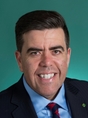
Milton Dick Speaker
As a mark of respect to the victims of the Bondi antisemitic terror attack, I ask all present to rise in their places.
Honourable members having stood in their places—
Anthony Albanese Grayndler, Australian Labor Party, Prime Minister
Matilda, Edith Brutman, Dan Elkayam, Boris and Sofia Gurman, Alexander Kleytman, Rabbi Yaakov Levitan, Peter Meagher, Reuven Morrison, Marika Pogany, Rabbi Eli Schlanger, Adam Smyth, Boris Tetleroyd, Tania Tretiak, Tibor Weitzen. The minute of silence we have just observed echoes with those 15 names of 15 innocent people for whom today should be just another Monday morning—another day in this beautiful country they loved in the embrace of the family and friends they adored; another day in busy lives, rich in passion and purpose, defined by hard work and by humour; another day devoted to others, serving their community, nourishing their faith; another day of school holidays. Instead, our parliament comes together in sorrow to offer our nation's condolences to the people who knew and loved them best.
We welcome all the family members and dear friends and spiritual leaders joining us here. From the depths of grief, you have summoned remarkable strength. You have given us a glimpse of who your loved ones were, how much they meant, how brave they proved themselves to be and, as Rabbi Ulman put it, the 'light' that each of those souls brought into the world. As we pause in silence to remember them, we recognise that for you an unbearable silence has fallen—the silence of laughter forever stilled, of footsteps in the hallway that will never come, of a voice that will never be heard again, except in memories held in broken hearts. It is the silence of futures unlived—the silence of a sorrow beyond words, inflicted by an atrocity beyond comprehension.
On 14 December 2025, Chabad of Bondi hosted hundreds of Jewish Australians for the first night of Hanukkah. They gathered at that world-famous spot, a beautiful place at the heart of their community. In coming together to celebrate the Hanukkah message of hope, resilience and victory of light over darkness, they were also reaffirming their identity as proud Jews and proud Australians, from grandparents who had survived the horrors of the Holocaust and made a life and home here in Australia to children playing in the summer twilight. When the gunshots began, some people in the crowd looked up to the sky to see the fireworks. Others thought it was balloons popping. Then the horrific reality descended. As we join in mourning for the 15 souls whose lives and futures were so cruelly stolen, our hearts also go out to everyone injured and traumatised—people who will always carry scars from what they suffered and saw on that dark night for our nation. We say to all of you who have travelled here today and to those watching at home that, on your long road to healing, Australia will be by your side.
Just as our nation came together one week after Bondi to light candles against the darkness, we must continue to raise our voices against the silence, because, while the massacre at Bondi Beach was cruel and senseless, it was not random. Jewish Australians were the target. As we offer our love, sympathy and solidarity to everyone bearing the weight of trauma and loss, we make it clear to every Jewish Australian: you are not alone. All Australians stand with you. Australians were with you at Bondi Beach in those unspeakable minutes of violence and terror: police officers and first responders running towards danger to save lives, backed by Hatzolahand community health support; adults shielding children they did not know from bullets; lifeguards using their boards as stretchers to carry the wounded; cafe staff giving shelter to people fleeing in fear; and passers-by performing acts of extraordinary bravery.
I have asked the Governor-General to create a special honours list, so all Australians can nominate these heroes of Bondi for formal recognition. Because the defining and enduring truth of that fateful Sunday is not fear or bloodshed, it is not the cowardly antisemitic evil of the terrorists and nor is it the murderous perversion of Islam they took as inspiration. It is the courage and kindness of people risking their own lives to save others—people I have had the opportunity to meet: Yanky Super, Gefen Bitton, Ahmed Al Ahmed, Constable Scott Dyson, Probationary Constable Jack Hibbert and so many, many more. I've had the honour to meet with some of these heroes to express the gratitude and admiration of our whole country. Their bravery is inspiring, and it was instinctive. They did not need to know the names of the people they faced gunfire to help. They did not to stop to think about faith or nationality; their bond was more profound than that.
Their bravery was an act of shared humanity, and that is the spirit in which Australians have responded every day since—working around the clock in hospitals across Sydney, donating blood in record numbers, turning that famous foreshore into a sea of beautiful flowers—matching their words of love with deeds of kindness and unity: mitzvahs.
In that same spirit, honouring the heroes of Bondi also means standing together against the evil that inflicted this devastation. It means standing together against hatred and standing together against division. It means working together to eradicate antisemitism wherever it hides, whatever form it assumes and whatever weapons it wields. It means affirming loudly and clearly that Jewish Australians have every right to be proud: proud of who you are, proud to raise and educate your children in your faith, proud to freely participate in the public life of our nation and proud that you are not just a part of the Australian story; you have helped to write the Australian story.
In government, in the law, in business, in education, in the arts, on the battlefield and in every field of human endeavour your faith, resilience, wisdom and compassion enrich our national life. You belong here. You are respected, valued and admired. As Prime Minister, I give you this solemn promise on behalf of every Australian. We will not meet your suffering with silence. We will not leave you in darkness. We will continue to do everything required to ensure your security, uphold your safety and protect and honour your place here with us as Australians.
Amidst our grief for those killed and injured and our gratitude to those who saved lives, I know there is disbelief and there is anger, too. How could there not be? A Holocaust survivor was gunned down in a nation that had given him refuge from the worst of humanity. A 10-year-old girl will never have another birthday. Terrorists inspired by ISIS murdered our citizens on our soil.
In the long days and hard weeks that have followed, so many of us have thought to ourselves and said to each other: this doesn't happen here—not in Australia. It's not the Australian way. Bondi Beach changed that forever. We must face that unforgiving truth, and we must learn from it. We must channel our anger into meaningful action to ensure an atrocity such as this can never happen again. That responsibility starts with me as Australia's 31st prime minister. It also belongs to each of us here in this chamber as parliamentarians, and it's a task for all of us as Australians to build social cohesion and to reject division and prejudice in all of its forms.
In the great tradition of Jewish Australians serving our nation, Sir Isaac Isaacs was Chief Justice of the High Court and the first Australian-born governor-general. It was the member for Isaacs who reminded me of the Jewish concept of tikkun olam, the responsibility to repair the world, a mighty collective task that begins with individual good deeds—mitzvahs, as Rabbi Ulman and Rabbi Mendel have spoken with me about many times over recent weeks: small acts of kindness and care that add up to a better world. That is central to the Jewish faith.
It is at the heart of our Australian character too—knowing that our strength comes from caring for each other, respecting each other, looking after each other, bringing light into other people's lives and recognising that kindness is an act of courage. It's the courage to listen, understand, learn and change. That is how all of us can help repair and strengthen the fabric of our nation. It's how we heal and move forward in a spirit of national unity where light triumphs over darkness. It is how we honour the heroes of Bondi and how we ensure that the 15 people we remember and honour today are never forgotten. May their memories be a blessing.

Sussan Ley Farrer, Liberal Party, Leader of the Opposition
9:47 am
I rise with a heavy heart to speak on behalf of the opposition to join with all members of this parliament in expressing our deepest condolences and sorrow for the 15 innocent lives taken by the horrific terror attack at Bondi Beach on 14 December 2025. I acknowledge victims-survivors and families in the gallery today. This deadly and deliberate attack on Jews on Australian soil was on the first night of Hanukkah, the festival of lights—the night that should have been filled with joy and hope, not darkness and hate. Many never imagined such a horror could take place on our shores, but it did.
People who were there told me their stories—covering their children with their bodies, running to safety, screaming and searching for loved ones while a part of them felt no surprise, just the cold weight of expectation realised. 'We somehow knew it would come to this,' they said. But how? Surely this is something that happens elsewhere, not in Australia, the land of the fair go—the Australia that opened its arms to Jewish parents and grandparents as they fled the horrors of the Holocaust, where Jewish Australians have embodied our core values of service, duty, mateship and humanity. We honour those we lost by answering this question: how did this happen, and how can we make sure it never happens again?
Fifteen precious lives. Boris and Sofia Gurman—Boris, 69, and his wife, Sofia, 61, had been married for 34 years. Rabbi Eli Schlanger, 41 years old, was a devoted rabbi and chaplain, and father of five. Edith Brutman, 68, was a beloved member of the Sydney Jewish community and a woman of great principle. Adam Smyth, 50, was a local Bondi resident, a loving husband to his wife, Katrina, and father of four children. Boris Tetleroyd, 68, was a gentle soul and a gifted musician, and there was 10-year-old Matilda, whose parents named their firstborn, in their words, 'with the most Australian name that could ever exist'. Marika Pogany, 82—known lovingly as Omi—was a mother, grandmother and pillar of her community; Peter Meagher, 61, a retired New South Wales police detective sergeant, who spent 34 years of his career protecting others; and Dan Elkayam, 27, a young man in the prime of his life. Reuven Morrison, 62, was a businessman, philanthropist and patriarch of his family; and Tibor Weitzen, 78, a father, grandfather and great-grandfather. Alexander Kleytman was an 87-year-old Holocaust survivor, who managed to survive the worst tragedy in human history, where six million Jews were murdered, but could not survive Australia's antisemitism crisis. Rabbi Yaakov Levitan, 39, was a deeply-committed religious and community leader and Tania Tretiak, 68, a much-loved member of the Randwick community.
I know that no list of qualities or achievements can capture the full lives that were lived, nor the pain now felt by those left behind. In the past weeks I have attended funerals and memorials. I was with those who sat shiva with families in their deepest grief, and I have held the hands of mothers who lost children, children who lost parents, husbands and wives who lost their beloved partners.
Amid the horror of that evening, we also witnessed the very best of the Australian spirit—the selflessness, bravery and love emerging from the darkness. Ordinary people became heroes. Among them was Ahmed al-Ahmed, a father of two, who'd brought his own family to the beach that evening. Amid the chaos, he acted. Unarmed and alone, he disarmed one of the gunmen, disrupted the killing and gave others precious seconds to escape. It is clear that many Australians are alive today because of what he did. And there was Boris Gurman who, with his wife Sofia by his side, confronted one of the attackers with his bare hands, holding onto the weapon for several seconds before they were both killed. Reuven Morrison, too, ran towards the gunfire. He picked up a brick and hurled it at the attacker to try to halt the carnage, drawing fire away from others and saving lives. Gefen Bitton, another bystander, ran towards danger as well and was shot multiple times. He's still recovering from his injuries, and we offer him our gratitude and our prayers. Rabbi Leibel Lazaroff, visiting from Texas, played a quiet but vital role, helping shepherd dozens of people to safety, tending to those in shock and offering spiritual support amongst the trauma.
We also pay tribute to the surf lifesavers and local lifeguards, who rushed to the scene even while the attack was ongoing. They used surfboards as makeshift stretchers, tore through their supply of first aid bandages and sheltered around 250 people inside the surf club. Our emergency service personnel—police, paramedics, doctors, nurses and firefighters—all responded with extraordinary professionalism and courage. New South Wales police officers confronted the attackers, shooting one dead and critically wounding the other, ending the massacre and saving lives. Hospitals across Sydney were put on alert. Thanks to the skill of medical teams, many of the wounded survived. We've heard harrowing accounts of first responders performing CPR, of off-duty doctors in the crowd who sprang into action to tend to the injured, and of bystanders comforting strangers in shock. To all those who helped in those dark moments, we say 'thank you'. The whole country is grateful for your selflessness. This attack showed us the worst of humanity, but, in its wake, we have truly seen the best of Australia.
Antisemitic hate fuelled the terrorists on 14 December, but it came out of the shadows in October 2023. It walked our streets. It marched over our bridges. It took over our landmarks. It camped in university quadrangles. It painted graffiti on our buildings. It firebombed our places of worship. It sent children to school behind locked gates and armed guards. Like a slow, creeping disease, it festered in plain sight. Jewish Australians do not feel safe, and if Jewish Australians do not feel safe then no Australian feels safe. You warned of this menacing storm, and you said you felt unheard. The coalition heard you.
We must unite as a parliament to confront and defeat this evil. To do so, we must face uncomfortable truths. Radical Islamist extremism caused this. I repeat: radical Islamist extremism caused this. Leaders need to be able to express this clearly, because if you can't name the problem you can't possibly defeat it. For too long, many in our society, especially in positions of authority, have failed to act decisively. It should not have taken the murder of 15 people for us to open our eyes to the dangers of antisemitism in Australia. As leaders, we have a sacred responsibility to protect our citizens from such hate-fuelled violence. We owe it to the memories of those we lost and, more than anything, we owe it to the nation's children, who are born without hate in their hearts.
Victims' families, eminent Australians and millions of ordinary Australians called for a Commonwealth royal commission. Through anguish and heartache and grief and horror, those calls intensified. Now that the royal commission has been established, we must make sure that it's free to do its work independently, without fear, favour or interference. But I say to the families here today: you are owed an apology for how long it took. You should never have had to juggle grieving your lost ones with national advocacy for the royal commission you so understandably wanted and deserved.
In the days following the attack, something remarkable happened. Across Australia, people of all faiths and backgrounds lit candles and placed them in their windows. In cities and towns far from Bondi, people held prayer vigils and gathered in quiet shared sorrow. At Bondi Beach itself, a sea of flowers bloomed outside the pavilion where the attack took place.
I was there every day for a week. You had to be present to actually feel the grief, the pain, the bewilderment and, yes, the anger—because there has been anger through the heartache. So many times, we heard: 'I don't want your words. I want something to be done.' At funerals and on the streets, I saw strangers weep for someone they never knew and watched volunteers embrace survivors they had only just met. I spoke with a young woman who survived the attack and saved others. She said: 'I'm not a hero. Any Aussie would have done the same.' I sat with a lady in her 70s weeping on a park bench. 'We had a tough time when we came here as migrants,' she said, 'but nobody wanted to kill us.'
Today, this parliament mourns for the families lost from this lethal act of terror and with those on the long, uncertain road to recovery. We say to them: you are not alone. Your pain is shared by an entire nation. We cannot fully comprehend the depth of your grief, but we will walk beside you in the days and years to come. We will remember your loved ones not just as victims of a terrible crime but as vibrant individuals who lived, loved and contributed enormously to our country.
In the aftermath of this tragedy, we must strive to ensure that the memories of those 15 beautiful souls truly become a blessing—a blessing that inspires us to build a more cohesive and compassionate Australia, one where we meet this moment of truth and respond with moral courage and moral clarity. There's no better legacy for the future than the message of strength I heard delivered by Rabbi Ulman at Rabbi Schlanger's funeral to the next generation of Jewish Australians, and I echo that message today. Lift your eyes and stand tall. Be brave. Be proud of your Jewish heritage and your Jewish faith. You should never have to hide who you are or what you believe in. We will fight every single day for an Australia where you are loved, valued and safe.

Allegra Spender Wentworth, Independent
10:00 am
Bondi Beach was perfect that Sunday: hot, clear skies, cool waves and people excited for the coming holidays. Around the country, and especially in Wentworth, Jewish Australians were coming together for the start of Hanukkah. Chabad Bondi had celebrated Hannukah at Bondi Beach for years—a joyous, open celebration of music, face-painting, donuts, games and light. I left Bondi Beach with my family just an hour before the horror began.
Sunday 14 December was one of the darkest days in modern Australia. One part of our community—Jewish Australians—was murderously targeted. It was an attack on them and an attack on our Australian values. Our country will never be the same, nor should it be. The question is who we become now—how we honour the memories of the 15 beautiful people we lost and how we honour and care for the dozens who are physically injured, the countless who can never forget the trauma and bloodshed of the day, and the families who will live with the scars forever.
Every person we lost that day was a precious gift to their family and their community. Simple words are inadequate to express their light. But saying the names of those we have lost has a special place in Jewish culture. People are not gone if we continue to say their names and remember them. Rabbi Yossi Friedman tirelessly led the reading of names for 30 days at Bondi Beach, and I'll continue that here.
Cherished community member Edith Brutman; adventurous young traveller, Dan Elkayam; Boris Gurman and Sofia Gurman, who instinctively and courageously tried to stop this atrocity; Alex Kleytman, who survived the Holocaust but died in the country where he sought refuge; Rabbi Yaakov Levitan, who chose a life of devotion; former police officer and community stalwart, Peter Meagher; Reuven Morrison, who lost his life courageously challenging the gunmen; caring grandmother Marika Pogany, who delivered meals to those in need; Rabbi Eli Schlanger, a giver, and someone I was lucky enough to know personally, whose goodness and warmth I experienced firsthand; Adam Smyth, a local father, husband and friend; Boris Tetleroyd, a gentle, much-loved man and gifted musician; Tania Tretiak, who died shielding a child from gunfire; Tibor Weitzen, a great-grandfather who gave out lollipops at Bondi Chabad; and, finally, 10-year-old Matilda Britvan, a light.
May their memories be a blessing. In the words of the poet Zelda:
Each of us has a name given by God and given by our parents.
As parents, we often name our children for our hopes. The hope for Australia captured in Matilda's name is heartbreaking. How badly we have let down her parents and her family. How badly Australia failed the Jewish community that day.
When I think about the terrorists who attacked that Sunday, it's easy to despair. But then I think of the other stories of the day. I think of Boris and Sofia, a couple in their 60s who tried to stop the gunmen with their bare hands, whose courage leaves me in awe; of Reuven, who took on the terrorists only armed with a brick; of Ahmed al-Ahmed, a Syrian refugee who saved many lives by disarming one of the attackers; and of Chaya, a child herself, who put her body in front of other children.
I think of so many who risked their lives to protect others: locals, surf lifesavers and guards, young CSG guards, police, first responders, Hatzolah and tireless healthcare workers. Some of those people are in the galleries here today. Thank you, each and every one of you, for what you did when it really mattered.
Many recount the long-ago stories of Gallipoli as exemplifying the Australian spirit. I believe the stories of Sunday 14 December deserve to be cherished equally. That is the modern Australian spirit, one of courage and care. I saw that care in the quiet procession of thousands of people—locals and people who had travelled for hours, schoolchildren, sports teams, people alone and in groups, people of all faiths—laying flowers to say: 'We are devastated too. You are not alone.' I saw the care in the Paddle Out of Thousands, with the beach lined by surf lifesavers, strangers hugging, and local businesses giving coffee to first responders and flowers to mourners. I saw the care in the tears and stories that we shared at the memorial and our mitzvas. I saw our kind, melting-pot Bondi community trying to process the destruction with care for one another. One Jewish woman told me that the light she found in the darkness was that people she had not heard from in decades reached out simply to say, 'I am with you.'
We will not let the terrorists win. Australia promises that your safety and acceptance do not depend on your religion, your ethnicity or who you love. I am proud of that promise. But we must make it real for Jewish Australians, who belong here too. There have been Jews in this country since the First Fleet. Their contribution across our institutions and endeavours is boundless. They are our friends, our neighbours and our colleagues, yet many of them no longer feel safe or welcome. Security fences and guards around Jewish schools and synagogues are normalised. When I attended the bat mitzvahs of my school friends, we walked straight through the front door. Now, as a local MP, I encounter guards and barriers at almost every Jewish school or synagogue I visit.
When I think of how we must change, I look to an Australia where we don't need those guards. We don't know how long it will take, but it violates our Australian compact when a community has to pray, congregate or educate behind security. We must not tolerate it, and we must not tolerate the violent extremism that makes it necessary.
Antisemitism has become normalised in this country in a way I never thought I would see. This includes a friend of mine being sworn at as a South African Jew when asking someone to inch their car forward, and an eight-year-old girl being abused at the lights because she's holding the hand of her Orthodox father. As one mum said to me, 'How do I explain to my kids that so many people hate them?' When Jewish Australians tell me they are thinking of leaving this country, where they were born, it is a tragedy for all Australians.
As a parliament and as a country, we need to be both strong and soft right now—strong in confronting the hate that drove the attack, resolute against violent Islamic extremism and all types of violent extremism, and clear eyed and fact based about what it will take to keep the Jewish community safe; and soft so that we do not lose our common humanity in our strength. If we meet difference with suspicion rather than with curiosity, the terrorists will truly win. This work belongs to all of us, in all our workplaces, universities, schools and home and online spaces. It is not the work of weeks but of years. My commitment to the families of Bondi is that I won't move on from this when other people do.
Australia is one of the most diverse societies in human history. It is remarkable, but it is not easy. Social cohesion must be consciously built. Each of us, including everyone in this House, must personally reflect on how we contribute to that cohesion, and each of us must do better. We will disagree passionately, but we owe it to one another to disagree well. We must not dehumanise one another. We cannot fight hate with hate. As Rabbi Ulman reminded us on the last night of Hanukkah at the vigil on Bondi Beach:
Darkness is not defeated by anger or force. Darkness is transformed by light …
People are angry now, and rightly so. But, in his words, Australia must become a nation 'where kindness is louder than hate, where decency is stronger than fear'.
This was the most violent attack of hatred in modern Australia. I do believe that we as a country can emerge more united, more steadfastly committed to our common values and our shared humanity, than ever before. The stories from Bondi show us the way. The courage and the care of those Australians show us the way. This is what we owe those we have lost. This is how we honour their blessed memories. As Rabbi Ulman reminds us, this work is urgent. Let us not wait for tomorrow. Let us start today. I thank the House.

Richard Marles Corio, Australian Labor Party, Minister for Defence
10:09 am
A day or two after 14 December the remarkable story emerged of a couple in their 60s, Boris and Sofia Gurman. Grainy, dashcam footage captured them trying to confront the gunmen right at the start as they were getting out of their car. Incredibly, it looks like, without any training—Boris, a retired mechanic, and Sofia having worked at Australia Post—they will prevail, appearing to disarm one of the gunmen. But then another gun is found, and, heartbreakingly, both Boris and Sofia are shot and killed, becoming the first victims of the Bondi massacre. What I find utterly astonishing about their actions is how intentional they were. This was not a reflex. They didn't have to put their lives on the line. In fact, the more obvious path to have walked would in all likelihood have seen them alive on this day. Yet, in that moment, they staked all that they had, all that they had been, to defend those around them. As did Reuven Morrison, who threw a brick at one of the gunmen until Morrison, too, lost his life.
Ahmed al-Ahmed threw himself at one of the terrorists. In the days after Bondi I was speaking with Rabbi Marcus Solomon, who could see the actions of Ahmed al-Ahmed only in the context of the literal workings of God. Facing two people with a shockingly distorted world view, here was this man, Ahmed al-Ahmed—a word which means 'peace' in Islam, a faith that holds as a tenet that the taking of an innocent life is a terrible sin—who risked his own life to protect those around him irrespective of their religion.
What these four people and others did was to change the equation in that moment and for all time, because while the gunmen might have expected to have it all their own way, for it to be a free-for-all, they found themselves instead on contested ground. We will never know the names of those who were saved as a result, nor how many, but when you consider that there were a thousand people attending the Chabad community event on that busy summer Sunday evening at Bondi, those who might reasonably say, 'But for their actions, death may also have become me,' must surely be numbered in the hundreds. In the middle of this tragedy, their actions stand forth like a shining beacon.
Bondi is the moment that terrorism came to our shores, to an iconic landmark of our nation. But the Bondi massacre was a clear and calculated attack on Jewish Australians. It was an horrific act of antisemitism which, on the one hand, took the life of 87-year-old Alexander Kleytman, a survivor of the Holocaust, and on the other, the life of Matilda Britvan, who at the joyful age of 10 was, literally, distilled potential. So much has been said about antisemitism in the last month and in the last two years. It may be tempting for some to think, given antisemitism has existed for millennia, 'What on earth can we possibly do?' Yet in the very many conversations I have had with members of the Jewish community, what they have all consistently said to me is that for many, and for most of their lives, antisemitism is far from having defined their experience as Jewish Australians—in fact, it is quite the contrary. In a world in which antisemitism exists, Australia had been a safe harbour.
It's against that backdrop of relative historic normality that the Jewish community today is so shocked, traumatised, that their kids going to Jewish schools have to do so behind high walls and with a 24/7 protective guard and that, when kids are leaving school, they have to get out of their uniform on campus so they cannot be readily identifiable on the streets—where the logos are taken off the buses for the same reason, and the same way of operating applies to Jewish aged-care facilities, to Jewish community centres and to synagogues. It has become difficult, if not impossible, for the community to celebrate with joy their culture and religion, without fear. So, rightly, the Jewish community asks today: in Australia, how is that okay? In the land of the fair go, how is that fair? If there is to be any meaning coming out of this tragic event, it must be in the resolution of this question.
The legacy of Bondi has to be that we return to the Jewish community the Australia that they once knew and, in the process, as we aspire to eliminate all forms of prejudice from our country, we seek to provide to each and every citizen the full promise of Australia.

David Littleproud Maranoa, National Party, Shadow Minister for Agriculture
10:15 am
On behalf of the Nationals, it's with great sorrow that I rise to grieve with this parliament for the 15 Australians that were tragically lost at Bondi Beach in what was a horrifying terrorist attack targeting our nation's Jewish community. Our thoughts remain with all those who were injured, and we offer our gratitude for those acts of incredible bravery that we saw during this moment of terror—the bravery of our first responders and the bravery of those Australians who acted heroically to save the lives of others. We commend the courage of heroes like Ahmed al-Ahmed, who put his life on the line. He disarmed a terrorist and he saved the lives of countless others.
But what unfolded last month was a despicable act of antisemitic terror. Australia was violated in the most egregious way on that day by pure evil that has left a scar on our nation. Ultimately, it is for us not to let this become a footnote in our history but instead to have the courage to make it a defining moment—as an enduring legacy to those lives lost, to eradicate this type of evil from our country.
There have been only two times in my life that I have seen fear in the eyes of the people of western Queensland. The first was the terrorist attacks of 9/11 and the second was on 14 December 2025. Many people not just in western Queensland but across Australia think of Bondi as this iconic, if not mythical, part of Australia that most of us only ever dream of visiting. For one of this nation's most iconic places to have been assaulted in the most heinous way has shaken our belief in what it is to be Australian and what it is to live in Australia, a nation that until now has been far from this type of terror.
As the sun began to set in the early evening of Sunday 14 December, the shores of Sydney's Bondi Beach had been throughout that afternoon a scene of bliss and enjoyment. It was Chanukah by the Sea. It was an occasion for the Jewish community and for families, for children and for locals of all ages to come together and light up the famous Bondi beachfront in a celebration of humanity and faith. As the time approached 7 pm, horrifically, two Islamic terrorists unleashed a barrage of bullets which transformed what had been a scene of peace and grace into a scene of cold blooded terror.
In the aftermath of this shattering act of evil, today is a meaningful moment for this parliament to remember and honour all those innocent souls who were cruelly taken away. We honour 10-year-old Matilda, a ray of sunshine who will be remembered by her family as a girl who loved to laugh, dance and sing. We honour the generous souls like Rabbi Eli Schlanger, who was cherished by his community for his graciousness and whose funeral I had the absolute honour of attending. We honour the bravery of Boris and Sofia Gurman, a couple who were both lost while trying to stop the gunmen. We honour the boldness of Reuven Morrison, who went down as he confronted the terrorists, armed with just a brick. And we honour the sacrifice of those Australians who died while shielding their loved ones from this act of terror. Today we honour each of the 15 Australians who have sadly lost their lives in a sinister and vile terrorist atrocity, which should never have happened.
What unfolded at Bondi is the human toll of antisemitism. This is the human toll of inaction, where antisemitic hatred is allowed to fester. This is the human toll of Islamic terrorism, a threat fuelled by an extreme religious ideology embedded with violence and intolerance. For 2½ years, Jewish Australians have warned and pleaded for us to act against this scourge of antisemitic hatred that has been allowed to spread, and for that we have failed them. When Jewish childcare centres need to be patrolled by armed guards, we have failed them. When Jewish students are intimidated on university campuses, we have failed them. When Jewish businesses were boycotted, we failed them. When synagogues were firebombed, we failed them. This cycle of poisonous anti-Jewish hatred must end, otherwise this will all be in vain. Antisemitism must be irradicated, and radical Islam must be irradicated.
I grew up in an Australia where it didn't matter whether you were Catholic, Protestant, Muslim, Jewish or anything in between, so long as you contributed to your community and you contributed to our country. We celebrated the richness of faiths, and that's the Australia we must fight to regain. We are the custodians of the Australia that we inherited and a society that has drifted into a dark place, which we must have the honesty to face up to—to what it has become—and have the courage to fix it and to hand an Australia to the next generation that we're proud of.
Today we pay our respects to the lives which were stolen at Bondi. Fifteen innocent Australians have lost their lives. Our Jewish community has been traumatised, and our country has been reshaped. There are really no words of comfort that I or any of us can provide to the families of these victims that will ease their pain, but they should know: this country is with you, and your loss will not be in vain. May they rest in peace.
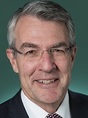
Mark Dreyfus Isaacs, Australian Labor Party
10:22 am
I too begin by speaking the names of the 15 people who were murdered at Bondi Beach on 14 December 2025: Rabbi Eli Schlanger; Rabbi Yaakov Levitan; Alex Kleytman, a Holocaust survivor; Peter Meagher; Boris and Sofia Gurman; Edith Brutman; Dan Elkayam; Reuven Morrison; Marika Pogany; Adam Smyth; Boris Tetleroyd; Tania Tretiak; Tibor Weitzen; and Matilda, aged 10.
There are moments in our nation's history that confront us with unimaginable horror and grief; that leave us searching for words; that leave us struggling to comprehend the scale of what has been lost; that compel us to reflect, to remember and to act; and that test not only our laws and our institutions but also the quite assumptions of safety, decency and mutual care that distinguish Australia's values. The attack at Bondi Beach on 14 December 2025 was such a moment. It occurred during a Hanukkah celebration attended by families, children and elders. It was a gathering that symbolised joy, tradition and community. It was shattered by hate. Fifteen people were murdered. Many more were wounded and traumatised, and lives were forever changed.
Amid the horror, acts of extraordinary courage also emerged: bystanders shielding others from harm; emergency workers and police officers running towards danger, strangers helping strangers; and Ahmed al-Ahmed, a 43-year-old Syrian Australian father of two, who disarmed one of the attackers, preventing further loss of life. In minutes, a targeted atrocity against Jewish Australians turned a celebration of light into a moment of darkness. Yet, even then, humanity's most selfless instincts of mutual care emerged, instincts that hold communities together in their most distressing moments.
It was also an attack on the kind of country we strive to be: one that is fair, safe and inclusive. We must not, and we will not, allow those values to be diminished. Every Australian, regardless of their faith or background, deserves to live in safety, dignity and peace. I've spoken with members of my own community who were, like me, deeply shaken by this attack—parents unsure how to explain such violence to their children, people of all backgrounds struggling to make sense of such hate and to find the words to speak about it.
Our response cannot be confined to grief. It must extend to what we choose to defend and how we defend it. That means upholding our laws against hate. It means ensuring that our public spaces remain open, inclusive and safe for all communities. I'm seeing Australians come together not only in grief but in determination—determination to reject hate and to act with unity and care, the values that unite us as a nation.
I've spoken the names of those who were murdered. Each one was a life full of meaning—people who were loved, who contributed to their communities, who shaped the lives of those around them in quiet, lasting and meaningful ways. For every person murdered there are families and friends left behind, a home left quieter, clothes still hanging in wardrobes, photos on walls that will never be updated, children asking when someone is coming home, a seat left empty at the dinner table, a laugh no longer heard, the longing for one more word—one moment, one more chance to say what was left unsaid. The pain of that absence does not pass quickly. They were parents, children, neighbours and friends. Their loss is not only an overwhelming private sorrow for families and loved ones but a wound felt across the nation. It's a reminder of how fragile our shared sense of peace and safety can be and how vital it is that we protect it together. There are some that seek to take that from us; we must not let them.
You don't have to be Jewish to feel this in your chest. An attack like this hurts all of us. In Jewish tradition there's a prayer said by mourners. It's a prayer about life, dignity and the hope for peace at times of profound loss. I will close with the Mourners' Kaddish, in memory of those we've lost, and I invite all present to rise:
Yitgadal veyitkadash shemeh raba, be-alma divera chiruteh veyamlich malchuteh bechayechon uveyomechon uvechayey dechol beit Yisrael, ba-agala uvizman kariv, ve-imru: Amen.
Yehe shemeh raba mevarach , le- alam ule -alme almaya .
Yitbarach, veyishtabach, veyitpa-ar, veyitromam, veyitnase, veyit-hadar veyitaleh veyit-halal shemeh dekudesha, berich hu, le-ela min kol birchata veshirata, tushbechata veneche-mata, da-amiran be-alma, ve-imru: Amen.
Yehe shelama raba min shemaya vechayim aleinu ve-al kol Yisra-el, ve-imru: Amen.
Oseh shalom bimromav, hu ya-aseh shalom, aleinu ve-al kol Yisra-el, ve-imru: Amen.
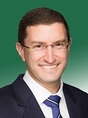
Julian Leeser Berowra, Liberal Party, Shadow Attorney-General
10:29 am
Today we gather to remember the victims, to support the injured, to comfort the mourners and to praise the heroes. We gather to reflect on the choices before us as a country. As a sixth-generation Jewish Australian I have always felt an overwhelming sense of gratitude for what this country has given my community. Jewish and Australian stories are deeply intertwined. My grandfather Sam served in the Australian Army in World War II. He was taken as a prisoner to the Thai-Burma railway. In that terrible place he drew strength from the freedom of the Australia he loved. Every week, no matter where the Australians held camp, Jewish services were held. Even in the horrors of the Changi prison camp, a place was consecrated as a synagogue. It's why, when my first child, my son whom I love, was born, I wrote:
I want James to understand the particular perspective that comes from being a Jewish Australian, a religious minority that never numbered more than one per cent of this country, in a land which almost uniquely in human history has been good to the Jewish people.
That same concept was so beautifully encapsulated by the wonderful words of the Deputy Prime Minister earlier today. There's much I grieve for today: the innocence lost at Bondi, the survivors of Bondi and the things they cannot unsee, the synagogues torched, the Jewish artists doxxed and frozen out, the university students harassed, the small businesses shut down—all of this pains me. But it is the loss of the truth that Australian is good to Jewish people that crushes me. The loss of this idea is felt by every Jewish Australian, particularly when we see our children confused and scared about what is happening in this country.
Bondi alone did not do this, but it has been accelerating in the 800 days between the Hamas attack on Israel and the Bondi attack—800 days of failure across our national life. The feeling in the Jewish community right now is visceral. It's of disappointment, of anger and of betrayal. The Holocaust survivor Eddie Jaku at the end of World War II left Europe for Australia because he couldn't resolve the question: where were my neighbours? Increasingly, Jewish Australians are asking the question: where are our leaders? Today is not about day-to-day politics; it's about the type of country we want and the type of people we are. The sad reality is, if we don't change, then Bondi won't have changed anything. Bondi represents a moment of choice: will we stay in the political cul-de-sac we've been in for over 800 days, or will we tackle the sources and causes of antisemitism in this country; will our leaders continue to treat antisemitism and violence against Jews as a political problem to manage, rather than the moral and cultural problem that it is; and will our leaders drag their heels or deal with the issues with priority, alacrity and zealous determination?
If we are to change, it starts with tackling the three groups where antisemitism has taken hold. The first group where Jew hate is festering is violent neo-Nazi groups. They move in small cells which must be disbanded. They're best tackled with more funding and stronger powers for our security services. The second group is the radical Islamists. They are a danger to our Australian community, and they are a danger to Muslim Australians. In my community the Persian community have for years stood against the mullahs of Iran and all their extremism, and I honour them. We must shut down the hate preachers and their extremist prayer halls. We must proscribe Hizb ut-Tahrir—in fact it should have been done years ago—we must jail and expel the vile propagandists and their violence and we must be vigilant about those who seek to come here. The third group where antisemitism is rife in the cultural left. It's in the writers festivals that celebrate people who say their mission is to make Jews feel culturally unsafe. It is in the theatres where keffiyehs are donned and Jews are catcalled. It's in the universities where Jewish students are harassed and Jewish academics are deplatformed. It's in the conferences where Jews are silenced, shut down, humiliated and called 'mutt' and where the term Zionist is used as an insult. In all these places we have witnessed failure of moral leadership, we have seen antisemitism excused with the word 'but' and we have seen hatred framed as artistic expression.
It would be tempting to conclude with something poetic or sacred—a call, as it were, to give us hope. I can't do that today, but I will finish with a warning. We cannot continue the 800 days of neglect. Bondi will either be the crescendo to a bad chapter in our history or the midpoint to a story that gets worse. Without change—without political change, without cultural change and without a reprioritisation of antisemitism as the foundational threat to this country—what we have seen will get worse. It's naive to think parliament could sit for two days and then move on as if that's enough to deal with this issue. If we have to, we need to deal with antisemitism every day this parliament sits to get the job done, until we restore an Australia that is good to the Jewish people and free and fair for all. Our times require leadership and goodwill. If we show it—if we work for it—then we can reclaim the Australia we remember and love and, in so doing, provide some comfort for all those who have lost so much. That is the choice before us today.

Matt Thistlethwaite Kingsford Smith, Australian Labor Party, Assistant Minister for Immigration
10:35 am
After Michael and Valentina migrated to Australia from Ukraine, they wanted to choose the most Australian name they could for their firstborn child. The name they chose was Matilda. Matilda and her sister, Summer, were students at La Perouse Public School, where over half of the student population are Indigenous kids from the La Perouse Aboriginal community. That community welcomed and embraced Matilda, Summer and their family. They gave Matilda the name Wuri Wuri, which in the Dharawal language means sunshine. And what a ray of sunshine she was. Matilda was the youngest victims of the senseless antisemitic terrorist attack on the Jewish community at Bondi Beach on 14 December. I offer sincerest condolences and the love of our community to Michael, Valentina and Summer for the loss of your beautiful Matilda Bee.
The last photo of Matilda is of a happy, smiling 10-year-old dancing amidst the bubbles, face painted, celebrating the start of school holidays and the first day of Hanukkah with her family on a picture-perfect day on Australia's most iconic beach. It represents the innocence and the tragedy of those who lost their lives that day. That photo of Matilda was taken by Peter Meagher, a distinguished, retired police detective and legend in the Randwick Rugby Club who was working capturing photos of the Chabad of Bondi Chanukah by the Sea event before his life was tragically cut short. Marzo was a man of integrity and service who volunteered with the Galloping Greens as a team manager, official and referee for decades. The guard of honour at his funeral from the NSW Police and the rugby community stretched the length of Sydney's College Street, a measure of our community's respect and affection for Peter. His wife, Virginia, and his brothers Greg, David, Andrew and Paul carry not only their grief but the love of the entire Randwick community.
We honour the life of Alex Kleytman from Matraville, devoted husband of Larisa and father to two children and 11 grandchildren. Alex survived the Holocaust and the freezing winters in Siberian during World War II before migrating to Australia. It's unimaginable that he died on Bondi Beach, enjoying the afternoon sunshine. He died a hero, shielding his wife from the gunfire. The family's courage in the face of unimaginable grief has moved our entire community.
We honour Tania Tretiak, a beloved wife, mother, grandmother and member of the Randwick community. Her husband, Pavel, her children Dennis and Julia and her grandchildren mourn the loss of someone whose strength and kindness shaped generations.
We also remember the many others who lost their lives that evening—Rabbi Yaakov Levitan, Tibor Weitzen, Marika Pogany, who volunteered with Meals on Wheels for over 20 years and whose family I know very well, Dan Elkayam, Edith Brutman, Adam Smyth, Boris Tetleroyd and Rabbi Eli Schlanger, a teacher and mentor to many. We also remember and pay tribute to Boris and Sofia Gurman and to Reuven Morrison, who bravely attempted to disarm the gunmen and whose courage saved lives. They are now Australian heroes.
In the darkest moments on that terrible evening, we also witnessed some extraordinary acts of courage. Our first responders, including police, paramedics and emergency medical teams, acted with skill and composure that saved lives, and our surf lifesavers and lifeguards once again proved why they are among the most trusted and respected Australians. Lifeguards Michael Jenkinson and Daniel McLaughlin ran towards the gunfire, treating the wounded and ducking for cover as they moved from patient to patient. Jackson Doolan ran barefoot from Tamarama carrying a defibrillator and a first aid kit. Rory Davey rescued swimmers caught in the chaos. Many surf lifesavers from Bondi and North Bondi clubs ran into the danger, treating the wounded and shielding them from harm, including Andy Reid, Anna Booth, Brett Pattinson, Mason Kemeny, Steve Larnach, Anna Willis and Pete Colquhoun, who are here with us today. Surf lifesavers are highly trained and skilled in rescue and resuscitation, but they're not trained to treat gunshot wounds as they were doing that day. Their selfless actions saved lives, and we pay tribute to them and we thank them.
That afternoon, North Bondi Surf Life Saving Chub was celebrating its members Christmas party. In the aftermath of the shooting, the club became a triage point, with club members carrying victims on rescue boards back to the club house for treatment. That evening, instead of sweeping up tinsel, they were hosing down the blood-soaked floor. A week later, I was proud to stand arm in arm on the shore at Bondi with those surf lifesavers and hundreds of others in red and yellow as a tribute to the victims and to symbolise our thanks to those who risked their lives to help. That guard of honour stretched the entire length of Bondi Beach. You are truly great Australians.
Hanukkah is a celebration of light over darkness. The oil meant to burn for one day on the re-establishment of the Second Temple gave light for eight days, a symbol of the resilience of the Jewish people. This motion is not only an expression of grief and remembrance; it's a reaffirmation of unity and hope, a declaration that hatred and terror will never define us, and a commitment to comfort and support the families of all the victims and survivors of this shocking antisemitic attack, that the wuri wuri of Matilda and all those lost will shine eternally, that Jewish Australians will continue to be proud of their faith, their heritage and their culture, and that they will never, even walk alone.
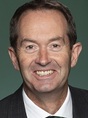
Andrew Wallace Fisher, Liberal National Party, Shadow Cabinet Secretary
10:42 am
In the 13th century, St Francis of Assisi said, 'All the darkness in the world can never extinguish the light of a single candle'. The act of what happened at Bondi on 14 December was an act of profound violence and hatred. It stole innocent lives, shattered families and traumatised a community. It shocked Australians from every corner of our country. I extend my deepest condolences to the families and loved ones of those who were murdered, to our brave first responders, to those who were injured and to all who continue to live with the consequences of that day. No words spoken in this place can ease the pain of parents who have lost children or families whose lives have been changed forever. But it is right that this parliament finally pauses, reflects and speaks with one voice, in sorrow, respect and solidarity.
Bondi is more than a location. It is part of Australia's identity—a place of openness, freedom and community. That such a place became the scene of Australia's worst act of terrorism makes this tragedy all the more confronting for our nation.
This attack was not random, it did not occur in isolation and it did not happen without warning. It came after more than two years of escalating, unaddressed antisemitism in this country, after repeated concerns raised by Jewish community leaders, security experts and law enforcement professionals, after hatred was allowed to become louder, more visible and more normalised. That context matters, not to politicise grief but to honour it with honesty, head on.
History teaches us a difficult lesson: antisemitism never ends with Jews alone. Shortly after the attack, I reflected on words attributed to Martin Niemoller—words that bear repeating today:
Then they came for the Socialists
And I did not speak out
… … …
Then they came for the trade unionists
And I did not speak out
… … …
Then they came for the Jews
And I did not speak out
… … …
Then they came for me
And there was no one left
To speak out for me
These words are a confession, not a slogan. They are a warning about the cost of silence and inaction. Condolence motions are about mourning, but they are also about resolve. They are about saying that the lives lost mattered and that their loss demands more than words. For the families of the victims, sympathy alone is not enough. They deserve answers, they deserve accountability and they deserve to know that everything possible will be done to prevent such a tragedy from happening again.
I want to acknowledge the dignity shown by the families, in the face of their unimaginable pain. Their calls for truth and transparency are not partisan; they are human, they are reasonable and they must be respected. To the Jewish community in Australia, many of whom are grieving, while also living with fear, and some of whom are here today: you are not alone. You have every right to live openly, to worship freely and to feel safe in your very own communities. Antisemitism is an attack on Jewish Australians, but it's also an attack on Australia and 27 million Australians. It is an attack on our values and our pluralism and on the idea that people of different backgrounds can live together with mutual respect. We must be unambiguous about that together.
Today this parliament respectfully remembers the 15 people whose lives were ruthlessly, needlessly cut short: Matilda, the youngest, at only 10; Rabbi Eli Schlanger; Boris Tetleroyd; Boris and Sofia Gurman; Reuven Morrison; Edith Brutman; Marika Pogany; Rabbi Yaakov Levitan; Peter Meagher; Tibor Weitzen; Alexander Kleytman; Dan Elkayam; Adam Smyth; and Tania Tretiak.
Moments like this test us as a nation. They test whether we are prepared to speak plainly about hatred, whether we are willing to learn from history and whether we have the moral courage to act before tragedy, not just after it. The victims of the Bondi attack deserved better; their families deserve better. Australia must do better, and that means all of us. As we honour their memory today, let us commit ourselves to vigilance, to honesty and to the principle that silence in the face of hatred is never neutral. May the memory of those lost at Bondi be a blessing to their families and to all 27 million Australians.
Josh Burns Macnamara, Australian Labor Party
10:49 am
Most Australians wouldn't have heard of the Chabad movement before 14 December, but the philosophy of the Chabad movement is one that sends missionaries to bring Judaism to Jewish people in all corners of the world, to enrich Jewish life and to make it easy to experience Jewish life wherever they are. You may not realise it, but there is something beautiful and something completely opposite about Chabad holding an ancient festival celebrating Hanukkah, which is about the oil that was found after the destruction of the temple, on one of the most iconic beaches in Australia, synonymous with sunbaking and hanging out with friends. That is what Chabad does; it brings Judaism to all different corners of the world and embeds it in the society that is there.
The Jewish community in Sydney is, just like all other Chabad communities, rich because of the effort that is put in to make Jewish life beautiful and celebratory, filled with mitzvahs and good deeds. That's what was going on on 14 December. The driving force behind Chabad at Bondi was Rabbi Eli Schlanger. I was privileged to attend his funeral, and even at his funeral he was raised as someone who brought Judaism not just to the community of Bondi but to prisoners and to people who otherwise would be out of reach. He did so because he wanted to enrich their lives.
We are taking this moment in this House to appreciate the beauty that in Australia you can have one of the most iconic and modern and beautiful beaches embedded with an ancient tradition filled with people who just wanted to feel a part of their own history and spirituality. That was the target. I remember, on the evening of 14 December, I was driving home, and my phone rang. It was one of my staff, who was born in Sydney. She said: 'There are shots being fired on Bondi, and we think it's near the Hanukkah celebration. The WhatsApp groups are growing crazy.' At that moment, I knew I had to make calls to my colleagues and to the Prime Minister's office, but my first instinct was my daughter, because she was on her way to the Melbourne Hanukkah event. That's what Jewish life in Australia unfortunately has become. You think: 'What about my own family? What are they going to be? Are they going to be safe?' Thankfully my mum hadn't gone yet, but, tragically, my community in Sydney suffered the most unimaginable pain.
I had the privilege of speaking to Josh and Shaina Goodnick, who spoke of Shaina's incredible father, Reuven. In our conversations, we spoke about the bravery of Reuven. One of the things that stuck with me—forgive me for sharing our private conversations, but this is one of the things that stuck with me that I think is worth mentioning—is that Josh and Shaina were imagining what his thoughts may have been in that moment when he decided to confront the terrorists. The answer that they gave was, 'How dare they?' How dare they come to our community? How dare they come to my community? What a brave and incredible person to pick up whatever they could to try and protect their community.
For Jewish Australians, this country means so much. For my family, this country means so much. For our community, this country means everything. It has been a safe haven for our community and a safe haven for our people who fled persecution and dehumanisation. I tried to think about what must have been going through the gunmen's heads when they were looking down upon the community, seeing innocent people. What are they looking at? What do they think of us? What do they think of me? What do people think of the Jewish people here in Australia? I am proud of my community, and our community are a proud people. We belong here, and we must not dehumanise one another. As my beautiful new daughter cries, forgive me; she'll calm down, hopefully. I've changed my train of thought here. I think that will happen over the next few months. We must not dehumanise each other, because dehumanisation is what leads to exactly what happened in Bondi. Not every act of hate ends in violence, but every act of violence begins with hate.
I say to my colleagues here in this place that Jewish life was absolutely shattered in Bondi. People have questioned their place in this country, but the way we honour the victims of the Bondi massacre and the Bondi terrorist attack is not just by honouring the incredible bravery, selflessness and proud nature of people celebrating an ancient religious tradition in a modern iconic part of this country but also by ensuring that the everyday life of Jewish Australians and the people in our community is not one where you have to walk past security guards when just going about your business, or worry about whether your family is safe when celebrating your culture. Can we live this life, in this country, in the safe haven that was promised?
I want to finish by saying that there will be a lot of work to be done but today is about recognising those people who were Australians and who paid the ultimate price just for participating in Jewish life in Australia. They were targeted because they were Jewish. History, for too long, has taken people because of that exact reason, but how a country responds defines a country. When synagogues were burnt down, Australia decided that we were going to rebuild them. That is the appropriate thing to do. When people are attacked, we need to create stronger laws to ensure the appropriate response to that sort of hate and vilification. Right now, we also have a group of people who are desperate to be stood by and have Australians stand with them. To every single Australian who has lit a candle or checked in on a Jewish community member, friend or colleague, I say thank you, because how a country responds matters. To all the victims and to my community, this is our home and this is our country. To the families, I wish you a long life. To the victims: zichronam livracha—may their memories be a blessing.
Ted O'Brien Fairfax, Liberal Party, Shadow Treasurer
10:56 am
Can I say from the outset to the member for Macnamara: you need not apologise for the beautiful sound from your child. I think it's a sombre reminder to all of us that we are here for a condolence motion and, indeed, we have an obligation to the next generation, so thank you for having your little one in the parliament with us.
I also express my deepest sorrow for the loss of 15 innocent lives resulting from an act of mindless terrorism on Bondi Beach on 14 December 2025. I speak today with a heart that is heavy and with a profound sense of responsibility as a member of this, our national parliament, because, when violence strikes at the heart of any one of our communities, our nation's social fabric frays. In attacking innocent Jewish Australians, the terrorists attacked all of us, for, when Jewish people are unsafe, we are all unsafe. First and foremost, I honour the 15 innocent victims. They were parents, children, friends and neighbours. Each life taken was precious and each life mattered. The absence of each is being felt deeply by those who love them and by the nation that grieves for them. To the families of the loved ones, I extend my sincere condolences. I cannot pretend to understand your pain. To the extraordinary bravery of first responders and ordinary citizens who ran towards danger, I thank you. Your actions reflect the best of Australia: courage without hesitation, compassion without calculation and service without any expectation of recognition.
In the days and weeks since, Australians have gathered across faiths, cultures and communities. Candles have been lit, hugs given, tears shed, prayers said and hands held. These simple acts show that hatred and terror do not have the final word, but love and solidarity do. We have heard the voices of moral clarity, especially from religious leaders, including Jewish leaders who've signalled a desire to respond to hatred and terror with unity and dignity. Rabbi Oshy Goodman from my area of the Sunshine Coast said to me: 'moments like this remind us of the importance of moral grounding and spiritual depth in our society—that when our values are anchored in something higher than ourselves, including responsibility before God and conscience, it strengthens our capacity for compassion, respect, and choosing life'.
In this parliament, through the actions we take, the laws we pass and the inquiries we run, it is imperative that we consider Bondi not as some unexpected out-of-the-blue tragedy, but the consequence of something far deeper and more sinister that has been allowed to fester and become normalised in Australian culture, and that is antisemitism. Antisemitism is a cultural cancer, and the strategies we adopt to try to remove that cancer—the actions, laws, the inquiries—are important. But there is a lesson of history that we must not forget: culture always trumps strategy.
There is only one thing that can trump culture, one thing that can change it, and that one thing is leadership. Protecting our nation and countering hatred and extremism demands not an episodic burst of energy but sustained leadership, and our nation is screaming out for it. Providing this leadership is our responsibility as people elected to this, our national parliament. As political leaders, let us speak openly and honestly about the scourge of antisemitism, the evils of Neo-Nazism and radical Islamic extremists. Let us state unequivocally that there is no place in Australia for religious hatred or political or ideological violence of any kind. Let us actively look for answers, search for ways to ensure that this sort of atrocity does not happen again and defend and promote that one thing that has the capacity to unite us, especially as an increasingly diversified people, and that is a common set of values—values shaped by Judeo-Christian ethical traditions; values of freedom, equality and a fair go; a belief that with rights come commensurate responsibilities, and, where we have differences, they are met with tolerance. These values, right now, are being tested, and yet they have been the moral foundations of our civic culture that have influenced our institutions, our laws and social norms. As they are under threat today, as borne out by the Bondi tragedy, we owe it to not just the victims and their loved ones but Australia as a whole, especially the next generation, to ensure these values are defended and promoted, so they once again can form the moral foundation of civil life in our country.
Mike Freelander Macarthur, Australian Labor Party
11:03 am
To Boris Gurman, Sofia Gurman, Edith Brutman, Rabbi Eli Schlanger, Boris Tetleroyd, Marika Pogany, Adam Smyth, Matilda, Dan Elkayam, Peter Meagher, Tibor Weitzen, Reuven Morrison, Alexander Kleytman, Rabbi Yaakov Levitan, Tania Tretiak—to the victims of Bondi: may your memories be a blessing. To your friends and relatives: I wish you a long life.
What happened on 14 December at Bondi was a tragedy. It was a tragedy for those involved. It was a tragedy for the Jewish community in Australia.
The Jewish community in Australia is diverse. It has been here since first European settlement. Many of my relatives came here as convicts. They built a life that was aimed at service, at improving the community and at making the world a better place, and they have done so for generations.
The people that were murdered at Bondi were murdered by men who were not just antisemitic but anti civilisation. These people need to be rooted out, no matter where they come from. It isn't just Muslim extremism; we have extreme right-wing Neo-Nazis who want to do the same, and they must be rooted out. That's part of our responsibility as a government, and I apologise deeply to the people who were killed and who were injured that, as a country, we couldn't protect you. It makes me deeply sad.
The Jewish community in Sydney has clustered at Bondi for many generations. My dad went to school at Christian Brothers Waverley, just up the road. He lived in Birrell Street in Bondi. My mother and father met at a party on Bondi Beach—that was the first time they met. My grandfather, Randolph Griffiths, was one of the Bondi lifesavers involved on the Black Sunday rescue on 6 February 1938—the greatest surf rescue that has ever happened in Australia. Hundreds of people were rescued but, unfortunately, five people died. He later went on to become one of the founders of the Emanuel Synagogue in Woollahra.
The Jewish community has contributed to this country over many generations. It is diverse. The Chabad community is a religious community, a part of the Jewish community that has contributed significantly in the relatively short time that it has existed in Sydney. The Jewish community contributes, and there is a huge difficulty with understanding what has happened with antisemitism in the last few years. Why has this happened? It hasn't been built on nothing; antisemitism has existed in Australia since Jewish people have been here. I remember, as a younger person, the fire-bombing of the Bankstown Synagogue when I was a kid. Antisemitism has existed for a long time. It is important that we find out why this has ramped up, and it is important that we root it out. As I said, this is not just antisemitism; this is anti civilisation. There is not a person in this place, I know, who would not support measures to make sure we root out antisemitism in our community, because it's not just about the Jewish population: it's about all civilised people. We have to make change—we cannot continue on this road.
I congratulate the Prime Minister and the cabinet for their behaviour in the way they have dealt with this. I'm very proud to be part of a government that has dealt with this tragedy and is looking to further measures to make sure we don't have further episodes of antisemitism to this violent extent in Australia. But it's important that we reach into the depths of our society and look into why this has happened. We need to improve our civics education and we need to make sure that all communities are included in our society, and that none are excluded. I have been gratified, actually, by the contact I've had with people of all religions, from our local Buddhists to our local mosques, and people of all religions working in the health system with me. I look forward to a better future. We have seen at Bondi that great tragedy can be followed by great heroism. As a society, great disasters can be followed by great light and great improvement. This is what Hanukkah is about: light in the darkness.
I thank all those who have delivered messages of hope and positivity. We must look forward, not backwards, but we must make sure that this cannot happen again. Thank you.

Alex Hawke Mitchell, Liberal Party, Shadow Minister for Industry and Innovation
11:09 am
The most important responsibility of any nation state and its government is the safety and protection of its own citizens. In a rights-respecting democracy in a Western country like Australia, the whole purpose of government is to administer the law and to have the exclusive monopoly on the right to use force to protect law-abiding citizens. And yet, in the Australia of 2026, we now know that the government and all its agencies have been unable to provide some of our most vulnerable citizens—Jewish Australians—with their birthrights of essential safety, life, liberty and their pursuit of happiness, and we must be open about this. Fifteen of our bright, law-abiding, peaceful and rights-respecting citizens lie dead, shot on our beach at Bondi, and we the parliament, we the government and we the people, owe their memory and our Jewish Australian community everything we can do to restore their basic safety. This irrational, ancient prejudice of antisemitism has made its way to our shores. This enemy is not external now. This ancient prejudice, this enemy, walks amongst us, and we must do something about it.
Today we can also remember the 10 Australians who died in the 9/11 attacks, the 88 Australians murdered in the Bali bombings, the two people killed at the Lindt Cafe, the police civilian officer gunned down in my home town on the steps at Parramatta, more incidents than I can remember on our streets, and now 15 beautiful and peaceful Australians slaughtered at Bondi Beach while practising their own culture, traditions and religion—citizens that should have been able to do so in safety. Australia and its people have been under attack by a radicalised and perverted form of Islam since 9/11, a threat that affects all of us and, again, must be taken most seriously. When a 10-year-old girl—Matilda, named after one of our most iconic Australian cultural odes—is gunned down weeks after receiving an award for her excellent citizenship to others, every Australian parent does and should feel in their bones that something is inherently wrong and dangerous in our midst.
Jewish Australians have done so much for this nation—names like Monash, Isaacs, Lowy, Gonski, Finkel, Solomon Lew, Triguboff, Pratt, Geraldine Brooks, Harry Seidler, Jessica Fox, Torah Bright and Jemima Montag, so many proud men and women who've made an indelible contribution to our Australian way of life. These are Australians like any other, and they deserve their basic rights.
The Islamic State, and its ideology, is an enemy of humanity. It kills Muslims. It kills Jews. It kills Christians. It kills Yazidis. Indeed, more Muslims have been killed by the Islamic State than any other group. Can we truly comprehend the evil that could overcome a person to look down the sights of a high-powered rifle and fire it at a 10-year-old child? What can we do against such reckless hate? We can fight it and work to eradicate it from our society and to not be reticent with those that reject our rights-respecting society. We cannot be naive about this ancient hatred and prejudice. We must understand and believe people that, when they say things on the steps of our own opera house, this is what they mean. We must take the necessary steps to apply the law to them, to protect the law-abiding from this criminal behaviour.
As Josh Frydenberg said at Bondi on 17 December last year:
This massacre at Bondi is the greatest stain on this nation. Has brought the greatest shame to our nation.
The greatest stain on our nation must occasion the greatest effort by us, by our parliament and by our governments to right the wrongs of the past by taking the action that we must to eliminate the scourge of antisemitism. There are Nazis parading on the streets of Sydney and Melbourne openly.
When I was a young man, I was returning to my home in Parramatta. I'd grown up there, and I'd been to public schools there, but I had never known that there was a synagogue just down the road, on Victoria Road, from where I lived. On that night, I witnessed two figures throw a lit object into a nondescript building, and I rang the police, as any law-abiding citizen would, as I watched the fire start and the perpetrators run away. The police didn't know, as I didn't know, that this was the Parramatta synagogue. That was my introduction to antisemitism as a young person in Australia.
For most of us in Australia, security and safety is our birthright. Today, for Jewish Australians, it is not. When I returned to that same Parramatta synagogue, 25 years after that incident but a few weeks ago, their community was only there because of the armed guards, because of the fences and because of the cameras. They do not enjoy the birthright that we do as Australians. We should be ashamed, and we must be ashamed, but we must act on this shame so that the tragedy of Bondi never happens to any Australian again and so that every Australian enjoys their birthright of freedom, safety and security.

Mr Tony Burke Watson, Australian Labor Party, Leader of the House
11:14 am
On a hot Sunday afternoon, someone living a couple of kilometres from my place had a call from his friend and said, 'Let's go to the beach.' It's a fair way to the beach from my part of Sydney, so they weren't sure which beach to go to. Their options were to go to either Brighton or Bondi. They tossed it up and Ahmed said: 'I haven't been to Bondi for ages. Let's go there.' They went there for a coffee. The first coffee shop said, 'No, we're closing down, about to shut shop.' The second coffee shop—the same story. The third—the same story. He noticed that there was something going on in the park. As he walked across the road, a rabbi issued the most beautiful Australian invitation. He said, 'Yes, this is a Hanukkah celebration that we're having here, but you are welcome to join us.' That's why Ahmed al-Ahmed was there. He was invited by the rabbi to be part of the celebration of Hanukkah. He walked around the different stalls. He enjoyed himself a bit. He still couldn't find the coffee that he wanted, and he started to walk off into the car park. And then the shots were fired.
A lot is said about faith, and there have been some different lines dropped in different speeches so far. I simply say this: no-one is going to tell me that Ahmed al-Ahmed was of the same religion as the gunmen. He was there on the invitation of a rabbi. And then, the moment the Jewish people of Bondi were under threat, he did not care about his own safety. He went forward in the line of fire, and we know what followed. When I visited him in hospital, his explanation of what he did was very much about the hand of God—a story that you could have heard from somebody of almost any faith. I just think this is important: as we work through the horror, the hatred and the evil—the unspeakable evil of those gunmen—we need to not lose what's best about Australia and not assign it on the way through to the wrong people.
I was asleep. My wife and I were celebrating our anniversary, and the phone rang. It was the secretary of my department to say that gunshots were being fired in Bondi. We didn't yet know the cause, but there was a Jewish celebration and we thought it might be connected. Thanks to some quick conversations with Qantas, Skye and I were able to get on the next plane home. At the first opportunity, both the police commissioner and Rabbi Zalman Kastel were good enough to join me laying wreaths at Bondi when I was back in the country.
The days that have followed have very often involved a man who will not be known to many members of parliament here but who is in the public gallery: Rabbi Mendel Kastel. I first came into contact with him after the horrific antisemitic comments that came out of Bankstown hospital. I reached out to him straight away—we'd done the condemnation; the response had happened immediately—to talk through how we could provide better safety for Jewish patients. I wish it hadn't been that that started the relationship or 14 December that deepened it. But Mendel has been a pathway through to any family that has needed help effectively in a moment like this, to make sure that people weren't having to deal with government and that they could deal with a trusted friend. Mendel has very much been the pathway, and I want to acknowledge that. In fact, the kosher pantry had been established at St Vincent's Hospital only weeks before—not realising the extent to which it was going to be so immediately needed.
The message from those who hate is to tell people that they don't belong. The message from Australia needs to be that we are all here together. We need to respond to hatred with the ferocity of laws that are carefully targeted. I must say, in terms of hate speech, that I wish we were going harder than we are able to go tomorrow, but we deal with the parliament we have. I acknowledge the member for Wentworth, who has also been arguing on hate speech laws for a very long time.
But I just want the parliament to know there is no greater response to people being told they don't belong than for Australia to say, 'You are welcome here forever.' Dan's partner, Krystal, made contact with Senator Duniam and said, 'I want to stay in your beautiful country,' but she had applied for a spouse visa, a partner visa, and no longer had a partner. She's now a permanent resident of Australia. Rabbi Yaakov Levitan's parents didn't realise that they were going to be asked to come from South Africa to be constantly helping with the grandchildren. They thought they'd only visit. They're now permanent residents of Australia. Geffen Bitton, who joined Ahmed al Ahmed, who rushed to the exact same scene, had only been awake for a day when Rabbi Mendel made sure that I was there to conduct the ceremony.
The ceremony is a very weird one. We have to cancel someone's visa and put them in detention, and that gives me the right to give them whatever visa I want, to give them permanent residency, which made people smile in different ways. Krystal joked about whether she would have to be put in handcuffs. Geffen, who'd only been awake for a day, had the slightest smile about it. The Levitans, for everything they were going through, still insisted on putting berries on the table as a sign of hospitality, as though they had to offer more.
But, in this moment, Australia has a chance to respond more loudly than the evil of the terrorists and to simply say they don't speak for us. Our voice is you are welcome here forever. We will make it safe.

Anne Webster Mallee, National Party, Shadow Minister for Regional Development, Local Government and Territories
11:21 am
It's with profound sorrow that I rise today to speak about the horrific events of 15 December at Bondi Beach and to acknowledge the grieving family members who have been in this House. Bondi Beach is an iconic Australian landmark that should symbolise joy, freedom and unity. Instead, it became the scene of unimaginable tragedy. Fifteen innocent lives were stolen by Islamic extremists driven by hatred and intent on inflicting maximum harm. This was not just an attack on Jews; it was an attack on every Australian and our way of life. It was the worst terrorist atrocity in Australia's history, and it has shaken every one of us to the core.
What happened that day is utterly unthinkable. Families who had gathered to celebrate Hanukkah, a festival of light and hope, were gunned down in cold blood—children, parents and grandparents all targeted simply because of who they are: Jewish Australians. We watched in horror as the news unfolded, moving from disbelief to grief and then to haunting questions. How could this happen here? Why such hatred? Who could commit such evil? This is not Australia. This is not the nation I grew up in and that we cherish.
Since 7 October 2023 antisemitism has surged alarmingly across our country. We have seen Jewish Australians harassed, threatened and vilified; homes graffitied; cars and synagogues firebombed; and businesses coerced into closure. Synagogues and schools and childcare centres have been forced to tighten security as fear grips the community. Our fellow Australians, our neighbours, our friends, now feel like strangers in their own home. It is disgraceful, it is unacceptable and it must stop.
Equally disturbing are the scenes of aggressive mobs in our streets, celebrating violence, chanting hatred. This is not free speech. This is incitement. It corrodes the very fabric of our society. When any group is targeted, whether for their faith, ethnicity or identity, it is an attack on all Australians. We cannot and must not stand by, because the standard we walk by is the standard we accept. Islamic extremism must stop. Neo-Nazism must stop. Antisemitism must be eradicated. We owe it to every Australian to ensure that our country is a place of safety, acceptance and peace. To every Jewish Australian and to every family shattered by the Bondi Beach attack, I extend my deepest condolences. Your grief is our grief. Your fear is fear. Australia is your home. You belong here. You deserve to live free from terror, free from hatred and free from fear.
As Australians we are bound together by our shared humanity and our commitment to justice. Let us say with one voice: never again, not here, not anywhere.

Michelle Rowland Greenway, Australian Labor Party, Attorney-General
11:25 am
On 14 December Jewish Australians from across Sydney gathered at Bondi Beach to commemorate the first day of Hanukkah. What should have been a joyous celebration of the victory of light over darkness was instead forever tarnished by a targeted act of pure antisemitic evil. What occurred that day is an unfathomable tragedy that took the lives of 15 innocent Australians, including young Matilda, only 10 years old.
Let me be clear: there was nothing random about this act of violence. This was an act of terror by individuals with hate in their hearts and guns in their hands. I extend my deepest condolences to all who innocently lost their lives and to the families, loved ones and all those in our community who have been affected by this terrible devastation. We stand together in this place as Australians united in grief but also committed to ensuring that the atrocity that occurred in Bondi against our fellow Australians can never happen again. As a nation we must respond with strength, not partisanship. This is what Jewish Australians deserve and it is an outcome that I am focused on ensuring we deliver, because an attack on Jewish Australians is an attack on all Australians.
In the aftermath of the attack I had the solemn honour of standing beside Jewish Australians, fellow parliamentarians and the Governor-General at a commemoration organised by Jewish women's groups at Bondi Pavilion to pay respects and marks seven days since that terrible event. Together, we joined in remembrance of those who lost their lives, as a sign of collective unity and the need for action. It was the strongest reminder that at times of extreme hardship and tragedy we see the best of the Australian character. In the days and weeks following the attack, Australians from all walks of life have rallied to support victims, their families and the wider Bondi community. It has been nothing short of extraordinary. People placed flowers at Bondi Pavilion, checked in on their Jewish friends, supported local businesses and acted as shoulders to lean on when it mattered most.
As a representative of one of the country's fastest-growing and most diverse regions, I found it particularly heartening to see the display of solidarity and outpouring of support from so many different religious and cultural leaders in north-west Sydney and, I'm sure, right around Australia. It is this demonstration of strength and solidarity that we must also emulate across this parliament. We must work not only to respond to this awful event but also to foster a society in which this very hatred has no opportunity to grow.
In this place we represent every corner of our nation. We represent families who want to go about their lives in peace, and different communities that contribute so richly to our national fabric. We represent those who live in the best country on earth, a place where people should not be forced to live in fear because of who they are. As we bow our heads and say, 'Never again,' we must find ways to honour the victims and deliver for Australia not only with our words but also with our actions. May the memories of those lost live on, and may we find the strength and courage in this time of grief to do just that.

Jason Wood La Trobe, Liberal Party, Shadow Minister for International Development and Pacific Island Affairs
11:29 am
I rise to speak on the condolence motion. One of the saddest aspects of being a member of parliament here is speaking to this awful tragedy at Bondi. If you asked every Australian what the most significant places in Australia are, if their reply was not the MCG or the Opera House, it would be Bondi—everyone has been there. I'll start by putting on my hat as a former police officer. I really want to acknowledge those first responders. There is Probationary Constable Jack Hibbert, who was just four months into the job. He was shot in the head and also the shoulder, and lost vision in one eye. Then there is Constable Scott Dyson, who suffered two gunshot wounds. He was put in an induced coma and underwent multiple surgeries. I've been asked, 'Why didn't they just shoot the offenders?' The simple reason, as I've explained to people, is that they have pistols; they were up against terrorists who had been planning this for months, if not years, and who had rifles and far superior weapons. The two constables, in particular, charging up to the offenders—or the terrorists—were simply putting their lives on the line. Again, there is Detective Senior Constable Cesar Barraza. He is another hero police officer. We saw the footage of him taking a miracle shot. To shoot a revolver with any accuracy over 20 metres is difficult, but he did it over 40 or 50 metres. Then there's the father of two Ahmed al-Ahmed, who disarmed one of the terrorists—and that's what they are; they should be referred to not as 'gunmen' but as 'terrorists'—and was shot five times. They are all community heroes. They all did amazing work.
There are those who should not be forgotten: Edith Brutman, 68, vice president of B'nai B'rith's New South Wales antiprejudice and antidiscrimination committee; Dan Elkayam, 27, a French national who played for Rockdale Ilinden Football Club and worked in Sydney as an IT analyst; Boris Gurman, 69, and Sofia Gurman, 61, two everyday Australians who, amazingly, tried to disarm the terrorists as they arrived and before they went on to their massacre; Rabbi Yaakov Levitan, 39, a rabbi who was secretary of Sydney Beth Din; Peter Meagher, 61, retired police detective and Randwick DRUFC manager, who was hired as a freelance photographer on the day; Reuven Morrison, 62, a businessman who threw rocks or bricks at the gunmen knowing that he most likely wouldn't survive; Eli Schlanger, 41, an assistant rabbi who, as we've heard, assisted those in corrective services; Adam Smyth, 50, a Bondi local taking his wife for a walk; Boris Tetleroyd, 68, a visitor at the Hanukkah event that day; Tania Tretiak, 68, a Randwick resident attending the event with her family; Tibor Weitzen, 78, an engineer who died with his wife, Edith Brutman; Marika Pogany, 82, a volunteer who delivered meals and services to Jewish seniors; Alex Kleytman, 87, a Holocaust survivor; and, as we all know, Matilda, the youngest of the victims. As the father of an 11-year-old girl, I say to Matilda's parents I just cannot imagine it. I say this also to her school friends and her young friends. I can't imagine the birthdays. Last year, it would have been all about whose birthday is next and who gets invited; sadly, that won't happen for little Matilda anymore.
I say to the Jewish community we all feel very sorry for you. I acknowledge our members of the Jewish community here, too—the members for Isaacs and Macnamara, and Julian Leeser. It's been a really tough time. I say, finally, something about what I experienced in the former government, when I had the honour of delivering the Safer Communities Fund. One thing which really hit home when I went to a Jewish synagogue or community centre or school was the security measures—the armed guards. I couldn't believe it. I couldn't believe the stress those from the Jewish community had back then. Now it's to a new level. They deserve everything we can do. We must do everything we can do now to protect our Jewish community. They should be able to walk the streets freely, go to school freely, go to community events freely. Thank you.

Anne Aly Cowan, Australian Labor Party, Minister for International Development
11:34 am
I guess, just a couple of weeks shy of Christmas, most Australians would have been doing the kinds of ordinary things that we do around that time—prepping for school holidays and for Christmas, a time to rest and recoup and spend time with family and friends. For Australia's Jewish community, 14 December was the start of Hanukkah, the festival of light over darkness.
Over the course of the history of this great nation, Australians have been tested, through wars and conflict and through droughts and floods. Through each of these challenges something really extraordinary has happened: the Australian spirit has prevailed. It's a spirit that embraces every single Australian in true kinship and genuine mateship, a spirit that says to all Australians, regardless of who they are or where they were born, regardless of their religion or skin colour: you are us and we are you.
The day of 14 December 2025 is marked in our nation's collective memory as a day of tragedy. The mass-casualty terrorist attack was not indiscriminate, as most terrorist attacks are; it was an attack that targeted Australian Jews on a day of celebration for who they are. This was anathema to everything Australian—to every value that we hold dear in this country and, indeed, to the very values of humanity. But the day is also remembered for the incredible acts of love, kindness and bravery, and it's that love, kindness and bravery—that light—that will guide us collectively, as a nation, through the dark, as it always has in this country.
I take this moment to extend my deepest condolences to the Jewish community. To the families and friends who lost loved ones, to those who were wounded and to those who witnessed horrific scenes that they will never be able to forget, I say: your pain is felt throughout this nation, from our most remote communities to our largest cities. Your pain is Australia's pain and your sorrow is Australia's sorrow. To our Jewish community: we will not look away. We will not let your grief go unanswered. We will not let you grieve alone. We will wrap our arms around you and we will say to you: you are us and we are you.
I want to take a moment today to honour the heroes of Bondi, who put themselves in danger to protect their fellow Australians, and the everyday Australians who performed these incredible acts of bravery and assistance to those in need. Boris and Sofia Gurman, the couple who many have already spoken of, took the initiative to run towards danger, something that many of us would find pretty much against our first instincts. They confronted the terrorists before they tragically lost their lives. Jessica Rozena, pregnant, shielded a little girl from the gunfire, as did many people, putting their own bodies in the way of harm in order to shield others. Ahmed al-Ahmed also bravely ran towards danger to disarm the gunmen, risking his own life to protect strangers—people who he didn't know. He had never met them, but he nonetheless felt that sense of kinship and mateship for them. I also want to acknowledge the first responders—police, paramedics, doctors, nurses, lifeguards and veterans—who came to the aid of fellow Australians.
Each one of these acts of bravery was done by a person or people who are Australians—Australians who stood up for the safety of our community, Australians who took action against hatred. Their actions on that day compel us—not just those of us in here today and not just for today but every one of us, every Australian, every day at all time—to stand up against those who divide us, to be vigilant against hatred in all its forms, to open our eyes and be vigilant against this ancient hatred of antisemitism and to stand together, as we always have as Australians, against the challenges that confront us: with love, with kindness, with bravery and with the Australian spirit.

Monique Ryan Kooyong, Independent
11:40 am
The terrorist attack at Bondi on 14 December 2025 changed our country. What should have been an evening of sunlight and laughter, of faith and community, became a moment of national trauma. We lost 15 of our own to acts of senseless violence, and we lost some of the confidence we had as a country in our safety, our freedom and our generous diversity. In this place today we honour those lost by saying their names, and we say them with love, with respect and with grief: rabbi Eli Schlanger, Boris Tetleroyd, Boris and Sofia Gurman, Reuven Morrison, Edith Brutman, Marika Pogany, rabbi Yaakov Levitan, Peter Meagher, Tibor Weitzen, Alexander Kleytman, Dan Elkayam, Adam Smyth, Tania Tretiak and Matilda, the 10-year-old girl who broke Australia's heart.
A central promise of our liberal democracy has always been that Australians should never have to live in fear of violence or intimidation because of who we are. In our most challenging hours as a nation Australians have drawn together. We've always been united against hate, against terror and against division. In moments as dark as these we are confronted by how much our society has changed in recent years. Antisemitism has accelerated. Racism and bigotry have become more virulent, their proponents more vocal and more violent. For many Jewish members of the Kooyong community the events of 14 December exacerbated their increasing fears that they're not safe here, they are not valued here and they do not belong here. I've heard from many of their devastation and their anger. Many are the children or grandchildren of Holocaust survivors. Their families crossed the world to find safety and security but now find themselves vilified in our streets, their schools defaced and their synagogues and cars torched.
I've also heard from dozens of constituents who are not Jewish but who want me to convey on their behalf in this place their profound grief at what happened at Bondi. They've asked me to acknowledge on their behalf the pain and tragedy of the lives lost, to express shame that this happened to our own on our own beach and on our own shores. They want their leaders to express their grief and sympathy without qualification and without partisanship, and they want us in this place to demonstrate sensitivity and respect for all as we seek to heal our communities and our country. Together we thank those who had the extraordinary courage to protect others, sometimes at their own cost—those who thought not of race or religion, not of themselves, but only of the humans around them. We thank the police officers, first responders, surf lifesavers and healthcare workers who saved lives while risking their own.
We know that no-one who was there at Bondi on 14 December will ever be quite the same again. If we are divided by these acts of terrorists, the terrorists have won. We can't let them close our hearts against each other. We have to stand together—arm in arm, hand in hand—to mark our loss, to express our grief and our desire to protect all Australians from acts of hate, and to support all members of our communities so that they will always know that they are respected, valuable and equal.
Acts of senseless destruction will never overcome our determination to defend the strength, beauty and generosity of Australia's democracy. Our unity as a country is our greatest strength. We mourn those lost at Bondi because they are our own, and we mourn the loss of innocence that we've all experienced because extremism and terrorists have brought hatred to our home. Let the memory of the 15 lives lost at Bondi be a blessing. Let our home again be the Australia that they chose to live in and to immigrate to, and let their light shine brightly in this hour of darkness.

Tanya Plibersek Sydney, Australian Labor Party, Minister for Social Services
11:45 am
I think we will all remember where we were on the evening of 14 December, and I certainly will. I was at the Newtown Synagogue's Chanukah in the Park event. I want to acknowledge that Rabbi Eli Feldman, who organised that event with his beautiful wife, Rebbetzin Elka Feldman, is here in the gallery with us today. I was at that Newtown Synagogue event, Chanukah in the Park, in Hollis Park in Newtown. I think one of the most lovely things that Rabbi Feldman told me that night is that the neighbours there in Newtown had wanted to have their Christmas party at the same time as Chanukah in the Park, and, in typical Australian fashion, they worked out that the neighbours would have their party a bit earlier and then go to Chanukah in the Park and the people organising Chanukah in the Park would go to the neighbourhood party first, and that celebration was combined.
This is a celebration that I've attended over the years. There were children, music, doughnuts, face painting and clowning. It was a beautiful, uplifting celebration, and then something changed. The messages started coming through on the WhatsApp group through the security guards, and Elka Feldman came up to the stage and told us that there had been a security event in Bondi—that was the first message we got—and that we should hurry things along. The next message we heard was that there had been gunshots. Rabbi Feldman finished the lighting of the menorah, and we dispersed.
It wasn't until I got into my car to drive home that more news started coming through about what really sounded fanciful when we first heard it. We couldn't believe the news that was coming through. Sadly, as the night progressed, it became apparent that the first disturbing reports that we'd found were only the very beginning of the horror that unfolded that night. As the minutes turned into hours, we heard about the worst of humanity—a terror attack against our Jewish community, an act of violent antisemitism, carried out at one of our nation's most cherished landmarks that horrified the world.
Arthur Miller wrote that there are moments when an individual conscience is all that can keep the world from falling apart, and, as the horror unfolded, we also saw something else distinctly Australian: people doing whatever they could to help. I believe that it is within the conscience of Ahmed al-Ahmed, who put himself in harm's way to end the violence, and within the consciences of Boris and Sofia Gurman, who were fatally shot attempting to disarm one of the gunmen, and within the police officers, the off-duty lifeguards and the first responders who rushed to the scene and within ordinary people, like Jessica Rosen, who covered the bodies of children with their own bodies to protect them from the barrage of bullets, and within the thousands of Australians who donated blood or gave money or simply comforted their Jewish friends that we saw the true character of this nation.
In the last few weeks, I've watched people reach out across religious, social and political divides to comfort each other and mourn together, and I've sat with Jewish families as they've searched for hope in the face of unimaginable grief. I got to apologise to the family of Leibel Lazaroff, who came from Texas to be with their young son and brother. He was catastrophically injured; his only thoughts were to protect the people around him, to staunch the blood flowing from the wounds of the person who fell next to him. I was able to stand with Rabbi Elimelech Levy as he lit Sydney's longest-standing public menorah just days after the attack. It was a ceremony I've been to before in Martin Place, in the open. Instead, this year we had to have it inside, in Sydney Town Hall.
I listened as 10-year-old Matilda Britvan's friends remembered her radiant smile and infectious laugh at her funeral. Rabbi Yehoram Ulman, who only days before had buried his own son-in-law, Rabbi Eli Schlanger, read her eulogy, asking that Matilda remain not only in all of our hearts but in our deeds and in how we live our lives. I've known Matilda's family for decades, and I know what a loss they have suffered.
It is within these acts that our shared humanity lives. To have the moral clarity to choose courage over hate, to defy darkness and to engage in even one mitzvah is no small feat. It's one of the key lessons of Hanukkah which, as we honour the 15 victims of Bondi, warrants reflection. The eight flames of the menorah have come to symbolise light, not fire, because the story passed down by Jewish teachers over centuries is one of renewal, not vengeance. Historian Thomas Cahill argued that it was the Jews who give us the outside and the inside of our moral world, and that most of our best words—freedom, progress, spirit, faith—are the gifts of the Jews.
Another idea born of Jewish culture is the idea that love is the foundation of justice. Love as the foundation of justice is so important. How hard it is to ask that of us right now. Yet Australians will continue, in the shadow of this heartbreak, to face a choice. Will we allow one evil act to divide us, to erode our principles, or can we remain steadfast and resolute in our commitment to love? In choosing the latter, I believe we not only heal but will find a better country waiting for us on the other side. It falls on us in this chamber to embody those values because, as JFK reflected, the job of a nation's leader is not to curse the darkness but to light a candle through the darkness to a safe and sure future.
Colin Boyce Flynn, Liberal National Party
11:52 am
Today I rise with a heavy heart to speak on today's condolence motion honouring the victims of the Bondi terror attack. On 14 December 2025 a Islamic State inspired attack occurred at Bondi Beach. It was a day that was meant to be a celebration of Hanukkah, a Jewish holiday, that turned into a nightmare for around a thousand people in attendance while millions of Australians watched the terror unfold on television and social media. Fifteen victims were tragically killed, and over 40 people were injured and taken to hospital. I will use this time allocated to me to speak about these victims and honour them.
The youngest victim of the terror attack was a little 10-year-old girl named Matilda. Matilda's family moved to Australia from Ukraine, and Matilda was their first born in the country. Her parents thought 'Matilda' was the most Australian name that could ever exist. Matilda is remembered as a bright, joyful and spirited child who loved life and animals. In her honour, her family asked people to draw and share pictures of bees online, as her middle name was Bee.
Boris and Sofia Gurman, who had been married for 32 years, were also confirmed killed. Dashcam footage was released of Mr Gurman attempting to disarm an attacker to protect others. Their family said:
While nothing can lessen the pain of losing Boris and Sofia, we feel an overwhelming sense of pride in their bravery and selflessness.
This encapsulates Boris and Sofia, who were people instinctively and selflessly trying to help others.
Rabbi Eli Schlanger was one of the organisers of the Hanukkah event. His father-in-law, Rabbi Yehoram Ulman, stated:
My biggest regret was, apart from the obvious, to tell Eli more often how much we love him, how much I love him, how much we appreciate everything that he does and how proud we are of him.
French engineer Dan Elkayam was among the 15 people killed. The 27-year-old, who worked at NBC Universal, had been at the beach playing soccer with friends and celebrating the Jewish holiday when the shooting unfolded. Dan was remembered as an adventurous young man who loved travel, meeting people, playing soccer and celebrating his Jewish faith.
Alexander Kleytman was a Holocaust survivor who came to Australia from Ukraine. Mr Kleytman's daughter Sabina said her father had died:
… doing what he loved most. Protecting my mother—he probably saved her life—and standing up and being a proud Jew.
She said:
Lighting the light, bringing the light to this world.
Peter Meagher was a freelance photographer at the Hanukkah event who was killed. He spent almost four decades in the NSW Police force, with members of his local footy club saying:
The tragic irony is that he spent so long in the dangerous front line as a police officer and was struck down in retirement while taking photos in his passion role is really hard to comprehend.
His family said:
Our family is heartbroken by the loss of our beloved Peter. He was a cherished brother, husband and uncle whose kindness, generosity and love touched everyone who knew him. Our lives have been changed forever.
My thoughts are with the family and the loved ones of the remaining victims, Adam Smyth, Boris Tetleroyd, Edith Brutman, Marika Pogany, Tibor Weitzen, Rabbi Yaakov Levitan, Reuven Morrison and Tania Tretiak. On behalf of the electorate of Flynn—I'm sure that I can speak for everybody in my community—we pass on our condolences to the families and to the victims particularly. May they all rest in peace.
As a final word, I would like to speak directly to the Jewish community of Australia, particularly those people in the gallery today. As a legislator and as a member of parliament, along with all of my parliamentary colleagues, I wonder what has happened to Australia. I'll make this commitment to you here. I will do everything I possibly can to rid this wonderful country of extremist Islamic terror. That is a commitment I make to you here today.

Jim Chalmers Rankin, Australian Labor Party, Treasurer
11:57 am
On weekends at kids' sport and at fetes and festivals, there's often a volunteer medic to tend to bumps and bruises and sprained ankles. In the Jewish community, that first aid is often provided by Hatzolah, a first responder group. Yaakov Super, who's in the gallery with us today, is a volunteer medic with Hatzolah. His mates call him Yanky. Yanky was on hand to provide routine first aid at the Hanukkah celebration in the park at Bondi on 14 December. Yanky was shot in the back that day, just near the footbridge. He thought he must have been among the first hit because he heard gunshots after he fell but not before. The mic draped over his shoulder was shattered, but he found a way to radio for help. Fragmentation from the bullet collapsed his right lung. He lay on his folded kippah, hoping that the pressure would stop him bleeding out.
His friend Rabbi Mendy Berger, also in the gallery today, was about 90 metres away at the other end of the festival. He saw Yanky shot. And while he sheltered his daughter, he saw the whole massacre unfold. He saw the horror wrought by this evil act of ISIS inspired, antisemitic terrorism, and he saw the chaos and then the bravery which followed it. He saw another man, Elon, shot multiple times in front of his own little two-year-old son, and he assumed that he was dead. Rabbi Mendy Ulman was also there and also sheltering his child. When Eli Schlanger was gunned down, the two rabbis lost an uncle and brother-in-law. Their lives were connected by family and faith, now by terror and tragedy.
In all, as we know, 15 were killed that day and, amidst the terror, there are stories of extraordinary bravery and survival. That Elon survived, that Yanky survived and that at least 55 were wounded and survived—these are miracles. Jewish law tells us that when God performs a miracle you're obligated to return to that place and give thanks—Yanky told me about that. I know that's what he did, and I know that's what Elon did too because I was there when Elon returned for the first time. And given what Rabbi Berger, Rabbi Ulman, Yanky and Elon have all been through, it was so unbelievably generous of them to spend time with me last week in that breezy and beautiful park to talk me through and to walk me through what happened that day on what Rabbi Berger called the 'killing ground'. They showed me the bullet holes in the trees and in the steel structures of those little gazebos. They lent me a kippah to light a candle and placed an 'even', which is a little remembrance stone, with me.
Rabbi Berger and Rabbi Yanky, as I said, are here today and I want to say to them, 'Thank you'. Together we joined the thousands of others who were there over the past five weeks to pay respect to the lives lost to this unspeakable and unfathomable violence and to their loved ones; to the witnesses, the lifesavers and the police and paramedics, some of whom have been with us today as well; to the reporters, the brave community heroes and the nurses, the surgeons and the psychologists; to all of those who were hurt, who are hurting and who are helping; and to every Australian who knows that this kind of hatred has no place in the sort of society that we love and cherish.
As others have pointed out, Australian Jews have helped shape this nation since the early days of European settlement. From our most distinguished citizens, like General Sir John Monash and our first Australian-born governor-general, Sir Isaac Isaacs, and to our friends and our neighbours, our workmates and our teammates, this community is woven into the fabric of our national life—an intrinsic part of our Australian story. For many, here and around the world, Bondi is a symbol; it's a part of what it means to be Australian. In its sun drenched freedom, Bondi has formed a big part of our own self-image, and now the sickening atrocity of 14 December is also a part of Bondi—a part of our story.
As we've heard, the victims at Bondi came from all walks of life: rabbis, devoted volunteers, sports lovers, an IT analyst, a retired police detective and a Holocaust survivor—all bound by the simple act of enjoying life and observing faith under a summer sky when their lives were cut short. We say to everyone affected by this horror and to every Jewish Australian: you have the right to walk the beach, the promenade and the park in safety; to be proud of your origins and your heritage; and to celebrate your faith in public. This should be an act of community and not an act of physical courage. Our grief today is shared because our lives are shared. When Australians see little Matilda, we see our own kids—the happiness that face painting or a petting zoo brings them. When we see Boris and Sofia Gurman's courage, we imagine our own parents. When we see Reuven Morrison, or Ahmed al-Ahmed or the police officers, we hope that we would be that brave in that situation.
You don't need to be a scholar of the Talmud to understand its message that whoever destroys a single soul is deemed to have destroyed an entire world and that whoever saves a single soul is deemed to have saved an entire world, or to understand that this attack on this Jewish community is an attack on all Australians; that an attack on the peaceful act of celebrating Jewish faith is an attack on all of our faiths and all of our traditions—to understand that what happened on 14 December is not something which the Jewish community can or will be left to mourn alone.
Today we gather in grief, but we need to also gather in resolve and in solidarity. This condolence motion is to demonstrate that this House and the communities that we all represent are there for our Jewish sisters and brothers today and for everyone affected by the atrocity at Bondi, for all of the difficult days of hurting and healing ahead.
Andrew Willcox Dawson, Liberal National Party, Shadow Assistant Minister for Manufacturing and Sovereign Capability
12:05 pm
We've heard a lot of sadness and sorrow today from all corners of this parliament. Today we all share similar sentiments, and we've come together to pay tribute to those who have lost their lives at the hands of terrorists at Bondi Beach on 14 December 2025. I too wish to offer my condolences to the victims' families. The loss for those families is unimaginable. No words can undo the pain and grief those families have experienced, are feeling right now and will carry forever. I am terribly sorry for your loss.
I would further like to extend the condolences from my constituents of Dawson. Many people in my region have reached out to show their support, to send their love and well wishes, and to share their stories of reflection. My electorate of Dawson may be almost 2,000 kilometres away from Bondi, but the people of Dawson are standing with you in spirit, with many prayers being sent your way.
Fifteen innocent lives were lost at one of our country's most iconic locations. Bondi will now be forever synonymous with the worst terror attack on Australian soil. This hate filled rampage by two hate filled terrorists has devastated families, shattered communities and scarred a nation. It should never have happened. This occurred at a family event, a love filled celebration, a place where ordinary Australians felt they were safe and could never have anticipated that this would be a place of such horror. It was a place where kids ran around and played, had their faces painted and patted animals at a petting zoo. This religious event could have been any event in any community across Australia. I reflect and think about the many times I took my own kids to similar events. The one that sticks out to me most is our local carols by candlelight, where I would take my children each year. I'd watch them, with joy on their faces. They sang along with the Christmas carols and played with other kids. Many others have drawn connections with other events they've attended as a family.
In communities across Dawson and communities across Australia, parents shed tears when the news broke, and they still cried days later when images of Matilda were shown on the nightly news in their living rooms. For mums and dads this is raw. It is raw because they see in the beautiful eyes of Matilda an innocence and joy. They see their own children. Their hearts are aching for Matilda's mum, dad and little sister. No parent should ever have to imagine such loss, and no child's life should ever be taken away in this way.
I also want to give thanks to those who were the first responders and helped prevent further casualties. I thank you for your courage in that moment. Your bravery should never be forgotten. While, rightly so, much attention is given to the victims and their families, I also want to acknowledge the bystanders and those who bore witness. These people are also victims and will now have the horrific images burnt in their memories. These people escaped with their own lives, but many will be haunted by the events for years to come. Heading down to Bondi for a swim, a surf or even a coffee with friends may be hard to reconcile for the many who were there that day. Make no mistake. The Bondi attacks will forever be a very dark day in Australian history. We are a country changed and a country wondering if we, as a nation, can pick up the pieces.
Honouring the victims means more than words. It means resolve, vigilance and a shared determination to ensure our public places remain free and part of this great Australian country—part of joy, not fear. That is why, as we meet here today, returning to this place to mark our respects, we must honour all of those impacted by taking the right and strong actions needed to safeguard our communities and ensure Bondi is never repeated. We must remember the victims and their families—not only today, but forever.

Gordon Reid Robertson, Australian Labor Party
12:10 pm
The recent terror attack in Bondi was an act of violence designed not only to take innocent lives but to fracture our sense of safety, to sow fear in our public places and to test the strength of our national character. It was an attack on Jewish Australians celebrating—families, workers, visitors—people who simply expected to return home safely.
Let me be unequivocal: terrorism has no place in Australia. Hate has no home here. Antisemitism, racism and all forms of extremism—whether political, religious or ideological—are fundamentally incompatible with Australian values. Violence driven by these forces will never define who we are as a nation. Australia is strongest not when we retreat from one another but when we stand closer together.
In the days following the Bondi attack, we saw grief ripple through communities right across our vast country. We saw fear, but we also saw courage. We saw strangers supporting strangers. We saw first responders running towards danger and communities refusing to be divided. That response tells us something profound about Australia; terror may strike, but terror will never win.
In the immediate aftermath of the attack, we witnessed extraordinary courage from those who ran towards danger when others were fleeing. I want to place on record deep gratitude to the New South Wales police and the New South Wales Ambulance, who acted with speed, professionalism and selflessness in the most confronting of circumstances. Police officers secured the scene and neutralised the threat. Paramedics treated the injured under immense pressure. They made rapid, life-saving decisions in chaotic and dangerous conditions—often at great personal risk—and their actions saved lives.
I also want to acknowledge the doctors, nurses, allied health staff and support teams in our emergency departments who received the injured. Long after the sirens faded these professionals continued to work, bearing witness to unimaginable grief. Emergency departments do not close their doors when tragedy strikes; they absorb it, and they do so with skill, compassion and resolve.
At moments like this, leadership matters. Our words matter, and our actions matter even more. We must condemn terrorism clearly and consistently, while also confronting antisemitism and violent extremism whenever they appear. At the same time, we must protect the social fabric that extremists seek to tear apart. We must resist the temptation to assign blame to entire communities, entire faiths or entire cultures. That path will only lead to further harm, and it is precisely what extremists seek to provoke.
Recently, I attended a Hannukah celebration at the Gosford waterfront with Rabbi Yossi and members of the local Jewish community. It was a deeply moving experience, particularly in the shadow of such violence. Hanukkah is a festival of light in darkness, of resilience in the face of persecution and of faith enduring against overwhelming odds. As part of that celebration I learned more about the dreidel: a small spinning top often associated with children and joy but rich with meaning. Each Hebrew letter on the dreidel represents the phrase, 'A great miracle happened there.' It is a reminder that, even in the darkest moments of history, hope can endure and light can return. Standing there by the water's edge, surrounded by families, elders, children and community leaders, I was struck not by fear but by strength: strength in gathering openly, strength in refusing to hide and strength in choosing joy, culture and faith in a moment when it would be easier to withdraw. That is the Australia that I know.
The response to the Bondi attack has shown that our communities will not be intimidated into silence or separation. We have seen vigils attended by people of every background. We have seen interfaith leaders stand shoulder to shoulder. We have seen Australians reject antisemitism and reject hatred in all of its forms. Our responsibility as members of this parliament is to reinforce those values, to ensure our security agencies are properly supported, to ensure our communities are protected and to ensure that our national conversation remains grounded in unity rather than suspicion.
Terror seeks to isolate, extremism seeks to divide and antisemitism seeks to dehumanise. Community defeats all of those things. Let us honour those affected by the Bondi attack, not only with our words but with our unity, our vigilance and our commitment to one another.

Zoe McKenzie Flinders, Liberal Party, Shadow Assistant Minister for Mental Health
12:16 pm
There is a thing I like to say whenever someone asks me about my electorate. I say, 'I am the luckiest MP in the country.' When I say it, I'm not referring to our beaches or the beautiful opal waters of Port Phillip Bay, and I'm not referring to the sparkling leaves in the hills alongside our vineyards or to our walking tracks, where a daily collision with a koala, an echidna or a roo is pretty common. I'm referring to our people, the people of Flinders. Here's how I describe it: they bring their best selves to meet with me every single day. They bring their kindness, their generosity and their sense of adventure, combined with a sense of resilience and responsibility to one another. They look after each other.
I saw it on the weekend at Cliffex Meats in Rosebud, where hundreds of people turned up to thank the CFA of Rosebud and Rye for fighting fires across the state. The people of Rosebud are of modest means, but Bec and Blair put a call out and people turned up and stuffed their $20 and $50 notes into those plastic jars, and our firies chomped down on a snag with some sauce. I saw it at the Boneo market, where people stopped for a chat to check in on one another and, there too, to stuff more money in those CFA tins, and then at the Portsea Swim Classic, where I was worried about everyone's welfare because of the easterly gale, but the organisers looked at me with a bit of a giggle and said, 'We've got this, Zoe, because we're lifesavers.'
Next week, I will join another 50 people as they take the final steps in their marriage to Australia on Australia Day. That's how I like to think of citizenship ceremonies—they are like a marriage, particularly for those who've been in a long-term de facto relationship with this wondrous land. Where I'm from, it's not uncommon to meet someone becoming Australian who's lived here for 50 years already. The choice to become a citizen is a welcome one. In taking the oath, our new Australians pledge loyalty to Australia, to care for our nation and our shared future and to embrace in perpetuity the blessings of this land—because the blessings of this land are many.
As a country, we have been particularly good at imparting the notion that, when you come to Australia, you join our way of life—a way of life so amply demonstrated that Sunday night in mid-December when families gathered on a warm, early summer evening at Bondi Beach to have a barbecue, to play games, to have a swim or a surf or to just catch up. We say it less loudly, but we ask you, in coming here, to leave the troubles of your earlier homeland behind, whether ancient hatreds or contemporary wars. We ask you, 'Please do not bring them here,' and, in return, we say to you, 'Here you are safe.'
Since 8 October 2023, I've no longer been sure that that is Australia's promise. I learned that lesson two years before—to the day—15 innocent people lost their lives on Bondi Beach. I was in Israel, on the Australian parliament's only bipartisan trip to Israel since 7 October, so we could see for ourselves what had happened there. During that visit, I put a single photo up on Instagram—standing with my mate, the member for Macnamara, on the Mount of Olives—and I wrote, 'I am proud to stand on and in Israel with this bloke.'
A few hours later, the comments started coming in—hate filled references to 'violent colonial oppressing regimes', 'genocide and terrorism', 'the sound of children being brutally murdered'. People suggested I lacked moral fibre. 'You make me sick.' 'I'm disgusted in you.' 'You are vile.' 'Free Palestine,' many wrote—and one odd one: 'If you've ever wondered how atrocities like the Holocaust happen, it's because of apathetic politicians like you.'
I came back to Australia and I talked publicly and often of what I had seen in Israel, the horror of 7 October, the slaughter of innocent people in their homes and the rape and mutilation of women—the targeting, in particular, of those who had sought to live in peace with the people of Gaza in the border-town kibbutzim. And then the letters started coming in, first a trickle and then a flood of gratitude that somebody, anybody, was speaking out for the Jewish people not only in Israel but here in Australia, where they needed to hear it. The nature of the letters is best summed up by the one from Amy from Melbourne, who said:
My young family moved to Melbourne from the States in 2010 for what we thought would be a few years… We never went back—partly because the Melbourne Jewish community has been an unbelievable safe and supportive place for us to live…
I have felt rocked to my core since the 7th of October…
I watched your interview on Sky News and for the first time in months really felt safe.
You speaking out means everything to me…
Others who wrote to me spoke of a possible return to Israel, despite the war and despite the danger, in the hope that they would feel safer there than they were feeling in Melbourne and Sydney.
In my very first words in this place, in my maiden speech, I pondered: what happens here in this parliament and in this country when we find ourselves surrounded on these benches by men and women who have never read Primo Levi's If This Is a Man? On 14 December I realised that day had already come.

Patrick Gorman Perth, Australian Labor Party, Assistant Minister to the Prime Minister
12:21 pm
Australians have broken hearts. Too many have broken dreams. But Australians refuse to let their society break, because that is exactly what the antisemitic terrorists of Bondi Beach want. They sought to terrorise Jewish Australians. In response, Australians have stood shoulder to shoulder with our Jewish friends and fellow citizens, including the Jewish community that has its heart in the Perth electorate. We will not let these antisemites, these terrorists, terrorise from beyond the grave or from jail, nor will we allow their actions to encourage or inspire others—because Australia's choice is to choose hope over fear and to choose kindness over division, because we know that hope overcomes hate, and light overcomes darkness. The hope of all Australians combined is stronger than the hate of these evil terrorists.
Sunday 14 December 2025 will be remembered as the darkest day in Australia's recent history. Australia at its best, with the celebration of Hanukkah on the iconic Bondi Beach, was shattered by the most un-Australian and inhumane of acts—an ISIS inspired terrorist attack on innocent Jewish Australians who were gathered in celebration. This violent expression of hatred towards Jews has affected every Australian. It changed our nation. The anger, pain and sorrow felt across Australia will be with us for the rest of our lifetimes. My thoughts are with those who are grieving, those who are injured and those who are traumatised.
Any life lost was a life too many, and today the parliament honours those who are no longer with us. We honour Matilda, Rabbi Eli Schlanger, Boris Tetleroyd, Boris Gurman, Sofia Gurman, Reuven Morrison, Edith Brutman, Marika Pogany, Rabbi Yaakov Levitan, Peter Meagher, Tibor Weitzen, Alexander Kleytman, Dan Elkayam, Adam Smyth and Tania Tretiak.
I also pay tribute to the bravery of those who responded—police, paramedics and civilians rushing people to hospital, helping secure Bondi, providing crisis and counselling support—and to those who are there for the long term, providing the support that is needed not just over weeks or months but over years. It has been my sad honour to work with the Prime Minister and the Council for the Order of Australia to establish the Bondi special honours list so we can honour the heroes. Australians can nominate them, and they can shine a light on the good, shine a light on the best, of Australia.
What happened at Bondi Beach affected all of Australia, and the conversations I've had have broken my heart. The fear and distress across Australia, including in my electorate of Perth, is significant. And I say again very clearly: I stand with the Jewish community in Perth.
I want to thank all community leaders, including Dr Michael Levitt as President of the Jewish Community Council of Western Australia. The leadership from office holders in the Jewish community has been extraordinary. I join with them in saying once again: there is no place for antisemites, for terrorists or for hatred—no place in our schools or universities, no place in our workplaces, no place in the Australian Public Service and no place in our health and aged-care systems—because the Australia we build together is inclusive and welcoming for all.
Australia welcomed thousands of Jewish people after the horrors of World War II. In the 1950s, in the heart of the Perth community, the suburb of Menora was created. The roads and paths are inspired by the shape of a menorah. It is a symbol of the welcoming community that you can see from space.
In 1954 at the consecration of Temple David in the Perth electorate, Rabbi Dr Herman Sanger said the following: 'The storied past of the Jewish people is full of struggle, suffering and martyrdom, if we view it superficially. When more deeply and truly understood, our whole history is a monumental record of creativeness, from the Decalogue of Moses to the thought of Einstein. It is a unique story of stubborn survival that transforms 40 centuries into one saga of faith and hope and the triumph of life over everything.' That triumph of life over everything is what I carry in this place following this most devastating of acts. And for life to triumph, we must act. That's what I commit myself to, so we never again have to convene parliament as we have today.
David Batt Hinkler, Liberal National Party
12:26 pm
Sunday 14 December 2025 at Bondi started out as a typical Aussie summer's evening at the beach—an evening filled with fellowship, friends and community; a celebration of Hanukkah, the Jewish festival of light, a festival of love—but it turned into a day which our nation will remember as one of darkness and death. On behalf of the people of Hinkler, I share our deepest condolences to the loved ones of the 15 innocent lives lost at Bondi, lives taken because of an unimaginable act of terror, an act of hate, an act of violence. My community of Hinkler stands together with our Australian Jewish community. The people of Hinkler grieve together with all of Australia. Let us, together, remove hate from our society. To the victims of this tragic and senseless terror attack at Bondi: together, we remember you. In the face of this, the worst terrorist attack in our history, we all must find a way to unite and stamp out antisemitism. We must crack down on radical Islamic extremism. To the families, friends and loved ones and the broader community: as you mourn, please know that, together, we are with you.
On 15 December, the day following the Bondi terror attack, I spoke with members of the Jewish community in Hinkler to let them know I was standing with them and so, too, was our Hinkler community. Our Jewish friends were left shattered, and now, understandably, still need our love and support. I am proud to represent the people of Hinkler and I'm grateful for this opportunity to stand in this parliament on their behalf and pay our respects.
I applaud the heroes who responded to the terror attack. As it unfolded, police officers, paramedics and surf lifesavers—some in uniform and others, off duty, in plain clothes—plus, of course, those everyday Australians, many of whom themselves were under fire, ran towards the danger and put their own lives on the line to save others. And save lives they did. The heroics resonated with my community of Hinkler, as they did across the nation and indeed the world. Yes, in Hinkler, we live 1,200 kilometres away, north of Bondi, but we felt close to this tragedy. Seeing the pictures on our TV screens and in our social media feeds, we watched our fellow Aussies being attacked and we watched in awe as Australians stood up and fought back. I also need to mention, and share gratitude for, the doctors and nurses and all the medical staff who assisted in the hospitals as the emergency unfolded.
So much hope came from this tragedy. Last week I visited the local Lifeblood in Bundaberg, where I regularly donate plasma. I was told by the staff that they've been busily accepting blood donations since the call went out soon after 14 December. This is what Aussies do: roll up their sleeves—literally—and do all that they can to help. There are also the quiet charity offerings and so much more.
We owe it to those who lost their lives, and those impacted by this attack, to ensure that there is a full and proper Commonwealth royal commission. This parliament and our great nation must commit to a thorough investigation without fear or favour, working with one another for a common goal, to do better, to do what is right and to always remember each of those 15 innocent lives taken away by the terrorists.
To the Jewish people of Australia: we must do everything we possibly can to ensure that you are safe and you are protected in this country and to shine a light on this dark episode, which will always be ingrained in Australia's history. Shalom.

Pat Conroy Shortland, Australian Labor Party, Minister for Defence Industry
12:31 pm
I share the shock and devastation of all Australians following the horrendous terrorist attack at Bondi Beach on 14 December 2025—an act of evil, blatant antisemitism; a terrorist attack that has struck at the heart of our nation; and an attack on our way of life. My thoughts, and the thoughts of the people of Shortland, are with the family and friends of the 15 people who tragically lost their lives—who were murdered.
The trauma and loss their families are dealing with is beyond anyone's worst nightmare. I think especially of the parents of 10-year-old Matilda, who are facing an unimaginable future without their daughter. My heart goes out to the people who were seriously injured, and may face lifelong impacts as a result, and to the broader Jewish community, who've faced a targeted antisemitic attack.
The first day of Hanukkah should've been a joyous celebration of faith, but it will be remembered as one of our darkest days. My community also grieves with the people of Bondi. Like us, the Bondi community loves the ocean and the sunshine, and they've suffered an enormous trauma at the heart of their beloved beach. In the month since the attack we've seen Australians across the nation embrace their fellow Australians, especially those of Jewish faith.
I know that people in Shortland have been deeply affected. In fact, my office has received thousands of emails and phone calls. Most of these people have been expressing horror and dismay that such a grotesque act of violence could take place in modern Australia. For example, Nicholas from Jewells wrote:
I am writing to you as a constituent who is both deeply saddened and profoundly disturbed by the recent terrorist attack at Bondi Beach. This was not only an attack on our Jewish friends and neighbours but an attack on the Australian way of life itself, a way of life built on fairness, tolerance and a belief that everyone is a mate, regardless of their faith or where they come from.
Nicholas went on to write:
Australians pride themselves on living peacefully side by side without fear or suspicion. The horror at Bondi Beach has shaken that spirit. It has left many of us feeling that the easy-going decency that defines our country has been violated.
The Lake Macquarie and Central Coast communities have demonstrated their solidarity with Jewish Australians by coming together with love and unity. Just a few days after the attack, I attended a service at Newcastle Synagogue—as did you, Deputy Speaker Claydon—where people from across the Hunter stood side by side in the face of darkness. The synagogue was overflowing with people, who spilled out onto the street. The people on the street listened—in fact, they stood there silently for over an hour because they could not hear the service. They stood there to commemorate and to show solidarity. People wanted to demonstrate their sympathy for the Jewish community and stand against terror and hatred.
We must also remember that, against this vile and cowardly attack, we saw acts of bravery—the best of humanity. If it wasn't for the courage and quick actions of the New South Wales police, medical professionals, first responders, lifesavers and many individuals just there on the day, many more people would have died.
In particular, I'd like to mention Ahmed al-Ahmed, a Muslim man who saved countless Jewish lives by disarming one of the attackers. I've had so many letters to my office praising him for his courage, including from Juan, a police officer of more than 28 years. He described Mr al-Ahmed's actions as courageous, selfless and inspiring—someone who acted to save life regardless of religious faith. Juan requested that Mr al-Ahmed be nominated for an award for his selfless bravery, and I thank the Prime Minister and the Governor-General for establishing special awards to recognise the bravery of those like Mr al-Ahmed. But there were many others like Mr al-Ahmed, many of them highlighted in today's debate—people who rushed towards danger, putting themselves in harm's way to save the lives of others. These people embody the best of what it is to be an Australian, showing the selfless courage that we have seen on battlefields but is rarely required of civilians.
From such a horrific and tragic incident, one message must remain clear: there is no place for this hate, violence and terrorism in our nation—no place for antisemitism—and we will continue to stamp it out in all its forms. If we stand together, light will triumph over darkness every time. As the Prime Minister said, Australia is stronger than the cowards who attacked innocent people that day. Australia is braver than those who seek to make us afraid. Australia will never submit to division, we will see justice done and we will come through this together.
We will never forget the people who died on 14 December, the love they gave and everything they brought to our nation. May their memory be a blessing.
Pat Conaghan Cowper, National Party, Shadow Assistant Treasurer
12:36 pm
Today I rise with a heavy heart, alongside colleagues on all sides of this House, to acknowledge and mourn the lives lost in the tragic and senseless attack at Bondi. Like so many Australians, I was shaken to my core by the images and the stories that followed—stories of ordinary people enjoying an ordinary day in a place that symbolises freedom, community and joy. Bondi is one of our country's iconic locations. It is where families gather, where visitors are welcomed, where life is lived freely without fear. On 14 December, 2025, that freedom was shattered. As the sun dipped towards the horizon and families laughed together as the celebrations of Chanukah by the Sea commenced, a nightmare unfolded—a terrifying act of hatred that took 15 precious lives and wounded many more. That night should have been filled with candlelight and laughter. Instead, it became a moment of horror. That this place and this celebration became the scene of such evil and violence has left our nation grieving and deeply saddened.
Today, we remember those whose lives were taken. Each of them was more than a victim of an act of violence. They were loved, as parents, children, siblings, partners, friends, colleagues and community leaders. They had plans, dreams and futures that will never now be realised. To their families and loved ones I offer my deepest condolences. No words spoken in this chamber can ease your pain, but I hope you know that the grief you carry is shared by everyone in this place and by this nation.
We also acknowledge those who were injured, both physically and psychologically. The trauma of that day does not end when the headlines fade. Healing will take time, and it will require ongoing care, compassion and support. We must ensure that those affected are not forgotten once the immediate shock has passed.
In moments of darkness, it is easy to focus on the horror, but today it is also right and necessary that we recognise the extraordinary acts of bravery and humanity that emerged amid the chaos. We honour the bystanders who did not run away but instead ran towards danger—people who rendered first aid, who comforted strangers and who placed themselves in harm's way to protect others. Their courage reminds us that, even in the most frightening moments, decency and selflessness endure.
We pay tribute to our emergency responders: the police officers who confronted the threat with speed and professionalism; the paramedics who worked tirelessly under immense pressure; the doctors, nurses and hospital staff who fought to save lives; and the lifeguards and first responders who transformed a place of leisure into a place of urgent care. Their actions saved lives. Their service reflects the very best of Australia. These men and women do not seek recognition, but they deserve it. They showed calm in chaos, compassion in crisis and bravery when it mattered most. This attack has forced us to confront difficult questions about the safety of members of the Jewish community and about the safety of everyone in the community. Those discussions are necessary, and they must be undertaken with seriousness and care. But today, first and foremost, is about remembrance, respect and unity.
Violence seeks to divide us. It feeds on fear and isolation. Our response must be the opposite. We must respond by standing together, across the country, across communities, across faiths and across political differences, united in our rejection of hatred and our commitment to protecting one another and protecting our freedoms. Today we do more than mourn. Today we recommit ourselves to rejecting hatred in all its forms, to speaking against antisemitism, to standing united against violence and to demanding that safety and dignity be the right of every person in this nation. What happened in Bondi was more than an attack on innocent lives; it was an attack on our sense of safety and trust and on the very values we hold dear. But, even in that darkness, we choose light, we choose unity and we choose love.
May those who lost their lives rest in peace. May their families find strength in the love that surrounds them, and may we, as a nation, move forward with resolve, humanity and hope.

Madeleine King Brand, Australian Labor Party, Minister for Northern Australia
12:41 pm
I join with the Prime Minister and other members in offering my condolences to the family and friends of the 15 innocent people who were shot to death at Bondi Beach on 14 December 2025 because they were Jewish. I would also like to give my deep thanks and pay tribute to the police, paramedics, health workers, surf lifesavers and brave members of the public who responded immediately to the Bondi terror attack. Many ran towards the danger, to save lives and to disrupt the killers, in acts of humanity and courage which we will always remember. We all hope we would be able to show such bravery if ever called upon. Survivors of the shooting will be forever traumatised, physically and psychologically. The ripples of such trauma will affect so many people for a very long time, likely forever. Families and friends of the dead will never be the same. Australia won't be the same. I think the grief is boundless.
Wielding guns, two violent men with a hatred of Jews carried out these terrorist murders in an act of evil that is hard to imagine, yet many in the Jewish community feared that this is exactly what could happen as antisemitic words, acts and violent attacks increased in Australia over recent years. The killing of Jews attending a peaceful beach-side Hanukkah celebration is our nation's worst terrorist attack and the worst attack on Jewish people anywhere in the world since the horrific attacks carried out by Hamas in Israel on 7 October 2023. The mass murder at Bondi Beach is not only a tragedy; it is much more than that. It is an outrage and an affront to the Jewish community and to all of us. The two murderous men were driven by homegrown hate—a hatred of Jewish people and the state of Israel. This antisemitic hate flourished here at home, in Australia, and the murderers pursued their hate unhindered until ordinary people put themselves in the firing line and died to save others at dusk on 14 December.
I believe we need to undertake a serious period of self-reflection, both individually and collectively, on how our communities and institutions can better stand against hate and racism—parliament, of course, but also all of the organisations within which we work to progress political agendas, and other organisations and agencies that operate in civil society. What could we and the institutions we work with and within do to better promote pluralistic values to ensure there is greater understanding of the strength in diversity? How can we better stand up for the Australian values of fairness, inclusion and openness, which also must include calling out comments and actions that spread hate against our Jewish community?
Words have meaning, and now there are so many platforms to share words that hold and promote hate. I think we should think of some of those words and phrases and social media posts and slogans on banners at protests as if they are the bricks thrown through the shop windows and the fire bombs thrown at synagogues, all seeking to terrify and intimidate Jewish people. Jewish people must be safe in Australia. There cannot be a false equivalence drawn between difficult and emotive political and policy challenges and our obligation to call out the antisemites among us. That has always been the case, but it is even more pressing now in the aftermath of the mass-murder of innocent Jewish people at Bondi Beach.
We must always remember that a 10-year-old girl called Matilda was shot in a park by the beach for being a Jew. This will be to our eternal shame, and we must never forget. It should tell us something about the longevity and depth of antisemitism in this country that, year after year, we keep building up security around Jewish schools and synagogues and meeting places. Because of the risk to their lives, this effort must continue, but if we don't identify and address the underlying causes of the hatred, and put a stop to their proliferation, we condemn our Jewish communities to always being separate and not being safe. That's not fair, and that is not the Australia we love.
There have been mistakes and missteps. I have made mistakes and missteps. The days and years behind us cannot be changed, but the days before us are yet to be written, and what we do next as individuals and as a nation will be of vital importance to Australia's future as a country of peace that welcomes diversity and rejects entirely the hatred of Jewish people—indeed, an Australia that rejects hatred entirely. I conclude where I began, by expressing my deep sorrow and condolences to the friends and families of all those who were killed and injured on one of the darkest days in Australia's history. I thank the House.

Michelle Landry Capricornia, National Party
12:47 pm
I rise today to offer my deepest condolences following the horrific terror attack that occurred on the evening of 14 December at Bondi Beach, an attack that violated the nation's collective consciousness and will forever be seared into the soul of our nation. The night should have been a time of joy; it was the first night of Hanukkah, the festival of light. Jewish families gathered peacefully, as they have every year at this time for 30 years, on one of Australia's most iconic beaches to celebrate faith and community. No-one except the sinister, ISIS-inspired perpetrators knew what was about to unfold. Through our screens we witnessed the scale and brutality of radical Islamic extremism and ideology, incompatible with any civil society, one that left 15 people murdered. Innocent people shot down, targeted because of their faith. Bystanders ran for safety. Others tried to shield their loved ones as this nation and the world watched in disbelief. The murdered were people who believed Australia was safe. The murdered believed they could celebrate their faith openly. The murdered believe they had a tomorrow. I honour each of the 15 lives taken.
Remember Matilda Britven, just 10 years old, the youngest victim, a child celebrating Hanukkah innocently with two things every 10-year-old loves: cake and animals at a petting zoo. She was a little girl with her whole life ahead of her. Rabbi Eli Schlanger, aged 41, the Bondi rabbi. A husband to Chaya and a father of five, including a newborn son, and a pillar of the Jewish community, he had devoted his life to service, faith and kindness. Boris Tetleroyd loved Bondi Beach, loved Australia and loved his community, a devoted and loving father. Boris and Sofia Gurman were married for 34 years. Boris bravely confronted the attacker and disarmed him. He and Sofia died in each other's arms after the shooter deliberately targeted them. Reuven Morrison, 62, charged unarmed towards a gunman in a desperate attempt to defend others, an act of unimaginable bravery. Edith Brutman is remembered by her family as a woman of integrity and strength who met prejudice with principle and division with service. Marika Pogany, aged 82, devoted thousands of hours to delivering meals to others simply because caring was who she was. Rabbi Yaakov Levitan, a quiet servant of his community, was sharing prayer and connection when his life was taken. Peter Meagher, known as Marzo, a retired police detective who served the public for decades, was killed whilst pursuing his passion for photography. Tibor Weitzen, 78, a beloved grandfather, husband and cherished member of the Bondi Chabad and Russian Jewish communities, was killed while trying to shield a family friend. Dan Elkayam, a French national who made Australia his home, was a talented footballer and a joyful soul who was deeply loved by all who knew him. Adam Smyth, a husband and a father of four, was innocently walking with his wife along the beach, living life and loving his family. Tania Tretiak was attending in love and solidarity with her Jewish husband, reminding us that this attack struck not only Jews but all Australians and our shared values. And we remember Alexander Kleytman, aged 89, a Holocaust survivor who endured the worst antisemitism in history during World War II only to be murdered in Australia while shielding his wife, Larissa.
In the midst of the horror of the Bondi terror attack, ordinary Australians did extraordinary things. Civilians who were unarmed and unprotected stepped forward to help strangers to shield others and give aid. They refused to let fear win. Our police officers ran towards danger without hesitation. Their bravery and resolve prevented an even greater tragedy. But they were not alone. Our Bondi lifesavers' rapid response and selfless courage turned a scene of terror into one of hope. Trained to protect life in the water, their heroism was just as effective on land, as they worked to treat the injured, guide people to safety and restore order in moments where every second mattered. These men and women did not ask who someone was, where they came from or what they believed; they acted because lives were at stake. Their heroism reminds us that, while terrorism seeks to divide and terrorise, the Australian spirit responds with unity, courage and compassion. We thank them and we'll never forget their bravery.
Passing laws that fail to address the stain of antisemitism and Islamic terror is a betrayal of Australia and of those who lost their lives at Bondi. While 15 innocent lives were taken, their light can never be extinguished. Their lives will light the path to a better Australia.

Mark Butler Hindmarsh, Australian Labor Party, Deputy Leader of the House
12:52 pm
It has been 36 days since the devastating antisemitic terrorist attack at Bondi Beach; 36 days since 15 innocent people had their lives so cruelly stolen from them; 36 days of unimaginable grief for families who will never again hold their loved ones, never hear their laughter, never share another moment together.
The Bondi terror attack was an act of pure hatred and cowardice. First and foremost, obviously, it was an act of mass murder targeted at Jewish Australians. But, by extension, it was a deliberate attempt to instil fear and to divide our community. It was an act of antisemitism. We must call it what it was. More than 150 years ago, my great-great-great-grandparents, Abraham and Sarah, migrated to Australia to join a growing Jewish community in vibrant 1870s Melbourne. Able to participate fully in civil and commercial life, and having built an extraordinary contributing livelihood, Abraham bragged at one stage that he had overseen the laying of more railway track than any other person in Victoria at the time. It was a community in Melbourne, attracted to the richness of the gold rush, that ultimately gave Australia its first locally-born governor-general, Sir Isaac Isaacs, and our greatest general ever, Sir John Monash, who led my great-grandfather onto Anzac Cove on 25 April 1915.
My mother and her mother—although that side of the family moved to Adelaide and strayed from the Jewish faith—always taught me and my family to be proud of our Jewish heritage and of a country that gave a safe space for our forebears to come to, free from the antisemitism that was so rife across the globe, and allowed them to build such a wonderful life for them and their family, now six generations ago. After World War II, Australia welcomed even more Jewish migrants and enthusiastically supported the creation of the State of Israel. Australia famously cast the first vote in favour of that motion at the United Nations, a decision I remain unshakably proud of. That environment that allowed Jewish Australians to lead full, contributing lives—largely unmolested by the antisemitism in other parts of the world—has been under serious threat since the massacre on 7 October 2023.
I had the privilege of representing the government at large gatherings of the Jewish community in the eastern suburbs of Sydney—first of all, only a matter of two or three days after the massacre, and then on the 12-month anniversary of the massacre. I remember the former deputy prime minister, the member for Riverina, being there. I was there speaking on behalf of the government with then leader of the opposition Peter Dutton and NSW Premier Chris Minns, and with thousands of members of those communities, on those two occasions. Talking to that community, the sense of terror—obviously for loved ones back in Israel, but also the sense of terror here in Australia—and the sense that something had changed in a step-change way was really quite profoundly moving to me and, I imagine, to others who were at those events.
It was a spike in antisemitism that's continued since 7 October 2023. It started in the hours of that massacre. It really came from an unholy collection of disparate groups coming together spewing hate: the open chanting of phrases on our streets that urged the destruction of the only Jewish state on the planet; the intimidation of Jewish students on campus; and so much more exclusion and discrimination right throughout civic, commercial, cultural and academic life, as well as in a sector I most deal with—the health sector.
Only Jewish parents, as we've heard through so many contributions, have to watch their children walk into childcare centres or walk into schools surrounded by twelve-foot fences with security guards. Only Jewish aged-care facilities—and this is not widely known—have had to hire security guards 24/7 on police advice because of the threats of violence directed towards aged-care facilities: violence directed towards older Jewish Australians, many of them Holocaust survivors, in a facility for the final months of their life. And now, of course, there is the Bondi terror attack, the most horrific and shocking manifestation of antisemitism our country has ever seen.
I acknowledge the deep pain and the fear this is causing Jewish Australians, and I acknowledge the trauma and anxiety gripping the Jewish community and the wider Bondi community—something that, in our health portfolio, we have been working on very closely with NSW Health. Our government, along with NSW Health, have moved quickly to deliver immediate mental health supports on the ground and across Jewish communities right across Australia because we know that the trauma is deep and we know from other traumatic events—some of them natural disasters or attacks like this—that the tail of mental distress is a long one that governments are going to need to provide support for.
Australia will never forget this awful day, the lives that were so cruelly taken or the heroism shown by so many first responders and people in the health sector. We stand with the Jewish community and with every family member and friend who has been touched by this tragedy. To those grieving, I offer my deepest condolences. Australia mourns with you.

Michael McCormack Riverina, National Party
12:59 pm
Fifteen blessings. Fifteen rays of light. Fifteen beacons of hope. Fifteen beautiful, innocent lives gone—lost, taken, stolen—in a hail of hateful bullets, a mad and bad fury of mere minutes when iconic, peaceful Bondi Beach changed forever. These were 15 Australians—strangers to most, but Australians. They loved and were loved.
This country is girt by sea. We know this because we sing it every time we join in the national anthem. Bondi provides some of that girt. It encircles, fastens and helps to bind Australia. Our Jewish Australian community does the same. On 14 December, hundreds of Jewish Australians gathered at Bondi to celebrate and to commemorate. Hanukkah is about the victory of light over dark. What took place on that day of infamy should never, ever have happened—not anywhere and certainly not here in our law-abiding, peace-loving country. But let's be honest. Let's look deep into our hearts and minds. If we were that law abiding and peace loving, then how does something so terrible and terrifying occur?
We need to be better as a nation and as a people. But will we? Already, in the short, sad days since the worst terrorism attack on Australian soil, we have seen and heard more of the antisemitism, the radical Islamist extremism, that has been allowed to spread like a cancer through society across our communities, even regionally. This must stop. It has to end now, for little Matilda's sake if nothing else. When a state premier, Chris Minns, and a police commissioner, Mal Lanyon, ask that a particular protest not go ahead, those requests must be upheld and honoured by the judiciary who head up our courts.
Our New South Wales police, and all first responders to this incident, were magnificent. They were. They ran to help when harm threatened. The ordinary, everyday heroes were courageous in the true Australian spirit of mateship, of bravery and of humanity. Locally, for my electorate, candlelight vigils were held at Wagga Wagga on 18 December, when the mercury hovered around 40 degrees Celsius, and three days later at Yass, when it rained heavily—tears from heaven. Both were touching ceremonies. Thank you, Riverina.
I communicated this morning with my good friend Jewish Australian Josh Frydenberg, the former federal treasurer. This is what he said: 'This is Australia's fight. Jews are the canary in the coalmine. It is critical the government supports the victims' families in a big way. Many of them have very limited financial means. Securing the royal commission was the result of people power.' And he's right, of course. Josh, as has every Jew, has especially felt this tragedy—this unnecessary tragedy. Jewish Australians have been let down. They have been badly let down. No more. May light always conquer darkness. May justice be served on the perpetrators and all of those who seek to do harm in words or actions to Jews in this life or the next. Shalom to the 15 victims and their families, whose lives have been irrevocably changed by this awful event. May the names of those so evilly murdered live forever in the conscience of a bereaved but, hopefully, better nation.

Anika Wells Lilley, Australian Labor Party, Minister for Sport
1:03 pm
(): I speak today to honour to lives of the 15 people who were, tragically, killed during the terror attack at Bondi Beach on 14 December 2025. What happened at Bondi Beach was an act of evil. It was an attack against Jewish Australians, and it was an attack against Australian society. There is no place for this hate, this violence or this terrorism in our country. We will not stand for it, and we will do what is needed to protect Jewish Australians and in fact all Australians. As the Minister for Communications—responsible for Australia Post—it is with a heavy heart that I also speak in particular honour of Sofia, who was an Australia Post team member at the Bondi Junction post office, and her husband, Boris.
Sofia and Boris were married for 34 years. They were honest, hardworking and selfless people. Sofia was a much loved and highly respected member of the Australia Post team. For nine years, she served her community with professionalism, with kindness and with care. Sofia, her colleagues say, was someone who lifted those around her, who made her workplace a better place simply by being in it and who treated every single customer who came to her counter with kindness and with patience. To the customers of the Bondi Junction post office, Sofia was far more than a familiar face; she was someone who made everyday interactions feel human. People remember her gentle humour, her patience and the way that she took time to connect.
That deep sense of responsibility to others did not end when Sofia left work each day. It was the defining feature of her and her husband's lives and, tragically, ultimately, in their final moments. On Sunday 14 December, Sofia and Boris had every opportunity to step away and place themselves out of harm's reach. Instead, confronted with the danger, they chose to act. They moved towards the threat. They tried to protect the people around them, many of whom they didn't know. Those who knew Sofia and Boris best have said their response reflected the way that they lived, as people who instinctively helped, who took responsibility for their community and who placed the safety of others first. Sofia and Boris were laid to rest together, as they had lived, side by side. Their passing has left a profound absence not only for their family but for the community they served so faithfully.
This act of violence carried out against Jewish Australians on the first day of Hanukkah, a time meant for light, faith and celebration, was an attack not only on individuals but on the values that underpin our nation. It was an assault on the idea that people should be able to live openly, safely and proudly in their own identity. We cannot, and we will not, let any of these values be undermined by this despicable act.
Australians came together in the wake of this horrific attack to mourn, to grieve and also to thank the first responders who put their own lives on the line to help. There were so many heroes at Bondi during the deadly terrorist attack. This includes our surf lifesavers who ran towards danger to look after their fellow Australians, our emergency service workers and regular people who chose to put themselves in harm's way. As the Minister for Sport, I want to acknowledge in particular our surf lifesavers, who do an incredible job every day, and 14 December was no different. They stepped in to help like they always do for anyone in this country. They were people the who were at the heart of this incredible response to this terror attack, and they are the people who will now come together.
This is a time for unity because there is no place for antisemitism in Australia. Hatred and extremism must be confronted wherever they appear. As the Minister for Communications, I am committed to working with industry, with the eSafety Commissioner and with the Special Envoy to Combat Antisemitism to prevent the spread of online hate by legislating a digital duty of care. It's no longer enough for social media giants and tech companies to treat online hate with a Whac-A-Mole mentality when it appears on their platforms. We know they have the capability to act, to detect and to prevent online hate, and we will make it their legal responsibility to do just that.
Jewish Australians have the right to feel safe, respected and valued, and to know their contribution to our nation is protected and recognised. Today we honour the lives defined by kindness, courage and humanity. May their memories be a blessing.

Jamie Chaffey Parkes, National Party, Shadow Assistant Minister for Agriculture
1:08 pm
I wish to begin by acknowledging the family and friends of the victims and survivors that join us in the gallery today. It is unthinkable in this, our country, that families enjoying a peaceful and happy celebration should suddenly find themselves protecting their children from bullets and hiding in a place that was never, ever designed for hiding. This attack—this horrific, unbelievable attack—struck at the heart of what it is to be an Australian at one of our most recognisable iconic Australian locations.
Fifteen people who got up on the morning of 14 December and dressed and packed for a celebration at the beach did not come home. May they rest in peace. The hundreds, if not thousands, of people who loved those 15 victims awoke the following morning to a life that is forever altered. My heart and the heart of the Parkes electorate community goes to those families. I am sorry that two people with hate at their core have taken the people that you love.
My thoughts and the thoughts of the Parkes electorate community go to those people injured, who ran with their children and who will forever bear the scars of fear. This is not Australia as we know it. This is not Australia as we grew up, where Aussies come in all shapes and sizes and help each other live a free and caring life. This was not an Australian act. The best of Australia was on display in the moments following the horrific attack, with our dedicated, selfless first responders and lifeguards acting to save lives. Our ambulance officers, doctors, nurses, police and emergency services are the true heroes.
In this parliament we must come together to show those who have had their lives torn apart that this cannot happen again. We must show Australians who felt the horror at this happening in our home that this is not right. We must act so that our good people, whatever their beliefs, are valued and that they are safe. A Holocaust survivor, a retired detective, a happy couple, a girl called Matilda—they all deserve better. I hope that in this place, where we represent all Australians, whether they're from Condobolin or Canberra, Darwin or Devonport. We can lead by example. I hope we can find a way to ensure people can celebrate in safety at a beach, in the desert, in a rainforest or at home in their own suburb without fear. We must find workable safeguards that do not punish the many millions of Australians who do the right thing whilst also removing the dark stain of hatred that led to this attack. As we remember those who died and those who will forever relive the horror, we will fight to find the best way forward to preserve our beautiful Australian way of life.

Basem Abdo Calwell, Australian Labor Party
1:11 pm
I rise to stand in grief and sorrow with the families and loved ones of the 15 innocent people murdered and all those injured at Bondi Beach on 14 December 2025. This atrocity, which stole innocent lives, was an act of terrorism deliberately targeted at Australia's Jewish community as people gathered to celebrate the first night of Hanukkah. This was a devastating, targeted, antisemitic attack, an attack on our shared values and on all Australians. On the very next day, I stood with members of our Jewish community in Melbourne. I stood with them to mourn, to listen, to grieve and to stand in solidarity. This nation stands with them. Communities right across Australia wrap their arms around them with care, with compassion and with resolve. I joined with the community at the Caulfield Shule to make one thing unmistakably clear: you belong here, never to be silenced by fear or diminished by hate. It should be voice, it should be defended, and it should always be uplifted. Every Jewish Australian has the right to live in peace; to work, to contribute, to worship safely, freely and without fear; to gather in community, proud of who you are; and to be celebrated for the profound contribution the community makes to this nation's strength, its character and its success.
The attackers set out to do two things: to take innocent lives and to pull Australia down a dark and dangerous path, one marked by fear, division, hatred and suspicion of one another. They failed. They will fail. Australians will not be divided or defined by fear nor bend to violence. We will defend the right to live openly and safely, and we will respond to hate with resolve. We will stand today, tomorrow and always with all communities who call this country—Australia, in all its diversity—home.
The evil of antisemitism wounds more than those it is aimed at. It attacks more than that wonderful expression that was put to me by young members of the Jewish community, something that stuck with me—Jewish joy. Antisemitism corrodes trust. It fractures communities. It tells people they do not belong. Once hate is allowed to grow unchecked against one community, it creates permission for prejudice against all of us, which is why we must never forget that Australia is home to all of us. It's a home where people can live openly, visibly and safely; a home where faith, identity and culture are not hidden but protected; and a home where diversity is a strength, with the right to safety, security and belonging. It is unacceptable that fear should shape the life of any Australian or that any of us should be denied this sense of belonging and home. This is a moment that calls for national unity to confront the worst of hatred and division. Let us honour the victims in the way Australians know best: with unity and without allowing grief to harden to fear or division.
We honour the extraordinary bravery shown that night by police officers, paramedics and first responders whose courage and professionalism saved lives. The heroes of Bondi—ordinary Australians who showed extraordinary courage over self-preservation—are Australians like Ahmed al-Ahmed, whose actions saved countless lives by placing himself between danger and strangers, guided by his own convictions and faith. We also remember those whose courage cost them their lives—like Boris and Sofia Gurman, killed after confronting the terrorists as the attack began, acting instinctively and selflessly to protect others.
Bondi Beach has been a place of beauty, gathering and renewal since human footprints first pressed into that sand. It holds a treasured place in the story of this country and in the hearts of generations of Australians. This tragedy will not eclipse the spirit of this place nor the hope and belonging that return with every new sunrise over that shore. This is Australia, a nation built and defined by its diversity, unity and inclusion. May their memory be a blessing.

Angie Bell Moncrieff, Liberal National Party, Shadow Minister for Youth
1:16 pm
I add my heartfelt sympathy for the victims and their families around the events of 14 December at our beloved Bondi Beach. I acknowledge their pain and embrace those impacted; some, we know, were here in the gallery earlier this morning. The Gold Coast community send our deepest condolences: shalom aleichem—peace be upon you. My local Jewish communities send their love and support for your loss.
We thank those first responders, the emergency services, but also I feel compelled, as the co-chair of Parliamentary Friends of Surf Lifesaving, to thanks those volunteer lifeguards—in fact, the 73 of them that day at Bondi who went way outside of their comfort zones, untrained for these matters, to attend to Australians and to save those lives. Thank you to all of those volunteers at Bondi surf lifesaving club.
What we saw at Bondi—the loss of 15 lives—was nothing short of horrific. It was a despicable act of terror targeting innocent Australians who were celebrating Hanukkah—people gathered in joy, community and faith whose lives were stolen by hatred and violence. The youngest, just 10, had her future stolen. Our future as a country was stolen. Today we remember those who were senselessly killed. We grieve with their families and their loved ones, and we recommit ourselves to ensuring that such acts of terror, hatred and violence have no place in Australia.
But condolences, thoughts and prayers alone are not enough. The Jewish community is rightly angry, and I have words and sentiment directly from the three Gold Coast rabbis, Rabbis Gurevitch, Serebryanski and Cohen, who I joined with my Gold Coast colleagues in solidarity at the Bondi massacre remembrance at the Home of the Arts on 22 December. I was with Rabbi Serebryanski at Hanukkah celebrations when the news of the massacre unfolded.
Their words, they say, must be matched with honesty, with leadership and with action. Antisemitism—what should more truthfully be called Jew hatred—has been allowed to fester in this country for far too long, and the fear within the Jewish community is real. Jewish Australians should not need increased security at their homes, at kindergartens or at places of worship. They should not need to scan their surroundings before attending synagogue or sending their children to school. Jews should not feel compelled to hide their identity or think twice about wearing symbols of their faith in public. They should be as free at any other Australians to go about their lives in safety and dignity, yet today Jews are not. When a minority in this country live in fear simply because they are Jewish, it is a failure. The government has failed in its first responsibility: to keep all Australians safe. We do not defend antisemitism as those opposite have done for so long. We attack it head on, directly, unequivocally and without apology.
Protecting Jewish Australians and protecting free speech must go hand in hand, because they are not opposing goals; they are inseparable. Free speech is not a luxury; it is vital protection for minorities, including Jewish Australians, who rely on it to defend themselves, to speak out and to challenge hatred wherever it appears.
Australia has long prided itself on being a nation where people of all faiths can live freely and securely. Freedom matters because it allows minorities to call out hatred, expose extremism and defend their place in society. But freedom also carries responsibility to condemn violence, reject extremism and stand up for one another when it matters most, and we have seen that from Australian society calling for a royal commission. We cannot focus on only the symptoms while ignoring the deeper problem, we cannot condemn terror in one breath and tolerate hatred in the next, and we cannot continue to celebrate multiculturalism while any minority community feels unsafe in its own country.
The victims of the Bondi attack deserve more than remembrance. They deserve resolve, and we must be honest about where antisemitism comes from. It exists on the far left. It exists among radical Islamist extremists. If we are serious about fighting terror and hatred, we must confront all of it head on and without fear or favour. This is not about politics; it's about public safety. It's about moral clarity and what sort of Australia we want to be. For too long there's been a deafening silence while anti-Jewish hatred has been allowed to fester and grow. This parliament must do better. A nation that tolerates hatred through silence will eventually pay a far higher price.
May we honour and remember the victims of the Bondi terror attack not only with our words today but with courage, clarity, action and leadership. In the words of Rabbi Adi Cohen, 'Today's compromise is tomorrow's new normal.' So I condemn the hate and antisemitism that continues today on the Gold Coast. It is wrong, and it must stop, and those responsible will be held to account.

Tania Lawrence Hasluck, Australian Labor Party
1:22 pm
Matilda; Edith Brutman; Dan Elkayam; Boris and Sofia Gurman; Alexander Kleytman; Rabbi Yaakov Levitan; Peter Meagher; Reuven Morrison; Marika Pogany; Rabbi Eli Schlanger; Adam Smyth; Boris Tetleroyd; Tania Tretiak; Tibor Weitzen—15 Australians for whom today should be, as the Prime Minister said, just another Monday morning. It is not, nor is it the same for those left behind, for the close family and friends of those so brutally taken away—people like six-year-old Summer, who now lives with the trauma of seeing her big sister murdered—for the extraordinary people who were present and who survived, for those who ran to danger and for those like Amy Booth who responded to it.
We meet here now to do something tangible: to guard against this tragedy being repeated and, as my friend the member for Macarthur said earlier, to root out the underlying causes of the rise in hatred and antisemitism. My electorate of Hasluck is rich in cultural diversity and rich in religious diversity. Over the last four years, I've been a regular visitor to the many churches, temples, mosques, schools and religious institutions around Hasluck, and one thing that has always struck me is the goodwill that exists between them and the active demonstration of the pluralistic Australian values within our community at large.
The Shree Swaminarayan Temple and the Sikh gurdwara in Bennett Springs are fine examples of this. Each of them feeds not only many in its own community, on a regular basis, but also the many families in need in Hasluck and beyond, regardless of faith or ethnicity, particularly at times of natural disasters. In any given week, there is a proud and open celebration of faith in my electorate of Hasluck, as it should be.
Recently I was invited, and readily accepted the invitation, to attend the Hanukkah prayers for the fallen and the lighting of the menorah, and I attended a service for the sabbath and a wedding, with the traditional calling of the groom to the Torah.
Our Jewish community, like any other, has the right to expect to be able to observe their faith and carry out their lives in peace and without anxiety, and yet they cannot. My local Jewish leaders told me that, when the attack at Bondi was happening, Hanukkahs were being held concurrently across New South Wales and around the country and, as messages were being sent out about the shooters, there was confusion as to whether they were also under attack. No-one, of course, could know whether this was a lone attack or part of a wider attack. The Jewish leaders told me of the panic and the fear that was felt at every Hanukkah, and earlier we heard our member for Macnamara sharing his own experience and his fear for his daughter's safety. This brings home just how vulnerable and how unsafe our Jewish community feels.
Heavy and visible security presence, CCTV, high walls—these fortifications and layers of security have become normalised. It is not normal. I am shocked and I'm deeply saddened for our Jewish Australians to live in a constant state of fear in our neighbourhoods. Racism, antisemitism and intolerance have no place in Australia, nor in any democratic society. Every major religion preaches peace. When violent extremists attack unknown innocents in the pursuit of their own twisted political or ideological beliefs it is more than just a crime; it is an attack on the underlying principles of Australia as a whole. As was put to me recently at a roundtable I attended with our Jewish leaders in Perth, this horrific act—this hateful act of terrorism—our collective response and the actions that follow will be marked in history and studied and judged for decades to come.
The government I am part of is committed to combating antisemitism and to addressing the underlying cause in the rise of racism. As the Prime Minister has said, this is not now a time for division. It's a time for unity, for coming together and for encouraging fairness, respect and kindness across all society. Let the respect we all show be the bedrock upon which we move together from this tragedy. As the Hanukkah celebration teaches, the light will overcome the darkness.

Dai Le Fowler, Independent
1:27 pm
I rise today with a heavy heart to honour the 15 innocent lives lost in the horrific and senseless act of violence at Bondi on Sunday 14 December. What should have been an ordinary summer's day by the sea and a joyful celebration marking the first day of Hanukkah was shattered by an act of terror that has left families grieving, communities shaken and our nation in mourning. Today we grieve with the families, friends and loved ones of the victims. Their pain is unimaginable and their loss will be felt for a lifetime.
On behalf of my community in Fowler, I wish to place on record the many messages of sorrow, sympathy and heartfelt condolences that have been shared with the families of those who lost their lives. People from all faiths and backgrounds reached out with compassion, united in their horror at what occurred and in their shared humanity. We also stand with the Jewish community of Australia. This was a targeted act of antisemitic terror, and it must be named as such. Antisemitism has no place in this country—none. Jewish Australians deserve to live in safety, dignity and peace, just as every Australian does.
Yet, even in such darkness, the candle of hope still flickers, carried by the courage of ordinary people who chose humanity over fear. We remember Boris and Sofia Gurman, who stood together in an extraordinary act of bravery, attempting to disarm one of the gunmen so that others might live. Their selflessness cost them their lives, but their courage will not be forgotten. We thank Ahmed al-Ahmed, a Syrian-born father of two. Despite being shot multiple times, he disarmed one of the attackers. Ahmed, who had already devoted his life to protecting others through service in the police force in his home country of Syria, once again stood up to protect strangers. His actions reflect the very best of Australia.
That day ordinary Australians did extraordinary things. They did not ask who was Jewish, who was Muslim, who was Christian or where anyone came from. They acted because someone needed help. I also wish to acknowledge the Bondi surf lifesavers and the emergency responders who were on duty that day and who assisted and supported the community in the immediate aftermath, providing care, reassurance and calm in an extraordinarily distressing situation. That is the Australia we know: grounded in fairness, decency and care for one another. It is an Australia that we must hold onto, now more than ever.
I came to this country as a refugee in 1979. I have now lived in Australia for 47 years, and in all that time I have not encountered such terror on our shores except for the Port Arthur massacre and the Lindt Cafe siege. These moments mark us as a nation, not only for the violence inflicted but for how we respond in its aftermath. We must be careful not to allow grief to harden into division, or fear to be redirected from one community onto another. Antisemitism must never be met with Islamophobia. Violence against Jews must never become vilification of Muslims. Hatred cannot be cured by more hatred. I represent Fowler, one of the most culturally and religiously diverse electorates in Australia. My community is made up of people who have fled war, authoritarianism and oppression. They understand deeply what happens when hatred is allowed to grow unchecked. They came here because Australia promised something different: safety, freedom and respect for one another.
At moments like this, Australians look to leadership for reassurance—not rhetoric. They want to know that our laws protect everyone equally, that no community is scapegoated and that our shared values remain intact. Let us honour the victims of Bondi, not by deepening divisions but by choosing unity over fear, compassion over blame and humanity over hate. That is the Australia the families of the victims deserve. That is the Australia my constituents believe in and that is the Australia we must continue to protect. Thank you.

Clare O'Neil Hotham, Australian Labor Party, Minister for Housing
1:32 pm
I greatly appreciate the opportunity to say something on behalf of the community that I am so proud to represent in this chamber. I represent one of the most multicultural parts of the most successful multicultural country in the world. My community is made up of 200,000 stories and journeys to Australia. Respect, tolerance and love are part of everyday life on the streets of Hotham. Within that melting pot we have a deeply cherished and deeply loved Jewish-Australian community, who I want to speak to today. On behalf of Hotham's 200,000 residents, and personally from myself and my family, I express the deepest sorrow for what happened on 14 December. This was an attack at Bondi Beach, one of the most iconic places in our entire country, but it was an attack on every Australian of Jewish descent. And it was an attack on all of us—on our national identity and the safety and security of every single person who lives in this country.
Our local Jewish community have shown me and my family extraordinary warmth and kindness. I am lucky to have two beautiful Chabads in my electorate, the Chabad Carnegie and the Chabad Bentleigh, led by Rabbi Engel, Rabbi Raskin and Rabbi Shimon. Last year, my family got the opportunity to join with these communities to celebrate Hanukkah. It was the most beautiful afternoon. We gathered together in Packer Park in my community. It was a beautiful, warm Melbourne day. There were rides for children, there was delicious food for everyone to share and I can remember that this afternoon was marked by the squealing of delight of hundreds of children who had come to celebrate this special occasion for the community.
So much has changed since that day. This year, no public event could be held in my community. Hanukkah was celebrated in a tiny community hall which was heavily patrolled by Australian Federal Police. This is not the promise of multiculturalism in our country being fulfilled. We live in a nation today where Jewish-Australian parents are asking their children to change out of school uniforms so they don't have to take public transport home with visible signs of their religion. We have kindergarten parents taking their children out of formal education because they don't feel that they can keep them safe. This is categorically and undeniably wrong. We need to tackle the causes of it, and I hope that we are able to do it together.
I've been very privileged to be able to share in the grieving process that my community has been going through since December, and, honestly, I have learned so much that I didn't fully understand about Judaism before this attack. I have seen extraordinary things—a community faced with hatred and anger that came together immediately afterwards with so much love, so much resilience and an unbreakable sense of faith and family. I've seen a community confront the horrible pain of what is happening to them, not by trying to push it away or shield themselves from it but by living through it and feeling it together as a community, openly and honestly. And I've seen a community fill what is such a dark, dark space with love and light, singing together, praying together and choosing connection over fear.
Bondi is a watershed moment for our country. It is a moment of darkness that can never be repeated, and it has also created so many moments of lightness and hope. I am speaking of the truly extraordinary and quintessentially Australian acts of bravery that we saw on that day. When I think about Bondi, I'm not just going to remember the horrible acts of violence and hatred that were perpetrated; I'm going to think about Boris and Sofia Gurman, who fought the attackers in the first moments, sacrificing their safety for others. I'm going to think about Ahmed al-Ahmed, who crept up on the gunman, wrestling the gun out of his hands, saving countless Australian lives. I am going to think of the image of Jackson Doolan running barefoot from Tamarama out to Bondi Beach to see what he could do to help. And I'll will think of Reuven Morrison, who fought the attacker with whatever he had.
I will think especially of Jessica Rosen, who in the tumult of violence could not find her little three-year-old girl, who she had taken to Hanukkah. But she saw another child that had been separated from her parents, and she threw herself on a child she'd never seen before, and she protected her throughout the attack. That alone is an incredible act of heroism, but you can hear the audio online of the two talking to each other throughout the attack, and it's the most extraordinary audio. The little girl says to her, 'Can we hide?' And the way that Jessica is able to comfort this child she has never met before in a moment of sheer terror is something I will never forget. Jessica was interviewed afterwards, and she says, 'I'm just a mum, and I just did what mums do.' Well, Jess, you are not just a mum. You are an Australian hero, and you and people like you have given our country hope in one of our darkest hours. We thank you, and we honour you today.

Melissa McIntosh Lindsay, Liberal Party, Shadow Minister for Women
1:38 pm
Her name is a song as poignant and stirring as our national anthem. She was her parents' first Australian. She's the little girl in every home across our country. She is the heartbreak in all our hearts. She is 10-year-old Matilda. She is one of 15 innocent people murdered in the terror attack in Bondi, an act of senseless, unimaginable violence. In a place known for openness, beauty and belonging, lives were stolen in moments of terror, leaving families shattered, communities grieving and a nation struggling to comprehend how radical Islamic terrorism could erupt in the heart of everyday Australian life.
Behind every one of the 15 lives lost was a person whose story mattered deeply. Among them were parents, grandparents and great-grandparents, volunteers who delivered meals to the vulnerable, musicians whose creativity enriched their communities, people of deep faith and service and ordinary Australians simply walking along the beach with those they loved. Some died shielding their families. Some died trying to stop the gunmen. Some died protecting strangers. They were people who gave, people who created, people who served. They were, all in all, good, everyday Australians.
Where there is darkness we look for light, and it was in the darkness of this attack in Bondi where we saw the brightest lights of our national character: first responders who ran towards danger; paramedics, doctors and nurses who fought to save lives; lifeguards who sheltered hundreds, triaged the injured on the sand and carried the wounded to safety; ordinary people throwing themselves at the attackers to protect others. Their actions reflected the courage, decency and instinctive solidarity that define the Australian spirit.
The antisemitic attack in Bondi has shaken our country awake to what has been building for years: radical Islamic extremism has spewed its hate onto our whole Australian community. The world realised the threat of Islamic extremism on 11 September 2001, a day when 10 Australians also lost their lives. That tattered Australian flag found in the rubble of the Twin Towers nearly 25 years ago in New York has never been restored, and now, in Bondi, it has been torn again, this time on our own soil. We cannot allow ourselves to drift back into the comfort of believing Australia is somehow insulated from terror, because terror has found us and it is looking for war. On the front line are our Jewish Australians—peaceful, good people who, over generations, have given so much to our nation, in the military, in politics, in sport and in every walk of life.
Terror will not disappear without strong leadership, clear resolve and decisive action. Australia expects this, and it is what is required to restore safety, restore confidence in our nation's future and safeguard the values that define us and the belief that public spaces belong to all of us and that Australians should be able to walk along the beach, gather in worship or enjoy a family outing without fear. This is what democratic freedom brings.
But leadership also requires something more: the ability to offer hope when the country is hurting—hope that we can build a safer Australia; hope that we can strengthen the bonds between communities; hope that we can protect our children and preserve the freedoms that define us; hope that love, not hatred, will shape the future of our nation. Hope is not naive. Hope is the work of rebuilding. Hope is the discipline of refusing to let terror write our story. Hope is the belief that we can rise from this moment stronger, more unified and more determined to defend the values that bind us together.
And hope is found in the youngest voice in this tragedy: the voice of a child—of little Matilda B, as her family called her. It's a reminder that even the smallest among us can bring the light and bring the purpose—an extraordinary impact; a tiny ray of sunshine with the power to touch a nation. She will not be known only as the youngest victim of an act of terror that has devastated our country; she will be known as the light, the hope and the love that will inspire change for the better. May her memory be a blessing, may her light guide us and may we honour her by choosing love over fear, unity over division and hope that carries us forward in peace.
Marion Scrymgour Lingiari, Australian Labor Party
1:43 pm
I join everyone in this chamber in expressing my sincere condolences to the families of those who were killed in the terrorist attack at Bondi last December. As a First Nations parliamentarian, I can imagine the pain, the fear and the grief that exists for these families right now, and I share their resolve to see justice upheld. My thoughts are also with those who were injured and hurt by this awful crime and for those who are still recovering in hospital. Most will carry the trauma and the scars for the rest of their lives. To the entire Jewish community in Australia: we're all standing with you. An attack on you is an attack on all Australians.
As a nation we are still coming to terms with the brutality and the horror of what happened. It has deeply impacted our national psyche and our sense of security as citizens of this country, a safe and multicultural country. We cannot let fear, anger and distrust be the cause of further division. This is what the terrorists wanted, and it is what we must deny them.
Fifteen innocent lives were lost at an event, the purpose of which was to bring people together and celebrate the vibrance of the Jewish community. Feelings of grief for lost ones cannot be put into words by those immediately impacted. It is right to mention that the stories from this tragedy are as inspiring as they are heartbreaking—the bravery of a Holocaust survivor who died shielding his wife, the married couple of 35 years who bravely stepped forward to confront the criminals in order to try and protect others and, of course, young Matilda. I remember sitting beside my granddaughter who was the same age as Matilda and her asking me, 'Why and how can this happen in our country and at that same age?'—talking to young people and removing their innocence about what had just happened. But their stories and young Matilda's story and many others that emerged that day paint a picture of what is important and the diversity that we mustn't lose sight of and what is within the Australian Jewish community.
How do we comprehend the shooting of defenceless victims? But targeting individuals because of their religion makes the Bondi executions all the more shocking and vile. While we saw the worst kind of evil during the terrorist onslaught, we also saw the best of the Australian character. We saw bravery in the actions of the first responders and the dedication of nurses and doctors who travelled to Sydney to help with the medical emergencies. We saw mateships in the record amount of blood donations following the attack. We saw compassion from the beautiful tributes from all sections of the community. This is what our country is good at.
But we must continue to worry about the much darker elements that have emerged following this attack, especially from voices online. Rising hatred risks tearing at the seams of our multicultural society, which we have worked so hard to build. More and more, we are seeing a polarised political environment with voices of reason finding it harder to cut through. As elected representatives, it is imperative that we all work tirelessly to bring people together, not drive them apart. There is no question that the world we are living in and the fabric that underpins our community are changing quickly. We are living in a more unstable and perhaps more dangerous world than we have experienced previously. Hate speech is increasing, and we need to make sure people who incite violence are held accountable. There is an element of moral leadership which must be demonstrated by all of us. We all have that responsibility in this chamber. The work of bringing people back together is not easy, but it is in our national interest. We must expend every energy in making sure Australians come out of this devastating attack more connected and more united.
I do thank the Prime Minister for his leadership during this time and for ensuring our government is focused on national unity and tangible responses. I also want to acknowledge the local member for Wentworth for her leadership and her voice. Such an attack devastates communities, and the member for Wentworth has always sought to ensure her community is heard, seen but also held during these times.
Where we go from here is important. We must stand vigilant against extremist violence; however, simply being vigilant will not be enough. As a member of this parliament, I stand ready to work with my community on how to create a better, more cohesive society. Again, like everyone, I convey my sincere condolences on behalf of my electorate to all of the families of the victims. May they rest in peace.

Barnaby Joyce New England, National Party
1:49 pm
We all will remember the time that we found out about this. I was at Danglemah. I was just coming in from work, and Vikki came to the fence crying and saying: 'They are murdering people at Bondi. There is someone; there is a gunman. They are murdering people.' She's a tough lady, but it was devastating. We all knew at that point that something evil had occurred. We think about that evil. Who sowed that foul seed? Where did this hate come from? Who tended it? Who watered it? Did we ever see that malignant pest, that malignant bush, that burr that grew up? Did we walk past it? Was it too difficult for us to deal with? We have to show the resolve now to deal with this issue.
On that day, Boris and Sofia showed resolve. As an older couple, they decided to do something about it, and they died for it. Ahmed al-Ahmed decided to do something about it. He stood up and put his own life on the line. He walked forward when others were rightly taking cover. He sought out and closed in on the person who was murdering people. And, if he hadn't, more would've been murdered. But we have to be honest about exactly what is going on. We are having a condolence motion today for the mass murder of innocent people at a park at a beach in Sydney on a Sunday by Islamic fundamentalists. Did we ever think that day would happen in Australia? Did we ever believe that day would come?
On that day, 14 December, 15 people were murdered; 40 people were injured, some critically; and our nation was torn apart at the fabric of how we saw ourselves. We felt sullied. We felt there was something dirty that had happened in our country—because this was not inspired by rage; it was not inspired by drugs. It was done coldly and calculatedly by a father and his son, who planned it and walked out of their flat like they were walking out for a morning jog. We have to do something about this. We've got to ask ourselves: How did they come to that view? How did they justify it and reconcile it in their own minds? If we don't do something about it—and that's hard; that's tough—then all we are doing is saying, 'Sorry. We empathise with you,' but we're not changing anything.
You've got to think, the next time—we hope this doesn't happen. But that foul seed did not self-propagate. I do not believe for one second that this happened in some form of isolation. There is an issue, and it needs to be dealt with. If we don't, what do we expect—that that was the only weed in the wheat paddock? If it happens again, we'll all be partially responsible for it because of our inaction now. So this is a call to all of us to make the hard decisions and to ask the questions.
We have got to understand that we have to have stronger oversight of the basic principles that get you entry into our nation. The reality is this was a father and son. We have to ask the questions: Did we get any idea that this was an essence of what his belief was when he got that incredible gift of Australian citizenship? How did he manage, without anybody asking questions, to indoctrinate his son? When the son was going to William Haddad, formerly Wisam Haddad, with that putrid hate that emanates from that school—why didn't we do something about it? Why did we just stand back and look at it?
Australia—egalitarian, easygoing, beach, bush, barbecue, bravery, family, friends, compassion. It's all these things. They're such an incredible gift. But make no mistake. If you don't stand up, even belligerently, for your beliefs and the tenets of this nation, then you can sully them and, at the very worst, you can lose them. May those who have departed rest in the Lord.

Amanda Rishworth Kingston, Australian Labor Party, Minister for Employment and Workplace Relations
1:54 pm
Today, our parliament comes together not only in sorrow and solidarity but also with resolution for action in our hearts. The antisemitic terrorist attack at Bondi on 14 December was a horrific assault on the Jewish Australian community. But it was also an attack on the Australia that we know and cherish—an Australia where people of all faiths and backgrounds can gather freely, celebrate openly and live without fear. What happened on that first night of Hanukkah has shaken our country. But the message of Hanukkah is that light will always overcome darkness, and, even in the darkness of that moment, we saw humanity, courage and community.
Today, we honour and remember those who were murdered on that tragic day: Boris Gurman, Sofia Gurman, Boris Tetleroyd, Reuven Morrison, Edith Brutman, Marika Pogany, Dan Elkayam, Rabbi Eli Schlanger, Rabbi Yaakov Levitan, Peter Meagher, Alex Kleytman, Tibor Weitzen, Adam Smyth, Tania Tretiak and, of course, little Matilda. They were mothers, fathers, children, grandparents, community leaders, volunteers and sports fans. I didn't know them personally, yet they were not strangers. They were just like you and me. They were just like millions of Australians. They had family who loved them. They had friends who celebrated them. They had hopes and dreams that were as ordinary and precious as our own.
These terrible acts have tried to fracture us—to make us afraid of each other. But they will not succeed, because what we share as Australians is so much stronger than anything that could divide us: it is a common sense of decency and humanity. We saw strangers run towards danger, without hesitation, to protect others. We saw bystanders holding each other, offering first aid and comforting people they had never met before. We saw communities from all backgrounds and walks of life gathering to mourn together. For many of the victims and their families before them, Australia represented safe refuge—a place to live, work and worship in peace. They built a life here, raised family and formed friendships and communities. And this has all been ripped away by hate-fuelled extremism.
I think of those who are now left with a hole that can never be filled. But their contributions and their memories will endure. That Hanukkah gathering beside the sea was meant to be a celebration of light and togetherness, so let us carry that light forward, because the light will prevail. Our strength lies in unity—in nurturing the bonds we build every day with our neighbours, with our colleagues, with our friends and with strangers on the street.
The people who died at Bondi were part of the fabric of our national life. We honour them by standing up against antisemitism, prejudice and hate. Today, we commit to action to eradicate those evils, and we vow to stand together, holding fast to the best of the Australian spirit.

Cameron Caldwell Fadden, Liberal National Party
1:58 pm
My heart is absolutely broken for those who lost their lives on 14 December and for those left behind who bear the scars of that terrible event—the family, the friends and, more broadly, the Jewish community. Firstly, I'd like to thank those who assisted on that terrible day: the police, the paramedics, the lifesavers and the ordinary Australians who became heroes and entered folklore that day.
For a terrorist attack to occur in broad daylight at Bondi Beach, the most idyllic and quintessentially Australian location, is beyond tragic. This was an attack not just on Jewish Australians but on all Australians. We all know that feeling of gathering on the beach to celebrate a birthday, a wedding, Australia Day or, in this case, an important Jewish celebration.
The Hamas terror attacks on Israel on 7 October 2023, which slaughtered thousands of innocent people, were an inflection point and a warning that should have been heeded. Instead, Jewish Australians have lived in fear—more fear than any other Australian and a level of fear that Australians should not tolerate. The fear that Jewish Australians have lived in has turned out to be very real. I suspect that many Australians didn't fully understand what antisemitism actually was before that terrible day in December last year. It's a word that broadly captures so much in so few letters, but it's the type of word with the type of meaning that most Australians who are getting on with their average lives—waking up, taking the kids to school and going to work—simply assume that, because it's so bad, surely the government must have it under control. But at 6.47 pm on Sunday 14 December, it became glaringly apparent that antisemitism in Australia was not under control. And I want to share today the Queensland and Gold Coast perspective on the tragic events.
The Gold Coast, where I'm from, is a long way from Bondi, but I know that the pain was felt keenly by our Jewish community. Jewish Australians have played a significant role in building our city, as they have as nation-builders. They've been building in commerce, in the arts and in the community. And so, as Queenslanders, we came together in City Hall in Brisbane on 21 December. I must pay credit to Lord Mayor Adrian Schrinner and Premier David Crisafulli, both of whom gave incredible speeches at what was a very moving commemorative event. Those gentlemen showed real leadership and real heart. The next night we came together on the Gold Coast for a unique commemoration at the HOTA Precinct. The thing that stood out to me was the singing that everyone participated in of the song I am Australian and the words 'I am, you are, we are Australian'.
In the Australia that I know you can watch footy on a Saturday, you can go to church on a Sunday and you get up for work on a Monday morning; and you can go to the beach any time you please. This, of course, is illustrative; it's not exhaustive because, as Australians, the whole point of our way of life is one of individual choice, whether it be your footy team or your religion. The tragedy of the Bondi event was that it left Jewish Australians asking, 'What future do we have in this country?' And it left all Australians asking, 'What country do we have for our future?' As parliamentarians and as leaders, we must now step up and deliver the promise of Australia and make sure that we have a secure future ahead.

Andrew Giles Scullin, Australian Labor Party, Minister for Skills and Training
2:03 pm
Sunday 14 December will forever remain in our nation's memory as a day of loss and of sorrow. Hundreds were down at Bondi that afternoon, celebrating together by the sea. But their joy was shattered by an act of terror that stole the lives of 15 Australians: an attack on Jewish Australians and on the very idea of Australia itself. It was an act designed to spread fear and sow division, an act of deliberate antisemitic hate. The day was not chosen by chance. Jewish Australians had come together to celebrate the beginning of Hanukkah, a festival that brings light into darkness—a time for family, a time for community and for resilience. These messages of hope now carry, for all of us, a much deeper meaning as we come together—as we should in this place, Australia's parliament—to mourn the victims, to share our collective condolences with family and friends, to stand with the Jewish Australian community in their grief, and to bear witness and assume responsibility.
Last month the Jewish community stood strong, continuing to mark Hannukah, determined to shine light into what must have felt like an overwhelming darkness. This resilience demands more than just our admiration. Australia has been—and remains, in my view—the most successful multicultural society. What we've been building together is precious: a place where everyone belongs; a place indelibly marked by the contribution of Jewish Australians; a place which offered something much more than just safety to so many Jewish refugees a couple of generations ago; a place where people can be proud of who they are; and a place where they can freely and safely practice their faith, as Jewish Australians should have been able to do on 14 December before that murderous act of terror, which has already taken an extraordinary toll—15 lives taken and a community in shock and grief.
But this toll cannot extend to tarnishing what makes our country unique: the strength of our diversity, underpinned by our respect for each and every one of us. For those of us in this place, we must come together to tackle the evil that is antisemitism. We must remember the responsibility that comes with the extraordinary privilege each of us shares—to show leadership that is resolute, considered and empathetic; fundamentally, to recognise our responsibility to bring people together—and, in doing so, recognise the peculiarly Australian light that shone through the darkness on 14 December. There were those extraordinary acts of bravery—the lifeguards and the locals who rushed to provide first aid, the work of the police and other first responders who put themselves in harm's way to protect others, and, of course, the acts of everyday Australians, most notably Ahmed al-Ahmed, who stepped forward in so many acts, big and small, to help those in need and in danger. For me, it is these stories that remind us of the strength and the compassion that really define what it means to be an Australian.
Today, as a parliament, we pause and remember 15 lives murdered: Edith Brutman, Dan Elkayam, Boris and Sofia Gurman, Alex Kleytman, Rabbi Yaakov Levitan, Peter Meagher, Reuven Morrison, Marika Pogany, young Matilda, Rabbi Eli Schlanger, Adam Smyth, Boris Tetleroyd, Tania Tretiak and Tibor Weitzen. We acknowledge—and I acknowledge on behalf of the people of the Scullin electorate in particular—the pain that is ongoing for families and friends, and for a community scarred and forever changed. We listen and we seek through listening to deepen our understanding and our reservoir of empathy. We reject hate, and we reject those who seek to degrade and dehumanise their fellow citizens. We redouble our efforts, too, to look for those acts of kindness, to build a deeper, shared understanding across our communities and to strengthen our social cohesion at this time because we must keep looking towards the light, even—I would say especially—when darkness tries to crowd it out.

Sophie Scamps Mackellar, Independent
2:08 pm
The horrific events of Bondi on 14 December marked a heartbreaking end to 2025. That day marked the worst mass shooting in Australia in 30 years. Fifteen innocent people were killed, 40 injured and thousands directly and indirectly impacted by grief and trauma—scars that will be with them for life. On behalf of everyone in Mackellar, on the northern beaches of Sydney, I send our love to the Jewish community and our neighbours in Bondi. We send our deepest condolences to everyone who is grieving. We stand with you in grief, in solidarity and in resolve, and we will not forget.
A summer evening that should have been filled with joy has been forever etched in our national memory as a moment of profound shock, horror and loss. This was a sickening act of antisemitic violence that targeted the Australian Jewish community on a day that should have been one of hope for them and a celebration of light prevailing over dark. This is not the Australia we know; it is not the Australia we will accept. All Australians should feel safe and welcome in this country.
The day of 14 December was also a day of extraordinary courage and care, heroism and love—love for our neighbours, for fellow Australians, for fellow human beings. So I would like to extend a number of enormous thankyous on behalf of the people of Mackellar. Firstly, thank you from the bottom of our hearts to all the bystanders and first responders who put their own lives at risk to save others that day. I cannot imagine the level of relief of those injured when people arrived to help them so quickly. Our heartfelt thanks go to the police officers, paramedics, ambulance officers, healthcare workers and emergency services. Special thanks must also go to the local lifeguards and lifesavers, many of whom ran into live fire to help. Their bravery and composure saved lives in unimaginable circumstances. Thank you to all the incredibly brave bystanders—people of different faiths and backgrounds—who, against all natural instincts, ran towards danger, not away from it, to respond with courage and compassion. This is the true Aussie spirit, and you made us beyond proud.
Amongst the many incredible acts of heroism, I want to make special mention of the actions of Ahmed al-Ahmed, a Syrian born Muslim man who acted to disarm one of the shooters. Like others, he understood full well that he could be killed that day, saying to his cousin, 'I'm going to die. Tell my family I saved people's lives.' Acting out of compassion for his fellow humans, Ahmed not only saved innumerable lives that day but also helped prevent the further fracturing of our social cohesion, by unintentionally preventing the collective blame of an entire community. This is absolutely critical because, as Ali Kadri said in his article on 17 December, identity based suspicion does not make society safer. It fractures trust, deepens resentment and creates the very conditions in which violence becomes more likely.
I also want to make special mention of 22-year-old Mackellar local Probationary Constable Jack Hibbert, who graduated just four months earlier. He was one of the first police officers to respond. Even after being critically injured, Jack continued helping others. His actions were driven by an unwavering commitment to protect the community, even at great personal risk. Jack has undergone multiple surgeries and has lost the sight in one eye. Jack helped save lives that day, and all Australians are eternally grateful. Thank you, Jack, for your courage, professionalism and selflessness. In Mackellar we were all so relieved when we heard that Jack had made it home from hospital in time to celebrate Christmas with his family.
This tragedy is a stark reminder that we must actively protect our fundamental Australian values of fairness and tolerance. We must renew efforts to eradicate antisemitism and all forms of prejudice. This is a time for unity—to come together and strengthen what is good in this country and not allow hate to weaken us. The day of 14 December displayed the worst of humanity, but it also displayed the best. The countless acts of selflessness and courage showed us that light is stronger than dark after all. On that dark day of 14 December, the light of humanity also blazed powerfully.

Zaneta Mascarenhas Swan, Australian Labor Party
2:14 pm
My heart is so heavy. But it is really important that the parliament meets today, under this weight of profound loss. On 14 December at Bondi Beach, 15 innocent people were murdered, including 10-year-old Matilda Bee. This badge is a symbol of Matilda. I have not met her, but she sounds like an extraordinary young girl. She clearly had so much love and happiness to share into our world, and I'm so sad that she won't be able to do that. But the truth is that her story will live on.
This attack was an antisemitic terrorist attack carried out during Hanukkah, a time that should have been marked by light, family and hope. To the family and friends of those who were murdered, particularly the Jewish Australians who are grieving: I just cannot fathom what you're going through. We cannot restore what has been taken, but we can honour the truth that these lives were precious and their loss will be felt nationwide.
Terrorism aims to intimidate communities into retreat and to divide. I remember when September 11 happened. I was 21 years old, a student at Curtin University. Curtin had a memorial soon after, and the thing that I remember clearly from that memorial is when the Jewish student leader got up and shared a Jewish teaching. The teaching was that there is value in every single human life, and whoever destroys a single life destroys an entire world. The Bondi shootings did not just take 15 lives; they took 15 entire worlds.
Antisemitism is unique, and it is a dangerous form of hatred. It draws on a history of persecution. It spreads through conspiracy, scapegoating and dehumanisation. When it is minimised it does not fade; it mutates and escalates. No matter the form it takes or where it hides, we must eradicate it. A parent should never have to explain to their child that strangers hate them. That type of hatred has absolutely no place in Australia. We know of some schools overseas where children learn what to do in a mass shooting. I don't want to have an Australia where kids have to go through security in order to feel safe. We need to think about what kind of country we want to be, and we must demand more.
In the aftermath of Bondi, Australians showed who we are, with courage. We saw some of the best of what Australians can do in crises, whether that be first responders, hospital staff, lifeguards or ordinary people doing ordinary things. I remember going to the Lifeblood Cannington Donor Centre, which opened at 11 o'clock on the Monday morning. What was interesting was that at 10.30 a line was already forming. They don't typically do walk-ins, but Australians wanted to step up and do something. The Red Cross server broke, and they ended up accepting walk-ins. The local cop station wanted to do a group donation. They had record donations. The thing that I recognised is that, yes, we stepped up, but we need to make sure that we don't do so only in the wake of a crisis; we need to continue to step up in the future. I have my second donation scheduled for later this month.
I spoke with Daniel and Michael—also known as Beardy and Mouse—two Waverley lifeguards who were there at the scene on the day. It's interesting. We've sometimes been told that the lifeguards weren't prepared for mass shootings, but when I was speaking to Michael he said that he was ready, and the reason why he was ready was that he had done training for mass blood losses due to shark bites. He explained that he knew exactly what to do there at the forefront because he had been trained in how to deal with blood loss. Michael had built the muscle memory to respond to that situation. What I think we need to do, as a nation, is build up our muscle memory to make sure that we call out hatred.
This is stuff that I've seen happen in my community of Swan, where there were community-run workshops post Christchurch. We saw the Vic Park Collective, the Star Street Uniting Church, the Islamic College, the queer community and the Aboriginal community saying that hate was unacceptable. They did a two-part workshop. The first part was about sharing pain and lived experience. The second was to teach people how to build that muscle to make sure that we stamp it out. I recognise that my government needs to make sure that we look at the systems.
To everyone that has written to me in relation to this, thank you, and I will work hard to make sure that we stamp out antisemitism and racism.

Leon Rebello McPherson, Liberal National Party
2:20 pm
I rise today with a heavy heart to speak to this condolence motion following the horrific attack at Bondi Beach. Like the Gold Coast, Bondi is a symbol of who we are as Australians: open skies, golden beaches, families coming together, surfers watching the sets roll in, visitors from every corner of the world, sharing an unspoken understanding that this is a country of freedom and safety. That sense of ease and innocence was shattered. What happened at Bondi shocked us not only because of the lives lost and the lives forever changed but also because it struck somewhere deeply familiar. Those scenes could have been Coolangatta, or Burleigh, or anywhere along the coastline that I represent in McPherson. My heart breaks for Bondi. This is not the Australia we know. This is not the Australia that we have built together.
Among those murdered was Alexander Kleytman, an 87-year-old Holocaust survivor. He survived the Nazis, and yet in the country he believed would keep him safe he was murdered for being Jewish. My deepest condolences go to the families and loved ones of those who were killed. No words spoken in this chamber can ease the grief that you carry, but know that the nation grieves with you and that we honour the lives that were taken far too soon.
We have a responsibility in this place to speak honestly about why this happened. This attack was not random; it was an act of antisemitic terrorism driven by a radical Islamist ideology that rejects our values, dehumanises Jewish people and glorifies violence. I have walked the grounds of Auschwitz and Dachau. I have stood where hatred was systematised, where ideology stripped people of their humanity and turned neighbours into targets. Those places remind us that antisemitism is not a disagreement or a grievance; it's a lethal ideology. When tolerated, minimised or excused, it does not fade—it grows.
Antisemitism has been growing in Australia. We have seen it on our streets, on our campuses, online and in protests where hatred is dressed up as activism. We have seen Jewish schools targeted, synagogues vandalised and families made to feel afraid in the country they call home. We have heard chants that should never be heard in Australia, and too often we have seen hesitation where there should have been moral clarity. When hatred is left unchallenged it creates the conditions in which violence becomes possible. Fifteen lives were ended as a consequence of that failure.
Australians are, rightly, asking how this happened and how we ensure it never happens again. We must stand unapologetically for the values that define us. Freedom of religion, equality before the law, mutual respect and the absolute rejection of political and religious violence. We must call out antisemitism for what it is, every time it appears, no matter who it comes from or how it is supposedly justified. We must confront radicalisation wherever it takes hold, with strong laws, effective security, proper resourcing for intelligence and law enforcement and the courage to say that some ideologies are fundamentally incompatible with the Australian way of life.
Australia has always been a nation of immigration, but it has never been a nation without standards. If you want to build a life here, you must leave imported hatreds at the door and commit to the non-negotiables that bind us together as Australians. From the Gold Coast to Bondi, Australians to live without fear. They want their children to go to the beach, to school or even to synagogue knowing they are safe. This condolence motion is not only about mourning the dead; it is about defending the living in the name of those who paid the ultimate price. It's about deciding the kind of country we will be. I refuse to accept an Australia where Jewish Australians feel unsafe, where hatred is normalised or where extremism is something we are powerless to confront. This is not the Australia I know and, with resolve, honesty and courage, it never will be. May the memory of those we lost at Bondi be a blessing—and may it strengthen our determination, in this place, to protect the Australia we love.

Jason Clare Blaxland, Australian Labor Party, Minister for Education
2:25 pm
When the shooting started, Jessy knew exactly what it was. Jessy is a friend of mine and a dear friend of my wife's. Our kids are about the same age. She was there on that awful day with her little girl, Shemi. They were there to get sufganiyot—jam doughnuts—for Shemi and for her big brother, Lev. In that split second, Jessy did what any parent would do. She picked up her little girl and she ran. She hid, and she jumped on top of Shemi. She held her so tight she was worried that Shemi had stopped breathing. She remembers hearing the shots getting closer, the bullets hitting people near her and the spray of blood as it landed on her. And then it stopped. She ran again, this time until she found her husband, Nadav, and her son, Lev, who'd raced to the beach desperately looking for them. In Shemi's little hand was her big brother's doughnut—or what was left of it.
I want to believe that what happened that day in December wasn't Australia. But the truth is it was. In the most Australian of places, 15 Australians had everything taken from them, one of them a little girl with the most Australian name possible. All of them were victims of an unfathomable hate. They were hunted down and killed because they're Jewish—murdered because they're Jewish. In the short time that I have, I offer my deepest condolences to everyone who loved them and who must still be drowning in their own grief. I also thank everybody who ran towards the danger that day and whose actions that day and in the days after must have saved the lives of dozens more people—people like Jessy and Shemi.
I want the House today to hear their voices. In the week after, Shemi came to her mum and asked her, 'Can a kid die?' She'd found out about Matilda. As they walked home one night from the Bondi Pavilion, she said to her mum, 'So I could have been a photo, too, like Matilda, and you would have had to put a rock and a flower for me.' Jessy's helping her little girl to understand all of this.
I told Jessy that I was going to speak today and that I wanted to tell her story and Shemi's story. She's written something for all of us. This is it:
My name is Jessica Chapnik Kahn. My five-year-old daughter and I are survivors of the Hanukah Bondi Beach massacre.
On Sunday 14 December, 2025, my daughter and I ran, along with hundreds of children and adults. We threw ourselves to the ground. We covered our children with our bodies. And as the gunshots came closer and closer, as flying bits of flesh and bones sprayed over us, there was no mistaking it. This was a massacre.
I realised I was no longer preparing to survive. I was preparing for how I wanted my daughter and I to die. I leaned into her ear and spoke the only words that came to me.
"Go inside yourself, my darling. Go to your heart, where all the love is. Stay there, my baby; stay there."
I speak to you today as someone changed. I am still returning from that concrete deathbed, still learning how to walk familiar streets with unfamiliar fear. And I speak as someone who has experienced a place that no horror, no terror, no gunmen could steal from us.
As we return to our lives, our beliefs, our ambitions, I ask myself and I ask you: What would heart have us do? What would heart have you do with your position, your power, your politics, your laws? What would heart have us do with our anger?
Bondi has shown us what anger does when it is heartless. What would heart have us do at such a time as this?
Many brave things happened at Bondi that day. But right now, this moment feels like the very new brave part. Much of this work is entrusted to you. Let your actions be guided by conscience, care, and compassion.
Let your leadership honour life, safety, and belonging. Let your decisions reflect the value you place on the innocence of our children. Let your relationships with one another be rooted in respect, so that we too may treat others the same way. Let your leadership be rooted in humanity.
If heart and horror can coexist, heart can guide politics too.
It has come at a terrible, terrible cost, but may we now have the courage to carve a new path of heart.
May we create the country we've always dreamed of, a country where all people live and breathe in peace. It is not impossible. Heart can take us there. Lead us with heart. Stay there. Stay there. Stay there.

Dan Tehan Wannon, Liberal Party, Shadow Minister for Energy and Emissions Reduction
2:32 pm
Can I commend all the speakers who have spoken today on this condolence motion. It's been truly heartfelt, and I think that, with the finest of words, we have honoured those who have died under the most heinous terrorist act that this country has ever seen. I still remember Sunday 14 December because, I think like many Australians in the lead-up to Christmas, I was at a family gathering. My father, uncle and aunts, cousins, nephews, nieces and children were all together doing what I think a lot of people were doing on 14 December: leading a celebration, as we knew that Christmas was coming—as holidays were coming—and it was a time to get together. I remember I was on my way back from the airport when the news started coming through as to what was occurring in Bondi. I remember wishing and hoping that it wasn't what it looked like it was: an antisemitic terrorist attack, the worst and deadliest terrorist attack that this country has seen, driven by pure, pure hatred.
And to the families of those who lost their lives, I offer my deepest, deepest condolences. Because, as we've heard, there's a Jewish tradition that you should continue to say the names of those who are deceased, I'm going to do so today, like others have: Matilda, Edith Brutman, Dan Elkayam, Boris and Sofia Gurman, Alexander Kleytman, Rabbi Yaakov Levitan, Peter Meagher, Reuven Morrison, Marika Pogany, Rabbi Eli Schlanger, Adam Smyth, Boris Tetleroyd, Tania Tretiak and Tibor Weitzen. May you be comforted from heaven.
As we come together today with this condolence motion, we also must come with a resolve like we've never seen to deal with the hatred that inspired it. We have to make sure that we do everything we possibly can—everything that we humanly can—to deal with antisemitism in this country, because, if what we have seen happen will not redouble our resolve to deal with antisemitism, nothing will, and if we do not deal with it then, as many have said, we change the very nature of our country. We change the very nature of who we are. And none of us—none of us—want to see that dream of our nation eroded by heinous acts such as what happened on 14 December.
As in all tragedies, fortunately, we also see the best in humanity, and the fact that there were people who were willing to run at danger to save other people's lives and were prepared to give up their lives to save others is something we witnessed on that day. We also saw our police do what the police do every day—just show extraordinary acts of bravery—and we saw our volunteers, who once again over this summer have done and will continue to do—as they have over previous summers—the most selfless actions. We saw that again with the surf lifesavers. It is that good, that humanity, that we all need to keep turning to so that we know and understand that the evil that was perpetrated is a small minority—it is a small, small part—of who we are as a nation. That's why, if we come together, we can defeat it.
The world watched with horror what happened on 14 December, and the world continues to watch how we're going to deal with it. That, I think, is incredibly important for all of us also to recognise, because the way we are viewed as a nation—the way we are viewed in how we deal with what occurred—is critical for not only who we are as a nation but how we are viewed as a nation. That's why I appeal to everyone—everyone—to show the leadership that is required to deal with this antisemitism, which, sadly, has grown and grown, especially since October 7.

Alice Jordan-Baird Gorton, Australian Labor Party
2:38 pm
I rise to speak on the Prime Minister's condolence motion this afternoon and, like my many colleagues before me, express my deepest sympathies for the families and loved ones of the 15 innocent people murdered at Bondi Beach on 14 December 2025—15 innocent lives lost: Boris and Sofia, Rabbi Schlanger, Dan, Peter, Alexander, Reuven, Rabbi Levitan, Tibor, Marika, Edith, Boris, Adam, Tanya and darling Matilda. To these families, the Bondi community and the entire country: we mourn with you, and we commit to doing everything we can to prevent something like this from ever happening again.
This is a dark moment for our nation. This horrific act of terrorism on Jewish Australians was an attack on every single Australian. There is no place for this antisemitism, hatred, violence and terrorism in our country. Australia is braver than those who seek to make us afraid.
I cannot express enough gratitude for those who risked their lives in aiding the victims, including members of the local lifesaving clubs; frontline responders such as New South Wales police and New South Wales ambulance and healthcare workers; and community groups such as Community Safety Group and Hatzolah. I want to repeat a statement made by the New South Wales Premier, Chris Minns, that members of the New South Wales police force, including two who were left in critical care, were shot in the front and not in the back. When our Australia was tested, our selfless public service ran towards the violence—risking their own lives to save others. That is the true meaning of public service. And then there's the heroism of everyday Australians, the men and women who responded at the scene: those who ran towards danger and those who comforted and protected others. Those like Ahmed al-Ahmed, who tackled the gunman and wrestled the gun out of his hand. Despite being shot twice, he kept going and, in doing so, saved the lives of countless people. Or like Jessica or 14-year-old Chaya, who each shielded toddlers they had never met before; they held and comforted them during the attack. Jessica and Chaya were both injured protecting the children. Or like Constable Dyson, a police officer who was profoundly injured while trying to protect his community. These acts of courage are essentially what it means to be Australian. In a moment that tested us, true heroism, bravery and selflessness came through. That is who we are. We are a nation built by migration and strengthened by multiculturalism. We are a nation of resilience, strength and endurance, where we look after each other and where hatred and extremism will not be tolerated. A month on, this is what we will choose to remember from that dark day.
But the attack didn't come from thin air. Children aren't born hateful, they learn it. And this kind of hatred is not Australian. Neo-Nazis proudly showing their faces outside a state Parliament House is not Australia. Attacks on places of worship are not Australia. Terror attacks in our cities, on our streets and on our beaches are not Australia, and we refuse to let those be Australia. I'm proud to represent one of the fastest-growing diverse electorates in the country. Like young Matilda's parents, who left Ukraine for a safer life in Australia, many of my constituents came to Australia to build a better life for their families. About one-third of people in my electorate of Gorton were born overseas. What we saw at Bondi was the worst of what hatred can become. People in my diverse community are no strangers to the everyday experience of hate. It is unacceptable that fear should shape the lives of any Australian.
In moments like these, how we respond in this chamber matters. The country looks to us, and we set the tone for the nation. After the Port Arthur massacre, the Bali bombings, the Lindt Cafe siege in Martin Place in Sydney and during COVID there was unity in this place. I thank my colleagues for standing united. We stand together in grief and in action. Hanukkah is a story of survival—of hope and light, and of good triumphing over evil. We will let that message of hope and unity guide and inspire us, and we will act on it. I commend this motion to the House.
Darren Chester Gippsland, National Party, Shadow Minister for Veterans’ Affairs
2:43 pm
In speaking in support of the Prime Minister's motion, and on behalf of Gippslanders, I want to extend my condolences to the families and the loved ones of the 15 innocent Jewish Australians who were murdered at Bondi Beach in the worst terrorism attack on Australian soil. I want to commend speakers on both sides of the chamber for their contributions today, but specifically the many fine words that have been spoken by people like the member for Berowra, the member for Isaacs, the member for Wentworth and the Deputy Prime Minister.
One of their central themes was that Australia has been good to the Jewish people. Australia has been a safe place—a place where Jews have not been persecuted for their faith as they have been in other parts of the world. After the horror of the Holocaust, many Jewish people came to Australia and helped to build the nation that we all enjoy today. So, yes, Australia has been good to the Jewish people, but the Jewish people have been good to Australia as well. There are so many leaders in business, in defence, in politics and in our cultural and broader civic life—the Jewish people have been good to Australia. The terrorism attack, tragically, has stoked fear and division as it undermines the Australia that we all believe in in this place.
Collectively, we have failed Jewish Australians in this place. We have to accept our share of responsibility for failing to keep them safe. Self-evidently, we failed to keep them safe as they went about practising their religion and celebrating a special time in their families' lives. We have to ask the right questions. We have to learn the lessons and we have to commit ourselves to protecting the rights and the freedoms of all Australians.
I think my friend the member for Berowra said it best when he told the House:
Without change—without political change, without cultural change and without a reprioritisation of antisemitism as the foundational threat to this country—what we have seen will get worse. It's naive to think parliament could sit for two days and then move on as if that's enough to deal with this issue.
He said:
The sad reality is, if we don't change, then Bondi won't have changed anything. Bondi represents a moment of choice …
The challenge for us in this place is to honour the victims, to honour the survivors, to honour the brave souls who sought to intervene as bullets were being fired at innocent people and to honour those whose lives will never be the same after that day. The way we honour them is by the actions we take in this place.
Before each summer, members of parliament are offered a briefing on the upcoming summer and the natural disaster predictions from our emergency services. The briefings serve as a warning, and they urge us to take action to prepare our communities for the risk of natural disasters like fires, floods and cyclones. While the terrorism attack at Bondi Beach was not a natural disaster, make no mistake—we were warned.
This is not about apportioning blame. This is about acknowledging that we were warned and that we failed to take enough action to prepare our communities. The government and the opposition were warned, and we failed to take enough action to keep Jewish Australians safe. Month after month following the 7 October attack on Israel we experienced an escalation in antisemitism, and Jewish leaders warned us that things could get worse. So, today—as we grieve for the lives cut short; as we recognise the heroic actions of citizens and first responders; as we talk about the challenges we face to restore peace, freedom and respect—we have to accept our responsibility, as elected representatives of our communities, to take more action.
As Australian of the Year Neale Daniher is fond of saying, 'When all is said and done, much more is said than done.' That cannot be the case on this occasion. We owe it to the memories of the fallen to take the strong action required to keep Jewish Australians safe and protect the values that have united our nation for generations. I want my children and my grandchildren to live in a country that is good to the Jewish people. The choices we get to make in this place, the leadership we demonstrate and the action we take on the ground will decide the type of Australia we leave for our future generations. Today, we are united in grief. Tomorrow, we must be united in our action to combat hatred and antisemitism in our nation.

Tracey Roberts Pearce, Australian Labor Party
2:48 pm
() (): The incorporated speech read as follows—
It is with a heavy heart that I honour the memory of those whose lives were tragically taken in the horrific antisemitic terrorist attack at Bondi last month. This was an act of unimaginable hatred—one that struck at the heart of our values as Australians and as human beings.
We mourn deeply for the 15 innocent lives lost, for the families and friends whose worlds have been shattered, and for all those whose lives will never be the same. To those families, we say: your pain is shared by an entire nation. We grieve with you, we stand beside you, and we will continue to hold your loved ones in our hearts.
To the survivors who carry both visible and invisible scars: we commend your courage and resilience. Your determination to move forward, despite all you have endured, inspires us all.
We also stand with the Jewish community, who were the direct target of this appalling act of hate. You are not alone. We condemn antisemitism in all its forms, and we reaffirm our unwavering commitment to ensuring that every member of our community can live safely, freely, and without fear.
I wish to pay special tribute to our first responders—the police officers, paramedics, emergency personnel, surf lifesaving volunteers and community members—who attended the scene with courage and compassion, racing towards unimaginable danger to protect others. Several police officers were injured in the line of duty, and we acknowledge their immense bravery and selfless service. Their actions embody the very best of who we are as Australians. In the face of hate, they responded with humanity. In the face of fear, they showed courage. And in the face of tragedy, they gave us hope.
Let this parliament, and our nation, honour all those affected by this senseless act by rejecting hatred in every form. We must speak out against prejudice, build bridges between our communities, and protect the spirit of inclusion that defines our country.
The powerful theme the Chabad community in Bondi have chosen for us all is: 'Light will win, a gathering of unity and remembrance.' May we remember those we lost not only in sorrow but in light and strength, and may their memory inspire us to create a safer, more compassionate and more united Australia.

Ged Kearney Cooper, Australian Labor Party, Assistant Minister for Social Services
2:49 pm
Today in this building we have heard 15 names, each one etched into our national memory. They are the names of those whose lives were taken far too soon at Bondi's horrific terrorist attack. This profound act of violence has shaken our nation. This was an attack on our shores in a place so special to many, an iconic place we all know and love.
The names of those we've lost represent an Australia that is forever changed. We are a nation now in mourning and in shock that this happened in our home. As a mother, grandmother and sister, I carry the fear of losing a loved one with me every day. Anyone who has lost someone they love knows that grief does not end. It stays with you, and it eternally comes in waves. For each life lost there remains empty chairs at family tables, faces no longer at community gatherings and a warmth missing from the moments that shape a life. Even the moments that should be joyful are forever marked by absence. Today and every day I extend my deepest condolences to the families whose lives have been torn apart by the attack at Bondi.
I want to take a moment to especially acknowledge the parents of young Matilda. No parent should ever have to bury a child. There are no words that can ease your pain, but I'm so deeply sorry for your loss. I also extend my condolences to the broader Jewish community, because the loss of these 15 lives was not random. This was a targeted antisemitic act of terror, an attack directed at Jewish Australians on the first day of Hanukkah, a time that should be marked by light, faith and celebration. Australia has been a place of refuge for so many Jewish people in the aftermath of the Holocaust. We are a country that promises peace, safety and solace not only for Jewish people but for so many people who migrated for a better life or travelled to our shores as refugees seeking safety. We are a fiercely proud multicultural society. It's part of our national character and one of our greatest strengths. Our promise of peace must never be broken by any of us.
While Bondi will mark Australia forever, the question now is how it will do that. We must remember that this attack was not only an assault on 15 people nor only the Jewish community. It was an attack on all of us, on our values, our social cohesion, our belief that people should be able to practise faith freely and live free from fear. Every one of us must be vigilant against attacks on our values, attacks on peace, and we have to be vigilant against the embedding of hatred towards Jewish and other communities in our society. We must hold those who seek to divide and harm others accountable. As the member for Macnamara said today:
Not every act of hate ends in violence, but every act of violence begins with hate.
Through the pain, we should remember all those who showed up for others in the wake of Bondi. They showed who we truly are. They showed us love, and they rejected hate. The ambulance officers, the police and first responders who ran towards danger, the nurses and doctors who treated the injured, and healthcare workers and thousands of Australians who lined up to donate blood, with queues stretching across the country. I also think of Australians who risked their own lives to protect strangers on that terrible day, including Ahmed al-Ahmed. In the aftermath, al-Ahmed's father has said: 'When he did what he did, he wasn't thinking about the background of the people he's saving. He was think of the people dying in the street.'
I think of those who refuse to stay silent in the face of hate and all those who showed up for the Jewish community in grief, in love and in respect for humanity.
In the aftermath of Bondi, I met with local Victorian Muslim leaders alongside Basem Abdo, the member for Calwell; and Premier Jacinta Allan. They spoke with deep compassion for the Jewish community, and they condemned the atrocity without hesitation or qualification. Despite their differences in faith, background or politics, they stood united in humanity, anxious to find the way through this tragedy and to do what they can to prevent this happening again. This is the Australia we must hold onto. This is who we must remember we are—an Australia where difference does not divide us, where kindness is not weakness but courage. Social cohesion rests on respect for one another, for our institutions and for the opportunity for every person to live with dignity and safety. All of us in this building carry a personal responsibility to stand against hate, not fuel it.

Tom Venning Grey, Liberal Party
2:54 pm
Today we gather in this place to remember. We gather to honour those who were taken from us too soon. We gather to reflect and to try and heal. We think of the mothers, the fathers, the sons and the daughters who did not come home that day. Their lives were full of light and, although that light was cut short, we will not let it be forgotten. We will hold their memories dearly and the lessons close.
On behalf of the people of Grey, I also want to speak to those who were there. I want to speak to the people who walked on the beach on a normal afternoon and saw the unthinkable. I want to speak to the shopkeepers who pulled shutters down to protect strangers. I want to speak to the parents who used their own bodies to shield their children. I want to speak to the young people who had to grow up far too fast in one single hour. We see you. We know that, while physical wounds may heal, the sights and sounds of that day stay with you. You were just going about your lives. You were going for a swim. You were simply enjoying a walk in the sun. You were celebrating your faith. You did not ask to be part of a tragedy, you did not ask to be brave, but you were there and you saw things that no human being should ever have to see. This parliament acknowledges your pain. We acknowledge the weight you now carry. It is a weight that no-one should bear alone.
Listening to my colleagues in the Jewish community, it is clear they and those in their faith feel a visceral sense of betrayal by leaders in this House. Now it is our time to stop treating antisemitism as a political inconvenience and confront it as a crisis. As described by my incredible colleague and friend and Jewish Australian, Julian Leeser, action is required across three fronts: disbanding violent neo-Nazi cells, silencing hate preachers and radical Islam and ending open Jewish harassment in the arts and the cultural left. This is a moment of choice. Leaders must act with determination to dismantle hate and restore safety to the Jewish people of Australia whose contribution to the national cultural fabric is both generational and truly profound.
For many of us, what happened at Bondi felt impossible. Australia is a place where we feel safe. Our beaches are a place of peace. We do not expect the shadows to reach us there. We do not expect the world to break in that way. It was a moment that felt as if it belonged in a bad dream, not in Sydney. It was a shock to the soul of our whole nation. We asked ourselves, how could this be? We felt a deep sense of loss for the safety we once knew, yet, even in the middle of that darkness, we saw the very best of who we are. We saw heroes emerge from the crowd. We saw the first responders, who did not hesitate. They ran towards the sound of trouble while others were running away. They did their jobs with a courage that humbles us all. We saw the paramedics and the doctors, who worked until their hands were tired and their eyes were weary, fighting to save every life that they could. They are the shield that holds the night back. We saw the regular people, the heroes in plain clothes, who stood their ground. We saw people who stopped to help a stranger even though their lives were in danger. They showed us that hate and fear cannot win if we stand together. They showed us that the bond we share is stronger than any act of violence. They showed us what it means to be a unified Australian community.
Let us pledge today to support one another. Let us be kind to those who are hurting. On behalf of the people of Grey, I thank the men and women in uniform, who keep us safe. Let us remember that, even when the world feels dark, the light of this great nation and the strength of the Australian spirit will shine through.
Matt Keogh Burt, Australian Labor Party, Minister for Veterans’ Affairs
2:59 pm
I rise to share my profound sorrow at the tragic loss of life and injury that occurred at Bondi on 14 December 2025. No words can express the helplessness and loss that so many Australians feel at this senseless act of evil. On behalf of the community of Burt, I extend my heartfelt condolences to every family who has lost loved ones and to every survivor now facing the long path to recovery. We stand with you.
Our community of Burt is one of the most diverse in Western Australia, and we are strong and vibrant because we are diverse. I don't want to see anything putting that at risk. We must remain ever vigilant. In the salient words of Pastor Martin Neimoller:
First they came for …
And I did not speak out
… … …
Then they came for me
And there was no one left
To speak out for me
An attack on Jewish Australians is an attack on Australians enjoying an Australian beach and celebrating their traditions, and, as such, is an attack on all Australians. It is therefore up to all of us to unite. In order to heal, we must stand together. There is no place for this hate, violence and terrorism in our nation.
I want to acknowledge the bravery of bystanders and first responders who ran towards danger, on that terrible day, to save lives, demonstrating the very best of the Australian character—not least of which was the North Bondi RSL, which became an immediate refuge for hundreds, including injured survivors and children. Inside the RSL, veterans with combat experience provided first aid, treated gunshot victims and supported traumatised families before emergency services could reach the scene. In the days following, the North Bondi RSL again opened its doors, this time as a dedicated community support hub, to provide recovery services and health and mental health support. To echo the words of North Bondi RSL chair Josh Farquhar, they haven't divided us; they've brought our community closer together. Thank you all for your continued service to our nation.
Reverend Andrew Nixon, the Department of Veterans' Affairs lead chaplain, was also on the ground and volunteered his time to support victims and first responders to deal with the tragedy as it unfolded and in the days that followed. I want to thank him for providing a calm, understanding ear and emotional and spiritual support for people dealing with the most horrific day of their lives. This is yet another example of Australian values and mateship shining through, on a day of unspeakable horror.
I want to take this opportunity to also acknowledge the great contribution of our Australian Jewish community. They've played an important role in shaping the wonderful multicultural nation we live in today. Australia's Jewish community has enriched our nation for generations, through family and faith, enterprise and culture, civic leadership and public service, but not just that. They have also defended us, with many Jewish Australians putting their lives on the line to fight for our way of life, serving in our Australian Defence Force for more than a century.
In this place, our greatest priority is to protect the Australian people from harm, and we are taking action. I want to acknowledge, as well, the Prime Minister's decision to stand up a royal commission into antisemitism and social cohesion. Learning from the Royal Commission into Defence and Veteran Suicide—which was a gruelling process that reopened old wounds, and many tears were shed—this royal commission will ensure that we provide a safe and secure future for Australians of all walks of life.
It is therefore with profound heaviness of heart that I commend this condolence motion to the House. As the Prime Minister has said, light will prevail over darkness.

Simon Kennedy Cook, Liberal Party
3:03 pm
Bondi Beach is a place where Australians gather to have fun, play in the sea and sand and maybe enjoy a night out. But on December14, 15 innocent people were murdered. Families have been shattered, a community has been traumatised and Jewish Australians are grieving. People—friends and family members—were murdered simply because they were Jewish.
We honour those who were killed. We honour them as Australians—people who belonged here, who were part of this country and whose absence will be deeply felt by their family and their community.
One of those killed was Marika Pogany, an 82-year-old woman, whose nieces Jenny and Andrea live in our local electorate of Cook. Their loss reminds us that this violence isn't distant; it reaches directly into Australian families—into Australian neighbourhoods.
The attack is also a reminder of a hard truth: antisemitism exists in Australia, and it was allowed to go unchecked for far too long. And it's still causing fear. Jewish friends of mine are feeling fear—fear about their safety, fear about their families, fear about dropping off their kids at Jewish schools or Jewish day cares, and fear that a mass murder that should have never happened in Australia could happen again.
I'd also like to acknowledge the passing of Stanley Roth, a Jewish Australian and friend, local to the Bondi area, who this issue mattered deeply to. Stanley's legacy must continue, because no Australian should live in fear of violence because of their religion or who they are.
What happened in Bondi must be a national turning point for our country. We must pivot. We must not allow Australia to import international hatreds or extremism. It can't be imported into our streets or into our Australian neighbourhoods. We must unify as a country. We must find pride in being Australians and the values that we protect—values like the rule of law, equality, tolerance and the rejection of any political violence. Australians' values are not optional. People who reject these values, who hate our country or hate what it stands for, have no place in our society and no place in our country.
Even in the face of violence, Australians showed extraordinary courage. There were people who gave their lives trying to stop or disarm the gunmen. Remember Reuven Morrison trying to throw a rock to disarm the gunman; Boris and Sofia Gurman, who we watched on that grainy dash cam footage disarming a gunman and then giving up their lives, being shot while stepping in to protect strangers because that's the Australian way; and Ahmed al-Ahmed, who owned a local tobacconist in the Sutherland shire and disarmed a gunman, saving countless lives, and was shot doing so.
Bondi and Cronulla share much in common. They're relaxed beachside communities shaped by everyday Australian life. They're open. They're inclusive and built around communities that look out for one another. They celebrate the tradition of surf lifesaving, which reflects our Australian culture of service and self-sacrifice. This is the Australia we must protect.
This is not a time for division or equivocation. It's time for Australians to unite—unite for who we are—and unify around a simple truth: Australia is a place of equality. International conflicts are not imported. Violence is never justified. Faith is protected and not feared.
To the families who are grieving: Australia stands with you. To those living with fear today: let me remind you you belong here. We will stand up and make sure you are protected. And to this nation: let this be a turning point where we choose unity over division, courage over silence and our shared values over hatred. The Australian parliament must stand up. It must act and take action so these events can never happen here again and so that we do everything in our power to make sure this never occurs again on Australian shores.

Alison Byrnes Cunningham, Australian Labor Party
3:08 pm
I rise today to acknowledge the profound loss and the sadness of the Cunningham community following the horrific terrorist attack at Bondi Beach on Sunday 14 December at the Chanukah by the Sea event. On that horrific evening, 15 innocent lives were taken, and our country has been left shaken and reeling. I give my sincere and heartfelt condolences to all of those who lost a loved one and whose lives have been changed forever.
Hanukkah is the Festival of Lights, a festival with a message of optimism and hope. When reflecting on the events of that night, I focus on the acts that truly demonstrate the Australian spirit: the bravery of ordinary Australians—of our first responders, paid and volunteered, who put themselves in danger to help and protect others. We saw people running towards danger, stepping in front of a gunman because maybe they could stop him, calling out warnings and sheltering total strangers—people putting kindness and caring for others first. That is what being Australian truly means.
One week after the Bondi attack, on the national day of reflection, I attended the lighting of the menorah with the Jewish community of Wollongong, along with local leaders from all faiths and backgrounds—Nepalese, Indian, Vietnamese Buddhist monks and a First Nations pastor—as well as members of the Multicultural Communities Council of Illawarra, the Salvation Army, the member for Whitlam, the member for Wollongong, the deputy lord mayor and local councillors, Wollongong local area commander Superintendent Karen Cook, local police and many other members of our community. We stood together as one with our Jewish community, as Rabbi Menachem Aron spread a message of love, light and kindness. It was a display of solidarity and of shared grief, demonstrating that we will not allow hate to define who we are or how we gather. I want to thank Dr Yoke Berry from the Wollongong Jewish community for her strength and her kindness in the face of this terrible event.
Days after the Bondi attack, I joined the member for Wollongong, the member for Macarthur, the member for Reid, Waverley mayor Will Nemesh and many mayors from across New South Wales, as well as thousands of others, to lay flowers at the Bondi pavilion. People from all faiths, all backgrounds and all walks of life gathered in their shared grief and their shared determination to ensure that this is never repeated. I was also joined by young members of the Jewish community Pnina Hagege, Zac Morris and Ellie Zilberman, who came to pay their respects, as well as Kath Cummins. I wanted to acknowledge their presence, their resolve and their kindness.
I also acknowledge the leadership of the Muslim community in engaging constructively and respectfully with government since the events at Bondi. The president of the Omar Mosque in Gwynneville has long put community unity above hate, noting that, when it came to these Bondi attacks, 'These were sick individuals who did this.' Syrian born Ahmed al-Ahmed is one of the heroes of Bondi. He put his life at risk to save other people in his community. His bravery was simply awe inspiring.
I unequivocally condemn the actions of the perpetrators at Bondi, and I condemn antisemitism, hatred and racism in all its forms. We cannot allow more hate to be the response to this act of hate. We cannot allow extremism to be responded to with further extremist behaviour. This attack has struck at the core of our beliefs. Acts of such immense and intense hatred are aimed at dividing us and driving a wedge between us—in this case, based on religion. But it has not. It has united our community, firstly, in shock and grief but now in a steely determination that similar incidents are not repeated against any group or at any gathering. Over the last month, we have seen both the best and the worst of humanity, but the best elements of us have consistently risen to guide us. I hope to see others continue to put kindness and unity above division. We must do all that we can so that this event is not repeated in Australia.
The theme of our national day of mourning on Thursday, as requested by Rabbi Ulman, will be 'Light Will Win—A Gathering of Unity and Remembrance'. We must use light to guide us from this dark period, and we must use light to help us stamp out hate in all its forms in all parts of our community. I again give my deepest condolences to the friends, families and communities of the victims of this senseless attack. May this tragedy help guide us to a better, more cohesive and more respectful Australia.
Helen Haines Indi, Independent
3:14 pm
On behalf of the people of Indi, I rise to offer my deepest condolences to families, friends, Jewish Australians and the community of Bondi, as we mourn the loss of 15 innocent lives at the Hanukkah celebration on 14 December. I acknowledge the victims-survivors, and the family and friends who have been in the parliament today. I have followed many condolences that have been made today. I particularly want to acknowledge the member for Wentworth, in whose electorate this act of terrorism took place and who stands steadfastly beside her shocked and grieving community. I want to acknowledge our Jewish parliamentarians: the member for Isaacs, the member for Macnamara, the member for Berowra and the member for Macarthur. Shalom. I want to acknowledge the member for Chifley and the member for Cowan, who have been such voices of peace in this parliament.
The iconic beach of Bondi is a long way from the mountains and valleys and small towns of Indi. Bondi looks nothing like Barnawartha, Benalla, Boorhaman or Bright. But the 15 people so callously murdered that day are indeed just like every one of us—everyday people enjoying gathering together on a summer evening.
In Indi, our links to Jewish Australians are strong. The very first member for Indi, Sir Isaac Isaacs—a storied Jewish Australian, an attorney-general and later a justice of the High Court and our first Australian born governor-general—was raised and educated in and worked in the towns of Yackandandah and Beechworth, and we are so proud of his legacy.
In Bondi, anyone can throw down their towel and enjoy a refreshing dip. It's a place where children play, where families picnic and where tourists flock, and, just like on that tragic December day, it's a place where people gather to celebrate important events. On that night, Jewish Australians were doing just that, and it was because of their Jewishness that they were singled out. A day that should have been marked by joy in the Jewish calendar was instead marred by violence, grief, terror and the most unimaginable loss. Australians have been left shaken and confounded by the senseless taking of human life and the deep wound this event has inflicted on our shared humanity.
But, even in these darkest moments, we see the very best of our nation. At Bondi, we saw Boris and Sofia Gurman, two North Bondi locals who attempted to stop one of Australia's most deadly terrorist attacks before a bullet could even be fired, and they would pay for that bravery with their lives. We saw Reuven Morrison charge at the shooters, picking up objects to hurl at them, and he too paid the ultimate price for his courage. We saw Ahmed al-Ahmed bravely confront a gunman, tackling him unarmed. We saw 30-year-old Gefen Bitton run back from safety to help Ahmed. We saw a pregnant mother, Jessica Rozen, using her own body to shield a stranger's child. We heard about a young woman, Tash Willemsen, at the petting zoo, protecting beautiful young Matilda Britvan's little sister, Summer. We saw a lifesaver running barefoot into danger to deliver medical supplies. We saw our police and paramedics respond with courage and skill—countless others too. It was our Jewish Australian brothers and sisters and these people who I see right now. In a show of strength and solidarity in one of the nation's darkest moments, Lifeblood donor centres across the country were inundated as people sought ways to help, replenishing blood supplies used to support Bondi patients—close to 50,000 donations and 120,000 additional appointments made beyond that.
On 21 December, far away from Sydney but a few short miles from where Sir Isaac Isaacs lived and worked, I joined with people across Indi and people across our nation on a day of remembrance to light a candle in honour of those who lost their lives, to reject hatred and division, and to commit that light will overcome darkness. As I drove to Canberra yesterday, I carried with me a condolence book just delivered to my office a couple of days ago from one of our aged-care centres in Indi.
Here in this hallowed parliament of Australia, may we, as leaders in our communities and as national leaders, demonstrate that we can be a beacon of light and that we model the social cohesion we seek of our citizens—not that we shy away from the difficult and passionate debates and not that we wave through law without earnest endeavour, but that we engage with graceful intent to do everything we can to respond courageously, powerfully and decisively to terror. May light guide us all towards a stronger community, one that is more compassionate, curious of difference, courageous and kind. May the memories of 15 beautiful lives be a blessing.

Ed Husic Chifley, Australian Labor Party
3:19 pm
Early one morning last December, a rabbi and I stood quietly together on the footbridge overlooking that patch of Bondi that's becoming abominably attached to an awful chapter in our history. We earlier visited the memorial at Bondi Pavilion. Respecting an old Jewish tradition, I placed a stone amongst the flowers and wreaths. In this tradition, stones endure. They represent a commitment to remember—to remember Matilda, Edith Brutman, Dan Elkayam, Boris and Sofia Gurman, Alexander Kleytman, Rabbi Yaakov Levitan, Peter Meagher, Reuven Morrison, Marika Pogany, Rabbi Eli Schlanger, Adam Smyth, Boris Tetleroyd, Tania Tretiak and Tibor Weitzen. We remember you all.
While walking towards the footbridge, the rabbi was telling me of the days filled with funerals he'd attended and the grief weighing down his community. Other rabbis and Jewish Australians I've spoken with have told me the same. When I stood next to my friend on that footbridge, it was a cold moment because of what silently crushes your mind and presses on your chest—the realisation that anyone gathered below had so little room to escape the hateful intent that befell them. I keep thinking of Matilda, a 10-year-old. She deserved a life rich with experience, yet she was robbed of this by terrorists fuelled by antisemitic hatred, who targeted her simply because of her faith while celebrating Hanukkah in Bondi. It's chilling. It's wrong on so many levels to every person killed that day.
Bondi Beach isn't simply a place for sunburn and surf; its power comes from those waves drawing in the four corners of the globe. It's a magnet for people from all different walks, from both here and other shores, who make their way to that beach, entranced by a natural wonder. It's a place of shared joy. You don't need to feel the itch or heat of Bondi's sand between your toes to know that, when you see Bondi, you think of Australia—laid back, care free, people getting on. For years it's also been the perfect backdrop for Jewish Australians wanting to celebrate a sacred moment in the calendar of their faith, Hanukkah. But this image, this backdrop, has been marred, stained horrendously by an act of terror and hate—bullets whose purpose was to end lives and divide the rest of us. Worse still, for the children of Abraham to do this to each other, at a moment important to the faith of the other, is truly sinful—two men contorting faith to justify terrorism. One was stopped by another man driven by his faith, guided, he said, by the hand of God. I thank him and everyone who stepped forward when instinct screamed, 'Step back.' Thank you to all first responders, doctors, nurses, lifesavers and those that are now helping people tortured by grief. Our gratitude is deep and profound.
Mourning and condolence is a space for remembrance, reflection and choices about what's next. When it comes to choices, a rabbi put to me, 'We choose our hard.' Even easy choices are made to avoid hard ones. They come with harder consequences and harder choices later. There is little that will be easy for us all in this place with what's before us. The questions we must ask ourselves on the floor of this House are: What are our choices, and what do we bring to this moment? Does the moment need more anger and bitterness? For many who've suddenly, tragically, prematurely farewelled those they love, these are instinctive responses to grief, to fear and to loss. I respect and understand that. But, for us here, have we had enough raised voices, and do we need more temper? What can we do to help draw the nation together? Less brawling, more healing and less driving each other into our own defensive corners. If we say we choose to unite, let's prove it. Let's do the hard work restitching our social fabric, refashioning the bonds between people of all walks.
Resolve doesn't need to be fuelled by anger and hate to achieve its ends. I dare say you've heightened the strength of resolve emphasising clear purpose—a clear resolve to confront and address extremism, a resolve to unite and to build a sense of safety, an ability for others to practise faith free from fear. Let's deliver that. It's what we should absolutely resolve to deliver to Jewish Australians.
The roots of my family tree come from a place that shredded itself with ethnic and religious hatred. What I've resolved and what I bring to this moment, and from the moment I took my first oath to serve here, is a determination that our country, which has been so good to so many, will never contend with the same fate—unity always. We can differ in view, but we should never dissolve as a result of corrosive hate. We can resolve that, no matter from what corner extremism emerges—Islamists or far-right extremists—we will stand up and deal with it together. What presents as a threat to Australians of all faiths and backgrounds is a threat to us all. We can remember who we are as Australians, and we can resolve for better, for safer and for stronger.
I end on this point. One of the toughest books I've ever read is Night by Nobel Peace Prize laureate Elie Wiesel. Night devastatingly details what Elie and his family endured and, in cases, succumbed to during the Holocaust. He wrestles with the testing of faith that comes with horrific experience, a theme he returned to regularly through a prolific literary career. I've retraced many of his words and thoughts lately. I end with this observation he made when I ask friends in this place what we bring to a shared challenge. Elie Wiesel observed:
Just as despair can come to one only from other human beings, hope, too, can be given to one only by other human beings.
This is our moment to give hope to each other and the people we collectively have been sent to represent.

Melissa Price Durack, Liberal Party, Shadow Minister for Science
3:26 pm
I rise today to offer my condolences and those of all my constituents in Durack to the families and friends of the 15 innocent victims of the Bondi Beach terrorist attack. We all grieve with you as you begin this long journey of healing.
Sunday 14 December 2025 will be remembered as one of Australia's darkest days. This was an antisemitic attack committed by Islamic extremists, directed at Jewish Australians who came together as a community for Chanukah by the Sea, a celebration of peace, faith and hope. My heart goes out to the Jewish community, who were the targets of this attack but have also had to face rising antisemitism in Australia in the past few years.
Beyond this sickening attack we have seen far too many examples of antisemitic vandalism and hate. When the news broke that a shooting had occurred at Bondi Beach on the first night of Hanukkah, I think many Australians would have been shocked and horrified yet, sadly, not completely surprised because this has been building in Australia. While the gunmen targeted Jewish Australians, make no mistake: this was an attack on all Australians. This was an attack on our values and our way of life.
Australians have often reflected that this is the sort of thing we've come to expect overseas. We've comforted ourselves by saying how lucky we are here and that an attack like this could never happen in Australia. Like many Australians, I feel a deep sense of dread that this has happened in our country, and I am so sorry that currently Australia is not a safe haven for Jewish Australians.
Colleagues across the chamber have reflected on the victims of this terrible event. I want to pay special tribute to the youngest of the victims, 10-year-old Matilda. Many may have seen the photos of Matilda at the Hanukkah event, taken moments before the terror was unleashed, that showed the joyful girl she was. She looked to be having such a good time, enjoying the petting zoo, popping bubbles, getting her face painted and smiling with her sister for photos. Those photos paint a picture of what that celebration should have been about. Matilda's parents described her as a 'softie' who loved animals, practised judo and rarely wanted to be apart from her little sister. Beyond this, the most touching tribute came from her father when he described why they named her Matilda. At the Bondi memorial, he said:
We came here from the Ukraine … and I named her Matilda because she was our firstborn in Australia. And I thought that Matilda was the most Australian name that could ever exist. So just remember—remember her name.
It's clear from these words that when Matilda's family came to Australia they wanted to join us and to be Australian. They wanted to be a part of our culture and our way of life and to be safe.
Compare that to those who are accused of taking Matilda's life. When you have people in this country who hate everything we stand for, who are antisemitic, who aren't tolerant, who are Islamic fanatics and who refuse to assimilate into Australian culture, this is what happens. This sort of violence should not happen here, but it will again if we don't address that.
When the Prime Minister called for action in his address this morning, I agreed with him. It's well past time for action, though, and time to address the root cause of this attack. To do so, we must acknowledge what that root cause is, and that is radical Islam. We need to realise that Australia is under no obligation to import ideologies that are inconsistent with Australian values. To the contrary, we are obliged to stop this importation of hate. Let's not paper over this tragedy, pretending this was simply a firearms issue or an isolated case of radicalism. It wasn't a law-abiding farmer who was behind this attack. It was a pair of radicals—one invited in and allowed to stay, and another who was born and raised here. Our way of life, and what we take for granted, is very fragile at the moment, and that is why action is needed.
As we reflect on the horror and the implications of this terrible attack, let's also honour the Australians who put themselves in harm's way at Bondi Beach to prevent further loss of life and those who acted to treat the injured. We are very grateful to our first responders and to those innocent bystanders who acted to protect their fellow Australians. In doing so, some were injured and some lost their own lives. We must remember the good that does exist in this country and what the best of our country looks like. We must wrap our arms around the families of those taken far too early, those who were injured and those who are on the path to recovery. I thank the House.

Carina Garland Chisholm, Australian Labor Party
3:32 pm
On a Sunday in summer, families and community came together to celebrate the first night of Hanukkah at the iconic Bondi Beach. This should have been a joyous moment. But darkness descended that evening on 14 December, and evil actions robbed 15 people of their lives, leaving families, communities and the nation scarred. There are survivors who are still grappling with their injuries, first responders who confronted catastrophe and are dealing with trauma, and so many friends and families of those who lost their lives who are contending with terrible grief. We acknowledge the fine work of first responders and the courage of all of those who sought to fight off this attack and protect and care for others.
We are all mourning those lost lives, and, on behalf of my community of Chisholm, I offer my solemn sympathies and deepest condolences to all those impacted by the incident at Bondi. So many innocent lives were lost: Matilda, Rabbi Eli Schlanger, Boris Tetleroyd, Boris and Sofia Gurman, Reuven Morrison, Edith Brutman, Marika Pogany, Rabbi Yaakov Levitan, Peter Meagher, Tibor Weitzen, Alexander Kleytman, Dan Elkayam, Adam Smyth and Tania Tretiak. We remember their names. May their memories be a blessing.
I remember the moment when I first found out about the horrific events at Bondi that Sunday evening. I felt shock, sadness, anger and disbelief that something like that could happen in a country like Australia—an unimaginable incident and one that we need to ensure never happens again. We need to do all we can to ensure that prejudices such as antisemitism cannot take root in our communities. It is critical that we work together as a parliament and as a nation to do this.
My own community comprises those who are Jewish. It's a very diverse electorate and we are home to Mount Scopus, a Jewish school. I stand with all in my community, and I support you. I am so profoundly sorry that this event occurred and that antisemitism has caused so much harm in our beautiful nation.
The event on Bondi Beach on 14 December was to celebrate the first night of Hanukkah and to celebrate Jewish resilience and hope—the triumph of light over darkness. We all must, as decent Australians, not let darkness take hold, and we must shine a light as a parliament and in our communities to make sure the horrific event that saw lives lost on 14 December never happens again. We must engage with one another with respect and good faith and show kindness to our neighbours. We must do all of this, as well as ensuring that we have laws fit for purpose, to make sure we can truly root out the hatred that exists and keep people safe.
Jewish Australians have long been an incredibly important part of our national identity and the fabric of this country, and they continue to be. In my community, the legacy of one of Australia's most well-known Jewish Australians is visible virtually everywhere you go, and that is the legacy of General Sir John Monash. He is the namesake for the largest municipality in my electorate, Monash council, and the local university, Monash University, where I studied as an undergraduate, and there are just so many local medical facilities and community groups that bear his name too.
John Monash's life was remarkable, and there is no question that he shaped so much in Australia and, in particular, Victoria. A distinguished military commander and civil engineer, Sir John Monash fought for Australia in the First World War and later literally helped build Melbourne as an engineer, before heading to the state electricity commission. As someone who was born in the Latrobe Valley, I can say his legacy is large there too. He knew the importance of education and community and of service to others, stating:
… equip yourself for life, not solely for your own benefit but for the benefit of the whole community.
These words are significant, I think, and cause us to reflect on the importance of unity and of looking after others.
As we approach the national day of mourning for the tragic event in Bondi, there are things we can do to remember those lives lost and to shine a light in these dark moments. We can all light candles and perform mitzvahs, acts of kindness for others, and we must commit ourselves today and every day to making sure that an event like the terrorist attack at Bondi Beach never happens again.

Henry Pike Bowman, Liberal National Party
3:38 pm
There are moments in the life of a nation that divide time into before and after—moments that lodge themselves in our collective memory not just because we choose to remember them but because we cannot forget them. Tragically, 14 December 2025 will be one of those dates. In a place where so many millions of Australians and tourists have gathered so often without fear, violence arrived without warning. In an instant, that normality was shattered, families were torn apart and a community that had done nothing to invite harm was changed forever.
The Hebrew scriptures begin with a radical claim: that every human being is made in the image of God. That idea is a foundation of Jewish moral thought and of Western civilisation itself. Violence against the innocent is not merely a crime; it is an assault on that image, the denial of human dignity at its most basic level and an affront to God himself. That is what Australians felt when they watched the events of Bondi unfold: shock, grief, and the quiet, unmistakable realisation that something precious had been violated. Today this parliament gathers to mourn, to honour the lives that were lost, but also to speak with honesty about the evil that was done, because remembrance without truth is not remembrance at all.
Let me start by making this point: Jewish Australians are not guests in this country. They are part of its very foundation. There were Jewish Australians, of course, on the First Fleet. Jewish families helped build this nation from its earliest days. They worked, they served, they sacrificed and they contributed to Australia's civic, commercial, cultural and military life at every stage of our history. The greatest Australian this country has ever produced was a Jewish Australian. Sir John Monash was not only a brilliant general; he was a nation builder and a defender of our institutions who helped shape the Australia we inherit. In the course of the last parliamentary term, the member for Macnamara and I respectively chaired and co-chaired the inquiry by the human rights committee into antisemitism on campus, and one thing that I was shocked by was that the University of Melbourne, a university that John Monash attended and was the vice-chancellor of, is a place where Jewish students now feel harassed and feel unsafe. I think that 100 years have passed and we've gone backwards. It's a shame. It's a national shame.
To attack Jewish Australians is to attack Australia itself. What happened at Bondi was not random. It was not detached from ideas. These were not deaths from some natural disaster or a road accident. These killings carry a far darker moral responsibility. They were the product of belief, intention and choice. Violence like this does not come from nowhere. It grows where hatred is excused, where extremism is indulged and where antisemitism is tolerated rather than being recognised for what it is: a poison. Bondi is the terrible endpoint of that moral failure. We owe it to the victims not to sanitise this reality. Radical Islam is a real and present driver of extremist violence across the world. Naming it is not an attack on peaceful Muslim Australians, the overwhelming majority of whom live decent lives and reject violence. It is a necessary distinction, because an ideology that glorifies murder does not shrink when it is ignored; it grows.
To be antisemitic is to be anti-Australian. It must be removed deliberately, not tolerated quietly. It must be challenged in our institutions, confronted in our schools and universities and denied any refuge in our public life and in all our communities. This is not a new standard we are inventing. This is the oldest standard that we have. Australia is a country built on the belief that every human life has equal worth, that the innocent are not collateral, that disagreement never justifies violence and that faith is never an excuse for murder. Most Australians still hold these values quietly, instinctively and firmly. We saw that in the courage of bystanders, in the professionalism of police and emergency workers and in the collective grief of an outraged nation in the days and weeks that followed. That instinct must now be matched by resolve. May the victims rest in peace, may their families find comfort, and may this nation have the moral courage to learn, to act and to rededicate itself to the protection of the Australian people and Australian values.

Jo Briskey Maribyrnong, Australian Labor Party
3:43 pm
On behalf of my family and my community of Maribyrnong, I rise to contribute and share, as others have done, my deepest sympathies and sadness. On the early evening of Sunday 14 December, I was at home with my two girls, Gweny and Margot. I was introducing them to one of my favourite movies, The Sound of Music. It was an ordinary, gentle Sunday summer evening. And then the news broke.
As the details became clear about what was unfolding at Bondi, that iconic, much-loved place, like all of us I was shocked, devastated and reeling. People who had been at the beach, celebrating their faith, gathered with friends and family, were suddenly confronted by bullets, by indiscriminate violence and by hatred directed at them because of who they were—because they were Jewish. This abhorrent act of violent antisemitic terrorism is the very antithesis of who we are as a nation, and yet it happened.
But, even in the darkest moments, we also saw the very best of Australia. We saw the extraordinary bravery. We saw compassion. We saw people run towards danger to help strangers. To the first responders, to the active bystanders, to Ahmed al-Ahmed—whose courageous act in disarming one of the attackers saved countless lives—and to every person who helped, comforted, shielded others, stayed and cared for the injured: thank you. There was an outpouring of solidarity right across our country for the victims and their families and for all Jewish Australians, who, in the wake of this attack, continue to carry the weight and fear of rising antisemitism. These acts of courage and kindness speak directly to who we are. They remind us of the Australia we strive to be.
The following Saturday, my family and I travelled to Sydney to attend the funeral of my husband's grandmother, who had passed away the same day as the attack. After the funeral, Ravi and I felt it was important to go to Bondi to pay our respects, to stand with others and to acknowledge the horror of what had occurred. It was a deeply moving experience for us and our two girls. While we were there, we heard Rabbi Yossi Friedman, who had been reading out the names of the victims each hour. I want to acknowledge Rabbi Friedman for his dedication to honouring those who were lost and for helping families like mine understand who these people were—their lives, their stories, their humanity.
As Rabbi Friedman read, we heard about Rabbi Eli Schlanger, 41 years old, an incredible support to his family and community; Peter Meagher, who had spent 34 years on the police force but who was there on the day as a photographer, capturing the joy of the festival; Tibor Weitzen, 78 years old, murdered while sheltering others; Dan Elkayam, 27, a young man from France, visiting and enjoying our great country, who had spent the day on the beach playing soccer before heading out to join the Hanukkah celebrations; Alex Kleytman, 87, a Holocaust survivor; Reuven Morrison, 62, who bravely tried to stop the attackers, throwing a brick and anything else he could find; Marika Pogany, 82, an active community volunteer who distributed meals to those who needed them; Rabbi Yaakov Levitan, described as the backbone of the local Bondi Jewish community; Sofia and Boris Gurman, the first to be gunned down as they tried to wrestle the guns off the perpetrators; Edith Brutman, murdered alongside Tibor Weitzen as she too sheltered others; Boris Tetleroyd, who had come to Australia seeking safety and freedom to live his faith, only to be murdered here because of it; Adam Smyth, 50, a passer-by walking his dog; Tania Tretiak, remembered for her kindness and care of others, and Matilda, just 10 years old—only a year older than my Margot. Each name is a life, a family, a future taken and a community left grieving.
In remembering them, in honouring them, we make a shared commitment: to never forget; to stand against antisemitism in all its forms, and to stand against all forms of hate; to choose unity over division, compassion over cruelty, courage and curiosity over fear and light over darkness; and to continue the work of building a kinder, safer Australia.
In this place, we have a responsibility not just to mourn but to lead—to lead with decency, with compassion, with unity and with the quiet strength of kindness—to call out hate wherever it appears, to protect those who are targeted, and to ensure that Australia remains a place where people can live, worship, and belong without fear, because kindness is a strength that binds us, compassion is a courage that moves us and unity is a power that carries us forward as a nation. That is the responsibility of this parliament, and that is the responsibility we owe to those who we honour today. May their memories be a blessing.

Rebekha Sharkie Mayo, Centre Alliance
3:49 pm
The events of 14 December 2025 changed our country and challenged the fabric of our nation. My deepest condolences to the victims, their families and their friends. Today we remember 15 innocent people whose lives were taken in the most awful of circumstances: the youngest, 10-year-old Matilda, a happy little girl who loved the outdoors, animals and her friends and family; Rabbi Eli Schlanger; Dan Elkayam; Rabbi Yaakov Levitan; Reuven Morrison; Peter Meagher; Tibor Weitzen; Marika Pogany; Sofia Gurman; Boris Gurman; Edith Brutman; Boris Tetleroyd; Adam Smyth; Tania Tretiak; and the oldest victim, 87-year-old Holocaust survivor Alex Kleytman. These senseless deaths should never have happened. The hateful sentiment behind them has been building for some time. What should have been a day of joy and light, celebrating the start of Hanukkah, was destroyed by the vile actions of two very evil men.
My thoughts are also with the witnesses, the first responders and those who were injured in this unforgivable attack by Muslim extremists. Muslim fundamentalism leads to Muslim extremism, and to think that such evil lives in our suburbs is utterly horrific. We must not allow Islamic extremism in our nation. For too long Jewish people have been targeted and have suffered. I have talked with many Jewish Australians in South Australia, my home state, and they have said to me that they noticed a very sizeable shift after 7 October. Since that time, the Jewish community have suffered in silence. They have suffered the vandalism, the graffiti, the firebombing of synagogues and cars and the threats to life. Even now this vile antisemitism continues in my state. They live in fear quietly, but it's a fear they should never have to experience.
My condolences go to the Australian Jewish community. There is no place for hatred in our country, and I am so truly sorry that we, as a nation, did not do more to protect you and stand by you. My community of Mayo is united in sorrow, and we are determined for a peaceful Australia. We will not stand for what happened at Bondi or for antisemitism in any form. It is wicked, and we will not let it divide us or define our country's future. To all the families that have lost a loved one, to those who have lost friends and people who were close to them, and to those who have been injured: my thoughts and prayers are with you every night.

Peter Khalil Wills, Australian Labor Party, Assistant Minister for Defence
3:53 pm
While we're all strangers on this earth, even so, our souls melt from the heaviness of last month's heinous attack on Australia's Jewish community. It showed us, horrifically and graphically, the evil that can reside in the souls of human beings, an evil that seeks to destroy our humanity. All Australians and the rest of the world were utterly horrified by this ISIS-inspired terrorist atrocity at Bondi Beach. What we've been faced with is tragedy, pain and grief: the tragedy of 15 innocent people losing their lives, including 10-year-old Matilda; the visceral pain of survivors and family members who witnessed the horror; and the aching grief of our entire nation at the incomprehensible loss of those innocent lives and of our nation's innocence.
Yes, this atrocity at Bondi was targeted at our Jewish Australian community, but it was also an attack on all of us. What sense could any of us make of this depraved evil act? For many of us, there was no sense to it. It is an unalloyed hatred, borne of evil. It's an extremist Islamist world view, a perversion of a great faith. It's a perversion that rejects our pluralism, our democracy and our very way of life. It's a world view that encourages its adherents to dehumanise and demonise minorities—people of Jewish faith—and that encourages deadly attacks on innocent people, with no respect for human life. That is the simple evil of it.
But there is light in the darkness. There is something to grasp in the emptiness. That has been the response of Australians in the wake of this brutality. They've shown us the light: the strength in our unity when we do come together. The bravery of our fellow Australians, who fought to stop the evil acts of violence inflicted by these terrorists, is the light. Boris and Sofia Gurman and Reuven Morrison all lost their lives trying to stop the attackers, buying precious moments for others to get away and to live. We all know the heroic story of Ahmed al-Ahmed, the Syrian refugee who tackled and disarmed one of the terrorists. We don't know how many lives he saved, but he saved many. The police officers who fought back—detective Cesar Barraza, who brought down one of the terrorists, and constables Scott Dyson and Jack Hibbert, who were both seriously injured during the attack. The first responders, from our amazing paramedics to the local Bondi lifeguards, whom I met today and who acted so swiftly to save as many survivors as possible, even though they told me they didn't have training to deal with gunshot wounds but relied on their training around shark attacks and massive loss of blood, went straight into action and saved people in front of them. All the civilians who found themselves on a typical Sydney Sunday afternoon in the middle of a crisis and who went to aid the wounded—there were so many more people who shone the light so brightly against the darkness of just those two extremist gunmen. All of those Australians demonstrated an unwavering commitment to life and the best of our humanity.
Antisemitism is an evil that tears at the fabric of our country because it threatens the peaceful, free and egalitarian society that we all cherish. Since the terrible events of October 2023 we have witnessed a series of appalling attacks targeting Australia's Jewish community. What we do to resist and defeat this hatred and the evil we witnessed at Bondi is our challenge as a nation. If we do cherish our pluralistic society, as lawmakers, political leaders, community leaders and everyday Australian citizens we all share the obligation to protect what we have built over generations. This can be done through the laws we pass here but also every day in every act of kindness, as the Prime Minister has mentioned, and in every resistance to prejudice and discrimination, whenever we hear it and whenever we see it. Our multifaith, multi-ethnic society works because we commit to it. It works because the majority of Australians commit every day to disagree peacefully, despite our differences, regardless of the diversity of our backgrounds. That, fundamentally, is our way of life, our democracy, the harmonious and peaceful society we create. It's the type of country we want to live in, in which anyone should be free and at peace to worship, to celebrate their faith and to be free from this kind of violence and hatred we've seen. Whatever differences we have, whatever disagreements we have, we can navigate through those without resorting to violence. These terrorists, filled with hatred, sought to divide and weaken this multicultural democracy we hold so dear. We cannot allow this.
My community of Wills is the embodiment of the society these terrorists want to destroy. Our multiculturalism and the cohesion we've worked so hard to build and protect is what makes Australia stronger. It is our duty to ensure this brutality never becomes normalised in this country. Our national unity is vital to our national security, and our government will continue to strengthen both. In our time of mourning and grief, Australians have put our arms around the Jewish community—our friends, our neighbours, our family. We honour the memory of those lost. May their memory be a blessing. In our darkest moments so many everyday Australians have been the light that has rejected hate. That is real heroism. To all those who have helped, all those Australians who have worked to push back darkness over the past month, thank you. It's not great power that keeps evil in check; it is the everyday deeds of ordinary Australians—the mitzvah, the small acts of kindness and love that keep the darkness at bay.

Mary Aldred Monash, Liberal Party
3:59 pm
I rise to speak on a motion that seeks to give sorrow words. There have been many fine contributions today. In particular, I want to acknowledge the words of my colleagues and friends, the member for Berowra and the member for Macnamara. My heart breaks for both of them. I want to acknowledge the presence in the gallery today of members of the Jewish community. I saw the former ambassador Amir Maimon there earlier. We met early in my term, last year, to discuss the rise in antisemitism across Australia. I spoke in my maiden speech about antisemitism as a stain on Australia's good character. It is now a permanent stain on the nation's heart, as Josh Frydenberg remarked recently.
Australia makes a special, sacred compact with those who come to our shores. To those who seek refuge in our beacon of hope, in our harbour of freedom, we give a promise that we will keep you safe. For Jewish Australians, that word has been broken. As the Leader of the Opposition said in her contribution, Jewish Australians have been telling us they haven't felt safe for some time. Since 7 October, over two years ago, hate has stalked fear that has now metastasised. Antisemitism is a cancer on our nation's soul, and we have now witnessed the unfettered evil it feeds.
Those 15 souls taken on a balmy Sunday evening at Bondi were not the only thefts on that December evening. From that night—now seared into the soul of our nation—there are families who will never share in completeness again. Anniversaries, birthdays and graduations have been stolen—from a 10-year-old girl who will never turn 11, Matilda Bee, to Alex Kleytman, who survived the greatest horrors on earth to find refuge in our sandy beaches, sunny skies and wide open spaces. He should have passed peacefully, as an old man in a warm bed surrounded by loved ones. That, too, was stolen from him. It was stolen from his family.
The innocence of our nation has been stolen in our worst ever terror attack. The notion that something like that doesn't happen here—not in Australia, not us, not the Lucky Country, she'll be right—won't cut it now. And if we don't act on antisemitism it will happen again. And, for all of the things that have been stolen from the victims, their families, the Jewish community and the Australian nation, that would be the greatest crime out of this tragedy: to chance another attack through inaction. We need to have some hard national conversations: about antisemitism on our university campuses, about casual references in restaurants and cafes, and about what it means for Jewish Australians not to feel safe. Actions need to have consequences.
My privilege is to represent a federal electorate named in honour of Australia's greatest ever citizen, General Sir John Monash. His brilliance and bravery on the battlefield helped win a war. He was the first soldier to be knighted on a battlefield by a British monarch in over 200 years. His fidelity to Australia continued after the war when he was back home in Melbourne. Monash helped set up the Latrobe Valley power stations as inaugural chair of the State Electricity Commission. That really set Victoria up as a manufacturing powerhouse. Having fought for this country as our greatest citizen-soldier, Monash's eternal gift was to bestow economic prosperity on generations of Australians, some still yet to come. An engineer by training and a Jewish man of faith, Monash built bridges in Australia, literally and figuratively. He would despair at the rampant antisemitism that has infected the Australia he so loved.
One of my favourite quotes is by Martin Luther King, and it goes something like this: 'Men hate each other because they fear each other. They fear each other because they don't know each other. They don't know each other because they can't communicate, and they can't communicate because they are separated.' Australia is separated right now, and it is our responsibility, from this place, to put our nation back together.

Claire Clutterham Sturt, Australian Labor Party
4:04 pm
I begin by expressing my deepest condolences to the families, friends and communities grieving the unimaginable loss caused by the Bondi terror attack. Our nation is still shaken by the events that unfolded at Bondi Beach on Sunday 14 December 2025. The grief felt across Australia is immense. Fifteen precious lives were taken in an act of hatred and evil. Like so many Australians, I've been struggling to comprehend the scale of this tragedy and the pain it has caused across communities. Like many people, I don't recall being as sad or as deeply sorry in my adult life.
On 18 December 2025 I attended an interfaith vigil at St Francis Xavier Cathedral in Adelaide, called 'Hope in the light'. In those quiet moments of reflection, I looked around the cathedral and saw people of many faiths and people of no faith, sitting shoulder to shoulder in peace, grief and solidarity. Faith leaders read prayers of hope during the vigil—Buddhist, Hindu, Anglican, Catholic, Uniting Church and Jewish. It was a powerful expression of the Australia we strive to be, a country where compassion triumphs over division and where humanity matters. The Jewish prayer was led by Rabbi Frankie from the Beit Shalom synagogue in my electorate of Sturt. Rabbi Frankie spoke with clarity and grace. His message was a simple but profound reminder of what is needed now and always: partnership with the Jewish community, not just today but every day, grounded in respect, empathy and a shared commitment to reducing suffering.
Exactly one month before the events of 14 December, I met with the President of the Jewish Community Council of South Australia, Annetay Henderson-Sapir, to get a better understanding of the antisemitism being experienced by the Jewish community in my home state of South Australia. Annetay shared the disturbing frequency of antisemitic incidents in South Australia, occurring on a weekly basis, primarily on our university campuses, but rarely being reported. Hearing this was confronting and deeply saddening because this is where it starts. Hatred rarely begins with mass violence; it begins with everyday words, actions and casual behaviours that go unchallenged and unreported and become normalised. It's not just a remark here or a comment there, or just one or two incidents in a week. It is dangerous, and silence in the face of this is dangerous.
Following the attack, I spoke to both Annetay and Rabbi Frankie to offer support, and I was struck by their grace and their determination to look towards the light. Despite everything, they were looking towards the light. I will meet with each of them again next week to discuss the specific actions my community can take locally to ensure our Jewish community feels safe, supported and heard. I stand with and will work alongside Annetay, Rabbi Frankie and our Jewish community to achieve this and to walk towards the light with them. May the memory of all 15 precious lives lost be a blessing.
As we reflect on these 15 treasured people, I want to acknowledge three in particular, whose ages mirror those close to me. Adam Smyth, simply out walking on the beach with his wife, was almost the same age as my husband. Matilda Bee was one year younger than my stepdaughter. The unbelievably courageous Boris Gurman was the same age as my parents. Their stories are different, but their loss brings into sharp focus a painful truth: if we fail to confront and stamp out hatred, then all of us are at risk. No family is immune to the consequences of radical extremism. No community can assume it will be untouched.
I also want to add my deepest thanks to the first responders, some of whom I met today, who ran towards danger. Their courage saved lives, and their commitment to protecting our community reflects the very best of our nation. We owe them our gratitude today and every day. They are ordinary Australians who did extraordinary things.
What happened on 14 December has brought us to a precipice. Without genuine partnership, without compassion and without an unwavering commitment to tolerance and Australian values, Australia risks losing what has long defined us: our place as one of the most peaceful nations on Earth. This is the work ahead of us and it is the work we must do together in partnership. I thank the House.

Ben Small Forrest, Liberal Party
4:10 pm
There have been, as many colleagues across the aisle have reflected, many words. Many fine words have been exchanged here today, but the one that has been missing, from the Prime Minister's address down, is 'sorry'. So I am sorry for being part of a parliament that was supposed to keep Australians safe and failed to do so. For a government that seems unable to say it, I am sorry for the failures in this building that led to 15 Australians being butchered on the sands of Bondi. In a cold moment of reflection, we must acknowledge, each of us, the 226 legislators, decision-makers and leaders that come to Canberra to represent our communities, that this wasn't unthinkable.
Rather, when just 48 hours after the October 7 attacks we saw a congregation of hatred in Sydney chanting death to a community in Australia, there was a warning sign. It is unthinkable, when the ensuing 800 days saw a continuation and indeed an escalation of that hatred by those who would seek to sow division in our community, that this attack was unthinkable. It was less unthinkable after we saw schools graffitied, synagogues firebombed and indeed our nation's national threat level escalated in a formal communication from our intelligence and security apparatus that Australia was expecting a terrorist attack within 12 months. To each of the families, the friends, the neighbours, the colleagues and those community members who have lost a loved one in this attack, I am sorry for my part in that.
This attack represents a loss of innocence for all Australians and indeed the country that we love. We owe it to each of those who have lost their lives and those impacted by this to root out and banish from this country the root cause, which is—we have to call it for what it is—an extremist Islamist fundamentalism that has no place in a free and open Australia.
In any tragedy, in any dark moment, there are of course shining lights. This is no exception, with acts of heroism from police, paramedics, surf lifesavers and ordinary Australians who ran towards the danger. They ran towards the gunfire to act in almost unimaginable valour. I think that is the best of what our country can be and indeed the best of what our country should be.
The late Queen Elizabeth II said that grief is the price we pray for love. I think they are fine words for our grieving families and communities to remember as they cherish those that they have lost. For me personally, I will take their loss—each of those murders—as a stark lesson of the responsibility we carry in this place as legislators. I thank the House.

Ms Catherine King Ballarat, Australian Labor Party, Minister for Infrastructure, Transport, Regional Development and Local Government
4:14 pm
I rise to join my colleagues across this entire chamber in offering my heartfelt condolences to the victims of the devastating antisemitic terror attack we saw in Bondi.
We've heard a little bit during this condolence motion about the concept of three deaths: the death of the body, the death when the soul leaves the body, and the third death, which is the last time someone says your name, thinks about you or writes your name. In that spirit, I too will read the names.
Matilda. Edith Brutman. Dan Elkayam. Boris and Sofia Gurman. Alexander Kleytman. Rabbi Yaakov Levitan. Peter Meagher. Reuven Morrison. Marika Pogany. Rabbi Eli Schlanger. Adam Smyth. Boris Tetleroyd. Tania Tretiak. Tibor Weitzen.
Last month, we bore witness to one of the most traumatic events in our nation's history and one of the most painful days in the long and proud history of Australia's Jewish people. For the past month my thoughts, the thoughts of every member of the government and, I am sure, the thoughts of every Australian have been with those affected, in particular the loved ones of those who've died and those who have been injured and are still struggling with that. We've also been struck by the bravery of those who responded, including our police, our paramedics, our civilians and our surf lifesavers. That image of Jacko running barefoot is an iconic Australian image.
This atrocity was an attack on our Jewish community, but it was also an attack on the Australian way of life. Australians are shocked. They are angry. And, may I say, as a non-Jewish person, it has been particularly confronting to appreciate the sense of fear and devastation I know so many of our fellow citizens have experienced in recent times. Antisemitism, the oldest hatred, is an evil that tears at the fabric of this country. It puts the peaceful, free and equal society that we cherish at risk. There can be no place for this hate, violence and terrorism in our nation. We are all gathered here in this extraordinary sitting of parliament because we do not want to see this happen again.
In the days following Bondi, I visited the Ballarat Synagogue both to listen and to offer my support and condolences. The synagogue was established in 1861. It is the oldest shul still operating in mainland Australia; the oldest in Australia is in Launceston. These are both regional communities. The Jewish community of Ballarat are one of the oldest threads in the fabric of our city. Their contributions were essential in building Ballarat into the thriving and welcoming community that it is today. Their names are on buildings across our community.
This is a story reflected across Australia. During the service, members spoke of their grief and of their anger that such things could happen here. They spoke about the need for compassion, the need to demonstrate tolerance and understanding, and the need for us all to come together. Outside, hundreds of flowers were laid at the door of the synagogue, in solidarity with the Jewish community. In a beautiful gesture, Ballarat Hebrew Congregation President, John Abraham, has since announced that these flowers will be used to create a memorial garden in honour of the victims of the Bondi attack, a place for all of us in our community to remember what has been lost and a reminder that we must continue to fight against antisemitism.
May the memory of those we have lost be a blessing to us all, and may we all somehow summon the strength to turn darkness into light, not just today but in every day and in everything that we do.

Tim Wilson Goldstein, Liberal Party, Shadow Minister for Small Business
4:19 pm
():
When the first shots rang out and people dropped to the ground, my father lifted his head.
He shouted at the terrorists, swore at him, challenged him: "how dare you come here, how dare you come to our place, to our people".
A woman later told me as she lay over her children whispering shema certain it was her final moment, the gun was pointed at her.
And then suddenly the terrorists turned, my father had distracted him, he had pulled him away.
Then came the footage the world saw.
My father throwing a brick at an armed terrorist, not out of recklessness, out of instinct, out of refusal to stand by.
More footage followed.
My father grabbing the gun, he knew how to use one, and he was ready to fight.
He was shot in the wrist, then another bullet, and then another, he collapsed to the ground.
My father said when we leave this world we take nothing with us. But he did.
Eleven bullets were found in his body.
A silent record of the final minutes of his life. Minutes filled with courage, with clarity and with selflessness.
I was privileged to hear this tribute from Sheina Gutnick to her father, Reuven Morrison, at the Bondi Shloshim at St Kilda Shule, as well as Perele Goldhirsch's tribute to her brother, Rabbi Eli Schlanger, last Monday. Today we honour their memories, with Edith Brutman, Dan Elkayam, Boris and Sofia Gurman, Alexander Kleytman, Rabbi Yaakov Levitan, Peter Meagher, Marika Pogany, Adam Smyth, Boris Tetleroyd, Tania Tretiak, Tibor Weitzen and, of course, Matilda, and the many others who were injured, as well as the first responders and the bystanders.
Bondi is, of course, a long way away from Goldstein, but the communities are connected by their people. On the Friday before the Bondi attack, I went to Central Shule in Caulfield South, and we discussed how wonderful it was that everything was seemingly returning to normal, and the mood was joyful at Chanukah at the Racecourse, just before 7 pm, as I arrived, on 14 December. But, as the news trickled in, the mood turned, as attendees lived the fear of texts going unanswered and phone calls ringing out to loved ones they knew were at the sister event in Sydney. Moreover, we all lived the daunting fear of whether we were safe in the context, and this has become the lived experience for Australians of Jewish heritage.
In the days that followed, I contacted many people I saw that night. Some told me family members were safe; others had friends who had sustained injuries but were stable in hospital. And some needed help. I also had to make phone calls to express condolences to grieving families.
While these families were days into processing their loss, they were also two years into living a bigger trauma: that, since 7 October 2023, the ancient bigotry of antisemitism is once again out of its cage. They know that, once antisemitism is let out, there is no quick fix; only sustained leadership can stop it, and, once it is out, it will also come for you. Their anger comes from the frustration of saying something repeatedly and not feeling heard. One local rabbi exclaimed to me in the days after: 'Everyone is saying, "Light through the dark," but where were they when it was dark over the past two years?' Another Goldstein constituent shared: 'The government is offering more money for bigger walls, but I don't want to live behind bigger walls; I want to live a life without them.' While we thank the volunteer Community Security Group, or CSG, for protecting the Jewish community—and we do; they protect the community, schools, synagogues and events—Australians of Jewish heritage don't want to need them. Another constituent wrote to me: 'My anger really is not with the jihadis; they're kind of doing their thing. My anger is that not a single person in our government will talk about the cause of the problem.'
Four days after, I joined a small number of people at Bondi pavilion as the sun rose. Shortly after I'd laid flowers on behalf of the Goldstein community, a women broke down on my shoulder as she told her story of the community she loved being torn apart. In the days after the tragedy, the Jewish community have spoken of their defiance, and, correctly, they've said that the answer must be to be more Jewish. But the responsibility falls to all of us to be our best selves for them too, because Bondi showed the moral clarity and courage that ordinary Australians can show in an instant. It also shows, for all of us, so much of what has been lacking that led to this tragedy.
When I hear calls for new laws because otherwise our government won't be able to stop antisemitism, I worry they underestimate the scale of the challenge. If we could pass a law that ended an ancient bigotry from the human heart, we'd all pass it tomorrow. We need more than a repeat of media-cycle political fixes in place; we need the enduring commitment that this moment compels. A royal commission is welcome. Some law will help. We know the evil we want to confront. Those who cultivate radicalisation to do harm have no place in this nation.
What the community wants from us now is clarity, to call out, of course, the Islamic extremism that motivated this antisemitic terrorism and to lead, because Bondi represents a day when our fraying social fabric was violently torn. The task of restitching it is long and tightening it an enduring one. As my colleague the member for Berowra said this morning:
… Bondi will wither be the crescendo of a bad chapter in our history or the midpoint of a story that gets worse.
Our task is one of honesty, leadership, vigilance and courage. It is not through our words but our deeds. Only then will we honour the words. May their memory be a blessing.

Emma McBride Dobell, Australian Labor Party, Assistant Minister for Mental Health and Suicide Prevention
4:26 pm
I rise today to extend the heartfelt condolences of my community on the Central Coast of New South Wales to all of those impacted by the horrific Bondi Beach terrorist attack. On the first night of Hanukkah, on what should have been an evening of peace, celebration and joy for the Jewish community, unimaginable violence took place. Fifteen innocent people were killed, and more than 40 others were injured. It was an antisemitic attack, deliberately targeting Jewish Australians.
Today, we honour each of the 15 lives lost. Fifteen innocent people were taken from their families, from their communities. We honour the bravery of those who ran towards danger—people like Boris and Sofia Gurman, who confronted a gunman and were killed while trying to protect others. We recognise the NSW Police officers who risked their lives, including those who suffered critical injuries running towards danger to protect others. And we acknowledge other first responders, some of whom are here today and whom I had the chance to meet, including paramedics, mental health workers, surf lifesavers and lifeguards who supported people in the immediate aftermath of the violence and in the days and weeks that have followed. We stand with the families that now face grief no-one should ever have to bear. We stand with survivors healing physically and emotionally, and we stand with Australia's Jewish community, whose sense of safety was profoundly shaken that night—who came to Australia as a safe place, a place of refuge, a place that is their home.
We know the deep impact an event like this has on communities, which is why our government has responded with comprehensive mental health support in partnership with the New South Wales government, and I acknowledge the efforts of Minister Rose Jackson. This includes dedicated resources to support the Jewish community, the broader Bondi community, first responders, children and young people. It includes focused mental health supports for the Jewish community through organisations with established links to the communities nationally, such as Jewish Care and Jewish House. On behalf of the government, I thank them for the work that they have done already and will continue to do for mental health.
We've boosted funding for crisis lines—Lifeline, Beyond Blue, eheadspace, Kids Helpline and 13YARN—to uplift their capacity to meet the growing demand in the wake of this tragedy. And to support first responders, including lifeguards, surf lifesavers and other community members who supported people in this attack, we've delivered funding to the Black Dog Institute's National Emergency Worker Support Service. The service provides online mental health assessment and free psychological sessions at the Black Dog Institute's depression clinic or the University of New South Wales's Traumatic Stress Clinic. We're also rapidly establishing a pop-up Medicare mental health centre in Bondi, offering free, walk-in mental health support and care with a specific focus on trauma support, to be opened in the coming weeks. To particularly support young Australians so deeply affected by this attack, we've provided additional funding for headspace, so it can support young people locally and deliver education sessions to schools, staff, students, parents and carers in communities and schools right across the country, including through eheadspace.
Recently, I had the honour of joining Her Excellency the Governor-General at headspace Bondi Junction, where we met with staff and heard from them—staff that have been tirelessly supporting young people impacted by the terror attack. On behalf of the parliament, I had the opportunity to thank them that day for the work they're doing supporting young people in their community. I'd like to take the opportunity today in the parliament to again thank them for the work that they have so generously provided—the care, the support, the compassion, the humanity—since 14 December and for the work that they will be providing in the weeks, months and years to come.
We will not forget the 15 innocent lives that were taken. What we saw on Bondi Beach that night isn't who we are as Australians. I say to the Jewish community in Sydney, in my home on the Central Coast of New South Wales and across Australia: we will always stand with you. I thank the House.
Aaron Violi Casey, Liberal Party
4:31 pm
The message of Hanukkah is that light will always overcome darkness. Today we see the truth in those words as we stand to remember the 15 innocent victims of the Bondi attack and refuse to let that hate divide our nation. We must be clear. This was not just an attack on Jewish Australians; it was attack on all Australians and our way of life. The idea of looking over their shoulder for danger is a thought that Australians have never had to carry when they gather for Christmas carols or local events. Bondi forced us to live with what should never be imaginable in our nation. This fear is the lived experience of Jewish Australians today.
For generations, Australia has been a sanctuary that so many have chosen as their home for the peace and safety it provides. It is a nation where we look out for one another and enjoy the quiet safety of our surroundings, and it is for that reason that we must do everything we can in this country to stamp out this senseless, hate fuelled violence and antisemitism. We stand together to say that violence, extremism and hate have no place in this nation. It won't be tolerated, but, most importantly, it won't divide us. In the face of such hate, Australians showed our best as a nation. To our police and paramedics and the everyday Australians who stared these terrorists down to protect their fellow Australians, thank you. Thank you for choosing mateship over division. Thank you for choosing love over hate. Thank you for showing the best of Australians.
On Sunday 14 December, as they celebrated the first night of Hanukkah, 15 Australians fell victim to abhorrent antisemitism and terrorism, but today we remember the people they were before this tragedy. At just 10 years of age, Matilda is remembered for bringing light to everyone around her. Her parents, Michael and Valentyna, were so proud to become Australians that they named her Matilda, the most Australian name they could find. She had her whole life ahead of her and will never be forgotten. Like so many parents around the country, and as the father of a 10-year-old daughter—it breaks all of our collective hearts to think about what Matilda's parents are going through. No words can ever do justice to their pain.
Peter was a retired police detective. He spent his career serving the public and was a valued member of the Randwick rugby club. Marika was a dedicated community volunteer who had previously been recognised for delivering more than 12,000 kosher meals on wheels since the late 1990s. Rabbi Levitan was a deeply respected member of Sydney's Jewish community known for his generosity and quiet service. Tibor was a beloved grandfather and husband. He died while trying to shield a family friend. Dan had recently moved to Australia and was already an integral member of the Rockdale Ilinden Football Club in West Sydney.
Alexander survived the Second World War; he was a keen chess player and man of many passions. Reuven was generous to the end; he was seen running towards the danger in an attempt to defend his community. Edith was a cherished leader who led antiprejudice and antidiscrimination committees. Adam was a father of four who loved his sport and loved his pets; he was walking at Bondi with his wife, Katrina, when his life was taken too soon.
Boris was a gifted musician who was deeply connected to his community. Rabbi Eli Schlanger was a father of five and a highly respected and devoted Jewish leader. Tania was a beloved grandmother and member of the Sydney community. Boris and Sofia Gurman lived honest, hardworking lives and treated everyone they met with kindness and respect. They were known for their generosity and quiet strength, and they tragically lost their lives after stepping in to try and prevent others from being hurt. They will always be remembered for their courage.
This is just a snapshot of the people they were and the lives they lived. They won't be remembered as a number or a victim tied to the tragedy; they'll be remembered for the lives they lived, the hearts they touched and the good they shared with the world throughout their lives. Today and always, we remember the 15 victims for the people they were, not the tragedy that found them, and we commit to living in honour of their memories and ensuring that, in this House, we do all we can to stamp out the scourge of antisemitism in this country.

Alicia Payne Canberra, Australian Labor Party
4:37 pm
Like all in this chamber, I rise with a profound sense of grief. On the evening of 14 December, at Bondi Beach, what should have been a beautiful celebration of faith and light was turned into a scene of unimaginable darkness. The Chanukah by the Sea event was the first night of the Festival of Lights. Australians of Jewish faith had gathered to light the first candle of the menorah, a symbol of hope and of the triumph of light over darkness. That sacred moment was shattered by a targeted antisemitic terrorist attack that claimed the lives of 15 innocent people and injured many more.
I want to say their names now: Rabbi Eli Schlanger, Alex Kleytman, Boris and Sofia Gurman, Reuven Morrison, Dan Elkayam, Peter Meagher, Rabbi Yaakov Levitan, Tibor Weitzen, Marika Pogany, Edith Brutman, Boris Tetleroyd, Adam Smyth, Tania Tretiak and Matilda, just 10 years old, whose parents gave her the most Australian name there was, such was their hope for their lives in this country. May their memory be a blessing. To the families of all 15 victims and the dozens more who were injured: this House and this nation grieve with you, and we stand together against antisemitism and hate.
We must be direct about why this happened. This was not a random act of violence; it was a targeted antisemitic attack on the Jewish community. Antisemitism is abhorrent. It is a poison that has no place in Australia. The Jewish community have helped to build our nation and must always feel safe and welcome here. For a community to be targeted while celebrating a holiday that defines their heritage and their resilience is a strike at the heart of our multicultural society. In this country, the right to gather, to pray and to celebrate one's culture without fear is non-negotiable. When Jewish Australians are targeted, will are diminished. Today we not only give our condolences but stand resolved in the absolute rejection of extremist hatred in all its forms.
I know that many members of the Jewish community here in Canberra had close connections with those who lost their lives or were injured. Again, I give them and their families my condolences and offer my solidarity. A week after the attack, I joined hundreds and hundreds of Canberrans for a vigil here at Parliament House. Rabbi Feldman, the senior rabbi from Chabad ACT, spoke, and I hope he won't mind me reflecting on some of his words. He said that, as a rabbi, he's often asked, 'Where is God?' in an event like this. His response is not to ask, 'Where is God?' but, 'Where is man?' He went on to say that it is amidst the darkness of 14 December that we see God in the way that people responded—in our shared humanity.
We acknowledge the heroes of Bondi. There were civilians like Ahmed al-Ahmed, who risked everything to disarm the attackers; Reuven Morrison and Boris and Sofia Gurman, who lost their lives confronting the terrorists; Jessica Rozen, who found herself separated from her own three-year-old son but sheltered from the gunfire a little girl also separated from her family; and many others who shielded strangers. There were the police officers who ran towards danger to protect the community and were injured in the process; the lifeguards who sprung into action, providing first aid while the shooting was ongoing; the off-duty first responders who showed up because they knew there was need; the doctors, paramedics and other healthcare professionals who rushed to hospitals whether they were scheduled to work or not; the thousands of ordinary Australians who flocked to Red Cross blood donation centres, taking up the call from medical professionals who put out the plea for urgent blood donations; and everyone who attended vigils and lit candles in solidarity with the Jewish community.
It is from our shared humanity—in recognising and responding to the divinity and dignity of every person—that we will rebuild from this. Hanukkah is a story of resilience. It is a reminder that even a small amount of light can dispel a great deal of darkness. We stand with the Jewish community of Bondi, of Sydney and of all Australia. We will not let fear and hate win.
Llew O'Brien Wide Bay, National Party
4:42 pm
I rise, as those before me have, with a very heavy heart, to pay my respects to those who lost their lives on 14 December and to offer my most sincere condolences to the families who lost loved ones and to everyone affected. It is a sad day for us that we have to speak about these issues and address them in our parliament after such a horrific event. Families—as we've heard from many speakers today and we will hear for the remainder of the day—were going about activities precious to them, precious to their community. They were gunned down in such a senseless way. Everything about what happened on 14 December is terrible, but the ideological motivation allegedly behind those who committed this is deeply, deeply concerning. We have to do everything we can to address antisemitism and extremism of all kinds, but we have to do it in a diligent, measured and precise way. Tomorrow will tell us much of the story as to how we do that.
Antisemitism has been on the rise for a long time. I watched the director-general of ASIO's 2025 threat assessment speech. It forewarned us about this. It forewarned us; it told us about the rise in antisemitism and the horrible acts that had been going on, directed at Jewish Australians. It begs the question, for me: why would the government choose to recognise Palestine in the middle of this—with all of the information and advice? To engage at that level, at that time, wasn't helpful. I don't think that was helpful at all. I think that contributed to a culture within a certain sector of our community who are out to harm people, and to the antisemitic protests that caused Jewish Australians to wonder whether they were safe in their own country. That's just horrible.
A close, close friend of mine, an octogenarian constituent in Wide Bay, Susie, is a Holocaust survivor. At the age of three she lost her grandparents in the Holocaust. I've spoken about her before. Since 7 October, when we saw that horrible attack on Israel, she has been working overtime to try to combat antisemitism, speaking at schools and at any forum that she can to highlight how dangerous and terrible antisemitism is. I spoke with her a couple of days after the Bondi attack, and it was heartbreaking to see a lady whose life started with the Holocaust, now as an octogenarian in Australia—the safe haven—in the state that I saw her. She is a strong, strong lady, one of the strongest people I know, but I could see that she was seriously affected by what happened at Bondi.
For me, it's a horrible, horrible circumstance that we find ourselves in this country. We do need to unite as a nation, we do need to call out all forms of radical extremism and, where appropriate, we need to legislate to help, but we can't implement laws that are going to affect people unfairly, and affect people's lives in a way where they don't deserve it. I look forward to seeing the legislation that the government will put forward tomorrow. I understand that today is about acknowledging and recognising this condolence motion, but it is a very sad and sorry day for Australia that this has happened. My thoughts and deepest sympathies are with all of those who are affected.

Kate Thwaites Jagajaga, Australian Labor Party
4:47 pm
Nothing we say today can end the pain of the Jewish people whose lives were upended by the Bondi terror attack. Nothing we do can bring back the 15 people who were killed, people should have had more—more time, more life, more moments with those who now face the bleakness of a future without them. Those moments were stolen, and they were stolen by people who were driven by hatred and by antisemitism, who designed their act of terror to spread fear and to test our trust and our faith in one another as Australians. That is why our words today matter: we are also saying that we will not allow that to happen. I extend my deepest condolences and those of my community in Melbourne to the families and friends of those killed and who are suffering. To all of those people whose lives will never be the same, today we acknowledge that and we grieve for you.
I extend our thanks to the first responders: to the police, paramedics, firefighters, nurses, doctors and everyday civilians who acted with courage, professionalism and compassion in the most difficult of circumstances. Their care and their bravery saved lives and provided reassurance in moments of fear and plain terror. At this difficult time, they remind us that our communities are filled with people who value and support each other—not only those who seek to spread hate and terror.
This was an antisemitic and deeply hateful attack on our Jewish community, and it has shaken people's sense of safety and belonging. It is confronting, it is unacceptable and it has caused real fear and distress well beyond Bondi. People are shaken, they are angry and they are grieving, and rightly so. At this moment, it matters that we are clear-eyed, that we stand with the Jewish community and that we don't look away or soften the truth of what has occurred. It is also important that those of us in this place who are given the task of leadership do this with respect for each other and respect for our communities in this place and outside. It is not possible for us to build better communities if our words are motivated not by speaking about the challenges we face and the work we need to do but by attacking and posturing. Australia is a multicultural country, and our foundations of that country must continue to include respect for each other. As Australians, we are at our strongest when we stand together, when we look out for one another and when we respond to tragedy not with division or suspicion but with kindness and, through that kindness, with strength and solidarity.
In the days following this attack, we've seen flowers being laid. We've seen messages of support and people lining up to give blood donations—quiet acts of kindness and reaching out from strangers to strangers. These moments remind us that, while violence may leave deep scars, it does not have to define us. What does define us is our commitment to one another and to our shared humanity—our commitment to creating a sense of community that every Australian can see themselves in, based on values of respect, inclusion and our responsibility to each other.
Today we also reaffirm a simple but powerful truth: terror and hatred will not succeed in dividing us. They will not erode our commitment to community or to the open and inclusive society that we value so deeply. We honour the victims of this attack by remembering them with dignity, with compassion and with deep sorrow and by standing together in the face of great loss. Today we grieve for all of those whose lives should have been longer. We grieve for all those affected. We stand with the Jewish community, and we reaffirm that antisemitism and hatred have no place in our communities.

Andrew Hastie Canning, Liberal Party, Shadow Minister for Home Affairs
4:51 pm
Sometime during the late seventh or early sixth century before Christ, the prophet Jeremiah wrote to the Jewish exiles who had been carried off from Jerusalem to Babylon by King Nebuchadnezzar. This is what the Hebrew text says in chapter 29 in the Book of Jeremiah:
Thus says the LORD of hosts, the God of Israel, to all the exiles whom I have sent into exile from Jerusalem to Babylon:
Build houses and live in them; plant gardens and eat their produce.
Take wives and have sons and daughters; take wives for your sons, and give your daughters in marriage, that they may bear sons and daughters; multiply there, and do not decrease.
But seek the welfare of the city where I have sent you into exile, and pray to the LORD on its behalf, for in its welfare you will find your welfare.
This passage of Scripture has inspired generations of Jewish people throughout history, living far from Jerusalem, to make homes, to be productive citizens and to build up the welfare of their local and national communities. Jewish Australians have done this since the arrival of the First Fleet, helping to build the welfare of our local communities and our great country.
And that is what Jewish Australians were doing on 14 December 2025 as they celebrated the first day of Hanukkah with family and friends down at Bondi Beach. By celebrating the Festival of Lights, they were seeking the welfare of our city and of our country, even though their welfare and security had been compromised by intimidation, as their homes and properties have been graffitied and firebombed over the last two years. Many might have taken the safer option and withdrawn from public displays of their faith and tradition, and who could have blamed them after the antisemitism that we have witnessed in this country? Instead, Jewish Australians persevered as a blessing to our community and proceeded with their Bondi Beach Hanukkah festival celebrations.
But, on that first day of Hanukkah, their welfare was shattered as militant Islamists armed with high-powered rifles cowardly gunned down and murdered 15 innocent people in cold blood. The elderly, parents and children were cut down. Many more innocents were grievously wounded by the long-range gunfire. Bondi Beach became a blood-soaked battlefield as tough and focused New South Wales police, along with the efforts of brave bystanders, closed the distance and overcame the jihadists with lethal force.
I acknowledge those who, on the day, acted from love and courage to overcome hate and cowardice: the police who returned fire and neutralised the threat; the civilians, like Ahmed al-Ahmed and the late Boris and Sofia Gurman, who disrupted the attack and created space and time for our police to get in shooting range of the terrorists; the family, friends and locals who stood between the gunfire and those they shielded with their bodies; the first responders on the scene who rendered first aid, staunched the bleeding and recovered order from the chaos so that the wounded had a chance; the doctors and nurses who shouldered the burden of a mass-casualty event and managed to save those who otherwise might have perished. I say thank you. You are the best of Australia, and we honour you in this House today.
But, even as we do this, the hard truth of the Bondi Beach attack remains. While our Jewish neighbours sought our welfare with a peaceful religious festival, our authorities were unable to uphold their welfare in return. This failure needs a close examination. I commend the Prime Minister for appointing a royal commission. We must have a full accounting, even if the truth is harsh and brutal. We must confront it.
One thing is clear, and I close on this reality. We now have people living in Australia who do not share our values, who despise our way of life, and they will use violence to make the point, as the father-son homegrown terror cell at Bondi Beach has shown us. Militant Islam is a cancer that must be cut from our communities before it kills more of us. So we must talk about immigration and citizenship and the kind of country we want Australia to become. To avoid this hard reality is to ignore the darker truth at the heart of the Bondi terror attacks.

Matt Gregg Deakin, Australian Labor Party
4:56 pm
I rise this evening to share my grief and shock and that of my community in Deakin at the horrific antisemitic attack at Bondi Beach on 14 December. Fifteen lives so cruelly and hatefully ended—15 innocent people who should still be with their friends and family; 15 people who should have been able to practise their faith openly and with pride, not fear. The violent hatred unleashed on 14 December will forever leave its mark on the victims' families and communities. I extend my solidarity and support to Jewish Australians, and I've received countless calls and emails from members of my community who feel just as strongly—shocked, angry and wanting to see change happen, and I share that sentiment.
Of course, the impact of this horrific terrorist attack has reached every corner of this country. It has touched everyone who feels more hesitant about openly practising their faith, going to places of worship or even going to public spaces. It has touched everyone who walks down the street and feels like a stranger in their own community, avoiding eye contact and keeping to themselves where previously they greeted others with a smile.
The evil of terrorism cuts lives short. It leaves the lives that remain strained, and the bonds that bind us together stretched to their limit and threatening to break. It can push us to retreat from one another—to close ourselves off from our fellow Australians. Terrorism challenges our belief in the fundamental goodness of humanity, a belief that underpins our ability to live our lives freely and with security. But I believe these bonds ultimately won't break. I believe that our desire to help each other, to be there for each other, is stronger than the fear that those two hateful antisemites poured into our country on 14 December.
We've already seen this in the emergency service workers and volunteers all around the country fighting floods, weeks after volunteers on the beach in Bondi did everything they could to save lives in an extraordinary effort. Australians from all backgrounds are expressing their sorrow, supporting their fellow Australians and doing what they can to make this country a better place. That is the country I know, that is the country I love and that is the country we have to defend.
Terrorism aims to sow mistrust, fear and division; to make us turn against our neighbour; and to make us a little less ourselves. If we're going to succeed in defeating this horrible phenomenon, we need to double down on who we are, on our values, and make sure that we are unapologetically Australian in the way we go about this, without forgetting who we are fundamentally but understanding that lines must be drawn—that hate speech is unacceptable and that it is not acceptable that members of the Jewish community do not feel like they can live their lives in safety and security as open and proud Jews in our society. That strikes at the heart of what our society is, and we have to do everything we can, beyond words and beyond expressions of sentiment, to make sure that these feelings turn into action. While reactionism isn't the call for the day, we do need to make sure that there is a response. We have to learn the lessons of history once again.
Sadly, antisemitism is not new. That lie that has recurred throughout history—that turns neighbour on neighbour, that turns truth into conspiracy and that makes others suspicious of one another for no good reason—is something that has repeated itself throughout history. We have seen it become particularly pervasive following 7 October. We've got to make sure that we are doing everything we can as leaders—not just as legislators but as people who have influence in our communities and who are selected by our communities to represent them—to make sure that we are setting the right example, taking the right approach, knowing when there is a moment for debate and when there are moments for deliberation and knowing that, when tough decisions have to be made, we sometimes have to look at different competing rights and principles and make tough calls. That's what leadership is. It is very easy to demand leadership from others, but we do have to display it ourselves. There is going to be a lot of work in the days ahead to measure up to the goodness and kindness exhibited by the Australian people all this time and the good sense exhibited by the Australian people, that we are strengthened by embracing one another, taking care of each other and showing love to one another during these very difficult times.
I wish I could give words of comfort, but I don't think this is the time for us to feel comfortable. We should be uncomfortable. As long as antisemitism lives on, we should feel uncomfortable. We should feel it as a call to action and do everything we possibly can to end this horrible scourge on our society. It shouldn't have taken a horrible event like this to turn our minds to it, but now there is no more room for doubt. There is no more time for delay. There are no more excuses. We have to act.

Garth Hamilton Groom, Liberal National Party
5:01 pm
I'd like to direct my contribution to the family members and friends of the victims; to the first responders, the police, the medical staff; to those who were there, who tried to stop it; and to those who stood up. I'd commend to them the many fine speeches that have been given here today, like the contribution of the previous speaker and the contribution from the member of Isaacs, which I thought was very fitting, this morning, and I thank him for that contribution. He spoke with clarity and conviction at a time when we need to hear these words.
Australians should know that there are very good people from all sides of politics representing them here in the parliament. They should listen to these speeches. If they do, they will hear one message repeated over and over: we cannot let this happen again. On this we are united. Listen to these speeches and judge us not on our words; judge us on our actions. Today we mourn the dead, but the work ahead of us in this parliament is to protect the living and to stop this from ever happening again. That is how we can best honour the victims of the Bondi massacre, and on that we should be judged.
Like many Australians, when I first saw those images begin to trickle through, I struggled to understand how something like this could happen, how someone could live in this beautiful country of ours, with our freedoms, and yet hold that much hatred in their heart. Who could put young Matilda in their crosshairs and pull that trigger?
I was reminded of my grandfather's struggle to understand what he had seen and the atrocities he'd witnessed in the Second World War. Like many who fought, in his dark hours he wondered, 'What was the point?' What was the point of that war, of all that slaughter he saw? He told me that it was only after the war, when the full extent of the atrocities of the Holocaust were laid bare to all the world, that he began to find meaning for the suffering and sacrifice that he and his mates had gone through. He needed to know that it was worthwhile—that everything that they had done and been through was worthwhile. It gave him a way to understand the horror he'd been through. I tell the story of my grandfather and of his generation now because they were proud to have been there when the Jewish people most needed them—most needed us. They were very proud that we as a nation chose to fight on the side of good against evil. That sense of particular care for the Jewish people became part of Australia's understanding of itself—an understanding I thought we all shared until Bondi.
I'm glad my grandfather isn't here to see what has happened on the shores of the country that he loved and he fought for. I can still hear his voice talking about how important it was for us to be a nation that could reach out and stand up to bullies and look after those who needed our care and how that was important to him. And it's important to me. I'm glad he's not listening to the condolence motions. He and his generation would be heartbroken to think that the antisemitism that was in the hearts of those that they went overseas to fight against has found its way to Australia in the form of radical Islamic extremism. They would be heartbroken.
We owe it to the victims and their families. We owe it to the generations of Australians who fought and died for this country to ensure that this never happens again. We think of all 15 victims of this terrible event. I hope that we can say that we have acted in such a way that we can look each other in the eye across this chamber and know that we have done everything we can to stop this from ever happening again. May they rest in peace.

Zhi Soon Banks, Australian Labor Party
5:05 pm
I rise on behalf of the people of Banks to add my condolences to those made by many members of this House who are contributing to this motion. The attack at Archer Park on 14 December was an act of despicable evil, one of the worst instances of terror this country has ever seen and the worst shooting in nearly 30 years. It shattered the peace of the festive season that so many Australians from all different faiths cherish. When I had the opportunity to lay flowers on behalf of my community at the memorial outside the Bondi Pavilion, the pain and grief were palpable. The community in Bondi is forever scarred by what took place.
While the community I represent in south-west Sydney is in many ways very different to the eastern suburbs, we are all Australians. In times like this, their pain, their grief is ours as well, not least because the shockwaves that ripped through Sydney last December left their mark all over our great city. One of the victims, Dan Elkayam, played football for Rockdale Ilinden FC, a club representing the St George district that forms half of my electorate but also a local Macedonian Australian community. I send particular condolences to the Jewish community not just in Sydney or the eastern suburbs but across the country, including in my electorate of Banks.
In the Jewish tradition, as many have mentioned previously, Hanukkah celebrates the triumph of light over darkness and freedom from oppression. To have that light dimmed by terror is a tragedy all of its own. The sad reality of the situation is that those terrorists went to Bondi to target Jews. This is abhorrent, and we must do all that we can to ensure this is never repeated.
To the Jewish community in Sydney and across Australia, who doubtless are still hurting profoundly, and the loved ones of all 15 victims we lost: my community is with you in your grief and your pain. May all of the innocent lives lost rest in peace, and may the memories of those lost be a blessing to those who remain.
I want to send the thanks of my community to all of those ordinary Australians who took on extraordinary personal risks to protect others—heroes like Ahmed al-Ahmed, who has been recognised across the world for saving lives when he ran towards the gunman, not away, and Chaya Dadon, who shielded other children with her own body during the attack. They represent the very best of Australia. And I want to send thanks to the everyday heroes, such as the volunteer surf lifesavers from Bondi and North Bondi surf lifesaving clubs and Waverley Council's professional lifeguards, who sprang into action to shelter people and render medical assistance, and to all the doctors, nurses and emergency service personnel from hospitals across Sydney who tended to the injured from the event.
Events like those that occurred on 14 December leave their mark on our national psyche, but as our country moves forward we must do so carefully. We must guard against our worst instincts. When we look on our neighbours with scepticism or suspicion we only weaken ourselves. Each time we are confronted with a choice between national unity and division we must always choose unity. We are our greatest as a country when we work together, and this is what we should be doing in response to 14 December.

Zali Steggall Warringah, Independent
5:10 pm
Today we grieve with the families of those murdered at Bondi Beach, we stand with those still fighting to recover from their injuries and we state clearly and unequivocally that antisemitism and terrorism have no place in Australia. Just over a month ago, on the first night of Hanukkah, a festival of light, resilience and hope, our nation was shaken by an act of antisemitic terror at Bondi Beach. Fifteen innocent people were murdered. They were Adam Smyth, 10-year-old Matilda, Boris Tetleroyd, Boris and Sofia Gurman, Reuven Morrison, Edith Brutman, Marika Pogany, Dan Elkayam, Eli Schlanger, Yaakov Levitan, Peter Meagher, Alexander Kleytman, Tibor Weitzen and Tania Tretiak. Each name represents a life cut short, a family devastated and a community grieving.
In the days that followed the attack our community came together. Bondi, Manly and Warringah are beautiful, iconic Sydney beaches, and the communities surrounding them share a similar way of life and values. After the attack my electorate expressed its deep solidarity with the people of Bondi and the Jewish community. A condolence book was organised by a constituent, Rodin Genoff, outside of St Matthew's church in Manly and later presented to the Jewish community. On 21 December the community came together again for a vigil on Manly Beach, standing in unity to honour the victims, support the injured and affirm that hatred will not define us. This vigil was organised by Northern Beaches local Paul Casper, and I thank him. I also attended a very moving memorial ceremony at Bondi held by the National Council of Jewish Women Australia alongside the Governor-General, fellow parliamentarians, community leaders and women from many backgrounds. I want to acknowledge the work and incredible support of Lynda Ben-Menashe and the National Council of Jewish Women Australia for their leadership and care in bringing people together at a time of deep grief and their advocacy for an Australian society that is safe, equitable and inclusive for all women and girls.
I'd also like to acknowledge Rabbi Mendel from the Cremorne Synagogue, who has been a steady and compassionate presence for our community and who spoke to me about the importance of continuing to support those still in hospital and recovering with their families, because in addition to those killed, dozens more were injured and 42 people were taken to hospital across Sydney. These victims have not only physical wounds but deep psychological trauma. While this condolence motion has focused heavily on those who paid the greatest price and made the greatest sacrifice, we must keep present in our minds all those that are continuing to live with the trauma and the consequences of very severe injuries. I've spoken to members of the Jewish community and have heard heartbreaking stories of deeply traumatised witnesses, including children who cannot sleep at night and who keep reliving the moment of horror in their heads and parents who are stuck with how they help their children. This event has devastated families and shaken the confidence of Australians, especially Jewish Australians, to gather in public spaces and practice their religion freely and safely.
The rise of antisemitism in recent years has led many Australians in the Jewish community to feel unsafe. It's common for Jewish Australians to report feelings of fear and insecurity when simply going about their daily life, such as dropping children off at school in the morning or attending public events. I have attended previous Hanukkah events and other Jewish events at the Cremorne Synagogue on a number of occasions, and it's impossible not to notice the intense security presence outside. We, as Australians, must ask ourselves: 'When did this become normal in a multicultural, multifaith society like ours?'
If we allow antisemitism to grow unchecked, we fail not only Jewish Australians but all of the democratic values that define us as a nation. If we are serious about standing with Jewish Australians, we must make sure our commitment extends beyond words. We must include long-term support for survivors, for families who are grieving and for frontline healthcare workers who continue this care every day. I want to acknowledge the incredible courage of so many, on that horrible day and continuing, and those who were injured, as were so many, through their courage—in particular, Probationary Constable Jack Hibbert, just 22 years old.
Finally, I would like to ask everybody: in the Jewish tradition, there's a big call for a mitzvah—an act of responsibility, an act of kindness. There's a campaign for everyone to do one mitzvah. I've been asked by Rabbi Mendel to remind all members of the House to keep urging so many members in our communities to collectively do these acts. They are powerful. Whether it is checking on a neighbour, volunteering, supporting survivors or standing visibly against hate, if we all stand together, and be visible, we can actually make a difference and make sure that Jewish Australians, like all Australians, feel safe in Australia.

Chris Bowen McMahon, Australian Labor Party, Minister for Climate Change and Energy
5:16 pm
There's a small number of events in everyone's lifetime where you and everyone you know can remember where they were when they heard the news. There is no doubt, I think, that for every single Australian the tragic events at Bondi meet that category. For those of us who live in Sydney, we immediately, when we found out, made inquiries as to where our families and our children were, and immediately we were glued to television sets and to telephones, checking social media, as we watched the horrific events unfold. And what unfolded was a cowardly act of hate-filled antisemitism, one which every single right-minded Australian has condemned and will always condemn.
For the families of the victims, their lives were changed forever. But it's true to say our country was changed forever as well.
In the weeks since, we've mourned with and cared for Australia's Jewish community, and that caring must continue indefinitely. We must wrap our arms around that community and grieve alongside them, with all of them—especially, as I know many members have mentioned, for the tragic loss of Matilda, who was stolen at the tender age of 10. It has been said that there is a word in the English language for someone who loses their partner—'widow' or 'widower'; there's a word for someone who loses a parent—'orphan'; but there's no word for someone who has to bury their child, because it is too confronting and horrible a concept to be captured by a mere word. Every child is precious, and no parent should ever have to bury their child as Matilda's parents had to do.
As we saw the worst unfold, we also saw the best of Australia come forward: those who stood up to assist in the face of incomprehensible danger to themselves, whether they were formally first responders—and I want to recognise the bravery of the New South Wales police who were on site, and the surf lifesavers, who save lives every day but weren't contemplating having to save them in this context—or those who were simply having a day out with their families, who didn't contemplate that they would need to risk their own lives that day to save others, but risk their own lives and save others they did. Then there were those, of course, who weren't there, who couldn't be there, who couldn't help, but felt a visceral need to help, who lined up to donate blood in the days following, right around Australia, as the call went out to do. I had calls from constituents saying, 'We can't donate blood; there are not enough spots,' and had to explain to them that it wasn't because there weren't enough chairs; it was simply because demand was so high as, in the Lifeblood facilities in Blacktown, in Liverpool, and elsewhere in Western Sydney, people were simply taking all the spots to donate blood. So this was the very best of Australia.
But, overwhelmingly, today is about the parliament coming together as one, to extend our condolences to every family who lost someone in the Bondi tragedy—an empty chair at Hanukkah, an empty chair at Shabbat dinner, an empty chair at birthdays and family celebrations for eternity. That chair represents stories never told, adventures never shared and a life that should have been lived to the fullest. Every single right-minded Australian comes together with that sentiment. On behalf of my electorate and my community, I want to express that sentiment.
In the days following the attack, I was struck again by the spontaneous acts in Western Sydney, like the makeshift floral tribute which emerged in Cabramatta for people who couldn't get to Bondi to lay their wreaths at Bondi Pavilion. It was a simple street sign in Cabramatta that became a Western Sydney shrine, where mums, dads and families turned up on Saturdays and Sundays and quietly laid a wreath—again, as I said, showing that Western Sydney spirit, giving blood and supporting in any way that they could. Faith leaders throughout Western Sydney were uniting.
Western Sydney has been mentioned a little bit in recent days, which I regret, but I want to tell the story of Western Sydney coming together, in a very unified and strong fashion, to condemn this violence and to extend our condolences to every single impacted person. When Bondi was attacked, Australia was attacked. It's in Australia's DNA to reject antisemitism. It's in Australia's DNA to respect faith, to practice religion freely and to live together in peace. It's in Australia's DNA to stand with the Jewish community in their time of need. So let us gather in this parliament not only to remember and offer our sympathies but also to say that we will continue to do so for as long as those sympathies are accepted by the impacted Australians.

Kate Chaney Curtin, Independent
5:21 pm
In the eight years I lived at Bondi Beach, I loved the mix of people that you would see on your average Friday night: surfers; city girls catching up in bars; blokes doing laps of the strip in their muscle cars; families of all faiths picnicking on the grass; tourists, fresh off the bus from the airport, feeling the sand between their toes; and Jewish locals walking quietly to shul. It was sometimes rowdy, but it was usually civil. It was the messy promise of multiculturalism and optimism that made me feel proud to be Australian.
The horrific antisemitic attack on 14 December was an attempt to break that promise—to frighten and divide us. Just as September 11 was an Islamic extremist attack at the symbolic heart of American capitalism, this was an attack at the symbolic heart of Australian pluralism and inclusion. It was an unspeakable horror to target Jewish Australians on the first night of Hanukkah, while they were celebrating the triumph of light over darkness. It confirmed the worst fears of Jewish Australians, who'd witnessed a rise in antisemitism in recent years, and it will remain a stain on our collective conscience.
Today is about remembering and honouring those who lost their lives on that day, as a step towards ensuring it will never happen again. I would like to express the deepest condolences, from myself and my community of Curtin, to the families, friends and communities of the 15 people who were killed that day. Each of their lives tells a story of kindness, connection and courage. They were parents, grandparents, children, brothers, sisters, neighbours and friends who gave to their communities, who built lives here, who loved and who were loved. Today we speak their names and remember them.
Boris and Sofia Gurman, married for 34 years, showed incredible bravery on the night, confronting, tackling and disarming one of the attackers, saving countless lives. Rabbi Eli Schlanger, who dedicated his life to community and family, served as a rabbi for 18 years and was head of the Chabad mission in Bondi. Boris Tetleroyd, described by family as a warm, generous and deeply sociable man, was someone who loved conversation, connection and helping others whenever he could. Reuven Morrison's daughter said of him: 'Everyone who knew him knew the incredible man that was just too big for this world—the light that he added, his absolute immense and endless generosity, his sense of humour.' Marika Pogany was a dedicated volunteer and delivered more than 12,000 kosher meals on wheels. Rabbi Yaakov Levitan was a deeply respected member of Sydney's Jewish community and served as secretary of Sydney Beth Din, the rabbinical court. Peter Meagher—'Marzo'—was a retired police detective and deeply valued member of the Randwick rugby club. His family have said: 'He was a cherished brother, husband and uncle whose kindness, generosity and love touched everyone who knew him.' Tibor Weitzen was a beloved grandfather and husband and a cherished member of the Bondi Chabad and Russian Jewish communities. He was killed while trying to shield a family friend. Alexander Kleytman had endured the horrors of the Holocaust as a child. Alex was killed while courageously shielding his wife during the attack. Frenchman Dan Elkayam was beginning to build a future and a family in Australia. His family have said: 'His smile could light up any room. He was pure joy—a beautiful and humble soul.' Adam Smyth was a kind and generous father of four children, caught in the attack with his wife, Katrina. Tania Tretiak was a grandmother attending Hanukkah with her family. She spent her final moments shielding a child from gunfire, displaying unimaginable courage. Ten-year-old Matilda was given the most Australian name her parents could think of after migrating from Ukraine. There is no greater tragedy than a life cut so drastically short. Edith Brutman was described by her family as a woman of integrity who chose humanity every day. She met prejudice with principle and division with service.
As we remember these 15 people, we cannot let those who seek to divide us and sow fear win. Instead, we honour the courage and care of so many that day, first responders and bystanders alike, and recognise the Australia we choose to be in these acts. As Rabbi Eli Schlanger's cousin said:
The world is a good place, and it's filled with billions of good people. We have to believe that the billions of good acts can dispel the darkness.
Faith leaders have asked that we do a mitzvah—an act of kindness—to honour those who we have lost. This act of light in the face of violence is a demonstration that, like Edith Brutman, we can and will choose humanity every day and that we can overcome antisemitism and all hatred and division. May their memories be a blessing.

Susan Templeman Macquarie, Australian Labor Party
5:27 pm
I was a long way from Bondi Beach on the evening of Sunday 14 December, at a community event to celebrate the festive season, up above the Hawkesbury River in part of the greater Blue Mountains. But, like so many others, I was only one person removed from knowing people who were there that evening, people who'd left the beach a little earlier, people who were about to go for their regular run, people who were at the surf lifesaving club for Christmas parties—and the connections go on.
However, it is not the proximity to danger that has created horror and anguish for people; it's the sheer evil act—the murder of 15 innocent people at Bondi Beach that evening, at a celebration for the first day of Hanukkah, in a horrific, targeted antisemitic attack. It's something none of us could have imagined would happen on Australian soil. As it should, this has left Australians reeling. Our thoughts are foremost with the 15 innocent victims and those who love them, whose lives have been changed forever by this loss and who are now suddenly navigating unimaginable grief. May the memory of those lost be a blessing.
Bondi is a special place. It's a meeting point between sand, sea and sky, between locals and visitors, and between generations. For Sydneysiders, it holds memories of our visits—as kids, as adolescents and as new parents—and, always, that feeling of being on one of the world's most famous beaches. It represents the freedom and safety that every Australian deserves. It represents the carefree, joyful spirit of our national character. It's a place that belongs to us all. To see such a place violated by an act of senseless violence has shaken Australians deeply because it has struck somewhere that felt shared, open and safe, a place where all Australians should be safe, and where Jewish Australians celebrating Hanukkah should have been safe. This attack on our Jewish community was an attack on all of us.
I want to also acknowledge those who were injured, physically and psychologically. I want to acknowledge the bravery of the first responders, some of whom I had the privilege of thanking this morning—representatives of Bondi and North Bondi lifesaving clubs and Waverley Council lifeguards. I also acknowledge the bravery and humanity of ordinary Australians who showed the best of who we are in the worst of circumstances—people who ran towards danger to protect others, strangers who offered shelter, comfort and first aid to other strangers, and the countless private, quiet gestures of care and sympathy.
I travelled from the Blue Mountains to Bondi a few days after the shooting. As I stood in the early morning light, I recognised that I was not alone in being drawn to that place to stand quietly alongside a community in mourning and to convey the respects of my own community. The objective of terrorist acts such as this is to divide us and to instil panic and suspicion in communities who are essentially full of goodwill. I understand the feeling of powerlessness that many Australians felt in the aftermath of this horrific attack. But I also understand that, as a community, our power lies in how we respond to this atrocity. Every act of compassion, kindness and unity is an act of defiance of these terrorists' will and a tribute to the memory of those victims. Every step we take to keep each other safe affirms our commitment to protecting life without surrendering the openness and respect that define us as a society. This attack did not take place in my local community, but it was an attack on the values shared by the entire Australian community.
In 1623, the English poet John Donne wrote:
No man is an island,
Entire of itself;
Every man is a piece of the continent,
A part of the main.
… … …
Any man's death diminishes me,
Because I am involved in mankind.
As Australians, we are all diminished by this loss. To Jewish Australians, to the Bondi community and to those directly affected by this attack, we say clearly that this parliament stands with you and shares in your grief. To all Australians, may we respond to hatred not by shrinking from one another but by standing closer together with resolve, with compassion and with humanity. May our response honour the 15 innocent lives lost and the values of Australian society of which they were such a treasured part.
Bob Katter Kennedy, Katter's Australian Party
5:32 pm
My uncle was killed in a football game, and for the next 50 years of his life no-one could ever say my Uncle Norman's name in of my grandfather, because he'd just go off and vanish, lock a door and cease to be with us. Right until the day he died, no-one could mention Uncle Norman's name in front of my grandfather. Now, how infinitely worse the pain must be if your child is just 10 years of age.
I have a rage in my soul, and it's very hard for me to talk nicely, because I just have this passionate rage. Some of these people were demonstrating outside of the Queensland parliament with their usual anti-Jewish hate. And two of our members of parliament from the party I belong to just couldn't bear it, and they ripped down their signs and got into a melee. Both our blokes look after themselves pretty good, and they really enjoyed the physical fracas before they were dragged off by the police. But there should be a rage in our souls if you hate any group in society. Obviously, I run into this sometimes with our First Australian people.
But going back to Matilda, 'Waltzing Matilda' is our national song, and I just wish more people knew the song 'Waltzing Matilda'. It was written in my hometown of Cloncurry. In my hometown, we created Qantas. We created the Royal Flying Doctor Service. Dame Mary Gilmore is buried in Cloncurry; she's on the $10 note. Matilda can't be a more Australian name. These people came to this country, they loved this country, and it gave them so much that they didn't have before, so they named their daughter Matilda. And her name is now one of the names of the people that were murdered on this day and in this tragedy.
A great tragedy should lead to a result that ensures, to the best of our ability, that it doesn't happen again, and we will be talking about that tomorrow. So I just wish for North Queensland—we don't have a lot of Jewish people in North Queensland, but two of them I know very well, the Kamslers. They and two other families created Cairns, which was a greasy little hot backwater. It became one of the tourist meccas and destinations of the world. So God bless the Kamsler family and what they did for Australia in North Queensland. They also fought extremely hard for First Australians—the only hotel in Cairns that employed First Australians—so they were people that fought not just for their own faith but for other people as well.
Professor Wronski got the first medical school built in Australia in 42 years—there were two other people involved; he was one of three—and some 18 medical schools have walked through the door that he opened. He made the medical school to cater to people and to the community. It was inculcated in their graduates that they were there to create good happiness for the people.
There are truly great people, and maybe there's something wonderful in that religion, the Jewish faith, which is, of course, our father religion, or our mother religion, for people that are Christians. We sometimes forget that Jesus Christ was a Jew—arguably, not just a Jew but a rabbi. It's the most illogical thing I could ever imagine—that people from supposedly Christian countries should be antisemetic.
But I cannot think about little Matilda dying so tragically without thinking of the worst people, maybe, the planet has ever seen, the Nazis—or the Russians, with their pogroms against the Jews. Most of Israel were actually Jewish people fleeing from Russia and the continuous persecution that has taken place there. Now, I don't know why people have this thing called 'antisemitism', but I know that, like Nazism and communism, it is a cancer. It is a cancer upon the soul of any country—wherever it is. As for me, I have a rage in my soul and it won't be quenched till we eradicate the basis upon which this attack occurred.
People will talk about the gun debate. I watched the murder—I was sick at the time—on the television of 3,000 people in the Twin Towers. My automatic reaction was to reach out with my right hand. I thought, 'What's going on here?' I was reaching for my rifle—sorry, it was Port Arthur. I was reaching for my rifle—'Hasn't anyone got the wherewithal to cut this dreadful creature down?'
I say here again that every single person—it's not just our feelings for Matilda, and that's what we're emphasising today. It also should touch off in us a rage in our soul against the people who are driven by hate and violence. We want them out of our community. Jesus Christ, the leader of the religion that I adhere to, said, 'Love even your enemies,' so we have to abide by that, but it is very, very hard when you have a little girl who was called Matilda because her parents loved Australia so much that they called her by the most Australian name they could conjure up. My heart goes out to those parents. I kept thinking of my grandfather. Till the day he died, no-one could ever say his son's name in his presence.
Milton Dick Speaker
I'll ask the member for Kennedy to conclude his remarks.
Tim Watts Gellibrand, Australian Labor Party
5:40 pm
As we've heard powerfully today, in the Jewish tradition, the memory of those that we have lost is kept alive by saying their names, so let me begin by again saying the names of those who were killed in the antisemitic terrorist attack at Bondi Beach on 14 December last year: Matilda, Edith Brutman, Dan Elkayam, Boris and Sofia Gurman, Alexander Kleytman, Rabbi Yaakov Levitan, Peter Meagher, Reuven Morrison, Marika Pogany, Rabbi Eli Schlanger, Adam Smyth, Boris Tetleroyd, Tania Tretiak, Tibor Weitzen. There is a universe inside every one of those names. There is a universe of human potential, of human experiences, of thoughts and feelings, of joy and of love in every individual life that was ended in that abhorrent attack.
We mourn for them in this parliament and as a nation. We grieve with all of those who lost a loved one or who were traumatised by this appalling attack, and we send to them our condolences, our love and our solidarity. We thank and celebrate the heroes of that day. People going about their everyday lives put themselves in harm's way to save others. First responders ran towards the danger. Surf lifesavers, a sacred symbol of Australian identity, braved human, rather than natural, threats on that day to save lives.
This sickening ISIS-inspired antisemitic terrorist attack targeted Jews celebrating the first night of Hanukkah, the eight-day festival of lights celebrating Jewish resilience. Our hearts break not just for the loss of life on that day but also for the way in which this atrocity attacked the Australian way of life. I represent one of the most religiously diverse communities in Australia—home to churches, Sikh gurdwaras, Hindu mandirs, Islamic mosques and Buddhist temples—and I've been proud that over generations we have built a country where people don't need to choose between their faith and a sense of belonging with their community and their nation. It's a country where the things that unite us as Australians are bigger than the things that divide us.
I see this on the beaches of my electorate every weekend. That this terrorist attack targeted Australians practising their faith on a beach—a place that unites people of all backgrounds in the secular rituals of Australian life—is an intolerable desecration. We don't do private beaches in Australia, because the country we share belongs to all of us. The idea that a terrorist has sought to deny a group of Australians the right to the peaceful enjoyment of our beaches in this attack feels like a particular affront. The reaction that we've seen in the swim-out at Bondi and the surf lifesavers standing arm in arm around our community, including at Altona Beach in my electorate, is a testament to this.
The response of everyday Australians to this atrocity has been to stand in solidarity with Jewish Australians and to insist that they continue to belong as a valued part of our nation; that they have a right to practise their faith as Jewish Australians in safety; and that the violation of this right that we saw at Bondi, and in a series of antisemitic incidents in this country in recent years, will not be tolerated.
For generations people have come to Australia from around the world seeking to build something better than the place that they left, to leave behind the prejudices of the old world and to build something new and better—a place where everyone gets a fair go to live their life and practice their faith in safety and security. Most poignantly, Australia has long been privileged to be home to the highest per-capita number of Holocaust survivors outside of Israel. Those people survived the worst of humanity and chose to seek safety among us. That a Holocaust survivor was killed in the Bondi attack is a fact of national heartbreak and shame.
We have work to do in Australia to ensure that the promise of this country is extended to all Australians and to stamp out the antisemitism that is denying a group of Australians the ability to live their lives like the rest of us. Antisemitism is the oldest prejudice, but it's grown into something of a different kind in recent years. Terrible events on the other side of the world have led far too many Australians to treat their fellow citizens here terribly. It's not right, and we need to do better. We should be clear that it is antisemitic to hold Jews in Australia accountable for the actions of the Israeli government, that it is antisemitic to speculate that attacks on Jews in Australia are false-flag events and that it is antisemitic to celebrate terrorist groups whose stated objective is to murder Jews. These kinds of views are not right, but they've become too common in recent times.
There's been too little empathy and curiosity and too much contempt and condemnation in Australia in recent years—too little kindness and too much hatred. All of us have an obligation to strive to do better in the wake of Bondi. We owe this to each of the individuals who lost their lives at Bondi and who we commemorate here today. May their memories be a blessing.
Phillip Thompson Herbert, Liberal National Party, Shadow Assistant Minister for Defence
5:45 pm
Celebrations in Australia are unique. We love a good get-together. We love a barbie in the park, going to the beach with family and friends. On 14 December the Jewish people of Bondi and greater Sydney were embracing this Aussie custom and celebrating the start of their religious tradition, Hanukkah, in a park at Bondi, one of Australia's most iconic locations. Their reality and innocence were taken away that afternoon by two men who had hate in their hearts—not love, not light, but hate.
The week after this tragic day I attended the local Townsville Jewish community's Hanukkah celebrations, as I have for many years. These celebrations are usually held in the community, where members of the public are able to attend. This year, due to the 14 December Bondi terror attack, this celebration was moved to a private location, one away from the general public. This is not the Australia I know, love, represent and have fought for. As I stood with the community, I could see anger and pain in their eyes. Yet, as the menorah was lit that evening, it was clear that despite their grief there was steadfast belief that this was a moment to reaffirm that light will always triumph over darkness. I stand in this place today to mourn the 15 innocent lives so cruelly taken in the terrorist attack and to honour the families, friends and communities whose grief is beyond measure.
Yet even in the midst of this horror we witnessed acts of extraordinary bravery of ordinary Australians who, without hesitation, ran towards danger to shield others from harm. Among them was Ahmed al-Ahmed, who confronted and disarmed one of the attackers, despite suffering gunshot wounds, along with many other courageous bystanders and first responders who placed themselves in the line of fire to protect strangers.
As a father of two young girls, I would like to honour the life of 10-year-old Matilda, whose bright spirit was taken from us far too soon in the horrific act of terrorism. In speaking her name in this place, we acknowledge not only the depth of her family's grief but also the immeasurable light she brought to the world in her short life. Matilda was remembered by her loved ones as a joyous child, one who radiated warmth, kindness and boundless love. Her family shared how she spread happiness wherever she went, touching the lives of all who knew her. That such a gentle and loving child could be lost in an act of such senseless violence is a tragedy that weighs heavy on our nation. Yet in the midst of their heartbreak, Matilda's family has offered the community an extraordinary example of grace. Her aunty urged all of us not to allow anger to be the legacy of this terrible event. Instead she asks that we honour Matilda by choosing compassion, by spreading the same joy and love that Matilda so freely gave. She said:
Take your anger and … just spread happiness and love and memory for my lovely niece.
In the darkest hours, this family has called on us to meet tragedy with humanity. Their words remind us that even in grief there can be hope. They remind us that love can be an act of courage, and they remind us that the legacy of a child like Matilda—her laughter, her kindness, her boundless spirit—can and must continue through the way we choose to treat one another.
In the face of this horrific terrorist attack, I must also acknowledge and pay solemn tribute to the countless acts of courage shown by first responders and ordinary Australians who stepped forward in the most terrifying of circumstances. Police, paramedics, medical staff, community volunteers and bystanders alike ran towards danger to shield others, provide urgent care and restore order amid chaos, exemplifying what has been described as 'the best of humanity'. During one of our nation's darkest moments, their instinctive bravery—confronting armed attackers, protecting vulnerable families, guiding people to safety and administering life-saving first aid under fire—stands as a powerful testament to the courage and compassion embedded in the Australian spirit. These selfless actions, undertaken without hesitation, saved lives and brought hope when fear and violence sought to divide us.
In honouring their heroism, we must also turn our focus to the work that lies before us. We must stand united as a nation against hatred, against violence and against those who seek to tear at the fabric of our communities. In the face of such darkness, we reaffirm that the bonds that tie Australia together—our shared values, our commitment to one another and our belief in peaceful, inclusive society—are far stronger than any act of terror could be. Don't judge us by our words in here; judge us by our actions and what we do in the following days.

Fiona Phillips Gilmore, Australian Labor Party
5:51 pm
At 9 am on 20 December, the waves lapped gently on the sand, and the morning sun warmed the solemn faces of hundreds of surf lifesavers who stood shoulder to shoulder on beaches right along the New South Wales South Coast and far south coast. For three minutes, lifeguards, volunteer surf lifesavers, young Nippers and community members stood side by side in silence to pay respects to those who lost their lives at Bondi Beach one week earlier on 14 December, a day that changed our nation forever. It was heartwarming to see lifesavers from 10 local surf clubs in my electorate, from Kiama in the north to Moruya in the south, come together for this quiet moment of reflection, unity and solidarity. Today, on behalf of everyone in Gilmore, I pay my respects to those who are no longer with us because of the atrocious, antisemitic terrorist attack at Bondi. We will never forget the victims, their families and the heroes who risked their own lives and who worked so hard to save complete strangers during the worst terrorist attack we've ever experienced in Australia.
I want to thank all first responders, including the police, paramedics, lifeguards and volunteer surf lifesavers, who heroically put themselves in danger to protect and save others. The three minutes of reflection on local beaches was such a moving tribute to the victims and to acknowledge the Bondi lifesavers, many of whom are regular visitors to the South Coast and who came to the aid of our local community during the Black Summer bushfires. They are truly selfless and extraordinary human beings. When lifesavers around the nation held their faces up to the morning sun, they shone a light on what it means to be Australian, to be united, to be courageous and to be there for each other. I am so, so proud of each and every one of them for the courage and the incredible Aussie spirit they demonstrate every day.
I know the shock, pain and grief of the Bondi attack are still so raw for those directly impacted, and the horrendous incident certainly sent shockwaves throughout my local community. Following the attack, I attended a prayer vigil on the lawns of the Shoalhaven Entertainment Centre at Nowra. A community gathering was also held at Kiama's Coronation Park. Dozens of services were held at churches right across my electorate, and people lit candles in their homes to support our local Jewish community and to mourn the devastating loss of 15 innocent lives.
Local Jewish woman Dani lost a family member at Bondi on 14 December, and she bravely, sadly, told the Shoalhaven gathering of her growing fears living as a Jew in Australia. However, with these words, Dani also said she held hope for the future. Dani said:
Hearing your prayers, seeing you donate blood and having you all come out here tonight is what it means to be Australian … The heritage of our Aboriginal people, mateship and celebrating differences is what this country is made of.
In Dani's words, 'Through the good and bad, we grow stronger together, when we come together and face it head on for each other.'
We need to strengthen our laws to protect all Australians no matter their faith, their nationality or their beliefs, because everyone should have the right to feel safe. Today, as we remember those who are no longer with us, we must vow to do all we can to ensure the horrific Bondi Beach massacre is never, ever repeated on Australian soil.
Tony Pasin Barker, Liberal Party
5:55 pm
Today, we pause to acknowledge and honour the victims of the antisemitic terror attack that occurred at Bondi. We do so in sadness, in sympathy and in solidarity with the Jewish community and, indeed, with all Australians who have been shocked by this most hateful of acts. The scenes that unfolded at Bondi were confronting and heartbreaking—families freely and joyously celebrating Hanukkah, a celebration of light turned dark in an instant; a community going about an open expression of their faith until they were met with unthinkable violence driven by hate; the worst loss of Jewish life outside of Israel since the Holocaust. Innocent lives were taken, others were wounded, and countless more carry the emotional and psychological scars of an incident that has caused everyday Australians to gasp and to think to themselves that this doesn't happen in Australia.
Australia is a safe, peaceful and tolerant nation. It is precisely because of those qualities that this attack has been so deeply felt. We pride ourselves on being a place where people can worship freely and congregate without concern. When that basic expectation is violated, when Australians are targeted for who they are and, indeed, for what they believe, we must confront it honestly and without equivocation. The victims of this attack are in the thoughts and prayers of my constituents. Their families carry a burden of grief that no-one should be forced to bear, and they have our deepest sympathy and support. To the Jewish community, we offer not only our condolences but our solidarity. I extend my heartfelt condolences to all who mourn and all who grieve.
Antisemitism has no place in Australia. It is an ancient hatred that has taken a modern and aggressive form, emboldened by events abroad and normalised by a failure to challenge it at home. No Australian, Jewish or otherwise, should walk their neighbourhood in fear or be forced to gather, pray or learn behind guarded gates. This parliament has a responsibility not merely to condemn antisemitism but to confront it. That includes naming it, rejecting it and refusing to tolerate attempts to excuse or justify it. That means calling out antisemitism explicitly and recognising the role that Islamic extremism played in this attack. It means recognising the threat that this twisted ideology poses to the safety and security of all Australians. And it requires acknowledging an uncomfortable truth—that antisemitic hatred was allowed to fester in our streets and in our public discourse and that the warnings were not ignored until lives were lost.
At Bondi, we saw the terrible cost of hatred when it metastasises into violence. But we also saw bravery. From victims, from bystanders and from first responders who ran towards danger to protect others. In the face of darkness, everyday Australians showed extraordinary courage, and I want to, as others have, honour them as well.
This attack was not only an assault on Jewish Australians; it was an assault on the values that underpin our liberal democratic society, and that's an attack on all of us. Freedom of religion, freedom of association, egalitarianism and mutual respect are all important principles that make the Australian nation what it is. This attack has made clear that antisemitism is not confined to particular suburbs or cities, nor is the responsibility to oppose it confined to any single community.
Across the Australian nation, Australians looked to Bondi with shock and sadness. They understood instinctively that this was an attack on all Australians, and they understood something else—that hatred left unchallenged never remains merely words. They now look to this parliament to speak plainly and to act responsibly, and to demonstrate our values are not just slogans but standards backed by resolve.
To the Jewish community, I want to say: the people of Barker stand with you. We grieve with you. We will not allow your safety, your dignity or, indeed, your sense of belonging to be compromised. Your struggle against antisemitism is ultimately Australia's struggle to defend the values that define all of us. May the memories of those who lost their lives be a blessing, may the injured recover fully and may this parliament honour their suffering by reaffirming the principles that make Australia the country we love—principles that we must protect with vigilance and resolve. I commend the motion to the House.

Renee Coffey Griffith, Australian Labor Party
6:01 pm
I rise to add my condolences and the condolences from my community of Griffith for those murdered in the Bondi terror attack on 14 December 2025. It's very meaningful to me to be able to add my voice to those who have spoken before me—and, Mr Speaker, I would like to acknowledge how humbling it is to see that you have been sitting in that chair for almost seven hours now, showing your own deep respect for this debate.
As a parent of school-aged children, at times I have looked on at the security processes and protections at schools in other nations—security checks and armed guards—and thought, with deep gratitude: 'Thank God we don't have to do that here. Thank God that here, for my children, school is a place of learning, friendship and inherent safety.' But, for so many of our Jewish families here in Australia, I know that is not the case. Jewish schools, childcare centres, places of worship and, yes, even public celebrations are all forced to plan carefully, consider safety and assess risk in moments that should be defined only by joy, community and connection. This is a deep shame to me.
I am a person of faith, and not once have I ever felt afraid to be in my family's church of five generations. In a little over the last 12 months, I have gathered with our local Jewish community of Brisbane twice—once for the first anniversary of the October 7 attack, and again just weeks ago for the Bondi terror attack memorial. At both gatherings, I will admit, I was scared. I found myself scanning the crowds outside, looking at faces and at vehicles—a vigilance known all too well by our Jewish communities. And yet inside, past security checks, our Jewish community welcomed me with openness, reassurance and warmth, even as they carried their own grief.
The first time I witnessed antisemitism was on another Sunday afternoon in Sydney's Bondi many years ago. It was in the checkout queue, during the couple of years I lived in the eastern suburbs of Sydney for work. A woman slammed the divider down on the conveyor belt, almost catching an older woman's fingers behind her, and hissed 'expletive Jew'. It was sudden and ugly, and I couldn't process what I'd just seen before the woman paid, took her items and left. I've never forgotten how quickly antisemitism can appear in the middle of an everyday moment, and it can make even the most familiar places feel unsafe.
Our Jewish community should never have to live with fear simply for gathering, praying, celebrating and belonging in Australia, their home. As my friend and colleague the member for Macnamara said this morning, there will be a lot of work to be done. But today is about recognising those people who paid the ultimate price just for participating in Jewish life in Australia. In the days since the horrific, antisemitic terrorist shooting at Bondi Beach on 14 December, our country has been carrying a weight that is hard to put into words—a summer evening, a gathering to mark the beginning of Hanukkah, families together by the water, and then fear, violence and unbearable, permanent absence.
In Jewish tradition, as I understand it, there is a teaching from the Talmud that explains that every life is unique and that if one destroys one life, it is as though they have destroyed an entire world. And for the heroes of the day, our first responders and those brave people who ran towards the danger, if one saves one life, it is as though they have saved an entire world. That same teaching helps us name what this tragedy has done. Fifteen worlds were taken from us that day—worlds of relationships, memories, service, laughter, ordinary routines and future plans that can never be replaced. Beautiful Matilda, Rabbi Eli, Rabbi Yaakov, Boris and Sofia, Reuven, Edith, Marika, Peter, Tibor, Alexander, Dan, Adam, Boris and Tania.
To the families, friends and loved ones: I am so sorry for what has been taken from you. The trauma and loss that you face is beyond our comprehension. To all Jewish Australians, including those in Griffith: you should never have to wonder whether a gathering of faith and celebration is safe. You belong here. You are respected. You are valued and admired. We stand with you. An attack on Jewish Australians is an attack on every Australian, and we will continue to do everything required to ensure your security, uphold your safety and protect and honour your place here with us as Australians.
In the wake of this vile act of violence and hate, we must unite. We must emerge from this tragedy in unity where all Australians embrace our fellow Australians of Jewish faith. We must move forward together to help repair and strengthen the fabric of our nation, united, to ensure we remain a place where light triumphs over darkness. We must ensure that the 15 people we honour today are always remembered. May their memories be a blessing.

Alison Penfold Lyne, National Party
6:07 pm
Matilda Britvan, Rabbi Eli Schlanger, Rabbi Yaakov Levitan, Edith Brutman, Boris Tetleroyd, Boris and Sofia Gurman, Reuven Morrison, Marika Pogany, Tibor Weitzen, Alexander Kleytman, Adam Smyth, Peter Meagher, Dan Elkayam and Tania Tretiak—taken by terror, but you will forever light our nation's path forward to fight evil. To the family and friends of the victims, to the injured and to the Australian Jewish community, I extend on behalf of myself and the people of the Lyne electorate our heartfelt and deepest condolences. Few of us will forget that Sunday. The tragedy stung and hung in the air. It still does. But few of us are living with the day-to-day grief, the unimaginable loss.
'How could this event be, an act of cold-blooded, hate-filled evil and terror?' people are asking. Surely not in Australia. Surely not in Sydney. Surely not at our iconic Bondi. But as we watched the news unfold that evening, it was clear that terrorism had struck at home. The years of rising antisemitism and the radicalisation of weak minds by fundamentalist Islamic hate preachers operating on our own soil had reached a momentary crescendo, and 15 beautiful, innocent lives had been taken—intentionally, callously, mockingly. That Sunday in Bondi was a day of extremes. We saw complete and utter evil, but, at the same time, we saw the best of humanity and its most noble traits. We saw unflinching bravery and self-sacrificing compassion. To the police, first responders, surf lifesavers, medical practitioners and ordinary Australians that, in the face of darkness and terror, shone courage and grace: I thank you from the bottom of my heart. You are the shining reminders of what Australia should be.
Most of the victims were at Bondi to celebrate Hanukkah, an important celebration on the Jewish calendar and the festival of lights. Others were merely out enjoying an Aussie summer day with family, living their life as the gunmen planned to snatch it away from them. And for what? The 'what' and the 'why'—we must deliberate on these two words without equivocation or political motivation. As legislators, we have a duty to ensure that the mechanisms that put the Bondi massacre in motion can never happen again. As Australians, we must look ourselves squarely in the eye and question the cultural changes and norms that allowed this to occur. Families of the victims and Jewish Australians living in fear do not just want to hear our sympathies and our hollow words.
For many Australians, Australia is no longer a country they recognise. For many Australians its face changed long ago, but this attack brought home the stark reality that our nation's spirit and founding values of tolerance, liberty and justice are disintegrating in front of our very eyes. I have seen in my own electorate a burgeoning antisemitism, not among people that you would consider Islamic extremists nor amongst people you would consider neo-Nazis, but rather amongst everyday citizenry. What, in the past, has been disagreement with the Israeli government has now become something far more insidious, something sickening and something that has led to incredibly vile messages—hate towards me for my position on Israel and hate towards Jewish Australians because of the actions of the Israeli government.
I have been shocked and saddened by this conflation of faith and politics. How did this become so normalised? These people have written to me pleading that I oppose the Special Envoy to Combat Antisemitism's recommendations, uncontroversial recommendations designed to protect Jewish Australians. They don't want them. I've had people writing to me unbelievably attempting to rationalise the slaughter of innocents at Bondi as a consequence of Israel's purported genocide in Gaza. Let me be clear to anyone who has written to me with this line of reasoning: you can find no refuge in me. This subtle but sure strain of antisemitism cannot be tolerated, along with the more overt displays of antisemitism.
This parliament needs to realise that the words and deeds of those who govern have consequences beyond those of everyday Australians. The curtailing to Hamas propaganda, which saw the government grant its wish of the recognition of a Palestinian state, has consequences in fermenting antisemitism. This parliament cannot just spend two days dealing with this. The passage of legislation is not enough. We must come together to formulate an informed and collaborative approach that will see hatred of Jewish Australians and hatred of all that our nation stands for stamped out forever. We must find a pathway back to a familiar Australia where all are safe. To the victims: may you rest in peace.

Sarah Witty Melbourne, Australian Labor Party
6:13 pm
Today we come together in grief, reflection and resolve. The attack in Bondi shocked our nation. In a place known for openness, community and everyday life, innocent people were targeted while celebrating their faith. What should have been a day of celebration was transformed into one of horror, loss and heartbreak.
On behalf of the people of Melbourne, I extend my deepest condolences to the families and friends of those who were murdered on that day. No words spoken here can ease the pain of loss. The sudden, violent taking of loved ones leaves an absence that can never be filled. I cannot bear to imagine the terror and heartbreak of that day, when two alleged terrorists made the decision to take the lives of innocent people simply because they were celebrating their faith.
Although I can't imagine how terrifying it was, I can picture how the day began—with joy and with families and friends gathered together, sharing laughter and tradition. To imagine that kind of happiness suddenly turning into fear, violence and loss is unbearable. Australians were killed. Australians were injured. Recovery will not be quick or simple. It will take time, support and compassion.
The parliament and the nation stand with the families who lost loved ones, with Jewish Australians and with the people of Bondi. In moments of terror we also saw moments of extraordinary courage. We saw first responders, lifeguards, police and paramedics who acted swiftly and selflessly under immense pressure. Their bravery saved lives. Everyday Australians ran towards danger to help strangers and refused to look away. These acts of courage remind us of who we are at our best. This was an act of terrorism, intended to not only harm individuals but instil fear and division in our society. It will not succeed.
This attack targeted Jewish people, striking at a community that is a part of the fabric of everyday Australian life and which has, in recent times, faced an alarming rise in hatred and intimidation. I have spoken with many Jewish Melburnians who have deeply felt the effects of 14 December. Rabbi Herzog of Melbourne said that the Jewish community is not separate from Australian society; it is woven into it. Jewish Australians are our neighbours, our colleagues and our friends. When antisemitism appears it is not an attack on someone else; it is an attack on who we are as a nation. We must stamp out all hatred. We must not excuse it, minimise it or tolerate it in any form. All Australians, including Jewish Australians, deserve to live in safety, dignity and peace.
Rabbi Gutnick, of East Melbourne, has spoken with honesty about the feelings many Australians are experiencing. It is natural to feel angry. It is natural to feel helpless. It is natural to ask, 'What can I do?' His answer is both simple and powerful: 'More than you think.' We may not be able to do everything. We may not be able to do a lot, but we can do something no matter how small. Rabbi Gutnick spoke of the fire at the East Melbourne synagogue in July 2025. The congregation received an outpouring of support: cards filled with beautiful words, flowers and messages of solidarity from people of different faiths. After the tragedy there was an explosion of kindness. It's a reminder that, while hatred is loud, care is widespread. The rabbi reminded me that reaching into the plight of others is how we find repair. It is how all of us together turn tragedy into a deeper partnership across civil society, each of us doing what we can to build a flourishing, inclusive nation.
Australia is a country built on diversity, freedom and mutual respect. We will not allow violence or hatred to define us. Nor will we allow any community to be blamed or vilified for the actions of these two individuals. Our response must be guided by unity, not suspicion, and by strength, not fear. May the memories of those who were murdered at Bondi be a blessing to their families and friends. May those who are healing find strength and care in the weeks and months ahead. And may we, as representatives of the Australian people, meet this moment with dignity, compassion and unity.

Sam Birrell Nicholls, National Party, Shadow Assistant Minister for Regional Health
6:18 pm
Sunday 14 December 2025 will go down as a day of tragedy and infamy for our nation. It was a day when thousands of people who were peacefully and gracefully celebrating the festival of Hanukkah were attacked—attacked for being Jewish. Fifteen of them—not them, but fifteen of us—were killed. It's hard to find words to describe how despicable, cowardly and evil this act and the people who perpetrated it are. Aussies at a beach, embracing faith—epitomised by Matilda, a 10-year-old with so much good in her, so much potential and with so much to offer our community—were cut down by hatred and an ideology with nothing to offer. The Jewish community has got a proud history in my electorate, in Shepparton and in the Goulburn Valley. As refugees and migrants coming over many years, they've set up the fruit farms, the dairy farms and—most famously—the packing technologies that drove those industries forward. There was a synagogue; it's no longer there, but there's a memorial stone on Poplar Avenue in Shepparton where the synagogue was. After the terrible events in Bondi, the Shepparton Interfaith Network, a group of all faiths—Sikhs, Hindus, Christians, Muslims, Jewish people—all gathered for a candlelight vigil and to talk about the way that faiths have been able to exist together in the Goulburn Valley in a peaceful way. There was no radicalisation, just faith in a culture that says, 'We respect your right to your faith as long as you respect ours.' It's a culture that's eroding in parts of Australia.
So where to from here? What are the norms in our society, and what do we want them to be? Do we have the courage to call out the antisemitism in our nation—wherever it resides? Examples of where it resides were articulated so well earlier today by the Member for Berowra. A precious part of our Australian community was attacked in December, and we need to have their backs and give them the support they need. My heart goes out to those whose lives were cut short and the families who grieve. I also give thanks, from a grateful nation, to the amazing heroes who intervened and the first responders who went running towards those people who were injured and subsequently died, many of them, at Bondi that day. We saw the best of Australia in them.
Australia will never be the same. This is an absolute tragedy. It is critical for us, as a parliament and as a nation, to look inside ourselves and not just make legislative change—that we'll debate, as we do in this place—but embrace the more challenging question of cultural change. It is the cultural change that we need, to right the ship that is Australia at the moment. It's going to take difficult conversations, it's going to take honest conversations, and it's going to take us all looking inside ourselves to ask what this nation is, what we want it to be, and why we have drifted to a point where something like this can happen in such an iconic place in our nation. We owe that to the victims, to their families and to our beautiful country.
Andrew Leigh Fenner, Australian Labor Party, Assistant Minister for Productivity, Competition, Charities and Treasury
6:22 pm
It is with deep sadness that I rise to speak on this condolence motion. The Bondi Beach shooting on the first day of Hanukkah was the worst attack on Jewish people in Australian history, the deadliest terrorist attack in Australian history and the second deadliest mass shooting in Australian history. The 15 victims ranged in age from 10-year-old Matilda, daughter of Ukrainian migrants, to 87-year-old Holocaust survivor Alex Kleytman. I also acknowledge the other victims by speaking their names: Edith Brutman, Dan Elkayam, Boris Gurman, Sofia Gurman, Yaakov Levitan, Peter Meagher, Reuven Morrison, Marika Pogany, Eli Schlanger, Adam Smyth, Boris Tetleroyd, Tania Tretiak, Tibor Weitzen.
That day also showed the strength of Australia. Four people confronted the gunmen; all were shot, and three were killed. Surf lifesavers ran to help victims under fire, reminiscent of those firefighters on September 11 who ran up the stairs as others were running down. They included Jackson Doolan, who was photographed running barefoot from Tamarama—over a mile away—carrying a heavy medical bag. It was an honour today to meet some of those surf lifesavers, and I thank the Member for Kingsford Smith for hosting them here today and giving us the opportunity to personally thank them for their work. Those who helped on the day were migrants, volunteers, public servants and passers-by. In a moment of darkness, they showed the very best of what our nation has to offer.
In preparing today's remarks I spoke with Bondi Rabbi Dovid Slavin, who I've known for nearly a decade. Rabbi Slavin moved to Australia in the early 1990s. In 2005, he and his wife, Laya, established Our Big Kitchen in the Yeshivah Centre in Bondi. It provides meals, connection, employment to people who have been released from prison and volunteering opportunities for schoolchildren from Jewish and Muslim backgrounds, brought into cook a meal side by side. When I spoke with Rabbi Slavin, he told me that he is asking for the first time, 'Is Australia safe for Jewish people?' He reminded me of the context that is too easily forgotten. Most Jewish Australians have ancestors who were persecuted in the Holocaust, a memory that echoes down the generations. Rabbi Slavin notes that social cohesion is one of Australia's strongest assets. If that's lost, he told me, they won't just come for the Saturday people; they'll come for the Sunday people and then for the Friday people. Rabbi Slavin told me that gun reforms are important, but they're just a start. He said: 'Australia is at a crossroads. Either we can take this as a wake-up call to reconnect to our values, or it's the beginning of the end of the Australia we knew and loved.'
I say to all Jewish Australians: you are welcome in this nation. You are cherished in this nation. Your ancestors have been here since 1788. Jewish Australians are an integral part of modern Australia. At a ceremony here in parliament in the great hall, to honour the victims, Schmueli Feldman, a fifth-generation Australian rabbi with a strong connection to Bondi, said Jewish people will never be broken, and Australia will never be broken. He urged us to stand together against hate, violence and division. I've been pleased to join Rabbi Feldman at public events for Chabad ACT here in Canberra. Rabbi Feldman asked me in my speech to call on people of all faiths to perform a mitzvah, an act of kindness, compassion and moral responsibility. A mitzvah for Bondi can involve checking in on a neighbour, volunteering or donating to those in need.
On my desk is a quote the member for Isaacs taught to me. Pirkei Avot teaches, 'It is not upon you to complete the work, but neither are you free to desist from it.' We've each of us learnt so much from Jewish Australians, who have contributed so much to this nation. May the victims rest in peace, and may the rest of us grow a little in the darkness of this terrible tragedy.

Nicolette Boele Bradfield, Independent
6:27 pm
I rise today with an aching heart. On 14 December our nation was shaken by the horrific terror attack at Bondi, where 15 innocent people lost their lives. Most were members of our Jewish community. They were targeted not for anything that they'd done but for who they were—for the faith that they carried in their hearts and for their identity, passed down through generations. Today we honour their memory. I honour the lives stolen too soon, the families forever changed and the communities left to grieve the unimaginable loss. I extend my deepest condolences to the loved ones of those who were killed, to those who were injured and to all who will continue to carry the trauma of that day five weeks ago.
Bradfield is home to one of the largest Jewish communities in New South Wales. It includes four synagogues, Masada College and families whose roots in Australia stretch back generations. It's a community that contributes profoundly to our civic, cultural and moral life. On the first Friday after 14 December, I was invited to and attended a service at one of the synagogues in Bradfield. It was the words of its rabbi that moved me beyond words. The rabbi spoke of one of her community, a boy, who on the following morning, the Sabbath, was to complete his months of study by reading from the Torah, leading prayers and delivering his speech, culminating in his bar mitzvah, his transition to religious manhood. What is already a very profound rite of passage for a young Jewish person should have been pure joy, but in this moment it was tempered instead with yet another level of gravitas. The Rabbi spoke, among other things, of the symbolism of this young man, a young, proud Jew, as the steward of traditions and culture from generations before to the generations to come. The Rabbi spoke in general terms about him being the embodiment of resilience and resolve, which are needed more than ever in the wake of the hate crimes the Sunday before, not just for himself and his family but for his whole community and the next generation of Jewish Australians.
This is a profound responsibility, and it can't sit with him alone. It calls on the rest of us, as a community, to stand alongside him, to protect what he carries and to ensure that resilience is shared. As a lifelong Australian, I'm deeply saddened that a country known for tolerance and fairness is now wrestling with rising division and hatred. This attack was an act of terror. It sought to use violence to frighten and divide. Jewish Aussies are Australians. They're citizens, they're neighbours and they're great contributors to our shared national life.
Condolence alone is not enough. Grief must be matched with resolve, and tomorrow here in this place we will consider laws aimed at combating antisemitism and hate more broadly. What we must do is remember the faces, the names and the lives behind those in this discussion: Matilda, Rabbi Eli Schlanger, Boris Tetleroyd, Boris Gurman, Sofia Gurman, Reuven Morrison, Edith Brutman, Marika Pogany, Rabbi Yaakov Levitan, Peter Meagher, Tibor Weitzen, Alexander Kleytman, Dan Elkayam, Tania Tretiak, Adam Smyth. We must legislate not out of fear or for politics but out of moral responsibility to ensure no community in Australia ever feels unsafe because of their faith or their identity.
Today we stand in solidarity with the Jewish communities of Bradfield, of New South Wales and of Australia. We stand against hatred, against violence and against the slow erosion of the tolerance that defines us when we're at our best. May the memories of those lost on 14 December be a blessing. May the families find comfort in the love that surrounds them. And may this parliament honour them not only in words but with action worthy of their memory.

Madonna Jarrett Brisbane, Australian Labor Party
6:32 pm
I rise to share my deepest sorrow, and sincere condolences from the people of Brisbane, with the Jewish community. For 36 days now, beds have laid unoccupied. Dining chairs have sat empty. Favourite clothes have remained folded in drawers. Bath towels and toothbrushes have sat in their usual spots.
There are empty seats in cars. Tears flow. Hearts are heavy. Minds and bodies have changed forever, and futures are gone. This is the personal impact on the families and friends of the 15 innocent people killed in the horrific terrorist attack in Bondi on 14 December.
On that day, as we've heard, hundreds of Jewish Australians had gathered at that iconic spot. They came together to celebrate their faith and, specifically, the victory of light over darkness. But this celebration was cut short because of hatred and antisemitism. One group—two men—chose hate, deciding that Jewish people should not live a life with their faith and within their beautiful community. We continue to grieve with the Jewish community across Australia, and we acknowledge that the pain and grief are still raw and, frankly, unfathomable.
Following the attack, I visited the local synagogue and, along with others, I have attended vigils offering my support and condolences to the Jewish community in Brisbane. Having our community come together at this very sad time was important to start the healing and the recovery. To the families and friends of the 15 people whose lives were tragically taken away, and to the broader Jewish community, including in Brisbane, know that you are not alone. You are Australian, you are supported and we cannot let this atrocity not change us for the better.
Every Australian, no matter their race or religion, should be able to enjoy their life in any community without prejudice, discrimination or harm. No-one should live in fear. Let's be clear: the Bondi attack was an attack on our Jewish community. It was also an attack on Australian society. But this cowardly act does not represent the Australia I love nor what we should expect or want. Tolerance, understanding and unity must be at the heart of our community.
In my first speech in this House, I spoke about the community I grew up in, and how we were stronger and better because of the immigrants whose culture, values and benefits transformed our suburbs, and how we knew and helped our neighbours without question. We stood with each other. But, sadly, I also spoke about the segregation of First Nations people which, as a young person, I didn't understand. As I've gotten older, I've realised the whys. It was individuals who made an effort to communicate and understand each other. We cared. We embraced our differences. We were united. It was a lack of empathy and understanding towards traditional owners, fear and, in many cases, blatant racism that saw segregation. More and more, tolerance is giving way to indifference, fear and hate. These last two words are being realised through stronger antisemitic, antiracial and antidifferent expressions and actions, and, as the member for Macarthur said earlier today, it is anti civilisation. We have to stop the hate.
Before I conclude, I want to acknowledge and thank our first responders, the police, paramedics, doctors, nurses, surgeons and allied health workers as well as our surf lifesavers and so many more. It's also important to acknowledge those everyday people who put their lives on the line to save people, some of whom they didn't know. You are all heroes, and we can't thank you enough.
This evil reminds us, in the most painful ways, of the fragility of life and the deep impact of intolerance, hatred and violence on families, first responders and communities, including those far beyond the place where that evil occurred. I believe Australia is at its best when we choose unity, compassion and care for one another, when we choose to reject fear and hatred, and when we seek out ways to support our neighbours and our friends and those doing it tough. We can never undo what has happened, but together we can honour those affected by understanding that the act of two people sharing a faith doesn't define that faith, by addressing extremism in all its forms and by choosing empathy over division, and community over isolation.
Each of us can lead by example. To change where we are starts here in this House. We have a choice to accelerate or block the path to stamp out hate and facilitate social cohesion. My choice is empathy over division, and community over isolation. It's why I'm here. It's also how we honour the memories of those in the Jewish community and responders who lost their lives just 36 days ago. May their memories be a blessing.
Andrew Gee Calare, Independent
6:37 pm
The Jewish community and our country suffered devastating loss on 14 December last year. The heart and soul of the Australian nation is wounded and scarred as we continue to grieve over the senseless loss of life and violence. On behalf of the Calare electorate, I offer our sincere and heartfelt condolences to the families, friends and loved ones of these whose lives were taken in such a horrific way. I also offer sympathy, support, solidarity and love from our region to all those still recovering from their wounds and injuries.
While the perpetrators of this atrocity represent the worst in humanity, those brave first responders and bystanders who risked their lives to help the wounded, to save others or to disarm the gunmen surely represent the best—those such as Reuven Morrison, and husband and wife Boris and Sofia Gurman. They had all come to Australia seeking a better and safer life, and they died trying to stop other innocent people from being murdered. There was 14-year-old Chaya Dadon and mother of two Jessica Rosen, who both shielded young children from the bullets with their own bodies; and Ahmed al-Ahmed, whose heroic actions undoubtedly saved many lives and helped end the massacre. The bravery, compassion and sheer heroism of all of them gives us hope for the future.
The horror and violence of this attack sent shock waves through every corner of our nation. Alongside many in our region, I attended community vigils in Orange and Bathurst to remember those whose lives were taken or who were injured and to stand in solidarity with members of our local Jewish communities and those around Australia. At our Orange ceremony, Blair Blashki, who is a Jewish member of our community, was invited to say a few words. He said:
During my whole time I've been here, in the Orange community, I've never felt anything but accepted.
I've always felt that Orange is a very inclusive society, an inclusive town and a great place to live—and I'm very fortunate to be here.
The biggest thing I take away from this past week is that the idea of what occurred is to try and divide us and to try and bring division between people in the Australian community.
When I reflect on my life and reflect on experiences throughout my life, one of the overwhelming thoughts is that how, at all times, it doesn't matter your race, religion, colour or creed.
What makes Australia "Australia" is that we are here, all together, moving forward and being as one community.
We cannot let this type of event tear apart what has made Australia what we are today.
We are all here today showing solidarity with the rest of the Jewish community and pushing forward and trying to find some light through all of this, as well as staying strong and staying together as one community, and that's what's got us here today.
They were moving words of peace in the face of such horror and evil.
Members of the Jewish community in our area are extremely appreciative of the outpouring of support, compassion and solidarity shown across our region. They have also expressed to me that they want this to be a turning point in the way our country deals with antisemitism, because the cold, hard truth is that, instead of antisemitism being called out, a blind eye has often been turned to it. This has to change. The modern, prosperous and free Australia of 2026 cannot be a place where members of our Jewish communities are murdered in our streets, in our parks and at our beaches. It cannot be a place where it is acceptable that synagogues are firebombed; that childcare centres are burned; that members of the Jewish community are assaulted; that schools, homes and cars are vandalised or destroyed; that the offices of Jewish members of parliament are attacked; or that Jewish businesses are forced to close out of fear for the safety of their staff and customers. The Bondi shooting was an attack on all Australians and our way of life. Antisemitism must be confronted, and it must be defeated. The future of the Australia that we know and love depends on it.
These terrorists want us to give in to the hatred, to live in fear and to divide. But we are Australians, and we are doing what we always have done when our country has faced tragedy, trauma and challenge: we unite. As Blair Blashki implored, let us stay united. Let us not be torn apart by hate, but let Australia face this evil with the same clear-eyed, steely resolve that has vanquished other foes and other threats to our nation. And may we never forget those who had their lives cut so tragically short on that horrific December evening in 2025. I commend the motion to the House.
Louise Miller-Frost Boothby, Australian Labor Party
6:44 pm
The afternoon of Sunday 14 December at Bondi Beach was a warm, sunny 28 degrees—perfect beach weather. For members of the Jewish community, it was also the first day of Hanukkah, the Festival of Lights. This important Jewish festival commemorates the rededication of the second temple after a revolt and, specifically, the discovery of one day's supply of oil to light the menorah: a supply that miraculously lasted instead for eight days. It is a holy day. It's the day of optimism and hope, of light over darkness. It's also a day of celebration, and the local Sydney Jewish community were celebrating it at Bondi at a festival called Chanukah by the Sea. They were reaching out to the local community, sharing their celebration and their culture. We know that one of the heroes of this tragedy, a Muslim man, Ahmed al-Ahmed, said he was invited into the festival by a rabbi after trying to get into a few of the local cafes that were full.
This scene of joy and community was interrupted by two men with hate in their hearts and guns in their hands. Scenes of families celebrating together and sharing food became scenes of tragedy. Fifteen people who went to Bondi that day—expecting to relax, celebrate and have some fun with friends and family—didn't go home that night. Fifteen lives were lost, their potential cut short, and 15 families and communities were devastated by those deaths; their lives will never be the same. A further 41 were injured and countless others traumatised by what they saw and experienced that day. And communities across the country—Jewish communities and other communities—felt less safe going to bed that night.
This is not the Australia we want. This is not the Australia we value. We are a friendly people. We are a diverse and welcoming people. What happened in Bondi that sunny evening is not the Australia we want; these are not Australian values. But in the midst of tragedy and devastation, in the midst of seeing the worst side of human nature, we also saw the best side. We saw Ahmed al-Ahmed, unarmed, tackle and disarm one of the gunmen despite significant injuries to himself. We saw Boris and Sofia Gurman wrestling with a gunman, trying to disarm him. They paid the ultimate price. We saw Reuven Morrison throwing a brick, the only weapon he had to hand, at one of the gunmen. He also paid the ultimate price. And we saw Alexander Kleytman, a Holocaust survivor, shielding his wife with his body, even as he took the bullets that ended his life. We saw 14-year-old Chaya, who shielded two toddlers with her body and was shot in the leg. There were, no doubt, many other such stories. Of course, we saw countless surf lifesavers, police, ambulance officers and first responders responding to the injured and the deceased even while the shooting was going on. We thank them all, and we offer condolences to the families and friends of the deceased.
This is one of the turning points in the life of this country. As Australians we need to think about the kind of community we want to be. We can be what we want to be, but we need to commit ourselves to making it so. We need to make conscious decisions about the future we want, the future we can work together to create. I want a community where we all feel safe. I want a community where we recognise that no matter our faith, our cultural background, the colour of our skin, our gender or who we choose to love, we all feel safe. I want a community where people of all faiths or of no faith can genuinely express who they are in a public space and feel safe; otherwise, hate has won. And if one of us is less safe, then we are all less safe. The future is in our hands, and we need to be intentional about what we want it to be.
A Jewish tradition asks us to remember the dead by saying their names, and I'll finish on that: Boris and Sofia Gurman; Rabbi Eli Schlanger; Dan Elkayam; 10-year-old Matilda, the youngest victim; Rabbi Yaakov Levitan; Edith Brutman; Adam Smyth; Boris Tetleroyd; Marika Pogany; Peter Meagher; Alex Kleytman; Tibor Weitzen; Reuven Morrison; Tania Tretiak. May their memories be a blessing.
Kevin Hogan Page, National Party, Deputy Manager of Opposition Business in the House
6:49 pm
I rise to commend this motion. Obviously, a lot of very heartfelt speeches have been made today. There's been a lot of grief and trauma in this chamber today. We've had survivors and families of the victims here, and we respect and pay our acknowledgements to them.
What happened on 14 December is not uncommon around the world, but it's certainly more uncommon in Australia. We literally had evil, in its worst form, walking on the soil of Bondi. I know that everyone in this chamber has struggled to get their head around the idea that two men felt that it was okay, because of their hatred of a certain religion, to walk to a public space—a very iconic place in Australia, too, Bondi Beach, and I'm sure the choice was very purposeful—and randomly shoot people they didn't know. Two men felt it was okay to randomly shoot a 10-year-old girl and to randomly shoot defenceless old people, and they felt that it was a good thing to do. It's quite horrific to think that there are people who have that much hate in their heart. In this case, they were Islamic extremists, who hate some people because of their religious practices and beliefs. Australia has changed forever. Bondi has changed everything, and I'm sure a lot of us agree on that.
Going back two years to the terrible and barbaric attack on Israel by Hamas—I know the two attacks are very different and not comparable, but I think some of the thought processes may be aligned—we had men who went into Israel and were randomly killing, raping women and even delimbing people. I have seen some of the graphics of that. People had their limbs cut off in front of their family members—a horrendous and horrific act. I was shocked when, a couple of nights later, there were people celebrating that at the opera house. I think that was a bit of a wake-up call for all of us. There are lots of forms of evil, but there's a form of evil in our country called Islamic extremism. Islamic extremists hate people of a certain different religion. We have to acknowledge that. In acknowledging that, we can arm ourselves to do what we need to do to combat it.
Bondi, as I said, is an iconic and famous geographic setting in Australia. I think that choice was purposeful. And Hannukah, as we know, is a Jewish celebration of light over darkness, so there's irony in that. I had prearranged, a week or two before, to be in Sydney on the Tuesday after the Chanukah by the Sea event, so I was in Sydney and went to Bondi. I know the member opposite, who lives close by in Randwick, would have been to Bondi very soon after the attack. You could feel the grief. You could feel an emotion in the air, almost coming from the clouds. It was oppressive. There was a lot of trauma there. I bumped into people who'd been there on the Sunday and had been through exceptionally traumatic events, helping children and victims who had been shot. It was quite eerie, too, like one of those terrible scenes from a movie. It was a crime scene, as you know, so there were bikes and cars just randomly left behind. The tape was still up and you couldn't move anything at that stage. You could see cars and other things in the area with bullet holes in them. Nothing had been moved. It was very traumatic just being there. Some of the stories were very disturbing. At the same time, though, there were some very uplifting moments, and I do want to finish on a positive note. There was spontaneous singing of the national anthem. There was spontaneous singing of 'Waltzing Matilda', because of one of the victims having the name Matilda, and the reason she had that name.
There is much to do. There is good and evil in this world. Good and evil have been in the world for thousands of years, and antisemitism has been in the world for thousands of years. You only need to read the Old Testament to get a concept of antisemitism and how prevalent it's been in the world for thousands of years—World War II being a recent example of antisemitic behaviours. There was that as well. I commend this motion and give my love and wishes to the Jewish community in our country.
Josh Wilson Fremantle, Australian Labor Party, Assistant Minister for Climate Change and Energy
6:55 pm
Above all else, I express my deepest condolence and sorrow. I bring to this place the heartfelt sympathy of the Fremantle electorate community for the victims, and for the families and friends of the victims, of the appalling terrorist attack at Bondi on 14 December last year. It was an attack that targeted Jewish Australians celebrating the first day of Hanukkah, an observance with the triumph of light over darkness as its theme and a tradition that, when practised here, occurs in the brightness of summer. Of course, it originates in the Northern Hemisphere, where it spans the winter solstice—the shortest day and the longest night—as the year turns from coldness and suffering towards warmth and renewal again. From that awful tragedy—from its cruelty, bigotry, madness and violence—Australia embarks on that difficult but necessary journey towards healing through grief and compassion, and towards the renewal of our core values through our unity of purpose.
It is unimaginably tragic and against everything that Australia stands for that 87-year-old Alex Kleytman should survive the Holocaust and yet have his life ended by antisemitic violence at Bondi Beach. It is heroically wonderful and a personification of the Australian experience and character at its best that Ahmed al-Ahmed, a Syrian refugee, stood up to violent terrorism, taking a grave risk and being shot himself in order to save the lives of others.
Earlier today there was a gathering co-hosted by the members for Kingsford-Smith and Wentworth to honour the contributions of the surf lifesaving community on that terrible day. The president of the Bondi surf club, Liz Webb, reminded us that there were 10 minutes of awful gunfire, but that, in every minute since that time, Australians have reached out to support the victims and their families, to support those injured and traumatised, and to support the broader Australian Jewish community.
The fact that there has never been a method or a means, be it secular or divine, to eradicate the capacity for wickedness in humankind does not stop us from striving towards the greatest possible peacefulness, harmony, togetherness and shared wellbeing. That is what we're seeking to do here in this place this week, with parliament recalled so that we can begin taking steps that occur alongside an ongoing process of reflection and response. The motion for this debate is part of that. Through the resolute, tempered and deeply compassionate leadership of the Prime Minister, those steps in response began in the first hours after the tragedy at Bondi. To the extent that combating prejudice in the form of vile antisemitism is a vital part of our response, that work is being pursued on a focused and unprecedented basis by this government.
The approach required to enhance safety and peacefulness in all our communities is guided by clear imperatives. We want to strive against the ignorance and intolerance that lead to prejudice and violence. We want to reduce and control access to the means by which wicked people can do harm to others. We want to identify and interdict those who show the rudiments of dangerous hate. Those three imperatives—against prejudice, against the dangerous proliferation of guns and against groups and individuals who are inclined towards hate and violence—are all necessarily cast in the negative. As Australians we overwhelmingly reject prejudice and violence. We are against those things, not, if we're honest with ourselves, from the purity of past conduct but rather from the pain of past experience—especially with respect to First Nations Australians—and happily, and more recently, from our cherished evolution as a remarkably cohesive, fair and peaceful multicultural nation of many ethnic and national threads and of people from a variety of religious or spiritual traditions, or from none.
Yet, in truth, while we reject prejudice and we reject violence, our strongest defence against the worst human delusions and depravities is actually not the delineation of what we are against, but our practice and our promotion of what we are for, of the best in human qualities and the best in human character: kindness; peacefulness; sympathy; understanding; generosity; the courage to care for one another, even as strangers; and love. Like the irresistible Australian summer sunshine overcoming darkness, we saw those qualities at Bondi on 14 December. We have seen them every day since. And we must resolve to lean into those qualities in the days ahead.
Scott Buchholz Wright, Liberal Party, Shadow Minister for Skills and Training
7:00 pm
My fellow Australians, my sincere condolences go to those that are affected by the antisemitic terrorist attack that happened on our shores that has ingrained itself—a scar on our landscape that history will remember. I represent, and offer my condolences on behalf of, all of the people of Wright. I cannot fathom the amount of pain that those people endured on that given day.
I want to acknowledge and associate myself with some of the comments that have been made in this House today from both sides of the chamber. The contributions have been genuine; the contributions have been heartfelt, and, to some extent, enlightening. The contributions that we make today condemn the atrocity which stole the lives of those victims of the terror attack. It was an act of terrorism that deliberately targeted the Australian Jewish community, gathering to celebrate the first night of Hanukkah.
I want to acknowledge the courage, composure and quick action of all those police officers, first responders and healthcare workers whose dedication and skills saved lives. I also want to acknowledge the trauma of the men and women who were injured physically and psychologically, including those who witnessed the horror. I wish to express Australia's deep admiration for those heroes of Bondi, the everyday people who showed extraordinary bravery and unselfishness, including those who were wounded and killed.
Some of the contributions I heard today moved me. There was a comment from the other side where they said, 'Antisemitism is anti civilisation,' and then additional comments that it was anti-Australian. It is anti-Australian. This is not the country we want for the next generation. It's not the country we want for our children.
I want to acknowledge the contribution made by the Leader of the Opposition, where she said:
Antisemitic hate fuelled the terrorists on 14 December, but it came out of the shadows in October 2023. It walked our streets. It marched over our bridges. It took over our landmarks. It camped in university quadrangles. It painted graffiti on our buildings. It firebombed our places of worship. It sent children to school behind locked gates and armed guards. Like a slow, creeping disease, it festered in plain sight. Jewish Australians do not feel safe, and if Jewish Australians do not feel safe then no Australian feels safe. You warned of this menacing storm, and you said you felt unheard.
There were some other comments that were made around the contribution to our country. And there were some comments made around the different stages of grief. Some human behavioural theorists would suggest that there are five stages of grief: first denial, then anger, and then, ultimately, acceptance. These stages are not necessarily linear, and each individual person who grieves can grieve differently. This particular incident gave me time to ponder how those victims are feeling. I tried to fathom what it would be like if it were one of my children, if it were my wife, if it were my parents or if it were my grandparents—how I would deal with the loss. It would be heartbreaking for a community that was out celebrating joyfulness to have a part of their heart, their soul, torn from them, with that loss never to be replaced.
I can't fathom the hate. I cannot fathom the hate of the shooters. Who could bring a rifle to their shoulder and find an unarmed 10-year-old innocent child in the crosshairs—I cannot find the hate that would then cause them to pull the trigger and repeatedly go through this process. I can't understand why that hate is there. I don't know what they expect to achieve with these actions, and I don't know how we fix it.
I heard in our contributions today that the Jewish community have a belief that, if you continue to speak the names of those that have fallen, they will not stay in the dark; they will forever be in the light—a magnificent contribution. So, in my closing comments, I would like to just speak the names of those 15 into the Hansard.
There were Boris and Sofia Gurman. Boris was 69, and his wife, Sofia, was 61. They had been married for 34 years. Rabbi Eli Schlanger, 41 years old, was a devoted rabbi, a chaplain and a father of five. Edith Brutman, 68, was a loved member of the Sydney Jewish community and a woman of great principle. Adam Smyth, 50 years old, was a local Bondi resident, a loving husband to his wife, Katrina, and a father of four. Boris Tetleroyd, 68, was a gentle soul and a gifted musician. There was10-year-old Matilda, who we have heard about today from most speakers and whose parents named their firstborn, in their words, with 'the most Australian name that can ever exist'. Marika Pogany, 82, known lovingly as 'Omi', was a mother, a grandmother and a pillar of her community. Peter Meagher, 61, was a retired New South Wales police detective sergeant who spent 34 years of his career protecting others. Dan Elkayam, 27, was a young man in the prime of his life. Reuven Morrison, 62, was a businessman, a philanthropist and the patriarch of his family. Tibor Weitzen, 78—a father, grandfather and a great-grandfather—managed to survive the worst tragedy in human history, where six million Jews were murdered, but could not survive this crisis. Rabbi Yaakov Levitan, 39, was a deeply committed religious community leader. Tania Tretiak, 67, was a much loved member of the Randwick community.
You will never be in the darkness; we will always keep you in the light. And we will do what we need to do in this place to change the course, the trajectory, that our country's on at the moment. We need to do that not only for the Jewish community; we need to do it for our kids and the next generation.

Jerome Laxale Bennelong, Australian Labor Party
7:09 pm
On behalf of Bennelong, I express my heartfelt condolences to the families and loved ones of those who lost their lives in the terror attack at Bondi late last year. Their loss is immeasurable and their grief is something no words in this place can ease. I want those impacted to know that they are not alone and that their loss and trauma is recognised and mourned in this place, in Bennelong, and right across the country. The lives lost were sons and daughters, partners, friends, community leaders and colleagues. Fifteen lives were lost: people with routines, plans and futures that were cruelly taken away from them in an instant by a despicable act of terror and hate.
As I come into this place today, I know I am carrying more than my own words. I'm carrying the voices of people right across my community, in Bennelong, who have reached out to me over the last four weeks, sharing their sadness, their shock, their anger and their disbelief that this tragedy could happen here in Australia. Over recent weeks, I've spent time with our community in Bennelong, who, like all of us, are trying to make sense of what has happened. People have spoken to me about fear for their families, about the shock of seeing such violence occur in our suburbs and about the weight that they have been carrying since 14 December.
For many in the Jewish Australian community, it has compounded existing fears and anxieties and reinforced legitimate concerns about antisemitism and personal safety. This reality needs to be acknowledged openly and plainly. Antisemitism must be called out and condemned wherever it appears. Further, hatred directed at people because of who they are—their race, their religion, their gender or their sexuality—has no place in Australia and mustn't be allowed to fester in our communities. The response of this parliament, both from the government and the opposition, must be to root this hate out and pass laws to eradicate it.
I'd like to thank the members of Bennelong's local Jewish community and the leaders and members of North Shore Temple Emanuel. Since October 7, they've shared with me their stories of exhaustion and worry. They've spoken about a deep sense of grief and sadness but also about a feeling that this attack in Bondi did not come as a shock to them. For many in the Jewish community, concerns about safety and targeting have been raised for a long time, and there's a strong sense that the seriousness of those concerns has not been understood or heard.
That sense of fear was made real at Bondi on 14 December. Just 20 minutes away, local families from my community in Bennelong were in St Ives; they were gathered to celebrate Chanukah on the Green at the same time as the attack in Bondi. Children and families there were placed into lockdown, frightened and uncertain about what was happening in Sydney.
What I've heard for a while, but even more since Bondi, is a clear message: that living in fear should not be normal and Australia can no longer accept that the Jewish community need to live this way. One member of Bennelong's local Jewish community put it to me in a way that has struck a chord. He said to me, 'My wife and I have two children, who are now adults, who we had to take through security to kindergarten, to school and to synagogue. Now we have grandchildren, and we are doing the same with them—only the security required has increased, not decreased.' To say this is disheartening is an understatement. As a country, as local communities and as this parliament, we have to smash that reality, which has existed for too long in this country. Antisemitism has to stop. I'll advocate for and support laws designed to stop it.
In moments like this, the way communities respond matters. I've seen people reach out quietly to one another across faiths, backgrounds and beliefs to offer support and reassurance. I've also seen that solidarity expressed in simple meaningful ways. In Bennelong, in the days after the attack, a community gathered for a Hanukkah candle lighting ceremony and, throughout Hanukkah, kept the Canopy screen at Lane Cove illuminated with the candles of the menorah. We had the lovely show of support by households across my community putting a lit candle in their front windows. The great Australian instinct to stand together is one of our greatest strengths. It's how our communities endure loss and overcome adversity. It is also how this parliament should respond—with unity and dignity in honour of those precious lives lost.
Terry Young Longman, Liberal National Party
7:15 pm
I rise to speak on the condolence motion for the victims of the Bondi antisemitic terrorist attack on 14 December last year. Most of us are going to remember where we were when the news reports of this horrific attack began to filter through our televisions and our devices. My wife, Alex, and I were spending the evening with our daughter, Jessica, who had turned 18 the day before. I can remember Alex's comment, in disbelief, as we saw the disturbing images: 'Is this really happening in Australia?' She asked this as, in this country that we both grew up in, these were images we associated with other countries far away, not our country. This simply doesn't happen in Australia.
Then we heard that a 10-year-old girl, Matilda, was one of the 15 victims. We reflected that, unlike our daughter, Matilda would not get to celebrate her 18th birthday. Her parents, Michael and Valentyna, will not have the joy of seeing her graduate, get married, have children and achieve whatever career path Matilda would have chosen. They have been deprived of so much. As a dad, my heart goes out to you. I can't imagine how you are feeling right now and the pain that you're in.
This senseless attack was driven by Islamic extremism and was one of the darkest days in the history of a country that has prided itself on its multicultural diversity and its historical culture of accepting people from all nations and from different cultures and faiths. As is the case with many things in life, the greatest strengths of an individual community or country can also be their greatest weaknesses. One of the beauties and most celebrated attributes of Australian culture has always been our 'she'll be right' attitude. This is a quintessential Australian way. I have no doubt it has contributed to our largely peaceful history compared to many nations. I'm also sure it has contributed to our No. 5 ranking in the longest life expectancy, as we know stress is a killer.
But the detriment of this attitude, apathy, can also come with a price. We've seen it for years in health. Australians, particularly men, are too slow to see a doctor about a suspicious lump, skin blemish or pain in their body that ends up being a tumour that has metastasised, or a melanoma caught too late. This is despite the warnings of so many, including family members and members of medical community imploring us to catch these conditions early, as the survival rate of those who have early intervention is greatly increased.
So it is with this recent tragedy. As with cancer, I believe this could have been avoided with early intervention. This horrific event was the culmination of over two years of ignoring the pleas of so many in the Jewish community and the security experts who warned that this cancer of antisemitism was growing and spreading across our nation. Tragically, these warnings were largely ignored. Just as when warnings are ignored with health conditions like cancer, deaths often result. Like we are with cancer, we must be ruthless in the way we deal with extreme, radical, violent Islam and all forms of antisemitism, cutting it out before it can take hold. The warnings of those who know best must be heard and acted upon. There is no place for apathy with regard to serious matters like these. Our very presence here today shows the price we pay when we ignore the warnings.
To the families of the victims, the entire Jewish community and everyone else who has been affected by this horrific terror attack, I want to apologise to you for letting you down and for my own apathy. I'm one of the many who will have to live with questions like: 'What if I had spoken out more? Could this have been avoided?' There will also be those who had the power to act, either through not ignoring warning signs, not creating laws and legislation, or ignoring words that were spoken that were hateful and un-Australian. It will be up to each individual to judge what part they could have played, if any, in possibly preventing this tragedy. That is not for me or anyone else to do; let every man and woman be a judge of their own conscience.
We now owe it to the families of all the victims to ensure this type of attack never happens again on Australian shores. But I implore this parliament to take its time to get this right. Decisions made when emotions are raw are well-meaning but rarely good decisions. Good leadership resists the urge to simply appease a public rightfully crying out for justice by acting hastily, in favour of well-thought-out and effective legislation that actually works. We need to get this right and we need to make sure that the lives lost and impacted by the events of 14 December 2025 are not in vain.

Ash Ambihaipahar Barton, Australian Labor Party
7:20 pm
Across our country, people are grieving, searching for answers and struggling to comprehend how 15 innocent lives were taken and many people were injured at Bondi Beach on 14 December 2025. That night it started off as a place of joy and celebration, and it was turned into a scene of terror. On behalf of the people of Barton, our thoughts and prayers are, first and foremost, with the families and loved ones of those who were murdered and the Jewish community. Their loss is immense, and no words offered here today can truly ease their pain, but they deserve to know that this parliament stands with them in solidarity.
This attack was not random. It was an act of terror, deliberately targeting the Australian Jewish community as they gathered together to celebrate the first night of Hanukkah, a festival that symbolises light, resilience and hope. Many other cultural groups, in a similar vein, celebrate light over darkness. That such hatred was unleashed at a moment of faith and joy is deeply confronting for all Australians.
From the night of the attack, in the days that followed, I was in contact and met with the members of my local Jewish community—including Dr George Foster from the Southern Sydney Synagogue based in Allawah, who has done an amazing job to support the local Jewish community in such a challenging time. What I heard was not just sorrow, but distress—distress that simply gathering to celebrate or to be visibly Jewish in public comes with risk. That should absolutely disturb every one of us in this place. Antisemitism, along with all forms of hatred, is not something we can afford to downplay or tolerate. It is an evil hatred and has no place in Australia. As a parliament, we must be condemning it and committed to taking meaningful action to remove all forms of hatred to all community groups.
This tragedy has also touched my community of Barton. We were devastated to learn that Dan Elkayam, a football player with Rockdale Ilinden Football Club, was tragically killed in the massacre. I was able to attend Dan's funeral to pay my respects, but also to learn that he was a young French national of strong Jewish faith who made Australia his home. He truly embraced the Australian way of life. Football was Dan's passion. That passion brought him to Rockdale Ilinden Football Club, where he joined the association's premier league as a highly talented midfield player. Those who knew him described him as a down-to-earth guy and someone who was warmly embraced by everyone he met. His joyful presence, his respectful nature and his kindness will be deeply missed by his teammates and by all those who knew him. We pray for Dan, and we pray for his family as they grieve a shocking loss. My deepest condolences go to the Rockdale Ilinden football community.
I also want to acknowledge the courage of the New South Wales police officers, first responders and healthcare workers who acted with deep calm and bravery. Their actions saved lives, and they represent the very best of public service. We must also acknowledge those who were injured physically and psychologically—those who witnessed scenes no person should ever have to witness. We stand in solidarity with you. And we honour the heroes that night—everyday people who showed bravery and selflessness—including those who were wounded and those who lost their lives trying to protect others.
This House must affirm, without any qualification, the right of every Australian to live, work, practise their faith and just be in peace and safety, to gather freely without fear, to practise the culture of peace, and to participate fully in Australian life, proud of who they are and proud of the contribution their community has made to our nation. At moments like this, Australia is very much tested. We can allow hatred to divide us, or we can stand together in unity and in peace. I believe Australians and the people of Barton expect us to choose unity and peace—to confront hatred with courage, compassion and the best of the Australian spirit. For those who died on 14 December 2025, may they rest in eternal peace.

Rick Wilson O'Connor, Liberal Party
7:26 pm
As literally the last opposition speaker on today's condolence motions, I've heard many fine contributions on the tragedy that was 14 December: speeches acknowledging the heartache and loss suffered by the families and loved ones of the 15 innocents who were killed on that fateful day in Bondi, and speeches acknowledging the heroism of those who ran towards gunfire to help their fellow Australians—heroes including members of the public, the police, paramedics and the lifesavers who are here in the gallery this morning, performing actions which, for many Australians, have restored their faith in the people of our great nation. These were everyday heroes not afraid to act bravely without thought for their personal safety.
I can only add my condolences on behalf of myself, my family and the communities across my vast electorate of O'Connor. Geographically, O'Connor is about as far away from Bondi Beach as you can get and still be within continental Australia, but Bondi holds a special part in the hearts of all Australians, and the people of O'Connor were shocked at the desecration of this most revered place. They were shocked that our Jewish community were singled out and targeted while celebrating the Festival of Lights, Hanukkah. They were shocked that families that had gathered to light candles, to sing and to pray were torn apart in a moment of mayhem and destruction.
My office has been inundated with calls from constituents offering condolences and sympathy for the loss. They were heartfelt and sincere. But beneath that genuine sympathy I detected a burning anger. People have asked: 'How did it come to this? How did we allow antisemitism to fester and grow to the point where innocent Australian families celebrating a religious festival at one of our most iconic beaches were gunned down in cold blood?' The call for a royal commission to find answers, which rang out across the country, was echoed by the good people of O'Connor. There is a steely determination by everyday Australians that this tragedy should never happen again in this country, and that is why the responsibility falls directly on our shoulders in this place. The condolences that have been expressed so eloquently here today will mean nothing if we do not act to prevent this tragedy being repeated.
We know some of the actions that are required already. Other measures will be recommended by the royal commission. Above all, we must all of us demonstrate leadership by condemning antisemitic hate when we see it. We need to demonstrate that as leaders of our communities we will not tolerate hateful slogans and marches targeting our Jewish brothers and sisters, because to do anything less will dishonour the memory of those who died so needlessly on 14 December at our nation's favourite beach. May all their memories live on in the hearts and minds of Australians, and may their legacy be a commitment to peace and tolerance for all fellow Australians without regard for religion or ethnicity. We are all one under our Australian flag, so may this be a watershed moment in our shared history.

Matt Smith Leichhardt, Australian Labor Party
7:29 pm
I rise to speak on the condolence motion on behalf of the people of Leichhardt. The Far North feels a long way away from the sands of Bondi, but distance does not lessen compassion nor diminish grief. So I stand in this chamber today in solidarity and in sorrow with Australia's Jewish community. The heinous events of 14 December—a targeted attack on Australians of Jewish faith, an attack during a time of celebration—were a darkness that threatened to extinguish Hanukkah, the festival of the light. But, with the resilience and the compassion of Australians of every faith, that light shone through.
In the days that followed, I worked closely with the Far North Jewish community. At the invite of Rabbi Ari Rubin, I attended a memorial service the next day. It was not just a memorial service but an act of defiance. The feelings of those present were of hurt, confusion, anger and grief. For too many in the room, those feelings were familiar. But, in that room, the small community hall 2,500 kilometres away from Bondi, compassion, love, resilience and defiance shone through. On the second night of Hanukkah, we celebrated together with the lighting of the menorah. In the coming days, Rabbi Ari worked his way down from the Far North to Mackay to be there for his community, to celebrate Hanukkah and to maintain his steadfast refusal to be cowed. It was only later that Ari revealed to me that he had lost close friends in the attack. Yet he held firm to his strength and resolve, which many of us could only begin to imagine.
Back in Cairns, Udi David Stern worked hard to create and deliver a community event to welcome and allow the Far North to embrace the community, our community, our friends. So, when we reconvened on the national day of reflection on that eighth day of Hanukkah, there were hundreds of Far Northerners out of every creed, colour and persuasion—a community of Australians united simply by their humanity and compassion for their fellow citizens. Udi did that for us.
There is an old Jewish proverb that I've thought of a lot. It goes, 'I ask not for a lighter burden but for broader shoulders.' This one proverb speaks so much to the resilience of the Jewish community. But I say to Australians of Jewish faith: your shoulders are broad enough. We have come to share and lighten these burdens, we have come to stand with you, we have come to grieve with you, and we have come to heal with you, because you are us. Earlier today, the member for Macnamara moved us all with his speech. He spoke of dehumanisation. What did those monsters see? What did they see on that day? What do they see when they look at him? When I look at the member for Macnamara, I see my friend. I see Josh. When I look at Rabbi Ari, I see a friend and a man who placed his community first. When I look at my friend Udi, I see a man who moved heaven and Earth to give us an opportunity to come together as a community to grieve and show support.
Like so many others, I wish that it had not come to this. We have a responsibility now to ensure that antisemitism is stamped out and rooted out in all of its forms and that Jewish Australians feel safe, loved and welcome in this country that we are so proud to call home, which has until now been largely untouched by such horror. Fifteen people had their lives taken by two monsters who had perverted and then weaponised the teaching of a religion that quite literally means 'peace'. They did this only to justify their own hatred. Fifteen people who should be going about a normal day. They should be at work, playing with grandkids, doing the shopping and the chores that annoy people, getting ready for the school year.
In the Jewish faith, saying the names of the departed ensures that their memories live on. The names have been said many times today, entered into Hansard for eternity. I take the opportunity now to do so as well—Matilda, Rabbi Eli Schlanger, Rabbi Yaakov Levitan, Alex Kleytman, Boris and Sofia Gurman, Peter Meagher, Reuven Morrison, Edith Brutman, Dan Elkayam, Marika Pogany, Adam Smyth, Boris Tetleroyd, Tania Tretiak, Tibor Weitzen.
I extend my deepest condolences to their families and their friends and the Jewish community of Australia. I pay tribute to the first responders and heroes of the day.
Rabbi Ari, who I spent much time with over the weeks, maintained that the light will overcome the dark, always. Let us now turn to the light together. May their memories be a blessing.
Gabriel Ng Menzies, Australian Labor Party
7:35 pm
On behalf of my electorate of Menzies, I stand today to recognise the 15 innocent Australians who were murdered in the horrific antisemitic terrorist attack in Bondi on 14 December 2025. We extend our deepest condolences to the families and loved ones of the victims. To those who have lost a child, a parent, a sibling, a grandchild or a grandparent, a partner, a friend, a rabbi: I cannot begin to understand, let alone express, the grief and loss you must be feeling. I can only say that we stand with you, we grieve with you and we commit to uphold the safety of the Australian Jewish community and all Australians. I acknowledge, too, all those who have been affected by this atrocity, particularly in the Australian Jewish community—those who are wounded, those who have been traumatised and those who have lost their sense of safety and security.
We have returned to parliament early to show our unity and solidarity with the loved ones of the victims and the Australian Jewish community. I thank all those across the parliament who have expressed their condolences and support. I'd particularly like to acknowledge our Jewish parliamentarians—the member for Isaacs, the member for Macnamara, the member for Berowra and the member for Macarthur—for their contributions and for the grace and courage they have shown at such a difficult time. The member for Isaacs sharing a Jewish prayer with the parliament was a moving reminder of the promise of our modern multicultural society. The member for Macarthur highlighted the long and significant contribution of Jewish Australians to our country. The terrorist attack in Bondi was made all the more egregious by the fact that it occurred on one of our most iconic beaches on the first day of Hanukkah, the Jewish festival of lights. As the member for Macnamara shared, Chanukah by the Sea was an event that brought ancient tradition to modern Australia and opened it to the wider community. That people can come here and continue to freely practice their faith and share their culture is at the very heart of what it means to be Australian. That is why this attack was not just an attack on our Jewish community but an attack on the fabric of our nation.
I'd like to thank the Jewish community leaders and members of our Jewish community in my electorate of Menzies for taking the time to share your experiences with me, and particularly during a period of grief and mourning. I understand that this has not just been an attack on your community and faith but that the losses you have suffered have been personal—that some of those killed in Bondi were friends and loved ones.
I understand that this has been a deeply traumatic time and that there are those in the community who are angry. I say to all Jewish Australians: know that you are a cherished part of our country and community. Our government is committed to action and to ensuring that the Jewish Australian community are safe and protected; that we come together as a country and that, out of this atrocity, our nation is not weakened but strengthened; that we can restore trust, reinforce social cohesion and send a clear message that antisemitism, hatred and extremism have no place in our country.
In the Bondi terrorist attacks we saw the worst of humanity, but we also saw the very best of those who would call Australia home. We saw it in those who engaged in astonishing acts of heroism: Boris and Sofia Gurman, Ahmed al-Ahmed, Reuven Morrison, Jessica Rosen and many other everyday Australians; in the lifeguards, police and other first responders, who ran towards danger; in the paramedics and health workers who tended the wounded and saved lives. May they serve as an example to all of us here to be brave and loving and to stand together against hate.
In closing, I would like to again offer my condolences to those affected by this attack, particularly in the Jewish community. We stand with you. We hear you. We honour the memory of those lost, and we commit to action so that atrocities like this never happen again. I commend this motion to the House.

Rebecca White Lyons, Australian Labor Party, Assistant Minister for Women
7:40 pm
I rise on the motion before the House and echo many of the sentiments already expressed by fellow members. Like members across this chamber, I want to honour the memory of the 15 innocent people who were killed in that violent antisemitic attack of 14 December. I acknowledge the injuries physical and psychological suffered by many others and extend my support to their families, friends and colleagues, whose lives have been permanently altered. I pay tribute to the first responders and medical staff who acted with professionalism and courage in circumstances no-one should have to face. And I recognise the acts of heroism and bravery, big and small, from ordinary people who put themselves in danger to help others.
Events is like these stop us in our tracks. They intrude into ordinary life and remind us how suddenly the safety so many of us take for granted can be taken away. For many Australians, Bondi is not an abstract place. For some it's home. It's where they work, send their kids to school and spend time with friends and family. It's where they celebrate religious holidays. For others it's an icon, one of the most recognisable symbols of what it means to live in Australia. That familiarity and symbolism is part of what makes the attack so confronting. The other part, of course, is the fact that the perpetrators deliberately targeted Jewish Australians, a people who have suffered so much already and who are now once again forced to carry fear and grief simultaneously. The sheer cruelty of what those men did—the calculated evil, the unthinkable targeting of Australia's Jewish community, who were peacefully celebrating together—has left a deep impression on the soul of our country. On behalf of all my constituents in Lyons, I extend our condolences to the Jewish community, to the people of Bondi and to everyone affected.
For Tasmanians and especially for people in my electorate, this tragedy carries a particular weight. Almost 30 years ago, Port Arthur became synonymous with grief—a grief no community ever expects to carry. For so many, the events of 28 April 1996 are not confined to history books or anniversaries. They shape the community to this day. They surface in quiet moments, and they return sharply when another act of violence occurs elsewhere in the country. I want to acknowledge that there are many in my electorate for whom this moment has reopened painful memories. Port Arthur also shaped how Australia understands its responsibilities after tragedy. In the aftermath, our nation made decisions that were difficult and at times contested but guided by a clear principle that the safety of the community must come first. And our elected leaders stood side by side, unified in their determination to make change, and together they led our community through one of its darkest times. Those decisions did not erase loss or numb the pain. What they did was reflect a collective willingness to do our best to protect against such a horror happening again and to come together and heal.
In those dark moments of 14 December, we watched events unfolding with dread and a sharp pain in our chest as we came to understand that another heartbreaking tragedy was playing out on our soil. The lessons from Port Arthur remind us that if we are to truly honour a loss as profound as what we experienced at Bondi, then there are obligations imposed upon us as a nation. We must listen carefully to those who are hurting. We must respond with compassion and urgency to provide care and assistance. We must take tangible steps to further improve the safety of our community and eradicate hate. And we must never allow the passage of time to dull the memory of what occurred. For the families affected by the Bondi attack, the coming weeks and months will be as hard as those first days of grief. Support will be needed long after headlines disappear. The reason for this is well understood in communities like mine, where recovery has been measured not in weeks, months or years but in decades.
Through this condolence motion, we honour those who were killed at Bondi and we extend our sympathy to all those who've been affected. We affirm our support for the Bondi community and for all Jewish Australians, not just today but in the weeks, months and years to come. We affirm that violence of the kind we saw in Bondi, and the antisemitic thinking that lay behind it, is not something we will ever accept or allow to be normalised in Australian society. We acknowledge that confronting antisemitism requires more than condemnation in moments of crisis. It requires vigilance, leadership and a willingness to do whatever it takes to stamp it out wherever and whenever it appears. We reaffirm, with sincerity, our commitment to a safer and more compassionate Australia.

Emma Comer Petrie, Australian Labor Party
7:45 pm
On 14 December 2025, 15 innocent people were murdered at Bondi Beach in an act of unspeakable violence. They were children, daughters, sons, parents, grandparents, friends, neighbours and community leaders. I want to tender my heartfelt condolences to their families and loved ones, whose grief is beyond words. This was not a random act of violence. It was an act of terrorism deliberately targeting Jewish Australians as they gathered to celebrate the first night of Hanukkah, the festival of light, and their faith. An occasion meant for joy, reflection and togetherness was shattered by hatred.
We must be absolutely clear: antisemitism has no place in Australia. It is an evil that threatens the safety and dignity of our fellow Australians. This motion unequivocally condemns antisemitism, and I am proud to support it, but condemnation alone is not enough. Words must be matched with action. The Jewish community cannot face antisemitism alone. It is a problem every Australian needs to address, and it demands a strong response.
In the midst of this despicable tragedy, there were also moments of extraordinary courage. We honour the police officers who ran towards danger, the lifeguards and first responders who acted with composure under unimaginable pressure and the healthcare workers who worked tirelessly to save lives. Their professionalism, skill and dedication embody the very best of public service. Because of them, lives were saved and families were spared even greater suffering.
We also honour the heroes of Bondi, ordinary people who in an extraordinary moment chose courage over fear and compassion over self-preservation. These were not people trained for crisis or prepared for violence. They were everyday Australians who, when confronted with unimaginable danger, acted to protect others. Some ran towards those in need, offering first aid, comfort and shelter. Others placed themselves between the attacker and strangers they had never met. In the chaos and terror of that day, they embodied the very best of our nation's values.
We also acknowledge the deep and lasting trauma suffered by those who were injured, both physically and psychologically, by witnessing this atrocity. Trauma does not end when the headlines fade. As a nation, we must ensure that survivors and witnesses are not left to carry this burden alone. At its core, this motion affirms the fundamental principle that every Jewish Australian has the right to live, work, worship and learn in peace and safety; to participate fully and freely in Australian public life; to gather without fear; to be proud of who they are and be proud of the profound contribution their community has made and continues to make to our nation's success.
Everyone—and I mean everyone—should have the right to be safe, to have agency, to worship one God or many, or to choose a different path of belief. Regardless of our beliefs, we all deserve safety and respect. Who does hate serve? Who does resentment serve? What does one hope to find at the end of that dark path? When you feed the engine of hatred, everyone you look at, everything you read and everything you feel looks like fuel.
As humans, we need social groups. We crave connection. Hate is often used as a tool for bonding, as an easy way to blame others for perceived wrongdoings in one's life. Hate is tantalisingly easy—dangerously easy. You can just blame someone or some group for most, if not all, of life's problems. There is no accountability—no nuance. It's illogical and hard to cut through. Hatred is suffering for the hated and the hater. Hate begets hate. Violence begets violence. Terrorism preys on this human desire for connection. It's abhorrent and has no place in our society.
In some ways, I believe life happens either to you or for you, and every single day you get to decide which one it is. If you are fuelled by hate, life is happening to you. You're a passenger in your own story as hate has the wheel. Love, however, is light. It adds value to life and warmth to the soul. It is a key ingredient to harmony. It requires conscious efforts to understand and be empathetic to those different from oneself. Love is honourable and love is strength, and we need to share it with those around us as we heal from this tragic moment that's forever etched in our memory.
When one group is made to feel unsafe, our shared sense of security is undermined. This tragedy has taken a toll on the safety that all Australians feel. In response, we need to have a moment of national unity and strong, decisive action. In times like this, the choice before us is clear: we can allow hatred and division to fracture us, or we can stand together in national unity. Today we are sending a clear message: we mourn together, we stand together and we will not be intimidated by hate. We honour the victims, support the survivors and continue to commit ourselves to an Australia where everyone belongs and everyone is safe.

Julian Hill Bruce, Australian Labor Party, Assistant Minister for Citizenship, Customs and Multicultural Affairs
7:51 pm
For the families and loved ones of those 15 people who lost their lives in this horrific antisemitic attack at Bondi Beach, no words can ever be enough. We've been honoured by those who found the strength to come to Canberra and observe today's parliamentary condolence motion. The searing grief and pain does not pass quickly when you lose someone you dearly love. Grief is personal. It comes in waves and ebbs and flows as it does its work over time. But grief is magnified, in these circumstances, beyond what most of us will ever have to bear—the violent murder of loved ones, made worse because it was not random. It was terror, targeted at people simply because they were Jewish. Our hearts also go out to those who survived but who endured unimaginable scenes of horror—trauma which will stay with them but not define them.
The worst ever terrorist attack on Australian soil was designed to spread fear and division, with maximum impact at the iconic Bondi Beach, a place globally renowned, showcasing the best of Australia's egalitarian nature—a place where generations of Jewish Australians had gathered to be and celebrate together, including, as we heard earlier, generations of the member for Macarthur's family. 14 December saw the very worst of humanity—evil, hate and murder—but also the best of Australia: love, courage, sacrifice and solidarity. The Prime Minister and other speakers have spoken of the remarkable acts of courage that Australians witnessed: first responders whose work saved lives; victims and heroes who risked and, in some cases, sacrificed their own lives to save the lives of others; Boris and Sofia Gurman, who were killed; Reuven Morrison, who was killed; and Ahmed al-Ahmed, a true Muslim, unlike the cowards who murdered the innocent.
Australians in my community and across our continent have been utterly horrified by this terrorist attack. It is to our nation's abiding shame that, in the very moment when Jewish Australians should have been safe, celebrating Hanukkah on the beach—an ancient tradition of light over darkness—they were not. This was even more poignantly so because amongst those murdered was Holocaust survivor Alex Kleytman, who found refuge and shelter in Australia from the horrors of Adolf Hitler's Nazi regime.
14 December was also, for many Australians, a grievous loss of national innocence. We've prided ourselves on the fact that we don't do guns, we don't do mass shootings and we don't do intercommunal violence in Australia. Things like that happen elsewhere—on TV, not here. Yet a toxic mix of antisemitism and ISIS inspired violent extremism fuelled this attack.
As others have observed, though, extremism in all its forms is the enemy, including right-wing nationalist Nazis. The very fact that we have to say Nazis in 2025 is abhorrent. Australia failed those 15 people who were killed and also the Jewish community more broadly. We must now confront why and how, and do everything within our power, as a nation, to ensure this never happens again. An attack on any Australian because they are Jewish is an attack on Australia itself—on the very idea and the reality of modern Australia. The promise of modern Australia is the great Australian promise of a fair ago—that everyone gets a fair crack at life here and is welcome, safe and belongs, no matter their identity. In return, Australians expect people to commit to Australia, our democratic system of government, our institutions and our values. They expect them to accept the Australian covenant that all citizens and those welcomed here must accept—that people leave their hatreds and prejudices at the border and recognise the strength that is our diversity and the spirit of mutual respect. For Jewish Australians this covenant has been broken and must be repaired. The ancient scourge of antisemitism must be confronted.
Last week I shared tea with a Jewish constituent who illustrated it like this: everyone knows those bushfire danger ratings signs with the big arrows that sit at the side of the road. They rate the daily fire danger from 'low' to 'catastrophic'. The reality for Jews today is that when they leave their house, when they are visible or when they are gathered together, they are always quietly rating the danger, and it's not low. The risk is made visible by the shamefully necessary spread of security fences, measures and guards at Jewish places. But the silent calculation of danger is always done. As an aside—not to claim equivalence or create a binary—the sad reality is that this danger calculation is one that Muslim women and others in my electorate make every day, too. However, that's a speech for another time.
Terrorists seek to spread fear and divide us so that we turn on each other. We mustn't let them prevail. Put simply, social cohesion is how we live well together, how we treat one another, how we debate our differences and how we share a sense of fairness, even when we disagree. Social cohesion means respect, participation, belonging, trust and shared responsibility. If we confront antisemitism effectively and renew the Australian covenant, then we make life better and safer for all Australians—for every single one of us today, for all our kids and for all those who come after us.
Tomorrow the parliament has important legislation to pass. As the Prime Minister said, the terrorists come with hatred and bigotry in their hearts and guns in their hands, and so we must respond to both the motive and the method. Let's hope that those opposite can put love of country, love of Australia, over their hatred of each other and come together in national unity, as Australians deserve in the face of terror.

Jodie Belyea Dunkley, Australian Labor Party
7:58 pm
I stand in this parliament today, alongside 150 colleagues from all sides of politics, to offer my deepest condolences and to express my sorrow for those devastated by the Bondi terrorist attack on 14 December and for the tragic loss of 15 innocent lives and the injuries to 41 civilians.
It has been 36 days since Hanukkah. The festival of lights was darkened by an attack of terrorism on our shores, an attack fuelled by antisemitic ideology, hate and violence. The grief and anguish of those who lost loved ones and the deep wound inflicted on Jewish people, the Jewish community and Jewish culture in Australia are immeasurable. We are a country in mourning.
I cannot claim to fully comprehend the pain of profound loss, and the anger or the fear that comes from being targeted because of one's culture, one's faith or one's identity in this manner. But I can acknowledge it and I can honour it. As the representative of Dunkley, I stand in solidarity with those carrying the weight of the profound grief that comes from losing beloved family members and friends, religious leaders and community members. I stand with the Bondi community, the Jewish community and my Jewish family members, friends and colleagues.
To those on the ground on 14 December, the first responders—the police, medical staff, lifesavers and bystanders who bravely put their lives at risk as they ran into gunfire, protected children and lent a hand to support those who were injured: thank you. You are national heroes. Despite the terror you felt at the time, you demonstrated the very best of the Australian spirit.
As a person of faith, in times of profound sorrow and loss I return to my faith and values to help guide me. This morning, at the opening of parliament, we recited the Lord's Prayer. In that moment I was reminded of the responsibility and compassion that we must anchor our work in as representatives of the people. I was reminded of our responsibility as Australians to respect one another.
This week in parliament we will consider legislation on hate speech, extremism and gun laws—measures aimed at combating antisemitism and strengthening social cohesion in this country. Hatred and violence based on race, religion and identity have no place in Australia. Those of us in this parliament, representing our country, have a choice. We have an opportunity to reclaim the light from darkness in honour of those who lost their lives and those who will hold the trauma of the Bondi attack with them for the rest of their lives. May the memories of those we have tragically lost guide our deliberations this week, bringing us together in unity, committed to the care, protection and safety of Jewish people and to social cohesion. If Australia is to remain a nation that believes in a fair go for all, we must work together as a parliament, leading the way, role-modelling inclusion and respect. That is my commitment.
On the national day of mourning, this Thursday, 22 January, may we as a nation honour those who lost their lives, by standing together, stronger, kinder and more united as a country and as a people, unwavering in our solidarity that no act of terror could ever hope to break. That light will prevail over dark. I commend this motion to the House.

Julie Collins Franklin, Australian Labor Party, Minister for Agriculture, Fisheries and Forestry
8:03 pm
The day of 14 December 2025 will now be marked in Australian history, partly for all the wrong reasons—as the deadliest terror attack on Australian home soil. But, for the families and loved ones of the 15 Australians who died that day, it is etched in history because it was the day that their loved one died. For the people who assisted on that day, from the everyday Australians who ended up becoming first responders to the first responders themselves—the police, the ambulance officers, the health workers and the surf lifesaving people who were on hand—it will also be etched in their memory because of the trauma that they witnessed and the devastation that they saw. Their lives will be changed because of what happened on that day. So many lives rippling across Australia were impacted. The day of 14 December 2025 will be one of those days that Australians remember where they were when they heard.
It reminds many in my home state of Tasmania of that dreadful day in Port Arthur. It reopens many wounds for Tasmania about the discussions that were had at the time about how we could come together after such a tragedy, how we could show kindness and empathy, and how we could rebuild. I know that the scars for those who were impacted by Bondi will be there not just for days and weeks but for months, years and decades to come. To those families that are grieving their loved ones, I say: our thoughts are with you. So many Australians send to you kindness, empathy and condolences, and I speak on behalf of my electorate and the people of Tasmania when I say that our thoughts truly are with you.
These events remind us all that we should be focused on the things that unite us and that we need to show each other more love, more kindness, more empathy and more understanding of how each other lives. We should be able, in Australia, to feel safe. All Australians have a right to feel safe, and today Australians are asking, 'What will it take to feel safe again?' as this reverberates around the community. To feel safe again, Australians need all of us in this place, in this building and in parliaments across the country to come together in unity, in kindness and in love and to do what we can to make sure that more Australians feel safe—safer than they do today and safer than they did on 14 December last year.
It is a dreadful thing that happened, but out of dreadful things also come heroic actions that bring us all together. We should remember the heroes of that day—as I said, the ordinary Australians who stepped up on that day: the heroes who tried to stop the atrocity from happening, and the first responders, who didn't know that they were going to be in a place that would be etched in history for Australia. It is an incredibly difficult time, I know, for all those that are healing, but we should be coming together as a nation and as a country. I'd urge this parliament to seriously consider our responsibility to make sure that this country remains united.
David Smith Bean, Australian Labor Party
8:06 pm
I rise today to address the House on a subject I hoped we would never have to contemplate. Since this House last met, we have witnessed an horrific act of terrorism. At a time when Australians should have felt most at peace and in a place where they should have felt the safest, they were not. Over a period of six minutes, 15 innocent Australians enjoying Bondi Beach and celebrating the festive season were murdered and 40 others were injured. The terrorists, motivated only by hate, chose their victims because they were Jewish and celebrating Hanukkah, a festival of hope and joy. It is difficult for us to comprehend the depths of irrational hatred that led to such an act of unspeakable violence.
At times like this, our thoughts go first to the 15 victims and their loved ones, and the hearts of the Bean community go out to all of them. We think of Alex Kleytman, a man who survived the holocaust. We think of Tibor Weitzen, 78, who died shielding his wife and others from the gunfire. We think, of course, of Matilda, only 10, a little girl who had her whole life ahead of her, an innocent victim of evil.
Over those six minutes, we saw not only unspeakable violence but also remarkable acts of courage. Boris and Sofia Gurman, in their 60s, confronted the terrorists and tried to disarm them, being murdered in the process. Reuven Morrison, also in his 60s, charged the terrorists before being murdered. Geffen Bitton left a place of safety to charge the terrorists, being critically wounded in the process. Ahmed al-Ahmed acted with such selflessness that his courage has been recognised the world over. These are the names we know.
Equally worthy of recognition are the off-duty lifesavers from the Bondi Surf Bathers Life Saving Club and the North Bondi Surf Life Saving Club who, under fire, rushed to the scene, rendered assistance and sheltered hundreds in the surf lifesaving clubhouse. I also play tribute to the police and ambulance officers who responded to the attack, particularly the police who were injured responding directly to the attack and those officers who ensured that the attack went on no longer than six minutes.
The attack may be over, but its consequences remain. As a community, Australia faces a choice right here and now. This act of terrorism should not have happened, but we can act to prevent it happening again. Make no mistake: when hate meets violence, we all lose. We have lost mothers, fathers, partners, sons, daughters, work colleagues and neighbours.
There is a pathway forward for us to tackle and defeat the evil of antisemitism, but it's not easy. It is not easy, but it is necessary. The way we'll defeat antisemitism is not to divide and blame each other; the way we'll defeat antisemitism ultimately is by removing the gaps and cracks in our public spaces where the forces of evil which lead to violence fester and grow. The way we'll defeat antisemitism is to, in the face of violence and danger, come together and unite with a common drive and purpose. If we react with fear and division, they will win. When we respond with love, with unity and with courage, then we will win and overcome this scourge.
Now is the time to remember the loss, to honour the bravery, to mourn, to weep and, I hope, eventually to heal—to come together across our communities. There is much work to be done this week and in weeks to come. This parliament has a lot to unite over.
Luke Gosling Solomon, Australian Labor Party
8:11 pm
I join with all members of parliament, and all the Territorians that I am fortunate to represent with my colleagues the member for Lingiari and the NT senator Malarndirri McCarthy, to express our sympathies to the family and friends of those murdered—those 15 Australians who were killed—and to all of those who were injured in the horrific ISIS-inspired antisemitic terrorist attack at Bondi. This was an attack on Jewish Australians, which means that it was an attack on all Territorians and all Australians. This is about all of us, and all of us have a responsibility to act.
In the days after the massacre, I visited Bondi to pass on the solidarity of Territorians and to thank first responders. I also visited and thanked members, veterans and volunteers at the North Bondi RSL. That is something that I did personally, to thank not only them but also people that were there, from government and non-government organisations, who were actively supporting members of the community, right there and then, out of the North Bondi RSL club.
During and after the terrorist attack at Bondi, the doors of the North Bondi RSL club stayed open. Veterans, staff and volunteers moved quickly to help, providing first aid to the injured, giving refuge to people fleeing the shooting and supporting the police, ambulance officers and others working at the scene. The kitchen at the RSL stayed open as well. They were pumping out pizzas and making sure that first responders were fed late into the night. This was local veterans and RSL volunteers backing their local civilian community in a moment of real fear and trauma, and they have continued to do that work in the days and weeks since.
Quite organically, the North Bondi RSL became—they established—a support coordination hub. I attended a multi-agency coordination meeting there with Matt Thistlethwaite, the member for Kingsford Smith, alongside New South Wales government agencies and members of national NGOs—including social workers who were operating out of the RSL, going out into the community and spending time providing mental health first aid to members of the community. It is a clear example of the capacity of veterans to make order out of chaos and to provide local leadership when it counts. It also shows, to my mind, the great strength of RSL sub-branches, other ex-service organisations and organisations like the surf lifesaving clubs that step up in times of need as local coordinators for collective, service oriented action. I want to thank the Governor-General for visiting the veterans and volunteers at North Bondi RSL not once but twice.
Today I was honoured to attend an event put on by the member for Kingsford Smith recognising some of the surf lifesavers who responded to the tragedy. It was a great privilege to meet Mouse and Beardy—those are their nicknames—who were there at the time of this massacre. The contribution of first responders and surf lifesavers was personified by the photo of the lifesaver from Tamarama running barefoot to assist. Australia owes them and all first responders a deep debt of gratitude, and that includes those who were merely there that day who responded first, putting their lives in jeopardy for the lives of other Australians and visitors—other humans.
I've also been speaking with local Jewish community members of the Northern Territory, along with leaders of other religious groups, to express my sympathies and our family's solidarity and support and to say clearly that we recognise the profound loss that this attack on Jewish Australians has caused for their community but also for all Australians. I acknowledge the NT Jewish Community Association's role in providing leadership and support to local Jewish people in our community in the Top End of the Northern Territory. Recognising that our federal parliament has been recalled to deal with one of the most serious responsibilities that any government has—and that is to keep Australians safe—I will be working with colleagues from all sides of politics, because moments like this demand cooperation and a sense of national unity. In that vein, I look forward to working with the Northern Territory government in a constructive and collegial way to keep Territorians safe.
Finally, I acknowledge and thank our police—the police that responded at Bondi and the police that keep our communities safe. I stand in solidarity with them because, when the shooting starts, it falls to them to defend the public and neutralise the threat. All honourable members of this place and the other place and all state and territory legislators should remember that. It is the police, and they are the ones we need to back, as well as our beloved Jewish community that our hearts go out to.

Daniel Mulino Fraser, Australian Labor Party, Assistant Treasurer
8:19 pm
I rise this evening to offer my condolences to the families of those killed at Bondi, to their friends and to the entire Jewish community. It may sound trite to say that Australia will never be the same again, but it is true. I don't think we can overstate how terrible, how tragic and how unjust 14 December was. As part of the 2025 Hanukkah celebration, many members of the Jewish community in Sydney came together at Bondi, one of Australia's most famous locations. This was a peaceful public event at which innocent people were violently targeted. Dozens were injured and 15 of our fellow citizens are now dead—killed for who they are and what they believe in. Their passing has, rightly, shaken our nation. Today we honour their memory. We remember them with a deep and profound sadness.
Coming together in a public place to peacefully observe a religious ritual is the right of every Australian and a core element of our successful multicultural society. One central principle that unites all faiths and forms the foundation of our society is the sanctity and intrinsic value of human life. One of the most shocking aspects of this tragedy is that people were shot and killed simply for being Jewish—for their beliefs.
Antisemitism is a manifestation of the urge to dehumanise. It is ancient. It is persistent. It is our obligation as a government and a community to defend against it and to eradicate it. We need to listen when Jewish people express their fears. Those fears are informed by centuries of experience.
In addition to the horrifying scale of the events of 14 December is the profound tragedy of each individual life taken. For each family touched by this tragedy, the absence of their loved one will echo far into the future. The Jewish community at large will feel a collective grief and even greater worries about their security and safety.
The 15 victims demonstrate so many of the strengths of Australia's Jewish community. They were people who have contributed to our society in so many ways, people who were leaders in their community. They were mothers, fathers, sisters and brothers. They included the older generation and the youngest. I want to make it clear that Australia's Jewish community has been an integral part of our broader society for over 200 years and that this will continue. You are not just welcome in Australia; you are an enduring part of our nation and of who we are.
As a parliament, we must now act to ensure that we give meaning to this statement. Today is not a day to debate the specifics of next steps but rather to collectively commit to meaningful reform and protections, to commit to reaching for national unity wherever possible. I believe that humanity's capacity to hate and to dehumanise is far exceeded by our capacity for love and for courage. We saw that on 14 December from New South Wales police, from Hatzolah, from Ahmed al-Ahmed, from Bondi lifeguards and from locals who threw open their doors to shelter those fleeing the beach. Two of the victims, Boris and Sofia Gurman, courageously and selflessly stepped in to protect others. They tried to wrestle the gun away from an attacker. Tragically, this led to their own deaths.
There were countless expressions of love and displays of courage, big and small, that night, and I commend and praise each of them. We need to draw on this love, kindness and compassion if we are to come together as a nation and heal. In the words of Rabbi Ulman:
Darkness is not defeated by anger or force. Darkness is transformed by light, and that light begins with what each of us chooses to do next, and returning to normal is not enough.
We must all commit to not returning to normal, to joining together and collectively finding a better path. In doing so we must remember, with the deepest respect, the lives of all the Australians that were lost.
Again, in the words of Rabbi Ulman:
May the memories of those we lost be a blessing. Light will win.

Kristy McBain Eden-Monaro, Australian Labor Party, Minister for Regional Development, Local Government and Territories
8:24 pm
I rise today to add my voice to the messages of condolence for the victims of the antisemitic terror attack we saw in Bondi on 14 December. The community of Eden-Monaro stands with you and will continue to stand with those whose lives were irrevocably changed on that day. No-one should have to endure what happened on that day. There is no place in our country for this kind of hatred, bigotry or extremism that led to these events at Bondi Beach, and my heart breaks for the 15 innocent people who lost their lives that day and for their families, their friends and their communities, who will never stop mourning them.
I offer my sincere condolences to the families of Matilda; Boris and Sofia Gurman; Rabbi Eli Schlanger; Edith Brutman; Boris Tetleroyd; Adam Smyth; Marika Pogany; Peter Meagher; Dan Elkayam; Tibor Weitzen; Reuven Morrison; Rabbi Yaakov Levitan; Alexander Kleytman; and Tania Tretiak. Their absence is felt deeply, and we will not forget them. That day, they should have been safe. They should have been celebrating their faith together by the water, enjoying the start of Hanukkah, a holy day on the Jewish calendar, the beginning of an eight-day celebration representing resilience, light and positivity—an ancient tradition in an Australian iconic setting. It should have been a peaceful event, and instead that peace was shattered.
This was an attack on our Jewish community and on the Australian way of life. It was an attack on our people and what we hold sacred: our right to gather to celebrate our faith with loved ones wherever we are. In the days following the Bondi attack, I was proud to play a small role, as Minister for Emergency Management, in delivering support to assist victims, their families and small businesses who were impacted on that day. It was the first time that our disaster recovery funding arrangements were activated for a terrorist attack, and I hope it will be the last.
But now we must take action when something this abhorrent occurs on our shores, and I urge all parliamentarians to come together to take that action: to shut down hate preachers, to tighten our visa laws and to do whatever we must so that antisemitism and hate don't fester in our communities—practical support, changes in our laws and enacting reviews that help us understand what happened in our beautiful country. We must learn from this, and we must do better. We can't allow hate and division to permeate our community, and it is up to each of us to call it out when we see it, in person or online, in workplaces, in schools and in our communities. I believe social media and tech giants have a lot to answer for in this space.
I want to acknowledge the first responders who attended Bondi that day. They ran into a situation that many have been trained for but should never have to endure, because on that day they were also met with violence. Probationary Constable Jack Hibbert and Constable Scott Dyson were both injured in the line of duty. Of course, they aren't the only ones who will bear the scars from what occurred on 14 December. Forty people were injured that day, many while carrying out incredible acts of bravery—people like Ahmed al-Ahmed, who was just nearby having a coffee and ran towards the danger, and local lifeguards, students and ordinary Australians who ran into the park to help people. They helped stop the bleeding, they helped protect young ones from the attack and they undoubtedly saved lives, and it's these stories that show who we really are as a nation—the caring and compassionate ones, the people who are always ready to lend a hand to someone in need.
We must now come together as a nation, because we cannot let this evil tarnish our country and our iconic Bondi Beach. Today we remember and we grieve together. Although I cannot imagine the grief felt by our Australian Jewish community, I say to them: you don't carry this alone. This parliament stands with you and this nation stands with you, and we will stand with you into the future.
Cassandra Fernando Holt, Australian Labor Party
8:29 pm
We should not need to be here this week. This week of parliament should not have been necessary. On 14 December our nation changed. We witnessed the worst act of terror in Australia's history. Fifteen Australians were murdered at Bondi Beach, and 40 more were injured. They were gathered at a Hanukkah event. They came to celebrate faith, family and light. They were met with terror. This was one of the darkest days in our nation's history. This was not only an attack on the Jewish community; it was an attack on every Australian. It was an attack on our values. It was an attack on our way of life. These were lives—not statistics, not headlines. They were parents and grandparents, children and siblings, friends and neighbours. They were Australians. They were murdered in an act of violent extremism, an act designed to spread fear, to divide us and to silence our community. It will not succeed.
The Jewish community came to Australia for the same reason as so many others, including my own family. They came for safety—safety from war, safety from persecution, safety to raise their family and safety to practise their religion in peace. But this compact, the compact of Australia, has failed our Jewish community over the last two years. We have seen the rise of antisemitism in our schools, in universities, online, on our streets and in places of business. Worst of all, we have seen leaders weaponise this for political gain. This is simply not good enough. It is the responsibility of every Australian to say clearly that antisemitism has no home in Australia. Hatred has no excuse. Violence has no justification. We must do better. We must be better.
Today we also honour the heroes of Bondi, the police, the paramedics, the doctors and nurses, the members of the Bondi and North Bondi surf lifesaving clubs, the volunteers of Hatzolah and the ordinary people who ran towards danger. Boris and Sofia Gurman saw the Islamic State flag in one of the cars. They tried to stop the attackers, seizing his weapon, before being shot by a second rifle the shooter had in his car. Reuven Morrison charged one of the gunmen with only a brick. He was killed for his courage. Ahmed al-Ahmed disarmed one attacker, saving countless lives, before being shot twice. Geffen Bitton tried to help him and was critically wounded. On that day, they showed the best of Australia—courage, decency and self-sacrifice.
In the book of Psalms it is written:
The Lord is close to the broken-hearted and saves those who are crushed in spirit.
Today our nation is broken-hearted. We grieve with the families. We stand with the injured. We stand with the Jewish community. We stand together. There is a long road ahead. Trust must be rebuilt. Safety must be restored. We must walk that road together with unity, with resolve and with courage. My condolences go out to those we have lost. Lest we forget.

David Moncrieff Hughes, Australian Labor Party
8:34 pm
Boris Gurman, Sofia Gurman, Rabbi Eli Schlanger, Edith Brutman, Adam Smyth, Boris Tetleroyd, Marika Pogany, Peter Meagher, Dan Elkayam, Reuven Morrison, Tibor Weitzen, Alexander Kleytman, Rabbi Yaakov Levitan, Tani Tretiak and, with that most Australian of names, 10-year-old Matilda: these 15 names represent what Australia lost on 14 December. They are now etched in the hearts of Australians forever. Those names represented hopes and futures for the lives of those who bore them, who were unjustly torn from their families and loved ones at Bondi Beach in an act of violence and terror that most Australians had thought unthinkable on this continent.
It was an act of unspeakable evil and hate. It was an antisemitic attack, targeted at Jewish Australians. But it was also an attack on Australia itself—an Australia that is tolerant and relaxed, a beach-going country where you can take your troubles to the calming sea. The terrorists attacked that. They sought to divide Australians, to get Australians to turn on each other, to get Australians to believe that our differences should separate us. Australians are stronger than that.
During the attack, ordinary community members stood up against the violence, the terror and the hate at the cost of their own safety—people like Boris and Sofia Gurman, who wrestled with one of the gunmen during the early stages of the attack and who, tragically, lost their lives in this act of selflessness and courage; and people like Ahmed al-Ahmed, who owns and runs a shop in Sutherland, in my electorate of Hughes. While unarmed and without any protection for his own safety, Ahmed approached one of the gunmen and disarmed him, turning the weapon on the gunman before propping it against a tree. Ahmed was shot and wounded in attempting to protect others.
In the days following the attack, the front of Ahmed's closed shop in Sutherland became a focal point for my community's grief and their gratitude to those who showed such bravery and selflessness in the face of danger. A sea of flowers and messages of hope and gratitude to Ahmed for standing up for his fellow Australians flooded the front of the shop. I visited that shopfront several times, and each time I was deeply moved to see the love and the gratitude being poured out in messages like this one:
And whoever saves one life—it is as if he has saved all of humanity—Qu'ran 532. From a family outside of your faith and culture, thank you. Thank you for showing the best of humanity when it mattered the most.
The community came together and supported and lifted up our neighbour. In the face of fear, division and contempt, when it would be easy to choose to hate, southern Sydney turned to love. We chose light over darkness.
It's the light that the Hanukkah event was planned to celebrate. When I visited Bondi that week, the community had gathered for prayers and to sing. Australians of all backgrounds had come to pay their respects and to stand with our Jewish brothers and sisters. The terrorists seek to divide Australians, to make us turn on each other, to hate one another. They failed. Australians are wrapping their arms around the Jewish community, and the community of Sutherland have stood in solidarity with a Syrian Muslim refugee who embodied the Australian values of mateship and sacrifice. That is modern Australia, and that is the Australia that the terrorists will not destroy. But there is more to do.
Antisemitism, hatred and racism are unacceptable in any form in modern Australia. Antisemitism in its various forms has been around for thousands of years. The Daesh terrorist ideology in which antisemitism flourishes has persisted for far longer than 800 days. But just because it has persisted doesn't mean it can be accepted. Modern Australians can disagree about international and domestic politics and can practise different faith traditions, but Australia must be a place free from violent international conflicts.
I want to acknowledge the first responders who stepped up to keep victims alive, including the police, ambulance officers and surf lifesavers, many of whom were on the scene, having what should have been an ordinary Christmas party, and many of whom were in parliament today and whom I met with.
We remember those who were lost that day. I want to extend my condolences on behalf of the community of Hughes to all the families, loved ones and the Jewish community. May their memory be a blessing. What happened that day must never be repeated. We must take actions to ensure that we do all that we can to make sure that they are not. I commend the motion to the House.
Anne Stanley Werriwa, Australian Labor Party
8:40 pm
Every death diminishes our society, and those whose lives are cut short because of violence leave a void for the people they've left behind and a void for the wider community—places at celebration tables that are forever empty, a life's history not written nor told. For the families of the 15 people who died at Bondi on the night of 14 December, I offer my thoughts and condolences and those of our community in Werriwa. We stand with you in your pain and hope that time will allow you to remember those treasured people for the beauty they had and contributed not for the horror in which they died.
For those who were injured, some still in hospital or starting the long journey of rehabilitation, we stand with you, willing your health to return as soon as possible. Out of the horror of that night Australia saw what is the best of our society, perhaps because Bondi had already been touched by violence such a short time ago. Shopkeepers and residents opened their doors to shelter people to keep them safe. We will never know how many people were saved by the actions of others. Bystanders on the beach used their own bodies to shield children and saved more lives. They showed kindness. First responders ran into the face of danger to help. The vision of the lifesavers running from neighbouring beaches with first-aid kits to help will stay with me forever. They are always the best in our community, and they did not fail to step up and support.
We also saw so many Australians waiting for hours in line to give blood and provide other supports, because they wanted to help and be part of this community. Overwhelmingly we have seen the best of our fellow Australians. It is that community spirit we must now harness to make sure that as a parliament we do our best to ensure that an act of such violence does not happen again. As a community we must recognise and value each person for their right to be part of our Australian society and recognise everyone's right to contribute and be supported by our community. Antisemitism and the violence that we have seen to certain ethnic groups and religions must stop now. As Australians we must call out hate wherever it is directed. We must ensure that we support each other and realise that we are all so much more alike than different. Religion is never a reason for violence and never a reason to take another person's life.
May those who lost their lives at Bondi Beach be forever remembered and honoured. May those who lost loved ones be comforted by Australians that grieve with you. May those injured be healed, and may the Jewish community be affirmed and wrapped in the support of the love of our community.

Dan Repacholi Hunter, Australian Labor Party
8:43 pm
On 14 December, 15 innocent people were murdered at Bondi Beach. They were mums and dads, sons and daughters, friends and neighbours, who had gathered to celebrate the first night of Hanukkah, a moment of faith, family and light, and instead they were met with violence and hate. To their families and loved ones, I offer my deepest condolences. No words can ever ease your grief. No speech could undo what has been taken from you, but today this parliament and this nation stand with you in sorrow and in solidarity, united in mourning and remembrance.
What happened at Bondi was not random; it was deliberate. It was an act of pure terrorism, and it was targeted at Australia's Jewish community. We must say that clearly. We must not soften it, and we must not look away. Antisemitism is pure evil. It has no place in Australia, not in our streets, our schools, our workplaces, our places of worship or our politics. We condemn it without hesitation and without condition. The attack at Bondi has left deep scars not only on those who were injured but on everyone who witnessed the horror of that night. Men, women and children will carry that trauma for a long time, and some will carry that for the rest of their lives. They deserve our care, our support and our understanding not just in the days after this tragedy but in the months and years that follow, as healing takes time, and support must endure.
In the midst of this horror we saw extraordinary courage. We honour the police officers who ran towards danger. We honour the first responders, healthcare workers and surf lifesavers who acted with calm, skill and determination to save lives. Their actions mattered. Their professionalism mattered. Because of them, lives were saved and families were spared unbearable losses. We also honour everyday Australians who showed incredible bravery—people who stepped up and stepped in to help strangers, shield others and try to save lives at great personal risk to themselves. Some were wounded, and some were killed while protecting others. They are heroes—not because they wore a uniform but because they acted with compassion and courage when it mattered most, in moments of fear and uncertainty.
This tragedy has forced many Jewish Australians to ask a very painful question: am I safe here? Am I safe here in Australia? No Australian should ever have to ask that because of who they are, how they pray or the traditions they pass on to their children. When people feel the need to hide their faith or avoid gatherings out of fear, this is not freedom. This is not the Australia that we believe in, and this is not acceptable. Confronting antisemitism is not the job for one community alone; it is a responsibility for all of us—governments, institutions, leaders and everyday Australians. Silence allows hate to grow, and calling it out, stopping it and standing up to it are how we push back. This motion also affirms the right of every Jewish Australian to live, work, worship and learn in peace and safety, to gather without fear, to practise their faith openly and to participate fully in the Australian way of life. Jewish Australians have made a profound contribution to this country across business, medicine, science, culture, education and public life.
Australia is stronger when every community feels safe, respected and valued. This is not about politics; it is all about values. It's about the kind of country we want our children to grow up in—one where difference is respected, not feared, where disagreement never turns into dehumanisation and where violence is never excused. This moment demands unity that refuses hatred—unity that says violence will never win and unity that meets fear with courage and division with decency. Australians are at our best when we look out for one another, stand up for our neighbours and choose fairness and kindness over fear and cruelty. The answer to hatred is not more hatred. It's resolve in the face of fear. It's decency when division is easy. And it's action, not words alone. Today we remember the 15 lives stolen. We honour those who helped. We stand with those who are hurting. And we recommit ourselves to confronting hatred wherever it appears, together as Australians.

Lisa Chesters Bendigo, Australian Labor Party
8:48 pm
Like so many in this place, I rise to speak on the motion moved by the Prime Minister, a condolence motion for the victims of the Bondi antisemitic terror attack that occurred late last year in December. A text message that I received from somebody in my community reads:
Thank you for reaching out Lisa. I've been so distressed by the news.
My Sydney family is all safe thankfully but the community is reeling.
When we lit candles last night the girls were so happy and I could not find words to explain why I was suddenly so shocked and withdrawn.
Good to see gun law reforms being tackled immediately.
It's mind boggling that one of them had a license to possess long arm rifles.
I'm saddened but not surprised by the surge of anti-immigration rhetoric
I genuinely believe we are safest when all minorities are safe.
These are the words and the thoughts. Thank you, my friend, for sharing them at such a difficult time.
Far too many families all over Australia are struggling to share the words with their children about why they were suddenly shocked and withdrawn in what should be a very happy time in a family—sharing faith, sharing culture and sharing a connection to their religion, something we should all have the opportunity to celebrate freely and openly in this country. In the days that followed the attack, my good friend and Jewish leader, Howard Nathan, reached out and asked that we all remember our local Jewish community, small but mighty, in Kyneton, Castlemaine and the wider Bendigo electorate and the need to acknowledge the shock and despair that they were going through.
He was right; he is right. As their elected representative, like all elected representatives in this place, this motion is an opportunity today to acknowledge the deep pain, despair and heartbreak that this event has caused Jewish Australians. On Sunday 21 December, the national day of reflection, the Bendigo Interfaith Council organised an interfaith gathering at the Great Stupa of Universal Compassion. It was to be in their peace park. The focus was on togetherness and mutual understanding. I prepared a statement for the event because I could not attend:
Today, the Bendigo interfaith community will be gathering at the Great Stupa of Universal Compassion. The focus is togetherness and mutual understanding.
The devastating terrorist attack at Bondi Beach is shocking and distressing.
It was a targeted antisemitic attack on Jewish Australians on the first day of … a joyous celebration of faith.
It was an act of evil.
Our thoughts are with every person affected, in particular the loved ones of those who died and those injured.
We pay tribute to the bravery of those who responded, including police, paramedics and civilians.
An attack on Jewish Australians is an attack on every Australian.
Together we all need to stand together against this hatred and division.
We need to be one another's light in this difficult time.
Leaders of community and faith groups across Australia have condemned this horrific violence and have called for Australians to stand together in solidarity at this time of trauma and grief.
Like many of us, I believe in Bendigo, and we stand together today to demonstrate hate will not divide us.
Compassion, respect and humanity unite us.
On that night, my children and I joined thousands of other Australians to light a candle, place it in our window and pause for a moment of reflection. My son, Charlie, had questions—some that I could not answer, so we asked a family friend that could. The next night he asked if we could light another candle, because that's what young children do to work things out and to understand. When Charlie returned to kinder, there were no guards. He got to run in happily, smile and thumbs up. That should be the experience of every child returning to kinder, and, until all children at schools and kinders have that opportunity, this place still has work to do. On behalf of the constituents of my electorate, I wish to say to those affected: you are not alone. We will get through this together by standing together.

Tony Zappia Makin, Australian Labor Party
8:54 pm
To the families and loved ones of the people killed at Bondi on 14 December, I extend my profound condolences. I can only try to understand their grief and their loss. It has now been over a month since the Bondi Beach shootings. Time moves on so quickly, and, for most people, normal life resumes. But it doesn't for those killed at Bondi, nor for their families and close friends—15 people that were celebrating life, probably looking forward to the summer holidays and Christmas plans that never came to pass. For their families and close friends, and for those wounded, their lives were changed forever, left with heartache and memories that will never leave them.
On 14 December our nation was left shocked, angry, saddened and grieving in a way I have never seen before: angry at those who committed such a cowardly and heartless act; shocked that such an event could happen in Australia, where the principle of a fair go is ingrained in our identity and where we pride ourselves on multicultural success; saddened and grieving that 15 defenceless people—including 10-year-old Matilda—who had done no harm to their killers and were going about their lives as we all do could be mercilessly gunned down.
We cannot turn back time, we cannot bring back the lives of those killed and we cannot restore the lives of their loved ones. But we can, and we do, thank those who in any way assisted on the day—some risking or losing their own lives, as so many other speakers have noted.
Today there is too much hate throughout the world—too many innocent lives lost every day because of hate, bigotry, greed, and racial and religious intolerance. Hate and bigotry are used by evil people to indoctrinate others, who then commit vile atrocities even at the cost of their own lives. Jewish people know hate and bigotry only too well, having experienced antisemitism for centuries. The Bard, William Shakespeare, wrote about it over 400 years ago in his play The Merchant of Venice. In act 3, scene 1, Shylock, a hated Jewish moneylender and a victim of antisemitism, when questioning why Jewish people were so despised, exclaims:
I am a Jew. Hath not a Jew eyes? Hath not a Jew hands, organs, dimensions, senses, affections, passions? Fed with the same food, hurt with the same weapons, subject to the same diseases, healed by the same means, warmed and cooled by the same winter and summer …
He goes on:
If you prick us, do we not bleed? If you tickle us, do we not laugh? If you poison us, do we not die?
That passage reminds us all that we all have much more in common than that which divides us, yet, 400 years later, nothing has changed.
Every life is precious, every life is sacred and every life matters. Laws may constrain behaviour, but they will not restrain a crazed person who is prepared to die for their cause. It is only when people overcome hatred and bigotry that others will feel safe. And people are not born with hate in their mind. It is taught to them. And, just as hate is taught to them, so can love be.
We must not let the Bondi killings slowly fade into the past. We owe it to the Jewish community, who have already endured so much, and we owe it to the 15 people killed and to their families to do all that is possible to prevent another tragedy. May the loss of their lives not be in vain but become a time of reflection and a turning point for the better for our nation.

Matt Burnell Spence, Australian Labor Party
8:58 pm
I rise today to join the Prime Minister and many other members to express my heartfelt condolences to the families and loved ones of Edith Brutman, Dan Elkayam, Boris and Sofia Gurman, Alexander Kleytman, Rabbi Yaakov Levitan, Peter Meagher, Reuven Morrison, Marika Pogany, Rabbi Eli Schlanger, Adam Smyth, Boris Tetleroyd, Tania Tretiak, Tibor Weitzen and Matilda, aged just 10 years old: 15 people, 15 souls, 15 innocent lives. They were loved; they were known; they were part of families, part of a community and friends to many; and they should still be here. To their families and loved ones: we cannot undo what has been done; we cannot take away your grief; but in this place, here today, we can honour their memory, we can mourn with you and we can stand with you, and we can commit ourselves to ensuring that our country never accepts hatred as normality and to doing so whilst the Australian Jewish community carries this grief—a grief so profound that no family or community should ever have to carry it.
These lives were lost on the first night of Hanukkah, as Jewish Australians came together to mark a moment of faith, identity and tradition—Hanukkah, a time of lights; a time of resilience; a time of gathering together, openly and proudly, to affirm what you believe and who you are; a time meant for moments of joy and togetherness, not fear. This wasn't a random act of violence, nor an act of senseless violence. This was a targeted, premeditated act of antisemitic violence. It was an act of evil. It is a reminder, albeit a confronting one, that Australia is not immune from hatred directed at people because of who they are or who they worship. We have always wanted to think of this kind of violence as not something that happens on our shores, but it is a reality that we must now confront, no matter how ugly this may be.
Even in that darkness, Australians did what Australians do best. In the face of such immeasurable evil, and at the very real risk of injury or death, they steeled themselves and made the conscious decision to run towards danger, not away from it—doing so to protect, in most instances, complete strangers. That courage deserves to be recognised in this place—an example of the best of humanity, in the face of the worst unfolding in front of them.
That courage in a moment of crisis does not remove the responsibility that sits with all of us here today. No Australian should ever have to think twice before celebrating their faith in public, and no Australian should ever feel they have to hide who they worship in order to feel safe or in order to be safe. In Australia, we cannot become a place where Jewish Australians are made to feel that their faith must be practised quietly behind closed doors, because that is not who we are. We are a proud multicultural, multifaith nation. Every Australian should be able to live their life openly, safely and with dignity. It is now on all of us in this place to uphold and set this standard: to refuse to excuse hate; to refuse to qualify it or downplay it; and to make it clear that Jewish Australians have every right to live their lives without fear or intimidation and without further acts of wanton violence.
In my electorate of Spence, we grieve with Australia's Jewish community. When an atrocity such as this happens, it doesn't remain in one place. It reaches across our country. It leaves entire communities shaken, searching for reassurance that they are safe in the nation they call home.
To the Australian Jewish community: I stand with you, and we, here in this place, stand with you. We stand with you in grief and in solidarity. May those who have lost their lives rest in eternal peace, but may their memories live on and may their families find comfort, in time, surrounded by a community and a nation that refuses to look away.

Tom French Moore, Australian Labor Party
9:03 pm
I rise to speak in support of the condolence motion following the horrific and deliberate terrorist attack at Bondi Beach on 14 December 2025. This was not a random act of violence but a deliberate attack, intended to cause death and injury and to spread fear by targeting Jewish Australians. It is for that reason that I begin by extending my deepest condolences to the families, friends and loved ones of those who lost their lives. Nothing said in this place can ease their grief, but it is right that the Parliament of Australia pauses to acknowledge their loss and place on record our collective sorrow.
For the injured, for those who witnessed the violence and for the broader Bondi and Sydney communities, this event has left an enduring mark. What should have been an ordinary day—people enjoying the beach, meeting friends and spending time with family—was shattered by an act of calculated hatred. And that rupture to everyday safety is itself a source of trauma that must not be understated.
From Western Australia, Bondi may feel a long way away geographically, but moments like this collapse distance very quickly. Australians understand beaches and public spaces as places of openness, shared civic environments where people of all backgrounds move freely and without fear. And when violence intrudes into those spaces, particularly violence motivated by hatred toward a specific community, it resonates across the country.
This was not just an attack on those present that day. It was an attack on Jewish Australians as a community and on the values of safety and inclusion Australians rightly expect. Jewish Australians should never be made to feel unsafe in public places, at cultural gatherings or in the simple act of living their lives. Antisemitism, whether expressed through words, symbols or violence, has no place in Australia. And terrorism driven by that hatred must be condemned unequivocally.
In the midst of the chaos, however, we saw extraordinary courage and decency. Members of the public acted instinctively, helping strangers, shielding others and providing first aid in circumstances no-one should ever face. They were ordinary Australians who stepped forward because someone needed help. And that deserves recognition by this House. I also wish to place on record my respect and gratitude for the first responders—police, paramedics, surf lifesavers—who responded swiftly and professionally. Their actions undoubtedly saved lives. They ran towards danger, not away from it, with the calm confidence Australians rely upon in times of crisis.
Events like this understandably provoke fear, anger and a demand for answers. Those reactions are human. But they also test us, particularly those of us entrusted with public office by demanding a response grounded in steadiness, clarity and resolve rather than one that flames anxieties or reaches for easy explanations. Violence of this nature has no place in Australian society. It cannot be normalised, excused or explained away.
As the member for Moore, I represent a diverse community of different backgrounds, faiths and histories, united by a shared expectation they will be safe and treated with dignity in this country. In my first speech to this parliament I referred to Martin Niemoller's First They Came, a reminder that failing to speak out when one group is targeted ultimately weakens the safety of all. When Jewish Australians are attacked because of who they are, it is not a matter for one community alone; it is a test of whether we are prepared to draw a clear and unequivocal line against hatred and political violence.
Australia is a country built on the assumption that people will look out for one another. That assumption was shaken at Bondi, but it was also reaffirmed by the conduct of those who helped, those who responded and those who supported victims and families in the aftermath. As a parliament, our words today must not be a substitute for continued care, support and seriousness in how we approach public safety and community protection. Respect for the victims requires more than a moment of silence; it requires follow-through.
In supporting this condolence motion, we affirm that every life lost mattered, that every injury sustained is taken seriously and that Australians are entitled to feel safe in public places. We also affirm that Jewish Australians are entitled to live free from fear, intimidation and violence, just as every Australian is. Finally, I join colleagues in standing with the people of Bondi, with the Jewish community, with the people of New South Wales and with Australians everywhere who were shaken by this attack. We mourn with those who have lost loved ones, acknowledge the bravery of those who acted and recommit ourselves to the values of safety, decency and mutual respect that bind this country together. In doing so, we affirm the kind of country Australia chooses to be.

Andrew Charlton Parramatta, Australian Labor Party, Cabinet Secretary
9:09 pm
Today we join as a parliament united in grief. The recent terror attack at Bondi has taken 15 Australians—15 lives, young and old, each precious and each irreplaceable. And we extend our deepest condolences to their families and loved ones and to the Jewish community, who carry a weight of sorrow that no words in this chamber can fully ease.
What happened on 14 December was an antisemitic attack, and we reaffirm today that an attack on Jewish Australians is an attack on all Australians. In the face of this tragedy, we honour the bravery of the first responders, the bystanders and the members of the public who stepped forward in moments of unimaginable fear—ordinary people who ran towards extraordinary danger. Their courage and selflessness remind us that, even in the darkest moments, the Australian spirit is defined by care for others.
As a parliament we affirm that violence will not fracture the free, open and multicultural society we have worked so hard to build in this country. Our national response must be grounded in our shared values as Australians: respect for one another, dignity for all faiths, and the belief that diversity is a source of strength. Those values are not abstract. They are lived everyday by everyday people in communities across the country, including in my own electorate of Parramatta, one of the most diverse electorates in this country.
In Parramatta, in the days following the attack, our local community came together. Members of the subcontinental community organised a vigil in Harris Park, lighting candles and placing them on the pavement, standing publicly and peacefully with the Jewish community. It was a simple act, but it sent a powerful message: hatred has no place in our suburbs, and our response to violence is solidarity. I also visited the Parramatta synagogue during Hanukkah, a time traditionally marked by light and reflection but this time shrouded in darkness and sadness. I want place on record my thanks to Rabbi Roni Cohavi, who leads that congregation with calm, dignity and a deep commitment to community wellbeing, even in moments of profound distress. These moments of solidarity matter—a vigil in Harris Park, a conversation in a synagogue during Hanukkah, neighbours checking in on one another across lines of faith and culture. They remind us that social cohesion is not something declared by governments alone; it is something that Australians must actively choose, especially when it is tested.
The Australian government has acted, in the wake of the Bondi attack, to support public safety and community recovery. Assistance services have been deployed. The recommendations of the antisemitism envoy's report are being adopted. Law enforcement and security agencies are working closely with states to strengthen protections and provide clear information to the public. But laws and security measures, while necessary, are not enough on their own. We must also protect the cohesion of our multicultural society. Terrorism thrives when communities are isolated, when members of the community are set against each other, and terrorism fails when people stand together. While we cannot undo what has been taken, we can choose how we respond. We honour those lost by strengthening the bonds between us, by standing with communities who feel afraid and by reaffirming that no act of hatred will ever define who we are.
On behalf of my local community in Parramatta, I express our profound sorrow and our unwavering solidarity with the Jewish community. May the families of the victims find comfort in the knowledge that the nation grieves with them. May we honour those we have lost by continuing the work of building a safer, fairer and more united Australia.

Sharon Claydon Newcastle, Australian Labor Party
9:14 pm
Today we stand united in this place in profound sorrow and solemn reflection, not for the passing of time but for the lives shattered by an act of unspeakable violence. At a place and time that should have been filled with sunshine, laughter and light, at the beginning of Hanukkah, terror struck. A joyful community celebration turned into a scene of unimaginable fear, grief and devastating loss when two men armed with guns in their hands and hate in their hearts opened fire. That day, 15 innocent people were murdered at Bondi Beach. They were mothers and fathers, children, friends and community leaders. They were deeply loved and deeply connected. Their absence leaves an ache that words alone cannot soothe.
To the families, friends, children, spouses, siblings, neighbours and colleagues of those killed: this parliament recognises the depth of your grief. Your loss is our collective loss, and your pain is felt across this nation. We also acknowledge the grief and trauma of the men, women, and children who survived and who continue to recover, carrying physical injuries and emotional trauma. The road to healing is long, but please know you won't walk it alone.
Let us be clear about what occurred. This was not random violence. This was a terrorist attack on Australian soil, an act of cowardice that deliberately targeted Australia's Jewish community as they gathered to celebrate the first night of Hanukkah. That's traditionally a time of light, reflection and hope. The Australian parliament condemns in the strongest possible terms the evil of antisemitism and all forms of hatred that fuel violence. We stand in unwavering solidarity with Australia's Jewish communities and reiterate that there is no place in our nation for hatred, antisemitism and violence—not now, not ever.
On 14 December, when we saw the absolute worst of humanity, we also witnessed acts of extraordinary kindness and courage from police and other first responders who ran towards danger, from medical professionals who worked tirelessly, and from ordinary Australians who swung into action to help save lives.
In my own electorate of Newcastle I have been deeply heartened by our community's response. Faced with the evil of antisemitism, Novocastrians emphatically rejected hate, choosing unity over division, and light over darkness instead. They donated blood, laid flowers, signed condolence books and checked in on their friends and colleagues. And they turned out en masse in response to Rabbi Yossi Rodal's call to join him, just three days after the attack, at a vigil at the Newcastle synagogue, packing out the synagogue, with hundreds more spilling out onto the streets and into the courtyard and gardens. This was Newcastle at its best, standing together in sorrow and solidarity. It was especially pleasing to see people of all faiths come together that evening, with leaders from all the Christian churches, the Mayfield mosque and Afghan communities all standing side by side with the Jewish community.
I want to pay tribute to Rabbi Yossi because it's his strong, compassionate leadership that made everybody welcome and brought our community together at a time when we needed to be unified more than ever. Despite grieving the loss of his dear friend Rabbi Eli Schlanger, Rabbi Yossi's calm resolve and pastoral care for his community have been a profound source of strength at an incredibly difficult time. I also wish to acknowledge the powerful words offered by Rebbetzin Malki Rodal at the vigil—words that provided great comfort and strength, reminding us all of the enduring power of love, light and hope.
I was also deeply moved by the response of the members of the Newcastle Hebrew Congregation. In the hours following the terrorist attack, I spoke with president Samuel Reich, vice-president Max Lenzer and long-serving member of the congregation David Gubbay. Despite their profound shock and grief, they spoke with a shared determination that this act of terror would not define them—would not define us, our community. The Jewish community will continue to turn towards the light, even in the darkest of times.
Newcastle has a compassionate heart. The size of the crowd at the Newcastle synagogue on the evening of 17 December proved that to be true. Novocastrians are empathetic people. We look after one another, we reject hate and division and we refuse to say silent when any member of our community is attacked. These acts of solidarity remind us that, even in our darkest moments, love will always triumph.
This motion declares that this parliament rejects hate and terror. It honours the memory of those murdered and commits to standing with survivors and their families. This is an important first step, but words of sorrow are not enough. We must resolve to act to confront antisemitism, and indeed all forms of hatred, with courage and clarity, and to ensure that our laws, education and national conversations reflect our values. I hope tomorrow this parliament can act with dignity, compassion and unity to pass legislation to do just that.
May the memories of those lost be a blessing, may the injured fully recover and may peace remain our lasting goal. In keeping with the Jewish tradition that asks us to remember the dead and honour them by saying their names, tonight we remember Matilda, Edith Brutman, Dan Elkayam, Boris and Sofia Gurman, Alexander Kleytman, Rabbi Yaakov Levitan, Peter Meagher, Reuven Morrison, Marika Pogany, Rabbi Eli Schlanger, Adam Smyth, Boris Tetleroyd, Tania Tretiak and Tibor Weitzen.

Joanne Ryan Lalor, Australian Labor Party
9:20 pm
I rise today to speak for the community I represent in this place, to add our collective condolence to those from electorates across the country, to join others in this motion of condolence and to condemn the murderous, antisemitic terrorist attack on 14 December at Bondi Beach. In my diverse community, weekend celebrations and devotions are held in our local parks and community centres on an almost weekly basis. We gather just as the Sydney Jewish community gathered at Bondi that night. Not so subtly, we often gather in the names of various religions that celebrate light over darkness. They gathered to celebrate that first night of Hanukkah, just as many communities across the country did, like those in my community gather to mark Diwali or Holi, or attend iftar dinners in public places, or celebrate Eid or share Christmas cheer with friends and family. We gather for religious and cultural festivals. We gather for secular occasions such as to celebrate the monsoon season, for sporting events, for cinema in the park, for Park Lounge, for midsummer, to celebrate our culture and our identity.
At my home on 14 December, like many Australians, I became aware of the events through reports on social media. Like all Australians, I was horrified. I was mortified. I was grieving, as it unfolded, for all those present, for those who were victims of the antisemitic hatred and political violence, for those called to act in response, and for those like myself who were hearing about it while sitting alone in their lounge rooms. My thoughts are with the Australian Jewish community for their loss, for the Sydney community, for the Bondi community and for Australia. I grieve with them, but I grieve too for all the Australians that have had their faith in our celebrated pluralist foundations shaken by those who saw our inclusivity and chose to try and destroy it.
On behalf of my pluralist community, my multifaith community, my multicultural community, my multilingual community, like the member for Parramatta, I rise to join with others in this place from around the country to thank those who put their lives at risk—or worse, lost their lives—to save others. I ask that, out of respect for their efforts, for their sacrifice and in the spirit of their actions, we determine collectively to reject hate and all the isms and ideologies that seek to divide us. I ask that we unite in this moment of mourning and grief and use it to create a stronger, more inclusive country and a more inclusive future. I ask that together we fulfil the promise of our great, inclusive, generous idea that is our modern Australia.
Question agreed to, honourable members standing in their places.
Milton Dick Speaker
As a mark of respect to the victims of the Bondi antisemitic terror attack, the House stands adjourned until tomorrow at 9 am.
House adjourned at 21 : 25