
House debates Condolences
Bondi Beach Attack Victims
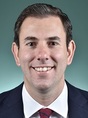
Jim Chalmers Rankin, Australian Labor Party, Treasurer
11:57 am
On weekends at kids' sport and at fetes and festivals, there's often a volunteer medic to tend to bumps and bruises and sprained ankles. In the Jewish community, that first aid is often provided by Hatzolah, a first responder group. Yaakov Super, who's in the gallery with us today, is a volunteer medic with Hatzolah. His mates call him Yanky. Yanky was on hand to provide routine first aid at the Hanukkah celebration in the park at Bondi on 14 December. Yanky was shot in the back that day, just near the footbridge. He thought he must have been among the first hit because he heard gunshots after he fell but not before. The mic draped over his shoulder was shattered, but he found a way to radio for help. Fragmentation from the bullet collapsed his right lung. He lay on his folded kippah, hoping that the pressure would stop him bleeding out.
His friend Rabbi Mendy Berger, also in the gallery today, was about 90 metres away at the other end of the festival. He saw Yanky shot. And while he sheltered his daughter, he saw the whole massacre unfold. He saw the horror wrought by this evil act of ISIS inspired, antisemitic terrorism, and he saw the chaos and then the bravery which followed it. He saw another man, Elon, shot multiple times in front of his own little two-year-old son, and he assumed that he was dead. Rabbi Mendy Ulman was also there and also sheltering his child. When Eli Schlanger was gunned down, the two rabbis lost an uncle and brother-in-law. Their lives were connected by family and faith, now by terror and tragedy.
In all, as we know, 15 were killed that day and, amidst the terror, there are stories of extraordinary bravery and survival. That Elon survived, that Yanky survived and that at least 55 were wounded and survived—these are miracles. Jewish law tells us that when God performs a miracle you're obligated to return to that place and give thanks—Yanky told me about that. I know that's what he did, and I know that's what Elon did too because I was there when Elon returned for the first time. And given what Rabbi Berger, Rabbi Ulman, Yanky and Elon have all been through, it was so unbelievably generous of them to spend time with me last week in that breezy and beautiful park to talk me through and to walk me through what happened that day on what Rabbi Berger called the 'killing ground'. They showed me the bullet holes in the trees and in the steel structures of those little gazebos. They lent me a kippah to light a candle and placed an 'even', which is a little remembrance stone, with me.
Rabbi Berger and Rabbi Yanky, as I said, are here today and I want to say to them, 'Thank you'. Together we joined the thousands of others who were there over the past five weeks to pay respect to the lives lost to this unspeakable and unfathomable violence and to their loved ones; to the witnesses, the lifesavers and the police and paramedics, some of whom have been with us today as well; to the reporters, the brave community heroes and the nurses, the surgeons and the psychologists; to all of those who were hurt, who are hurting and who are helping; and to every Australian who knows that this kind of hatred has no place in the sort of society that we love and cherish.
As others have pointed out, Australian Jews have helped shape this nation since the early days of European settlement. From our most distinguished citizens, like General Sir John Monash and our first Australian-born governor-general, Sir Isaac Isaacs, and to our friends and our neighbours, our workmates and our teammates, this community is woven into the fabric of our national life—an intrinsic part of our Australian story. For many, here and around the world, Bondi is a symbol; it's a part of what it means to be Australian. In its sun drenched freedom, Bondi has formed a big part of our own self-image, and now the sickening atrocity of 14 December is also a part of Bondi—a part of our story.
As we've heard, the victims at Bondi came from all walks of life: rabbis, devoted volunteers, sports lovers, an IT analyst, a retired police detective and a Holocaust survivor—all bound by the simple act of enjoying life and observing faith under a summer sky when their lives were cut short. We say to everyone affected by this horror and to every Jewish Australian: you have the right to walk the beach, the promenade and the park in safety; to be proud of your origins and your heritage; and to celebrate your faith in public. This should be an act of community and not an act of physical courage. Our grief today is shared because our lives are shared. When Australians see little Matilda, we see our own kids—the happiness that face painting or a petting zoo brings them. When we see Boris and Sofia Gurman's courage, we imagine our own parents. When we see Reuven Morrison, or Ahmed al-Ahmed or the police officers, we hope that we would be that brave in that situation.
You don't need to be a scholar of the Talmud to understand its message that whoever destroys a single soul is deemed to have destroyed an entire world and that whoever saves a single soul is deemed to have saved an entire world, or to understand that this attack on this Jewish community is an attack on all Australians; that an attack on the peaceful act of celebrating Jewish faith is an attack on all of our faiths and all of our traditions—to understand that what happened on 14 December is not something which the Jewish community can or will be left to mourn alone.
Today we gather in grief, but we need to also gather in resolve and in solidarity. This condolence motion is to demonstrate that this House and the communities that we all represent are there for our Jewish sisters and brothers today and for everyone affected by the atrocity at Bondi, for all of the difficult days of hurting and healing ahead.
No comments