
House debates Condolences
Bondi Beach Attack Victims
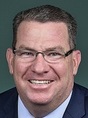
Scott Buchholz Wright, Liberal Party, Shadow Minister for Skills and Training
7:00 pm
My fellow Australians, my sincere condolences go to those that are affected by the antisemitic terrorist attack that happened on our shores that has ingrained itself—a scar on our landscape that history will remember. I represent, and offer my condolences on behalf of, all of the people of Wright. I cannot fathom the amount of pain that those people endured on that given day.
I want to acknowledge and associate myself with some of the comments that have been made in this House today from both sides of the chamber. The contributions have been genuine; the contributions have been heartfelt, and, to some extent, enlightening. The contributions that we make today condemn the atrocity which stole the lives of those victims of the terror attack. It was an act of terrorism that deliberately targeted the Australian Jewish community, gathering to celebrate the first night of Hanukkah.
I want to acknowledge the courage, composure and quick action of all those police officers, first responders and healthcare workers whose dedication and skills saved lives. I also want to acknowledge the trauma of the men and women who were injured physically and psychologically, including those who witnessed the horror. I wish to express Australia's deep admiration for those heroes of Bondi, the everyday people who showed extraordinary bravery and unselfishness, including those who were wounded and killed.
Some of the contributions I heard today moved me. There was a comment from the other side where they said, 'Antisemitism is anti civilisation,' and then additional comments that it was anti-Australian. It is anti-Australian. This is not the country we want for the next generation. It's not the country we want for our children.
I want to acknowledge the contribution made by the Leader of the Opposition, where she said:
Antisemitic hate fuelled the terrorists on 14 December, but it came out of the shadows in October 2023. It walked our streets. It marched over our bridges. It took over our landmarks. It camped in university quadrangles. It painted graffiti on our buildings. It firebombed our places of worship. It sent children to school behind locked gates and armed guards. Like a slow, creeping disease, it festered in plain sight. Jewish Australians do not feel safe, and if Jewish Australians do not feel safe then no Australian feels safe. You warned of this menacing storm, and you said you felt unheard.
There were some other comments that were made around the contribution to our country. And there were some comments made around the different stages of grief. Some human behavioural theorists would suggest that there are five stages of grief: first denial, then anger, and then, ultimately, acceptance. These stages are not necessarily linear, and each individual person who grieves can grieve differently. This particular incident gave me time to ponder how those victims are feeling. I tried to fathom what it would be like if it were one of my children, if it were my wife, if it were my parents or if it were my grandparents—how I would deal with the loss. It would be heartbreaking for a community that was out celebrating joyfulness to have a part of their heart, their soul, torn from them, with that loss never to be replaced.
I can't fathom the hate. I cannot fathom the hate of the shooters. Who could bring a rifle to their shoulder and find an unarmed 10-year-old innocent child in the crosshairs—I cannot find the hate that would then cause them to pull the trigger and repeatedly go through this process. I can't understand why that hate is there. I don't know what they expect to achieve with these actions, and I don't know how we fix it.
I heard in our contributions today that the Jewish community have a belief that, if you continue to speak the names of those that have fallen, they will not stay in the dark; they will forever be in the light—a magnificent contribution. So, in my closing comments, I would like to just speak the names of those 15 into the Hansard.
There were Boris and Sofia Gurman. Boris was 69, and his wife, Sofia, was 61. They had been married for 34 years. Rabbi Eli Schlanger, 41 years old, was a devoted rabbi, a chaplain and a father of five. Edith Brutman, 68, was a loved member of the Sydney Jewish community and a woman of great principle. Adam Smyth, 50 years old, was a local Bondi resident, a loving husband to his wife, Katrina, and a father of four. Boris Tetleroyd, 68, was a gentle soul and a gifted musician. There was10-year-old Matilda, who we have heard about today from most speakers and whose parents named their firstborn, in their words, with 'the most Australian name that can ever exist'. Marika Pogany, 82, known lovingly as 'Omi', was a mother, a grandmother and a pillar of her community. Peter Meagher, 61, was a retired New South Wales police detective sergeant who spent 34 years of his career protecting others. Dan Elkayam, 27, was a young man in the prime of his life. Reuven Morrison, 62, was a businessman, a philanthropist and the patriarch of his family. Tibor Weitzen, 78—a father, grandfather and a great-grandfather—managed to survive the worst tragedy in human history, where six million Jews were murdered, but could not survive this crisis. Rabbi Yaakov Levitan, 39, was a deeply committed religious community leader. Tania Tretiak, 67, was a much loved member of the Randwick community.
You will never be in the darkness; we will always keep you in the light. And we will do what we need to do in this place to change the course, the trajectory, that our country's on at the moment. We need to do that not only for the Jewish community; we need to do it for our kids and the next generation.
No comments