
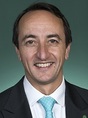
Dave Sharma NSW, Liberal Party, Shadow Assistant Minister for Citizenship and Multicultural Affairs
4:17 pm
Senator Cadell has submitted a proposal, under standing order 75, today. It is shown at item 13 of today's Order of Business:
That, in the opinion of the Senate, the following is a matter of urgency:
The Albanese Government's betrayal of Australian veterans through its attempt to rip $748 million from allied health care with a $5,000 cap—now cynically rebadged as a "review threshold"—and the need to scrap it so veterans' care is determined by clinical need, not Labor's budget bottom line.
Is consideration of the proposal supported?
More than the number of senators required by the standing orders having risen in their places—
With the concurrence of the Senate, the clerks will set the clock in line with the informal arrangements made by the whips.

Ross Cadell NSW, National Party, Shadow Minister for Water
I move:
That, in the opinion of the Senate, the following is a matter of urgency:
The Albanese Government's betrayal of Australian veterans through its attempt to rip $748 million from allied health care with a $5,000 cap—now cynically rebadged as a "review threshold"—and the need to scrap it so veterans' care is determined by clinical need, not Labor's budget bottom line.
It was an interesting process when we went through the estimates process and were hearing about the reasons this came about; $748 million is a lot of money. But, when we get to the core of it, we hear about two veterans using two providers where they went over $100,000. We know who the providers were. One was a dietician; one, I think, was a podiatrist. They were billing at least every week for these services. Other senators were in there; we sought answers to the questions: What action have you taken against the people who are rorting the system? What have you taken against these providers that are doing the wrong thing? The answer was none.
We've heard about the Fraud Prevention Centre, which had 120 people and now has 200 people. So we had 120 people doing nothing before—they were taking no action—and now we've got 200 people doing nothing to prevent this fraud. But 25,000 veterans have to pay the price of not going after people committing fraud in this system—providers. It is a sickening thing. These are people who served our country. These are people who joined the armed forces with a promise we made to them that we would look after them, a promise they relied on, a promise for allied health services for their injuries, for their physiotherapy, for their psychological health—for so many things. Now this government wants to back away from it for the budget bottom line. Let's not pretend it's anything more than that. This is not about veterans' health. This is not about their wellbeing. This is about cutting money out of the budget—$748 million.
When I went to my hometown in the Hunter Valley and talked to Ruth Rogers at Singleton RSL, Ruth told me of her troubles and of how she needs these things and how people she supports as an advocate need these services every day, every week. Now they have to jump through a hoop. We heard today this question: how are you going to approve these things in 28 days when you can't get recognition of injury for 350 days? It just doesn't make sense. We haven't met these KPIs, and these people deserve better.
That is why we saw veterans march to Parliament House. That's why we saw veterans put their medals down on the front steps of Parliament House. It's because this government has broken Australia's promise to them.
James Burns, up in Scone, has launched a petition, which we can all go and sign. It's a petition that meets with the Senate requirements, so we can debate it. When he came here, he talked about how he will easily go through the $5,000 of allied health in a month. The guy can't walk to town. He has an electric scooter that will get him from his house to town and from his town to home but not around town. It'll run out of battery before he gets home. He can't get one upgraded. What do I say to him and to the people like him right across Australia? 'You'll now suffer. You'll pay the price because this government can't control its spending. You will pay the price because this government betrayed our oath.' That is why this is such an urgent motion.
We have a private member's bill—potentially two—that can turn this around. We have the ability to give integrity to the oath we made to our veterans, who went overseas, who served in Australia during disasters. We can put them in harm's way, but we no longer want to help them get out of harm's way, and that is not good enough. It is certainly not good enough for any parliament that I want to be part of—to think that these people are replaceable, that these people are expendable and that these people don't need the care that they so desperately do.
The difference made by this cap for these 25,000 people could be life and death. It could be the psychological help to get over the trauma of what they've seen, what they've done, what they've been involved in. It could be the health care they need to avoid living a life of pain, through physio, through chiro and things like this. But now we have this cap. It is not good enough. Our Australian veterans deserve better. That's why it must stop. The cap must be scrapped, and anyone who says anything different has to have a look at themselves.

Josh Dolega Tasmania, Australian Labor Party
4:23 pm
I'd like to acknowledge the ADF personnel around the building today and this week as part of the parliamentary exchange. I welcome them to Parliament House.
I rise to contribute to the urgency motion raised by the coalition. I've got to talk about some of the things that happened with the Department of Veterans' Affairs under their watch whilst they were in government. They were the party that gutted DVA, leading to a huge claims backlog. Former veterans affairs minister Andrew Gee told the Royal Commission into Defence and Veteran Suicide that, despite a huge backlog, he was forced to cut $430 million, a move that he labelled as 'counterintuitive'.
Since day one, we've worked to improve the lives of defence personnel, veterans and their families in Australia, with significant funding increases. The state of veterans' support funding when we came to government was a disgrace. There was a backlog of 42,000 new veteran claims that had not been looked at by anyone in the Department of Veterans' Affairs.
Do you know what? I can tell you a little story. I worked for the union that represented DVA workers: the CPSU. The former LNP government, as part of their crusade against the Public Service, brought in labour hire firms to process DVA claims, and they were really nasty in the way they did this. Those workers that were brought in were employed with no sick leave, no annual leave and no job security. To add further insult, they were paid much less than those who were sitting next to them and directly employed in the APS. These people served veterans.
Not many people know that it actually takes six months for a worker, when onboarded at the Department of Veterans' Affairs, to be fully able to process claims. During the dying years of the former government, during their wasted decade, there was a revolving door of workers who simply didn't complete their training due to the miserable working conditions that they were hired under. Those opposite actively sabotaged DVA from being able to serve veterans, who deserve so much better from their government.
On this side of the chamber, we're committed to supporting our defence personnel, veterans and their families, and that's why we've made investing in the Department of Veterans' Affairs a priority. In fact, the Albanese Labor government has provided the department with more funding resources than at any time in the past three decades. The Albanese Labor government funded additional DVA staff to clear those backlogs, with record claims-processing in the last three years. We also committed $15 billion in spending on payments and services for over 360,000 veterans and their families last financial year, $5 billion more than four years ago.
The royal commission found that the previous veterans legislation system was so complicated that it poorly impacted veterans' mental health and increased the risk of suicide. To address this issue, we introduced reforms to the veteran support system from 1 July, including once-in-a-century changes to simplify veterans entitlements legislation, improve integrity in the system and implement a more holistic wellbeing support approach to supporting veterans and veterans' families. These changes have simplified the veterans compensation system, making it easier for veterans and their families to understand their entitlements and making it easier for DVA to process their claims.
Our priority is to ensure veterans and their families can access health care and support when they need it. That's why we're investing $169.7 million into strengthening veteran cardholders' access to allied health services, including the largest investment in veteran allied health provider fees in over two decades. This addressed recommendation 71 of the royal commission, which called for increases to the DVA fee schedules to improve access to care. For example, this means the fee paid for a standard physio consultation will increase from $75.10 to $110. This means more choice, better access and greater confidence in DVA healthcare arrangements for veterans.
Importantly, we're reducing the burden of veterans having to return to a GP every 12 allied health visits for a new referral. Instead, we've expanded this to a $5,000 threshold before a veteran's care is reviewed. The allied health threshold will not apply to some of our most vulnerable veterans, including those who are eligible for the special rate disability pension or the totally and permanently incapacitated pension and those who are catastrophically injured.

David Pocock ACT, Independent
4:28 pm
At the Australian War Memorial, there is an exhibition called Deathmin, and I would encourage my Senate colleagues and members of the public, when you're there, to go and check it out. It is by Kat Rae, and I'll quote her about this particular exhibition. She said:
After my veteran husband Andrew suicided in 2017, I inherited a stack of post-death admin. This "deathmin" contains thousands of pages in which Andrew requests support for his broken body. Eventually, DVA paid $7 fortnightly, later reduced to $5. Three months before Andrew died, payments ceased.
… … …
Deathmin is a counter-monument to the strong, upright imagery often conveyed in the Australian War Memorial. At my height and Andrew's weight, Deathminembodies the burden placed on veterans and their families. It asks bureaucratic institutions to care for the people they say they will.
The government says: 'Well, it's just another cheque. You'll still get more than $5,000.' But this threshold adds another obstacle. It's another piece of paper. It's another form. It's another visit to the GP. And it all goes on the stack; it all piles up. It all goes on the shoulders of veterans who are just trying to get well and on their families.
This is not something we should be doing. We've heard so clearly from veterans and their families just how hard it is to get support. And now we're saying that if we identify that you do need support—if you really need support, if you need so much support that you have to have more than $5,000 of allied health—we're going to check you; we're going to make sure you really need that support, rather than just trusting the health system and the veteran.

Susan McDonald Queensland, National Party, Shadow Minister for Resources and Northern Australia
4:30 pm
Australia's promise is that we will look after those who serve. But that promise does not expire when you go out of uniform. The DVA website says that it is the duty of all Australians to repay our veterans' commitments in kind. I agree with that; the coalition agrees with that. But does Labor? What an extraordinary list of talking points we've just heard from the government—an appalling defence, where apparently the real victims are officials in the department. It is an absolutely bizarre allegation. How on earth can a $748 million cut to spending mean that veterans are being better looked after? How can it be that, if you can't get access to services, the best solution would be to cap allied health services for the veterans who have served Australia so faithfully?
Townsville veterans already know what losing support looks like, thanks to the Albanese Labor government. Regional veterans already face barriers of fewer specialists, longer distances, higher costs and harder access. We have one of Australia's largest serving and ex-serving defence communities. The Oasis in Townsville was created to support veterans and families transitioning from military to civilian life. It helped these veterans access employment, education, housing, health care and wellbeing services and reconnect with their community. DVA itself previously described the Oasis as providing 'government and community services to Australia's largest veteran community'. Its work also confronted one of the most confronting issues for the veteran community, which is suicide. But the Oasis closed its doors in December 2025 following a funding dispute with the Commonwealth. The Commonwealth terminated a $4½ million grant. Meanwhile, the government has made $8 million available to support bilbies. Apparently bilbies are more important to Labor than our veterans.
Lieutenant General John Caligari warned that veterans could again be left without that home base, somewhere they could turn up and feel safe. That should have been a wake-up call. But instead of Townsville being a model for supporting veterans, it's an example of what happens when support disappears. Andy Cullen, who's an Afghanistan veteran with 17 years of service, is a fourth-generation soldier. His 18-year-old son is considering joining the ADF, but Andy is now discouraging his son from becoming the fifth generation of that family, because he doesn't trust the government to look after his son if he is injured, because trust has been broken.
Australian Labor should be ashamed. What message are we sending? Australia needs people who are willing to serve. We cannot ask them to risk everything while penny pinching on their care afterwards. When did veterans start being treated as a budget line item? Their care isn't a government generosity; it is an obligation. Stop the word games, scrap the $5,000 threshold, remove the bureaucratic hurdle and honour the promise Australia has made that we will look after those who serve—and that will not stop when they take their uniforms off—and that we will continue to care for those veterans who have served and who have been injured protecting this nation. It is extraordinary that Labor would roll out talking points about department officials when the real victims are veterans who are now committing suicide—the terror of not being able to access the right care, the right allied health services, thanks to this government's penny pinching. It is an absolutely un-Australian way. Cut the cap.

David Shoebridge NSW, Australian Greens
4:35 pm
Veterans can see through the messaging that's coming from the Labor Party. They've been done over by the coalition before. They remember what it's like—being ignored and put at the back of the queue. Labor comes out and says: 'Oh, it's not a cap. This isn't a cap on services. It's just a review point.' But veterans can read a budget like I can read a budget. You can see in the veterans budget that this government is proposing to save three-quarters of a billion dollars by putting in this 'not a cap but a review'. We'll call that what it is: absolutely unparliamentary language. That is what this is.
When I first raised this issue in estimates, I was shocked at the lack of information. When we drilled down we found that, actually, 25,000 veterans are currently getting allied health services in advance of this cap. I have had so many veterans come into my offices to talk with me and communicate with my team a deep fear about this, because they know this is life and death. It can be as urgent as veterans with complex PTSD getting to see a psychologist, or someone who's injured in combat getting to see a physio so they can play with their kids. That's what this is about.
Defence always seems to have money—for US corporations, for more money for the Defence senior brass—but they're slashing it for the men and women who served. Defence is currently spending $43 billion on half a dozen useless frigates and $375 billion on AUKUS, and they won't pay for a veteran's physio. Those are the priorities here. It reveals a lot about any government, about how they treat people who served in good faith and then just got put on the scrap heap. Veterans have seen it time and time again. Well, we're on their side on this. (Time expired)

Marielle Smith SA, Australian Labor Party
4:37 pm
I also rise to speak on this matter of urgency moved by Senator Cadell. From the outset, I want to put on the record my utmost respect and gratitude for our nation's veterans. I'm sure many people in this chamber share a similar family story to mine. My family is deeply proud of our family members who have served in both world wars and more recently in the Middle East. My husband is a former member of our defence forces, and we know the impact that service has on both the individuals who bravely serve in our name and on their families, not just in the immediate aftermath of that service but with impacts that can last many months, many years and many decades. I know that none of us in this chamber would ever seek to diminish that service or to diminish the respect we all share for our veterans. We know that those people in our country who bravely put themselves forward to serve do so at great sacrifice for their own wellbeing and great sacrifice which has ongoing impacts for their families.
Today I want to use my contribution to simply place some information, some facts and some context on the table, because the truth is, when the Albanese Labor government came to power, we began the work that meant that we now have better funded and resourced the Department of Veterans' Affairs than it has been in three decades. Since day one, our government has worked to improve the lives of defence personnel, veterans and families in Australia, with significant funding increases.
The truth is that veteran support funding when we came to government was in a dire state. Under the previous government, DVA was underfunded and underresourced. This meant veterans weren't getting access to the services and supports they needed and deserved, and I think many on the other side of the chamber would agree with that now. There was a huge backlog of almost 42,000 new veterans claims that had not been looked at by anyone in DVA. As a result of the funding we've invested, we've cleared that shameful backlog, and that has had a big impact on people's lives. I know it was a source of incredible frustration, disappointment and upset, and it's a good thing that that backlog has gone. We're continuing to resource DVA to provide that funding for healthcare support and compensation that veterans need and deserve. With respect to the current changes that are under way, again, some information I think is helpful to lay on the table, but obviously, our goal must be to ensure that those who serve our country have the support that they need, have the support that they deserve.
The government is making a substantial increase to the fees paid to allied health professionals providing services to veterans to improve access to those services. This was a key recommendation of the royal commission. It was recommendation 71. These reforms are about trying to reduce the burden on veterans to go back to their GP every 12 months for a new referral. Not everyone has the same GP and it's not easy for everybody to go see a new GP, to share their story, to share their pain and to share why they might need an allied healthcare service. Then there is the review point. This is meant to be about reducing the time and the financial burden that veterans experience when they do have to go back to their GP every 12 months; rather, having a different system which avoids that kind of burden.
Critically, we're ensuring that further care will be available if there's a clinical need beyond that $5,000. It's important to say as well that veterans approaching the threshold will have their treatment reviewed with their healthcare team, but they will be able to access those services. There will still be continuity of services while DVA considers any requests for additional care so there is no unnecessary interruption to that treatment. Again, that's an important piece of information that should be laid on the table in this debate; so, too, that these changes will not impact veterans on the special rate disability pension or on the totally and permanently incapacitated pension, or have been determined to be catastrophically injured.
Also, there is ongoing consultation and it's important that that consultation is able to take place. It's important that people are able to have their voices heard in that consultation, and I'm confident that the minister and our government are listening closely to that. We are committed to ensuring veterans receive high-quality care. I think everyone in this chamber would never diminish the commitment of others to our veterans and to the armed services. There is more work under way here in terms of that consultation, but having the facts on the table about what these reforms do is important too.

Tyron Whitten WA, Pauline Hanson's One Nation Party
4:42 pm
I rise to speak on this matter of urgency. Yesterday, outside Parliament House, decorated Australian veterans laid down their medals. They did not do it lightly. Those medals stand for service and sacrifice. They were laid down as a condemnation of this Labor government. Labor's $5,000 annual cap on allied health cover for veterans is a travesty. Physiotherapy, psychology, occupational therapy and rehabilitation for those that risk their lives for this country have been cut short.
Labor might be trying to back away now, saying that it triggers a review, but the damage done to the trust of our diggers is irreparable. Veterans with complex injuries and PTSD will hit that ceiling and then fight extra bureaucracy just to keep seeing their clinicians. Matt Keogh refused to even shake the hands of veterans that came to plead with him for some humanity. Matt Keogh has to go, this cap has to go, and One Nation will always support our veterans.

Jessica Collins NSW, Liberal Party
4:43 pm
Yes, this moment won't be forgotten. This week will never be forgotten—those decorated veterans, as you said, Senator Whitten, laying down their medals in front of Parliament House, giving them back to this government that has abandoned them, the government that has betrayed our veterans.
We have had to put this urgency motion forward because it is urgent, quite frankly, to the point of life or death for some of these people. I heard directly from veterans yesterday that there are people out there that can't manage. They can't battle the system any longer. They can't go through it anymore. They feel that their only choice is to end their own life. This is why this is so urgent. This is why everybody is so up in arms and desperately pleading with the government to remove this cap. It is not a threshold. It will make it even more difficult for these veterans to get the health care that they need.
Let me go through one example that I heard yesterday from a veteran who came and shared his story with me. His initial liability claim was 534 days in the system to then get a letter saying that they had accepted the liability. Bear in mind that the KPI of this government is 100 days. That's five times over what their KPI is. After 663 days, it's still not finalised. Can you imagine the impact that that would have on someone's mental health, battling the government that they prepared to lay down their lives for? We have a situation where the overcentralisation of the DVA claims process is slowing things down to the point that it is affecting the mental and physical health of our veterans. Claims are being kicked down the road. It's actually costing the government more money through the centralised process, the government's hand-picked medical assessor, and veteran health clinics in the meantime are closing down. They have been forced through this system they don't want to be in, it's costing the government more money, and it's making it more difficult for them.
This is why it's so urgent today that we call on this government to scrap this cap. The government says that they're going to make a $748 million saving off this cap. But it's not a cap, is it? It's a threshold. We heard from the government just now that they were investing resources. Money is not the answer to everything. You've got to sort all the problems around this. You've got to help our veterans—back in our veterans that did everything they could, put their lives on the line to only have this cruel government slap them in the face, quite frankly. We also heard from Andy. I know the story has been shared a bit today, but we heard from Andy, a fourth generation soldier who feels betrayed and disappointed by the government that he fought for, and he's discouraging his 18-year-old son from enlisting. I think that's an absolute tragedy. I heard from Chris, a veteran who suffered a traumatic brain injury while serving our country. He has been rejected on his claim too. He's not getting the help that he needs after he waited. The system is broken, and I call on the government. Remove this cap at the very, very least, and back in our veterans.

Sue Lines President
The question is that the urgency motion as moved by Senator Cadell be agreed to.