
Senate debates Bills
Commonwealth Electoral Amendment (Banning Dirty Donations) Bill 2026; Second Reading

Steph Hodgins-May Victoria, Australian Greens
9:01 am
I welcome the opportunity to continue our work to get big money out of politics. I acknowledge the work done on this issue over so many years by my colleagues Larissa Waters as well as former senators Lee Rhiannon and Richard Di Natale, alongside academics, integrity experts and civil society organisations, who have consistently pushed for strong political donation reform.
The Commonwealth Electoral Amendment (Banning Dirty Donations) Bill 2026 is pretty straightforward. It bans political donations from industries with a clear history of using money to buy influence and get privileged access to decision-makers. It also places a $3,000 cap on individual political donations per election term to reduce the outsized influence by wealthy donors in this place. The industries covered by this bill include fossil fuel companies, gambling corporations, banks, tobacco companies, liquor interests, defence contractors and pharmaceutical corporations. These are the industries that have repeatedly used political donations and lobbying to shape outcomes in their favour and against the Australian people. Last year's electoral reforms simply didn't go far enough. The government's deal with the coalition kept disclosure thresholds far too high and failed to deal with donations from industries that pose the greatest risks to political integrity, industries that simply should not have a say in politics. The tobacco industry don't have a seat at the table anymore because they're dangerous, and neither should these other corporate interests have that sort of influence.
Australians are increasingly frustrated by political parties who seem more accountable to their corporate donors than to the Australian people—whether it's delays on climate action, watering down gambling reforms or our gas giants continuing to receive favourable tax treatment. While people struggle with cost-of-living expenses, keeping a roof over their heads, buying fresh groceries every week and affording their medicine, multinational gas corporations get the royal treatment. This bill is about restoring some balance in the system. It is about making it harder for wealthy industries and individuals to buy influence in this place and ensuring that communities and individuals are not drowned out by corporate money.
Let's air some of the corporate parties' dirty laundry, shall we? Here are just some of the receipts for the last decade: Woodside gave $1.2 million to Labor while they get their climate-wrecking projects rubber stamped again and again. Santos slipped Labor over $800,000 while racking up a decade of paying zero corporate tax. A decade of zero corporate tax cost Santos just $800,000. Chevron handed over more than $600,000 to Labor, who recently gifted them $300 billion worth of Australian gas for free—I mean, a pretty good business for these corporates. And Sportsbet funnelled almost half a million dollars to Labor while gambling reform sits on the sidelines. Families are being ripped apart, suicides are increasing every year and the government refuse to act because they have their hands out for those corporate donations from Sportsbet, and what a great shame.
Do you know what? Those sitting on the other side of the chamber are not off the hook either. Hancock Prospecting handed around 750,000 grand to the Libs while they greenwashed their fossil fuel expansion. Adani Mining—another $750,000 to the Liberal Party while successive governments swept the coal company's scandals under the carpet. And Tabcorp—a neat $650,000 to the Liberal Party while gambling adverts target our children. The receipts go on and on and on.
One Nation with their shiny, new private jet—I will have plenty more to say about them later, about just how deep in the trough their noses actually are, so don't get too comfortable. You do not have to dig deep to see the pattern: big dirty money funnelled in, terrible policies coming out. These are not donations; these are investments in the major political parties in this country and, frankly, they are excellent business for the big corporates. A few hundred thousand dollars here and there to the old parties and you practically get to write the policy for yourself. The reality is, though, someone sitting at home will never have that kind of influence. They will never have that kind of influence over the government elected to represent them unless they have huge piles of cash ready to go.
What a week, budget week, a week that exposed the whole ecosystem of corporate influence in all of its polished, glossy, champagne-soaked glory, a budget that reads less like an economic plan and more like a thank you card to corporate donors, and a breakup letter to everyday Australians, who are being absolutely slogged at the check-out and at the petrol bowser. Labor had the opportunity of a decade, of a generation with the community backing the expert evidence, the political mandate and with the public appetite to finally stand up to the gas cartels and tax our gas. But what did they do? They folded—of course they did. Instead, we got a gas reservation policy so confusing that even their own ministers cannot explain it. Contracted gas, uncontracted gas—it is governing by press release. The only thing clear is the bottom line. With zero meaningful revenue, this will not raise a cent and that suits the gas corporations just fine—of course it does.
I know this pressure is real, Labor. You can feel the mood shifting across this nation, across communities, across political lines. People have had an absolute gutful. They are saying 'enough is enough'. They want a fair return on their resources. They want a budget that works for them, not just for big gas and big corporate interests and the one per cent, because that is what this budget delivers for them—one per cent. They want a budget that properly funds universal child care, that does not rip off people living with disabilities, that delivers real cost-of-living relief right now, not scraps down the track, and that accelerates a transition away from the fossil fuels that are driving the climate and energy crises we are all experiencing. You do not get to say you have listened to the polling, the experts, the economists and the community when you then deliver a budget that so squarely lands on the side of the same corporate interests bankrolling this political system. This budget has shown us exactly who Labor works for: big gas and one per cent. It's not you, not me, not the people who voted them in—the people who funded them to get in. Remember this: while the dirty money keeps on flowing, they will keep doing this time and time again.
This week, I thought I would attend one of the infamous, exclusive budget-fundraising events hosted by the Labor Party mere minutes after they deliver the budget. If you haven't heard about them, these are exclusive parties where CEOs, corporate representatives and lobbyists rub shoulders with the Prime Minister and senior ministers, sip champagne and quietly celebrate another year of selling Australians out and selling our gas for nothing while no doubt offering a few helpful suggestions about next year's budget, which might improve their bottom line. If you want to get into this event, it's 5½ thousand dollars a pop, thank you very much. I turned up at Hotel Realm to discover that I wasn't invited. Apparently, you need 5½ thousand dollars to get in the door. It seems not being a multinational corporation with a proven track record of splashing cash around parliament worked against me, and it works against you too.
I'm sure that the Australian energy producers were in there, though. You can imagine—the same gas lobbyists who, when asked at the gas tax inquiry whether they would shout the Prime Minister around if they could avoid a new tax in the budget, just shrugged their shoulders. But a round of beers or even 5½ thousand dollars for a ticket to that all-exclusive event is so bloody cheap when you consider what these dirty donations buy these companies. Their members chipped in a million dollars a pop to run a campaign to kill a gas tax; 5½ thousand bucks is peanuts to them. A round of beers is nothing when you think about the $17 billion that they along with their ALP minister mates, former and present, saved their multinational mates. For those who missed the ALP's night of nights or want to back it up, they can head along tonight to the shadow Treasurer's fundraiser for the bargain price of $2,000 a pop. What an absolute steal.
These engagements aren't just about influence; they are practically job interviews for life after parliament. Since 2001, nearly every single resources minister has gone to work for the fossil fuel industry. Ministers, MPs and senior advisers leave parliament and walk straight into high-paying jobs in the industries they used to regulate—Shame!—like Mike Kelly, Labor's former defence minister, who quit parliament and immediately took up a job with American weapons and data-mining giant Palantir; and Thomas Duke, former director of policy for Minister Clare O'Neil, who went straight from writing Labor's five per cent housing deposit policy to working for the Commonwealth Bank of Australia. The architect of a policy that was always designed to work better for the big banks than for young people now works for one of the big banks. You cannot make this stuff up.
Right now, the Minerals Council of Australia is deciding who will be its next chair. It's two lead candidates are two former Labor politicians: former member for Hunter Joel Fitzgibbon, cofounder of the parliamentary friends of coal; and Mark McGowan, a renowned defender of fossil fuel interests. Who will be the next to follow Stephen Conroy into the gambling lobby after he helped to bury the Murphy report? I wonder if Madeleine King—the minister for Woodside or Japan or resources, whatever it is today—will flip a coin in deciding who she goes to work for next out of these interests.
And look, there's one elephant in the room that I haven't addressed yet: a party that was just gifted a private aeroplane worth millions of dollars bought by some of Australia's richest people. Pauline Hanson's One Nation, the so-called party of the people, now has a shiny new jet to fly between corporate dinners and million-dollar fundraisers. But the public are not fooled. Australians know that a gift worth more than most family homes comes with strings attached. One Nation is turbocharging its billionaire cavalry before donation reforms tighten up at the end of the year. They are rushing that money in before scrutiny ramps up, because they know that it will not pass the pub test. The far right in Australia is the fossil fuel industry in a trench coat.
One Nation is a voice for battlers but a vote for the billionaires. Lining up with mining billionaires, with gas corporations and wealthy elites and partying at Mar-a-Lago with the mad king Donald Trump. That is how One Nation rolls, folks. It is repulsive, and Australians have had an absolute gutful. They wanted an end to it, and that is exactly what this bill will do. It will stop the corrupting influence of dirty donations in this country. It will go some way towards restoring the public's trust that they elect politicians to represent them, not the cashed-up donors crawling the halls of this parliament. As a Greens senator, I find the idea of charging for access for a policy discussion completely unfathomable. After this government's budget, which rips money away from people with disabilities and funnels billions of dollars into weapons and subsidies for fossil fuels, the Australian people are, rightly, asking, 'Who does this government work for?'
Let's be clear: the major parties and One Nation do not want to change the status quo that has benefitted them for decades. They will fight this kicking and screaming, but the only thing that terrifies them more than losing these funding streams is losing seats at the next election. Together, we need to work to get dirty donations out of politics. We need proper donation caps. We need to close those loopholes that funnel dark money through our political system. We need to ban donations from harmful industries that should never have a voice in this place. Until we achieve these things, we will never, never have a parliament that truly serves the people.
To those of you out there watching, appalled that this continues to happen in 2026, we need to organise. The next federal election is not too far away, but it is going to take public pressure right across this country to break this two-party system that has depended on corporate fossil fuel interests and gambling interests for far too long, and to turn this around and have a parliament that genuinely represents you, not the political and elite class in this country.

Murray Watt Queensland, Australian Labor Party, Minister for the Environment and Water
9:17 am
In February last year our government passed once-in-a-generation reforms to our electoral system to get big money out of politics. We've just had another lecture from the Greens party, despite the fact that they voted against the electoral reform that we managed to pass through this parliament last year. If parties, including the Greens, were serious about tackling donation reforms, they would have voted for our legislation. This was the biggest package of electoral reform in 40 years. It has substantially improved transparency, including public reporting of political donations within days rather than months, and it has slashed the threshold of what is disclosed from almost $17,000 to $5,000. It included capping political donations, limiting campaign spending, restricting big donors and various other reforms to the electoral process in Australia that were badly needed. That is what the Greens voted against—the biggest package of electoral reform in 40 years.
Through Labor's initiatives, we will put down pressure on the money that trades hands in elections and make sure that Australians know more about who is donating to parties and candidates before they go to the ballot box. These important changes will limit the disproportionate influence of big donors and stop the arms race of endless fundraising and spending. We are now delivering on Labor's commitments to improve transparency and accountability across our electoral system. Our reforms focus on disclosure, transparency, caps and limits for everyone, regardless of who you are.
If the Greens were serious about improving our electoral system, they would have voted for our electoral reform last year. But, of course, the Greens party would rather lecture the parliament about their moral superiority on donations reform and gambling reform while being bankrolled by gambling interests.
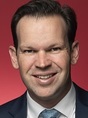
Matthew Canavan Queensland, Liberal National Party
9:18 am
I've often remarked that the hypocrisy that comes from down that corner of the chamber is almost in infinite supply. It's such a shame we couldn't capture the Greens' hypocrisy, or have some technology to capture it and convert it into electricity, because we would never have a blackout again. There is an infinite supply of hypocrisy that comes from down that end of the chamber, exceeded only by their moral superiority. They are our betters, of course. They are the moral guardians of the universe, according to them—just ask them—and everybody else is terrible. Everybody else is corrupt. Everybody else is in hock to some dark-money friends. I'll get to the receipts.
Matthew Canavan Queensland, Liberal National Party
There are plenty of those. In truth, there is no moral high ground that the Greens sit on. It's quite the reverse with these kinds of debates. I'm actually surprised that the Greens come in here and raise these issues when there is no party in this place—there is no movement in this country right now—that has become more influenced by corporate donations and is following more the nose of big business than the Greens political movement.
The Greens political movement did begin as a genuine attempt to improve the environment in this country—to stop certain projects that they viewed as environmentally damaging. I've often disagreed with the Greens, but I take the point. I respect the fact that their founders, the origins of their party, came from a genuine place of wanting to protect the environment.
Today the Greens political movement is just a shadow of those pioneers, because they simply follow the big green money, the green cash, that comes from the solar and wind industry that is destroying the very environment that the Greens purport to protect. I see it all over this great country of ours and all over my area of the country in Central Queensland where mountain tops are being literally blasted off—areas of pristine environment that have become the biodiverse areas of koala habitats and sugar gliders. These areas are just being blown to smithereens, all in the interests of the corporate green industry that the Greens support and just follow the nose of. These are all largely foreign investors, all big businesses. This is big business. Small businesses don't have enough nitroglycerine to blow up 20 metres of a mountain top. It's big deals, right?

Peter Whish-Wilson Tasmania, Australian Greens
You're talking about coalmines.
Matthew Canavan Queensland, Liberal National Party
Well, I don't want a coalmine there either—through you, Mr Deputy President. I don't support a coalmine in these areas. I don't support coalmining on prime agricultural land. I don't support coal seam gas in these areas. But you guys do. You support large industrial activity that destroys our natural environment. And they're doing it just to—guess what?—make money. That's why they're doing it. These guys aren't protecting the environment. They want to make money by destroying our environment.
Good people who used to be in your movement, like Steve Nowakowski, who stood for election twice for your party in North Queensland—he is aghast at it. I disagree with Steve on lots of things, but we do share a view of wanting to protect our beautiful and pristine natural environment.
But the Greens have sold out to these interests. You can tell that because this bill doesn't tackle those donations. They come in here with this moral pomposity and want to ban all these corporate donations. But guess what? They don't want to ban the corporate donations that go to the Greens. This is a massive industry. There is no industry that gets more welfare, more money, from this place than the renewable energy industries—the biggest protection racket in this country now. The budget that the Labor Party delivered this week gives another $18 billion to its failing net zero agenda.
Steph Hodgins-May Victoria, Australian Greens
How much in fossil fuel subsidies? How much in fuel tax credits?
Matthew Canavan Queensland, Liberal National Party
Through you, Mr Deputy President. The fossil fuel industry, as you like to call it, or the resources sector, as the stats say, is the least supported industry in this country. Go and look at the Productivity Commission figures. The Productivity Commission does a report on this every year, and the mining industry in this country receives less support than any other industry in this country. It basically receives R&D assistance in those stats. That's about it—because, unlike the renewable energy industry, the mining industry pays tax; it pays bills. It employs thousands of people. It creates money for our country in terms of trade. We know it does because these guys want to tax it. They want to shut it down, but they also want to tax it. I don't know how that works long term. But the renewable energy industry in this country has become addicted to surviving on taxpayer subsidies, not on creating wealth. While doing so, it is destroying large parts of our environment.
Let's just have a look. The Greens are completely closed to this issue, but some work done by the Page Research Centre last year has found $170 million to a variety of environmental groups—all on the public record. The facts are there. It's all on the public record.
Honourable senators interjecting—

Murray Watt Queensland, Australian Labor Party, Minister for the Environment and Water
Who funds that research?
Matthew Canavan Queensland, Liberal National Party
The facts are there. This is all on the public record. These are all publicly disclosed financial reports.
Peter Whish-Wilson Tasmania, Australian Greens
More disinformation—peer reviewed research?
Slade Brockman Deputy-President
Senator Canavan, resume your seat! Senator Hodgins-May and the minister were heard in silence. Senator Canavan, you have the call.
Matthew Canavan Queensland, Liberal National Party
Sorry, I couldn't hear you over the rowdy interruptions because they don't like transparency. They don't like this. They don't like the idea that in the 2023-24 financial year—these are all disclosures to the charities regulator—$170 million went to these green groups pushing this environmentally destructive renewable energy agenda.
Some of those groups are getting funding from the CFMEU. I think the Greens still take money from the CFMEU. So how dare you come into this place and lecture the rest of us about how terrible these donations are, when you take donations from a discredited organisation that has been implicated in some of the worst corruption in this country for decades? Where do you get off? Even the Labor Party has decided not to take donations from the CFMEU. They won't give back the money that they took, but they have at least stopped current donations from the CFMEU. So where do you guys get off? Where do you get off when even the Labor Party—which I wouldn't necessarily hold up as a bastion of moral probity when it comes to trade union funding—have had to turn their noses up at the CFMEU? But you guys keep taking money from them, and you come in here and want to lecture us about donation reform!
Why doesn't your bill ban CFMEU donations? If you really wanted to ban dirty donations—that's what the name of this bill is, 'banning dirty donations'—where is the CFMEU? You've all shut up now, haven't you? You've got no response to that. Where are your interjections now? You take money from the corrupt CFMEU, and you have the temerity to come in here and lecture us. Give me a break! Give me a total break.
What's worse about the donations to these green groups that just want to make more money off the backs of Australian taxpayers is that a big chunk of them come from foreign sources. This is harder. It is much harder to find. The $170 million is available through the charities regulator. Unfortunately, there is a lot less transparency on foreign donations. You often have to go through annual reports overseas, and different countries have different disclosure requirements. But, over the last decade, at least $100 million has come from foreign groups. They often call themselves philanthropic groups, but they have a real agenda. They have an agenda to pursue this industrial solar and wind power. Often communities are trying to fight against this, to protect their own land and their own environment, and they're facing this massive tsunami of political donations from foreign sources that we should just really not allow in this country. We've tried to introduce foreign transparency requirements, but it's very difficult. It's obviously still happening.
Again, with this bill, if the Greens were serious about so-called dirty donations, why are they happy to continue to allow so much foreign money to come in and influence our political system, our country, often against the interests of local people who just want to protect their local environment? But the Greens are happy to sign up and stand next to the sorts of groups doing this.
These donations from foreign countries should be examined with much greater scrutiny. We have seen concern in other countries—there has been concern expressed by the European Union—that money flows from countries like Russia, who clearly have an interest in seeing Europe close down its gas industry, which it naively and stupidly has done, or largely done. They've become more dependent on Russia because of that. There probably has been some influence from the Russian government on European politics. We need to stand against that; that's what we should be standing against. What is very clear this year, or has become very clear this year, is that we need to become more self-sufficient as a country—more independent. The Greens' political priorities here, which seek to shut down the use of our resources, would make Australia more dependent on other countries and less able to respond to crises, as we've seen in the last few months. Denigrating the resources industry that underpins our security, wealth, prosperity and national security would weaken our country. We shouldn't seek to denigrate particular industries.
I am not proposing that we should ban donations from renewable energy companies. I think any business that legally participates in this country deserves to be able to participate in the political process, unless they're conducting illegal activities. We haven't even banned donations from the CFMEU, but maybe that should be considered. But, if you are legally participating in this country, you should be able to participate in the political process. The laws we pass do affect your business, your industry, and they deserve a voice, just like any other Australian.
What is most unfortunate about this debate is the constant questioning of each other's motives, particularly from a platform where no-one has clean hands. You take donations. We do. We all do. I'm upfront about it. You guys never are.
Peter Whish-Wilson Tasmania, Australian Greens
There's a little bit of a difference, mate!
Matthew Canavan Queensland, Liberal National Party
You throw the mud without saying, 'We do too.' How about we just debate the issues? How about we just do that? All the donations are public. All the donations are fine. All the donations are publicly listed. Why don't we just debate the issues, instead of questioning each other's motives constantly?
The reason the Greens movement has often had to increasingly resort to this kind of rhetoric is it's actually losing the debate on the issues. Your vote is declining. Your support is going down because people are no longer buying the rubbish that has clearly been shown to be wrong. You made a lot of promises: that clean energy would lower power prices and bring manufacturing to this country, that we'd have a critical minerals industry, that we'd have hydrogen and that we'd clean up our environment. None of those things have come true, and that's why people are walking away from this agenda. Instead of trying to debate those issues and reflect on what you might have got wrong, you instead are lashing out now and saying, 'It's not because we have got things wrong; it's because other people are corrupt or are involved with certain businesses or industries in this country.'
You can see you're losing the debate, guys, because even the government has flown up the white flag on this. This week, in the budget, the Treasurer mentioned the words 'net zero' just once, and it was a lame, fleeting reference in relation to the world going to net zero. It's not, but, anyway, he said it. The Minister for Finance is saying, 'We're not going to spend much money on net zero anymore; we're going to slow it down,' but the fine print says otherwise. The government is clearly walking away from this agenda as fast as it can because the Australian people know it's failed. It has failed as an idea. It has failed around the world. The pursuit of net zero has only made our country weaker and more dependent on other countries. It has hollowed out our manufacturing industries, pushed our energy prices to record levels, crushed the living standards of the Australian people and forced real wages back 15 years. They're back to 2011 levels under these policies. They have failed on every level.
Most of all, they have also failed to protect our natural environment. Our bushland is being destroyed by large-scale solar and wind projects. Our farmlands are being bought up by overseas interests trying to produce carbon credits. There's a beautiful farm in north-east Tasmania that's being bought up right now by a rich UK business in order to stop farming and start creating these ridiculous things called carbon credits. How is that any benefit to our natural environment? How is that any benefit to this country? Why are we allowing foreign interests to come in here and shut down Australian farming in the pursuit of this ridiculous idea of net zero? It has to be scrapped. Let's fight the issues, get off this rubbish and instead start dealing with the issues that the Australian people face and lower their cost of living.
Peter Whish-Wilson Tasmania, Australian Greens
9:34 am
It's a shame that Senator Canavan is fleeing the chamber and is not going to listen to my response to his diatribe, but I'll send him the link, and he can watch it on TV.
Over the last 20 years, since I started in politics, the major-party vote in this country has fallen every year and every election. It used to be that only 10 to 15 per cent of Australians would vote outside the two major parties. It's now more than a third of Australians who do, and if you look at the Farrer by-election—and there are messages in that by-election and protest vote for all of us—it is clear that people do not think this political system represents their interests, and we need to ask ourselves why. What is a key reason that people are turning away from politics and registering protest votes, and what is causing it? This bill today, the Commonwealth Electoral Amendment (Banning Dirty Donations) Bill 2026, goes to the heart of that.
I would say to Senator Canavan, after his recent contribution, it is all about questioning the motives of donors to political parties. Why do big companies, big fossil fuel companies, big gambling companies, big real estate companies—I could go on—donate to political parties? That's the question. I'm sure there are going to be different responses around here, but the truth is those companies do not do it out of the goodness of their heart. They do it because they want something from a political party. That is just clear as daylight—one hundred per cent a fact. It's called pay for play. It's been happening since the Roman Republic, and it's still happening today, but it's got to such a calamitous level globally. We seem to have had this mass political psychosis descend on our systems in the Western world, especially in US politics, where it feels like a small bunch of wealthy, psychotic billionaires and politicians have got us by the short and curlies because of money and influence in politics.
Senator Canavan spent most of his contribution talking about third-party donations, or donations or money going through third parties. That has nothing to do with this bill by the way, but it is definitely worth addressing, and I will get to that towards the end of my contribution. There's no more of an expert in how dark money influences politics and outcomes on policy than the National Party and the Liberal Party, who have been backed by billions of dollars of dirty money for years, through think tanks, third-party organisations, PR companies—you name it. It's all part of the denial machine, and I will get to that before I finish. I'm grateful this Senate had a very important inquiry into this exact issue, as to who is paying for the disinformation and misinformation.
But it's good there have been some moves. Senator Watt, in his brief contribution, talked about the government's new legislation to cap donations, but the truth is it doesn't go anywhere near far enough and it is tinkering around the edges. This bill will work alongside the new federal election finance reforms that were passed last year and is designed to commence after those new donation transparency and cap laws begin. This bill goes significantly further than those reforms by outright banning donations from certain sectors rather than just regulating or disclosing them. Those sectors include industries that have an undue influence over government decisions, which is the whole reason they pump millions of dollars into our political system. It's property developers, gambling and liquor companies, banks, tobacco and vaping companies, pharmaceutical companies, mining and fossil fuel companies, defence companies and industry lobby groups representing those sectors. This bill introduces a strict overall donation limit for everyone else, capping political donations at $3,000 per election term for any individual, business or organisation. This is much lower than the caps introduced in the 2025 reforms, which were $50,000.
But also—and this is the thing—you can ban political donations or cap them, but money will find a way to flow to political parties. That happens through, for example, gifts that corporations love to give to the major political parties. This bill will close loopholes that parties and associated entities have used to avoid disclosure rules. Senator Hodgins-May talked about going to the Treasurer's special dinner the other night, the $5,000-a-head dinner, which is a classic example of how you raise a lot of money without having to disclose it. Subscription fees, affiliation fees, discounted services, fundraising tickets and interest-free loans would all count as donations in the circumstances covered by this bill. Membership fees under $1,000 would remain exempt in limited situations, but larger membership or affiliation payments credited to federal accounts would now be treated as political donations and be subject to caps and disclosure laws.
This bill also expands the aggregation rules so that donations to state branches, local branches and associated entities are counted together towards the federal cap, preventing donors from splitting contributions across different arms of the party, which is another way that the 2025 laws can be circumvented. Industry peak bodies and representative organisations would also be banned from donating if most of their members are prohibited donors. This is intended to stop industries funnelling donations through lobby groups or associated entities instead of donating directly. This bill creates new criminal and civil penalties for unlawful donations. Knowingly making or accepting a banned donation could attract penalties of up to two years imprisonment or fines of up to 400 penalty units. Lastly, anti-avoidance provisions are strengthened to stop schemes designed to get around the bans, including channelling donations through third parties. Businesses uncertain as to whether they qualify as prohibited donors could apply to the Electoral Commission for a formal determination, which would be valid for 12 months.
This is the situation we find ourselves in in modern politics. It's especially the case in the US and also in the UK, where third parties wanting to influence outcomes are now, for example, donating to fake industry groups. We broadly call them astroturfing groups. There are a number of them in this country that the Senate looked at recently in our inquiry into misinformation. For example, Coal Australia donated to Australians for Prosperity, run by ex-MP Jason Falinski, who said he knew nothing about the donations but wished he had because—I can't quote his exact words that he made in the media—he felt like that wouldn't have been something he would have supported. The majority of the money for Australians for Prosperity, $2.7 million, came from the coal industry to fund advertisements, before an election, attacking the Greens and the Labor Party. That was just one example. There were plenty more.
We heard that, in the US alone, $3.4 billion had been funnelled by fossil fuel companies to PR firms, just to run attack ads and campaigns, in the last 10 years in the US. That's just to PR firms, let alone to consulting companies who write reports full of misinformation designed to undermine climate science and climate action, or the hundreds or thousands of right-wing think tanks set up deliberately to change the Overton window and to change public policy all around the world to suit the vested interests that fund those think tanks.
Senator Canavan talked about environment groups that have disclosed their donations to Australian environmental campaigns and movements openly and proudly, saying they're campaigning to stop the age of fossil fuels and transition to clean energy. Senator McDonald talked the other day about the Sunrise Movement. Sunrise were out and proud about donating to these campaigns. They do want to stop the age of fossil fuels and transition to clean energy because they care about future generations. They care about us actually taking climate action and stopping the robbing of future generations of the same things that we've been lucky enough to experience in our lifetime. They're not trying to hide any of these donations. It's completely different when you do try and hide them through third-party organisations, through astroturfing strategies.
The recommendation from our inquiry was that the Joint Standing Committee on Electoral Matters, who are looking at these things and looking at how we could improve these laws, look at the last election and the amount of money that was funnelled into groups like Advance and these other astroturfing groups to suit the agendas of, at the time, the Liberal and National parties but, increasingly, One Nation. There are the campaigns around mass immigration and against net zero, the tens of millions of dollars being funded into groups like Advance and the hundreds of posts appearing out of websites internationally. We don't even know who is paying for them. There were 400 posts in one week essentially promoting One Nation using deepfake AI. Australians and people around the world are so confused. They don't know what's real and what's not any longer. That's the world we live in today, and it is getting worse every single day.
This has been the strategy. Steve Bannon has openly talked about this—flood the zone and create confusion. That's what it's all about. If you repeat disinformation, lies and deceptions often enough, people start believing them. It's hard to know where to get your information in this day and age. We are drowning in a sea of misinformation and disinformation, and just about everything Senator Canavan contributed in this debate was misinformation on climate change, renewable energy and climate action.
So this is where we are today. This is why we need to crack down on dark money and dirty money influencing our elections. It's been going on for too long. I commend Senator Hodgins-May for bringing this bill forward. I also want to acknowledge the long list of Greens MPs in this place over decades who have pushed and pushed for donation reform. No-one has done more in this Senate chamber than the Greens to try and progress cleaning up politics. It's what the Australian people expect.
We need to pay attention to the Farrer by-election. Senator Canavan made another disinformation claim about the Greens vote. The Greens vote is holding up very well, thank you very much. In fact, it grew substantially all around the country six months ago when the Iran war was declared. It's actually the national Liberal-National vote that has been falling every day for years and years. Yet they come in here and do the same old thing. They are shills for the fossil fuel industry and other industries. They somehow think that campaigning against climate action is going to win them the next election. I acknowledge that there are senators in this place, such as Senator Canavan, who wouldn't have a job if they came out and said they believed in climate action and climate science and wanted to transition to renewables. He literally would not have a job as the leader of the National Party or probably even get preselected and elected because the incentives are all around making this a political issue for their own power, ambition and careers.
They don't care about the science or the fact that the climate is breaking down before our very eyes. It's a massive threat to national security. It's a threat to people's cost of living. It's a threat to biodiversity around this country. It's a threat that's been recognised all around the world by thousands of scientists over hundreds of thousands of peer-reviewed scientific papers, and yet it gets thrown out the door on the altar of people's political ambitions. I've had enough of it. I have seen what this place has done to some people. They ignore the facts. We all ignore the facts at our own peril. Do you know what? I've had my fair say in here, and it's about to end, but history will be the ultimate judge of people like Senator Canavan and what he stands for and what his party stands for. I have no doubt about that.
So I'll ask senators, with the last minute of my contribution, to consider how we can further clean up politics, which is to everyone's advantage in this place. If we don't connect with people, if people don't feel they can connect with us and don't feel like what we stand for is what they stand for, it erodes trust in this institution of parliament and in politics and we will continue to see protest votes and we will continue to see Australians disillusioned and disorientated by the standard of debate. If we can show them that we are in here legislating for them and not for special interests—the big, dirty fossil fuel corporations and other corporations that have rigged the system for too long and the billionaires who have used it to distract away from the fact that they are making record profits every day and don't pay their fair share of tax—then the rot will continue. I can only see darkness ahead if we don't act. This is a simple, easy way for us to act—getting behind Senator Hodgins-May's bill. Let's clean up politics. (Time expired)

Susan McDonald Queensland, National Party, Shadow Minister for Resources and Northern Australia
9:49 am
I can't help but reflect on the closing part of Senator Whish-Wilson's contribution where he said that all he sees in the future is dark. Of course, that is what the Greens agenda and the dark money that is flowing into anti-fossil-fuel and anti-energy project campaigns in this campaign would result in. It would result in a very dark future, and we know already, because of the crazy ideological agenda that is being pushed by these groups, funded by renewable energy profiteers, that it is seeing Australian energy prices go through the roof. There's not an Australian family that is not struggling with the cost of living and with paying the bills in their own home, much less the small business that they work in, and manufacturing jobs have been lost from Victoria. Worse, the big smelters that provide the important baseload metals—smelters like the bauxite and alumina smelters in Gladstone and Mount Isa, and the smelter in Whyalla for steel—are under threat from its crazy agenda.
I want to turn back. It is Australia's democracy that we are speaking about today—the health of being a liberal democracy. This is an important thing, because democracy, as Winston Churchill described it, is not the best system but it is the best one that we have. I am paraphrasing, obviously; he was much more eloquent than that. But the point that to be made is that we believe in the freedom of democracy, in the rights of association, in the ability to speak, and in the ability to come together, irregularly or regularly, to vote to choose how our country is run. What we're talking about today is another shield, another veil that's been proposed by the Greens to distract and confuse donations that are being made by legal, taxpaying companies in Australia.
What they don't want you to look at is the extraordinary campaign that's being run by influencers, by, yes, billionaires and by foundations like the Rockefeller Center and the KR foundation. Money flows into Australian organisations that seek to mislead, to confuse and to change the political agenda. These are campaigns that are very, very mischievous at best and, I would say, anti-Australian at worst. These campaigns are not disclosed. In fact, I love this idea that the Greens are quoting Electoral Commission disclosure laws because they comply with the laws. Any Australian can go to the Electoral Commission reports and see who is donating to their political parties and to their Independents. But there are organisations that are not forced to comply with the same sorts of disclosure rules. They are organisations that are funding organisations like the Australia Institute and the Institute for Energy Economics and Financial Analysis, IEEFA, and some of the social media influencers who are not disclosing who their posts are being funded by.
There are organisations like the Environmental Defenders Office. After being found in the courts of Australia to be confecting evidence and creating cultural heritage stories in order to stop an offshore gas project, their penalty—millions of dollars to pay the legal fees of Santos—was first given as a loan to that organisation, and then that loan was forgiven. It was millions of dollars, with no disclosure as to who paid that. Surely, if the Greens were interested in transparency—in keeping our electoral system and our rule of law transparent and clear and fair in an open and honest democracy—they would want that disclosure made. They would want to know who paid nearly $10 million for the legal expenses of Santos. Surely that would be of interest to it. Surely of interest to us would be the $175 million that flowed into Australia to affect our political discussions and our policy position. It was $175 million in 2023-24 and, prior to that, hundreds of millions of dollars in other campaigns—campaigns that used words like 'undermining the financial figures' and 'campaigns that seek to distort, to confuse, to mislead the financial affairs of resources companies in Australia'. Surely that would be of interest to anybody who sincerely worries about transparency and influence regarding the Australian Electoral Commission.
But of course the Greens don't, because it suits their agenda to shut down the sectors that not only pay the biggest amounts of corporate tax, royalties, PAYG tax and payroll tax but also support small businesses in regional parts of Australia and support hundreds of thousands of incredibly well-paid jobs. What is the plan for all those families who are earning $250,000 or $350.000 a year? Where will they go? Will they go and polish solar panels? Will they go to another energy project, like wind turbines? No, because those projects don't employ people, and they don't keep the lights on, certainly not in a reliable way and in a way that supports manufacturing in Australia—the sort of agenda the government says they seek.
Surely we should be concerned about the transparency of those donations by people who seek to undermine, confuse and mislead in the story about oil, coal, gas and, most recently, nuclear in Australia. That is the sort of disclosure I would like to see, because what worries me is: what is the plan for us as a nation if there is no resources sector? That is where this is going. The agenda of funding organisations that seek to shut down coal, oil, gas and nuclear means that ultimately we will end up with no mining, because the energy costs make it too expensive, and certainly too expensive to do smelting in this country. It means the regional parts of Australia become tumbleweed towns and, instead, we end up with technology that is already under investigation by US security agencies for importing Chinese turbines into Australia that have cameras and microphones and potentially could be shut down. That is what we will end up with if this campaign of misinformation is continued.
I want to go back to some numbers that were read into Hansard by one of the Greens senators about donations—completely disclosed, I assume, on the Electoral Commission's website. But in this same period, 2023-24, revenue of $175 million went into, for instance: the Australian Institute, $10 million; GetUp, $6 million; the Graeme Wood Foundation, $2,387,000; and the Environmental Defenders Office, $17 million. Where is the disclosure that would allow an Australian who is seeking to understand where the funding to influence our political discourse is coming from? Where can people simply go and find that? Well, I'm afraid they won't be able to, because, under the Greens' proposal, we will stop only the legitimate disclosures that are already being made but certainly not these other people of influence, these foreign donations.
I'm fascinated. As a political representative, I can't take money from any foreign donations; it's a blanket 'no'. I don't seek to stop foreign donations flooding into this country, but I do think that there should be better disclosure. There should be some disclosure. This is extraordinary. If the Greens agreed, they would have included that in the amendments they are providing, but of course they haven't because they want to pretend that they are making this about transparency. But it's not. It is part of working to their political masters in running a campaign that seeks to mislead Australians.
There are many important issues that Australians expect us to focus on in the parliament. They want us to focus on declining living standards, rising energy prices, housing affordability, small businesses that are collapsing and families under pressure. But, instead of focusing on these issues, we are here debating another thought bubble from the Greens. Their answer to Australia's challenges always remains the same: more regulation, more political censorship and more ideological gatekeeping. The Greens' solution is to create legal prohibitions around who can participate in the democratic process. They seek to financially throttle political participation based on ideology and to silence industries and Australians that they disagree with. Once again, that demonstrates how out of touch the Greens are with everyday Australians. The coalition believes in equal participation, equal treatment and transparency that is applied consistently because we trust Australians, not activist politicians, to make their own democratic decisions. For these reasons, the coalition will not support this bill.
(Quorum formed)
Steph Hodgins-May Victoria, Australian Greens
10:03 am
I seek leave to make a short personal explanation.

Matt O'Sullivan WA, Liberal Party, Shadow Minister for Choice in Childcare and Early Learning
Leave is granted.
Steph Hodgins-May Victoria, Australian Greens
In my speech, I named a former Labor staffer, and I wish to withdraw that reference from Hansard.
Matt O'Sullivan WA, Liberal Party, Shadow Minister for Choice in Childcare and Early Learning
Sure. Senator McKim?

Nick McKim Tasmania, Australian Greens
I thank Senator Hodgins-May for enabling us to have a debate today about the corrupting influence of political donations on our democracy. Let's be very clear about what political donations are. They are a corrupting influence on our democracy. They are basically institutionalised, legalised political bribery. This is how the big corporations get the outcomes that they got in this week's budget—by their donations to the Labor Party and, in previous governments, to the Liberal and National parties. This is how the one per cent insidiously control our democracy to make sure that they ultimately do not pay their fair share of tax. This is how the big corporations and the super wealthy one per cent make sure that work is taxed more punitively than wealth and that work is taxed more heavily than corporate profits in this country.
Political donations are how the big corporations and the super wealthy one per cent control the major parties in the Australian body politic to make sure the overwhelming majority of tax breaks like negative gearing and the capital gains tax discount end up in the pockets of the wealthiest, highest-income people in our country. This is how fossil fuel corporations made sure there were $46 million worth of direct public subsidies to burn fossil fuels in the budget that Labor brought down earlier this week. Political donations are how the native forest lobbying industry ended up with another $28 million in public subsidies in the budget that Treasurer Jim Chalmers handed down this week.
Let us be clear about the direct link between political donations and political outcomes. The budget this week contained cuts to our renewable energy transition. It contained cuts to environmental protection. It contained cuts to the climate transition. It contained cuts to support to encourage the uptake of electric vehicles. And yet, in the very same budget that Labor is trying to convince people is reformist and of high ambition, there is nearly $40 billion ripped out of support for people with disabilities. There is new money to encourage gas production. There is new money for the mendicant native forest logging industry. This is the corrupting influence of political donations on our democracy.
I want to talk a little bit about the environment and climate impacts of this budget because they have been delivered directly through the insidious reach of the donations that the Labor and Liberal and National parties accept from big corporations and from the super wealthy in this country. This budget contains extra subsidies for the native forest logging industries, especially in Tasmania and New South Wales. As if the government throwing $300 million of taxpayer money at the native forest logging industry as a sop when the Greens actually negotiated to strengthen Labor's reforms of the Environment Protection and Biodiversity Act was not enough, now that mendicant industry, which would end overnight if the public subsidies were withdrawn, is the recipient of another 28 million bucks explicitly designed to help it work around the strengthened environmental laws that were passed through this place late last year. What a disgrace!
The environment and the climate are the big losers in this budget, along with people with disability and young people, who will continue to get ripped off by a tax system that is designed to rip off young people, designed to rip off working people and designed to favour people who are high-income or high-wealth individuals. This is the corrupting influence of political donations.
The Greens bill would finally, and it is desperately overdue, clean up our political system. It would stop dirty donations from harmful industries that are not acting in the public interest like gambling, weapons corporations, fossil fuel corporations and big pharma. These are the industries that continue to reach in through the mechanism of political donations and continue to deliver outcomes not for the Australian people but for their own narrow financial self-interest. Many of these industries are led by CEOs who are prepared to make bank by destroying the planet's climate system, destroying nature and engaging in activities that are not in the public interest.
That includes the gas corporations, who, of course, skated home free in this year's budget because Labor squibbed on introducing a gas export tax of at least 25 per cent. That's multiple tens of billions of dollars forgone over the next decade because Labor will not take on the big gas corporations. This budget contained $46 billion in fossil fuel subsidies. Folks, it's 2026—we're sleepwalking into a climate catastrophe! It's going to smash people around the world. Countless people are going to die, be displaced, suffer starvation and suffer from thirst because water supplies are changing and rainfall patterns are changing. This world is heading for calamity, and in 2026, under a Labor government, we are getting approvals of new coal and gas mines hand over fist and a budget was handed down this week that contained $46 billion in public subsidies for burning fossil fuels—in 2026!
History will not look at you kindly; I can assure you of that.
Matt O'Sullivan WA, Liberal Party, Shadow Minister for Choice in Childcare and Early Learning
Senator McKim, I have to cut you off there. The time for debate has expired; the clock has come to that hour.