
This is a proof (draft) Hansard, not the final version.
The Parliament had not yet published the final text for this day when we fetched it, so the wording, who said what and the results of divisions may differ from the final text.

Susan McDonald Queensland, National Party, Shadow Minister for Resources and Northern Australia
1:10 pm
The only thing worse than being misled is being lied to, and this government told Australians that they would be better off under them. Four years ago they made that commitment, and, at the last budget, they again committed to making Australians' lives better off under Labor. Australians were promised relief and honesty, and instead what they got was higher costs and broken promises. Inflation is up higher than the rest of the OECD countries thanks to reckless spending under this government. Interest rates continue to increase, putting pressure on Australians right across the country. Real wages are back to 2011 levels under this government. Australians are working harder than ever before but falling further and further behind.
Everyday prices are surging under Labor. Coffee is up 26 per cent; the cost of bread, 22 per cent; and confectionary, 29 per cent. Domestic travel is up 27 per cent. Biscuits are up 22 per cent. Gas prices are up 42 per cent. Australia is out of step with economies that have been able to manage their own inflation and interest rates. This is a government whose reckless spending, whose wasteful ways are making Australians' lives harder in every way. We see more taxes and more spending because that is all that Labor knows how to do. Since August of 2025, New Zealand has cut its rates by 75 basis points. The United States has cut its rates by 75 basis points and Canada by 50 basis points. Even the United Kingdom has managed to cut its interests rates by 25 basis points. And yet Australia flies in the face of that sort of economic management, with interest rates up 75 basis points. Australia is the last country that still has rising rates.
Labor promised that power bills would fall by $275. Instead, electricity prices have surged by 32 per cent. Australians are being treated like an ATM by this government. Taxes are up, spending is up, interest rates are up. Labor claims to stand for workers, while ensuring that private-enterprise jobs are disappearing. Small businesses are under attack. We have seen small businesses failing at a greater rate than since we have started keeping records on this data. And remember that every small business that fails has behind it a mortgage, a family, somebody keen to take the initiative of making their own way, taking advantage of the opportunities of this country. Power costs, taxes, red tape and militant union deals are crushing confidence for small businesses, for families and, indeed, now for big businesses in this country. It's too hard to start a small business here. It's too hard to maintain a small business. Increasingly, the jobs in Australia are being funded by taxpayers. It's not growth, it's not growing an economy; it is taking the money out of the pockets of Australians and then putting it back through the other side. A healthy economy cannot survive on that kind of economic practice.
The Prime Minister promised integrity and accountability, but Australians now see spin, excuses and avoidance. The Prime Minister said he would never go missing in action, that he would always step up when Australians needed leadership, but instead he was nowhere to be seen on the weekend. A by-election in one of 150 electorates across the country, and the Prime Minister was completely invisible.
The policies designed in Canberra by Labor make it harder for regional Australians to operate. We are seeing just one-third of the amount of dollars spent on Medicare and medical expenditure on each Australian in the cities. The Prime Minister likes to flash around his Medicare card, but that is not worth very much once you leave the metropolitan places. The Prime Minister announces more childcare centres in places that don't have childcare centres. The Prime Minister talks about more housing in places that can't get access to trades. The Prime Minister says that he will grow Australia, and he absolutely is, with unfettered immigration—immigration that means that young Australians can't get into a home.
The Prime Minister promised that he would make it easier for Australians, and that is exactly the opposite to what every Australian is experiencing right now. Every Australian will tell you how much harder their life is under Albanese and this government. In the north, biosecurity is a mess. Border Force funding has been cut. There are fewer oversight flights. Illegal fishing boats are making landfall in Northern Australia. Biosecurity and national security are being ignored at our peril right across the country. Farmland is being lost under this government's crazy and ideological emissions campaigns. Eighty-two per cent renewables by 2030 means that millions of hectares of prime agricultural land are being lost to wind towers and solar farms. ABARES have warned of an additional 18 million hectares of land that will be lost to climate offsets.
Australia should have some of the cheapest energy in this country, but instead, taxes like the safeguards mechanism, like anti-coal, oil and gas legislation, mean that instead of Australians being blessed with cheap energy we have some of the most expensive energy on the planet. What does that mean? It means not only that Australians being the most on energy costs but also that we are losing more Australian manufacturing jobs in places like Victoria, where that government won't drill for gas onshore. The gas shortage in that place means that jobs are being offshored and lost to Victoria and lost to Australia.
Mining and resource projects are stalling. Australia used to enjoy 40 per cent of the world's LNG investment right here, but that has fallen to 15 per cent at a time when the world so desperately needs more investment and more gas. Australia should be the beneficiary of those investments, but, instead, approvals are getting harder. The government is funding organisations like the Environmental Defenders Office, an organisation that confected evidence and manufactured cultural heritage in order to try and stop the Barossa project off the coast of the Northern Territory. This government is making it harder for Australia to access and develop its wonderful and abundant resources, thanks to ideological targets and aims. We have insecure food. We have insecure energy. We have skyrocketing prices. We have a government whose taxation is being wasted on wasteful, reckless spending.
The coalition offers an alternative. We offer lower taxes and relief from bracket creep. We promise to reduce red tape, boost the housing supply, restore affordable energy and, importantly, increase gas supply and production. These are costs under Labor that Australians cannot continue to bear. Instead of being one of the world's wealthiest, most prosperous and free societies, Australians are labouring under Labor. Australians expect honesty. Millions of people are asking whether they are better off today than they were four years ago, when Labor was elected, because they are finding it very difficult to find the positives.
The coalition is focused on restoring our standard of living, protecting our way of life, rewarding hard work and being economically responsible instead of recklessly spending Australians' hard earned money. It is extraordinary, after four years, how much worse Australians are under this government than they were previously.

David Pocock ACT, Independent
1:22 pm
As many Australians feeling the weight of the cost of living look to tonight's budget, we know one thing that won't be in the budget: ensuring Australians get a fair return from the export of our gas. Multinational gas companies will look at tonight's budget, have a sigh of relief and probably crack a bottle of champagne at the fact that they will continue to make extraordinary amounts of profit and not have to pay Australians a fair share for the export of our gas. This is a deliberate choice by the Albanese Labor government, and it is a choice that Australians are paying for every single week.
When we see what isn't and what is in the budget, we need to remember that a 25 per cent gas export tax would bring in $350 million every single week in a normal year—probably a lot more with the money that gas companies are making due to the war in Iran—and that's $17 billion a year. We hear so much about being fiscally responsible and about what's in the national interest. Getting a fair return for our resources is all of those things, and it is something the vast majority of Australians want to happen, and they want to see it happen tonight, in the budget.
We're told by politicians from both sides: 'Don't worry about paying for the actual gas. These companies pay corporate tax. Aren't they good corporate citizens? They pay corporate tax on their profits, and we should just be grateful for that.' If you look at what some of the industry players actually pay, Santos has paid $33 million in Australian income tax on more than $41 billion in sales over the past decade—$33 million on $41 billion. That's not a fair return. INPEX, which exports more gas each year than New South Wales, Victoria and South Australia put together consume, paid no royalties, no petroleum resource rent tax and just $484 million in company tax on $81 billion in income.
Australians see this, and they know we're getting fleeced. They look at the major parties and then they look at the gas companies, and they say, 'How come you're all saying the same thing? How can we have elected representatives and multinational gas companies saying the exact same thing to us? That's our gas. We just want to get paid for our gas. And then, sure, when you make a profit, you can pay some corporate tax as well.'
This is a tax system that's not working for Australians, and we are selling off the inheritance of young Australians. The longer we delay, the less we will get, because the window to act is closing as the world moves away from gas. Pakistan has cancelled 45 LNG cargoes for 2026 alone. Vietnam has walked away from imports. The government's own modelling expects LNG production to fall 27 per cent by 2035.
We only get to sell this gas once. We should demand a fair return from the export of our gas, because every cargo that leaves Australia untaxed is revenue that we will never see again. These big multinationals who turn up to the Senate inquiry want to tell us all the costs of their investment—how much corporate tax they've paid, how much payroll tax they've paid—and when you say to them, 'Thank you for your contribution. What was your revenue last year?' they're stunned. They are stunned. 'Oh, oh, I can't remember. I can't remember how much gas we sold. But I'll tell you all the costs. I'll tell you how much tax we paid, but I can't tell you revenue and I can't tell you the volume of gas that we exported.'
Australians have had enough. They are sick and tired of multinationals taking advantage of us and that being enabled by the major parties—and it's no wonder that Australians across the country are looking for alternatives. We have to make sure that we actually get a return on the export of a resource that belongs to all of us.
We've seen the gas industry with $10 million odd for a campaign to stop Australians getting a fair return for our gas. Thankfully, a lot of Australians are seeing through the propaganda. They're seeing through the flood of ads on social media, when they read the news, at the airport—all over the place—with the gas industry saying, 'Hey, hey. Don't you dare touch this system that works very well for us.' You've got Japan, profiting more from our gas than we get in petroleum resource rent tax, also saying, 'Don't tweak the system. We're doing very well out of it, thank you very much.'
So we have to continue to fight on this. We have to continue to call out the lobbying that happens in this place, the total lack of transparency when it comes to who has sponsored passes and, I would say, the arrogance of some of the answers we received back in the recent inquiry—a refusal to say who has a sponsored pass and who gave one to that representative. This is the people's house. Australians deserve to know who has privileged access to this place. In the absence of transparency, Australians will make up their own minds as to why we have two major parties who think that it is totally cool and normal to export a resource and not demand a fair return—or payment at least—for that resource.
I'd like to also speak about something that every parent in Canberra is terrified about—whether their child will be able to get the care that they need here in Canberra. Yesterday, we saw the news of yet another Canberra mother begging the ACT government to establish a paediatric oncology and haematology unit in Canberra. This is not a new call. There have been families over many, many years telling their stories of travelling to Sydney for treatment time and time again. The cost of that, the challenges in terms of schooling and family—
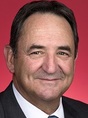
Glenn Sterle WA, Australian Labor Party
Order! Sorry, Senator Pocock, we are going to now move to two-minute statements.