

Deborah O'Neill NSW, Australian Labor Party
4:52 pm
Senator Payman has submitted a proposal, under standing order 75, today, as shown at item 14 of today's Order of Business:
Pursuant to standing order 75, I give notice that today I propose to move "That, in the opinion of the Senate, the following is a matter of urgency:
The need for the Australian Government to address the increasing accessibility and affordability issues that are preventing Australian families from accessing quality early childhood education and care by imposing a 25% tax on gas exports".
Is consideration of the proposal supported?
More than the number of senators required by the standing orders having risen in their places—
With the concurrence of the Senate, the clerks will set the clock in line with the informal arrangements made by the whips.

Steph Hodgins-May Victoria, Australian Greens
4:53 pm
I move the motion standing in Senator Payman's name:
That, in the opinion of the Senate, the following is a matter of urgency:
The need for the Australian Government to address the increasing accessibility and affordability issues that are preventing Australian families from accessing quality early childhood education and care by imposing a 25% tax on gas exports".
It's not all that often that two of my favourite topics—quality education and care and taxing greedy corporations—converge in this place, but I guess today's my lucky day. Yesterday, we took a significant step towards what the Australian public agrees makes sense, what experts know make sense, what pretty much everyone knows makes sense except for the major parties, One Nation and, of course, the gas lobby. Our inquiry into the taxation of Australia's gas resources will be short and sharp, but it will dig deep. It will dig into the excuses that massive gas corporations have used for decades—excuses that successive weak governments have used for decades to avoid paying what they owe on tax on exports. Our message is simple: the free ride's over.
Australians are fed up with the gas industry's greed. They are fed up with a system where multinational corporations make billions exporting our resources while people at home are struggling to pay their bills. And they are fed up. They have absolutely had a gutful of Labor's refusal to take on these corporations and to tax them properly. This is money that belongs to the Australian public. It should be helping people afford the basics and transition off gas, not padding the profits of some soft wealthiest companies in the world.
A minimum 25 per cent tax on gas exports would raise at least $17 billion every year. That is $17 billion a year that we are currently missing out on, 17 billion bucks that could be used to improve people's lives, to improve our energy security and to compensate households, because this inquiry comes at a crunch moment. The gas cartel is poised to cash in on global conflict—blood-soaked dollars—while Australians are being smashed with rising costs at home. These companies are rubbing their hands together with glee as prices surge. And the revenue we're talking about—there's no shortage of ways it could be used: immediate cost-of-living relief, free public transport, rapid electrification to protect households from exactly this kind of global energy shock in future, or even—I don't know—free, universal, high-quality early education and care.
Today the Senate Education and Employment Committee has also tabled its report into the quality and safety of early childhood education and care, an inquiry initiated by the Greens. Over the past year the sector has been through one of its most difficult periods. Families have been through one of their most difficult periods. We have seen serious safety failures, an exhausted and underpaid workforce, and families being priced out of the system they desperately depend on. At a moment like this we need bold structural reform. Instead, we've been given a report from a Liberal-controlled committee that barely tinkers at the edges. It's a disgrace. It focuses on short-term fixes while sidestepping the core issue: early learning in this country is still treated as a cash cow, not a public service.
Until we confront that, until we stop putting profits before kids, we'll be letting families and children down across this country. Just as we guarantee universal access to schoolchildren, we should be building a universal, high-quality early learning system—one that works for every child, every family and every educator. The Greens' dissenting report, which I am proud to have tabled, sets out a different path. It calls for a national ECEC commission—real action to lift wages, measures to rein in excessive profiteering and a clear transition to a universal system.
And $17 billion in tax from the greedy gas corporations could deliver truly universal, high-quality early childhood education and care. We can afford it, but it will require this captured government to stare down the vested interests that call the shots and finally put Australian families first. If we had the courage to take on the gas cartel and implement a fair export tax, we could fund the services Australians rely on. We could ease the pressure on households and we could finally build systems like early education that are designed for people, not for profit. This is a moment for people to pick a side. The Greens know which side we are on, and it sure as hell isn't the side of the gas cartels.
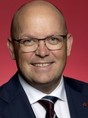
Matt O'Sullivan WA, Liberal Party, Shadow Minister for Choice in Childcare and Early Learning
4:57 pm
I rise to speak on this urgency motion before us today—the need for the Australian government to consider the increasing accessibility and affordability issues that are preventing Australian families from accessing quality early childhood education and care by imposing a 25 per cent tax on gas exports. Well, we don't need to introduce a 25 per cent tax on gas exports to fix our childcare and early learning system. We do need to address the deficiencies in our early learning and childcare system, but we don't need to impose a tax on gas exports to fund that.
What the government needs to do is to stop trying to impose a one-size-fits-all system on Australian families. Australian families need flexibility. They need choice when it comes to how they care for and see their children cared for. We don't need to see this one-size-fits-all system further expanded and developed in a way that would lock that in. We need to ensure that families are provided with that choice and that flexibility.
I think Senator Payman always brings really interesting motions into this place, and I appreciate that she brings them. It gives us a chance to actually have a debate, to have a discussion, about what's right and what's necessary for this country. But I've got to say, in this sense, she's channelling the Australian Greens when she brings a motion like this before the Senate.
The Greens's solution is to impose new taxes on everything. I guess they have to because, if they were to implement everything that they have on their agenda, then they would have to increase taxes all the way right through the economy because there's no way you could possibly pay for it. They're never happy in this place unless they're taxing something. In this case they're wanting to tax something in order to increase the big expenditure that would be required to achieve universal child care. That means we're going to get rid of the means testing for early learning in this country. It would mean that people on $300,000, $400,000 or $500,000 a year would get the same subsidy as someone that was on a lower or more modest income. Surely that's not the sort of system we should have.
The government needs to come clean as to whether or not that's what they mean when they talk about universal child care, because that's the only way you could interpret it. The Productivity Commission talks about this and says that, if you were to impose that—if you brought that in—it would cost up to $8 billion to the budget, and it would mean that you're not directing the support and the services towards those who are most in need. We've got to think about the most vulnerable families in this country. We've got to think about those families that need child care and that need access to good quality child care, those that are living in a childcare desert. If there's going to be any sort of funding, it needs to go towards where the needs are. Simply providing universal access would just mean that we're not really directing it in a way that it should be. Of course the only way you could do that is to raise taxes. That's what Senator Payman, and the Greens in supporting it, are proposing here today—that we just impose those sorts of taxes.
Now Australian families are paying more for child care than ever before, even though we've heard, for two elections now, that the government are going to make childcare cheaper. They said they're going to make child care cheaper but all that's happening, all we know, is that parents are paying even more for it. This is the problem. You throw subsidies and you throw money at these sorts of things. Unless you deal with the underlying issues then you don't really address the challenges that are in this system.
I was proud to put my name to the committee report today that was tabled that addressed the issues around childcare safety. There was a chapter in there also about choice and flexibility, because we must provide choice and flexibility in the childcare system. Only about 50 per cent of children are actually in centre based care. What about the other 50 per cent? What sort of support is there for those families? This government needs to do more. That's why the coalition is taking this on as a challenge—to ensure we provide choice and flexibility to families who really need it most.

Marielle Smith SA, Australian Labor Party
5:03 pm
The early years represent the most powerful lever we have to shape the kind of Australia we want to become. Investing in the early years is the single most important thing we can do to build a fairer nation and to ensure that every child, no matter where they live or what their parents do, can thrive. Access to high-quality early education and care should be available to all families who seek it, without cost, availability or quality concerns presenting a barrier.
I am proud to be part of a government that sees the extraordinary potential of high-quality early education and care and that is matching that with investment. We are committed to delivering high-quality early education and care to every family who seeks it, to every family who needs it. We're backing in families with our three-day guarantee and the cheaper childcare reforms. Our three-day guarantee gives 72 hours per fortnight of subsidised care to children who need it. We've scrapped the punitive activity test, which locked children out—children who often can benefit most from a high-quality early education—and locked out families who weren't able to comply with its strict application. We're improving access by building quality supply where it is needed most. The $1 billion Building Early Education Fund will build and expand more quality not-for-profits and more centres co-located at schools to help families avoid that double drop-off.
We've announced our four agreements with the states and territories to deliver almost 2,000 new early learning places for families. Eighty per cent of those will be co-located, with more agreements to follow soon. But, of course, we're improving not just access but affordability too, making early education cheaper for more than one million families thanks to our policies. On average, this has meant families paying $3½ thousand less over a year because of the reforms.
We've capped the amount early learning centres can increase their fees by through the worker retention payment, and we're building a sustainable work force, led by a minister who has spent much of her working life fighting for these very workers. We've funded wage rises for early childhood education and care workers, with the second instalment of the 15 per cent wage increase delivered in December last year. We want to keep our highly skilled educators in the sector for years to come and train a new generation of educators, too. As I have said in this chamber many, many times before, our early childhood educators do life-changing, nation-building work every single day, and for too long in our country they have been underpaid and undervalued for the extraordinary work that they do. That has to change. It is changing, thanks to the investments of our government.
There could be no more important lever, no more important investment, than in the early years. Through investment in the early years, we don't just change individual lives and we don't just change opportunities and trajectories for families who can then work; we actually change the potential of our entire nation. Investing in the early years is the single most important foundational decision you can make to improve a child's whole education. When you improve a child's whole educational opportunity and potential, it's extraordinary. You can see and map out in a child's brain what happens when they have access to early childhood development opportunities. The simple act of counting fingers and toes and singing songs to a child sees an extraordinary change in the child's brain and development potential. We're investing in the early years because we know it matters. We're also investing to expand parental leave because we know those critical early months between a mother or a parent and a child are absolutely essential too for sparking those brain connections, for fostering that sense of security, for setting the foundations for an extraordinary educational potential going forward.
These are some of the most important policy issues facing our nation, in my view. Our government is investing in them. Our government is making the decisions we need to make to ensure more families who want to access the extraordinary potential of early education are able to do so. That ambition needs to be limitless. Of course there is more that we can do, and I look forward to working with senators in this chamber who share that passion on the path forward.

Tyron Whitten WA, Pauline Hanson's One Nation Party
5:08 pm
Are we seriously being asked to believe that slapping a punitive tax on the gas industry will somehow deliver better early childhood education and care for Australian families? This is just fantasy. It's not grounded in economics, evidence or even basic logic. It is quite simply madness dressed up as moral virtue. This is just an ideological hit job on an industry that employs thousands of Australians, keeps the lights on and underpins a large part of our economy. To casually propose taxing it into submission in pursuit of a completely unrelated policy goal is economic sabotage. Supporting early childhood education is a worthy objective, but hijacking it to justify dismantling a critical sector is as cynical as it is absurd.
The real problem here is there is no credible link—none. The motion asks us to draw a straight line between two entirely separate issues and just pretend the unrelated link between the two doesn't exist. It is just a hand wave and a promise that, if we squeeze one sector hard enough, everything else will somehow fall into place. By that logic, why stop at gas? Why not tax air? Perhaps breathing is the hidden obstacle to childcare access. Or walking—yes, maybe families would finally get relief if we taxed every step they took! It sounds ridiculous because it is ridiculous, yet it is no more detached from reality than the argument being put forward here.
This chamber is supposed to stand for serious, evidence based policymaking. Families facing skyrocketing childcare costs deserve real solutions, targeted investment, workforce strategies and reforms that actually address access and affordability. Instead, we get economic sleight of hand: tax one thing, promise another, and hope no-one looks too closely. I have heard some astonishing arguments in my short time in this chamber. This may not win outright, but it's certainly a finalist. This motion belongs in the bin.
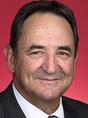
Glenn Sterle WA, Australian Labor Party
5:10 pm
I rise to make my contribution to this debate, too. I'd just like to say that I listened intently, Senator Whitten—it's not very often we're on the same fence on everything, but I do agree with you wholeheartedly on the nonsense of this one that's been put forward to us today.
I'm not going to attack Senator Payman—not at all—but I will say this. It's very easy, and she doesn't enjoy the support of a massive political machine behind her like she used to, but this is the sort of thing that you would hear around a barbecue when someone's on about their eighth or ninth or 10th beer, particularly someone who has not come from Western Australia. This is what really confuses me. Coming from the state of Western Australia—I'm not bagging Senator Payman out, and it's unfortunate she's not here to defend herself. But to fall into this ridiculousness of thinking, after about the eighth drink, 'How can we whack the living daylights out of a predominantly Western Australian industry?'—although it's all around Australia—to attack—

Don Farrell SA, Australian Labor Party, Minister for Trade and Tourism
South Australia—in the basin.
Glenn Sterle WA, Australian Labor Party
You have got a little bit down there; I agree. Thank you, Senator Farrell—and Queensland and New South Wales.
First, to pull this one out and think this is quality policy that all Australians would fall over—I'm not one that attends all the football grand finals and everything with the oil and gas industry, but I will say this, coming from WA: you go through the airport in Perth, and what are you looking at in the airport in Perth? It's not full of tourists, unfortunately; it's not. We'd love more tourists. It's full of fluoro vests, and a lot of those fluoro vests are engaged in hard-rock mining. I don't have a lot of friends in hard-rock mining, but in gas—I have the greatest respect for the gas industry. Do they pay their way? One can argue, but I will say this: we have the PRRT. Could it be brought on earlier? There are all those sorts of arguments that we can have, but, yes, they employ a heck of a lot of Australians. Yes, they are working within the taxation realms that this nation has set for them. The first thing is, I think, if you were to raise this argument just to kick the living daylights out of the gas industry in Australia, there'd be a lot of opposition.
But, more importantly, let's talk about childhood. Early childhood care is important, and Senator Marielle Smith put it succinctly. She put it better than anyone that I've heard today. We know that this government has done so much for early childhood, and we know that every child deserves to have access to quality care—there's no argument. It doesn't matter what your postcode is. We also know that the government are backing in families with our three-day guarantee and cheaper childcare reforms.
I mean, this government is investing no less than $1 billion to build more centres in more places. We are doing that. We are investing $1 billion under our Building Early Education Fund. We're building more early learning centres where families need it most, including in the outer suburbs and in the regions. I know because I've seen what we've been doing in the Kimberley, and in May we went to the election proposing for the Pilbara, which is all good stuff. We're building more quality not-for-profits. We're building more centres co-located with schools—heaven help us!—to help families avoid a double drop-off while we're strengthening the sector to improve quality.
We've announced four agreements with the states and territories to deliver almost 2,000 new early learning places for families. Eighty per cent of those places will be, once again, co-located with schools. If you were to listen, or if you had no idea what was going on in this nation and you read Senator Payman's proposal, you would think that nothing is being done about early childhood. For goodness sake, this Albanese government's been groundbreaking. We've got more agreements to follow soon.
Just like every child has the right to go to school, every child now has the right to three days of the child care subsidy, and every parent has the subsidy support they need to get back to work when they're ready. Our parents would have loved that, Senator Whitten! Wouldn't they have loved to have had that opportunity? I think my parents would have put me in care for more than the three days if they'd had their opportunity! We have cut the cost of early learning for more than one million Australian families. On average, families will pay $3½ thousand less this year because of our cheaper-childcare reforms. We've capped the amount childcare centres can increase their fees, through the worker retention payment, and because of that fees have gone up by 3.5 per cent for those services in the last year. That's the sort of practical support parents need. Thought bubbles like we've seen today from Senator Payman—well, maybe keep them around the barbecue, and we'll put some serious policy in place with the Albanese government.
Steph Hodgins-May Victoria, Australian Greens
The question is that the urgency motion be agreed to.