
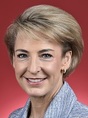
Michaelia Cash WA, Liberal Party, Deputy Leader of the Government in the Senate
3:44 pm
enator CASH (—) (): by leave—On behalf of Senator Birmingham, I move:
That the Senate expresses its regret at the death, on 30 January 2022, of the Honourable Michael Eamon Beahan AM, former President of the Senate and former senator for Western Australia, places on record its gratitude for his service to the Parliament and the nation, and tenders its sympathy to his family in their bereavement.
We pause today to commemorate the life of the Hon. Michael Beahan AM, former President of the Senate and senator for Western Australia. Michael was a proud Western Australian, an intelligent and accomplished parliamentarian and a true Labor statesman committed to the finest traditions of the Senate and to public service.
Michael Eamon Beahan was born in London in 1937 to his father, Francis, and mother, Grace. He won a scholarship to the Salesian College in Battersea, where he completed his schooling and worked briefly as an insurance clerk before migrating with his family to Australia at the age of 17. That was in 1954. Michael soon commenced work as a process worker at the Australian Electrical Company in Perth. After completing an apprenticeship as an electrical fitter, Michael went on to work as an electrician for some 10 years, including for his own small business as a contractor. During this time Michael also undertook three months of compulsory military service, serving with the 13th Field Squadron of the Royal Australian Engineers.
It was not long before Michael returned to further his education, undertaking study at the Leederville Technical College and subsequently at the Claremont Teachers Collegeand the University of Western Australia. He obtained a Bachelor of Arts, a Bachelor of Education and a Diploma of Education. His education served him well and he went on to teach and lecture across economics, psychology and education, but not before marrying Jenny Aitken, with whom he had two children.
Michael became active in the teachers union and joined the ALP in 1968, becoming president of the Bunbury branch of the party from 1969 to 1972. A move to Melbourne in 1974 saw Michael engaged as part of a three-person team to set up the Trade Union Training Authority. Michael served as the authority's WA director, which in turn would provide him with exposure to the Labor Party at a national level during his six years at the helm. Michael won the ballot for the position of WA State Secretary of the ALP, becoming a member of the national executive of the party from 1981 until 1992. He also became a national vice-president of the party from 1986 to 1989, as well as serving as a regular national conference delegate for Western Australia throughout the 1980s and the 1990s. Those familiar with this period of history in Western Australia would recognise that Michael Beahan played a pivotal role in the 1986 state election as well as the federal Labor election campaigns of 1983, 1984 and 1987, when of course Michael himself entered the Senate to serve under Prime Ministers Bob Hawke and Paul Keating.
Upon his election to the parliament, Michael brought with him 50 years of lived experience, traversing trade, education, civic service and party leadership. This was all complemented of course by the perspective of having been a first-generation immigrant to this great nation, Michael having spent the first 17 years of his life in England before embarking, like so many postwar migrants of his generation, in search of a better life in Australia. It was perhaps this broad and extensive life experience that helped Michael perfect his craft in this place. He brought enthusiasm with him to the Senate, undertaking to advance the ideals for which he proudly stood.
In the Senate, it was clear that Michael did not wish to be a representative who spoke simply to fill the silence, but he opted to speak if his words added to the debate. As a backbench senator, Michael delivered powerful contributions on industrial relations as well as speaking on education issues, the economy and electoral matters. On the latter, Michael served diligently on the Joint Standing Committee on Electoral Matters from 1987 to 1994. On 1 February 1994, Michael was elected unopposed as President of the Senate, a position he would hold until his departure from the parliament in 1996.
During his time in the Senate, Michael thought deeply not only upon the political ephemera of the day but also upon the enduring role of the institution of the Senate in Australia's democracy. In his final address to this chamber, Michael reflected on how his views of the importance and purpose of this place had transformed throughout his parliamentary career. As Michael described it, he had initially held a fairly sceptical and dismissive view of this place when he was first elected in 1987, describing himself as 'no enthusiastic supporter' of the very chamber over which he would eventually preside as President. This scepticism, however, stands in some contrast to the reflections that Michael delivered in his valedictory remarks nine years later, in which he said:
I do have a greater respect for it as an increasingly effective and necessary check on the power of the executive—any executive. I believe the Senate is developing and refining its role as a house of review and that, while petty politics frequently distract it from an effective use of its powers, much useful work is done in scrutinising and critically appraising the decisions and activities of government.
It is a rare but worthwhile exercise for senators to routinely challenge ourselves on what the Senate means to each of us.
During his time as President, Michael also led a number of delegations overseas and effectually used the position to provide Australian officials with access to high levels of government overseas. Michael was a deep-thinking man who polished his craft as a parliamentarian and deftly performed his duties as President to raise the decorum of this place and the standing of Australian governments on the world stage.
Following his departure from the Senate in 1996, Michael married Margaret—quite literally the day after he left the Senate. He went on to be elected as director of the Pharmacy Guild of Australia, representing the interests of independent community pharmacists to government and other community and private organisations. In this role, Michael advocated for the expansion of pharmacy businesses to encompass the provision of health advice and health related services. He continued to serve his community as a member of the board of a local community centre, as chairman of a research and advocacy group, and as chairman of an advisory committee managed by Monash University.
In 2011, Michael was appointed a Member of the Order of Australia for his service to the Parliament of Australia, particularly as a senator for Western Australia, and for his service to the promotion of international bipartisan political debate, to the pharmacy profession and to the community. We can all draw strength and encouragement from Michael's diverse and significant contributions to public life and his posture towards the challenges of our time. On behalf of the government and the Australian Senate, I extend our sincerest condolences to Michael's family.

Kristina Keneally NSW, Australian Labor Party, Deputy Leader of the Opposition in the Senate
3:54 pm
ENEALLY (—) (): I rise on behalf of the opposition to express our condolences following the passing, at age 85, of a Labor comrade, the Hon. Michael Eamon Beahan AM, former President of the Senate.
As I begin, I wish to convey the opposition's condolences to his family and friends, and I'd also like to acknowledge the Acting Leader of the Government in the Senate, Senator Cash, for her contributions today. I thank the Beahan family; the Hon. Gary Gray AO, Australian Ambassador to Ireland and personal friend of Michael; and members of the Western Australian branch of the Australian Labor Party, particularly John Cowdell and Marcelle Anderson, for their thoughtful consideration, advice and anecdotes about former Senator Beahan.
Eleven years ago, the Australian people recognised the contribution of Michael Beahan by admitting him as a Member of the Order of Australia, 'for service to the Parliament of Australia, particularly as a senator for Western Australia, to the promotion of international bipartisan political debate, to the pharmacy profession and to the community'. At his funeral in Melbourne on Tuesday 7 February 2022, former Senator Beahan was described as a genuinely good and kind man. For a kid who played and swam at Coliemore Harbour and attended Loreto Abbey school at Dalkey, he would rise to great heights. His career was varied. He was an electrician, a teacher, a union leader and a secretary of the Australian Labor Party in the state of Western Australia. In 1987, he became a senator for that state. That culminated in his role as President of this chamber, until he left politics in 1996. Former Senator Beahan was a true Labor man and a great Irish Western Australian. Through all of this, he remained good, gentle and kind.
Michael Beahan was born in London in 1937, and his early years were not easy. The impact of the Great Depression was still being felt; then the Second World War came, with constant bombings, including of his family home. As a consequence, the family decided to move to Ireland. Former Senator Beahan often spoke of his teenage years as a time of joy. He immersed himself in Irish culture and became a true lover of his father's native country, especially of Yeats's poetry and Joyce's prose. In his adult life, he returned to Ireland often.
When the Beahan family decided to migrate from Ireland to Australia, former Senator Beahan was 17 years old, and it was time for him to think of the future. In 1954, after disembarking a migrant ship at Fremantle, he found work at the Australian Electrical Company in Perth, manufacturing electrical equipment. Following his apprenticeship as an electrician and his introduction to trade unionism, he became increasingly interested in and concerned about workers' rights and workplace safety and was determined to do something about them. In his 20s, he decided to return to formal education. He attained arts and education degrees from the University of Western Australia and became a secondary school teacher in the regional town of Bunbury in Western Australia.
It was this combination of factory floor background, trade qualification, union membership and teaching that led to Mr Beahan becoming the first-ever education officer of the Trades and Labour Council of Western Australia. This initiative underpinned the establishment, in 1975, of the Australian Trade Union Training Authority, known as TUTA, funded by the Whitlam government to provide education and training programs for union officials. TUTA was a project of Labor minister Clyde Cameron, and former Senator Beahan was a devotee of its mission. It not only sought to educate union officials on the basics of organising and representing workers but also greatly improved the training of officials by including courses on governance and running a business. In addition, its emphasis on extending professionalism extended to appearance, style and language. It was the importance of image and presentation that former Senator Beahan carried into his later role as a party official preparing candidates for election.
Former Senator Beahan was instrumental in guiding the establishment of TUTA as a statutory authority in every state and territory, and he became its first director in Western Australia. It was through TUTA that he also learned the importance of training and organisation to keeping unions relevant in an ever-changing world. He was also attuned to the need for political action to ensure that the rights and wellbeing of working men and women were protected.
Michael Beahan's move to the political wing of the labour movement occurred in 1981, when he became the general secretary of the Western Australian branch of the ALP. This was a significant time, as Senator Cash notes, to be involved as a party official, as success occurred at a state and federal level. Former Senator Beahan led Labor's successful election campaign to win government at the state level in February 1983. A few weeks later, Labor won the March 1983 federal election, installing Bob Hawke as prime minister. Former Senator Beahan would go on to oversee Labor's successful state re-election campaign in WA in 1986 as well as the local contribution to further federal success in 1984 and 1987. These elections saw Labor in Western Australia address the lack of women in state and federal parliaments, with a record number of women from Western Australia elected at both the state and federal levels. I'd like to think that Mr Beahan would be a little bit delighted that two female senators were leading his condolence motion today. While Michael Beahan was a champion of women being elected to parliament—and his record reflects this—he was not a supporter of affirmative action or quotas, an issue in which he was at odds with his party.
Michael's enduring political legacy during his time as party secretary was the modernisation of Labor's political campaigning infrastructure, practice and culture in Western Australia. He brought a greater professionalism to campaigns, seeing the value of modernising local and regional organisational structures and of training campaign workers. His vision was to ensure that those who followed him would be best placed to steward his party forward. He adopted new ideas and technology from overseas, and he created a culture of campaign innovation, which deployed political imagery and themes communicated with new tactics and methods. In the 1980s these ideas were novel, and those who worked alongside him at the time became used to his organisational motto of 'crisp, concise and contemporary'. This became the campaigning hallmark of New Labour under Tony Blair in Britain, but its origin was very much in former Senator Beahan's thinking 40 years ago. He further introduced wage equality for political workers and party staff, becoming the first to champion pension payments and equality of reward and opportunity for female staff. The party adopted his approach to campaigning and organisation nationally, and by 1993 Beahan was the chairman of the Australian Labor Party's national campaign committee. In that year, under Paul Keating, Labor won a federal election victory many had dismissed as impossible—the 'victory for the true believers'.
Michael Beahan won election to the Senate as a senator for Western Australia in the simultaneous dissolution of 1987 and was re-elected in 1990. His principal participation in parliamentary proceedings focused on those areas with which he had the deepest affinity: industrial relations, working conditions, education, the economy and electoral matters. His contribution to committees was significant. Perhaps unusually for a senator, this included pivotal roles on two joint committees. These committees were often maligned by believers in the Senate's institutional independence. By contrast, he saw them as beneficial as a result of their breadth of representation and broad perspective.
He served on the Joint Standing Committee on Electoral Matters from 1987 to 1994, bringing his expertise as a party official to the fore. He argued in support of measures such as the total ban on broadcasting of paid political party advertisements, and he saw the full disclosure of political donations as 'vital to the integrity of the political process'.
He also served as the founding chair of the Joint Standing Committee on Corporations and Securities from 1991 to 1994. This committee had significant oversight of the Australian Securities Commission, the predecessor of ASIC, but it also operated in a vastly different corporate law environment compared to what we know today. It's easy to forget that the 1990s were a highly significant time in the evolution of this area of law in Australia, and Michael Beahan was one who pushed for a thorough redrafting of corporations law. The states and the Commonwealth had been attempting to find ways to create uniform corporations law since the Second World War. They were rebuffed by practical limitations, technical defects and the High Court, which found the Constitution limited the capacity of the Commonwealth to legislate, and so the law remained the domain of the states. Finally, the impetus for reform reached a stage where the input and hard work of many—including parliamentarians like former Senator Beahan—gave birth to the Corporations Act 2001, which remains the overarching law governing companies in our nation today.
Former Senator Beahan was also adept at internal Labor politics. He helped to found the Centre faction, which focused on neither Right nor Left politics but on policy, genuinely looking to balance the party. The Centre faction played a critical role in the success and stability of the Hawke and Keating governments and their reforms, which started 30 years of continuous economic growth.
Michael Beahan, having been a leader in the federal parliamentary Labor Party, became the 19th President of the Australian Senate on 1 February 1994, succeeding Kerry Sibraa. As the Senate's Presiding Officer, he improved the actual working of the chamber, and his reforms continue today. It was during his presidency that changes to the committee system that sought to make committee membership and chairing arrangements more closely reflect the party representation in the Senate came into effect. This was the beginning of the legislative and general purpose standing committee system, incorporating the examination of estimates, that we recognise as having been in operation almost continuously since that time.
Michael Beahan might be described as something of a convert. Like many of his generation, he was sceptical of the role of the Senate due to its role in precipitating the 1975 constitutional crisis, but he came to recognise its essential role, as he said, as a 'check on the power of the executive—any executive'. He particularly enjoyed the challenge of administering the parliamentary departments and working with the parliament's highly skilled and varied staff.
Former Senator Beahan was acknowledged by Gareth Evans, a fellow Labor senator and one of Australia's most significant foreign ministers, for his personal warmth and charm and as an outstanding character who contributed to the opportunity, wealth and humanity of Australia. The role of President of the Senate enabled him to become a global ambassador for Australia, something he had not previously contemplated despite his active work as a member of both the Senate and joint standing committees on foreign affairs, defence and trade, with a particular interest in trade and human rights.
He became the Australian Labor Party's international secretary too, and that allowed him to train campaign workers for social democratic parties all over the world, including in Malta, South Africa, Vietnam and Fiji. In Malta, he campaigned for the election of George Vella. It was clearly a successful campaign: Vella went on to become Deputy Prime Minister, Minister for Foreign Affairs and, in 2019, President of Malta. It's worth noting that in recent days the Labour Party in Malta won its third consecutive term in office. As here in Australia, Michael Beahan's legacy lives on in Malta. In South Africa, he campaigned during the first post-apartheid elections, supporting the election of President Nelson Mandela.
This role also provided some unusual opportunities. In 1995, the General Secretary of the Communist Party of Vietnam visited Australia to coincide with the accession of Vietnam as the seventh member of ASEAN. This was the highest-ranking Vietnamese figure to visit Australia to date. Prime Minister Paul Keating hosted a reception at the Lodge, and the general secretary from Vietnam expressed a desire to meet his counterpart in the Australian Labor Party. The then National Secretary of the ALP was 37-year-old Gary Gray. He was concerned that he might not fit the profile of what the general secretary from Vietnam might expect in his counterpart, so Gary sent Michael Beahan in his place. It's understood that Michael was well received, and Australia-Vietnam relations today remain strong.
Michael Beahan's parliamentary career was cut short when he did not win re-election in the March 1996 campaign. However, the constitutional architecture that governs the Senate placed him in the unusual position of continuing to serve as the President of the Senate even after his term ended on 30 June 1996. He remained in office until the Senate met that August to choose Margaret Reid, the Senate's first and, to date, only female president, as his successor.
Following the conclusion of his political career, former Senator Beahan settled in Melbourne and devoted much of his time to the community. His endeavours included fighting for housing projects, for democracy and for an Australian republic. I know from our colleague in the other place the member for Wills, Mr Peter Khalil—who was former Senator Beahan's local member—just how valued he was in the community. He also acted as a government relations and strategic policy consultant for the Pharmacy Guild of Australia, and the Rudd Labor government asked him to chair a review of political governance aid between 2008 and 2009. As in all his life, he dedicated his energies to good causes, even writing a letter to the editor of the Age newspaper in Melbourne just a few weeks before his death in January, making arguments for republican presidential models.
Michael Beahan lived a real labour life, committed to community and committed to causes. He was the epitome of politeness, a popular identity in the Senate and someone who always worked in support of the team. From London to Dalkey to Perth, and eventually to our national capital, he remained a good, gentle, kind and decent man. He was also someone you could trust. He would straight-up tell you if he was not going to back you and would not hold it against you if you were not going to back him. He will be greatly missed.
Michael is survived by his wife, Margaret; his brothers, Terry, Peter and Frank; his first wife, Jenny; and his children, Daniel and Kate. The opposition again express our condolences following the passing of Michael Beahan and we again convey our sympathies to his family and friends.

Sue Lines Deputy-President
4:10 pm
I rise on behalf of the WA branch to put on the record my contributions to the condolence motion to former senator and President of the Senate Michael Beahan and I wish to associate my comments with those of Senator Keneally and Senator Cash. I knew Michael, really, as a party member and as someone who was active in the party. I knew, obviously, that he was a senator, but most of my association was in working with him as a member of the party and as an active member of the WA administrative committee and the national administrative committee.
Michael joined the party, as we've heard, in 1968 and was active in the Bunbury branch. He took that branch from a fairly moribund branch to an active branch. He really worked to increase the membership and revitalise the sorts of activities members got involved in, and I'm pleased to say that that activism of the Bunbury branch continues today under the stewardship of Don Punch, the local Labor member down there. I've certainly met with the branch on many occasions and they are still an active branch, and I think they would be pleased to know that the history of that branch is of it being revitalised by Michael Beahan.
Michael, as we heard, had retrained as a teacher. He became an educator, and he first worked with the WA Trades and Labour Council, now known as UnionsWA, as a trainer. He was part of a three-person committee that established the Trade Union Training Authority, which was an amazing establishment, and I'm sure Senator Urquhart, like me, as a union official, attended courses at TUTA in Albury-Wodonga. Certainly, Michael Beahan was part of the small group that established the Trade Union Training Authority, and I'm sure there are other people apart from Senator Urquhart and me in this place and in the other place who also attended TUTA. It was a very sad occasion when it was defunded and became lost to the trade union movement.
In about 1981, as we've heard, Michael became the secretary of the WA Labor Party, and it was in this role and in his role on the national executive that I certainly got to know him more closely. Michael was pivotal in Labor winning the state elections in 1983 and 1986. It was probably in 1986 that I got to know Michael. Of course, that followed the federal campaigns that we won from WA in '83, '84 and '87.
As history shows and as, I believe, Senator Cash and Senator Keneally have remarked upon, but I lived through these times, these were heady days for the Australian Labor Party—very heady days indeed—some that those opposite are like to refer back to and try still to tarnish us with in this modern day of politics. They were heady days for the Australian Labor Party, and I have to say that, in all of the time that I knew Michael, he was very gentle. I cannot recall a time when I ever saw him raise his voice or, indeed, lose his temper. He was a very calm influence and a very good secretary to have at the helm of the Labor Party during those years.
As we've heard, in 1987 Michael was elected to the Senate, and during his time in the Senate he continued to pursue his passions on industrial relations reform, working conditions, education, the economy and electoral matters. Michael was also passionate about peace—something that he and I shared, although we were from different arms of the party. We certainly had peace activism and nuclear disarmament as something that we shared together. Of course, he was also passionate about native title.
In 1994 Michael was elected President of the Senate, and I must say that it is with great pride, as I walk backwards and forwards to my office each day, that I often look at that portrait of Michael. It is the Michael Beahan I remember and recall. He doesn't look any different in that to the Michael Beahan who I recall. He continued in that role and, as we've heard, he made great reforms to the Senate in the role of President—indeed, even though he was somewhat cynical when he was first elected to the Senate, he became a great supporter, as we all do in this place; we are all fiercely proud of the roles that we play as senators in this place.
The WA party, through its current secretary, Tim Picton, and the assistant secretary, Ellie Whiteaker, wanted me to put their remarks on the Senate record as well. They extend their deepest sympathy to the family and, indeed, to the friends of Michael Beahan: 'Michael, as we know, was a stalwart of the Labor Party, whose ongoing contributions continue to mean so much to us all. And WA Labor extends its condolences and sincere appreciation for the impact that Michael Beahan made to our party and to Australia.' Vale, Michael Beahan.

Slade Brockman President
4:16 pm
I will just add a few short remarks. I also wish to give my sincere condolences to the family of Michael Beahan. Michael Beahan was the fourth Western Australian President of the Senate but the first at that point for 50 years, and so it was a long time between innings.
His career as an electrician, I understand, was cut short by an industrial accident in which he lost a finger. He actually began his pathway to the education system and then, obviously, to this place due to one of those acts of fate that affect our lives, seemingly in a terrible way, but which in actual fact delivered to Australia a wonderful servant of this place.
He was comfortably elected to the Senate from the fifth position on the ALP Senate team for the 1987 double dissolution election. His views on the Senate changed over time; as Senator Keneally noted, he said that the role of the Senate was increasingly important and was an increasingly effective and necessary check on the power of the executive—any executive. This perhaps can be contrasted with an earlier view that he had when he was a much more junior senator, when he said about the Senate:
… people speaking in empty chambers, people running around to bells like Pavlovian dogs; the constant repetition of quorum calls or divisions …
So his views did evolve over time, as I think all of our views evolve over time about this place. In becoming President of the Senate, obviously, he played a significant role in lifting the work of this chamber and enshrining the committee system, which we all know and value so highly.
He was defeated in the 1996 federal election, contesting the third position—only the third incumbent Senate President to be defeated at the polls. He relinquished the role in August 1996 when the new parliament met. One of his perhaps lesser known but key contributions post his Senate career was saving the bluestone lanes around his house where he lived in Brunswick, Victoria. Obviously, that is something which all Victorians now cherish. In 2011 he was appointed as a Member of the Order of Australia for services to the Parliament of Australia, to the promotion of international bipartisan political debate, to the pharmacy profession and to the community. I cannot think of a higher honour.
Michael Beahan AM was a conscientious servant of the Senate and his chosen political party who made a varied and constructive contribution to public life in Australia before, during and after his time in this place. I would ask senators to join me in a moment's silence signifying assent to the motion.
Question agreed to, honourable senators joining in a moment of silence.