
House debates Bills
Treasury Laws Amendment (Tax Reform No. 3) Bill 2026, Income Tax Rates Amendment (Minimum Tax on Discretionary Trusts) Bill 2026, Treasury Laws Amendment (Tax Reform No. 4) Bill 2026; Second Reading

Dai Le Fowler, Independent
4:23 pm
Trusts are used for asset protection, succession planning and commercial arrangements. We should not assume every small-business owner using a trust is engaged in aggressive tax avoidance. Many established their structures years ago on professional advice. The Treasury Laws Amendment (Tax Reform No. 3) Bill 2026, along with the Income Tax Rates Amendment (Minimum Tax on Discretionary Trusts) Bill 2026, introduces a minimum 30 per cent tax on relevant discretionary trust income from 1 July 2028, subject to exclusions. The trustee pays the minimum tax; eligible non-corporate beneficiaries receive a non-refundable offset for their share. Corporate beneficiaries do not receive that offset, and ordinary company tax continues to apply to distributions they receive. That matters to businesses using bucket companies. The government says denying corporate beneficiaries the offset addresses arrangements used to deter tax for underlying shareholders.
Whatever the policy intention, this is not a minor adjustment for affected businesses. Consider a family operating a wholesale business through a trust with a company as the beneficiary. They have stock to buy and equipment to maintain, and customers do not always pay promptly. They need advice about retaining their structure, changing distributions, restructuring or considering the alternative election regime. The outcome depends on the circumstances, but the uncertainty is immediate. The answer cannot simply be, 'Speak to your accountant or talk to your lawyer.' Professional advice matters, but it costs money. These questions arise because the government is changing the rules.
The non-refundable offset also deserves scrutiny. A lower-income beneficiary may not be able to use the full offset. Any excess is not simply refunded. The government must explain that clearly. Families need to understand the difference between credit they can use and money they can get back.
Treasury estimates the trust measures in schedules 1 to 3 will increase regulatory costs by an average of approximately $141.5 million annually over 10 years. That is separate from the tax payable. Behind that figure are appointments, paperwork, revised documents and decisions about business structures. In a family business, there's usually no compliance department. It is the same person ordering supplies, serving customers, managing staff and checking the accounts at night.
The No. 3 bill provides transitional rollover relief for eligible restructures involving transfers from 1 July 2027 to 30 June 2030. I acknowledge that relief, but rollover relief does not mean cost-free restructuring. It generally defers eligible income tax consequences. It does not permanently erase accrued gains or remove liabilities under other laws. GST, fringe benefits tax and state and territory duties continue to operate.
The impact analysis estimates average restructuring costs at around $11,000. They also record stakeholder estimates, including a range of $15,000 to $50,000 reported by COSBOA. Not every business will face those costs, but they show why owners are concerned.
The relief also has conditions. Generally, required assets must be transferred within the transitional period. The explanatory memorandum gives an example where retaining a substantial property asset that is not excluded makes relief unavailable for the restructure's transfers. There are also continuing requirements, and certain changes can reverse previously claimed relief. Businesses need practical guidance before making decisions, not after discovering they have lost the relief.
That brings me to R&D under the No. 4 bill. Schedule 2 increases offset rates and will raise the turnover threshold relevant to refundable support, but it also raises the general minimum expenditure threshold from $20,000 to $50,000, limits refundability by reference to business history and removes the separate category of supporting R&D activities. A higher rate does not help if your expenditure no longer qualifies. Everyone would agree that R&D is vital for Australia's future economic prosperity. It is the foundation for strengthening existing industries and growing new enterprises that can compete in the global marketplace amid astonishing technological change. If we don't get R&D right, we are in trouble, and, to get it right, we need to listen closely to people who are at the cutting edge.
I received feedback from Josh Jeffress at Design Anthology, drawing on his experience of helping Australian businesses develop physical products. His message is straightforward:
Don't cut the bottom out of Australia's innovation pipeline.
He said developing a product involves more than a single experiment. Businesses investigate existing technology, prepare components, build experimental equipment and develop prototypes or test rigs. They collect data, identify failures, make changes and test again. That preparation can make experimentation possible.
The No. 4 bill makes it clear that an activity does not qualify merely because it supports eligible R&D. It allows additional integral activities to be prescribed. Some activities may qualify independently or under a future instrument. But businesses need certainty before committing money. Finding out early that an idea will not work can prevent much greater expenditure on something technically unviable. That is not wasted effort; it is informed decision-making.
Josh also warns that development costs and delays can slow commercialisation, giving overseas competitors time to make the first move. Not every commercial activity should attract an R&D concession, but necessary experimental work should not fall through a gap because the rules fail to reflect how products are developed.
There's another issue—the proposed time limits on refundable support. The reforms generally limit access to the refundable offset to a company's first 10 years, with an extended 15-year window for eligible therapeutic goods research. Developing a medicine can take 10 to 20 years from discovery through development and approval. As we often say, overnight success can take more than two decades. What happens when a company reaches the eligibility limit while still undertaking trials and making genuine scientific progress but is years away from a marketable treatment? The clock is linked to business history, not a fresh 15-year window for every treatment. The government must explain why that cut-off appropriately reflects medical research timelines and what assessment it has made of the funding consequences. We should expect accountability for public support, but we should not assume a company's age tells us whether its research still needs support. These are the precise questions the parliament needs time to examine.
Across these bills, people need rules they can understand before making decisions. For the trust measures, I want clear examples, accessible support and meaningful engagement with business owners and advisers about how corporate beneficiaries and existing arrangements work. For R&D, I ask the government to reconsider removing supporting activities and explain how necessary experimental work will remain supported. The government should answer these questions directly and in detail in this chamber. A cognate debate should not become a shortcut for that scrutiny.
The owners at the Fowler business forum deserve more than an assurance that the reform will improve fairness. They deserve to know what it means for their business. Think of a mum and dad at the laundromat, a mechanic or a family with a few restaurants. They are not asking for special treatment. They are asking to be treated fairly, to know the rules in advance and to be allowed to build something for the next generation. A fair tax system should collect the revenue we need while treating people reasonably. It should recognise the time, money and risk involved in running a business and give people a practical opportunity to turn good ideas into successful Australian products.
Small businesses are not just taxpayers; they are employers whose staff also pay taxes. If we make it harder for them to survive, invest and grow, the government should consider the question that business owners ask me: where will the taxes come from if we make it so hard for them to work, run a business and employ people? So I again say to the government: please pause, listen and take these changes to the people.

Madonna Jarrett Brisbane, Australian Labor Party
4:32 pm
A young Australian starting their first job gets a pay slip, and on the pay slip are the hours they work, their hourly rate, maybe their earnings, their superannuation and their tax. They can't decide that part of their salary should be taxed at somebody else's rate, and they can't divide their wages between family members when they're submitting their tax returns. They earn income. They pay the tax required. They contribute to our shared society. Australians should be able to expect that the tax system treats their work fairly, and they should be able to expect that access to sophisticated financial arrangements does not do not determine how much responsibility someone carries for our shared future. They should be able to expect that, when advantage in the system becomes difficult to justify, governments have the courage to act and to examine it.
That's why we're reforming the minimum tax on discretionary trusts. The central principle is straightforward: the structure through which income flows should not provide an open-ended advantage to one Australian over another. The consequences reach beyond this year's tax return. They go to the opportunities that we leave the next generation. They go to whether Australians believe effort will be rewarded. They go to whether our public finances can support the services and investments that future generations will rely on.
Let's be clear about what discretionary trusts do. A trust holds an asset. It might be money. It might be property. They do that for the benefit of a beneficiary, who's just simply a person or an entity. It's always made up of persons who are entitled to receive the assets. In a discretionary trust, the trustee generally has flexibility to determine which eligible beneficiaries receive the income and in what proportions.
That flexibility can serve legitimate purposes. Families are using trusts for succession planning. Businesses may be using them as part of asset protection arrangements. People perhaps use them to manage complicated family and financial circumstances. We should acknowledge those legitimate purposes, but we have to ask whether the rules themselves remain fair. An arrangement can be lawful and still deserve reform.
One of the advantages available through discretionary trusts is income splitting: distributing income among beneficiaries with different tax positions. Where income goes to beneficiaries facing lower marginal tax rates, the overall tax can therefore be lower. The budget explanation of this reform identifies that flexibility as an advantage is generally unavailable to people receiving wages and salaries. Consider this: two households have comparable financial resources. In one, income mainly comes in through employment. People doing their work are taxed on their earnings. In the other there's a bit of that, but income may also come through a discretionary trust, allowing distribution to be allocated among eligible family members. Depending on the circumstances, the second household may achieve a lower overall tax bill.
The difference need not reflect greater effort, a more productive investment or a greater contribution to the community. It simply reflects the legal structure through which income is received, and that is the fairness problem. A progressive tax system is intended to recognise a person's capacity to contribute. Its credibility is weakened when comparable economic circumstances can produce sustainably different outcomes because one household has access to greater flexibility than another. We want people to build successful businesses, and we want all Australians to save and invest, but we also want success to rest on creating value, providing services, employing people and taking on productive risks. Our tax rules should support those activities without making financial structuring a substitute for economic contribution.
Under the proposal, a 30 per cent minimum tax will apply to taxable income on discretionary trusts covered by the measures from 1 July 2028, and the trustee will pay. Beneficiaries will continue to declare their trust income, with beneficiaries other than companies receiving non-refundable offsets recognising the trustee's tax payments. There are two important words in that statement. The first is 'minimum'. It's a floor. There are many variables at play here, so a final tax rate can vary from that 30 per cent. The second is 'non-refundable'. For income covered by the measure, allocating a distribution to someone with a low tax liability will not ordinarily allow the trustee's minimum tax payment to be refunded through the beneficiary. That is central to reducing the income-splitting advantage. It changes the incentives created by the current rules. It makes it harder to use the flexibility of discretionary distributions to push tax on covered income below the proposed floor. We should explain that accurately.
Workers do not all pay an average tax rate of 30 per cent. Australia has a progressive personal income tax system; we all know that. The case for reform does not depend on pretending otherwise. The case is that discretionary arrangements can create tax advantages unavailable to most workers and a minimum tax can reduce those advantages. That's a strong enough argument without exaggeration. Why does this matter, though, for intergenerational fairness? That's something I mentioned earlier. It matters because every generation inherits more than the financial assets left behind by its parents. It inherits public institutions. It inherits infrastructure. It inherits education systems, health systems, the condition of the environment, the strength of public finances and more. It inherits the rules that determine who gets ahead.
If those rules consistently favour people who already have assets or can access a specialised advantage—maybe they can access specialist advice—each advantage can continuously reinforce itself. A lower tax bill can leave more net earnings that can then be invested. The investments can create future returns, the returns help finance another asset, and on and on it goes.
The policy question here is whether the tax system should provide an additional advantage that is much less accessible to families who mainly live on wages—the majority of Australian households. A young person cannot choose the financial arrangements into which they're born, they cannot choose whether their family has investment assets, and they cannot choose whether their parents can help with deposits. They should be able to expect, though, that the system is fair, and that means examining rules which allow established financial advantage to compound through preferential tax outcomes. Intergenerational fairness requires more than telling young people and young Australians to work hard. It requires asking whether the system gives work a fair chance.
This is not a contest between young people and old people either. Plenty of older Australians have spent their lives earning wages, paying taxes and raising families without a discretionary trust. Many now worry deeply about the opportunities available to their children and grandchildren. The question is how we share responsibility across different sources of income and different levels of financial opportunity. A fairer settlement, I think, can unite generations. It can honour the contribution of people who have worked all their lives while improving the prospects of those just beginning.
We should continually examine whether the balance between taxing work and taxing other income remains fair, and that's the principle behind this part of the bill, and we should be prepared to change that balance when arrangements have outgrown the justification, but supporting the principle does not mean ignoring the practical questions either. There's been a lot of consultation around the practical implications here. Some affected people will be running genuine family businesses. Some will have modest incomes. Some will have established their arrangements many, many years ago based on professional advice and probably based on, I gather, the law as it stood at the time. They deserve a workable transition. A reform can have a sound objective and still impose unnecessary costs if implementation is poorly designed, and that's why proposed transition arrangements matter.
Expanded rollover relief will be available for three years from 1 July 2027 for eligible taxpayers restructuring out of a discretionary trust. The legislation also offers an option under which trusts can be exempt from the minimum tax while continuing to distribute income, according to an upfront nomination of beneficiaries and their shares. These options recognise an important distinction. People may wish to retain their trust for legitimate family or commercial purposes, and we should listen when there are some genuine compliance problems. Concerns about administration, cash flow and restructuring should be tested against the legislation and addressed where necessary.
The proposal also contains some important exclusions. These include fixed trusts, charitable trusts, special disability trusts and superannuation funds. Primary production income and certain income related to vulnerable minors are excluded, alongside deceased estates and discretionary testamentary trusts established for genuine testamentary purposes. Legitimate deductions, properly designed business concessions and incentives that serve a clear public purpose all have a place in the tax system, and the aim is to reduce particular structural advantage while maintaining appropriate arrangements for genuine activity and genuine need.
The other elements of the tax reform package deliver on its commitment to strengthen innovation, investment and long-term economic growth. Innovation in particular is really important to many businesses in my electorate. As part of a broader economic reform agenda that includes support for first home buyers, further tax cuts and a fairer tax system, this bill provides businesses with greater incentives to invest, to innovate and to expand. The reforms are built on a $3.8 billion business tax relief and concessions, providing greater certainty for investors. They are designed to help Australians build wealth, support entrepreneurship and drive private sector led economic growth.
The one of the key measures are the new innovative business capital gains tax concession, which provides eligible founders, employees and investors with a 50 per cent capital gains tax discount on equity investments in innovation businesses. This will encourage early-stage investment and strengthen Australia's start-up and venture capital industries. The bill also reforms the research and development tax incentive, increasing support for genuine innovation. Changes include the higher research and development tax offset rates and increase in the refundable offset turnover threshold, lower R&D intensity thresholds and expanded eligibility for biotech and medical technology firms.
Access to the refundable tax offset will generally be limited to companies that have operated for less than 10 years. However, the higher $50 million turnover threshold will enable successful firms to continue receiving support for longer as they grow in scale. Eligible biotech and medical tech companies will be able to access the refundable offset now for up to 15 years. These reforms are expected to increase research and development investment by young firms by around $400 million annually—not a small amount. Additional measures expand the venture capital tax incentives and provide businesses with more flexibility to pay PAYG instalments monthly and strengthen compliance for consistent non-payers. Finally, the bill updates the electric vehicle tax concessions to ensure they remain sustainable while continuing to support EV uptake, which is a big part of our push to net zero.
Australians understand that everyone's circumstances are different. They don't expect every household to pay the same amount of tax. They are entitled to an explanation as to why people with comparable resources can face different obligations. 'Because one family could arrange its affairs more effectively through a legal structure' is not always a sufficient answer, especially when another family has little flexibility beyond taking another shift, working overtime or finding a second job. A nurse finishing a night shift should know that their contribution is respected, an apprentice should know that earning a living through a trade is valued, small business owners should know that success comes from serving customers and building a strong business rather than having to compete through increasingly elaborate tax structures, and a young Australian should know that the government is willing to examine advantages that have become entrenched in our systems.
We recognise legitimate uses of trusts, but we also recognise that we still need to reform taxation. We can support enterprise and still insist on fair contributions. We can respect families' desires to help their children while ensuring public policy also creates an opportunity for children whose families have less to give. Labor's proposed minimum tax is a step towards that balance. It addresses specific advantage and rebalances the tax system to be fairer to working Australians. It provides time and options to adjust, and it asks us to take seriously the relationship between today's tax choices and tomorrow's opportunities, because intergenerational fairness is built into the decisions made today. The rules we preserve, the advantages we reform and the responsibilities we share all shape the future of Australia. Our children should inherit a country where effort has value, public service has strength and opportunity is fairly available to all Australians.

Phillip Thompson Herbert, Liberal National Party, Shadow Minister for Defence Industry
4:47 pm
Small businesses should be backed, not billed. Changing the goalposts will absolutely decimate small businesses around the country. We will see people being forced to shut their doors. I just do not think that that is right. I've heard from multiple speakers, and I've had some discussions with people, around how much tax people pay or how much tax businesses pay. I'm not a small business operator, but I can tell you now that, if I could minimise how much tax I pay because I know where this Labor government spends it, I would. It's wasteful. They spend more. Right now, they're punching down on businesses and those that are just having a go and trying their best. They're punching down on those that have trusts because somehow this Labor government doesn't understand how it works.
It is unbelievable that we're talking about small businesses—many of whom don't take a wage and who barely survive but who do things that they love—and that this government would try and impose more red tape, more regulation, shift the goalposts. This is all for, like the previous speaker said, somehow, equality. It's just not. We have a taxaholic treasurer that just goes after small business, goes after those battlers that are just trying to make it and trying to provide a future for themselves and their families. No-one here, no business, has asked for this. No small business woke up and went: 'This is a great idea, Treasurer. This is exactly what you should do.' The role of government is to listen, work and deliver, not shift the goalposts for a tax grab, not to punish small business. But that's exactly what's happening here.
Small businesses are the lifeblood of our community. They are where young Australians get their first job and a foothold on the ladder of economic opportunity. Small businesses employ people. It's not like we've got some small businesses out here just somehow trying to avoid paying tax. But I can tell you now, if they're trying to minimise paying tax, more power to them, because they see what this government does with their money. Labor's tax on trusts pulls up the ladder. The tradie, the travel agent, the local cafe, the family farm—that's who Labor's war on small business is aimed at. That's who's being targeted. These are tradies who are just having a go. They've finished an apprenticeship and started their own business. They're moving forward, moving in the right direction. This is who's going to be punished through this. The family farm that we rely on from the paddock to the plate and that fills this country's bellies, feeds the nation and feeds other nations through exports is who is going to be punished.
If you talk about the businesses in your own electorate that run through a trust, every one of them now has to sit down and work out what to do under Labor's tax—'Do I continue to operate? Do I take a hit and somehow try to restructure? Do I have to lay off staff, which will affect their livelihoods? Or do we fold?' Part of me thinks that the government wants small businesses to fold.
Well, this is the tax that you're doing. No small business in Bennelong asked you for this, did they? You can interject as much as you like, and I'm happy to take it, but I look forward to your speech where you can name the small business that said to you: 'Member for Bennelong, this is exactly what we asked for. Please move the goalposts. Please attack the family trusts.' I guarantee they didn't.
A trust is simple enough. The business earns the money, it goes into the trust and, each year, the trustee decides who in the family gets that. From 1 July 2028, Labor makes the trustee hand over 30c in every dollar of the trust's net income before anyone in the family sees it. That's schedules 1 to 3. The rates bill sets the rate. That's why we oppose both bills.
Schedules 4 to 6 are a different story. They keep trusts set up in wills and the income of vulnerable children out of Labor's other 30 per cent tax, the minimum tax on capital gains. They also define what a new home is for negative gearing and give workers a year's grace on the super cap now that payday super has started. Labor has bundled those fixes in with its trust tax. We support schedule 6, and we don't oppose schedules 4 and 5 because they pick up fixes that the coalition has called for, even if they don't finish the job. That's why we're moving to split them off—so the small business tax on trusts gets voted on by itself. Labor still hasn't finished the job. Schedule 4 leaves the divorce and death capital gains tax problem to a later bill. Schedule 5's definition of a new home shuts out granny flats.
Option 1 is to pay Labor's new 30 per cent tax. Option 2 is to restructure into a company. The bill waives the income tax on the move but not stamp duty. State stamp duty can still apply to the move, on land and, in some states, on the business itself. The Treasurer hasn't fixed that part. Option 3 is to lock the family into fixed shares for life in a one-off election in 2028-29. Nobody new can be added unless they inherit from someone on the list. The Financial Review's guide to all this calls it picking the least bad option. That's the best Labor is offering our small business—pick the best bad option. Get taxed twice, up to 60c in the dollar. If trusts income goes to a person, they get a credit for the tax the trustee has already paid. If it goes to a company, they get nothing. That's in Labor's own explanatory memorandum at paragraph 1.63. So, the same dollar cops 30 per cent at the trust and up to 30 per cent again at the company, up to 60c in the dollar. That's the government's own numbers, not ours. That's a lot. Treasury looked at giving every beneficiary a credit and said no.
Being locked in for life—Labor's workaround for the backlash is a one-shot election. Trusts that exists on 1 July 2028 get one chance in 2028-29 to name their beneficiaries and the share each one gets. Then it's locked in for life. Labor's birth tax is still in the bill. Shares only change on a death or relationship breakdown, not for a child born after 1 July 2028, not for a child left off as a minor and not for a new spouse. That doesn't really reflect the Australia that we now know. If there was a breakdown in relationship or if a new child was born, they would be left off. Depart from the list once and Labor taxes that year's income at the top marginal rate plus the Medicare levy. After that, the minimum tax applies for good. There's no second election. The Tax Office can let you off only for an error or a genuinely exceptional event. The explanatory memorandum own example is a trustee falling ill before 30 June.
The old saying is, 'there are three guarantees in life: birth, death and taxes'. This treasurer has turned it into birth taxes, life taxes and death taxes. The Treasurer still hasn't fixed the stamp duty, and I think that is a problem. Labor's own impact analysis quotes the Australian Chamber of Commerce and Industry—$36,590 to $55,000 of stamp duty on a $1 million transfer. There are two ways out of the tax: make the election or move the business into a company. New South Wales has promised stamp duty relief only for the election and, on that route, the Treasurer says duty is not accepted now.
Farms are not exempt. It doesn't matter whatever spin gets told. Labor says a farm's income is exempt. But if you read the bill, it exempts primary production income, and, in the explanatory memorandum, it says that broadly means cultivating plants, maintaining animals and fishing. Contract shearing, mustering, harvesting and crop dusting aren't covered. Neither is the income from a farm bed and breakfast, a wedding venue or the rent from powerlines for the farm. Plenty of farms have one trust holding the land and a separate business running the farm. Labor's taxes tax the rent paid on the land trust. I would hate to see our country become a country where our farmers are punished, where our farmers feel like they don't have any way out of this. If farms stop producing, we will have to import produce instead of having it provided by our cattle farmers, our sheep farmers and all those that provide essential nutrients and services to many Australians, as well as all the other primary produce. We need to be giving them more support, not changing things at the last minute.
I have farms around the electorate of Herbert, which is in Townsville. And many who sit on the opposition bench in the coalition are farmers. I haven't heard a farmer say a good thing about this part of the bill—quite the opposite: they feel let down, continually. Whether it's more taxes, whether it's more of this government going after your hard-earned money or changing the goalposts when you're set up, when you're operating, all for some sort of tax grab—it just shouldn't occur. We should be providing more support to those primary producers, more support to those who make this nation turn, who make sure this nation is fed—from the paddock to the plate. We should be backing in our farmers.
And we should be backing in our small businesses—those with trusts. We should be backing in those who work hard, who want to have a go—and do have a go—and put it all on the line. They risk a lot. And now they're seeing lots of changes happen—not going into an election, not before an election but halfway through a term. That's what we've seen continually from this government. They don't take bad policy like this to the election; they do it halfway through. And halfway through, they're trying to use smoke and mirrors so the Australian people won't remember come election time. But they do remember.
I've said it a few times in here: there's a reason people in the communities have lost faith in politicians and don't trust them. It's because of tricky accounting, or changing things, or because of those who can't tell the truth in this parliament. We've seen that from the Prime Minister. We've seen it from other members of the government. And we now get bills rushed through this place that are going to hurt Australians, that are going to hurt small businesses, that are going to hurt farmers. That's why the coalition will continue to stand up for small businesses, because we have small-business operators on the opposition benches. We have a small-business operator as the Deputy Speaker in the chair—Deputy Speaker Boyce. We have the small-business operators who come in here every single day and say, 'We're not going to be pushed around by the government making a mistake'—because they don't have small-business operators, because they don't have those who have run a small business sitting in their cabinet. I would like to hear government members being honest and saying, 'This will hurt small businesses, this will hurt farmers and we should have taken that into consideration, and we haven't.'

Jerome Laxale Bennelong, Australian Labor Party
5:02 pm
I rise as a former small-business operator. I worked in one for 15 years with my family. I understand the needs of small business, and I'm proud to be part of this government that has delivered for small business since we came to office in 2022. I wholeheartedly support the Treasury Laws Amendment (Tax Reform No. 3) Bill 2026, because members of my electorate of Bennelong—from small businesses to wage earners to the multinationals in Macquarie Park—have told me that this government needs to be bold on tax reform. The 2025-26 budget has delivered on that: tax reform to make it easier for people to buy their first home and tax reform to make our taxation system fairer. And this bill delivers on our commitments delivered in the 2025-26 budget.
It's a shame that the member for Herbert is leaving the chamber, because he just said he wants to hear from a small-business owner. He said he wants to listen to a small-business owner. Well, here I am. I'm going to give you my perspective, as a former small-business owner, as to why I support this bill and the schedules within it, because I see firsthand exactly what small-business enterprise and hard work look like when I walk through the streets of Bennelong. We have a long and proud history of commercial enterprise, stretching from the bustling retail strips of Eastwood, Ryde, Gladesville and Lane Cove right through to that world-class innovation district of Macquarie Park, which is Australia's eighth largest economy. Just as my family did and just as I did in my small business, Bennelong's local business owners take on immense personal risk. They employ local residents, they buy from local suppliers and they give our suburban communities their vibrant local character. Whenever I meet with them now in my capacity as a federal member or met with them in my former capacity as mayor—
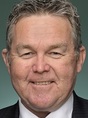
Phillip Thompson Herbert, Liberal National Party, Shadow Minister for Defence Industry
Under standing order 66A, I would ask the member if he is willing to give way.
Colin Boyce Flynn, Liberal National Party
I'll just have to take some direction from the Clerk. For the benefit of the member for Bennelong and for the House's information, per standing order 66A, to give way is the opportunity for the member for Herbert to make a short statement. Do you agree?
Jerome Laxale Bennelong, Australian Labor Party
I do not agree. I respectfully sat and listened to the member for Herbert for 15 minutes. If you can't get your point across in 15 minutes, you shouldn't be in this job, right? So I'll gladly continue on with my speech. Whenever I meet with small businesses in my electorate in my current capacity as a federal MP, or met with them in my former capacity as councillor and mayor, there is a pretty consistent message from businesses in my electorate to successive federal governments. They want governments to back business, they want government to continue to work to simplify compliance, and they want targeted support so that their businesses can grow. Despite the groans from those opposite, that's precisely what this government has been doing and what this legislation delivers today.
Our government has already delivered for small business by making the $20,000 instant asset write-off a permanent feature of the tax code. This instant asset write-off was created in 2011, and now it's being made permanent by Labor in 2026. It was the Rudd-Gillard government that created it back in 2011. The permanency is a pretty big deal. It's one that's often glossed over by those opposite, but it's important to provide certainty for small business. Prior to making this permanent, this measure operated on an annual basis and more recently was subject to some shenanigans in the Senate. Instead of simply passing this TLAB each and every year, the opposition often delayed it and delayed it to a point where business didn't have that certainty to invest because the bill hadn't passed. Then, when the bills did pass, businesses were only left with a couple of weeks to make a really important decision to spend up to $20,000 on improving their plant and equipment. So, by making this— (Quorum formed)
As I was saying, we've made the instant asset write-off permanent, giving businesses the tools they need to invest in more productive plant and equipment, which helps productivity. We've also reintroduced the loss carry-back provisions for medium and growing companies with an annual turnover up to $1 billion. This helps small businesses with cash flows in years following a loss.
This bill is an important extension to support we've provided to small businesses. It contains the measures in the next key tranche of tax reform that we announced in our budget. It builds on that solid foundation I was just talking about by incentivising new investment, slashing red tape and reducing compliance burdens so that we can continue our economic momentum. It contains five distinct schedules, and I'll touch briefly on a couple before focusing the conclusion of my remarks on schedules 4 and 5, which impact directly on small businesses.
Schedule 1 establishes the innovative business capital gains tax concession commencing on 1 July 2027. Under this schedule, startup founders, participating employees and early-stage investors will receive a 50 per cent capital gains tax discount on new equity investments in eligible innovative Australian firms. To qualify, companies must be actively trading unlisted Australian tax residents incorporated under 15 years and maintain aggregated annual turnover below $50 million. This 15-year eligibility window specifically recognises that deep tech and advanced science ventures, many of which are based in my electorate in Bennelong, often require extended development cycles to commercialise innovation successfully. Eligible investors will have the flexibility to select either the 50 per cent CGT discount or the traditional cost-base indexation alongside the 30 per cent minimum tax framework. This makes good our promise to consult with the sector as we developed a truly innovative CGT discount, ensuring that investment still flows in to startups and innovative companies.
Schedule 2 significantly enhances and targets the research and development tax incentive starting from 1 July 2028. It builds directly upon key recommendations of the landmark Ambitious Australia report. Core R&D tax offset premium rates will increase by up to 50 per cent, which is important, and the turnover threshold for the higher refundable R&D offset will increase from a $150 million cap to a $200 million cap. This R&D tax incentive is crucial for businesses just like Cochlear based in my electorate. Reviewing this cap has been something they've been calling on so that they can keep their R&D here onshore in Bennelong. I think over 60 per cent of Cochlear's global workforce operate out of their two offices in my electorate, and I know they'll make good use of this R&D offset to ensure that more jobs and more research and development are done right here in Australia. Biotech and medical firms developing complex therapeutic goods will be granted extended access to that refundable R&D offset for up to 15 years as well—again, recognising that clinical trials and approval pathways often take longer than the standard 10 years.
Importantly also, this bill establishes ongoing consultation in regard to important definitions of core and supporting activities when it comes to R&D tax offsets, and that's something I know that the biotech and pharmaceutical innovators in my electorate have been raising with Treasury, with the Treasurer and also with members like me. Treasury modelling estimates these reforms will generate roughly 20 per cent more commercial business R&D investment per dollar of offset provided, boosting start-up research by $400 million annually, and that is a good thing. Schedule 3 increases key investment cap thresholds for venture capital partnerships and early-stage venture capital limited partnerships. That's important too.
I'll touch a little bit on schedule 4, which is primarily about cash flow for small businesses. Having run one myself, as the member for Herbert now knows, I know how important cash flow is. You've got your rent, your staff wages and your inputs coming in on fixed and rigid dates, but, sometimes, your receivables are a little bit slow. They take a little bit longer to get in. Quarterly tax compliance obligations come—you can see them coming in the future, and it's a large expense at the end of a quarter. Whereas this schedule will allow businesses voluntarily to opt-in to a monthly tax obligation remittance rather than quarterly. That will help with cash flow so that, when revenues are high in that month, they'll have the cash flow to be able to pay it, and, when revenues are low, they'll be able to pay that lower amount monthly as well. That's a really important cash flow measure, which I support wholeheartedly in this bill and which I know will benefit small businesses right across Australia. Schedule 4 also provides those 'pay as you go' instalment cycles, as I just touched on, and that's an important addition to this bill.
Schedule 5 is some reforms to fringe benefits tax on electric vehicles. It's important to acknowledge how successful this EV tax incentive has been. It's also important to acknowledge that the market is really doing its job. People are going out there and buying EVs. Over 50 per cent of vehicles sold in recent months have been electrified vehicles—25 per cent of those are fully battery electric. We heard today from the Minister for Climate Change and Energy, for every, I think, 100,000 electric vehicles on the road, it would give us an extra three days worth of fuel reserves, so it's great to see this EV tax incentive not only being so successful but responsibly being managed down by this government. People are now actively making the choice to go to electric vehicle, and that FBT discount will reduce down to 25 per cent over the coming years. I'd encourage everyone just to keep an eye on those dates, because that's an important decision-making step, as you look to switch to electric vehicles.
Lastly and in my 12 seconds, I don't have much to add to this, but I would commend the changes to discretionary trust and thank the NSW government for their cooperation with this Labor government on stamp duty exemptions.

Alison Penfold Lyne, National Party
5:17 pm
I rise to oppose the government's minimum tax on discretionary trusts and the associated tax reform legislation before the House. These bills raise a fundamental question about our economic future: do we want a country that encourages Australians to work, save, invest and build businesses? Treasury estimates around 350,000 active small businesses operate through discretionary trusts, with some 130,000 expected to require significant advice about restructuring on making an election, yet the government has chosen to fundamentally change the taxation of these arrangements.
A family trust is not a tax loophole. It's a legal structure, and the existence of a trust is not evidence of tax avoidance. Across Lyne, families use trusts to operate businesses, hold assets, manage investments and plan for future generations. For many, establishing a trust is not primarily about minimising income tax. It's about asset protection, risk management and succession planning. Consider a family running a building business. Construction involves significant commercial risk, contractual disputes, unexpected liabilities, insolvencies elsewhere in the supply chain and fluctuations in cash flow. A properly structured trust, often alongside a company, can help separate certain family assets from commercial risks. That protection is not absolute, but managing risks through appropriate legal structures is sound commercial practice.
Trusts also allow families to respond to changing circumstances. One child might work in the family business, another might have a disability and another might experience financial difficulty or marriage breakdown. The flexibility of a discretionary trust allows the trustee to respond to those circumstances while preserving the underlying assets. That is not tax avoidance; that is responsible financial planning. Indeed, the government's own explanatory memorandum acknowledges that trusts are used for asset protection, succession planning and legitimate commercial arrangements. Yet, from 1 July 2028, the government proposes to subject relevant discretionary trust income to a minimum tax of 30 per cent. The Treasurer argues that that is necessary to align the taxation of income from capital more closely with income earned from work.
But there is a fundamental difference between wages and returns generated from savings or investment and the assumption of financial risk. When someone earns wages, they are compensated for their labour. When someone invests capital in a business, that capital is at risk. They may lose their investment, work for years without drawing a proper salary or inject more personal savings just to keep the business operating—and often those savings come from income on which tax has already been paid. Of course investment returns should be appropriately taxed, but it does not follow that income from capital should always be taxed at precisely the same rate as wages.
On this point, the Treasurer might benefit from revisiting the work of former Treasury secretary Dr Ken Henry. In October 2009, while leading the comprehensive review of Australia's taxation system under the Rudd Labor government, Dr Henry delivered a speech titled 'Towards a better taxation of savings'. He explained why taxing investment returns in the same way as wages could produce very different economic outcomes. Part of an investment return compensates for inflation rather than representing a genuine increase in purchasing power. Dr Henry demonstrated that a nominal tax rate of 30 per cent could produce an effective tax rate of approximately 51 per cent on real investment returns under his illustrative assumptions. He also discussed economic research, questioning whether identical rates of taxation on capital and labour were optimal. This was a Treasury secretary leading one of Australia's most comprehensive taxation reviews under a Labor government. Henry was not arguing that capital should escape taxation; he was explaining that taxation has consequences for savings, investment and future economic growth. The Treasurer and this government have conveniently ignored the advice of Dr Henry, instead gaslighting Australians with this perverted version of economic theory.
There is another flaw in the government's argument: a marginal tax rate is not the same as an average effective tax rate. A worker earning $80,000 does not pay 30 per cent on every dollar; they benefit from the tax free threshold and progressive tax brackets. Yet relevant trust income would face a 30 per cent minimum, even where the ultimate individual beneficiary would otherwise have a substantially lower effective tax rate. The proposed nonrefundable offsets do not necessarily restore that benefit. The problem becomes more serious with corporate beneficiaries. Where trust income is distributed to an individual, a tax offset can recognise tax already paid by the trustee, but corporate beneficiaries do not receive the same offset. That creates the potential for the same income to face taxation at the trust level and again in the company, producing a combined impost of up to 60 per cent in some arrangements. Tax should not multiply simply because income passes through legitimate business structures.
The government offers affected businesses three alternatives—pay the minimum tax, restructure into another entity or elect to restrict the flexibility of their family trust. Restructuring may qualify for Commonwealth income tax rollover relief, but that does not automatically remove state stamp duty. The government's impact analysis cites estimates of between $36,590 and $55,000 in duty on a $1 million transfer, depending on the jurisdiction. Master Builders have also warned of substantial additional tax liabilities and restructuring costs for family construction businesses. At a time when Australia desperately needs more homes, imposing additional costs and uncertainty on the businesses building them makes little economic sense.
Then there is the government's alternative—what is called an excluded election trust. An eligible existing trust can avoid minimum tax by nominating beneficiaries and specifying the proportions of income and relevant earnings each is to receive, but those proportions must then be followed in future years to preserve the exemption. A family making this election in 2028 is effectively being asked to decide how trust income will be allocated in 2038, 2048 and potentially beyond. What about children who are not yet born? What about grandchildren who may one day need support? What happens when a child develops a disability, experiences serious illness or encounters financial hardship? There are limited provisions allowing nominated beneficiaries to change following death or relationship breakdown but no general freedom to revisit allocations simply because a family's circumstances change.
The inconsistency in the government's approach to fairness is remarkable. When defending its decision to reduce the private health insurance rebate for Australians over 65, health minister Mark Butler argued that two neighbours on the same income should receive the same rebate regardless of age. The government says that is intergenerational fairness. Yet imagine two siblings. One is born before the family trust election is made and included as a beneficiary; the other is born several years later. Under the proposed rules, that younger child cannot simply be added to the nominated allocation on equal terms without potentially jeopardising the election. When it comes to private health insurance, Labor says age should not determine how people are treated, but, when it comes to family trusts, the timing of a child's birth can affect their family's ability to provide for them. Where is the consistency in that?
The consequences of departing from the election are severe. The trustee can become liable for the top marginal tax rate plus the Medicare levy on the trust's net income for that year. The 30 per cent minimum regime then applies in subsequent years, and the election cannot simply be made again. A concession that requires families to sacrifice their capacity to respond to future generations is no meaningful substitute for a genuine discretionary trust.
Estate planning lawyers have also raised concerns about existing wills. Many testamentary trusts have been drafted to include broad classes of possible beneficiaries, allowing families to respond to circumstances after someone dies. But, under this legislation, a testamentary trust established from 1 July 2028 may lose its exemption if its beneficiaries include companies or other trusts, even where those entities never receive a distribution. What happens to someone who has developed dementia and no longer has the capacity to amend their will? Tax reform should not leave families wondering whether arrangements established in good faith will still protect their children after they are gone.
The government also points to its exemption for primary production income, but that is not an exemption for every business associated with agriculture. Contract harvesting, shearing services, farm accommodation and certain rental income may fall outside the exemption. Regional families who diversify to manage commercial risk deserve clarity about how their arrangements will be treated.
Treasury estimates average additional regulatory costs of $141.5 million annually over 10 years. That money is diverted into compliance, accounting advice and restructuring rather than productive investment, and significant administrative and integrity provisions remain to be settled. Businesses are being asked to make long-term decisions without having the complete rules before them.
Now, alongside these measures, the government brings forward the Treasury Laws Amendment (Tax Reform No. 4) Bill 2026. This legislation exposes another contradiction in the Treasury's approach. Having removed the general 50 per cent capital gains discount for most assets, the government now proposes to restore that discount for investors in certain qualifying innovative businesses. Why? Because it recognises that startup investment is risky, entrepreneurs need capital and higher capital gains taxation can discourage investment. But those same economic principles apply to the family builder, the regional manufacturer and the small-business owner who has invested everything in their enterprise. Why should the incentive to take commercial risk depend on whether a business satisfies a government definition of innovation?
The proposed concession is confined to qualifying young companies. It involves an innovation test and additional compliance obligations. Treasury estimates the resulting regulatory costs at $17.2 million annually. I support innovation, research and development and the availability of venture capital, but investment incentives should be designed around sound economic principles, not an increasingly complicated collection of selective exemptions. The Treasurer is trying to repair some of the consequences of his broader capital gains tax changes for a narrow class of businesses while leaving others exposed.
The Treasury Laws Amendment (Tax Reform No. 4) Bill also retains a partial fringe benefits tax concession for eligible electric vehicles. The government's own review has identified increasing costs and benefits concentrated among higher income earners. The coalition's position is to end these concessions rather than continue subsidising particular vehicle choices through the tax system.
There is also a broader issue about how tax policy is being developed. The government provided just 23 days for consultation on the trust proposals in July and 15 days in September. The draft Treasury Laws Amendment (Tax Reform No. 4) Bill was also subject to a shortened consultation period. Parliament is being asked to consider complex changes with substantial consequences for business structures and investment. What justifies this haste? The trust tax is not scheduled to commence until July 2028. The coalition will seek to separate the trust tax from the other measures in Treasury Laws Amendment (Tax Reform No. 3) Bill so parliament can vote on it independently.
We support the transitional superannuation relief in schedule 6 and do not oppose the corrective measures in schedules 4 and 5, notwithstanding their remaining shortcomings. We oppose the trust tax and will seek a 12-month delay if the government refuses to withdraw it. We also oppose the Treasury Laws Amendment (Tax Reform No. 4) Bill because of the broader capital gains tax framework it seeks to patch and unresolved problems within the bill. The coalition has committed to repealing the discretionary trust minimum tax if it becomes law.
I believe in a fair and progressive tax system. I support effective action against artificial arrangements designed to avoid legitimate tax obligations. But Australia already has extensive anti-avoidance provisions. Where deficiencies exist, they should be addressed directly. The answer to inappropriate tax avoidance is to target inappropriate tax avoidance, not to penalise legitimate business structures because some taxpayers misuse them. There is a fundamental difference between closing a tax loophole and penalising a legitimate business structure. Small business should be backed, not billed. For those reasons, I oppose these bills and urge the House to reject them.
(Quorum formed)

Anne Stanley Werriwa, Australian Labor Party
5:34 pm
One of my predecessors in Werriwa, Gough Whitlam, made many memorable contributions to public debate over the course of his life. I'm sure we can all rattle off some of them, but one that resonates with me and is pertinent to today's debate is the words that he said in 1957 at the Chifley memorial lecture. On the occasion, Gough noted:
The way of the reformer is hard in Australia.
Those on this side of the chamber know the truth of those words only too well. In terms of reform, it is something that Labor governments do, and obviously it doesn't get any tougher than tax reform. Everybody talks about it, but very few do anything about it, because it's just too big and there are so many moving parts and vested interests. The history of modern-day tax reform is littered with reports, from the Asprey report in 1975 to the Henry review in 2010 and then the coalition's tax white paper in 2015. Forests of paper and newsprint have been devoted to the subject of tax reform, with curiously very little being achieved along the way.
In terms of that reform, the Albanese Labor government has already achieved a great deal. In June this year, the legislation for the first tranche passed, giving 13 million Australian workers a tax cut. Further, this legislation limited negative gearing to new builds to encourage new supply. In August, the Albanese Labor government acted again with a second tranche of reforms, this time locking in a permanent instant $20,000 tax write-off for small businesses and loss carry-backs for companies who have a turnover of up to $1 billion. Now, in October, the third tranche of reforms outlined in this year's budget is before the House. At its heart, this suite of reforms relates to the introduction of a minimum tax for discretionary trusts and further legislation to implement reforms to negative gearing and capital gains tax arrangements.
Schedules 1 to 3 of the Treasury Laws Amendment (Tax Reform No. 3) Bill 2026 introduce a minimum tax of 30 per cent on the taxable income of discretionary trusts. This change will take effect from 1 July 2028 and is about delivering a fairer tax system. It does this by helping fund tax cuts for workers and better aligning the tax rate on trust income with the tax rate paid by workers. Those opposite, who have no genuine interest in fairness and equity, let alone the average worker, will be interested in digesting a few facts on discretionary trusts. Firstly, discretionary trusts have more than doubled over the past 20 years. Secondly, Australia now has over a million trusts, around 80 per cent of which are discretionary. Third, the majority of trust income flows to the top 10 per cent of families, and approximately 90 per cent of total trust wealth is held by the wealthiest 10 per cent of households. Fourthly, analysis shows families with discretionary trusts in 2022-23 faced an average tax rate about four per cent lower compared with families with similar incomes who did not use a trust. Finally, 95 per cent of tax filers and more than 90 per cent of small businesses will not be affected by the proposed changes.
There are legitimate reasons to use a trust. These include succession planning and asset protection. However, as analysis has proven, the huge increase in the number of trusts has resulted in a different tax outcome for people with similar levels of income. The Treasurer and the Treasury have consulted widely on the matter. As a result, the government has made it clear that a range of trust types will be excluded from these changes. The exclusions include fixed trusts, charitable trusts, special disability trusts and superannuation funds. In addition, primary production income and certain income relating to vulnerable children will also be excluded. Further, deceased estates and all discretionary testamentary trusts established for genuine testamentary purposes will be excluded, as will all distributions from trusts to registered charities and deductible gift recipients.
Schedules 4 and 5 of this bill implement the reforms to the capital gains tax and negative gearing that were announced in this year's budget. It is expected that the reforms of this schedule will help an estimated 75,000 first home buyers into the market over the next decade. This is a tremendous outcome for a government that is serious about tackling housing supply and will help to reverse a worrying trend over the past decade. Further, these reforms will also preserve the gains investors have made and support investment into the new housing supply.
Regarding CGT adjustments, the legislation builds on the core legislation passed in June, addressing a number of more complex issues and ensuring the change is appropriately applied to a range of specific taxpayer circumstances and structures. Regarding negative gearing, this legislation includes the definition of a new residential dwelling and types of housing investment exempt from the limits on negative gearing.
Finally, schedule 6 relates to payday super transitional relief. It is now law that it is a requirement for employers to pay their employees' super at the same time as their salary and wages. This measure will strengthen our superannuation system and will help deliver a more secure retirement for millions of Australian workers. Often in my office, I have to speak to people who have not had their superannuation paid by their employers, leaving them without the retirement that they thought they were going to receive, and, sometimes, these are people in quite significant financial hardship. It is really important that this is something the government did. Employees will benefit from more frequent and earlier super contributions, which will grow and compound over their working life. This is a great win for workers.
The amendments in this bill provide transitional relief where the timing of contributions in the first year impacts an employee's concessional contribution caps. This will mean that individuals will not be adversely impacted by their employer transitioning to a payday super contribution frequency. Labor built Australia's world-class super system, and we will always protect it and seek to make it better, and this is just another example of doing that.
I began my remarks today by quoting my predecessor in Werriwa on the difficulty of reform, so it would be full circle to quote him again at the conclusion of my contribution. In 2002, Gough said:
Throughout my public life, I have tried to apply an overarching principle and a unifying theme to all my work. It can be stated in two words: contemporary relevance.
The measures contained in this bill speak to that very objective for our taxation system—to make it relevant for a contemporary Australian society and economy. The content of this bill has been subject to much debate and consultation. What is before us, then, is a measured and balanced piece of legislation. It gets the details right as it addresses contemporary needs and challenges, and I thank the Treasurer for this legislation and commend it to the House.

Allegra Spender Wentworth, Independent
5:43 pm
I want to put my objections to the process on the record at the start. I understand the pressure the government has to pass these reforms this year, but, yesterday, we were asked to debate and pass a bill in the same day that it was introduced. The government has given us another 24 hours, but this is a small concession. This is treating the House and those people who sent us here with contempt, and the government is making it a habit. I'd now like to turn to the substance of the bill.
Rebalancing our tax system was an overdue debate left in the too-hard basket by generations of Labor and coalition governments. I give the government credit for taking it on. It's hard and it takes guts. The government has acted to try and increase homeownership, and I support that, but, looking at the packages before this parliament, I have two significant concerns. First, the government is not lowering income tax rates. That has, honestly, been the entire point of the work that I've been doing on personal income tax. Problems with trusts and CGT discounts would be significantly reduced if the top marginal tax rate was lower. Whether the government is saving this for an election or is wary of inflation, the $77 billion left unallocated in this year's budget because of these tax changes should have been committed in legislation to lowering marginal tax rates, even if they came in after a number of years. Secondly, the package the government has put forward in previous bills and in this bill fail on innovation and business investment, particularly because of CGT. They are delivering the opposite. I hear from people in my electorate about investments falling apart and entrepreneurs leaving the country because of the CGT changes. And while the IBCC that is included in this bill makes it better, this is not a fix. The government must do better.
Let me take these bills in reverse order. Tax reform No. 4 will introduce an innovative business CGT concession allowing qualifying companies to retain a 50 per cent discount. It will, secondly, reform the R&D tax incentive in line with the Denholm review and, thirdly, enhance venture capital investment vehicles. Fourthly, it will make FBT less generous for electric vehicles. I support the venture capital changes, and I have been pushing them. I support making FBT less generous for electric vehicles, and I think the government could potentially go further on this because of the great uptake in electric vehicles driven by the Iran war. But unfortunately the things that particularly are there to drive investment are overshadowed by the CGT changes. I want to put on the record that I remain deeply concerned by the government's indexation approach to the CGT discount when it is applied to businesses and shares. Its proposed fix for innovative businesses, the IBCC, is I think better than nothing but far short of what it needs to be.
I am on the record as someone who supports changing the CGT concessions. I am on the record so visibly. If it is driving reductions in marginal tax rates, that is the point. I think this is important, and I think these messages need to be sent, because we tax people the most heavily when they are least able to pay. That is indicated by two types of household, one over the age of 65 and one of working age. The working-age household pays, on average, twice the tax when their two householders are earning 100 grand compared with the retired household. That makes no sense, given that the working-age household probably has HECS debts, probably doesn't own their own home or has a big mortgage, and is maybe paying childcare costs.
We need to rebalance the system, because young people are being left behind. We have seen in the decade up until 2016 that the wealth of older households grew by around 50 per cent and the wealth of younger households flatlined. That is a problem, and it's a structural problem. And we have a structural problem with an ageing population. We used to have, in the 1980s, around six people of working age for every person over 65; now it's down to four, and in the future it's going to be down to under three. These are the reasons we do need to rebalance the system.
But I want to come back to the fact that I think changing the CGT model through indexation is wrong, because it is focused on fairness, which I support, but it is not doing what it needs to do on prosperity, and I think it is genuinely hampering the prosperity that we need to grow in this country. The Treasurer has acknowledged the indexation limitations for high-growth, low-capital companies, both in his budget papers and in his second reading speech on tax reform No. 1. And I think it is relevant that only one other major economy, and that is Israel, uses this methodology. But it has a top marginal tax rate on capital of around 30 per cent, not around 47 per cent. I know the government is trying to fix this, and I know the government has done genuine consultation on the IBCC and has responded to feedback on this.
But let's be honest: the IBCC doesn't fix all the problems here. Even in its current form, the IBCC proposal is complex. It is still administratively onerous. It doesn't work for genesis kinds of innovations, such as biotech. With those time limits it may not be appropriate. It doesn't work for publicly listed companies that are very innovative or taking high risks, such as minerals exploration and, again, some biotech. I think those reasons alone say that the IBCC itself should be better. But the problem is that even if we fix those challenges with the IBCC on those specifics, the IBCC and the indexation model are still not right for businesses and for shares. For one, they are complex, and that is an issue when it comes to tax. Adam Smith said simplicity should be part of the ambition for any tax system, and he, hundreds of years ago, was absolutely right. It is unfair. You don't have to be innovative to take enormous risk to start and grow a business. Many businesses in our economy are low capital and so are particularly disadvantaged by indexation but would not fall under this innovative sort of definition. It's just not fair. We do not want to penalise people who are taking risks who don't fit a government definition of innovation. We need to recognise that there is enormous uncertainty in starting and growing a business. That is why it deserves a discount.
Finally, this is internationally uncompetitive. We have businesses in this country that could be subjected to tax rates on CGT well into the 40s, compared to other countries. It's uncompetitive. We don't have to have the lowest CGT rates in the world, but we do have to be in the zone of competition or we will lose some of our best and brightest overseas. I think the government's current proposal could do that.
I am going to put forward a different proposal because I do believe there is a chance for the government to make substantial changes here that could make a difference. What I've been trying to do is ask, 'What could the government do, given the legislation that has passed, given the legislation that's in front of the parliament at the moment, to try and fix this?' I'm arguing that the government should, for businesses and shares, go back to a flat discount, and I'm arguing that we should use the 'active asset' definition—which is currently well established and well understood—from various CGT concessions, with some small modifications, and make that discount 40 per cent instead of 50 per cent. That would raise about the same amount of revenue, according to the PBO analysis that I have done, but it would be substantially superior.
These are the arguments why. Firstly, it would ensure that any company, regardless of its innovation potential, would get a guaranteed flat 40 per cent discount instead of indexation, and it would keep our top capital gains tax rate at around 28 per cent, which is competitive internationally. It's not the lowest, but nor is it the highest. It is in the zone of play. It would allow the government to keep indexation on housing, which I think is appropriate. I accept that there are some very good reasons there. The businesspeople I talk to have a wide variety of views in terms of how we should tax capital. But where I do think many of them are united is in saying that taxing at 40 per cent across the board on active assets, which would also benefit risk-taking in shares, is a better outcome than trying to do the 50 per cent only through the IBCC and have everybody else subject to indexation. I think the government really should look at this.
Finally, this bill reforms the R&D tax incentive based on the Ambitious Australia report. Again, I'd say that the intention is worthy. I recognise that the government has done some very good things here, including the higher offset rates for core R&D. But I'll be honest: I'm concerned on two fronts. One is about removing support of R&D. We know that they've expanded the definition of core R&D through the offsets, but we don't think they will be completely offset. The second thing is the time limit in relation to these R&D tax incentives. I understand where the government's coming from here, but I still think, particularly for biotech or deep tech, that 15 years isn't enough. I met Dr Julian Freitag today, whose company, Magellan Stem Cells, is 17 years old and in Phase III trials. It's exactly that sort of company that would not be able to get this important R&D tax credit under the current changes. So I'm urging the government to reconsider this.
I'll turn to Treasury Laws Amendment (Tax Reform No.3) Bill 2026. This bill delivers the budget commitment to a minimum 30 per cent tax rate on trust distributions. It includes rollover relief for those structuring out of a discretionary trust and a new electable regime, the excluded election trust. It also clarifies how CGT applies to trusts and defines 'new residential dwelling' for the CGT and negative gearing changes already passed. It's been a really hard time for small businesses and restructuring is one more thing to deal with. I think the timing of trying to get businesses to restructure is wrong. Certainly, while I support principles of managing trusts in a more effective way, I've never thought we should actually deal with the trusts directly because of the complexity of restructuring. Regardless of this, I do believe we should be working towards a tax system on the principle where, if money is earned, the tax rate that is applied is pretty consistent, regardless of the structure that you individually are able to use.
I want to admit that there are very many genuine reasons for trusts, including managing succession in family businesses—and my own family has those trusts in place—but it is very clear also that trusts have really ballooned in recent times for reasons outside of business succession and through income splitting in different ways. I don't blame anyone using these structures. I keep on coming back to the fact that we need to cut the top marginal tax rates, when the incentives to use these sorts of structures would be significantly reduced, which would be beneficial to the overall economy. I recognise that many people in my electorate use these structures for things that really matter to them, like helping their young people through uni or topping up an older parent's income. I take the point that these are really positive things, but I recognise that they aren't open to everyone, and therefore I think it is appropriate to consider these restructures, though I have to say I'm really concerned by aspects around stamp duty, because the states haven't guaranteed that they're going to waive stamp duty, and I think that is a really significant challenge with this piece of legislation.
I'm going to finish off with some broad observations on tax reform. Tax reform is essential in this economy—and, I think, with low productivity and real challenges on housing and opportunities for young people to get ahead, it's critical. But we need to be clear on the why and clear on the principles on which you judge a reform. We need all the taxes on the table and we need a transparent process that allows us to properly manage the trade-offs and build community support. And I do not believe that the government has delivered any of these effectively in this bill. In the green paper I first did on tax, I outlined six objectives for tax reform that I think are still relevant: lower income taxes, rebalance the tax settings in favour of homeownership, which I agree the government has done, boost productivity and growth, stabilise our revenue base so that it can endure changes to demographics and consumption patterns, support the energy transition through better tax settings, and implement institutional reform. There are also six principles which build on Adam Smith's principles of efficiency, fairness, simplicity and adequacy which are important to the tax system. One, tax reform should encourage economic productivity and growth. Two, it should raise revenue with the least cost to society by minimising distortions in the way we work, consume, save and invest. Three, it should encourage behaviours that benefit individuals, society and the environment. Four, it should treat people and organisations with the same capacity to pay in the same way and raise more tax from those with greater capacity to pay. Five, it should be easy to understand and simple and cost-effective to comply with. Six, it should provide a stable tax base over time given changes in the economy and society.
There are always trade-offs against these objectives and against these principles, but I still think they stand the test of time. And I think that this is where we need to go from here, because the tax reform that is in front of the parliament at the moment should be better, but it also should not be the last word. We have minerals that are undertaxed. We have stamp duty that taxes mobility. We have no credible way of pricing emissions. We have communities worried about jobs and AI, yet we tax people who employ people. These things don't make sense. We need to drive better outcomes across our society. The tax system is a critical part of this, and that is why we need broader tax reform but with principles and with purpose that are clearer than where we are today.

Ed Husic Chifley, Australian Labor Party
5:58 pm
I thank the member for Wentworth. A lot was covered off by her there, but I want to recognise that she's done a mighty lot of work in talking with people that we both know and have great regard for when it comes to building a stronger economy by thinking differently, coming up with new ideas and being able to convert those ideas into commercial practice. Again, I think these contributions are really important. If there's anything this parliament can do with more of, it is thinking about how we generate new enterprises and how to grow them and make them much more solid, particularly enterprises that are trying to change the nature of the economy.
The reality is our world faces three big issues in particular. We have the impact of global warming, the rise of artificial intelligence and the breakdown of the international rules based order that deals with those things. When it comes to global warming, for a country like ours that has been dependent on resources for so long and made so much money, particularly from fossil fuels, as the world starts pivoting away and we start seeing lower demand, what will happen is that we will earn less money off those things as a nation.
That requires us to think differently about how we make our income and about the jobs that we create, and it does require us to think really deeply about the economic complexity of the nation. We have too many eggs in a few baskets. The parliament, as I said before, needs to think about the types of firms that emerge, but the parliament also needs to think about the face, shape, operations and the economy not just in an election cycle but for many years ahead—dare I say, decades ahead.
On top of those three things that I mentioned, there will be things that come out of the blue, that are unexpected and that also challenge and pressure economies. We lived through it. A once-in-a-generation pandemic really highlighted for this nation how dependent we were on just one country for all our goods and services. We recognised that we were vulnerable to dysfunctional supply chains. We realised that so much of the stuff we took for granted required importation. The things we needed the most weren't there when we needed them most, and we said, particularly as an incoming government, that we would reimagine what we do so that we can ensure that, on those key things—those national priorities and the goods that are really important to us—we'll able to do a lot more of that work ourselves.
These things are very big. They're big, hairy problems that are very difficult to solve. To do that, we need ideas. We need people to think differently about how to solve those problems. For instance, if we want to reimagine how we reduce our dependency on overseas supply chains and how we make more of our own goods, how we do so, when others have perfected the production process and we haven't got that ourselves, requires smart people—researchers and scientists—to start thinking of the ways to get this done. It also requires entrepreneurs to join with that effort to convert an idea from a lab benchtop into a production process and turn that into a commercial reality. We need a lot of people to do it.
In any nation, the key to all that I'm describing is having a healthy base of research and development. In Australia, we often celebrate really smart people who have done incredible things. We are, for example, right on the cusp of curing one of the most terrible conditions that has affected women: cervical cancer. We are now immunising young women from cervical cancer using Gardasil. Gardasil was created—it came out of an Australian mind in Dr Ian Frazer, and we owe him a big healthy dose of gratitude for what he's done to transform the lives of women and prevent them dying early from cervical cancer. It was an Australian who did it, but it was an overseas company that made the products and took all the gains.
We see this time and again, and I am so frustrated that an idea that began in an Australian mind is finished with hands on another side of the planet. We can do this work, and we can make it happen here, but R&D is critical as part of that process. In this country, as much as we have some really great minds, we've got a really bad way of supporting those great minds. If you look at R&D investment, it fell from 2.24 per cent of gross domestic product to 1.69 per cent in just 15 years.
In the OECD, we performed terribly on R&D. We have got to do better, but it's not an easy thing to fix. In the last term, as an industry minister, I pushed a number of times. It may come as a big surprise, but I can be a bit persistent! I did continue to badger my way into making sure we got a review of R&D in this country, and it ended up being called the Strategic Examination of Research and Development. It was designed to maximise the value of public investment in research. It was looking at harnessing and growing business investment in R&D. It looked to leverage our scientific strength to help address national priorities and, importantly, to foster new industries.
This is really important. As I said earlier, we have too many eggs in one basket. Our economy is not complex enough. We need to come up with new industries that make money. I'll give you an example. We can do this. People in this chamber would probably be unaware that we export a product that earns more money than some agricultural products that we currently ship overseas. There'd be very few people in this place that would think that software licensing is creating a lot of export dollars for us, but it's actually doing much better than most agricultural products in this country. Australians are coming up with software that is being bought by other people overseas, but that takes a lot of work, and we can't just have a few of those examples. But we are creating those new sectors in this country.
The SERD, as it became known, was headed up by Robyn Denholm, a terrific Australian, who is now chair of Tesla internationally. She came from the western suburbs of Sydney, made her way through different jobs and has been recognised for great business acumen, particularly in a company that has had to rely heavily on R&D, to change the way we drive cars and produce them. We had Professor Ian Chubb, former chief scientist, on there. We had Fiona Wood from WA, who was the instrumental person in the development of spray-on skin, which was critical when we had victims of the Bali bombing who had suffered terrible burns. She was able to help them repair their skin. We put her on the SERD panel. Someone who I've got great admiration for is Kate Cornick, who headed up LaunchVic and has been involved in helping start-ups in Victoria for many, many years. A great mind, she is now involved as the CEO of the Tech Council of Australia.
I want to formally, on the record, thank those people for their work. Their work has been absolutely critical in outlining how we can improve the way in which we invest in R&D in this country. To be completely frank, I would much prefer a much more developed and detailed response to SERD than a sporadic attempt to deal with some of those things. The review has been mentioned a number of times in terms of underpinning the changes that are being debated in this amendment today, but we do need to have a much more comprehensive response. I imagine the panel is keen to do it, and they've done a mighty job for this nation with the work that they've done, but it is critical work to think about how we invest more in this process.
The government has done a lot here to try and think this through. I know that there's been a focus on core R&D. Core R&D is important, but so is the supporting effort as well, particularly if you're developing hardware. Hardware does require the translation of a concept in the core phase, where you think of an idea, you think it might work, but when you go from a prototype you realise it may not actually stack up commercially and no-one will buy the product in the way that it's being put forward. Supporting R&D takes the time to do that. It's why, for example, the idea of capping—how long it takes or how long you can claim the R&DTI—has had such resistance, particularly in areas of biotech. But I also think of people in the climate tech space who are helping us reduce emissions with new hardware. It takes them ages to get that sorted, so we do need to see a bit of flexibility around that.
There are a lot of changes in here. I know there are people in the startup sector who've reached out to me who are happy with the level of engagement that the Treasurer and Treasury have undertaken, but they still have some concerns. Obviously, we are trying to work through some of that moving forward.
But I do get tired, I have to say; it took me a while to get the SERD up. When it comes to R&D, it's not the first time that there have been moves to change it. Under the former government, there was a move to cut $2.4 billion out of R&D—and before then, when we were last in government, there was a move to change the capital gains tax arrangements on employee share ownership, which, frankly, was disastrous. We get the advice from the same two departments. It doesn't matter, as I keep saying, who is on this side of the House; we get advised by the same people—the hive mind that is built between the Department of the Treasury and the Department of Finance—that do not look at Australian R&D as an investment. They see it as a cost and they see it as a way to cut, and they always put forward these types of ideas to cut costs. We can't afford that in this country. Treasury in particular have made public statements where they believe that it's better for us to just adapt someone else's technology than to develop here in this country. This is selling out our country terribly—absolutely awful.
We need those people who are stuck in ideological permafrost to recognise that, if we want to get the economy ready for the long-term, if we want to learn the lessons of the pandemic, if we want to ensure that not all our eggs are in one basket, if we want to not be dependent on vulnerable supply chains, we need to back R&D. But if we listen to Treasury and we listen to Finance, they're always going to be looking for a quick save—and we can't have it, because they don't have faith in Australian innovation. Like I said, when we were last in office it was they that suggested we tax unrealised gains in employee share ownership—terrible for start-ups, and we backed the last government in fixing it. The last government had a revolt in its own ranks about changes to R&D that were pushed, and I have to congratulate Senator Hume in leading that charge in government to convince the Morrison government not to go ahead with massive cuts to R&D. But now we've had to deal with proposals yet again by Treasury and Finance that we make these changes to R&D—terrible.
If we want the country to be stronger longer term, on its own two feet, in a changing world, we need to not only back our scientists and researchers; we absolutely have to back those start-ups, those early-stage companies, to make sure that they can succeed in the best possible way. There are a lot of good changes in here, and I'm glad that a lot of work's been done, but we can absolutely do better into the future. The parliament needs to take the time to learn a lot more about the work of start-ups and the contribution they make to this great nation of ours.

Cameron Caldwell Fadden, Liberal National Party, Shadow Assistant Minister for Housing
6:13 pm
I move:
That Mr Husic be granted an extension of time.
Question negatived.

Melissa McIntosh Lindsay, Liberal Party, Shadow Minister for Women
Small businesses are where big Australian dreams begin, where families put everything on the line to turn hard work into opportunity. As the shadow minister for women, I know that, for many women, starting a business is about so much more than making money; it's about independence, freedom and having control over their future, for a mum juggling work and children, a woman trying to rebuild her life after family violence while untangling her finances and trying to restructure a family business or someone trying to secure her retirement after years of caring for others. Women are already starting from behind—less savings, greater barriers to owning a home and, for women approaching retirement, an average of $86,000 less in superannuation than men. Starting a business doesn't automatically put women on equal footing. The Gender Index Australia in 2026 found that women lead 42 per cent of sole-trader businesses but just 15 per cent of incorporated companies and seven per cent of large companies. The last thing they need is another tax standing in their way, yet that's exactly what the Albanese government is proposing.
From July 2028, around 350,000 small businesses operating through discretionary trusts face a new 30 per cent minimum tax. A family trust isn't complicated. The business earns some money, it goes into the trust and, each year, the family can decide how that income is shared. Treasury says around 350,000 small businesses operate through trusts, and, by its own figures, around 210,000 could face extra tax or be forced to restructure. Treasury admits the damage won't be evenly spread. Some sectors, like construction and property, could be hit harder, and Master Builders and the Property Council are already raising the alarm. Imagine working your whole life to build a family business, only for Labor to hand you three rotten choices: pay a new 30 per cent tax; restructure into a company and potentially cop a hefty stamp duty bill; or lock your family into fixed shares for life, with no-one else allowed in.
And here's where Labor really twists the knife. If the trust pays income into a company, Labor can tax the same dollar twice—up to 60c in every dollar, on the government's own figures. Experts warn it could reach as high as 77c. Did Labor remember to tell Australians about this before the election? No. Labor promised more than 50 times not to raise taxes, then gave hardworking Australians just 23 days in July and 15 days in September to have their say. The government's own Office of Impact Analysis says 30 days is the minimum and small businesses need longer. Treasury received 595 submissions. How many has it published? None.
That's why the coalition is drawing a line. We will split the trust tax from the other measures, seek a 12-month delay and repeal it in government. The coalition opposes both bills—but not the sensible measures the coalition previously called for. These include protecting trusts established through wills and income for vulnerable children from Labor's separate 30 per cent minimum tax on capital gains. Those measures also clarify that what counts as a new home for negative gearing and provide temporary relief from superannuation tax penalties as payday super begins. We support the superannuation measure and won't oppose the other changes, even if they don't finish the job. We're moving to split them off so the small-business tax on trusts gets voted on by itself.
Labor still hasn't fixed the capital gains tax problems arising from divorce or death or from including granny flats in its definition of new homes for negative gearing. If Labor is serious about backing small businesses, it should work with us to stop taxing ambition and give hardworking Australians a fighting chance in the cost-of-doing-business crisis it has created.
You have to hand it to this treasurer. Every time you think he's reached peak absurdity, he finds another level. Take Labor's so-called solution to the backlash. Family trusts that exist on 1 July 2028 get one chance, in 2028-29, to nominate who receives their income and how much. Then those shares are locked in for life. Only death or relationship breakdown allows them to change. Break the rules and that year's income is taxed at the top marginal rate plus the Medicare levy. After that, the 30 per cent minimum tax applies permanently. Seriously! If a trustee gets sick before 30 June, they might get special consideration, but, if a family member has another baby? Bad luck! Want to remarry? Too late! What planet is the Treasurer living on? Children are born, people fall in love, marriages end, women escape violent relationships, mothers start over—life happens.
And then there's stamp duty. The government's own analysis cites estimates of $36,590 to $55,000 in stamp duty on a $1 million business transfer. The Commonwealth waives income tax on restructuring into a company, but not one state has offered stamp duty relief. Imagine how many jobs, apprenticeships and opportunities that money could have created.
And Labor's promise to protect farmers? Well, read the fine print. Primary production income is exempt, but contract shearing, mustering, harvesting and crop dusting aren't covered, and neither is income from farm accommodation, wedding venues or rent from powerlines. Where one trust owns a farm and another business operates the farm, rent paid to the landholding trust can be caught by the tax.
Labor isn't just taxing small businesses; it's making them pay through the nose to figure out the paperwork. Treasury estimates that it will cost small businesses $141½ million a year over a decade, plus another $939 million in one-off costs. That's not the tax. That's the cost of working out the tax. Master Builders warns a family building business earning $400,000 in taxable income could face a tax bill up to 70 per cent higher. Add another $82,000 to $175,000 in restructuring costs. Who ultimately pays? First home buyers, single mums struggling to keep a roof over their children's heads and older women already facing housing insecurity. Builders pass these costs on through higher home prices. For cafes and tradies, it's more money for accountants and lawyers and less for workers, apprenticeships and for the growth of the business.
And we need granny flats. We're for them. Backyard granny flats are a vital housing solution for multiple generational families where they're helping young adults save or keeping ageing parents close. But under Labor's negative gearing rules, a newly built secondary dwelling doesn't count as a new home unless it has its own title. While this technically hurts all families, it creates a much bigger crisis for older women. As the fastest growing demographic facing homelessness in Australia, a backyard build is often their only practical path to long-term safety. In established suburbs where older women want to age in place near community ties, granny flats are the most realistic way to add supply. The Housing Industry Association asked the Senate to fix this definition on 5 June, but did Labor listen? No. We're desperately short of housing, older women are at risk of homelessness and Labor is standing in the way of homes families could actually build. Even Australian charities are in the firing line. The Greens want Labor's charity exemption removed, which lawyer Mark Fowler warns could cost $1.3 billion in donations over five years. Will Labor stand up for Australian charities or cave into the Greens?
The government says more than 95 per cent of taxpayers don't receive trust income. But what about the 350,000 small businesses that do operate through trusts? Labor says this tax helps fund tax cuts for 13 million workers. But why should hardworking family businesses have to foot the bill? The coalition wants a small business act that gives businesses the right to be heard before regulators make decisions affecting them, not Labor's approach of acting first and leaving small businesses to pay the price. The Treasurer still has a chance to listen to small businesses and get this right. If he won't, he should have the humility to check his work.
Women are already fighting an uphill battle to build financial independence. The last thing they need is a government making that climb even steeper. Australian families are working harder, risking more and struggling just to stay afloat. They need a government that backs small businesses, not one that keeps knocking them down. Labor doesn't have to get this wrong. We're offering to help get it right.

Kate Chaney Curtin, Independent
6:22 pm
I rise to speak on the Treasury Laws Amendment (Tax Reform No. 3) Bill 2026. I'll start with the minimum tax on discretionary trusts, then turn to the changes to capital gains tax and the R&D tax incentive. Last month I spoke in this parliament about the pressures on small businesses in Curtin. Rent, insurance, wages and super are all rising, and many owners are squeezed between rising costs on one side and customers with less to spend on the other. I understand why many will look at this bill and see one more cost. Many family businesses set up a discretionary trust years ago on their accountant's advice for legitimate reasons like asset protection, succession planning and keeping the business in the family, and they have followed the rules as they found them. But I need to weigh their concerns against what's fair for the whole community and for the generations coming after us.
On balance, I support the broad intent of this bill, and I'll move amendments to improve it. My guiding principle is simple: income should be taxed in a broadly similar way whether it comes from work or from wealth. At the moment, this isn't the case. A nurse or an electrician on an ordinary wage pays 30c in tax on every dollar they earn. They can't split that income with anyone. In contrast, a man earning $200,000 through a family trust could split that income across his family, who could pay an average tax rate of only 12 per cent on that income, less than half of the nurse or the electrician.
There are now more than a million trusts in Australia. That's about 40 trusts for every 1,000 people, 20 times as many per person as in the UK and four times as many per person as in the US. About 840,000 of them are discretionary trusts. Most trust income flows to the top 10 per cent of earning families. This is an intergenerational issue. Our tax system leans heavily on taxing work, and that load falls hardest on younger Australians trying to buy a home and build a life. Every time we put this in the too-hard basket, we pass the problem onto our kids. This bill says that income flowing through a discretionary trust should be taxed at no less than 30 per cent. It doesn't abolish trusts. Where trust income already goes to people paying 30 per cent or more, nothing changes. Where things will change is where trust income goes to family members on lower tax rates. In that case, the trust will pay a top-up, so the income is taxed at 30 per cent.
Small-business owners told me that no-one is looking at how all these changes add up for them. I take this seriously, and, before deciding my position on this bill, I went through the government's impact analysis carefully, looking at the estimated impacts and costs. Around 85 per cent of small businesses don't use a discretionary trust at all, and more than 90 per cent won't be affected in any given year. This bill has also been improved since it was first announced. Existing trusts can elect to fix their beneficiaries and stay outside the minimum tax without restructuring or triggering stamp duty. Businesses that would rather restructure get three years of rollover relief. Where businesses do choose to restructure, they can be hit with state stamp duty, and the federal rollover relief does nothing about that. In WA, duty can apply to a business's goodwill, plant and equipment, not just its property. I'm calling on the Treasurer to work with the states, particularly the WA government, on duty relief for restructures made because of this reform.
Estimates of restructuring costs vary widely, from Treasury's average of about $11,000 to COSBOA's $15,000 to $50,000 before stamp duty. No-one knows how many trusts will restructure, elect or simply pay the tax, and those decisions must be made before rollover relief closes in June 2030. This uncertainty could be addressed through two reviews I'm proposing as amendments in consideration in detail. First, the Small Business and Family Enterprise Ombudsman would report by March 2030 on how small businesses are managing the transition while there's still time to extend the deadlines. Second, an independent review would start by January 2031 to test whether the bill has actually worked, whether it's brought the tax on trust income closer to the tax on income from work and what it has really cost small business. Both of these reports would be tabled in parliament.
I've also circulated a second reading amendment on testamentary trusts, which are trusts set up under a will. The bill includes an exclusion for genuine testamentary trusts, and I support that intent, but concerns have been raised with me about two flaws in how this exclusion is drafted. First, new conditions apply to testamentary trusts established on or after 1 July 2028, but the bill doesn't actually say what 'established' means. Administering an estate can take years, so a will signed decades ago by someone who dies before 2028 could still be caught, and someone who has lost capacity can't update their will at all. Second, the test asks, 'Who can benefit under the will?' For years, wills have included broad beneficiary classes, including companies and other trusts. Under this bill, naming just one of those entities could remove the exclusion for all of the trust's income, even if that entity never receives a cent. My second reading amendment calls on the government to apply the new rules only to wills made or changed after 1 July 2028, so people know where they stand. It also asks that one ineligible beneficiary named in a will not affect the tax treatment of everyone else. That keeps the integrity of the measure while stopping an unused clause in a will from unravelling plans made by families often years earlier.
To the Treasury Laws Amendment (Tax Reform No. 4) Bill 2026, the first schedule in this bill is the innovative business CGT concession. This is a carve-out from the new capital gains tax rules for innovative businesses, particularly startups. I've been calling for a carve-out for startups and early-stage businesses since the day after the budget. Without one, start-ups would pay a huge amount of capital gains tax, and this would put a significant drag on some of the most productive and innovative businesses in the country. I'm pleased that the government has acted on this, but I'm very concerned with the current shape of the proposed carve-out. The innovative business CGT concession is narrow, complex and ambiguous. It creates a company age limit of 15 years, which is too short for many of our most innovative companies, particularly in biotech and medtech. This is why I seconded the member for Wentworth's second reading amendment. It also only applies to companies listed on the stock exchange. While the intention is to isolate the concessions strictly for risky assets, there are industries for which listed markets provide an important source of early stage capital, particularly biotech and mineral exploration. This is better than nothing, but it's not really good enough. Productivity growth is essential to rising living standards, and, while I support the government's broad approach to tax reform—lowering taxes on work paid for by higher taxes on asset investments—this cannot have a disproportionately negative impact on our most productive, innovative businesses and sectors. Otherwise, this will come at the cost of Australia's future prosperity.
I want to focus in particular on the schedule 2 changes to the research and development tax incentive. I support better targeting of the incentive, and I acknowledge the government has listened to the sector by raising the company age limit it first proposed for therapeutic goods R&D from 10 to 15 years. For companies that aren't yet making a profit, the incentive comes as a cash refund, and that money goes straight back into research and helps bridge the gap between capital raisings. But a 15-year age limit on that cash refund will hit the companies doing the long, expensive work of bringing new medicines and medical technologies to patients the hardest. Medical innovation runs on long timelines. The government's own Department of Health, Disability and Ageing puts the average time to develop a new medicine at 17 years. Products must go through preclinical work and several phases of clinical trials, manufacturing and regulatory approval before they even earn a dollar. The cut-off will often fall in the middle of late-stage clinical trials, the most expensive stage of all. These are not slow or lazy companies. AusBiotech tells me that 30 per cent of its member companies doing R&D are 15 years or older. In one sample of 27 companies, 11 were older than 15 years, and 10 of those were in or preparing for clinical trials.
This matches what I'm hearing directly in my electorate of Curtin. Argenica Therapeutics grew out of research at the University of WA and the Perron Institute and is developing a treatment for stroke. It's already run a trial with 92 stroke patients across 10 Australian hospitals, and it's planning a 400-patient trial across Australia and the United States. Argenica was founded in 2019. If everything goes exactly to plan, it expects its first revenue in 2034, right at the 15-year mark. One setback in a trial and it would lose the cash refund just as it reaches the finish line. The same drug is also being developed for traumatic brain injury, which isn't expected to earn revenue until 2037. This exposes another flaw in the company based age limit. It assumes innovation stops after the first product. Argenica is also a listed company, meaning its investors will not be eligible for the CGT discount under the innovative business CGT concession. The combined effect of these two measures is a double hit on the same company at the same moment. Just as Argenica would lose its R&D cash refund, it would also lose the investor incentive that might have helped replace that money.
WA is home to more than 40 biotech and pharmaceutical companies and more than 50 medical technology and digital health companies. The WA government has invested heavily in clinical trial infrastructure in our hospitals. Clinical trials do more than create jobs. For Australians with cancer or a disease with no effective treatment currently available, a trial is often how they get early access to new therapies, and industry funds $1.3 billion of the $1.6 billion spent on clinical trials in Australia. If support ends partway through development, the trials and the manufacturing and jobs that come with them will go where the support is available. AusBiotech tells me one Australian medical technology company has already begun hiring 60 R&D staff in Singapore instead of Australia.
The government's own review of the R&D system, Ambitious Australia, found the R&D tax incentive must be globally competitive, it must keep R&D intensive firms here and it must extend support to commercialisation. It didn't recommend an age limit. In fact, Robyn Denholm, who chaired that review, said today that time limits should be removed altogether because long-term R&D is critical to progress in many industries, not just medical technology. That's why I'm proposing a second reading amendment to the Treasury Laws Amendment (Tax Reform No. 4) Bill calling on the government to remove the age limit on the R&D tax incentive for companies developing new medicines and medical technologies. Many of these products take more than 15 years to reach market and, without that change, we risk pushing medical research, clinical trials and the jobs that come with them offshore.
These bills move us towards a fairer tax system, but fairness should not come at the cost of families, estate plans or the research and innovation on which our future prosperity depends. I commend the bills to the House, but I move:
That all words after "notes that" be omitted with a view to substituting the following words:
(b) the bill applies a beneficiary test to testamentary trusts 'established' on or after 1 July 2028, but does not say whether a testamentary trust is established when the will is made, when the will-maker dies, or when estate assets pass to the trustee;
(c) as a result, Australians making or reviewing a will cannot know whether the trust it creates will be covered by the new rules; and
(2) calls on the Government to amend the bill so that:
(b) the beneficiary test applies only where a testamentary trust is established under will or codicil provisions made or varied on or after 1 July 2028, under a court order made on or after that date, or on an intestacy where the deceased died on or after that date; and
(c) the exclusion applies to income derived for the benefit of an individual, an exempt entity or the trustee of a special disability trust, so that naming an ineligible beneficiary in a will does not affect the treatment of the trust's other income".

Zali Steggall Warringah, Independent
I second the amendment and reserve my right to speak.

Sophie Scamps Mackellar, Independent
6:36 pm
I rise to speak on the Treasury Laws Amendment (Tax Reform No. 3) Bill 2026 and the accompanying Income Tax Rates Amendment (Minimum Tax on Discretionary Trusts) Bill 2026. Our tax system needs to be fairer, simpler and more sustainable for all Australians. This must be at the forefront of our minds when considering these bills. I recognise the government's objective with this legislation of reducing inappropriate income splitting through discretionary trusts, particularly where these arrangements allow wealthy individuals to minimise their tax obligations in ways that are not available to ordinary wage earners. There is a legitimate fairness issue here, and I support efforts to address it. But we must ensure that, in seeking to close tax loopholes, we do not inadvertently penalise small businesses, family enterprises and start-ups that are the backbone of our economy. Fairness is not just about the rate of tax that people pay; it's also about ensuring that the rules are proportionate, practical and do not impose unreasonable burdens on those who are working hard and doing the right thing.
These two bills work together to introduce a minimum 30 per cent tax on the net income of discretionary trusts from 1 July 2028. The Treasury Laws Amendment (Tax Reform No. 3) Bill establishes the framework for the new tax, including exemptions, transitional arrangements and mechanisms allowing trusts to restructure or elect alternative arrangements. The accompanying Income Tax Rates Amendment (Minimum Tax on Discretionary Trusts) Bill establishes the minimum 30 per cent tax rate itself. The Treasury laws amendment bill also includes further provisions relating to the government's capital gains tax and negative gearing reforms.
I want to make an important distinction right at the outset. I've supported reform of capital gains tax concessions and negative gearing where they relate to residential investment property because we urgently need to improve housing affordability and intergenerational equity. This is one of the most pressing and common issues that people all across Mackellar raise with me. For too long, our tax settings have encouraged investment in existing housing in ways that have contributed to younger Australians being priced out of homeownership, but changing the tax treatment of residential property investment is a very different matter from fundamentally changing how discretionary trusts are taxed. Discretionary trusts are used across the economy for a wide range of legitimate purposes, including by family businesses, entrepreneurs and start-ups. These reforms are a substantial change to the tax treatment of business and family structures.
I acknowledge that the government has listened to some concerns raised during consultation and has made important improvements to the original proposals. These changes are welcome. The legislation now provides a number of pathways for discretionary trusts to avoid the new minimum tax. One option is to restructure into a company or another eligible structure, supported by a three-year Commonwealth income tax rollover relief period commencing on 1 July 2027. Another is the excluded election trust arrangement, which allows eligible trusts to avoid the minimum tax by electing to distribute income to nominated beneficiaries in fixed proportions. Exemptions have also been expanded for particular types of trusts and income, including genuine testamentary trusts, charitable trusts, special disability trusts, primary production income and certain income relating to vulnerable minors. These are significant improvements, and I acknowledge the work that has gone into responding to stakeholder feedback.
But, while this bill is better than the original proposal, the central question remains: will these changes improve fairness without placing an unreasonable burden on Australian families and small businesses? Small-business owners are already operating in an extraordinarily challenging environment. They are dealing with higher operating costs, insurance premiums, rents, energy prices, workforce pressures and an increasingly complex regulatory environment. They are often doing so without large accounting departments, legal teams or substantial financial reserves. As the Council of Small Business Organisations Australia has stressed, the mechanism chosen to address tax avoidance must be proportionate to the problem and respectful of the legitimate structures through which hundreds of thousands of Australian small businesses operate.
For those businesses that are affected, the financial and administrative consequences could be significant. CPA Australia, a professional accounting body, has estimated that the professional advice required for trust owners to determine how to respond to the proposals could cost the country between $2 billion and $2.8 billion. The government's own estimates identify substantial one-off implementation costs and additional ongoing compliance costs. These are not insignificant figures. Every dollar a small business spends navigating complicated tax arrangements is a dollar that cannot be invested in new equipment, innovation, hiring staff or growing the business.
I've heard directly from constituents in Mackellar who are deeply concerned about these changes. One constituent is a co-founder of a technology startup established in 2024. They left full-time employment to pursue their business and invested considerable money in professional advice to establish a discretionary family trust to hold their startup shares. They did so for legitimate reasons, including asset protection, managing the uncertainty of income during the early stages of building a business and providing flexibility for their family's future. They were taking a significant personal and financial risk to create something new. This is precisely the kind of entrepreneurial activity we should be encouraging here in Australia. We need more people willing to start businesses, commercialise ideas, develop new technologies and create the jobs of the future. But these reforms raise uncertainty for founders who have organised their affairs in good faith under longstanding tax arrangements.
Discretionary trusts are not exclusively vehicles for the wealthy. They are also widely used by everyday Australians, family businesses and startup founders to provide asset protection, manage changing family circumstances and support business succession. Another constituent from Mackellar has shared the experience of their single-income family, which operates two discretionary trusts. The family wanted to protect assets for their two daughters and future generations, particularly in the event of relationship breakdowns, and, with modest superannuation savings and no expectation of qualifying for the age pension, they were seeking to provide for their own retirement and reduce their future reliance on government support. Importantly, this constituent points to the higher income tax burden they face as a single-income household compared with a dual-income household earning the same combined income. For this family, the proposed changes feel like the goalposts are being moved after years of prudent financial planning.
Their concerns go well beyond the tax rate itself. Restructuring out of a discretionary trust could mean losing the asset protection arrangements they deliberately established for their children. It could also require the consent of their bank to transfer existing finance to a new legal entity, consent that lenders are under no obligation to provide. This constituent's experience raises an important question: how do we ensure that reforms aimed at preventing tax avoidance do not penalise families who have worked hard, lived within their means and made responsible financial decisions to provide for their children and their retirement? These are precisely the kinds of unintended consequences that we cannot ignore.
One of my particular concerns is the practical operation of the excluded election trust regime. On paper, this provides a way for trusts to avoid the 30 per cent minimum tax without having to restructure, but, for family businesses, fixing distribution proportions can create real difficulties. Families are not static. Children grow up and become involved in a business. Grandchildren are born. Relationships change. People experience illness, disability, divorce or bereavement. An arrangement that makes sense for a family in 2028 may no longer be appropriate in 2035. Professional bodies have raised concerns that revoking an election or changing beneficiary proportions outside the permitted rules could expose the trust's income to taxation at the highest marginal rate. That creates a potentially severe consequence for what may simply be a genuine change in family circumstances.
A second concern is restructuring. The Commonwealth has provided capital gains tax rollover relief, but the Commonwealth does not control state and territory stamp duties. A business transferring assets into a new structure may still face substantial transfer duty liabilities, thus making restructuring not commercially viable. Businesses and families are being asked to make complex, potentially irreversible decisions without having the full set of rules in front of them.
We also need greater transparency and independent assessment about the cumulative impact of government policy on small businesses. Government policy decisions that introduce tax, regulatory and reporting measures like the proposed 30 per cent minimum tax on these trusts are too often assessed individually without adequately considering their cumulative impact on small businesses. Added to this, the existing impact analysis framework does not require dedicated, independent small-business impact statements for all major policy decisions across portfolios. We must mandate publicly available small-business impact statements for all major policy decisions materially affecting small businesses, prepared or independently assessed by a strengthened and adequately resourced Office of Impact Analysis. Ministers must be required to publicly explain how small-business impacts have been addressed and, importantly, what measures have been taken to minimise regulatory and compliance burdens on small business. They are simply drowning under red tape already. I will move an amendment, circulated in my name, to this effect.
I want to finish by returning to the principle of fairness. It is fair to expect wealthy Australians to pay their fair share of tax, but it is also fair to expect that people who have built businesses, invested their hardworking savings and taken commercial risks should not be exposed to disproportionate costs and uncertainty. We need a tax system that rewards enterprise, encourages investment and supports innovation. We need more startups, more successful family businesses and more Australian owned companies growing and employing Australians, and we need to make sure our pursuit of tax integrity does not undermine those objectives. The real-world consequences of this legislation for hardworking families and small businesses present a real risk. That's why I won't be supporting the bills today in their current form, but I encourage the House to support the amendment circulated in my name. I move:
That the following words be added after paragraph (2) (c):
(a) small and family businesses are the backbone of the Australian economy, supporting employment, investment, innovation and local communities;
(b) small businesses face growing cost pressures from the cumulative impact of taxation, reporting and regulation across government portfolios;
(c) government policy decisions, like the proposed 30 per cent minimum tax on discretionary trusts, are too often assessed individually, without adequately considering their cumulative impact on small businesses; and
(d) the existing Impact Analysis Framework does not require dedicated, independent Small Business Impact Statements for all major policy decisions across portfolios; and
(4) calls on the Government to:
(a) mandate publicly available Small Business Impact Statements for all major policy decisions materially affecting small businesses, prepared or independently assessed by a strengthened and adequately resourced Office of Impact Analysis; and
(b) require ministers to publicly explain how small business impacts have been addressed and what measures have been taken to minimise regulatory and compliance burdens".

Monique Ryan Kooyong, Independent
I second the amendment and reserve my right to speak.

Aaron Violi Casey, Liberal Party, Shadow Minister for the Digital Economy
6:50 pm
Let's be really clear. This bill—or three bills combined, because this government are not only gagging debate but combining multiple issues—is a betrayal of the Australian people. Every Labor member that votes for this bill, which they'll be forced to do, will have broken their word to their communities, because they did not take these changes to the last election, so their communities can no longer trust anything that any Labor member says.
You can always tell when they're uncomfortable with changes and they're forced to follow orders from the Prime Minister and this hapless treasurer, because we only had, out of 94 members, seven backbenchers speak on this legislation. Six had to sort of try and defend it and defend the undefendable, but the member for Chifley was also on that list. He wasn't as complimentary as his six colleagues that decided to try and defend the undefendable. He was very critical. Although I will give the member for Chifley credit, he technically—and I don't want a verbal him—did not criticise the Treasurer or the Minister for Finance or the Prime Minister at all, but he was very critical of the RDTI changes, and he was very critical of the Department of the Treasury and the Department of Finance, so I will be fair to the member for Chifley.
Although everyone in this House knows that a good minister runs their department, they don't get run by the department. Given the member for Chifley was criticising the Department of the Treasury, I'll let everyone decide whether the Treasurer is getting run by his department or he is running the department. Either way, clearly, the member for Chifley was right to criticise these R&D tax incentive changes, and he knows that this treasurer is not up to it, and this treasurer's decisions are hurting the Australian people. They're hurting Australian businesses today, and they will hurt the Australian people into the future.
Let me explain why these research development tax incentive changes are so damaging. There's an admission actually, I should say, from the Treasurer, because the Treasurer said he's going to consult on these RDTI changes for the next six months, so he broke his word at the budget, but then said he would consult. He's now rushed through more legislation, and so we're now going to have consultation on the consultation on the broken promise on another broken promise. What a disaster from this Treasurer who is so far out of his depth.
This is actually a serious discussion, when it comes to the RDTI, because, particularly for medtech and biotech companies, they rely on that funding to become viable. Let me share the story of one company that I've spoken to, but this could be many biotech companies. Let's be clear at 15 years for a medtech-biotech company, you lose access to the RDTI, but this company is 17 years old. It is currently in the middle of a $40 million stage 3 trial. These changes will cost this company $4 million to $5 million in cash flow, and this company is not profitable. That's why they still qualify under this refundable method today. For this company to continue these trials, they will need capital. They will need to go out to the market to get capital to continue to invest in a product that will save lives here in Australia. However, that journey has just got harder as well, because now, when people and investors are looking to invest in this company, they have to allow for this government clawing 47 per cent of that capital gain back through taxes, so it is a double hit for this business. This business is looking to solve a health challenge that is on the national health priority list for our country. This is a business that has invested in advanced manufacturing in Australia to make sure they can do the stage 3 trial and that would continue to invest in Australia. But this business and every medtech and biotech company in our country is now having to have the discussion about whether they will continue to invest in Australia or look to move offshore. Any company, particularly one that's not profitable, that's losing $4 million to $5 million in revenue, would be negligent if they didn't explore other opportunities. The Treasurer, as he always does, talked about consultation. Well, consultation's only valuable, Treasurer, if you listen and you actually make a change. If it's fake consultation where nothing changes, what's the point of it?
What has AusBiotech CEO Rebekah Cassidy said today about these changes? She said capping R&DTI refund eligibility at 15 years 'remains unrealistic'. She said:
Therapies for complex diseases can take well in excess of 15 years to research and develop due to the intensive nature of R&D and clinical trials required. When these companies stay in Australia, they can invest in advanced manufacturing to support their late-stage trials.
Australia has long wanted these late-stage clinical trials and advanced manufacturing to happen onshore.
She said they are concerned that:
If the legislation is passed in its current form, the new 15-year time limit risks encouraging early-stage research in Australia while pushing more later-stage R&D including clinical trials and associated manufacturing activities offshore.
That's the AusBiotech CEO confirming that these changes will make it harder for late-stage clinical trials and advanced manufacturing in our country.
Kate Cornick, who is the chief executive of the Tech Council, is also concerned. To be clear, it's a 15-year time cliff for medtech and biotech. It's 10 years for any other business. Kate Cornick said:
… the removal of supporting R&D and introduction of a general 10-year age limit on refundable offsets remained serious problems for tech firms.
That's the Tech Council representing start-ups across this country.
The Treasurer had the gall to stand up in question time and talk about how he's consulted on these changes. Well, two of the largest industry bodies representing start-ups in this country and biotech medical companies that are literally solving cancers have criticised these changes and said they shouldn't happen. But those on the other side say: 'We don't care about you. We're going to follow this Treasurer off a cliff.'
These R&D tax incentives will hurt Australia today and they will hurt our country in five years, in 10 years and for generations to come. It is a disgrace that this Treasurer has broken his word and is pretending that these changes are going to help innovation. He either doesn't understand what he is doing or is deliberately misleading the Australian people. Either way, it is unacceptable for a Treasurer to be so far out of his depth that the impact will be felt for generations to come.
I'll move to another issue when it comes to this Treasurer and broken promises—trusts. We hear the rhetoric from the Treasurer about how this is about wealthy people. It's about their ideology of targeting the one per cent. Let's be clear. If you're in the top one per cent and you're using trusts, as soon as these laws come in, you'll have the means and ability to restructure and change to minimise tax no matter what. But who this is going to impact the most is small businesses and family businesses that have set up trusts to protect their personal assets. It will be tradies and cafe owners in Casey. All across the country, small business will cop it in the neck again.
Let me read a letter from a constituent, a business owner. I could read hundreds of these, but, again, this government's gagged debate, so I can't read them all. They said: 'Over the years we've experienced multiple builders going into liquidation and consequently have had to borrow against our house to keep meeting our business commitments. Even when money does not come in, wages, suppliers, superannuation and tax still must be paid. I find it upsetting and frustrating when discussion in parliament and in the media portrays families using trusts as wealthy people trying to avoid paying their fair share of tax. This does not reflect our experience. Our trust structure is not solely about tax. It also forms part of how we manage business risk and seek to protect our family's assets and financial security. After more than 20 years building the business, protecting what we have worked for matters to us, particularly given the financial exposure we carry.' That could have been from thousands of my community. I'm sure it's the same for you, Deputy Speaker Boyce.
This government doesn't understand and doesn't care about the small and family businesses of our country that are wanting to have a go, get ahead and support their communities but want to make sure that, if it goes wrong, their personal assets—their house and a little bit for the future and for their children—are actually protected. This is a government that has never understood, and doesn't seek to understand, small business. That's why the coalition has been really clear. We will repeal these taxes and support the Australian people. Not only will we do that; we will back every Australian through our tax-back guarantee. That means, every time you get a pay rise, you don't have to pay more tax. What happens with inflation is your business wants to give you that pay rise because everything's more expensive. That puts you into a higher tax bracket, and then you automatically pay more tax when you go into the higher tax bracket.
That's the secret of this treasurer. It's why the Treasurer promises a tax cut in a budget and then actually delivers it into your bank account the next year—12 to 18 months later. It's because, by the time he's given you that tax cut, you've already paid for it four times over through increased income tax. But indexing the brackets means that, when inflation goes up, the bracket will go up, and you will stay on the same tax rate. That will give you, on average, $250 in year 1, $500 in year 2, $750 in year 3 and a thousand dollars in year 4. It will grow to $1,250 in year 5 et cetera—real reform and real tax relief for the Australian people.
If those opposite want to talk about how they want to support the Australian people, why won't they support the tax-back guarantee? The reason they won't is that the Treasurer relies on you paying more income tax so he can get ahead and spend it on wasteful ideas. This government doesn't get it, and small-business owners know it. A small-business owner spoke to me. He offered me the Albanese coffee. The Albanese coffee was an interesting coffee, Member for Bowman. It was offered at $25 because everything is so much more expensive and he's got taxes to pay.

Henry Pike Bowman, Liberal National Party, Shadow Assistant Minister for Mental Health
Must be a big coffee.
Aaron Violi Casey, Liberal Party, Shadow Minister for the Digital Economy
No, it's just a regular-sized coffee, but there's a trick to this coffee that this small-business owner offered me for $25. When you actually get it, there's 47 per cent missing. That 47 per cent is missing because the Prime Minister has already taken it. I ordered the Albanese coffee. It's a long-black coffee—very bitter, with no style at all and 47 per cent missing. Then, when you actually get it, it's a tea. It's an Earl Grey tea. It doesn't even deliver on what it promised. I'll tell you what, I couldn't have thought of a better description from this small-business owner because the Australian people have worked out this prime minister.
This is a prime minister that will say one thing and then do the complete opposite—whether it's promising to reduce your power bills by $275 and not delivering on it, promising to not change the capital gains tax and changing it or promising not to change trusts and changing it. This is a prime minister that has so much disrespect and contempt for the Australian people he will deny what we can see with our own eyes. He will fall off a stage, with video evidence of it, and say it didn't happen. He will disrespect the Prime Minister of Japan and will say it didn't happen. He will mislead this parliament when it comes to the Marrickville Golf Club, and he will say, 'I'm sorry,' after three tortured questions and pretend it didn't happen.
That is the reality for the Australian people. What you say matters, what you do matters and it ends up in tax changes that you didn't think were coming. The reality for the Australian people is that, in 18 months time, when the next election is here, it will be irrelevant what this prime minister and this government says. It does not matter what they say or what they promise will happen, because you cannot trust a word that they say. This is a prime minister that said, 'My word is my bond,' and has continued to mislead the Australian people, break his promises and show Australians—good luck. You have no idea what you're going to get with this prime minister at all.

Barnaby Joyce New England, Pauline Hanson's One Nation Party
7:05 pm
I really don't know where to start with this, because there's quite a quantum of material and a very short time, 15 minutes, to discuss it. The prospective prime minister of Australia at the last election—when you give a warrant that you are not going to do something, you should stick to your word. It is fundamental to people and business. 'If I can't trust you, I don't deal with you.' As you grow up, that's probably one of the fundamental laws your father will teach you. If you don't trust someone, don't go into business with them. You'll always end up in tears. And this government went to the last election saying they weren't going to do precisely what we're about to vote on.
As an accountant, this causes all sorts of problems. Accountants have this desire to trust the government and to trust what they say, and when people pay us fees we give them the best advice we can in the belief that the government keeps their word. We don't particularly want to make money because the government, in an erratic and dishonest way, changes what they had given a warrant that they would not do. Our job as accountants is to minimise your tax. That is what you're paid to do. You would be an accountant in a job for a very, very short time if you said, 'What I'm going to do today for you, Mr and Mrs Smith, is make you pay as much tax as I possibly can.' They expect you to understand the tax law and, as you apply it, to try and minimise the tax. As Kerry Packer said, 'I've seen how you spend it down here, and I don't intend to give you any more.'
Let's go through a couple of things here. You set up a discretionary trust. 'Discretionary' means that you have the capacity, at the discretion of the trustee, to distribute the money to those who need it or in the most appropriate way to minimise tax. That's been in place for a long while. Then you have a bucket company at the end, and if there's anything left over you put it into the bucket company. This is not evil. Australia has some of the highest tax rates around, so it would make sense to try and mitigate that. Australia does not have the tax rates of Singapore or of the United States. We have a very high tax rate. So, especially in a discretionary trust, when you have a number of family members in a business, then you have the discretion to give it to those people in that family business in a form—as they're all part of the business and all beneficiaries of the business, they'll pay tax—that's most effective. I do note that farming sections have been noted in here as not being in it. But I have a concern, because yet again that's a warrant, and I can't trust warrants.
I want to go through the two issues that really concern me. These changes that the government has brought about have really hurt small business. I had a group of small-business people from the western suburbs of Sydney over in the Senate side of the building, in a committee room, the other day. They are furious. They are working to try and get ahead. They have staff. They don't really take home much. They invest back into their business. They've set up a trust, and now it has been changed. Not only that; they have to pay a tax rate that is far in excess of what they were paying before. These are people who, when they go well, employ more people. That is what a government is supposed to do.
But it's not only that; we have this noxious position that if—I'll give you a business that I was talking to. It was a husband-and-wife boilermaker in the mining industry—I know you're very aware of that—in the Hunter Valley. They started providing mining parts. He would fit them. He was fitter. He would go out and fit him. She would wrap them. They worked in their backyard. They started in the garden shed. It's tradesperson and his wife. That is a typical form of business in so many areas. They both, at the start of their career, work for nothing. They work for nothing. They just work to cover the costs. They start small. Then it starts to grow. The mine realises—the evil coal mines! Oh, don't we hate the evil coal mines! The evil coal mines that support so much of Australia start to say, 'Well, these people are good at their job.' They start getting repeat business, and then they get bigger and bigger and bigger. Next minute, they've got 10 employees, then they've got 20, 30, 40 employees.
I went to this business and talked to them. By the time I got there, they had a chief financial officer. He looks pretty flash. He reminded me of my previous jobs in cost accounting. I said, 'Who owns the business?' and he pointed to a person I thought was just a regular worker at the back. He was sitting at the back of the room amongst all the other labourers, blue-collar workers. There are none of them any more over there on that side; they're all gone. Now, if he sells that business under this law, the Treasurer of Australia, on behalf of the worst management we've ever seen, takes 47 per cent of their winnings. They took all the risks, and Jim, the Treasurer, takes the money. That's a very bad deal. That is a very bad deal because, if they'd gone broke, they weren't going to be paid 47 per cent. They'd just lose their shirt, lose their house and probably lose their marriage. That's the pressure, and that's the reality. That's how it works.
The success of this crazy policy is—you'll see it in the housing market. The housing market in some areas, especially in the cities, is getting smashed. But does that mean that people—people rent. People rent because they can't afford a house. That's why they rent. What's happening now, perversely, is that the housing stock that's there is going down, and people who are renting are still renting, but it's becoming harder. So what the investor does, because they don't—there's another section. They don't have negative gearing. Guess how they make up for it. They put up the rents. They put up the rents to cover their loss. It's just crazy.
I just want to go to another thing. They're saying, 'For entrepreneurial areas, we're going to have an exemption, so you can get a form of capital gains tax exemption.' I'm going to give you an example. I declare I have an interest in this. In my area, we had—in the past it was a big tin-mining area. Tin was once worth a lot of money, then it went into a glut, and it fell out of favour and disappeared. Now, because of all the electronics and data centres and other things coming back in, it's actually starting to kick along a bit. It's starting to kick off. We have an opportunity in a place called Emmaville, around Glen Innes, to employ 300 people at a company called First Tin. It's in my electorate. I have an interest in it. I do have shares. I have declared it. I have shares in it. Here's the perverse thing: if this is going to invest in an Australian mining precinct—it's a foreign company, but I can buy shares in it. If I were from England, my capital gains tax, if those shares make money, would be 18c on the dollar. If I were a larger taxpayer, I think would be 24c. Don't quote me on that. It would be about there. If I were from New Zealand, it would be zero. But, if I'm an Australian investing in Australia and I sell my shares—guess what. It's 47c. So guess what happens. The foreigners invest in Australia, and the Australians don't. Can't they see this? This is like a big sign that says, 'We want foreign ownership.' That's what you'll get.
Now I'll go back to the accountancy side of me. I've got someone walking down out in western Queensland.
You trip over—whoops! Oh my gosh, you just found gold. You just found gold, and you think, 'Hang on, I might have a crack at this.' I would be advising you not to. I would say, first of all, the regulatory burden you're about to take on will make it near impossible for you to get ahead, and you're going to take a huge risk, and you might come unstuck. The overburden might be too much. You might come unstuck, and you'll do your shirt, and there's just no point doing it if they're going to take 47 per cent at the end. Who would go to the races and say, 'If I win, they take 47 per cent off me.' I just won't go to the races. There's no point. The odds are ridiculous.
What happens then is the people who are willing to invest, to take risk and to develop Australia don't do so. They don't take the risk. What you're likely to do—and this is not financial advice, for all those watching you or not. What I'm giving you now is not financial advice. You should go and see your registered financial planner and get proper advice. But what I might do is say, 'I can either take risk in that new mining precinct or take risk in that business, and, if I lose, I just lose my shirt, and, if I win, the Treasurer takes 47 per cent,' or I just go and invest in the National Australia Bank or BHP. I get my dividend from retained earnings and I get my franking credit, and there you go. It's a no-brainer. Go into the established business that's making a profit. Get the dividend, get your franking credit—you're alright! But that means we become a dumb country. We literally pop the balloon of entrepreneurial flair, and we say to the people, 'If you are willing to take the risk, we're going to kick you,' in a figurative way.
How do people get around this, if they think, 'No, I still want to have a crack at Australia. I still think it's worth it. I love the place'? They do two things: either they don't, or they move overseas. All of a sudden, you go to a party, and you're talking to people, and they all seem to have Australian accents, but they tell you that they're living in Singapore, apparently, or New Zealand. The ones that are doing well live in Monaco, because they've moved out of here, because our tax rate is crazy, and the price of taking risk is insane. If you go to London and set up, you can invest back in Australia as a pom and get a vastly better tax rate than if you were an Australian investing in Australia. Riddle me that. How do we get something so perverse? Because don't have people on the front bench of the government who have been in business.
In fact, in the Labor Party on the front bench, we don't have any labourers. Why that's important is you get a sense of common sense in people being outside, working in the sun, getting skin cancers, having hands that actually look like they've done manual work. They're less likely to get carried away with the garbage. Look at the savings in this—I don't know what it's about. I pointed out today during question time, if you want a saving, I'll give you a big one—$8.7 billion a year on the climate change department. That is something, in a few years time, they'll say about Australia, 'This is for real. I'm not joking. Australia used to have a whole department to change the climate. It really did. They invested $8.7 billion a year to change the climate,' and people say, 'Oh, that's crazy,' and he says, 'No, it's true. It's true. It's really happened. They were completely off their head,' and they will say, 'Did it change climate?' Of course not. Of course it didn't. It's just that's what happens when you've got ex-student unionists with a chip on their shoulder. Those are the sort of crazy policies you get up—climate change department and $8.7 billion.
And why that's important is—they're doing all this garbage because they've run out of dough. They run out of money, and they're desperately trying to work out—oh gosh, panic, panic, panic bills are rolling over. We're at HAFF per cent now, a bit over five per cent. Got to find money, need money, and the Treasurer was going, 'Where's the money?' It's in super funds, $4.5 trillion in super funds, so we'll tax them. We'll start a little bit and then we'll go—where else can we find money? Other family businesses, those outrageous people in commerce making the sacrifices—tax them when they sell. Tax them. What about houses? 'Oh, people put aside a bit of money and buy an investment house. We'll tax them.' They said, 'Hang on, why don't you just get rid of your climate change department?' 'Oh no, no, no, we can't do that, because that's enlightened. We can waste money on 5,700 employees in the climate change department.' What? I don't know what the hell they do down there. I should go and have a look. I suppose they're busily at their desk changing the clouds. But this goes to show the perverse nature and the confusion of this government. In the Intergenerational report, it says you're going to have 40 years of deficits in front of you. You're over $1 trillion in debt. One trillion seconds is 31,700 years. If you get this wrong, if you don't get your economic act together, you are going to go broke.

Nicolette Boele Bradfield, Independent
7:20 pm
I'm rising to speak on the Income Tax Rates Amendment (Minimum Tax on Discretionary Trusts) Bill 2026, the Treasury Laws Amendment (Tax Reform No. 3) Bill 2026 and the Treasury Laws Amendment (Tax Reform No. 4) Bill 2026. The changes outlined in schedules 1 to 3 of the Treasury Laws Amendment (Tax Reform No. 3) Bill 2026, which introduce a minimum tax on discretionary trust income, are significant. Indeed, they are a significant departure from the beneficiary taxation principles that have been in place for 90 years. These proposed changes are technical and complex. I note, with disappointment and at the risk of repeating myself, that we are once again not being offered the opportunity to review the outcome of that inquiry before debating the bills.
I want to talk about these discretionary trusts. I've heard from many small businesses in Bradfield that will be impacted and who rightly use discretionary trusts for fair dinkum purposes—family and commercial arrangements, quarantining investment risks, asset protection and succession planning, not to mention estate planning, about which some concerns and confusion remain. Treasury estimates that the additional regulatory compliance burden will be material, around $141 million per annum. While not all of this will be borne by those needing to restructure, it is an acknowledgement of the additional complexity being introduced in the tax system as a result of these bills. Rollover relief across an extended period to 30 June 2030 is therefore welcomed. However, this relief only applies to a small subset of potential costs and does not provide for the state and territory stamp duty that may be incurred in transferring real assets nor the cost of professional services and other advice that trustees will be required to seek to understand their restructuring options and what's required of them. One Bradfield small-business owner told me that she will be forced to close her business as a result of these changes. I think it's reasonable to expect that the federal government will work hard to negotiate with the states to introduce stamp duty exemptions for these businesses, and I'm going to continue to press them to do so.
In addition, despite the deliberate intention of these reforms being to, in effect, force taxpayers to migrate from one structure to another, any tax losses accrued in the original trust structure will be potentially stranded. This is a substantive economic cost being imposed on taxpayers who are only restructuring because government has made a midterm policy change. This is a question I'm being asked all the time. Surely the government could have worked to create a statutory mechanism to preserve tax losses during a government induced restructure. This is among many of the questions that my constituents have raised with me in relation to these bills. I think it points to a need for greater transparency from the government on other key issues also raised with me, such as the source of the $4.5 billion additional revenue allegedly generated from these changes, how much is going to come from income splitting and whether some of these arise because tax losses become stranded or unusable. Also, more transparency is needed about how the government settled on a flat rate of 30 per cent. While this aligns with the marginal rate that the average taxpayer pays, it's difficult to otherwise reconcile it to the average taxable income or the average tax paid.
There is another part of the bill that I would like to speak to as well, and that's the clarification of negative gearing exemptions for social and affordable housing. The bill defines affordable housing in line with the Income Tax Assessment Act, but the definition could be improved and made consistent across the country. My campaign for a nationally consistent definition of affordable housing is ongoing, and I introduced a private member's bill into the House last month to create exactly that. It sets affordable housing rent at the lower of 75 per cent of market rent and 30 per cent of household income for lower household incomes. The Treasurer has said that he agrees we need a consistent definition, and this bill is an opportunity to progress that agenda.
Today we're also being asked to debate another large tax bill, Treasury Laws Amendment (Tax Reform No. 4) Bill 2026, at the same time as the other two bills. I don't support lumping these together. I believe it dilutes the quality of parliamentary debate, but I have some remarks to make on this bill. I support the fact that the government is proposing to provide exemptions for CGT changes for innovative start-ups, as I've consistently called for since the tax changes were announced in the budget in May. I acknowledge the member for Wentworth has put forward different, cleaner proposals, and I support the fact that the government is considering these and hopefully doing something about this issue. The bill also makes changes to the research and development tax incentive. Previous reviews of the R&D tax incentive have found that the scheme has fallen short of its objectives of encouraging additional R&D and generating wider economic spill-overs. That's why I support the direction of these parts of the reforms, which seek to better target assistance towards core experimental research and provide stronger incentives for businesses undertaking genuinely innovative work. These are worthwhile reforms that respond to an important part of Australia's innovation challenge. However, one of the changes is the 15-year refundable offset for biotechnology and medical technology firms, which in my view is just not fit for purpose. Many medical technologies take much longer than 15 years to reach market, and that means the cut-off will come often during costly late-stage clinical trials, just when we need to be offering them support. We have biotech firms based in Bradfield, and I'm calling on the government to support the member for Curtin's amendment to this bill. Remove the 15-year age limit on the offsets for companies in this sector.
These changes also sit within a larger challenge that cannot be addressed through the tax system alone. Australia's total investment in R&D is now just 1.69 per cent of GDP against an OECD average of 2.72 per cent, and the Australian Academy of Science has described recent measures in the budget as useful whilst warning that they will not on their own reverse Australia's long-term research underinvestment. At a time when artificial intelligence, biotechnology, clean energy and other critical technologies are becoming central to our economic prosperity and national resilience, we cannot afford to allow Australians and their research capabilities and the talented people who sustain it to fall behind. So, while I support the direction of these particular changes, I encourage the government to see them as part of a broader national task—lifting Australia's research ambition, retaining and attracting talented scientists and ensuring that the technologies and industries that will shape our future are not simply invented elsewhere and imported here.
Finally, this bill implements the government's commitment earlier this year to phase out the fringe benefit tax exemption on EVs. As I said when they made this announcement, I think it's disappointing that, in the middle of a fuel crisis when every electric car on the road represents diesel and petrol that they don't have to import, the government should choose to roll this successful initiative back. We absolutely need to be prudent with how government funds are invested, but right now I think is not the time to wind this back. I think it's good that they aren't removing it entirely. EV sales are taking off around the country, and we should still be doing everything we can in our power to electrify our transport systems as fast as we can whilst this fuel crisis continues. These bills are far from good. They might in some places have good meaningful intent or not, but I hope by the time it comes back to this place that many of the crossbench amendments that have been made are considered and adopted—those from Wentworth, from Curtin and indeed from Mackellar. Without these changes, this is going to be a bunch of bills that will be tricky to support.