
House debates Matters of Public Importance
Economy

Milton Dick Speaker
3:21 pm
I have received a letter from the honourable member for Goldstein proposing that a definite matter of public importance be submitted to the House for discussion, namely:
The Government's addiction to spending, forcing higher inflation and interest rates, families to pay more on their mortgages and at the supermarket checkout.
I call upon those honourable members who approve of the proposed discussion to rise in their places.
More than the number of members required by the standing orders having risen in their places—
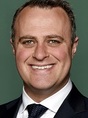
Tim Wilson Goldstein, Liberal Party, Shadow Treasurer
3:22 pm
Today's news around inflation is devastating for Australian families. So many families are already going into the supermarket, and they're getting to the end, where they're scanning the items through into their red basket or their trolley, and they're having to put items back on the shelf. They're looking at the bill and how much they're paying, and they're paying more and getting less. This is the legacy of the active inflation agenda of the Albanese government. Not only are they experiencing it at the supermarket; across every single bill in their lives, nothing is going down—insurance, basic goods, electricity prices and, of course, what is always the biggest chunk of most families' household budgets, their mortgage. In fact, we now know that there's been an increase in the average mortgage of $30,000 over an entire year.
When they look to this parliament and they look to this government and see whether there's any empathy, whether there's any understanding about the pressure and the pain that families or small businesses are experiencing—well, we just heard it in question time. Not only couldn't the Prime Minister and the Treasurer give two hoots about the consequences of inflation on Australian households; more importantly, they couldn't even care about the consequences of what is driving it. We saw this from the Prime Minister, who loved to quote the Reserve Bank governor in his remarks. There's just one thing. He forgot some of the other details that came out of the Reserve Bank governor's statement to the Senate estimates process. The Reserve Bank governor said—importantly, though, it is a cherrypicking festival of quotes from the Reserve Bank governor. She said:
Importantly though, it's not just these global pressures that are driving inflation in Australia—
Oh my gosh!
While they are certainly compounding the inflation problem, we still see inflation arising from domestic capacity pressures …
She continued:
… continued weak productivity growth means the economy cannot grow strongly without putting pressure on inflation. This is a fundamental challenge for the Australian economy and for everyone's real spending power over the next few years.
We know that in response to inquiries from the House of Representatives Economics Committee the Reserve Bank governor said, 'Yes, government spending is a key driver of why Australians are experiencing higher inflation'—and of course therefore experiencing higher interest rates and paying more at the supermarket and getting less.
You just need to look at the international comparisons, which is one of the things the Prime Minister and the Treasurer like to refer to. They look to like look at the global picture and say, 'We're no different; it's all international pressure, and so many other countries are experiencing the same pain.' There's just one problem: the government actively stoked inflation by spending too much in the lead-up to an international crisis. That's why they've left Australia exposed and vulnerable. And they have not just left our nation exposed and vulnerable; they have left Australian households exposed and vulnerable and left small businesses exposed and vulnerable. And their answer to those families who can't afford to put food on their table: let them eat inflation. And what's their answer to the small businesses that can't afford to keep their doors open? Let them eat taxes. This government has no empathy, no interest.
The compounding of these factors shows when you look at international comparisons: Japan's headline inflation rate, 2.1 per cent; their underlying inflation rate, 2.1 per cent. What's Australia's? Headline inflation: 4.3 per cent—more than double Japan's. What's our underlying inflation rate? It is 3.6 per cent. Let's look at France. They've got riots on the street, with people saying that their futures have been sold away by their government and they cannot afford basic services or a decent standard of living. Their headline inflation rate: 3.1 percent. We've got 4.3. Their underlying inflation rate: 1½ per cent. Australia's, under this Prime Minister and this Treasurer, is 3.6. The UK: headline, 3.45; underlying, 2.8. The US: headline, 3.7; underlying, 2.6—while we remain at 4.3 and 3.6.
This is the problem. The government has no empathy and no understanding of the contribution they are making. This government is spending more than any government over the past 40 years excluding the pandemic years. And their solution is to project out into the future 40 years of deficit spending, making sure we're borrowing from tomorrow to feed today and contributing to inflation pressure that Australians will continue to endure. The reality and the consequences of that are real. Not only have we crossed the threshold of $1 trillion of debt but taxpayers are now forking out a record $27 billion a year to pay the interest on that very debt—

Tim Wilson Goldstein, Liberal Party, Shadow Treasurer
And rising, as the Leader of the Opposition correctly outlines And these taxes are not to go towards schools, not towards benefits, not towards education but just to finance debt.
Think about the last federal budget and how vulnerable this government is leaving Australians. In the last federal budget, 10-year bond yields were assumed to be only 4.8 per cent. They're already up at around 5.3 per cent, and they will continue to rise, and with that the cost of servicing debt will continue to rise as well. Why? Because this Treasurer cannot kick his inflation addiction. We have underlying inflation running hot—too hot—for 14 straight months. It has been above the target band in 15 of the 18 quarters since Labor was elected. And despite how much they might want to turn around and blame international events, the facts and evidence simply do not back them up. When did underlying inflation go above the RBA's target band? The first bomb landed in Tehran at the end of February 2026. Underlying inflation went above the RBA's target band in July 2025. I don't know about you, but that sure as hell is a lot of shrapnel, all the way back to seven months ago. That is the reality. This government has been actively stoking inflation, and that is why Australians are getting poorer.
Australians desperately need hope, particularly those in small businesses, who are dealing with the consequences of record small-business insolvencies. They're dealing with the consequence of record numbers of Australians who are simply closing their doors because they can't keep their business operating or closing their business because they've got no-one to sell to. Unemployment is rising, inflation is rising, interest rates are rising and it just seems to be something that's accidentally happened to this government. Having an interest rate rise 16 times is not an accident. It might soon be 17 times—four times, 'accidentally', this year and possibly five soon. It is punishing and destroying so many Australians who simply want to keep their head above financial water. There is a reality, and there's a reckoning. This government has waved the white flag on inflation. They have surrendered to the inflation that they have stoked, and they have no pathway out.
The member for Moreton only a few weeks ago was out here in this chamber saying, 'What are you going to cut?' as though it was some sort of brilliant rhetorical device and then was out the doors at the front of this chamber only a few days ago saying: 'We've got to throw the kitchen sink at cutting spending. It's such a big problem now.' The member for Moreton is right. Somebody needs a plan. The Treasurer has run out of ideas. There's one good thing. This team, this opposition, this coalition alternative does have a plan. We have put forward $33.3 billion worth of savings, scrapping housing bureaucracies that don't build a bloody home, a climate bureaucracy—

Tim Wilson Goldstein, Liberal Party, Shadow Treasurer
that doesn't go on and cut emissions.
Sharon Claydon Newcastle, Australian Labor Party
Member for Goldstein, withdraw the swearing.
Tim Wilson Goldstein, Liberal Party, Shadow Treasurer
I withdraw, because the reality is we can't withdraw the inflation pressure Australians are living with. We would scrap housing bureaucracies that don't build homes, climate bureaucracies that don't cut emissions, corporate welfare that feeds the friends of the government and welfare for future noncitizens, which means we can get our budget back on a sustainable footing to actually advance the national interest and advance the interests of Australians first, as well as making sure we cut down the organised crime that feeds off illicit tobacco and is a lived experience of the Laffer Curve. We have organised crime coming in and enjoying super profits, and the only answer we're getting from this government is to protect the organised crime. There is a chance. There is hope, but it comes from a change of government and certainly a change of this treasurer.
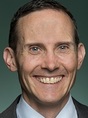
Andrew Leigh Fenner, Australian Labor Party, Assistant Minister for Productivity, Competition, Charities and Treasury
3:32 pm
It's all ambition, no ammunition. As Richard Ackland once said of the shadow treasurer, 'I had the sound off, so I could understand him perfectly.' If anyone was listening to that misfortune of 10 wasted minutes, they will have seen the confected outrage from the shadow treasurer but a complete lack of policy solutions.
Let's just take a moment to imagine what Australia would look like today and what the cost-of-living pressures would be like on Australian families if Australia was governed by a Liberal-National-One Nation coalition. The minimum wage would be lower. Student debt would be higher. Fewer students would be able to access free TAFE. Fewer parents would be able to access affordable child care. Home buyers wouldn't have access to Help to Buy. The government would be building fewer homes. Fewer Australians would have home batteries putting downward pressure on their energy bills. Income taxes would be higher. Government debt would be higher. Medicines would cost more. Visits to the GP would cost more. Multinationals would be paying less tax. Our competition laws would be weaker. The penalties for breaking competition laws would be, at their maximum, a tenth of what they are today.
The fact is that the world is facing an inflation challenge. The IMF's October outlook projects global inflation rising to 4.7 per cent this year. The simple reason for that is the war in Iran, which this government has urged the US and Israeli governments to bring to an end, their stated objectives having been achieved. The war in Iran has sharply driven up the price of a barrel of oil, which started the year at about US$75 a barrel and has now gone above US$90 a barrel, as supply disruptions and geopolitical tensions have tightened. Here in Australia, we've had inflation figures out today which report that petrol prices rose 9.4 per cent, driven by higher world oil prices. That is the principal driver of inflation today. The Australian budget doesn't set the world oil price.
We are seeing these challenges around the world. In the United States in September, inflation rose 0.3 per cent. In Britain, inflation rose 0.4 per cent, and, in Germany, inflation rose 0.4 per cent. In Canada, inflation rose 0.1 per cent. Across the euro area, it rose, on average, 0.6 per cent in September. In France, inflation rose 0.8 per cent, Italy 0.9 per cent. In Spain, it was up 0.4 per cent. Of the European Union's 27 countries, 23 recorded an increase in their annual inflation rate in September. This is a challenge which countries are facing around the world.
The government account for $1 in $5 of additional demand, and we are doing our part in order to work with the Reserve Bank in placing downward pressure on inflation. Average spending growth under this government is less than half the rate it was under the previous government. Since coming to office, we've identified approximately $180 billion in savings, closing loopholes, stronger tax compliance, reducing poorly targeted concessions and reprioritising spending. Under the former government, we had sports rorts, car park rorts—all manner of rorts—reined in by our government since coming to office, and we still have measures before the parliament that would deliver savings, including our changes to the private health insurance rebate so it is means tested not age tested. That savings measure is opposed by those opposite—a savings measure which would assist in the significant task this government is engaged in.
Over the last 15 years, only one Treasurer has delivered a surplus. It is Treasurer Chalmers who has delivered two surpluses. That reflects the important work that our government did. Those opposite printed the 'back in black' mugs but never delivered the budget into the black. The fact is—
I would love one, former deputy prime minister! I could definitely use a 'back in black' prop to pull out, because the fact is it would remind Australians of how fiscally profligate the former government was. Before the COVID pandemic hit, they had already doubled the debt. They doubled the deficit on coming into office, and they continued to significantly spend such that, now, two-thirds of government debt is that accrued under the former coalition government. Under Labor, we have delivered the most significant tax reforms in 25 years, delivering reforms that go back to the Asprey report of 1975. I pay tribute to Treasurer Chalmers for picking up the recommendations of experts such as the Tax and Transfer Policy Institute, e61 and the Grattan Institute, which, for decades, have been urging upon this government reforms on capital gains taxation, negative gearing and trusts. This treasurer, Treasurer Chalmers, has delivered all three.
Just as tax reform was fought by conservatives under the Hawke and Keating governments, it has been no surprise this year that we have seen the conservative parties backing the status quo rather than a fairer deal for homebuyers in Australia, but we on this side of the House have supported significant tax reforms. We have also put in place the most significant competition reforms of the last generation, reforming Australia's merger laws so there is more expeditious passage of low-risk mergers and greater scrutiny of high-risk mergers. We have increased penalties for anti-competitive conduct and anti-consumer conduct. We've made the Food and Grocery Code of Conduct mandatory, a measure opposed by those opposite, and it's backed now, under us, by strong penalties. We're tackling shrinkflation through reforms to strengthen the Unit Pricing Code. We've made supermarket price gouging illegal. We've funded CHOICE to give shoppers more information about supermarket prices, and we're addressing commercial planning and zoning through national competition policy to reduce the barriers to entry in the supermarket sector. We've increased funding to the Australian Competition and Consumer Commission, and we are seeing results to that reform. Earlier this year, in proceedings brought by the ACCC, the Federal Court found that Coles had made false or misleading representations about its 'Down, Down' discount, and a separate judgement in a case against Woolworths is pending. Our reforms are delivering economy-wide protections.
In the area of noncompete clauses, we have announced that we are scrapping noncompetes for everyone earning below the Fair Work high-income earner threshold, currently $190,100. This ensures that Australians can move to a better job. At a time when wages are under pressure, scrapping noncompete clauses allows wages to grow. The experts say that the benefits are something in the order of $2,500 for the one in five Australian workers constrained by a noncompete. That means wages will be higher, productivity will be higher and business start-ups will benefit, because, in an economy in which the unemployment rate is below five per cent, start-up business will be looking to hire from incumbent businesses. Scrapping noncompetes is good for productivity, good for innovation and good for freedom. Workers should have the freedom to move to a better job, and under this Albanese government we will deliver that outcome.
We have come to a deal with the European Union on a free trade agreement which will see significant increases to the amount of red meat which flows to the European Union—increases in lamb meat exports, increases in beef meat exports. This is a significant market, and Labor's free trade agreement is the kind of free trade agreement that would have been agreed to by the coalition in decades gone by. Negotiations were started by Malcolm Turnbull and Steven Ciobo, with then prime minister Turnbull describing it as 'a great day for Australia'. It contains no clauses on climate that the European Union and Australia haven't been signing up to in agreements of the past, including agreements signed by the former coalition government. They are so opposed to action on climate that they will make Australian consumers and Australian farmers suffer because of their ideological objections. Labor is the only true small-l liberal party standing in Australia. Labor is supporting free trade as those opposite once would.

Michael McCormack Riverina, National Party
3:42 pm
This is a matter-of-public-importance debate on the Albanese government's addiction to spending, forcing higher inflation and higher interest rates, with families paying the price on their mortgages and at the supermarket checkout. I listened very carefully to the member for Fenner's contribution, and he knows in his heart of hearts that he cannot keep defending the Treasurer; in fact, he should be the Treasurer, and he absolutely knows it. He's an economist, he's written books on this and he's very learned on the subject. But if the member for Fenner's commentary about the economy is true, then why oh why, everywhere you go, everywhere anyone goes in Australia, are people doing it so tough? Why is small business in freefall? Why are there 30 small businesses closing their doors each and every day? Why was last year a record year, so sadly, so tragically, for insolvencies? Why, every time you go to the fuel station, are you paying more and more at the bowser? Why are you going to the supermarket and getting less in your trolley and paying more at the register? Why, every time people are opening their power bills, are the costs going north? It's just too much.
The member for Fenner talks about the EU trade deal. We have to have a trade deal that is in Australia's national interest, not just in the European Union's interest—in both interests. But this deal does nothing for Australian farmers. If I'm mistaken, then why is the NFF coming out so hard against it? Why are farmers per se pillorying the deal? The coalition does not support the Australia-EU free trade agreement in its current form. It fails to deliver meaningful export access. What it is is a back door through which to give up our sovereignty over climate policy. We cannot sign a deal on behalf of our farmers and on behalf of our miners that is going to be a bad deal and not as good a deal as it should have been. This is the whole thing about Labor. In March, when Labor was going to go back to the negotiating table, it came out with a deal which is no better than what it was months and months ago. So why sign up to it?
If everything is so pink and rosy in Australia, why does this government have to continually bail out every enterprise, every manufacturer, that is using a lot of energy? Why is the country's largest aluminium smelter costing taxpayers $2½ billion, with the New South Wales and federal governments going to split the bill down the middle? The member for Newcastle—sorry, I mean the member for Hunter. You're the member for Newcastle, Madam Deputy Speaker Claydon. I won't verbal you; you're in the chair. The member for Hunter—I'll just verbal him!—knows full well that the government has had to come in and bail out an industry that should be standing up on its own two feet and that should be thriving. Aluminium and the smelter—everything should be going absolutely full bore. Instead, because of the failings of the Labor government, we have to put in a bailout—
The state government—it's another Labor government! You can talk about the state government all you like.
Sharon Claydon Newcastle, Australian Labor Party
Order, Member for Hunter and Member for Riverina! I know you invited the interjection, Member for Riverina, but please don't respond. Let's get back to the debate.
Michael McCormack Riverina, National Party
And then there's Whyalla, yet another industry which requires bailing out, not to mention SunRice. SunRice is an amazing organisation doing so much good for so many people in Finley, in Deniliquin, in Leeton, right across the Murrumbidgee Irrigation Area—right across the Riverina. And yet, because of water buyback policy and because the government says that it needs to take more and more water out of the system, the government has to step in with a $14 million bailout for SunRice.
It just can't continue like this. The government can't keep propping up the industry because of its own failed policies. There's good spending and bad spending. I realise that. This government needs to stop spending money upwards of $30 million on pre-COP conferences. It needs to stop spending money on water buybacks. It has to get back to first principles—that is, making sure that everyday, ordinary Australians and small businesses can operate fairly and effectively in this economy.

Sally Sitou Reid, Australian Labor Party
3:47 pm
If those opposite want to talk spending, let's talk spending, and let's get some facts on the table. When we came to government, we inherited $900 billion in debt, and 70 per cent of that debt was accrued by those opposite. Let's get those facts on the table while we talk spending.
I want to make it interesting for everyone in the chamber today; I'm going to add a bit of a backing track to my speech. Just have playing in the back of your head Shirley Bassey's 'Big Spender'. That is the song that comes to mind whenever Australians hear lecturing from those opposite about fiscal discipline. Have you got the tune in your head? I hope you've got it in there, because I'm going to take you through the five greatest hits of wasteful spending by those opposite.
Let's start with No. 5, car park rorts. Six hundred and sixty million dollars was spent on car parks, some of which were never even delivered. The Auditor-General said it was not transparent and not based on need—a terrible waste of money.
Now we move on to No. 4, French submarines. How could we forget! Prime Minister Turnbull signed the deal, then Prime Minister Morrison cancelled the deal—$2.4 billion in taxpayer money spent, with not a single submarine as a result. In fact, it ruined our relationship with the French, with the French president openly calling the former prime minister a liar.
We go to No. 3. This one was a doozy—the NBN redesign. Abbott ripped up the original plan. He promised cheaper, faster internet. Instead, Australians got slower speeds and we got a massive cost blowout—$27 billion wasted.
We're moving into some really wasteful spending now. No. 2 is JobKeeper design failures. It was a great idea. We supported JobKeeper; it's important to keep and support Australian workers. But the design flaws were enormous. In fact, those opposite gave $13 billion to profitable companies, companies whose revenue went up during the COVID pandemic because there were no clawback provisions.
Okay, we're going to go to No. 1. Are you ready for it? No. 1 for most wasteful spending is robodebt. It's the worst of the lot because, let's remember, the original intent of that policy was to save us money. It was supposed to save us $1.5 billion. What did it do? It ended up costing us money—$1.8 billion. I cannot think of a worse policy. It was unlawful, it ruined thousands of lives, and it ended up costing us money. So let's have a debate about spending. I'm ready to do it. It's important that we get the facts about what those opposite achieved on the record. We inherited that mess. We inherited that wasteful spending, that debt, and we also inherited their inflation challenge. It started under them at more than six per cent.
Let's move into part 2 of this speech. I'm going to give you a new song here—'Takin' Care of Business'. Have you got that in the back of your head? We are facing some real challenges. Inflation is higher than we would hope, it is sticking around longer than we would hope, and higher oil prices are adding to that. This conflict cannot end soon enough. We acknowledge that inflation is presenting difficulties and challenges to households. High interest rates are challenging. They're seeing it at the supermarket check-out. They're seeing it at the petrol bowser. We acknowledge that. But what we have done as a government, in every single budget, is find savings measures, and that has meant $180 billion in savings, which has meant we have avoided $70 billion in interest costs. We've delivered back-to-back surpluses. Were those opposite ever able to ever do that? Were they ever able to deliver just one surplus in their time in government? Never. We've made difficult decisions to make sure that we can make our budget sustainable.

Tony Pasin Barker, Liberal Party, Shadow Minister Assisting for Fisheries and Forestry
3:52 pm
I think we can all agree that Australians are doing it tough. The price of everything is up, and they are regularly hearing from the Reserve Bank that their mortgage and interest rates are going to go up as well. Today, in question time, I made two observations. The first was that the Prime Minister's demeanour suggested that he was a little angry, upset—I might even say concerned. It wouldn't take a body language expert to see that. It was pretty clear from where I sat. There was a second part of question time that was instructive too, and that was the question that the member for Bowman put to the Prime Minister. But I'll get to that in a minute.
I thought to myself during question time, 'Why is the PM upset?' And I think I've worked it out. Australians have worked out who they need to blame for the situation they find themselves in. They've finally worked it out. They've worked out that the challenges they face, born of inflation, are being driven out of Canberra. For a long time, those opposite have sought to point the finger in other directions, and Australians, as fair minded people, have said, 'Yes, fair enough, we can understand those things.' But the last interest rate increase in this country suggested a different attitude from Australians. Australians have now finally worked out that there is a direct causal link between public expenditure emanating out of this place and interest rates. It's driving up prices, it's driving up interest rates and it's causing real grief for Australians.
Of course, the Prime Minister's upset because the person who's in charge of selling that message to Australians and suggesting that the challenges are elsewhere is his embattled Treasurer. But the Treasurer, unfortunately, isn't able to shield the Prime Minister any longer. Australians have worked it out, and they're angry and disappointed. It's the reason he can't go to the footy, because he gets booed. We know that the relationship between the Prime Minister and the Treasurer is strained.
That leads me to the question that was posed by the member for Bowman. It was not the question that was instructive but the answer from the Prime Minister. The Prime Minister, when asked about the performance of his Treasurer, was glowing in his praise. He was glowing in his praise for the Treasurer. The speech could have been summarised as 'Australians have never had it better'. But, you see, that's the problem. We've got a prime minister with a tin ear, and Aussies know it. He comes in here and points to the performance of the Treasurer and says: 'The Treasurer is doing such a fantastic job. Look at all the things I've saved you from.' But Australians are sitting back at their kitchen table, opening another bill, be it an electricity bill, the annual insurance bill or other bills, looking at their credit card statement, grocery bills and other things and saying: 'But I'm really hurting, and your job is to protect us. Your job is to usher the Australian economy.'
Aggregate demand, which is what is driving up inflation and interest rates in this country, is made up of two elements. There's private demand and public demand. Private demand is hard to control. There's 24, 25, 26 or 27 million Australians. It's quite hard to reach into the budgets of Australians and make them make different decisions, although interest rates are doing that. But there is one element of aggregate demand over which the Prime Minister and the Treasurer, in particular, have very direct responsibility and control, and that's public demand. We've got a Treasurer, in the middle of an inflation crisis where Australians are being whacked month after month with higher interest rates, who has taken government spending to 26.9 per cent of GDP, the highest level in 40 years outside of the pandemic. Treasurer, tighten your belt because, when you don't, Australians are forced to. They've had enough of you and your prime minister.

Tania Lawrence Hasluck, Australian Labor Party
3:57 pm
Australians do not need anyone in this parliament to tell them that many households are under pressure with their budgets. I know people across my electorate of Hasluck, when they go past the bowser, when they head into the shopping centre and go to the checkout or when their rent or mortgage payments are due, are finding it challenging. We are in a cost-of-living crisis that's being shared internationally. We've never resiled from that. But we can't just wish away a conflict that we were told would only take a matter of days or weeks to resolve and that is still going today.
No-one should seek to minimise the pressure that some households are under. But, equally, we can't be caught up by the narrative that the coalition are trying to run—that they would in some way be doing a better job when they are so clearly, as we've just heard from the member for Barker, completely bereft of any policies. We know, based on their voting record, that the only thing that they have to offer is indiscriminate cuts. When I think about what those cuts would mean, they would mean they would cut the tax relief that will put more money back into the pockets of our hardworking Australians and those of my people, the working people of Hasluck. They would cut the very cost-of-living measures that are actually helping families to meet the mortgage, fuel the car and put food on the table. They would cut the health, housing and opportunities for people in Hasluck and in every electorate across the country.
I'll spell this out even more plainly. The coalition would never have provided the historic bulk-billing support that is helping patients in my electorate right now as I speak. They would never have created the 137 urgent care clinics around Australia, which have seen three million—or more now—presentations since 2023. They would never have subsidised the cheaper medicines, and they certainly ran a mile from 60-day scripts. The coalition would cut Medicare in Hasluck. This means putting at risk cheaper medicines, bulk-billing and Medicare urgent care clinics that are serving families in Midland, in Ellenbrook and in Morley. These are the services my community use and they are the services people in my community value. People in Hasluck have already saved more than $11.5 million since 2022 through our cheaper medicines policies. These are real cost-of-living supports for real people in my electorate, and they would all be at risk in the face of coalition cuts.
The coalition would cut housing support in Hasluck. We know this because, when Labor established the Housing Australia Future Fund, the coalition opposed it. For people in Hasluck, the HAFF means homes. I have 535 affordable and social homes being built right now in Bassendean, in Midland, in Woodbridge, in Ellenbrook and in Lockridge. These investments actually really matter because the housing pressure is real. Families are struggling with rents and mortgages, which are an enormous challenge at any time but particularly for those who are trying to get into their first home. Labor's response is to build; the coalition's response is to cut. We are delivering increases in Commonwealth rent assistance. We're helping first home buyers get into the market with five per cent deposits. In Hasluck so far, in fact, that's over 2,700 first home buyers who have accessed that. None of this would be happening under a coalition government. If they get the chance, they'll cut those exact programs. They would cut housing in a housing crisis. That is the coalition, which failed even to have a housing minister between 2013 and 2018. It's not like this is a new issue. It's been an ongoing issue and is a legacy that we are now working to fix.
The coalition would cut support for working families in Hasluck. We have backed higher wages. We have backed pay rises for people who educate our children and care for our parents. We have expanded paid parental leave. These aren't numbers on a spreadsheet. These are Hasluck families trying to pay the mortgage, the rent, the electricity bill and the grocery bill. Where is the coalition when we back higher wages for workers who need them? Nowhere—just crickets. The coalition would cut opportunities for people in Hasluck. Free TAFE, paid placements, student debt relief and real money back in young people's pockets are all examples of the kinds of initiatives that the Albanese Labor government is working towards and has delivered in support of families in my electorate and in electorates across the whole country. The coalition is purely a risk to health, housing and opportunity.

Tom Venning Grey, Liberal Party
4:02 pm
In March last year, the Treasurer told Australians that the Australian economy had 'turned a corner'. Well, this morning we found out which way it turned. Today inflation has a four in front of it and is rising. Prices are up 4.3 per cent over the year to September, which is up from four per cent in August. In South Australia, inflation is running at five per cent. The Treasurer did not turn a corner; he took a U-turn.
After the 2025 election, the Treasurer declared a shift in Labor's priorities. He said:
The first term was primarily inflation without forgetting productivity. The second term will be primarily productivity without forgetting inflation.
Treasurer, how is that going? Inflation had a two in front of it when you said we had turned a corner. Today it starts with a four and is galloping. On productivity, the Reserve Bank governor said just last month:
Productivity is doing nothing.
Treasurer, you promised not to forget either one. Instead, you have failed on both. Now the Treasurer says a big driver of inflation comes from the Middle East, but, as said by the Reserve Bank governor, inflation 'has been driven by domestic capacity pressures', with the Middle East 'in addition to this'. She says:
… we are consuming more than we can supply as an economy.
Prices set here at home are up 4.5 per cent. Australia's inflation woes are home grown, and Labor keeps feeding them. In France right now, people are rioting because of inflation, and it's lower than here. Government spending has blown out to almost 27 per cent of GDP, the highest in 40 years outside of the pandemic. In just four years, Labor has lifted annual spending by $170 billion. Spending grew 4.3 per cent in real terms last financial year, double the growth of the economy, yet the Treasurer recently spoke on a podcast and said he was not prepared to put a specific number on the optimal spending as a share of GDP. While the Treasurer will not put a number on spending, families have had to put a number on everything. They put a number on the weekly shop. Since Labor was elected, food has gone up 19 per cent. Eggs are up 39 per cent, milk 28 per cent and bread 22 per cent. They put a number on the power bill. Labor promised 275 bucks off, yet electricity is up 40 per cent. The only things Labor have cut are their promises. Ahead of the Melbourne Cup, Labor's inflation has told interest rates to giddy up. The markets have a 17th interest rate rise as the odds as favourite. Average Aussie mortgage holders, who are already paying about 31 grand a year more in interest under Labor, are set to lose yet again. The Treasurer keeps backing the same horse—more spending—and families keep paying for it.
How do you bring down inflation? You stop pouring fuel on the inflation inferno. The coalition has found $31 billion in savings. People ask what we will cut, and I'm more than happy to share—$9.4 billion from ending Labor's climate bureaucracy; $7.3 billion from ending corporate welfare, Labor's corporate mates; $4.3 billion from scrapping Labor's failed housing schemes; and $7.9 billion from breaking the illicit tobacco business model. We will cut Labor's waste, cut Labor's taxes and cut Labor's red tape. These savings more than pay for our tax-back guarantee while leaving the budget $22 billion better off over the four years.
Every family in Grey knows you cannot keep spending more than you bring in. You cannot spend your way out of a spending problem. Families have spent four years tightening their belts under Labor. It's about time this government tightened its own. Labor is addicted to spending, and Australians are left paying.

Matt Gregg Deakin, Australian Labor Party
4:07 pm
I think we can all agree in this House that households are struggling. This is a tough time for a lot of people. Driving past the fuel station, they see those prices have skyrocketed, approaching $3, and thinking how they're possibly going to pay for that and all the other expenses they have to cover in the week. But what most Australians know is fuel costs have been driven by a global oil shock. There are lots of drivers of inflation. It's true. We've got a persistent set of capacity constraints in our economy, which is largely service driven now. We've had global cost pressures, and we've had an increase in aggregate demand, or total demand.
The member for Barker is quite right—that consists of private sector demand as well as government demand. Where we've seen the big uptick is in private demand. He's also right in that what we have more control of is government spending, and that's why we've taken serious decisions to find savings in the budget and reduce those demand drivers as much as we responsibly can. But we know that, when we recalibrate a budget, it has real human consequences in our community. When you cut social programs, families suffer and household suffer in communities like those we all represent. So these decisions have to be taken very seriously. Cavalier lines about slashing and cutting are easy and that you don't have to think too much about it are simply irresponsible. Careful, responsible, considered decisions have to be made, and we haven't walked away from that.
Earlier today the Treasurer was speaking about how more savings measures will be announced in MYEFO, coming up very soon, and you've seen across all budgets delivered by this government that savings have been found budget after budget. Then, when we've had upward revisions in revenue, they've been mostly banked because we know that paying down debt is really important at this point in time, because the more debt we leave undealt with higher the interest costs that we find ourselves spending.
We're also dealing with the challenge of higher global bond yields. That often has two effects. The first is that it means a lot more of a budget has to be put towards paying debt. It also means that there's often a competing force that sees a pressure on interest rates as well. You almost never see a bond rate higher—in fact, I've never seen a bond rate higher—than the bond yield. So you've never seen interest rates lower than the bond yield. That has a significant effect as well. That goes to global confidence and various drivers in the global economy. So a lot of very considered and serious decisions have to be made at this point in time.
I noticed one of the earlier speakers spoke of the member for Moreton talking about the need to throw the kitchen sink at spending. She was absolutely right to say that. Of course we are looking at government spending, and we are taking very tough decisions. The private health insurance rebate, removing the age based loading, was a very significant decision. It was a difficult one. It affected people in all of our communities, but it was a taxpayer funded spend, which is not well targeted and not well calibrated towards need. There were other ways that that money could be redeployed to assist with aged care, which is chronic and serious in our community. These are not easy decisions. They're not consequence free. You don't have decisions in these matters where no-one suffers or it's not challenging. We don't take them lightly, but this is a time when we do have to make tough calls.
Criticising every spending reduction is not being part of the solution to this very serious set of economic circumstances in which we find ourselves. As a government, we do have to respond to the fiscal and economic circumstances in which we find ourselves. So, when I saw the MPI today, where the shadow treasurer was talking about inflation faced by businesses and families in Australia and didn't even mention the global fuel crisis, didn't even mention productivity and opportunities to increase the productive capacity of our economy, didn't mention the investments in manufacturing and in supply chain resilience in this country as a necessary foundation for our economy going forward—global shocks, not only economically but politically, mean that we do have to be ready to look after ourselves in times of crisis. We need to be making very serious calls. What we've seen is a little bit of theatre from the other side, hoping to pin all the blame on one factor or another. The truth is these things are complex, so we do need to deal with the nuanced complexity.
If you don't understand the basis upon which we have inflation, then we are not going to be able to have realistic expectations. One thing we know about inflation is that inflation expectations are themselves a driver of inflation. So, if we're not having a real conversation and if we're not talking about all the facts, we can find ourselves in a very misguided set of conversations which can themselves have an economic effect. What I would ask, when we have these very serious conversations, is that we get all the facts on the table. We can have debates about where the best parts in the budget are where we should recalibrate or taper out spending. That's entirely reasonable. We can have reasonable disagreements on that. But to suggest that this is some kind of a spending addiction or a deliberate inflation is just nonsense, and they know that. Let's have a real debate about policy. Let's have a chat about those tough decisions that need to be made. Let's carefully critique all the numbers being presented.

Leon Rebello McPherson, Liberal National Party
4:13 pm
I rise to speak on this matter of public importance today as raised by the shadow treasurer in relation to the government's addiction to spending, to forcing higher inflation and interest rates and to the consequences associated with that. I'll say that it is refreshing that there are some members of the Labor backbench who are prepared to break rank from the Labor leadership and actually agree with something that the coalition has been saying for a long time: government spending does need to be reduced. We've just heard it from the member for Deakin. We've heard it from the member for Moreton. This is after months of her saying: 'Oh, where are you going to cut? What are you going to do for the opposition?' Then more recently this week, she's turned around and said, 'Oh, yes, we need to throw everything we can as a government at reducing government expenditure.' It would be good counsel for them to have a chat to the Treasurer or to the Prime Minister, who don't seem to align with those views in their actions.
There was a lot of talk today and in the lead-up to today by members opposite who seem to talk about the events overseas. I think there's no-one who's denying that the events overseas have relevance, but what we are denying is the fact that they are entirely the cause of this inflation mess that Australia is in. We have had 16 interest rate rises. Inflation is now at 4.3 per cent as of today. We are seeing the consequences every single day across our electorates. And I'd hate to be a member of the Labor government right now, especially a backbench member, going and speaking to their constituents, because if they're genuinely engaging with their constituents, if they're genuinely engaging with small businesses, I'm sure the feedback is not positive.
A whole heap of questions were put to the Treasurer and to the Prime Minister today in question time, and in every single response to those questions—which were related to this inflation mess fuelled by the government's addiction to spending—the Prime Minister or the Treasurer spoke about the fact that there are things happening overseas and that this is part of a broader issue. But if you look at Australia, if you look at where our inflation sits—and I did say it's 4.3 per cent as of today; it's gone up again—we're actually somewhat of an outlier compared with the rest of the world. If you look at countries like Japan, 2.1 per cent is actually 2.2 percentage points down. Singapore is at 2.2 per cent, South Korea at 2.9, France at 3.1 and Canada at 3.1. So we are an outlier. That's not to say that those countries are not going through the same international events that we are. But it does say that there is something homegrown about this inflation crisis, and the Treasurer and those opposite would do well to admit that and to act upon it.
We've had the Reserve Bank of Australia actually say there is a domestic link. The Reserve Bank governor said, 'Inflation has been driven by domestic capacity pressures.' And they said that the Middle East is in addition to those domestic capacity pressures. They've said that domestic spending and investment have been stronger than expected and that we are consuming more than we can supply as an economy. One in every four dollars that is spent in this economy is spent by the government. That is concerning on so many different levels. On Sunday the Reserve Bank's Sarah Hunter said that government spending is definitely part of the picture.
There is an alternative view. The coalition this week outlined a number of different measures we would take to the next election. These are things this government can actually address now in terms of a budget savings package, which would save the Australian taxpayer $31.3 billion in total. Those opposite said we can have a discussion about what we want to cut. Well, here we go. We've been speaking about it. We're yet to hear whether the government is actually going to engage in this. We've got climate and net zero programs at $9.4 billion. We've got corporate subsidies and industry incentives at $7.3 billion. There are the failed housing programs and incentives, at $4.7 billion. Some of the welfare and NDIS eligibility changes would be $2 billion. And in illicit tobacco enforcement there's some projected additional revenue for another $7.9 billion if the government came to the table. But it's also about growing the economy. Something we have seen is that this government is not working for the people to generate the conditions, to generate wealth and in doing so support more government revenue.

Matt Smith Leichhardt, Australian Labor Party
4:17 pm
Everybody acknowledges that a lot of Australian families are having a really tough time at the moment, what that added pressure means and what it means for their day-to-day existence. To counteract that, to try to have a non-inflationary impact while reducing the cost of living, you have to get creative. You have to do things that matter to the everyday—things like tripling the GP Medicare rebate to allow more doctors to bulk-bill so people can get in and know that they're going to the doctor for free, or the $25 medicines so people aren't having to make those decisions at the end of the month: Do we eat? Do I take my meds? What if a bill comes? Do the kids need school shoes? Those are things that are important. Then there is fee-free TAFE, to give people who maybe missed out on their opportunity early in life to live their dreams—nurses, for example or carpenters—to give them that extra shot at it, to go in without having to put more money on the table to do the job that they want to do, to get into the industries that we need. If you look at Australia as a whole, inflation is a problem. We know that; everyone is happy to acknowledge that. But so is housing. We know we need more skilled labour, and fee-free TAFE is a big part of that.
It has to be a holistic approach. Everything we do has to be a holistic approach. Any clown can point at a problem and yell at it. That is not a solution. You identify one thing, yell, yell, yell and make noise. That's not going to get you anywhere. What you need is to understand every single aspect that you're living in and that you're working in. But what we're seeing from the opposition at the moment is an inward-facing conversation with a constant check over their right shoulder to see what's coming up the other way. We saw it when the member from New England had his question today in question time regarding abolishing anything to do with climate change. And then, at the end of the shadow treasurer's MPI, he belled the cat and went straight for climate change and straight for housing. We knew this was going to happen. It's inward looking again, in that the party that is so into trade, so into business, is going to stand in the way of a free trade agreement—44,000 tonnes of sugar. That's a lot of sugar.

Matt Smith Leichhardt, Australian Labor Party
It's very sweet. Thank you, Member for Hunter. We're doing puns. The sugar industry is struggling at the moment. It needs a boost. An extra 44,000 tonnes being able to be exported out to Europe is a boost. An ethanol mandate which is currently being discussed about the cleaner fuels would be a boost. Is the opposition getting behind that? No. Would that lower fuel prices? Yes. Is that a holistic approach to a larger problem? Indeed it is.
When they talk about the housing and they talk about the climate, those are the No. 1 things that they're going to cut—and ideologically cut, no less. Cutting climate change initiatives is a really bad idea, not just on an economic level but on a national security level. We have done so much work to re-engage with the South Pacific. The South Pacific expects us as a leader in our region to stand up. We hear this: 'Oh, it's only one per cent.' Every time an athlete comes into this place, everyone gets really silly and tries to get something autographed or get a shirt with their name on the back. You would think, with the amount of people supporting sport, they would have heard about the one percenters. If you get enough one percenters, you win. Thirty-six per cent of the world's emissions are produced by countries who produce, on average, less than one per cent total emissions. Total it up. Everybody has a job to do here. This is this inward looking that I keep talking about. They're not looking externally. They're not understanding.
Sharon Claydon Newcastle, Australian Labor Party
The time for this debate has sadly expired.