
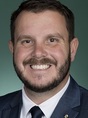
Phillip Thompson Herbert, Liberal National Party, Shadow Minister for Defence Industry
12:32 pm
I move:
That so much of standing and sessional orders be suspended as would prevent the government business order of the day No. 12, relating to the Statute Update Bill 2026, being called on immediately.
I don't think there is a more important thing to do in this parliament today than bring forward the Statute Update Bill for debate. Having a $5,000 cap placed on veterans' allied health services is a disgrace. This parliament and the Australian people should be able to hear what the government has planned for them. Right now we've got a minister that doesn't meet with veterans, a prime minister too afraid to sack an incompetent minister and veterans around the country having a cap of $5,000 placed on them.
I want to read some of the messages that I've received. One says: 'I live with chronic pain, post-traumatic stress disorder, anxiety and depression. I rely on ongoing treatment to manage these conditions. Under the $5,000 cap, I would have access to allied health treatment for only two months before I max out. What am I supposed to do for the rest of the year? I have wounds on my lower legs that were not responding to treatment. DVA told me I had to stop attending the Wesley Hospital wound clinic. I protested, but the decision did not change. After missing appointments at the wound clinic, my condition deteriorated. I contracted sepsis and came close to death.
'This is what happens when bureaucratic decisions get in the way of veterans and their treatment. I served for more than 20 years, including through the gulf and Iraq wars. I'm experiencing serious anxiety about these cuts. I just want assurance that the support I rely on to live will continue without disruption.'
My office recently received a call from a veteran who was a breaking point because of the $5,000 allied health cap. During the call, he spoke about suicide. A veteran who had served this country was talking about taking his own life because he feared losing access to the treatment and support he relies on. This is the human consequence of poor policy from a government that's turned its back on veterans. Apparently, this bill was so important when it went to the Senate, before amendments were made, and now it's been kicked into the weeds—now no-one wants to talk about it. The Attorney-General takes carriage of this, with the Minister for Veterans' Affairs. But they're happy for this just to go away. Well, this won't go away. It's not going away. Veterans' lives are at risk. And, yesterday, to be gaslit by the Minister for Veterans' Affairs, who came in here and had the hide to read to me about safe language and how we shouldn't talk about suicides, was absolutely disgraceful. It's not him who carries the coffins. I carry the coffins. Veterans around the country will carry the coffins. This is incompetence from a minister out of his depth and laziness from a prime minister who should sack him.
The Prime Minister and the Minister for Veterans' Affairs both came in here and spoke about all these fantastic changes that they're making. On one of these changes, they stood in front and openly misled. They were told only hours before that the 12 sessions to receive allied health care were actually up to the GP. Your GP could fill out a form—this form—and you wouldn't have to rely on those 12 sessions. It's up to your medical professional. The Prime Minister was told that. The Minister for Veterans' Affairs was told that. Yet, when asked in question time, they came in here and pointed to that, but they failed to mention the at-risk client assessment form used by GPs, your medical professional. They didn't want this on the record, because they were hanging their hat on a separate side of a policy.
We're not actually debating or wanting to debate that process. We want to talk about and debate the $5,000 cap on veterans allied health care, because it shouldn't be there. It should be removed. It should be scrapped. You should scrap the cap. And if you're not going to scrap the cap, then the Minister for Veterans' Affairs should walk up to the dispatch box and resign. That's what should happen. Right now, this government—this lazy Labor government—is playing politics with our veterans. That's what is happening, and that should be absolutely condemned at the highest level. Our veterans have put on the uniform and served in combat, peacekeeping, humanitarian missions and on natural disasters. They are the people that we've turned to for help in our darkest days. Now, when our veterans are turning to this government to do the right thing, they are being abandoned; they are being let down; and they are being failed every single day that this is allowed to drag on.
Veterans have travelled from all around the country to come to Parliament House to meet with their ministers. The first time they tried to get a meeting with the Minister for Veterans' Affairs, it was declined. The minister had a very important engagement at the Governor-General's house for some champagne and canapes for the address-in-reply. I can tell you now that there is nothing more important than a veterans' affairs minister meeting with veterans and listening to their concerns—not sitting back, rolling your eyes, folding your hands, throwing a tantrum and scoffing, and saying, 'Well, I could have been at the Governor-General's place today.' I don't care if you could have been at the Governor-General's reception. It doesn't matter. We have veterans that have flown here. We have veterans talking about their fear of their friends dying by suicide because of this cap. And they were gaslit by the veterans' affairs minister. Then, to try and mop it up, the Prime Minister says, 'I will meet with them now.' Well, sorry, Prime Minister; you have decisions to make. Those decisions are scrapping the cap and getting rid of an incompetent minister. I don't think they're too hard. I think it could happen right now. If the Leader of the House wants to stand up and confirm that we're going to scrap the cap today, by all means, he should do it.
I know that the electorate of Herbert in Townsville is the largest garrison city. It has the most veterans per capita. It's where I served. It's where I deployed to East Timor and to Afghanistan, where I was wounded in combat and where I found myself in the darkest hole. The only way that I knew that I would get out was because I could get service to allied health care—the psychology that I needed, the physio that I needed, the occupational therapist that I had to see. My mates that I call brothers have been in that hole. Some never came out: Jesse Bird, Brad Carr—people that I lived with, people that I call family, people that I call brother. I attended those funerals. I talked to their mums, and I looked at them when they sat up there in the gallery, right before the royal commission was called. And I apologise that it took so long for this to happen. Not one veteran's life should be lost.
Today we have this ability to get rid of something that will detrimentally hurt the veteran community. This $5,000 cap for our veterans is going to see them worse off. It's going to hurt them. It's going to hurt their families. We've already heard messages from people that said that they won't be a burden on their family. You know what that means? It means they have a plan. It means they won't be here because they don't want their families to see them at their worst—where they were.
It doesn't matter what electorate you represent; when you're here, your job is to listen to, work for and deliver for the people you represent. That's your job. The people you represent—like the veteran, their family member, their loved one—are watching. They're watching how you act, they're watching how you vote and they're watching, hoping that you'll do the right thing. Today you have that opportunity. You have that opportunity to bring this bill forward. You have this opportunity to scrap the cap. You have this opportunity to tell the Australian people that 'lest we forget' are not just words. It is a commitment that we give to our veterans and our ADF personnel. Our ADF personnel are terrified. What happens when they get out? Caps get placed on their health care.
We have a commitment to our people that serve, and we should honour them every single day. What is happening through a very incompetent Labor Minister for Veterans' Affairs is not honouring them. The Prime Minister should have got rid of the Labor Minister for Veterans' Affairs more than a couple of weeks ago, when the veterans met with him and complained about his poor actions and his treatment.
I want to say one thing to our veterans. We will not stop fighting for you. We're in your corner. We will make sure we do everything we can to scrap this cap. This allied health cap of $5,000 shouldn't be there, and this government should be ashamed.


Michael McCormack Riverina, National Party
12:42 pm
The motion is certainly seconded, and standing and sessional orders do need to be suspended. The vote that was taken yesterday on this very important amendment, which came from the Senate—it needs to be brought back into the House and it needs to be ratified. It needs to be put in place because our veterans deserve better. Last Thursday in the Senate, every non-government member voted in favour of scrapping the cap—35-20, a resounding result. And yet, when that amendment came to the House of Representatives yesterday, it was roundly defeated. I say shame on the government.
Today is the International Day of Democracy. Yesterday was a day of infamy, and I'm not overegging it. It was absolute treachery. It was a day of shame, and we have trashed democracy by making sure that that amendment yesterday was kicked into the long grass, as the member for Herbert has just said—kicked into the long grass. Our veterans deserve better. When you have veterans of Australia with wall-to-wall opposition, when you have the Senate, the upper house of the Australian parliament, voting resoundingly to scrap the cap, why is it that the government—and government is formed in the House of Representatives—votes to have that particular amendment kicked into the never-never?
We've got our public gallery full of young people. Thank you for coming to Canberra. Thank you for coming to parliament. Now, if those young people should one day decide to serve our nation, I hope the government of the day in the future looks after them when they give up that uniform—when they leave the Australian Defence Force and they return to civilian life. As it stands, on 15 September 2026, the government has put in place a policy that, from 1 July next year, there's going to be an arbitrary dollar figure placed on that service, on that noble duty that our veterans have performed. They have served. They have done what this nation asked them to do. That is simply not good enough.
Tomorrow, the government, by the sounds of things, is going to go on this divestment crusade where they sell off 68 defence properties. On one hand, they're selling up defence properties, and, on the other hand, they're selling out our veterans. It's simply not good enough. When you actually look at the properties, we've got HMAS Cerberus. We've got Swan Island in Victoria, and we've got Fairbairn Golf Course in the ACT. What do you think they have in common? They've got golf courses. Those bases, those defence properties, have got golf courses. If it was Royal Marrickville, it'd be a different story, wouldn't it! It would actually be funded. It'd be preserved. It'd be protected. No, they're being sold off. They're being sold off because defence properties of heritage value—of defence tradition—are being sold off, and our veterans are being sold out by this government. It's simply not right.
Yesterday—when the vote took place, the suspension of standing orders was moved and seconded, and passionate debates were brought forward—what do you think happened when the Minister for Veterans' Affairs and Defence Personnel was sitting in that seat that the member for Watson currently occupies? There were back slaps. I've not seen that since the carbon tax of 2011, the live sheep trade ban of 2024 and this year's budget. There were back slaps then too because this Labor government likes to congratulate itself when it does the wrong thing, and this is doing the wrong thing. It's doing the wrong thing not just by our veterans but by their families, and it's doing the wrong thing by our nation.
Our nation deserves better. Our veterans certainly deserve better. A former Labor prime minister, Billy Hughes, said this.
Unidentified interjection - Hansard doesn't record who said this
An honourable member interjecting—
Michael McCormack Riverina, National Party
He wasn't Prime Minister at the time. I agree with that, but he was a Labor prime minister and let's not disparage him. He said:
When you come back, we will look after you.
That's what he said back in 1917, and it rings true today, whether it's World War I or the Afghanistan war.

Mr Tony Burke Watson, Australian Labor Party, Leader of the House
He wasn't always with us.
Michael McCormack Riverina, National Party
It rings true today whether he was a Labor prime minister or he was a National Labor Prime Minister. It matters not. We should—as a nation, as a Commonwealth and as a parliament—look after our veterans, and we're not doing it unless we scrap the cap. (Time expired)
Mr Tony Burke Watson, Australian Labor Party, Leader of the House
12:47 pm
I'll deal with a few issues. I'll deal with the issue in substance that the members have just referred to with particular respect for the member for Herbert for the incorporation of his extraordinary willingness to serve this country and the way that he has framed the discussion in those terms.
If I can, on a tiny side note before I get into the substance—there was mention of Billy Hughes as a 'Labor prime minister'. Realistically, Billy Hughes ended up in every party except the party of the previous speaker. In answering the question 'why was the country party the only party you never joined?' his response was, 'You have to draw the line somewhere.' I only mention that because Billy Hughes was raised as if he was somehow a loyal Labor identity. He had an interesting time here.
There is one other thing I would like to say, given that we are talking about veterans, before I get to the substance of the direct issue that's contained within the Senate amendment to a largely unrelated bill on what's been referred to in the speeches. A lot of this debate goes to the issues of people in this House and throughout all of Australia wanting to find the best way to show respect to our veterans. It's the first time I've had the chance in front of a microphone to express the level of solidarity that exists from every member of this parliament with the member for Canning and the horrific allegations that were made against him by a member of the other place.
As Minister for Home Affairs, I work with people who wear our uniform. Obviously people think of Border Force, but the Commander of Operation Sovereign Borders is a member of the Navy, and the cybersecurity coordinator is a uniformed member of the Army, Lieutenant General Michelle McGuinness. We all talk about ourselves being in public service, and we are. But what people who wear the uniform and put themselves in harm's way do is beyond our level of public service—and so far beyond.
The concept that anyone with the opportunities that we have, as civilian members of parliament, could think that somehow it is okay to use the word 'traitor' against somebody who has worn our uniform—who has decided that, in the interests of public service, they were so committed as to be willing to put their life at risk—should be beneath anyone elected to this place. I respect that we're here for a different issue, but I think most of us, if we get the opportunity, want to be able to make clear just how horrific that is. The member for Canning has been the shadow against me. We have no end of disagreements. But there will be never a moment where I or any decent Australian will have anything but the deepest respect for his service.
Allow me then to go to the issue that's before us. First of all, the concept of there being a limitation on services to veterans before they have to go back and get a new referral is actually not a new concept. At the moment, the concept of having to go back to get a new referral is done in terms of number of visits. The proposal that the minister has been advancing is that, instead of it being done by number of visits, it would be done through an amount of money—a cost. The number of visits at the moment is 12, and after 12 visits somebody, if there is a further clinical need, goes back for a further referral.
The proposal, which the government is continuing consultation on, is that another referral would be required after a $5,000 review point. The concept which has garnered a lot of public discussion is that having to go back for a further referral is something new. It is not. At the moment, it's based on number of visits, and the proposal for the minister is that, instead of it being 12 visits, if there was a further clinical need beyond $5,000, then another referral would be required.
I respect the concept is out there, as it is in much of the public discussion, that there is a cap being introduced for the first time. There's anxiety that comes with that. But I just want to deal with both of those concepts. There is already a point at which a further referral is required, and it's based on the number of visits, not on the quantum of money. To have to go back to make sure that a further referral is given is in no way new. The second argument that's been put out there is that, in some way, the government is trying to save money with respect to veterans. Can I just say, the government's increased funding for veterans is in the order of $16 billion.
Now, I'm not going to go through the different recommendations and the state of delays in dealing with veterans' entitlements when we came to office in any level of detail. But let me say, you don't save money by spending $16 billion extra. The concept that the government is somehow trying to save money is not accurate. The concept that there is not already a point at which someone has to go back for a further referral is not accurate.
If the argument from those opposite is that we are better off with a number of visits being the point of referral, rather than the dollar value, then that's a policy argument to have, and I respect that. But I don't think either conclusion is necessarily or fairly framed as somehow being disrespectful to veterans. One is based, as the current system is, on the number of visits being 12. The other is based on the total cost of the referral over time then reaching $5,000. In each case, at the moment, when someone reaches 12 visits, they go and get a further referral, and they get more care as is required. That process, if someone were to hit the $5,000, would be the same. You'd get the further referral, and, on getting the further referral, more care is made available.
The government has been delivering the services and supports that the veteran community not only needs but deserves. Since day one, we have worked to improve the lives of defence personnel. We've worked to improve the lives of veterans. We've worked to improve the lives of their families in Australia with significant funding increases for the simple reason that this not only was overdue but is what veterans deserve. The state of veterans support funding when we came to government required that we provide the extra funding.
For anyone who looks at budgets, $16 billion is not a small amount, but can I say we don't hesitate in providing the extra funding for veterans. No amount of funding ever matches the extraordinary sacrifice that they have been willing to make for all of us. As a direct result of this government's additional DVA staff in the 2022-23 budget, we cleared the backlog that we had inherited. The backlog meant not the situation we're talking about at the moment, where someone would have to go back to a referral. A backlog meant: Was someone even getting the care to start? Did they even had the approval to start? So that's what we've been reforming to be able to fix, and it did need to be fixed.
The government has continued to properly resource DVA so the funding for health care, the funding for support and the compensation that veterans need and deserve can get to them faster. The payment changes we've made have been the most significant payment increase for the allied health services that are provided to veterans in 20 years. The increase in fees paid to providers will expand the network of allied health professionals available to veterans. One of the challenges, of course, was: even after approval, could you find someone to give the care? Unless the expansion of funding for the services was provided, you had the delay. Then, after the approval, you had the search, and you still had those challenges.
Against all of this, we just need to be aware that throwing allegations around, claiming that anyone in this parliament doesn't care about veterans, sends a message which I don't think anyone should send. For all of us, while we work out policy differences, the unity of this place in our commitment and respect for people who've worn our uniform should be a unity that we never put at risk.
Lisa Chesters Bendigo, Australian Labor Party
The time for this debate has expired.

Phillip Thompson Herbert, Liberal National Party, Shadow Minister for Defence Industry
1:06 pm
I seek leave to table the client assessment form for GPs. It wasn't the minister's fault, but, being wrong, there's no need to have 12 sessions to get a referral as a veteran; you can have your GP sign this and not get a referral for one year.
Milton Dick Speaker
Thanks, Member for Herbert. You've indicated to the House what you'd like to table.
Leave not granted.