
House debates Motions
Albanese Government; Attempted Censure
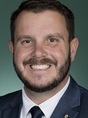
Phillip Thompson Herbert, Liberal National Party, Shadow Minister for Defence Industry
12:09 pm
I move:
That so much of the standing and sessional orders be suspended as would prevent the Member for Herbert from moving the following motion immediately
That this House censures the Government for ripping $748 million from veterans' healthcare through a $5,000 cut on allied health services, forcing veterans to fight bureaucracy to access treatment, betraying the covenant owed to those who served Australia, and balancing the Government's budget on the back of veterans and their families.
'Without DVA, I'd be stuffed. I have 22 scars on my body from various operations and metal in my body. I have PTSD, depression and anxiety, amongst others.' 'In the last four years, I lost my health, my mental health and my 24-year career and now I'm going through a separation from my family, all from military service.' 'These people want to reduce treatment. They are going to have a massive veteran health crisis on their hands.' 'It is just a slap in the face. We did what we did for our country. Now we have to fight the government for the help we need. It just isn't right.' 'If I lose physio, my injuries will become substantially worse, probably ending in more surgery.' 'I'm currently unable to work with my back injury, and my mental state has continued to crumble since service.' 'I've nearly lost my life due to these issues multiple times. Once again, we were thrown in the dirt.' 'If I lose either of my treatments, I can guarantee I wouldn't be here much longer. The country has truly lost our veterans.' 'I'll not be a burden on my family. I will take my life so my family doesn't see me at my worst. I want them to remember me as the man I am today.'
These are the messages, the heartbreaking messages, that I receive every day from veterans who are struggling, from veterans who have asked this government to get rid of this $5,000 cap on their allied health care. These veterans are talking about suicide. They're talking about not being here much longer because of this government's cap. It's simply not good enough. We look veterans in the eye on Anzac Day and Remembrance Day. We say, 'Thank you for your service.' We say, 'Lest we forget.' To me that's a commitment, a commitment that this parliament and their leaders have to veterans. But now it doesn't feel like a commitment. It feels like this government is betraying them. It feels like this government is letting them down. It's because we have an incompetent minister for veterans' affairs, and we have a prime minister who isn't strong enough to make the right choice to sack his veterans' affairs minister and scrap this $5,000 cap on allied health care.
I can't understand why, for any bit of legislation where they've had such pushback and been told that this is not what the veteran community want, they double down. Just before, a motion came back from the Senate to the House of Representatives where the majority of the Senate voted to scrap this $5,000 cap, and the government didn't have the spine to debate it, to bring it on or to stand up and acknowledge they got it wrong and then scrap it. They pushed it to another sitting day, which means it'll just sit there and nothing will happen. It is not good enough. This Labor government is looking veterans in the eye and saying, 'Your service doesn't matter.'
Now, you don't have to take my word for it. You heard from about nine different veterans just before with their heartbreaking stories. When they put on their uniform, serve on combat operations and humanitarian missions, help out through natural disasters, they expect that, if they become wounded, injured or ill, the government will look after them, because that's the commitment that governments give to our veterans, to our Defence Force. Sadly, once again, we've seen, from this government, our veterans being let down.
It talked about suicide in this message. If we haven't lost too many veterans—the Australian people know that and expect action. Yet we've got a government that is pushing people to start thinking like that again, pushing veterans to think that their service or their life—they don't want to be a burden on their family. That's a plan. I am so terrified that that plan will come to fruition.
There was never a consultation process announced. This is a new thing. The consultation is running for, I don't know, however long. And then, at the end of it, I'm sure that the minister and the government will say, 'Yes, veterans don't want this cap,' and I will stand in here and say, 'I know, genius, because they came to Parliament House, they've emailed our offices, they've met with everyone that they can'. They've tried to meet with the minister that didn't want to. You don't need a consultation process. You know that veterans don't want this cap.
This is a cost-saving measure that is placed on the shoulders of veterans—$748 million. That is disgraceful. A government should not ever, ever use veterans' health to prop up or fix their broken budget. That is something that I wouldn't have thought that any government would do. Yet here we are today, not being able to debate a motion coming back from the Senate. We had Senator Babet sitting on the same side as the Greens. No-one would have thought that would occur. But they all know that this is wrong. They know that this cap is going to hurt our veterans.
All this prime minister and the Minister for Veterans' Affairs have to do today is stand up and say, 'We'll scrap the cap. We'll get rid of it, and it's not because of the coalition; it's because the veterans don't want it.' Veterans have asked. Veterans have told. Veterans have demanded. I've had backbenchers on the Labor side come over to me and say, 'Yes, we want to get rid of it,' or, 'Please, don't come to my electorate and mention it.' The member for Isaacs doesn't agree. He thinks that we should keep it. He mentioned that before. I'm happy to go to his electorate and to meet with any ex-service organisation that told him and any other Labor member that this cap should stay, because I'm telling you no-one has.
We've got veterans' families, spouses and children contacting members of parliaments' offices going, 'I'm terrified of what this will do to my mum,' or their dad. If this is occurring, and you know it's wrong, then why wouldn't you just scrap it? Why won't you scrap the cap? You have to do the right thing. This is the time when the Minister for Veterans' Affairs can. He can say, 'It won't happen. We won't have a cap,' because we shouldn't, because, if a veteran's doing it tough, they're in a dark hole, things aren't going well—like I've heard from one of those veterans. He's just had a separation and he's got post-traumatic stress disorder. He has 22 scars on his body and has had multiple surgeries, and he's looking up and he can't see any light because the only light that he had, the treatment that he was getting, is being taken away because of this cut.
We've had the Department of Veterans' Affairs tell people that it'll be several months before they may get a review to be able to get any extra money. You shouldn't have to fight for that. I know what happens next. We go to funerals. I've carried too many coffins to sit in this place and allow incompetence to potentially make our veterans, myself or others that serve attend another funeral—because that's what my fear is.
We don't have to do this. It wasn't in the recommendation. I'm unsure; this could be recommendation 123—the Keogh recommendation, I'm not sure. But I can tell you that no-one, even people that don't vote this way and don't vote that way—this is a bipartisan position. You're either going to do the right thing and scrap the cap, or you're going to dig in. I can tell you now, I wouldn't want to be rocking up on any Anzac days or remembrance days or going to any of your veterans groups, because they are rightly angry. They will be furious.
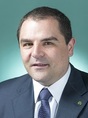
Tony Pasin Barker, Liberal Party, Shadow Minister Assisting for Fisheries and Forestry
November's coming up.
Phillip Thompson Herbert, Liberal National Party, Shadow Minister for Defence Industry
Yes, we have days coming up where we say, 'Lest we forget.' We say, 'We will remember.' I can tell you now it means nothing coming from this government side. 'Lest we forget' is something that we all have a commitment to do. We go to the War Memorial and we see the names etched on the walls. We see their families. We see people crying. They're asking you to be a leader today and scrap this cap.
There is nothing worse than this cap being placed on our veterans. These people who put on the uniform deserve much more respect than you're giving them. Minister, you're sitting here today. I hope that you stand up here right now and agree that this cap shouldn't be there. We should scrap the cap. If not, I hope you stand up and resign.

Steve Georganas Adelaide, Australian Labor Party
Is there a seconder for the motion?

Michael McCormack Riverina, National Party
12:19 pm
I second the motion. The standing and sessional orders need to be suspended. I'm not sure whether the minister is here deliberately or whether he actually has table duty, but I'm very pleased also that the Treasurer is here, because I'd really like to know what the Treasurer is going to do with the $748 million that has been banked as the savings.

Jim Chalmers Rankin, Australian Labor Party, Treasurer
There's been an extra $16 billion in the budget for veterans since 2022.
Michael McCormack Riverina, National Party
Tell that to veterans. At the moment, they can see there's a $748 million cut. You do not point your finger at me when we've got veterans out there hurting. You can cut pointing your finger at me, because there are veterans out there who are absolutely hurting. There are veterans out there who do not know that they're going to have a future. You can actually keep pointing a finger, and you can keep interjecting. But there are veterans out there—
Jim Chalmers Rankin, Australian Labor Party, Treasurer
You left them on a waitlist!
Michael McCormack Riverina, National Party
We did not leave veterans behind. I tell you who is leaving veterans behind. It's this minister. This minister is leaving veterans behind right across the country. But don't take my word for it. Get out to your electorate. You get out to your electorate, and you listen to your veterans because at the moment they are hurting. I spoke to a veteran in your home city who'd been on two tours of duty to Afghanistan. Are you going to continue to let him yell at me, Deputy Speaker? He can be quiet. He is interjecting on me.
Steve Georganas Adelaide, Australian Labor Party
There are far too many interjections from both sides. I will not take any more interjections.
Michael McCormack Riverina, National Party
There is $748 million that is going to be banked as savings, and they shouldn't be savings out of the veteran community. And it's not just veterans—
Jim Chalmers Rankin, Australian Labor Party, Treasurer
There's $15.9 billion extra.
An honourable member: There he goes again. Can you control the treasurer?
Steve Georganas Adelaide, Australian Labor Party
I didn't hear what the Treasurer said, but the member for Riverina has the call. He'll continue his speech. There are too many interjections from both sides. The Treasurer will cease interjecting.
Michael McCormack Riverina, National Party
It's half a million veterans. It's their families. And, at the moment, they are hurting. I spoke to an Afghanistan veteran in Brisbane at a forum, and he couldn't understand why his service had been insulted in this way. He couldn't understand why the medals that he so proudly wore and both the mental and physical scars had been rejected in this way by this government, which has turned its back on our veterans and has absolutely insulted and betrayed our veterans. Our veterans deserve better than this—$748 million over three years. That, from 1 July next year, is what our veteran community is faced with.
They need the allied health. They need the physical help. They need the psychological help. It's all well and good to say, 'We're working on the referrals process,' but if you're a veteran and you live—like our veteran friend did at this Brisbane forum—live remotely or if you live regionally, it is so hard to get a GP at the best of times, let alone a specialist. How are they going to after that $5,000 cap—and you can shake your head all you like, Minister. You can roll your eyes because you did that at the veterans, but you're not going to do it in the parliament when I tell you our veterans are watching. They're watching right across the country, and they know that this cap has to be scrapped.
They know that this cap is so unnecessary, because it wasn't a recommendation of the 122 recommendations handed down after the royal commission. It was not one of those recommendations. What we've seen here this morning is Labor once again kicking this into the never-never, Labor kicking what was a Senate bill passed, an amendment to the legislation that is going to be put through this place—35 to 20. It was rejected. Every non-government member voted against it—35 voted in favour of this amendment. What we've got is a Labor Party, a government, that is hurtling well and truly over $1 trillion looking to make cuts from veteran spending. Shame on them!
Yet they won't listen to the veteran community. They won't even listen to the Senate. The amendments come back here into the House and get kicked into the long grass, never to be seen again. I hope you speak to this motion, Minister. I sincerely hope you do, because there are people out there who are absolutely hurting. As the member for Herbert, a veteran himself, has just said, unfortunately, there are going to be people who have really bad outcomes from this particular cap. Scrap the cap! (Time expired)
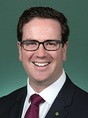
Matt Keogh Burt, Australian Labor Party, Minister for Veterans’ Affairs
12:24 pm
When the parliament discusses the government's enhancements to allied health for veterans, it's important that we speak about it in terms of the policy actually proposed by the government. The government announced, as part of the budget this year, that, from the middle of next year, we will see an increase in funding being provided to allied health professionals by DVA, paying them more to make sure that they can continue to service our veteran community. As part of those changes, we will also remove something that was causing veterans and medical professionals great burden in the 12-session treatment cycle. By removing that, we will be replacing it with a $5,000 threshold—a threshold that will only apply to one in 10 veterans and that will make sure there is still oversight and review of the use of allied health, so we can make sure veterans get the best health outcomes and the best overall wellbeing outcomes from the services they are provided, to support their health through allied health services. This is about enhancing the overall wellbeing of our veteran community, removing a burden on our veteran community and making sure that service providers are there and available.
The Royal Commission into Defence and Veteran Suicide—a royal commission that was resisted by the opposition when they were in government—recommended that fees be increased. That's something that this measure seeks to do. In the four years I've been the minister, we have seen both veterans and allied health service providers approach government saying that they are not remunerated enough and that, in their view, that would see them stop servicing our veteran community. That would be a travesty. The member for Riverina mentioned before the difficulty in regional Australia in accessing medical services. Well, if we don't increase those fees, that is going to continue to be a problem. That's why we've been enhancing the amount paid to GPs to make sure that they service our veterans, and we've proposed to increase allied health fees to make sure that they continue to service the veteran community as well.
When we look at the budget and what we have delivered as a government, we inherited, when we came to government, a shocking state of affairs when it came to supporting our veteran community. Under our government, the Department of Veterans' Affairs is now the best resourced it has been in three decades. That increase in resourcing has meant we have been able to process the backlog of claims we inherited from the previous government. It was fundamentally important that we were able to do that—so important that the royal commission recommended in its interim report that we do it; it did not even wait until its final report.
In addition to that, in supporting our veteran community, we have provided an additional $15.9 billion in service provision since we came to government—services that the veteran community needed, that they deserved but that were not being delivered to them, because the previous government would not process their claims and would not make sure they had access to that health care and support. That means that, under our government, we are expending around $15 billion this year in service and support to our veteran community. That's 50 per cent more than in the final year of the Morrison government—an additional $5 billion. This year alone, we estimated an increase of some $800 million in support to our veteran community.
Whilst the opposition might like to throw around particular numbers in the budget, they are missing the overall support and service. What's fundamentally important is this: in the proposed changes we have outlined, we have been very clear, firstly, that we will work together with the veteran community and with allied health professionals to make sure we have a system that works seamlessly to support our veteran community, and that, in removing the additional administrative burden that was there from the treatment cycle, we will also make sure that anyone who needs additional allied health services and has a clinical need will be able to get them.
We have made sure we have also recognised that those veterans with the most complex circumstances—those that are TPI or eligible for the SRDP, or those that have been designated as catastrophically injured—are exempt from this process, recognising their higher needs, making sure they are supported. We are also being very clear that anyone who needs additional support and is seeking a review at that $5,000 threshold from DVA will not lose access to allied health services while that review is being undertaken, making sure that there's continuity of service delivery when we're supporting our veterans. This can't just be looked at as a single measure on its own. We have been doing work across the board when it comes to supporting our veteran community in so many different ways. The royal commission is a seminal work. It talks about the great tragedy that has affected our veterans—the fact that you can have a situation where defence personnel and veteran community rates of suicide were much higher than we saw across the Australian community. It's why a royal commission was so desperately important, and it's why we took its recommendations so seriously, including the recommendation around increasing fees.
But it's not just been that. By the end of last year, we had already implemented 25 per cent of the royal commission's recommendations. We moved swiftly to establish the Defence and Veterans' Service Commission, which provides that oversight of government implementation of those recommendations. That is a unique body. You've never before seen a government set up a whole separate statutory body just to oversee the implementation of royal commission recommendations. That's how seriously the Albanese government took these issues. We're still on track to have implemented two-thirds of those recommendations by the end of this year, which included setting up the Veteran and Family Wellbeing Agency, which started in the middle of this year. We've just started the inquiry into military sexual violence, something that the royal commission also called for. There is work happening across the board, whether it's in defence policy or legislative changes, whether it's in supporting DVA with extra funding and resources or whether it's in processing claims or enhancing access to medical care. We've done work to enhance access to treatments and support, both for veterans and for serving personnel, so that we can actually deliver those improved overall wellbeing outcomes across our serving community, our veteran community and their family members as well.
These are all things that we should be working together across the parliament to deliver. But, unfortunately, we have seen some rhetoric around particular elements and particular areas being mischaracterised without recognising the important work that we have done with the veteran community. We committed to working with the veteran community when we outlined these changes in the budget to make sure that we got the service delivery elements right, to make sure we had seamless provision of allied health services and were able to maintain those allied health services by increasing the fees being paid to those providers, all of which is critically important. But the mischaracterisation of the threshold—remembering there's already a review right now, and that happens every 12 sessions. We are moving that up to the $5,000 threshold, which reduces the burden on our veteran community. It reduces the burden on the practitioners so that there's more access and availability to those practitioners. These are all things that have been welcomed by those groups. These are all incredibly important things.
But, just in the context of this debate, I think it's also important for everybody in the discussion in this House, in the Senate and in the media to just take a moment while we discuss policy properly—and we should debate policy; that's what this parliament is here to do—to take guidance from Mindframe in their guidance to parliamentarians when discussing suicide and self-harm. They say:
Parliamentarians have a unique responsibility when speaking publicly about suicide and self-harm, including in parliamentary proceedings, when talking to media and in community settings.
… … …
Research clearly tells us that public discussion, if not carefully framed, can increase distress, reinforce stigma or contribute to further suicidal behaviour in the community.
They also say that you should ensure your language does not sensationalise suicide or suggest that there is nothing that can be done and that care and restraint should be exercised so discussion does not inadvertently amplify risk. I urge everybody, in the discussion of the issues that we are debating today and that we have been considering with government and that I have been engaging on in roundtables and other consultations with the ex-service community and with practitioners, to keep those things in mind while we properly discuss how we can collectively work together to ensure that we have the best outcome to support our veteran community.
In that regard, I also remind those opposite and in this parliament we currently have two bills in the Senate that are also about implementing recommendations from the royal commission. Between those two bills, they will implement 20 of the recommendations of the royal commission and support the implementation of a further 20 of the recommendations of the royal commission, and it would be helpful, I think, to the entire veteran community, our serving personnel and our families if we could all work constructively together to deliver these better outcomes to support personnel, veterans and family members.
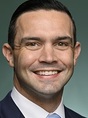
Aaron Violi Casey, Liberal Party, Shadow Minister for the Digital Economy
12:34 pm
The government don't want to hear this, but let's go to facts—the facts in their own budget: $748 million over three years as a saving and $340.2 million every year after. In four years, there will be over $1 billion in savings at the expense of our veterans. They are the facts in the Treasurer's own budget papers that he doesn't like to talk about—
Marion Scrymgour Lingiari, Australian Labor Party
We've run out of time, so I'm going to put the question. The question is that the motion be agreed to.