

Tim Wilson Goldstein, Liberal Party, Shadow Treasurer
10:53 am
I move:
That so much of the standing and sessional orders be suspended as would prevent the Member for Goldstein from moving the following motion immediately:
That this House notes that as of 10.30 am today, Thursday 20 August 2026, Australia's Commonwealth debt has hit $1 trillion for the first time in our history because of the Government's active inflation agenda and their addiction to spending.
Australia is experiencing one of the saddest days in our nation's history. Today at 10.30 am—only about 25 minutes ago—Australia crossed the $1 trillion threshold for Commonwealth debt for the first time in our nation's history.
This is a disaster for our country. We had the Treasurer, who was in here only moments ago, walk out before having to answer to the parliament. We know that the legacy of $1 trillion of Commonwealth debt is a disaster for the Australian people, particularly the legacy it is going to hand down to future generations. The Treasurer was out there today like none of this happened under his watch. He made bold claims about projected future debt levels many, many years ago under previous governments, yet we know that, under his watch, year after year, Commonwealth debt has continued to rise, and while Commonwealth debt has continued to rise, he has had rained upon him windfall gains from the mining industry and from events overseas. There has been $400 billion of reined-in tax revenue. Do you think he used any of that money to turn around and say, 'Actually, we should pay off some of the Commonwealth debt to protect the best interests of future generations,' or did he spend it and stoke inflation so that he could keep a vicious cycle going which is punishing the incomes and the real disposable incomes of Australian households? He chose the latter.
This is the design feature of the Albanese government's budget strategy. At every point they have sought to stoke inflation, tax inflation and then spend inflation, and they've borrowed money to do it. That's why Australian households are going backwards. That's why the wage price index data yesterday showed that Australians have been $1,600 a year worse off since the last federal election, and the cost of maintaining this ever-expanding level of public debt could equate to a $2,000 tax cut for every Australian taxpayer. So think about that. Not only, with inflation, are they taking away $1,600 from Australians' real wages; they're adding onto it, effectively, the liability of $2,000 of interest every single year. It's like doling out credit cards unwillingly to the Australian people. If a bank did that, we'd have a royal commission. But when the Commonwealth government—in particular, the Albanese government—do it, they just shrug their shoulders and move on, even though they are actively stoking the inflation problem that Australians are experiencing right now.
The reality is that this is material and this is real. Australians are paying the crushing consequence of the government's active inflation agenda, and that's why prices keep rising at the supermarket. That's why, when Australians go past the till and they swipe their goods, they're paying more to buy less. Until we see an end to the government's active inflation agenda of stoking inflation, taxing inflation and spending inflation, Australian incomes and Australian disposable incomes are going to go backwards.
Let's not pretend that this is some sort of accident. This government has driven spending to its highest level in 40 years outside of a recession. Since Labor came to office, government spending has risen from 24.3 per cent under the coalition to 26.8 per cent in the current financial year. This is $5,000 of additional annual government spending for every single Australian taxpayer, and what we know is that it's not just what's happening today; it's the deficits that are far out into the future. The deficits will continue for decades under the Albanese government's budget as they rack up more debt to spend today to stoke inflation so Australians become poorer. The 2026-27 budget forecasts deficits of $31.5 billion in 2026-27, $31 billion in 2027-28, $34.4 billion in 2028-29 and $25.3 billion in 2029-30, with the budget not projected to return to balance until at least 2034-35.
We also know that, under the government's own budget forecasts, they will continue to accrue debt well out to the end of the decade—to $1.5 trillion. Let's think about the scale of the debt—that trillion dollars, the threshold that was passed a little over 25 minutes ago. Let's look at what Australians could buy, because it's the scale of this debt and the indifference of the government that shows and reveals just how disastrous the situation is. Every single Australian could get 4,232 Big Macs with $1 trillion. Let's look at schooners of beer. It would be 3,597 for every single Australian. That's how big it is. But let's go to something far more essential. Let's look at the number of PBS prescriptions you could fill per Australian. You could fill 1,439 PBS prescriptions or get 790 GP visits. I dare say that would be more GP visits than most Australians would have in the entirety of their lifetime. Instead, the government has blown it away, and those will never be filled.
The government likes to wax lyrical about how they're on the side of young families. Well, 248 days of child care could be visited for $1 trillion—for every single Australian, we could have 146 weekly food shops. You know those lotteries to win a year's worth of groceries—that's how tough people are doing it right now? With $1 trillion, the government could get nearly half a year of groceries for every single Australian—average groceries—but instead they've just used it to stoke inflation and undermine the living standards of Australians.
This is the problem. Australians now are living the consequence of the Albanese government's active inflation agenda. By design, the government is borrowing from the future not just to pay for today but to make sure they stoke inflation. It is part of a vicious cycle of stoking inflation, taxing inflation and then spending inflation. Even worse than that, they're setting up Australians and future generations to fail, with scant disregard to the consequences. We know full well that today's debt is tomorrow's taxes.
We know full well that, when the government accrues debt today, it not just stokes inflation but becomes tomorrow's taxes. Future generations will carry that burden. Future generations of Australians are going to look at this parliament at this time and ask themselves why on earth there was a government that paid no attention to the national debt and watched it tick over at 10:30 am, about half an hour ago, to $1 trillion and left them with the legacy of such a large debt—and then by design, in their own budgets, made sure they continued that debt into the future. Australians are being sold out by this government, no more so than future generations of Australians, who will continue to live with this legacy.
What Australians need now more than ever is hope. What Australians need now is an understanding of how we're going to change that trajectory. As part of our plan, we've been very clear to make sure that future generations will not continue to incur this terrible legacy, and, particularly, that we stop the cycle of inflation the government is deliberately stoking. Through our tax back guarantee, we will make sure that income tax thresholds are adjusted so that the government cannot continue to steal Australia's incomes like thieves in the night and that Australians won't pay more tax, as they do under the Albanese government, which continues to stoke inflation.
But more than anything Australians need a government that is going to say, 'We're going to pull in the belt.' They should say it to the government before they turn around to the Australian people and tell them to pull in their belts, because it's what we need to do. We need Australians to look not at their feet with pessimism but at the at the horizon with confidence. We need a nation that believes in itself again, but it cannot happen when we have a millstone of debt that this Albanese government continues to stoke.
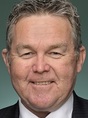

Kevin Hogan Page, National Party, Deputy Manager of Opposition Business in the House
11:03 am
I stand to second this motion. I certainly hope the government don't guillotine this after I second this. I hope we do have this debate within this chamber. They will apportion blame to us, of course, as they do for everything. But I think even the Treasurer and the Prime Minister should acknowledge that this is a significant event that has happened in our country today. As the shadow Treasurer just said, we are ticking over into $1 trillion of debt for our nation and all the taxpayers and citizens of Australia. This is a serious issue, and I certainly encourage the government to have a debate about it. We already know what the Treasure is going to say, unfortunately. He's not the most humble man nor the person with the greatest humility I've ever seen. Mind you, that speaks for a lot of ministers on the other side.
This parliament, this chamber, should have a serious discussion about this today. Yes, the Treasure will get up and say this is all the coalition. We haven't been in government for nearly five years now, but this will all be our fault. It's everything that we've done and nothing to do with what's going on now. But, as the shadow Treasurer just indicated, the scary thing is that the projections for the next 10 years show, on this government's parameters, it's going to get worse. There's no plan here from the current government for it to get better. There's a plan that this debt level is just going to continue to grow. As you know, Deputy Speaker Boyce, we have a plan. We do not want debt to continue to grow like it is.
The other thing that the shadow treasurer indicated was—and, again, it's scary—that we export. When you think about a business—and it's the same for an economy—what do you sell? Where do you make your money? How does Australia make its money? I would hazard a guess that a lot of people on the other side don't even realise where Australia makes its money. What are the core industries in our country that generate something that no-one else does? Well, other people do, but we get to be able to sell it, especially offshore. That generates us money. Deputy Speaker, I know you know this. Your own electorate plays a big role in this. The big items that we sell in Australia that generate wealth for Australians—and, again, a lot of city MPs certainly don't understand this—are coal, gas, iron ore, and food and fibre. They're the four sectors of the economy. All of those come from regional Australia. The member for Parkes is sitting beside me. He certainly understands that. I know the shadow treasurer understands that. We understand that.
Unfortunately, a lot of people on the other side of the chamber, even though that's how we make all the money, don't like them. Some of them don't like any of the four. A lot of them don't like two of the sectors where we make our money in Australia. We want to hear the plan. We should be debating this issue today because of the seriousness of it.
The other thing that I need to mention is this. As we tick over these debt levels, the other serious thing that's going on that we should all be aware of and Australian taxpayers should certainly be aware of—and the government should be explaining this as well—is that the cost of this debt is going up every day. What do I mean by that? I know the member for Parkes is aware of this too in another program he's working on. It's government bond yields in Australia. When the Australian government is having to go to the market, just as a note to the other side, this money doesn't fall from trees, by the way. When you're borrowing money, it doesn't just appear. When you're spending more than what you earn, as when you're a business or a family, you have to go and borrow it. The Australian government is certainly doing that at levels it's never done before. The rates on that debt are going up. What does that mean? Again, some of those opposite might not care. What that means is you lose money when the interest rate on your debt increases. Our debt level is increasing and the interest rate on that is increasing. It means you have less discretionary money to spend on the important things that you need to do.
I think we need to have the debate today about this. The government solution to this, because it's in their DNA, is to say: 'I know. We'll just tax everyone more. We'll just increase taxes on everything.' The problem with that is that history's proven how that works too. If you increase taxes and continue to increase taxes, that makes you less competitive. As a country, if you become really expensive to do business in or people don't have enough money to spend in their personal budget or in their small-business budgets because you're taxing them more, guess what? They slow down and start to generate less income. Therefore, there's a really dangerous spiral that you get into of getting a smaller economy, with more debt and more interest on debt. If you start taxing people more, you're going to actually make this worse.
But I know what's going to happen in 10 seconds. The government's going to shut this down. They don't want to talk about this debt level. They don't want to talk about the precarious situation. We have a plan, and we want to talk about it.
Colin Boyce Flynn, Liberal National Party
The question is that the motion moved by the member for Goldstein be agreed to.