

Milton Dick Speaker
3:11 pm
I have received a letter from the honourable member for Goldstein proposing—the Leader of the House, on a point of order?

Mr Tony Burke Watson, Australian Labor Party, Leader of the House
Under the standing orders it's quite specific that, for a matter of public importance, a member of parliament can only nominate one matter. The member for Goldstein, today, has submitted two letters. In the first letter, he suggests that the debate on the issue he wants actually not be held today but be held in November of last year. That was a sitting day. It would appear, on the face of it, given that the standing order says that a member can only put forward a matter of public importance, if we are to agree with what the member for Goldstein wants, then, effectively, in the true tradition of them at the moment in looking back into the past, the issue he wants to discuss should be debated on 26 November 2025. That's what he's written.
Milton Dick Speaker
Order, the member for Herbert! I will clear this up for the House. The Leader of the House is correct. There were two letters by the member for Goldstein. There was an incorrect date for the House, and in the interest of transparency the member for Goldstein issued another letter, and I have approved that. It was an innocent mistake. This does occur from time to time. I make mistakes all the time and I always own up to them. So the leader is correct, but we found a way forward.
It's my policy to try and allow debate to occur in the House, namely that I have received a letter from the honourable member for Goldstein proposing that a definite matter of public importance be submitted to the House for discussion, namely:
The Albanese government's bad faith 2026/2027 budget of broken promises, higher taxes and fewer homes that pulls the ladder of aspiration from Australians.
I call upon those members who approve of the proposed discussion to rise in their places.
More than the number of members required by the standing orders having risen in their places—

Tim Wilson Goldstein, Liberal Party, Shadow Treasurer
3:14 pm
Let's talk about not understanding a budget. Let's talk about this prime minister, who during question time has dismissed the impact of his new taxes on young Australians. We have raised in this chamber the impact of the new taxes that this government is putting forward on Janet and her daughter with Down syndrome. On Monday, the Prime Minister turned around and said it didn't really apply to Janet or her daughter. Today, we asked a further question on the impact on Janet and her daughter of the government's new taxes, and he has again dismissed and denied this case. The reality is there is no-one who is going to be spared from the new taxes that this Albanese government is applying to Australian households, small businesses and those who are getting ahead. There's a simple reason: this whole budget is built on the basis of the betrayal of the Australian community.
When I'm saying that the government has betrayed the Australian community, when we say the Labor Party has lied to the Australian community, there should be an uproar—

Sharon Claydon Newcastle, Australian Labor Party
No, Member for Goldstein, we're not having the—I'm not going to repeat your offence against the standing orders, but it's been the subject of long debate, and you will withdraw.
Tim Wilson Goldstein, Liberal Party, Shadow Treasurer
I'll withdraw and say there has been a deceit, a dishonesty, an untruthfulness, a misleading—
Tim Wilson Goldstein, Liberal Party, Shadow Treasurer
a deception of the Australian community. You would think there would be some sort of outrage from the Labor members in this chamber at the mere suggestion, but they know what happened 50 times over before the last election. They know, 50 times over, with red hot rage, what the Prime Minister insisted would never happen. And now they have introduced a budget, and they are all going to vote for it and become complicit in the deception, the untruthfulness, the deceit of the Australian community.
Think about it. Right now, so many Australian households are doing it tough. Australians have had their real wages fall backwards by three per cent under the Albanese government. An average couple with an average mortgage is $32,000 further behind under the Albanese government. There are small businesses that are desperately struggling. We have record small-business insolvencies in this nation. Eight go out of business every business hour of the day. We have a collapse in confidence, under the ANZ, Westpac and NAB surveys, and what Australian small businesses and Australians are looking for right now is a gasp of hope. But instead the Albanese government has given them a budget that they do not understand.
I talked about how they are taxing trusts on people with a disability. We know that the Treasurer has already called his own budget a confection, a misleading document. In his budget, he claims that, in the future years, the rate of inflation is going to be 2.5 per cent, but we know that he's released—
I know! We all question whether this is believable; I accept that. But that's okay; don't worry, Member for Nicholls: not even the Treasurer believes his own budget documents, because he's since released modelling assuming the impact of his capital gains taxes will be three per cent. We've seen consistent errors and failures on the part of this government because they don't understand the economy and they do not understand how Australians get ahead.
Just look at their own budget papers and what they show. Their own budget papers show—and they're sold on this deception—that it will help young Australians get ahead. Well, their own budget papers say that rents are going to increase under this budget. Think about that. I don't know about you, but, the last time I looked, most young Australians tend to rent before they go on to buy their first home. Those opposite are going to kneecap young Australians by increasing their rents. When they then go on and save for a deposit to buy their first home, those opposite will undermine and kneecap young Australians again by increasing the taxes that apply to capital gains. Then, if they dare do something as outrageous as work for sweat equity to get ahead—if they're going through employee share ownership schemes so they can advance their interests, accrue wealth and achieve that sense of aspiration that can only be achieved through work—the Albanese government has an answer. They're going to kneecap young Australians that are working to get ahead by taking up shares as part of their employment.
This morning, the Leader of the Opposition, the shadow minister for employment and industrial relations and I held a roundtable with people setting up startups and small businesses. They talked in particular about the role that share ownership schemes have in attracting the best talent to Australia to make sure that they can get the people they need to work in their businesses so that those businesses can grow and they can create the businesses that will not just be small businesses or startups today but grow into medium-sized enterprises and take on the world. But the Albanese government's answer to that is: let's take away the incentives for young Australians to get ahead. And that's before we even get to the great centrepiece of this budget.
The great centrepiece of this budget is housing. It's allegedly a budget that is focused on how it helps young Australians buy their first home. As I think I just heard the member for Fisher point out, what a joke! What a joke, because the reality is that the government's own budget papers themselves say that 35,000 fewer homes are going to be built. We can make a point about whether they tell the truth or not, but we know they certainly weren't deceiving the Australian people when they said they would lead to the building of fewer homes, and this is a problem. No matter how many new taxes they impose on Australians, whether it's a tax on aspiration, a tax on families, a tax on homes, a tax on rentals or a tax—and 'a tax' does sound an awful lot like 'attacks'; you could probably use them interchangeably—and an attack on the aspiration of the next generation of Australians, this government has no concern for the impact that its budget has on the future of the Australian economy.
What we saw revealed all of a sudden after the budget was finally handed down—because there are hundreds of pages of detail we needed to go through bit by bit—was this kernel or, as they call it in the video game industry, an Easter egg. An Easter egg is something that's designed to be hidden, but you can find it if you look hard enough. It's a common popular culture term. Well, there was an Easter egg of a 30 per cent death tax for those who have testamentary trusts. We've used examples in question time. We know the Prime Minister doesn't want to hear them. He doesn't want to see them. He wants to pretend they don't exist. But they exist to help families manage their estates and make sure that people can get ahead. Often, it's the most vulnerable whom they're designed to protect. I've used the example in question time and in this speech earlier already of Janet and her daughter with Down syndrome. What's the Prime Minister's solution? It is to pretend it doesn't exist?
The reality is that we know the Albanese government is seeking to kneecap the next generation of Australians to get ahead. So many Australians now have written to me identifying their concerns through our notthetax.com.au website, submitting their stories, including couples that have lost big chunks of their businesses. A couple in their late 50s wrote to me. They talked about how they've never claimed a single government payment—not one. They hold private health insurance and they paid $35,000 out of pocket for the wife's reconstructive breast cancer surgery because Medicare was grossly inefficient. They own one investment property, which is their financial security. They haven't increased the rent, but now they're going to get whacked with more and more taxes.
We have a constant stream of stories of Australians who are just trying to do the right thing and aspire to something greater for themselves and aspire to something greater for their children. But they're the ones who are targeted under this Labor government's budget. We all know the history: when Labor runs out of money, they come after yours. And that's the problem. The government has now fully revealed its character to the Australian community. They have fully revealed to the Australian community their priority, and it is not the Australian community. It is not a pathway where the next generation of Australians can get ahead. It is not a pathway where young Australians will look to the horizon with hope and dream big dreams, because all they can see on the horizon is more taxes from the Albanese government. It is a government that's not just not on their side; it's actively using the budget to kneecap their ambition, their aspiration and their future.
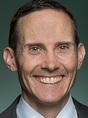
Andrew Leigh Fenner, Australian Labor Party, Assistant Minister for Productivity, Competition, Charities and Treasury
3:24 pm
What we just heard then was a diatribe by a dying tribe—a diatribe by a dying tribe that went to the last election promising to raise income taxes on all Australians and to spend taxpayer dollars on long lunches for bosses. But the fact is that the Liberal Party has always been the party that has opposed significant reform in Australia.
Indeed, when we go back to 1942, when the Curtin government put in place uniform income taxes, the coalition were against it. Arthur Fadden said:
… taxpayers under 1,000 pounds pay too little tax and those over 1,000 pounds pay, relatively speaking, too much tax.
Even back then we had the coalition parties saying that low-income workers should pay more so high-income earners could pay less.
Then in 1986 we've got the fringe benefits tax put in place by the Hawke government, and we had Jim Carlton standing in the House of Representatives saying:
We are totally opposed to this new business tax, this new payroll tax, which will destroy investment and destroy employment.
And we had Albert Adermann, another coalition member, in 1986 saying:
… these inequitable taxation propositions must be reversed and abolished.
The party of long, taxpayer funded lunches for bosses has always had its snout in the public trough.
When the capital gains tax was introduced for the very first time and the debate came to this House in 1986, Jim Carlton said:
This is a day of infamy for this Government … We are opposed to this capital gains tax. We will vote against it here and in the Senate, and should the legislation pass we will repeal it on our return to office. Make no mistake: After our Bicentenary in Australia there will be no capital gains tax.
It's one of the fundamental pillars of revenue raising in this country, and the coalition were against it when it came in. David Hawker said of it in 1986:
… this tax is plain stupid …
Then when Labor, under the Keating government, put in place universal superannuation—superannuation not just for those who came from money but from those who aspired to money—Richard Alston said in 1992:
… we are still fundamentally opposed to the whole concept of compulsory superannuation.
And Noel Crichton-Browne said:
This legislation will impose an added cost, an added burden, on the employers of Australia, significantly reduce employment and, naturally, increase unemployment.
The fact is that they were dead wrong on all of those things. Uniform income tax, fringe benefits tax, capital gains tax and universal super are now fundamental pillars of the Australian taxation system. The coalition has long been on the wrong side of history. They are, after all, the party that opposed Medicare, native title and the Sex Discrimination Act.
What we are doing in this budget is reducing the tax burden for over 13 million workers, supporting 75,000 more homeowners into the housing market and delivering a productivity package which will boost growth in this country. That productivity package is absolutely fundamental to ensuring that dynamic businesses can thrive. The national competition policy reforms are estimated to add around $13 billion to the economy every year, which is an average benefit of $1,200 for every household every year. That involves cutting financial sector paperwork, reducing duplicative data requests, streamlining foreign investment and ensuring skilled workers don't need separate licences and fees to work across state borders.
Just to take one example which is so important to this government's housing supply agenda, before this budget, it was necessary for Australian builders to pay to access the construction rules to which they had to comply. This budget makes access to all standards referenced in Australian legislation free. That means that a builder can read the rule book without paying for the privilege. That'll save small trade businesses up to $1,600 a year in access fees.
We've seen productivity in the housing construction sector fall 12 per cent over the past three decades, even adjusting for the fact that modern houses are bigger and better quality. The Productivity Commission has estimated that new regulation can add hundreds of thousands of dollars to the cost of new homes. This budget speeds up approvals and encourages the better use of modern construction methods. A new report out today by Danika Adams and Jonathon Mahon from CEDA on modern methods of construction finds that they can make houses that are 20 per cent cheaper and produced up to 50 per cent quicker. This budget will help the uptake of modern construction methods.
The budget will also cut the time it takes migrant trade workers to enter the workforce by up to six months. We've got a shortage out there of electricians, plumbers and carpenters. Faster recognition means more people earning and more homes being built. This is all part of the government's housing supply agenda.
Many small businesses will benefit from the $20,000 instant asset write-off being made permanent, which gives them more certainty when deciding whether to buy the ute, the coffee machine, the laptop or a new piece of machinery.
We are investing in the institutions that shape Australia. We're investing in individuals through free TAFE, better skills recognition, reforms to occupational licensing and the huge power of work the education minister is doing from early childhood right up to university. We're investing in infrastructure, building more homes, improving digital systems and supporting the transport and energy networks that connect people to opportunity.
Our changes to capital gains will ensure that the system is fairer, taking it back to the way in which it taxed real gains from 1985 through to 1999. For some asset classes, this is going to be better for investors than the current arrangement. If your gain is less than twice the inflation rate, you'll be better off as a result of Labor's approach of taxing real gains. We're taking away a distortion that arose from the combination of the 1936 change that introduced negative gearing and the 1999 change that put in place a distorting capital gains tax discount. That led to the housing market blowing up, pushing the price of homes outside the reach of regular Australians.
Those opposite are fighting for investors' fourth homes; we on this side of the House are fighting for first home buyers getting their first home and getting into the housing market. The coalition used to support this, back in the days of Menzies, when the coalition oversaw an increase in the homeownership rate in Australia. But, over the last couple of decades, we've seen a fall in the homeownership rate, and under the previous government they went years without even having a housing minister.
This budget invests $2 billion in enabling infrastructure, speeding up housing approvals and cutting red tape. It was a pleasure for me to join the Treasurer and the housing minister at Belconnen at a new development in my electorate just near the Belconnen owl that will see 315 new units, some of them social and affordable homes, improving housing affordability.
Our budget has been praised by many outside experts. Chris Richardson says:
There's a lot to like in this budget.
… what we haven't had is a budget that tackles some of the 'to-do' list that Treasury and the Productivity Commission have had sitting in their top drawers for many years.
This does that.
Aruna Sathanapally, the CEO of the Grattan Institute, says:
… the government delivered a broad and ambitious budget. It is meaningfully working its way through the to-do list for making Australia's economy more dynamic and thereby more resilient.
Ken Henry says:
Finally, a budget of economic reform.
… Jim Chalmers' budget takes a very big step. And it is a step in the right direction.
The CEO of Chartered Accountants ANZ, Ainslie van Onselen, says:
There are genuine positives in tonight's Budget, and we acknowledge the government's willingness to address some long-standing imbalances.
Luci Ellis, chief economist at Westpac and former assistant governor at the RBA, says:
I think the tax changes on negative gearing and capital gains are really significant. These are changes that everybody thought was politically impossible. … Suddenly a government has actually dealt with that. It's an intergenerational issue that they're addressing.
We on this side of the House are addressing longstanding tax reform and boosting housing supply. Those on that side of the House are continuing their tradition of opposing every significant reform in Australian history. They will go down again on the wrong side of history.
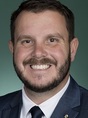
Phillip Thompson Herbert, Liberal National Party, Shadow Minister for Defence Industry
3:34 pm
Breaking a promise can have dire consequences. When veterans around the country learnt that this Labor government had gone back on its commitment to provide allied health support and to provide psychosocial support, they were rightly concerned and angry. Since yesterday, I have been contacted by thousands and thousands of veterans who are worried. They're worried about what will happen when they fall over, they need a hand up and that hand is no longer there. If you need to see a psychologist and you have a shoulder injury, a knee injury or any other injury on top of that, then your $5,000 cap that this Labor government has put on will be capped out, and you won't be able to get the support you need.
The minister has said: 'You've just got to ring up. You've just got to go to the Department of Veterans' Affairs and put a request in, and you may be able to get some extra help and support.' A person at DVA told me that that could take several months. If you're in a dark place and the only bit of light that you can see is the treatment that you're getting and if that gets taken away, what happens next? You go into a worse place; you self-medicate. And some people may not be able to pull themselves out. This is the reality.
The member for McEwen can interject as much as he wants, but I've sat in that dark place, and we couldn't get pulled out of that place.
Sharon Claydon Newcastle, Australian Labor Party
Member for McEwen and Member for Herbert, I'd appreciate it if you both stopped the interactions across the table.
Phillip Thompson Herbert, Liberal National Party, Shadow Minister for Defence Industry
Through the chair, Deputy Speaker Claydon, the member for McEwen has continually interjected about—
Sharon Claydon Newcastle, Australian Labor Party
Excuse me, Member for Herbert. I have dealt with the issue. You do not need to school me on the standing orders.
Phillip Thompson Herbert, Liberal National Party, Shadow Minister for Defence Industry
I'm not. I'm going through the chair.
Sharon Claydon Newcastle, Australian Labor Party
I have asked the member for McEwen to stop. I ask you to stop talking to him directly, which also encourages this.
Phillip Thompson Herbert, Liberal National Party, Shadow Minister for Defence Industry
Sure—encourages it. Okay. Thank you, Deputy Speaker—
Phillip Thompson Herbert, Liberal National Party, Shadow Minister for Defence Industry
I said 'okay'.
Sharon Claydon Newcastle, Australian Labor Party
Well, just continue calmly in your speech. Members opposite will have times to respond to this. You are getting an opportunity to put your viewpoints now. I'd like it done respectfully on both sides.
Phillip Thompson Herbert, Liberal National Party, Shadow Minister for Defence Industry
It does not surprise me at all that members of the Labor Party, of the Labor government, would interject when I'm talking about veterans mental health and how bad it is out there, would try to defend capping veterans mental health support and allied health support and would get so angry about having it called out.
We saw it in here yesterday. We saw the Prime Minister get upset when he was called out on this issue, and we saw the Minister for Veterans' Affairs too. But, in the community, veterans are upset—and rightly so. When those in here go home after being a member of parliament, tonight or when back in their electorate they'll sleep easy; everything's fine. In the veteran community, we're taking phone calls from people that are doing it tough. We're taking phone calls from spouses and loved ones who can't find their loved one, their veteran, who's gone missing because they're having a bad time. We're the ones who are on the phone, not those members of parliament that sit across and want to interject, those who want to defend price capping for our veterans and who won't allow them to get the support they need. I think it's a disgrace. I think it's disgraceful.
Those members who think that the veterans affairs situation now is fine, with these price caps that are going to see people in a worse place, and who want to yell out and interject should be taking these phone calls from veterans who are in a dark place. You're not there. You're not on the ground. You're not doing it for real. The number of people that are continually ringing me and other veterans around the country and complaining about this disgraceful act from this Labor government—it is not just a broken promise. It's not just deceitful. It is a life-changing, life-altering disgrace.
I am so ashamed that we've had a minister for veterans affairs try to defend price capping by saying it was in the royal commission report. It wasn't. It should not be there. They should redo it, because veterans deserve better than this Labor government.

Carina Garland Chisholm, Australian Labor Party
3:39 pm
I want to also thank our very hardworking Broadcasting staff here in the House of Representatives. I find it quite unfortunate that someone who does seek to become Treasurer of this country and who brought this motion to the House today is seemingly promoting misinformation and appears quite ignorant of the history of his own party. I want to thank the assistant minister for providing some really important historical context for this debate today. If anyone is operating in bad faith when it comes to aspiration, it is those opposite right now. Our budget is all about helping with the cost of living, strengthening Medicare and giving Australians a fair go at buying their own home. We are encouraging aspiration and opportunity.
Under those opposite, Australians suffered three terms of government without a housing minister, and, over nine years, less than 400 social and affordable homes were built—only 373, to be precise. Governments are not elected to protect broken systems. Governments are elected to respond to the challenges that are in front of them, and Australians know the housing market is not working fairly. Young Australians know it, renters know it, families trying to save for a deposit know it, my community knows it, and this side of the House knows it. Right now, first home buyers are being priced out of the market. They're being priced out by those who are backed by tax breaks, and the current combination of negative gearing and the capital gains tax discount has been giving investors an advantage over Australians who are really trying very hard to buy a home to live in for themselves and their families—to build a good life.
Our government, with the Minister for Housing, is acting responsibly and trying to help Australians put a roof over their heads—to have a dream for themselves and their families for the future. We're limiting negative gearing for future investments so that it can only be used for new builds that add to housing supply. We're hearing a lot of misinformation, frankly, from those opposite. We are actually trying to make the system fairer, to put more homes into our communities so that people can live near their families, near their loved ones and near their jobs; can start small businesses; and can dream of a future. Investors will still be able to access concessions by investing in new housing, adding supply to the market. We know that will mean more houses will be built, there will be more supply in the market, and, again, there will be more opportunity for younger Australians to finally get a fair opportunity at homeownership.
We're not interested in protecting a system that hasn't been working for people. Aspiration in this country should belong to everybody. It should belong to a teacher, it should belong to a nurse, it should belong to an apprentice, and it should belong to a small-business owner. We're already delivering five per cent deposits for first home buyers, and we're building 100,000 homes set aside specifically for them. We have 415 Australians in my community of Chisholm who've bought a house under this scheme, and I congratulate them on buying their first home. I do wonder what those opposite—what the member for Goldstein—would have to say to those people who've been able to use our government's policies to set themselves and their families up for the future.
We're also undertaking Australia's biggest ever housing build—1.2 million homes, including 55,000 social and affordable homes. We're getting those homes built faster by funding the essential infrastructure people need while training more tradies through free TAFE and supporting apprentices with a $10,000 incentive. We are not pulling away the ladder of aspiration like those opposite seek to do. We're extending aspiration to more people. We're delivering real relief for working Australians right now, including with more tax cuts from 1 July this year for every single Australian taxpayer.
We're strengthening Medicare; we're making free urgent care clinics a permanent part of Medicare. When we were elected, we said we wanted to build a better future to ensure that no-one was held back or left behind, and, through this budget, we are continuing that important work.
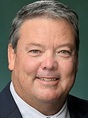
Andrew Willcox Dawson, Liberal National Party, Shadow Assistant Minister for Manufacturing and Sovereign Capability
3:44 pm
Before I start highlighting the litany of promises broken by the Albanese Labor government, I would like to offer my big thanks to the member for Herbert, Phillip Thompson, for standing up for the veterans. This budget would be the cruellest budget that I've ever seen. Those opposite want to cap veterans allied health at $5,000. It's an absolute disgrace. These fine men and women have put their bodies on the line. They put their lives on the line. They put their minds on the line for this country so we can enjoy the fantastic life that we have. These freedoms and liberties, they've been hard-fought for by our Defence Force personnel. The very least that those opposite can do is support these veterans when they come home. I'm concerned. I'm very concerned that, if some of these veterans have got to make a choice between physiotherapy, podiatry and potentially psychology—I don't want to see one more veteran suicide. That would be an absolute disgrace.
When I first got elected in 2022, one of my election commitments was to get a wellness centre, an RSL in Mackay. Mackay is home to about 4,000 people, and they do not have one. Fortunately, the Labor government got elected, and that was quashed. To make it worse, The Oasis in Townsville, another place in my electorate that was looking after veterans, has had their funding cut.
But let's just look at the promises. 'No new taxes' was taken to the election. But this Labor government's budget has just brought down a list of broken promises. This budget is a high taxing, high spending budget only a Labor government could be proud of. The broken promises include the promise was no change to negative gearing, capital gains tax and trusts, but here we are. When the government, when Mr Albanese himself, our prime minister, the Prime Minister of this great country, was asked are there going to be any changes, he said, 'How hard is it' 50 times. Well, I can tell you, it is very hard and people are doing it tough.
The whole budget is anti-aspiration. It's an assault on young people. For negative gearing, when changes are made, an investor can't then claim the interest as a tax deduction. They've got to get their money somewhere else, so they'll put their rent up. That is going to make it harder for the young people then to afford, once they pay their rent, the deposit. It's ridiculous. The capital gains tax discount again—younger people who can't get into the housing market and who are trying to save for a house deposit are buying shares and other investment streams. Now the capital gains tax discount is going to be taken away from them. It's going to be harder for them. That's just the cold reality of investing and how it is. The Albanese Labor government is taking away all the wealth creation tools that are being used by my generation. It's an assault on the youth.
And in this budget, mining investment falls to zero by 2028. Mining is our biggest export. Iron ore!

Andrew Willcox Dawson, Liberal National Party, Shadow Assistant Minister for Manufacturing and Sovereign Capability
Coal! Those thingies. That's right. We heard that from the Treasurer. That's our biggest export, iron ore. Then we've got coal and gas, and what about critical minerals that we hear the minister quite often talking about? We need the critical minerals. In my electorate, we need mining. In Australia, we need mining. Without mining, who's going to pay for all the hospitals and schools?
Michael McCormack Riverina, National Party
Who's going to keep the lights on?
Andrew Willcox Dawson, Liberal National Party, Shadow Assistant Minister for Manufacturing and Sovereign Capability
Who's going to keep the lights on? Exactly right, member for Riverina. Let's also look at the death tax. Don't forget the death duty by stealth. Oh, that's right. In this budget, buried deep down, it's called an inheritance tax. Well done to those opposite. While we're looking at broken promises what about the famous 275? Remember that promise in 2022? If you vote Labor, you will end up $275 better off on your power bill. What we need here is for the Prime Minister to come into this chamber, look the Australian public in the eye and say, 'I told an untruth.'

Matt Gregg Deakin, Australian Labor Party
3:49 pm
I think we've just had a confirmation of the coalition's long-distance relationship with reality. If they are seriously pretending that the old settings were producing broadly fair and sustainable outcomes for the young people of Australia, they're living in la-la land and, once again, proving themselves to be the group serving nothing and serving no-one as a coalition. It's no wonder their political future is increasingly in the abyss, when their only vision for tomorrow is tax distortions that have, for 25 years, made it harder for the next generation to get a home of their own. It plainly ignores the fact that, for my generation and those who are younger, getting into a house has been a whole lot harder than it was for our parents' and grandparents' generations.
It's not that the investors have done anything wrong. This was by bad design. In 1999, the Howard government came in and said, 'Let's introduce new CGT settings. That'll help increase the number of shareholders.' Well, it didn't. What it did was create, with negative gearing settings, a magic combination that made investing capital in existing housing simply irresistible. So, of course, people made the rational decision to invest in equal housing. But what we saw was a huge injection of capital into the existing housing market, producing no productivity whatsoever, increasing debt and making the dream of a home to live in all but impossible for working Australians everywhere across the country. Now we've got Sydney as the second-least affordable city in the world—second only to Hong Kong. We've got housing in Adelaide approaching levels of affordability that are greater than those of Paris, London and New York. That's where we're at. These are distortionary; we know they're distortionary.
The member for Goldstein's motion talks about bad faith. That is when you hold one position but secretly believe another. Of course, the member for Goldstein's not-so-best-selling book reveals he understands the reality that those systems have been screwing the next generation and have been distorting the tax system to make it harder and harder for people to actually achieve the aspiration of a home to live in.
When I go out to Deakin and I speak to young people about their aspirations, they don't talk about discretionary trusts, they don't talk about getting into their fourth investment property, they don't talk about the niche issues they're trying to use as an excuse for the preservation of a distorted tax system they know not to be working for young Australians. To suggest that young Australians have been the big winners out of the current tax system is beyond absurd. If they're so out of touch as to actually believe that, they should consider early retirement as soon as possible. While the Nationals have been calling for an immediate election as a referendum, I suspect their Liberal colleagues would not be calling for the same, otherwise it would be 'so long, farewell' to the Liberal Party, because their identity crisis is yet to culminate in any sense of who they are or what they stand for.
This Labor government is about making the aspiration of homeownership actually achievable for the next generation—people who have done everything right. They went to university, got a good job, got on a good wicket, but still, despite doing everything right, they have no chance of successfully bidding in an auction because they're competing against investors who are effectively subsidised by their own tax dollars. They've got the taxpayer behind them because they know that, if interest rates go up, half of that's going to be deductible. So we even see monetary policy blunted by the fact that a whole lot of interest on mortgages charged to investors is not creating the same amount of pressure as interest charged to those who are owner-occupiers, who cop the full whack of every single interest rate increase—not true, because of the current settings of negative gearing for investors.
We've seen the distortion of our entire tax system over a number of years, and what is the Liberal Party's plan? They say, 'I know what we'll do. We'll go back. We'll ignore every reality of this tax system and decide that it was good enough for young people. They're happy.' They'll find a couple of examples of some angry people. It's the idea that, if some people don't benefit from the removal of a tax concession, the whole tax concession must be preserved at all times and that all tax reform is impossible. What utter nonsense! We have got a generational opportunity to actually make the dream of homeownership possible again for the next generation, and we are committed to achieving just that. Things have to change. It is not the young people of Australia who have been benefiting from these negative gearing and CGT settings, and the frankly absurd sideshow that we're seeing from the coalition shows that they simply don't get it.
But, of course, in a lot of these speeches, they haven't even been talking about housing. They were outraged about it for the first couple of days after the budget. Then they realised young people weren't falling for it. They could send all the AI messages in the world, but young people know they have been screwed. We have spent most of our adolescence, our 20s and our early 30s knowing that we were being screwed. We went to auctions with our friends and saw them outbid time and time again by investors. The system simply isn't fair. We're privileging some forms of income over others.
This is a simple budget. It says: a buck is a buck is a buck and we're going to have closer-to-equal taxation, whether you make your income from owning things or from working. It is entirely fair. We're maintaining an adaptation of CGT to ensure that it reflects inflation so that, essentially, you are tax based on actual profit, not on any distortions from inflation.

Tom Venning Grey, Liberal Party
3:54 pm
This budget reveals the true nature of this government. It is a budget of broken promises, lower living standards and fewer homes built. It is in their own budget papers. But, more than that, it is an ideological budget. It is frighteningly socialist. These numbers speak for themselves. Because Labor can't manage money, we face a decade of deficits worth $150 billion. We are looking at debt of $1.25 trillion. That's $1,250 billion of debt. Every Australian will pay this. The yearly interest bill alone will hit $42 billion. That is $80,000 every single minute. Instead of fixing the problem, Labor is trying to balance the books by burdening the economy with $77 billion of extra taxes. Government spending is now at its highest level in 40 years.
Crippling inflation is destroying regional households. It is forecast to hit five per cent. That is higher than in the United States, the United Kingdom and Germany. Under Labor, energy is up 40 per cent and rent is up 23 per cent. Food, health insurance—they're all surging. Australians with a typical mortgage are $32,000 a year worse off. Real wages are down three per cent. Things are spiralling. If you feel poorer, it is because you are poorer. For people in rural and remote Australia, this means less money for groceries that are already overpriced compared to cities and towns. It means less money for school fees, sports supplies, school uniforms and school sports. It means less money for fuel, making trips to the doctor or dentist in town all the more difficult. It is an unfair burden.
To make matters worse, it is now abundantly clear that Labor has lost control of immigration. By the end of their first two terms, they will have brought in two million migrants, overshooting their own targets while failing to build the homes we need to keep pace with this population growth. Their own budget confirms that their new housing taxes will mean 35,000 fewer homes over the next decade. It is really baffling reading. One of the most disturbing parts of this budget is its demographic and age based welfare. They are pulling the ladder up on younger Australians and small business owners who are simply trying to get ahead and taxing older generations who have worked hard and saved.
They can't manage money, so they are blaming boomers and taking money from the business people who are our regional economies. That is not reform; it is an assault on aspiration. It is a tax on savings. It is a tax on getting ahead. It is a broken promise. Labor is shutting the door on young people who are already locked out of the housing market and acting like they're Robin Hood. We oppose the housing tax. We oppose the tax on family savings. We oppose the tax on trusts, which will smash—
Michael McCormack Riverina, National Party
There's not much trust in this budget.
Tom Venning Grey, Liberal Party
There's not much trust in this budget at all. It will smash small-business owners. You do not fix bad policy with tweaks; you fix bad policy with an axe. We will axe the tax.
Labor mistruths, Labor porkies, Labor broken promises or Labor incompetence—call it what you like. The Australian people have lost trust in this Labor government. The people I speak with are hoping that these taxes, these rising costs and these attacks on small businesses are merely incompetence, because, if it's not incompetence, it truly is evil. In a video circulating online, the Prime Minister said to a young couple:
Don't let the little details worry you, freak you out.
Well, Prime Minister, consider Australians pretty freaked out. The goalposts keep changing. The economy is a bin fire. Stop the war on aspiration. Axe the taxes, and stop the lies.
Sharon Claydon Newcastle, Australian Labor Party
I'm not going to continue to tell members of the opposition to withdraw. I will be removing you from the chamber the next time it happens in this debate. Member for Fisher, if you're coming up next, listen to that.

Claire Clutterham Sturt, Australian Labor Party
4:00 pm
If you stand still, you don't move forward. Things stay where they are, and opportunity passes you by. If you never step out of your comfort zone, never take a risk, never seek to challenge, then things will stay the same. Taking risks and managing risks is all about navigating uncertainty. It goes beyond just avoiding the risk, to balance what could go wrong, the downside, with what could go right, the upside. What has been lost in the chaos of unbalanced reporting, scare campaigns and dedicated social media crusades deliberately designed to spread misinformation is that this budget contains many positives for Australian individuals and businesses. There are many things that could go right, but, if you don't take the risk, if you don't look for these opportunities, you will never know what could go right. In not knowing this, you can't move forward.
This government is prepared to take risks in order to move forward. The status quo, particularly with certain tax settings and housing, is not working. Doing nothing, keeping things the same, will mean that nothing will change. So the government asked, 'What could go right if we undertake reform and take some political heat in the name of trying to move forward?' So what could go right with this budget? Well, 75,000 first home owners could be in their own home within the decade. What else? Businesses could benefit from loss-carry-back provisions, the $20,000 instant asset write-off, regulatory reforms resulting in a reduction in compliance costs, and tax incentives for investment by venture capital. Businesses will also continue to benefit from the existing four capital gains tax exemptions.
And right now, across Australia, genuine and meaningful consultation is taking place—as it should—with the business community about some of the more controversial features of the proposed capital gains tax reform so we can understand the required settings for things to go right. We understand and we want to create an environment which acknowledges and rewards risk taking, particularly by small business, who so often provide meaningful employment to people—who then pay income tax—and who provide the products and services our community needs and demands. That is why genuine, meaningful consultation is happening, and I would like to thank the 20 or so businesses who joined me at my Sturt small-business forum last Thursday to do just that. The discussion was productive, honest and professional, and it resulted in meaningful feedback. Conversations of this nature are going on around the country.
Now, let's talk about promises. When we came to government, we promised to cut income taxes. That promise has been delivered, with more delivery to come. We promised to make medicines cheaper. That has been delivered, with PBS scripts now costing just $25—or $7.70, frozen until the end of the decade, for concession card holders. We promised to increase bulk-billing rates. This has been delivered in spades, including in my electorate of Sturt, where the number of fully bulk-billed practices has doubled this year to 22. We promised to reduce student debt, and this has been delivered, with thousands of students receiving a 20 per cent cut to the cost of their education. We promised more urgent care clinics across the country and we have delivered them, including one on the Norwood parade in Sturt, which is now a permanent feature of the healthcare system. We promised free TAFE and we have delivered free TAFE, with thousands of Australians answering the call to obtain a qualification in critical industries, such as nursing, early childhood education, and building and construction. We promised paid prac and we have delivered $300 a week to students out on unpaid, lengthy teaching, nursing and social work placements. We promised to make it easier to buy a home, we have delivered and we will continue to deliver, with thousands of young Australians taking the keys to their first home, including just under 500 in my electorate. We're talking about promises; this government made them and has kept them.
Bold reform means taking risks and asking what could go right as well as examining what the downside might be. That's important. We'll continue to take risks to deliver for the Australian people because we want and need to move forward, and that is the difference between the progressive and conservative sides of politics.
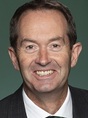
Andrew Wallace Fisher, Liberal National Party
4:05 pm
(): I'll be on my best behaviour—I promise, Madam Deputy Speaker!
Over the last four years of this government, we have seen the sharpest decline of living standards across the OECD and we've seen the highest rate of government expenditure in 40 years, outside the pandemic. I don't need to stand here and tell this to members on both sides of the House, because we're all hearing it. When we get out into our electorates, we're all hearing how much our constituents are doing it tough.
But, since the budget was released a couple of weeks ago, small businesses have been coming to me and telling me how fearful they are about the changes that are being made by this government. This government has effectively brought in these changes to increase tax when they had no mandate to do so. At least Bill Shorten, as the Leader of the Opposition at the 2019 election, had the courage to take these changes to the people. He was beaten because the Australian public said: 'Thanks, but no thanks. We're not interested.' But the Labor Party realised that, if they took these policy changes to the election, then the same thing would happen to them, so they didn't do it. These are tax changes by stealth. This is surreptitiousness. There's no other way to describe it.
The Prime Minister and the Treasurer had been asked time and time again whether there were going to be any changes to the tax of capital gains, negative gearing or trusts, and they said, 'No, that's not part of our policy.' We know that it was part of the Labor Party's policy. It has been part of their policy, since the 1980s, to make these changes. But with this thumping majority that Australians have given this government, with 94 seats, this government wasn't going to waste it.
To those members opposite who are sitting on wafer-thin margins—a little Monty Python joke there—you should be very worried about your seats because you know that Australians in your electorates are coming after you because they are very, very angry. They are angry because this government is driving up the cost of everything—rents, mortgages. We've seen 15 interest rate rises under this government. The average Australian mortgage holder is now paying $29,000 a year more on their mortgage than they were under the coalition, and that's after tax. Just think about that—$29,000 more.
Those members opposite talk about consultation and how this is all very usual and normal for a government to bring out a budget and then consult afterwards. Why didn't they consult before? Why didn't this government go out and speak to stakeholders about these changes before the budget was announced? I'll tell you why. It's because those members opposite lack courage. They lack the courage of Bill Shorten, because they knew that, if they took these changes to the Australian people, the Australian people would say, 'Thanks, but no thanks.' So they didn't.
As the father of a child who lives with disabilities, I can tell you one of my fears, and one of the fears of just about every parent who has a child who lives with disabilities, is: What's going to happen to my adult child—hopefully—after I go? How are they going to be looked after? That is one part of the importance of trusts, and now this government is going to change the way that those trusts are dealt with.
One thing that seems to have escaped the net here is the pre-CGT assets. Prior to 19 September 1985, any assets you owned were pre CGT. Now, as a result of this budget, from 1 July 2027 those assets, even if they were purchased pre 19 September 1985, are going to be taxed at a marginal rate. This is a breach of trust. It's a breach of faith, and this government will pay— (Time expired)

Zhi Soon Banks, Australian Labor Party
4:10 pm
The 2026-27 budget, delivered by the Treasurer a fortnight ago, was focused on reform and resilience across our economy and our society. There has been plenty of commentary since budget night, and this MPI by the shadow Treasurer today is a perfect example of the commentary that is distorting the reality of the budget handed down by this government.
Contrary to what the topic of this MPI would have you believe, this government is delivering a package of tax cuts that will benefit all Australian workers, including in my great electorate of Banks. These measures include income tax cuts for every taxpayer—some of which have been delivered already—with a further cut that will come into effect in just 36 days and another one on 1 July 2027. The $1,000 instant tax deduction has been delivered as promised and will make tax time simpler and taxes lower for 6.2 million Australian taxpayers from the 2027-28 financial year, enabling more Australians to keep more of what they earn. It is remarkable that, despite the combined benefit for an average Australian earner being up to $2,816 as a result of these changes, those opposite still try and spin that this budget is increasing the tax burden. I guess we will have to wait and see if those opposite will vote against tax cuts for Australians yet again later this week.
The author of the MPI would also have you believe that the budget delivers fewer homes—a demonstration that they have failed to read the budget papers in any detail. In fact, those opposite have been talking about what is in the budget papers in just about every single MPI and member statement since the budget while omitting key components. They never seem to mention the 65,000 new homes supported under the new Local Infrastructure Fund. They also never seem to mention the $47 billion going into the Homes for Australia Plan. And they don't mention the 660,000 homes built since this Labor government came in, nor the fact that commencements are up 26 per cent compared to this time last year. It could not be much clearer: this is a government that is committed to building more homes for Australians and getting on with the job of rectifying the shocking absence of investment by the former Liberal government.
There is plenty more in this budget. We're building on our record investment in Medicare, keeping our promise to make medicines cheaper, delivering record hospital funding and making urgent care clinics that so many of us are benefiting from across this country a permanent part of our healthcare system. We are also investing in public schools, with an extra $20 billion over the next 10 years to deliver on our Better and Fairer Schools Agreement, and our reforms to help students catch up and keep up at every school in this country.
We've heard a lot about aspiration and broken promises from those opposite. This rings incredibly hollow from a party that made a whole raft of promises about budget management and surpluses and reducing debt, but then broke all of them. I've spoken to many of my constituents about the budget directly at train stations, while doorknocking and on the phone in response to correspondence since the budget, and I'll keep doing so, because this is a transformational budget. It is a budget that fixes the system that even the shadow treasurer has admitted in the past is broken and stacked against first home buyers. This budget is supporting aspiration. It is making sure that first home owners are given every chance to succeed.
Sharon Claydon Newcastle, Australian Labor Party
The time for this discussion has now concluded.