
House debates Matters of Public Importance
Prime Minister
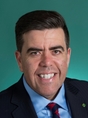
Milton Dick Speaker
3:11 pm
I have received a letter from the honourable Leader of the Opposition proposing that a definite matter of public importance be submitted to the House for discussion, namely:
The Prime Minister's failure to lead during times of crisis.
I call upon those honourable members who approve of the proposed discussion to rise in their places.
More than the number of members required by the standing orders having risen in their places—

Angus Taylor Hume, Liberal Party, Leader of the Opposition
3:12 pm
In times of crisis, Australians look to leaders for clarity, for conviction and for direction. The strength of a nation's leadership isn't measured in the good times; it's measured in the tough times. The truth is, across our country right now, Australians are worried. They're anxious. They're deeply concerned about what the current challenges mean for them, for their families, for their businesses and for their communities. They're confused by mixed messaging coming from the government. These aren't abstract concerns. They're felt around the kitchen tables. They're felt at the cafes, at the pubs—wherever people gather, they're talking about it, and they're confused, they're worried and they're anxious.
Australians remember, with great trepidation, the long days spent confined to their homes during the pandemic. They recall governments determining where they could go, who they could see and how they should live their daily lives. These experiences have not been forgotten. Australians want reassurance that the government has a coherent plan—one that is firmly anchored in the national interest and one that doesn't return us to the days of heavy-handed government intervention. Right at the heart of it, they want transparency. They want to know what's going on. That's how Australians are. And it's fair enough too. We live in one of the greatest democracies in the world, and transparency is a central principle in that democracy.
In these circumstances, transparency means understanding what is going on with this fuel crisis. And we've heard the Prime Minister in recent days say that national coordination is essential and the Commonwealth government is responsible for national fuel security. But, two days later, he was back to denying any leadership role, saying the response to the fuel shortages was a matter for the states and territories, not a question for him. Then he was insisting that everything was fine and there was no crisis. Mistakenly, a few days later—I don't think he was supposed to do it—the energy minister said there was a national crisis. He said that. He realised what he'd said, and they went into a complete tailspin about it.
Time and time again, we've heard the government say that there's lots of fuel, that there's more than there's ever been and that no shipments have been delayed or cancelled, or they've already been replaced. Today we asked a question, as we have every day, about what we are seeing in our supply chain and what fuel there is. We asked the Prime Minister to commit to releasing, on a daily basis, the latest information on the number of servos that are stocked out without fuel, the detailed fuel stock holdings by location, the number of ships which are bound for Australia and how many have been cancelled or delayed. I would have thought that, in the middle of a fuel crisis, they are pretty reasonable things for the Australian people to want to know about. You know what they were saying over there? They were saying, 'No, that's too political.' Several of the ministers yelled out: 'No, that's way too—we can't have the Australian people knowing the facts. That way, we can't spin our narrative.'
Australians deserve to know what's going on. They are completely confused. The fact that a minister can stand here at the dispatch box and say that there is more fuel in our supply chain than there was before the crisis and then acknowledge under pressure that there are over 600 fuel stations without fuel—it is no wonder Australians are anxious. They're confused, and they want to know what is going on. Rather than being honest and open with the public, the opposition has had to pry information out of the government question by question in parliament, and they sneer. Every time they have to actually say what is going on, they sneer. They're sneering at the Australian people. They are sneering at people who want to know whether or not they can take their family on a holiday or to meet other family members or to go to church or to other events at Easter time. These people want to know—all Australians want to know—whether or not they can do that.
The Prime Minister's lack of leadership was again on show in the response to our proposal for dealing with affordability of fuel at the bowser. We laid out a very clear plan, fully funded so it wouldn't fuel inflation, to bring down the price of fuel by over 26c a litre. You know what one of the ministers said that day? They said it was a 'thought bubble'. Then they went away and had the weekend off. They came in on Monday, and they suddenly realised in a panic that they actually had to bring down the price of fuel. They brought down the price of fuel. We showed leadership, and they showed a complete absence of leadership in dealing with this.
Alongside transparency and responsibility, leadership requires accountability too. The lack of a willingness to take accountability from this government is like nothing I have seen. In the course of my career, I've not seen anything like it. Soon after this crisis began, they said that all the inflation that you're feeling and all the interest rate rises that you've seen were all caused by the crisis. But we know that, before this began, interest rates were already rising. Inflation was at the highest level of any developed country in the world. We also know that the Treasurer has found a long list of people to blame for his complete failures on managing the economy. He's blamed Xi. He's blamed Trump. He's blamed Putin. He's back to blaming Trump now. He'll always find someone to blame. The one thing he will not do is take accountability and fix the problem. There is no accountability at all.
Australians are feeling the weight of this in their electricity bills, in their health insurance premiums, which are up 4½ per cent today, and in the cost of putting a roof over their heads, which is $28,000 a year after tax. I'm always reminded this is after tax. They're having to pay extra because of rising interest rates under this government. The lack of leadership from this treasurer and this prime minister has impacted Australians lives for the worse for the last four years. Not only had Australians been grappling with rising inflation, high inflation and rising interest rates going into this fuel crisis; they have also been suffering from an economy that just does not work for them. As I said in this place the other day, whilst the economy has grown by 7½ per cent, population in this country, mostly immigration, has grown by exactly 7½ per cent. It is no wonder Australians are having to work harder for less. Australians are struggling to put food on the table. So many families are struggling, and they are struggling now to put fuel in their cars.
Australians are watching and they're worried. They are looking for leadership. They're looking for clarity. They're looking for action. They're not looking for confusion, contradiction and delay, and this government has repeatedly failed to provide the leadership that they need. I call on the government to get on with the job. On top of following our lead by bringing down the price of fuel, they should immediately make the fuel stocks—what's available across the supply chain: in servos, on the way to the servos and in ships coming to the country—transparent on a daily basis. It needs to be made transparent on a daily basis. They then need to move the fuel to those servos. We know there are 600 servos without fuel—that's the latest count, although we've seen other counts published of 800 or even 900 servos without fuel. There is a complete lack of clarity about this. But we know it's a lot because we see it when we're getting out and about around our electorates. It is time to move that fuel that they keep talking about to those servos so Australians can have confidence that it's there.
They need to come clean about what happens next. If they are going to impose heavy handed mandates on Australians, they need to tell Australians that. Tonight, at seven o'clock, the Prime Minister has an opportunity to do these things. These are the tests for him tonight: showing transparency, accountability, responsibility and telling Australians where this goes next—because right now they have simply had enough.

Matt Thistlethwaite Kingsford Smith, Australian Labor Party, Assistant Minister for Immigration
3:22 pm
Oh, the irony of the Leader of the Opposition moving a motion regarding leadership during a time of crisis! This is the man whose policy response to increasing our nation's fuel reserves was to store more of our fuel offshore, in another country, the United States. Imagine if the 'minister for offshore fuel' over there were the Minister for Climate Change and Energy now. With an international oil crisis due to the war in the Middle East, instead of being able to release 20 per cent of our fuel reserve, as our government was able to do over the last couple of weeks, if the Leader of the Opposition were the energy minister we'd be begging the United States to release and ship fuel to Australia, and the response from the United States could have been, 'Get your own oil.' That could have been the response that we'd got. But thank God we have a responsible Labor government in charge, which had the foresight to bring Australia's strategic fuel reserves back here to Australia, onshore, where they belong.
During times of international crisis, Australians want stable, responsible leadership and cooperation, and that is exactly what the Prime Minister and our government are delivering during this difficult period. As soon as the war broke out in the Middle East, we convened the National Security Committee of cabinet to develop a plan to secure our fuel supplies and to keep prices as low as possible. Since that day, we've listened to the experts and consulted with the states and territories, but, most importantly, we've listened to the Australian people. We know that they are feeling pain because of the increase in international energy prices due to the war, and we understand the difficulties that this is creating for families, for households and for businesses. But we've developed a plan in consultation with the Australian people and the states and territories to maximise the supply of fuel, to minimise the price pressure, to crack down on price manipulation, to eliminate energy bottlenecks, to protect regional communities and industries and to prepare a plan for all contingencies.
The conflict in the Middle East has reduced supply and inflated international prices for oil, and no nation, including Australia, has been able to escape that reality. We know that this is hurting households' and businesses' budgets, so we're putting in place measures to reduce prices. Today we've halved the fuel excise to 26½c a litre for three months, and that is already starting to flow through to prices at the bowser. We've cut the heavy vehicle road user charge to zero for three months to lower the cost for truckies, who are essential to keeping food on the shelves, and there is financial support as well. We're providing financial counselling for farmers, who we know are doing it tough due to supply constraints in rural and regional areas.
We're also acting to increase supplies throughout the Australian market. We've released 20 per cent of Australia's strategic fuel reserves, about 760 million litres, predominantly of diesel. We're able to do that because we brought that strategic reserve back to Australia. Rather than having a voucher system where we would have relied on the United States to not only release the fuel but then ship it to Australia, we've now got the stockpile here. Those are the actions of a responsible government for a contingency such as this. We've temporarily changed the petrol and diesel fuel standards to get more fuel flowing. We've legislated new fuel security processes and powers to allow governments to underwrite the purchase of fuel on international markets to give supply confidence and to keep buying fuel for Australia's needs. And we're engaging with international partners. Over the course of the last couple of weeks, I've met with the Japanese minister, regarding fuel supplies, and representatives of the Republic of Korea to ensure fuel supplies to Australia.
We're acting to stop price manipulation. We've doubled penalties for price gouging to $100 million. The ACCC has launched enforcement investigations into major fuel suppliers over anticompetitive behaviour. We've consulted the states and territories to develop a national fuel security plan endorsed by those governments, including LNP governments, and we've coordinated a response for supply by removing bottlenecks where they were occurring in the regions. As well as that, we've appointed a national fuel supply taskforce coordinator, who's working with the states and territories to ensure consistent supply and provide regular updates.
But, most importantly, we're consulting with the Australian people. Our MPs and senators have been working with their communities regarding supply constraints and feeding that in to the minister for energy. We're working with the states and territories energy representatives and the premiers and chief ministers. We've worked with business groups, farmers and the agricultural sector, and they are on board with the plan. The only ones who aren't on board with the plan seem to be the opposition.
This is what the Business Council of Australia's Bran Black said on 23 March:
… that's the work that Australia's companies are doing collaboratively with the government. And that's the point that I want to stress. This is a time where we really do need to adopt a 'Team Australia' moment. We need to come together, we need to be working together, we need to be collaborative, we need to be engaged and we need to recognise that it's only by being together and working together that we'll get through it.
… … …
… the challenges that we're experiencing are largely driven by increased demand.
That's the view of the Business Council of Australia, a peak business body.
Then we've got the Australian Chamber of Commerce and Industry's David Alexander, who said on Monday:
Fuel supply is at a national level continuing, but obviously there are hotspots where there are gaps in distribution and the government's working to plug those gaps. …
… … …
… the government announced it would underwrite the purchase of oil in alternative markets. … that's a very smart move by the government.
That's the view of the Australian Chamber of Commerce and Industry.
What have the National Farmers' Federation said about the government's plan? They said:
The National Farmers' Federation welcomes the appointment of Anthea Harris as the Fuel Supply Taskforce Coordinator.
… … …
We acknowledge the global factors at the core of these issues, and that the need for a calm and considered approach to supply chain issues is imperative in responding to global trade and import disruptions.
Even the deputy leader of the Liberal Party is on board with our changes to policy. Senator Jane Hume said recently: 'Interestingly, when you cut the fuel excise, you actually potentially reduce inflation. So the first effect is that it actually cuts inflation. It's great news for Australian families and small businesses who are going to pay less for fuel now.' Darren Chester, the Nationals leader in the House of Representatives, said:
I think from an Australian consumer's perspective, they will welcome the relief.
So we have the business community, the farming community, the Liberal Party and the National Party all on board with our government's approach to dealing with this international fuel crisis—all except the Leader of the Opposition. Isn't it ironic that the Leader of the Opposition talked about accountability? This is from the man who, when he was the energy minister, tried to hide increases in electricity prices for Australian consumers until after an election. He cannot come into this chamber and talk about accountability given his track record when it comes to electricity prices.
What our government is doing is ensuring that we are working with the Australian people. Tonight, the Prime Minister will speak to the nation, the Australian people, about the difficulties and the challenges that our nation is facing. Most importantly, he will outline the actions that our government is taking—strong actions that are collaborative with the states and territories—to ensure that we do everything we can to boost supply, to reduce prices and to remove bottlenecks.
The opposition are being critical. They have become rather hysterical over the last couple of days in their criticisms of the government. They're very good at the criticism. They're very good at parliamentary speeches. But what we haven't seen from the opposition is a plan. Where is your plan? What is your plan for the Australian people to get through this difficult situation? I'm not aware of any policies that have been released by the opposition, because they have no credible alternative plan. They have no detail, they have no pathway and they have no solution. Most importantly, they have no leadership.

Michael McCormack Riverina, National Party
3:32 pm
The member for Kingsford Smith, the assistant minister, ought to know that the fuel excise cut was what the coalition asked—demanded, implored—the government to do, and the government then saw fit to do it. It was the plan put forward by the coalition. The road user charge was also proposed by coalition members to make sure that we could keep our trucks on the road.
Speaking of keeping trucks on the road—I spoke to Andrew Duff from Goolagong. He's got a couple of trucks in that little town on the Lachlan Valley Way in the Cowra shire, and this is what he said to me. Labor members ought to listen to this. He said: 'We've got no reception; we've got no services. We've always bought bulk fuel off BP Lowes, and we're not hoarding. We've always paid our bill. I've always paid my taxes. I've been in business. I've had my own truck since I was 26, and I'm 41 now. This is the first time in 15 years that I'm staring down the barrel of financial ruin. That's hard to swallow because we've never defaulted on anything. I went to check the account three weeks ago because I knew what was coming. What a lot of these politicians don't understand, or maybe they do—I'm talking about this Albanese government—is that the margins weren't there before this happened. The base inflation is killing us. When I started out, I used to buy a 20-litre drum of Cat DEO for engine oil. It was $80. I bought oil; one of our trucks was out. We buy bulk everything now. It's the only way to save. It cost me $200 for 20 litres of oil the other day. The margins and the insurances have literally, and I'm not being dramatic in this sense, collapsed the industry. They have. But the thing is that they haven't realised it.'
Andrew Duff and his wife, Claire, are good people. They are emblematic of people right throughout regional Australia. They can't afford to pay for the fuel for their trucks. That's if they are lucky enough to have fuel. Goolagong, in the Central West of New South Wales, has been out of diesel and fuel for three weeks, and that's simply not good enough.
When the Prime Minister comes in here and says that he and his government are transparent—well, yes they are, because people can see right through them! The issue is about supply, accessibility, availability and affordability. All of those things have disappeared in regional Australia. It's just like the leadership of this Prime Minister and his government, because they have been missing in action right throughout regional Australia.
And it's not just the truckies. It's also the farmers because it is sowing season. I know a lot of those opposite don't realise how crucial it is to have diesel at this point in time, in April and early May when the seeds go in the ground to grow the crops that are then harvested later in the year. That's how it works. But it can't work, and it won't work, if farmers have no diesel to put in their tanks to drive their heavy farm machinery to sow the crops—to direct drill and to scarify. Then, later in the year, they won't be putting their headers out in the paddocks because they won't have a crop to strip. And that is so tragic because the fuel security crisis will lead to a food security crisis, and that will lead to a national security crisis. And this is all on Labor's watch.
What does the Minister for Climate Change and Energy do? He appoints Anthea Harris. My goodness! As if she's not busy enough already doing the review into the Water Act, he gives her his own job; he outsources his own job, for her to do it as well. That's not good enough, Minister—simply not good enough. It's as if the people of the Murray-Darling Basin haven't got enough on their plates and on their minds. Now the person who's supposed to be doing the Water Act review is now doing another task outsourced by the hapless minister. It's simply not good enough. This is the same minister who couldn't stop the boats when he had the responsibility to do so. Now he can't tell us what boats are coming and what isn't coming. It's simply not good enough.
As a little aside, it's Easter this weekend. I just finished speaking to Rhiannon Druce from the Junee Licorice and Chocolate Factory. She said their sales for chocolate Easter eggs are at an all-time low because people simply can't afford them. The other thing is that people aren't going through their little shop because they can't afford the fuel to get out to that place. That is just a tragedy for that business. It's emblematic of what's happening right across regional Australia.

Sally Sitou Reid, Australian Labor Party
3:37 pm
I have listened very closely to the contributions from those opposite, and I know that they speak with great passion for their constituents and farmers. If only they could convert that passion into a plan to bring more fuel into this country in the short-term, because they don't have a plan.
During times of national crises, Australians want us to pull together. They want us to work together—the coalition, the crossbench— across the parliament in the national interest. And Australians do that best. We've seen that in natural disasters, with mates helping mates. We saw that during the global financial crisis, when the opposition, at the time, supported the bank deposit guarantee. And we saw that during COVID and lockdowns when the Labor opposition, at the time, supported JobKeeper to make sure that people were still getting paid. These were big shocks to our country, external to anything caused by any government at the time, but we all pulled together to get through.
What we are facing at the moment is another big challenge. The Executive Director of the International Energy Agency, Fatih Birol, said:
This crisis, as things stand now, is two oil crises and one gas crisis put … together.
This is a time when we should be pulling together and working in the national interest. And we are. Even the member for New England, the One Nation member, is pulling together and willing to pitch in. The only people who aren't are those opposite. I want to be very specific when I refer to those opposite, because the crossbench have also been willing to contribute. I am talking about the Liberal and National members. Let's look at what they've been saying. Matt Canavan said:
Now thanks to Labor's war on fossil fuels Australians are at breaking point.
What a ridiculous statement! We are in this situation not because of our climate change agenda but because of the war in Iran. Let's get the facts straight. Senator Michaelia Cash said:
… the government needs to come clean with the Australian people, and I have no confidence …
At a time when we need people to trust in government, when we need people to listen to our messages, what do they do? Undermine trust in our political system, in our democracy and in our government. That is a complete and abject failure on their part. She went on to say:
… get Chris Bowen in a blasted tanker and get him to drive it to those stations.
They have completely misunderstood the lessons from their time in COVID, when Scott Morrison went around talking about not holding a hose and the constituency in Australia punished him for that. It's not that they want you to actually hold a hose. They want you to show leadership and be in the country, not in Hawaii. That's the message they were trying to send you. They don't actually want Chris Bowen to go around driving a tanker. That is ridiculous. They didn't want Scott Morrison to hold a hose. They wanted him to show leadership. Chris Bowen is showing leadership. He's in this country. He's standing up and showing leadership every day by getting more fuel supply into this country.
Those opposite have been alarmists. They have been breeding mistrust in the community, and they have been causing people to panic buy and stockpile. It's little wonder that they cannot find leadership. Whilst they all have 'leader' in their titles, it's not about having 'leader' in your title; it's about showing up, the actions that you choose to take and the things that you choose to say. I could very well come up here and talk about the failure of the previous coalition government. I could talk about the fact that they didn't keep fuel reserves onshore—that they kept them in Texas. I could talk about their failure to incentivise Australians to electrify faster. I could talk about the fact that they let four of the six oil refineries leave our shores. But that would be petty. That would be politicising the issue. I'm not about pointscoring. I'm all about leading.
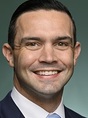
Aaron Violi Casey, Liberal Party, Shadow Minister for the Digital Economy
3:42 pm
The member for Reid did just go there! Although I would remind her that two of those refineries were announced as closures under the Rudd-Gillard-Rudd government, so those opposite should be very careful about criticising. The member for Reid talked about commentary in crises, and I was prepared because I thought this might come up today. I'm going to read out a few quotes from someone that gave commentary during a crisis—COVID, when we all needed to band together.
We've heard from those opposite that you shouldn't be criticising leaders during COVID—that it's a failure of leadership if you criticised during COVID. Let's play bingo. Who said this? 'At this moment of crisis, the Prime Minister has failed to lead.' That was the then opposition leader, Anthony Albanese, during COVID. That's one. 'The Prime Minister has no plan, just more confusion and blame shifting.' That's two. It was opposition leader at the time, Anthony Albanese. Let's go with three. 'This government will blame any weakness on crisis, but that is disingenuous at best.' Who was that? Opposition leader Anthony Albanese. I've got a whole page. I'm not going to read them. I hope the member for Reid takes these to the Prime Minister and holds him to account for his commentary during COVID, because, let's be honest, we are sick of the sanctimony from this prime minister. His own words show the hypocrisy of this prime minister and show a complete failure in leadership.
Let's talk about this failure in leadership. This prime minister is not a leader. At best, he's a manager. At best, he looks to manage the situation and spin it to his own advantage, and we've seen that this week. They do say that imitation is the greatest form of flattery. Well, the Prime Minister paid the coalition a great form of flattery—working proactively, offering policies to solve the challenges that we face—by imitating and copying our policy on Monday to cut the fuel excise and reduce the road user charge to take pressure off the Australian people. It was announced on Friday by the coalition. The opposition leader wrote to the Prime Minister. Three days later, on Monday, it became government policy. That is about leadership by the opposition leader—working constructively, bringing forward a policy that will take pressure off the Australian people. It was such a good idea that the Prime Minister took it, so well done, Prime Minister.
But, surprisingly, Member for Riverina, there have been some members in this House that have criticised that policy. Surely not, in a crisis where fuel prices are above $2.50 and diesel is above $3.
Aaron Violi Casey, Liberal Party, Shadow Minister for the Digital Economy
Well, we can't name them, because they are nameless Labor backbenchers. They were happy to background against the Prime Minister and the Treasurer in the Australian, but they didn't have the courage to put their name to the quotes. We'll read those. This is a quote from an unnamed Labor backbencher that was backgrounding against the Prime Minister—the Prime Minister should start watching his back! They said, 'Surprised we've done this given how many of us were against it.' There we go! Here we hear the truth. The Labor backbenchers are actually against cutting the fuel excise. If you're struggling to pay your petrol bill, just realise that the Labor backbenchers didn't want the 26c-a-litre cut.
Here's another quote from the unnamed backbenchers. There are multiple backbenchers providing quotes. They said:
To say most backbenchers are perplexed would be an understatement.
Two things have happened there if they're perplexed. If those backbenchers that are backgrounding and white-anting the Prime Minister are perplexed, that proves that it was not part of the Prime Minister's plan, and he took the coalition policy. Imitation is the greatest form of flattery. It also means that those opposite on the backbench are clearly not talking to their communities. They are clearly not talking to their communities and understanding that Australians are struggling, truckies are struggling, the diesel price—
A government member interjecting—
I'm making stuff up? I'm literally reading quotes your backbenchers provided. Talk to your colleagues. We'll go to the third quote, for the member for Hunter:
We've studied article after article that says this doesn't help, it's a … short term sugar hit.
Three unnamed Labor backbenchers are happy to background in the Australian. They've gone very quiet because they apparently don't support cost-of-living relief for the Australian people. Well, the opposition does, because we know our communities are doing it tough. We know that they need support. That's why the opposition leader led. He wrote to the Prime Minister, requesting this policy. The Prime Minister backflipped and followed us. But we know those opposite don't actually support relief for the Australian people. They said it in their own words. Could you be more out of touch?

Dan Repacholi Hunter, Australian Labor Party
3:47 pm
When people in my community talk to me at local events, at mobile offices, at Cessnock, Singleton or Morisset Bunnings, they're not interested in political games. They're not interested in motions like this. They're not interested in cheap political pointscoring. What they are interested in is very simple. They want us to get on with the job. They want us to listen. They want us to act. In times like this, when a crisis is coming from beyond our shores, Australians expect their government to step up and lead with practical action. Right now people are feeling the pressure. They are seeing it every time they fill up the car. They are seeing it in their businesses. They are seeing it at their kitchen table when they're working out what the week ahead looks like. That's what's been driving the conversations I've been hearing back at home.
The one thing I'll say about the people of the Hunter is this: they will always let you know exactly how they're feeling—thank you for that, too. They'll tell you straight up that fuel prices are hurting and cost of living is tough, and they just want to know what's being done about it. I've heard it from small business owners, tradies and families juggling mortgages and groceries all saying the same thing. They do not expect miracles, but they do expect us to take them seriously and do something practical. I've had people say to me: 'Just keep it simple. Just listen and do what you can.' That's exactly the approach I've taken.
Last week I took those conversations directly to the PM. I've spoken with the relevant ministers as well, and I've made sure those voices are being heard. The important thing is they are being listened to and action is being taken. That's how this government works. We listen and we act because this situation of the conflict in the Middle East is pushing up fuel prices right across the world, and that is not something that we can control, but what we can control is how we respond. What I've seen and what my community is seeing is a government that is responding.
We've halved fuel excise for three months, taking off more than 25c per litre of fuel. That's relief straight up. That's money straight into people's back pockets. We've cut the heavy vehicle road user charge to zero, because we know that, when transport costs go up, everything else follows. We're cracking down on petrol companies doing the wrong thing, with tougher penalties and real enforcement. And we're working with states and industry and our international partners to make sure fuel keeps getting to where it's needed most. At the same time, we're continuing broader cost-of-living support, whether it's tax cuts, cheaper medicines or strengthening Medicare.
Now, that didn't happen in a vacuum. That happened because people spoke up and because this government is all about listening and acting. And that's the difference, because what Australians expect in times like this is not noise. They expect us to step up. They expect us to work together. They expect us to focus on them.
Instead, what they're seeing from those opposite is the same old behaviour: oppose everything; knock everything; offer nothing—and that's at a time when Australians just want us to get on with the job. People see straight through that. They know it doesn't help them pay their bills. They know it doesn't help them make their fuel cheaper. They know it doesn't make their lives easier.
What helps is action. What helps is listening. What helps is getting on with the job. And that's exactly what this government is doing. I've seen it firsthand. I've taken concerns from my community straight into conversations with the Prime Minister and ministers, and I've seen those concerns turn into real decisions. That matters, because it shows people that their voice travels from their street to their local member and through to the decisions at the highest level. That's what good governments do. That's what people expect. That's what we are delivering, because it's about keeping Australia moving and supporting communities like mine.
So, yes, this is a challenging time, but what matters is how we respond. And this government is responding by listening to Australians and acting on their interests. That's what leadership looks like: not noise; not politics; just getting on with the job. That's what I'll continue to do for my community.
My community is telling me, every single day that I'm speaking with them, that they actually want us and the people on the other side from us to work together on this. We, right now, are in a national crisis. It's not something that we ever should be arguing about. This is the second time in less than five months that we've been in a situation where we should be working together, and it's utterly disgusting that those opposite are playing political games with people's lives right now. It is putrid. You can see why their numbers are going down, down and down in the polls. You can certainly see it. You guys need to have a good hard look at yourselves and think about what Aussies want, because Aussies want us to work together. The people of the Hunter want us to work together and actually do better for them, instead of being up here arguing over petty little things.

Anne Webster Mallee, National Party, Shadow Minister for Regional Development, Local Government and Territories
3:52 pm
Well, from panic buying to, apparently, tonight at 7 pm, a panic address by a prime minister who is really struggling to pull the narrative back to 'he's in control'. This MPI is about leadership and the PM's failure to lead. I do have a few pages here that might address that issue, but I really want to look at one.
I asked the Prime Minister today in question time about the National Fuel Security Plan and whether he could tell us who will be classified as critical users. Well, he couldn't. He wasn't happy about the question and sat down. We asked it again, and we finally found out that it is emergency workers, as you would expect—the police, the SES, the ambulance and the firies. And we understand all of that.
What fills me with dismay is that this Prime Minister and his cabinet do not understand that farmers and the trucking industry ought also to be in that critical user list. That's because, if our trucks stop, Australia stops. If farmers can't get their seed into the ground then it doesn't grow. And guess what? It doesn't make food, and they can't harvest it. Fuel is essential for our farmers. On top of that, urea is essential for our farmers. What is this government doing about it? Well, a little too little, too late, frankly.
I would say that, right from the get-go, this prime minister has failed the leadership test, from the fact that he turns to us in the coalition, time after time, and says, 'Well, what's your solution? Come to me with your answers.' No. You are the Prime Minister and you have a cabinet who should be working with everyone to sort out these issues. These are complex issues. Nobody is denying that. But there are people who are being left behind, and they are people in regional Australia. The Prime Minister has repeatedly said he will leave no-one behind, but I would argue that he is absolutely leaving regional Australians behind.
Of course. we called for the halving of the fuel excise on Friday. We also called for the road user charge to be dropped. By Monday, finally, the Prime Minister came forward and said: 'Oh, guess what we're going to do. We're going to halve the excise, and, in agreement with the states, we're going to drop the road user charge.' And tonight I dare say we will hear from the Prime Minister about his next steps. It is a government that is acting to preserve its status rather than acting in the interests of all Australians. That is my deep concern.
We belled the cat yesterday on a crazy plan to expand the number of MPs in parliament. My goodness me, that was tone deaf, absolutely tone deaf. There is no way that the Labor Party can walk away from this. The negotiations were happening. We know they were happening. Don Farrell, the Special Minister of State, made the statements last week, so we know that it was on the table. The Prime Minister then said, 'No, no, no.'
Anne Webster Mallee, National Party, Shadow Minister for Regional Development, Local Government and Territories
'There's nothing to see here. I'm actually happy with the make-up of this parliament.' That's exciting. So suddenly that was off the table. That's not leadership. Why were those discussions even taking place in the crisis that this nation is facing? It's a really good question.
Failure No. 2—let us talk about antisemitism just for a moment and the awful events that took place at Bondi. The Prime Minister took four years to finally call out antisemitism, and he would not use the words 'Islamic extremism'. Consequently, Bondi took place. Suddenly they're at panic stations, and things need to take place; action needs to happen. We called for a royal commission over and over again. It took the Prime Minister around three weeks to eventually come to a point where a royal commission was actually called for. That is not leadership; that is following once the herd has bolted. Australians wanted a royal commission, and this Prime Minister did not come to the table.
There are so many other examples of his failure to lead. Our nation deserves better.

Julie-Ann Campbell Moreton, Australian Labor Party
3:57 pm
Australians are so often defined by how we treat each other, by how we treat other people. In ordinary times, that might be described as friendly. It might be described as easygoing. It might be described as being a good mate. But, in more challenging times, those traits of mateship often transform. They transform into resilience, they transform into dependability and they transform into being someone who stands ready when things are tough and when times are hard. That's what happens in challenging times, and there is no doubt that these are challenging times. There's a war in the Middle East right now, a conflict that is happening that originated so far from our golden sandy shores but that nonetheless is having an impact on the global economy. And it's also having an impact here at home. We know it's impacting on families. We know it's impacting on farmers. We know that it's impacting on businesses.
The test for leadership in challenging times is listening, it's setting out a vision for our country and it's making that vision a reality. We've pulled together leaders and experts—this Prime Minister, this Albanese Labor government to listen. We've set out a clear plan for that vision, and we are undertaking the practical action to make that plan a reality for the Australian people. In that practical plan, we are halving the fuel excise to make sure that every litre is cheaper. We are taking the heavy-vehicle road user charge down to zero to make sure that trucks can get to their destination. We are cracking down on those seeking to take advantage of a crisis in the Middle East. We are underwriting fuel purchases being made on the international market, to make sure we can get more fuel into our country and drive up supply. We are making sure that truckies are being treated fairly. We are releasing 20 per cent of our fuel reserves—reserves that are now held in this country—to make sure that we have more supply in the pot.
What I would say to those opposite is that talk without action is the natural enemy of reform. Leadership demands more than just a title. My message to those who sit opposite is this. This is the moment to get on board with Australia, this is the moment to choose the Australian people, this is the moment to choose our nation, this is the moment to be constructive, this is the moment to resist populism and this is the moment to back our country in.
Leadership is not about how you tear down the show, although members opposite might be forgiven for thinking that, given what we've seen over the past 12 months. Leadership is not about how loudly you shout. Leadership is not about how much fear you can whip up with talking points designed not to back in Australians but to reap advantage from a tough time, when the chips are down.
Deputy Speaker Claydon, if you want to know about leadership and if you want to know what this place is about, all you need to do is look up, because that skylight right there was put there to remind us that this place is more than just the people sitting in this chamber. It's about what's out there. It's about the Australian people. That's what leadership is. I remind members opposite to look up.

Leon Rebello McPherson, Liberal National Party
4:02 pm
The absolute nerve of those opposite to come into this place at a time when Australians are doing it tougher than ever before and lecture us on leadership—the absolute nerve. We heard nothing but buzzwords, nothing but plans. 'We're going to take action. We're going to do X, Y, Z'—no details, but a lecture on leadership, something that those opposite are absolutely lacking. Australians are looking for leadership right now. They are crying out for leadership, because we have a prime minister, a treasurer and an energy minister who are not prepared to be upfront and honest with the Australian people and who are not prepared to have direct conversations with Australians at a time when Australians are concerned, at a time when they're anxious.
What we're seeing is that they're sending mixed messages, and that's resulting in confusion. It's resulting in people who, at a time when Australians should be celebrating—we're approaching Easter. Families should be coming together. People should be thinking about things other than how they're going to get to places or if they can get to places. We're seeing people on that side of the chamber dismissing those concerns.
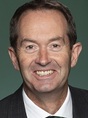
Leon Rebello McPherson, Liberal National Party
There's nothing to see here; that's right. What we need is reassurance about the plan, and we need transparency. This is something that we have asked for time and time again, in question time and at every opportunity we have had. We need to know what's going on with this fuel crisis. We have memories of COVID—and I speak to the people in my electorate of McPherson, especially because we are a border community down the southern end of the Gold Coast—and the country went through a lot. The world went through a lot. We need some sort of reassurance from this government, from this prime minister, that the government is in control and that our lives are not going to be taken over by government again.
The Prime Minister has previously passed the buck to states and territories, and he sent out his minister for climate change and energy, who I think, somewhat unscripted, came out and said, 'This is a national crisis.' So we've seen mixed messages time and time again. Just about every day, in question time, the coalition has stood up and asked things that I think are relatively simple. We've asked about fuel stockholdings. We've asked about outages at petrol stations. We've asked about shipment delays and details. For a government that spends so much time talking about transparency, talking about integrity and talking about the importance of democracy, we're not getting any of those qualities from this so-called leadership. Australians deserve to know what is going on now.
The coalition is prepared to be constructive, and one of the things that members on this side of the House have said is that we are happy with the fact that the government has come to the table in relation to reducing the fuel excise. This is something that we have been calling out for. The Prime Minister and the minister seemed to just ignore it over the weekend, and then they came back this week and said, 'Yes—
Andrew Wallace Fisher, Liberal National Party
They weren't thinking about doing it.
Leon Rebello McPherson, Liberal National Party
They weren't thinking about it; they took a weekend off! And now they've come back and said, 'Yes, we're going to agree with the coalition and we're going to do this.' We will take it. That is great. It is good for the Australian people, because they're hurting from this fuel crisis. But it's not just the fuel crisis. It's the fuel crisis on top of everything else. It's on top of all the pressures that have been piled on, one after the other. That's not to mention the 14 interest rate rises, not to mention their mortgages going up and not to mention the costs of groceries, electricity, fuel and everything; insurance is a massive one. This is on top of all of that.
Despite the fact that one government minister referred to our idea of cutting the fuel excise as a 'thought bubble', they've now adopted it, and we applaud them on doing that, although every day they didn't do it it cost Australians $16 million in extra fuel costs.
Coming to the table is not leadership, so to the member for Moreton, who spoke before, I say that, instead of coming in here and lecturing us on leadership, you should actually look at yourselves—
Julie-Ann Campbell Moreton, Australian Labor Party
You asked us to come here and talk about leadership.
Leon Rebello McPherson, Liberal National Party
And don't be interjecting when you're not in your seat. You can blame everybody else, but, when it comes to leadership, you should actually sit up and pay attention because the Australian people deserve that.
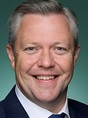
Cameron Caldwell Fadden, Liberal National Party, Shadow Assistant Minister for Housing
On the point of order raised by the member for McPherson, I think it would be timely to just remind members—

Sharon Claydon Newcastle, Australian Labor Party
He didn't raise one. He didn't give me the courtesy of addressing it at all, so sit down, please. I do not need to remind members; otherwise, I would have reminded your side some time ago as well.

Jo Briskey Maribyrnong, Australian Labor Party
4:08 pm
Australians can see right through this. This matter reeks of hypocrisy and it demonstrates why the current leader of the opposition just doesn't get it. Leadership is not using a global crisis to stoke fear and weaponise real anxiety for political gain, yet that is all those opposite have done since this conflict in the Middle East began.
But Australians are not quite surprised at this. They remember what leadership looked like under those opposite when the coalition last were in government. They remember being told, 'I don't hold a hose, mate,' by the then Liberal prime minister, who chose to holiday in Hawaii while regional Australia burned. They remember a vaccine rollout so bungled that, when the rest of the world was reopening, Australia couldn't, because, according to those opposite, it wasn't a race. And, in just the past three months, Australians have been reminded of this all over again. Former leader of the opposition Sussan Ley had the chance, in the wake of our country's worst terrorist attack in history, to do what every other opposition leader has done in recent memory—back team Australia, call for calm, call for unity. Instead, she manufactured outrage and stoked division, and one by one those opposite fell in behind her.
Today, nothing has changed. This new leader of the opposition, rather than working with the government and in the interest of the Australian people, uses this chamber to play politics by spreading misinformation and scaring families who are already anxious while watching the events overseas unfold and then feeling that pressure at home. All those opposite want to do is talk Australia down, because they are more interested in what they can gain from this crisis than backing Australians. We're not. We're stepping up, and we're stepping in. That is what leadership actually looks like: disciplined, methodical action and the commitment to give Australians the confidence when they need it most. The conflict may lie beyond our control, but our responses do not, and this government is exercising that responsibility every single day.
Under this prime minister's leadership, the government acted as soon as the crisis began, and we have acted every day since to give Australian households and businesses the best possible chance to withstand what this global crisis has already thrown at us and what it may still throw. We doubled penalties for false and misleading conduct and cartel behaviour by putting fuel companies on notice. We've given the ACCC stronger deterrence tools to protect Australians during this time of uncertainty. We have backed our trucking industry to keep moving so our economy keeps moving. And what do those opposite do? They didn't vote against it. I don't think they're even here, in the chamber. What is that leadership? Real leadership means stepping up and stepping in for workers, for businesses and for families under pressure.
We have focused every day on securing and strengthening fuel supply. We released 20 per cent of our fuel reserves, which are actually here in this country—not overseas. We've eased petrol standards. We've halved the fuel excise, which has unlocked more supply and lowered prices for ordinary Australians. While those opposite have been consumed by their own leadership dramas, the Prime Minister convened the National Cabinet and brought the states and territories and the Commonwealth together behind a coordinated approach and plan. That led to the appointment of the Fuel Supply Taskforce, the activation of emergency fuel coordination mechanisms and an agreement under the national fuel security framework.
Australians will remember what National Cabinet looked like under those opposite during the pandemic, when the then prime minister used it for political cover and attacked state premiers, who were simply trying to keep Australians safe. This is different. This is genuine national unity, and Australians recognise it. Time and time again, those opposite, who have sat on the government benches and know the weight of the responsibilities, have failed to rise to the occasion in this crisis. When Australians face hardship, their instinct is to look after one another—to look after their families, their neighbours, their community. Those opposite's first question isn't, 'How can we help?' Their first question is, 'How can we benefit?'
This government, under the steady and disciplined leadership of our prime minister, is not interested in playing that game. He's not offloading responsibility to other leaders. He's not boarding a plane for an overseas holiday. He is here and is focused on delivering for every Australian.
Sharon Claydon Newcastle, Australian Labor Party
The time for this discussion has concluded.