
House debates Matters of Public Importance
Labor Government
Milton Dick Speaker
3:10 pm
I advise the House that I have received a letter from the honourable the Leader of the Opposition proposing that a definite matter of public importance be submitted to the House for discussion, namely:
The Government's failure to provide national leadership.
I call upon those honourable members who approve of the proposed discussion to rise in their places.
More than the number of members required by the standing orders having risen in their places—

Angus Taylor Hume, Liberal Party, Leader of the Opposition
3:11 pm
Across our great country, Australians are hurting. Australians are pulling up at the petrol station to see those yellow plastic tickets saying the bowser is empty. There's no fuel. Service stations are running dry. Prices are surging. They're up by over 50 per cent—by far more for diesel, and, of course, that's so important to our farmers and our truckies. Uncertainty is growing, and Australians can see it with their own eyes. They don't need bureaucrats to tell them about it. They don't need prime ministers or ministers to tell them about it—not that they—
Unidentified interjection - Hansard doesn't record who said this
Opposition Members:
Opposition members interjecting—
Angus Taylor Hume, Liberal Party, Leader of the Opposition
Yes, exactly. They are living it every single day. Every single day we see farmers sleeping alongside their machinery to protect the fuel they need to plant or harvest their crops. That's what's happening. We see fuel being siphoned from vehicles so that Australians in suburbs around our country can have the fuel that they need to make ends meet. Truck drivers are cutting back on deliveries because they simply can't afford the fuel. They can't rely on the supply, because it has become unreliable.
Yet, in the face of all this, we have seen Labor ministers standing up and telling Australians that it's all okay, that it's all tickety-boo, that there's not a problem here and that Australians shouldn't believe what they're seeing. It's all misinformation. It's all fake news. They have said that supply is stronger than ever, that stocks are higher than ever, that there is no crisis and that we're not there yet. But Australians are there. When they fill up their cars and they look at the price they pay or they look at those tickets saying there's nothing in the bowser, they know what's going on.
There are small businesses across this country that are being forced to choose between passing on their costs to customers or struggling to lay off workers. We heard about Mary earlier on; we heard about Godden Food earlier on as well. We got some kind of completely unintelligible answer on Godden Food. It certainly didn't mention the challenges that Godden Food was facing.
Before any of this happened, Australia's economy and Australians were under strain. There have been two interest rate increases. More are expected. Inflation is surging, and Australians are struggling to make ends meet within an economy that is not working for them. I will lay out a couple of facts that I think are quite striking. The Treasurer likes to crow about how, under his time as Treasurer, the economy has grown in aggregate by 7½ per cent, and he thinks that's terribly impressive. What he forgets to say is that the population of Australia has grown by—wait for it—7½ per cent. It's exactly the same number. We know that nearly all of that is immigration. This is an economy that does not deliver to Australians.
It gets worse, though, because, even to achieve that flat outcome—GDP per person hasn't moved and hasn't gone up—Australians have had to work more hours per person, 4½ per cent. They're working harder for less in an economy with raging inflation, rising interest rates, government spending growing faster than anything in the economy, and non-market services and all the things that government funds growing faster than the private sector, which has been crowded out by a government that thinks a government directed economy is the answer to everything. It's not, and, in that context—when Australians are working harder for less and when they're going backwards—we are hit with a fuel crisis that this government has completely failed to acknowledge and certainly failed to take action on and fix.
Labor's response to this has been absolutely shocking. When the Prime Minister was in opposition, he said that leadership was all about taking responsibility. He said it many, many times. He said, 'Australia needed a government that would accept responsibility and tell it straight.' He said as Prime Minister that the buck would stop with him. They were his words. But, now in office and faced with a fuel crisis, it's all changed. They took days and days before they could accept there was a national crisis, and, well before that, it was all completely fine.
What Australians really want from this government and from this prime minister is leadership. That's what they want. They want leadership. The Premier of Queensland—who shows leadership all the time—David Crisafulli has said; 'All we're after is a national plan. It is a national crisis, and it does need action.' New South Wales Premier Chris Minns has said that the response to the crisis 'needs to be done on a national level'. Victorian Premier Jacinta Allan has said, 'Action should be coordinated at the national level.' These premiers aren't on our side of politics, but they know who needs to take responsibility. Even the Prime Minister himself has accepted that national coordination is essential. It's just that he's forgotten to do it.
We're all taught from a young age that we're going to meet adversity in our lives. Tough things happen—tough things happen in our country; tough things happen in our lives—but what matters is how we respond to it. Clearly our parents didn't have this prime minister or this government in mind when they said it, because you can contrast this government's inaction with what we did to secure our fuel supplies in this country. The two actions that this minister, the Minister for Climate Change and Energy, is most fond of reciting were done by us when we were in government. We guaranteed the future of our refineries in Geelong and at Lytton. I stood up with the head of the AWU and announced the refinery guarantee up at Lytton in Queensland. I stood to celebrate with the Deputy Prime Minister in Geelong to secure the future of those refineries which have been the only good news in achieving in what's been done over the last couple of weeks. The extraordinary thing is this energy minister forced one of those refineries to export all their petrol. He forced them with his emissions obsession to export their petrol. It took him weeks before he worked this out and actually finally changed the rules when he came under pressure. The other initiative that he loves to talk about is the extra storages that have been built and the Mandatory Stockholding Obligation put in place by us. We invested $200 million to build an extra 780 megalitres of diesel storage, which have obviously contributed to higher stock holdings than we otherwise would have had.
Australians are right to ask why this government has responded so pathetically to what we've seen, but we know. They are obsessed with net zero. We know that they don't want to see coal, gas and fuel in this country into the future. They haven't approved projects. They've made it harder for those industries to survive and sustain our energy system in this country. They've funded activists to engage in lawfare; the EDO is out there stopping these projects week by week, undermining our fuel security in this country.
They've put in place the safeguard mechanism, with high penalties and high taxes. Effectively, this is a carbon tax on industry in this country. It's a carbon tax on our manufacturers, on our aluminium smelters and on our fuel refineries. I tell you what, when we get into government, it's going—that carbon tax that they have snuck in and are imposing on all Australians, along with their vehicle emissions tax, another carbon tax. We know they're looking at farmers; they're going to go after them. There's their Capacity Investment Scheme that's working as a carbon tax in the electricity system. This government has undermined our energy security and our fuel security since they came into government.
This prime minister has failed to take leadership. Every Australian is paying a price for that. The government needs to take responsibility and fix the problem in front of it and become a responsible government for this great country.
Andrew Charlton Parramatta, Australian Labor Party, Cabinet Secretary
3:21 pm
It is true that Australians want strong and principled leadership. That leadership is never more important than in a crisis, and that's why that leadership is exactly what the Albanese government has been providing in this crisis. We have taken swift action to put our reserves onshore, to release 20 per cent of those reserves and to change fuel standards so that more of Australia's fuel stays in Australia. We've done a deal to make sure that that fuel gets where it needs to be in the regions. We've got the ACCC to police price gouging. We've appointed a fuel coordinator to work with the states, and, now, the Prime Minister is convening National Cabinet to provide national leadership. Colleagues, this is leadership. This is action. This is taking responsibility in a crisis. This is what serious times require.
As a contrast to the leadership provided by the Prime Minister and the Albanese government, let's do a quick review on the conduct of the Leader of the Opposition during this crisis. Friends, I wouldn't call the way that he has carried on textbook leadership. This is a man who let four out of six Australian refineries close under his leadership, when he was the energy minister, placing Australia in the precarious position that we currently find ourselves in. This is the man who made Australian fuel reserves locate to Texas, where they would have been of no use to us in this crisis. Yet here he is complaining about the current situation as if he had nothing to do with it. The hypocrisy, the gall, the front—you couldn't make it up. In a time of crisis, this leader of the opposition has been playing politics and creating fear. Then he comes into this House and suggests a matter of public importance related to leadership! Well, friends, this is a masterclass in bad leadership from the Leader of the Opposition.
If you want to know why Australians are moving in their droves from the Liberals to One Nation, this is an example of why. They're moving because, in a national crisis, the Leader of the Opposition, a person who purports to be the alternative prime minister, somebody who says they could be in government, is offering no solutions, only slogans and a litany of complaints without a single constructive suggestion. He's big on blame, blank on policy. Australians are looking at this as an alternative party of government and saying: 'If you've got no solutions to the crisis that we're in, if you're unwilling to play any constructive role and if you want to paint yourself as just a party of complaint, then why would I bother voting for you? I may as well vote for the genuine party of complaint, One Nation.' If they want a rock thrower, they'll find a rock thrower in One Nation.
The truth is that that is the reason why Australians are moving in droves from the Liberals to One Nation. If the Liberal Party has abandoned its claim to be a real alternative party of government, then why would any Australian vote for them? In the Labor Party, we are dealing with this challenge. We are in the white water, navigating through choppy currents with decisive action while they are shouting from the bank. The Australian people know that that is not leadership. The Australian people know that they shouldn't invest their vote in a party that doesn't have any solutions, only complaints. That is why they are losing voters to One Nation in droves.
It is a bit hard to take a lecture on leadership from the Leader of the Opposition. Let's walk through some qualities of leadership that any Australian would describe or want some leader to be. One quality of leadership that Australians would want in somebody who claims to be an alternative prime minister of this country is trust. They'd want to know they were voting for someone who they could trust, someone who tells the truth and someone who is upfront. When it comes to that, the Leader of the Opposition has got a little bit of work to do. This is the Leader of the Opposition who, in 2022, when he was the Minister for Industry, Energy and Emissions Reduction, because of his incompetence and because of how badly he had stewarded the nation's energy system, left energy prices rising by more than 10 per cent. Instead of being upfront about his failures, telling the truth to the Australian people about the energy bill shock he was about to inflict on them.
Instead of being transparent on 7 April 2022, he amended regulations so that that offer would not be released until after the election. Can you believe it? The energy minister of Australia, on one of the most important issues in his portfolio, immediately before an election, chooses to conceal this information from the Australian people. This man was a minister of the Crown, a man who puts the 'horrific' in 'honorific' and someone who doesn't deserve to hold that role if he can't even be honest about the basic facts in his own portfolio.
Even worse, friends, when he was caught out for this action, when it was revealed that he had hidden this information from the Australian people, instead of being upfront about it, instead of admitting that he'd messed up, that he'd withheld this information from the Australian people, he tried to obfuscate. On 26 October 2022, the Leader of the Opposition was asked if he knew before the election that prices would rise, and he replied, 'No, I didn't.' Then, he told Sky News that the price rise notice was something from the AER, the Australian Energy Regulator, 'It puts it out,' he said, 'not me; it's nothing to do with me. I didn't see it.' Well, this wasn't entirely accurate, friends.
On 1 November, just a few months later, he finally fessed up. Better late than never. He was asked a direct question, 'Did you sign the regulation delaying the notification of the price rise?' in the National Press Club. He finally gave the truth, 'I did,' said the current leader of the opposition. Honesty is an essential element of leadership. Trust in Australia's leaders is an important quality. Integrity is essential to what Australians want in their political leaders, and, consistently, time and time again, the Leader of the Opposition has failed to deliver that honesty, failed to deliver that integrity and failed to gain the trust of the Australian people.
Not only does this Leader of the Opposition lack trust and integrity but he also lacks conviction. This is a man who rose to become the leader of the Liberal Party on the basis of his great crusade to get rid of net zero. That's what he's passionate about. That's what he believes in. When you peel back the onion, right at its core is opposition to net zero. He's a conviction politician. Those convictions have come recently. In 2020, this is what the current leader of the opposition said:
We are obviously committed to global net zero, that's in the Paris Agreement, we absolutely share that commitment … many times we—
have said—
we want to get there as soon as possible.
The person who's claim to the Liberal leadership was his passionate conviction about net zero has only had that conviction for a few years. A few years ago, he was talking up his own trajectory towards that same goal. You couldn't make it up—an energy minister who pursues net zero then dumps it when political expediency suits him and he wants to tear down the leader in front of him, an energy minister who conceals from the Australian people the most important information about their energy price rises, someone who not only conceals it but then misleads the Australian people in relation to that information, and someone who had 22 energy policies during his time as energy minister and didn't stick a single one of them.
This is a person who has been in parliament for a long time with very limited achievements. He's good at coming up with new policies, much less good at delivering them. The only good quality of the Leader of the Opposition is that, I have to say, he does support his colleagues, and this is an important quality of leadership, friends. You want a leader who's slow to criticise and quick to praise. Good leaders are there with encouragement. They recognise colleagues when they do the right thing, and this is something that the Leader of the Opposition certainly has done.
In 2019, when more than a thousand new carparking spaces for commuters were delivered at Campbelltown Station, the Leader of the Opposition was there with a positive, encouraging word on that achievement. He jumped straight on to Facebook: 'Fantastic. Great move. Well done, Angus.'

Tim Wilson Goldstein, Liberal Party, Shadow Treasurer
3:31 pm
I enjoyed the audition from the assistant minister for the Treasurer's job. The Albanese government has an economic model. It is to stoke inflation then tax the inflation. What we have now, with this government, is a complete failure of leadership about the type of country we should want to be, where we want to go and what we need to build for a more confident Australia for the next generation.
No-one is under any illusion that we aren't in difficult international circumstances. Poor nations are weak nations. We need to be bold, we need to be confident, and we need to be strong as a country. That happens when we are prosperous, and Australian families, communities and small business are strong. When Australian families, small business and communities are weak, we have the foundations of a weaker nation.
What we're not getting right now is the leadership we desperately need to confront this crisis. We've witnessed it in this chamber, where we've had the Minister for Climate Change and Energy, who's come in here—and it was only less than a month ago—and said, 'There is no supply crisis for fuel.' Everyone on the opposition benches was, allegedly, making it all up. He couldn't see the reality of the risk to supply chains, that when oil stopped being dug out of the ground in the Middle East and refined then, eventually, that might lead into what comes out of the bowser. He said that there were no supply problems. Within three days, he was back in the chamber in a humiliating backdown, having to acknowledge that there was now a national crisis.
Now, every day, he comes into this chamber and has to explain to the Australian people just how many petrol stations are running out of petrol and running out of diesel. It is the economic model of the Albanese government. There is plenty of fuel for inflation, just not for farmers and families. They stoke inflation in the economy and then they tax the inflation and push Australian standards of living backwards. Inflation continues to outstrip wages, and Australian standards of living are going backwards.
They have no answers to these problems, whether it is the Prime Minister, the Treasurer or the energy minister, in an environment of what they have now dubbed a crisis. We have inflation raging, and their only answer is how they keep pouring debt petrol on the inflation fire, and Australian standards of living are declining in the process.
What we need now is real leadership. We don't need the dithering. We don't need the appointment of commissars, tsars or statutory officers so that, in only a few months' time, when the full consequences of the Prime Minister's leadership or the absence of his leadership are revealed, they have somebody to sack. The Australian people voted for this government, in disproportionate numbers of seats, to stand up and steward the nation at a difficult time. But we have seen none of that—and we shouldn't be surprised, because the pattern since the election has been that, when there are difficult times ahead and when there are difficult circumstances to confront, the Prime Minister scurries out of this chamber and the Treasurer scurries out of this chamber as quickly as possible. If a difficult question is asked, their only answer is bluster and attack of the opposition, not responsibility and leadership.
We've seen that just in the context of the ongoing problem, the one they refuse to acknowledge, which is $15 billion of public money being handed to organised crime through the CFMEU-Labor cartel. If a prime minister won't take an audit of or be accountable for that public money and won't show the basic test of leadership—which is that public money shouldn't go to organised crime. Public money shouldn't go to organised crime. When you don't have that basic test of leadership under this prime minister, how can the Australian people have confidence in any other measure that they are going to take by turning a blind eye, wilful ignorance or complete disinterest?
As we head to Easter, there are so many families who are already looking at the cost of Easter eggs, the cost of groceries, the cost of a simple holiday—we're not talking about lavish ones. We're talking about going to a caravan park. They're saying, 'Can we afford it this Easter, and will we even be in a position to afford it next Easter?' The Australian people are living with the failure of leadership by this prime minister, and they are, sadly, going to live with it for much time to come. (Time expired)

Madonna Jarrett Brisbane, Australian Labor Party
3:36 pm
For those opposite to raise a matter of public importance about national leadership is delusional, in my opinion. So what is delusional leadership? Dare I put those two words together? It's a dangerous style where leaders lose touch with reality, ignore the feedback and the evidence—some of which we just heard from the member for Goldstein—and it often leads to poor outcomes. For those opposite, the last 10 years have been an ongoing shambles of delusional leadership.
But let's define what a good leader is. I'll build on the previous speaker, the minister. A good leader inspires, empowers, guides and guides a team towards a shared vision while acting with integrity and empathy, and that's exactly what our prime minister does. We know Australians are doing it tough at the moment, and our government is leading and our prime minister is leading. We're listening to the Australian people and we're acting.
Our No. 1 priority at the moment is to address the cost of living. So let's go through it. We've delivered a tax cut for 14 million Australian taxpayers. That's leadership. We're making medicines cheaper. That's leadership. We're helping Australians see a GP for free and get health care closer to home. That's leadership. We're wiping 20 per cent off student debt. That's leadership. We're delivering energy bill relief for households and businesses. That's leadership. We've delivered more choice and lower cost and better health care for women. That's leadership. We've delivered the three-day childcare guarantee. That's leadership. We're delivering fee-free TAFE to students across the country. That's leadership. We expanded five per cent deposits to all first home buyers. That's leadership. We're implementing the biggest home build in Australia's history. That's leadership. We are investing in more crisis and transitional accommodation, ensuring vulnerable Australians have a roof over their heads. That's leadership. We've delivered pay rises for workers in the care sector and for millions of low-paid workers. That's leadership. We're rolling out cheaper home batteries to help lower power bills across the country. That's leadership. We're cracking down on supermarket price gouging, as well as petrol stations that are using the current war to rip people off. That's leadership.
We've seen global uncertainty really test leaders around the world, whether it's been the war in the Middle East or the war in Ukraine. Some of our traditional international agreements are really being challenged. So national leadership is not just about looking after people at home; it's about protecting our national interests abroad. Leadership is critical in these types of uncertain and turbulent times. Leaders need to be steady and reliable and be prepared to make tough decisions in the best interests of our community and our nation.
Since Labor came to power, Australia and our world more broadly have been rocked by climate events, the war in Ukraine, the rise of extremism, significant shifts in global security and trade, and, more recently, the war in the Middle East. It takes leadership to act quickly and decisively to ensure that the risks to Australians during these times are limited, and to lead with calmness in a way that unites, not divides, the cultures that are the strength of our country. In these circumstances, the Albanese government has stepped up: improved energy security through the relentless pursuit of renewable energy; implemented tougher hate laws, new trade deals and security agreements with the EU and Canada; developed stronger relationships with our Indo-Pacific neighbours; and implemented our Future Made in Australia program to protect our sovereignty.
The Albanese leadership is grand. It's in stark contrast to the leadership from the other side. Their history is indicative of a complete lack of a shared vision, empowerment, responsibility, integrity and empathy. Think Tony Abbott. Think of how he spoke about our first female prime minister. Think Peter Dutton, who almost destroyed our national healthcare system. Think Scott Morrison, who said, 'I don't hold a hose, mate.' And lucky you weren't met with bullets when he was speaking about a rally full of women—the man who hid his multiple ministries from the Australian people, the man who presided over robodebt, which caused harm to so many vulnerable Australians, and the man who failed to protect a young staffer from harm.
Those opposite used their first female leader in order to line up the next leader: the member for Hume. It's been a revolving door of failed leadership from those opposite. While those opposite continue to try to figure out what leadership is and who their leader should be, on this side of the House we've got steady leadership, and we will continue to deliver for all Australians. (Time expired)

Melissa McIntosh Lindsay, Liberal Party, Shadow Minister for Women
3:41 pm
What is national leadership? It certainly isn't what the member opposite was just prescribing to this House. Is it the courage to confront a crisis before it becomes a catastrophe—what we're seeing right now? Is it the responsibility to act when families are breaking under pressures they did not create? Is it the willingness to see that Australians are barely holding on by their fingertips? Yes, that is leadership. Do you know what isn't leadership? It isn't saying, 'Fuel supply remains strong,' as the minister for energy, Chris Bowen, has said, while Australians are pulling into servos to find empty pumps. It isn't insisting that Australia's fuel supply is secure while families are driving from suburb to suburb just to find petrol. And it isn't telling parliament we are a long way from a fuel emergency when, for many Australians, that emergency has arrived.
Right now, across Australia, families are asking, 'Where is the leadership we were promised?' Parents are skipping meals so children don't have to. Workers are juggling two or three jobs and still falling behind. Families who once donated to food drives are now relying on them. Worried children are wondering whether their parents can keep a roof over their heads. This is not abstract. This is not theoretical. This is real. This is a lived reality that Australians are facing every single day. Across Australia, petrol is pushing well above $2.50 a litre and diesel even higher. But in some suburbs the price isn't even the worst part. Drivers are pulling into servos to find empty bowsers, taped-off pumps, handwritten notes apologising for shortages. Behaviour is shifting. People are driving less, going out, less seeing family and friends less. Confidence is tightening. The national mood is under strain.
These are people like Adam, who relies on petrol for workshop work and diesel to keep his delivery vehicles moving. If fuel rationing comes in, it won't just hurt; it will directly affect his ability to operate and serve his customers. And they are people like Carol from Glenmore Park, who told me: 'We are receiving emails from suppliers adding an extra 3½ per cent to cover their diesel. Our own diesel bill has also doubled, so it's a double whammy.' These are not outliers. These are not the exceptions. This is the lived reality of Australians right now.
This is where the pressure shifts from costs to something deeper. When the cost of fuel rises, life begins to contract. For many Australians, especially in Western Sydney, there is no alternative. Nearly half of people rely on a private vehicle to get to work. A car is not a convenience; it is a necessity. That means that when transport costs rise too far, too fast, families are pushed into what experts are calling 'transport poverty'—spending more than 10 per cent of their income just to move through daily life. When that happens, the consequences ripple outward: longer commutes, less-reliable access to work, greater risk of job instability. Opportunities narrow. Pressure builds.
So I ask again: what is national leadership? Is it watching mortgage stress climb to levels we have not seen in decades, where families are cutting back just to afford the basics, including getting to work? Is it watching families fall into food insecurity in one of the wealthiest nations on earth while the cost of simply moving through daily life keeps rising? Is it watching parents choose between groceries and petrol, rent and medical bills and putting food on the table? No. No, that is not leadership.
Leadership is about stepping into the storm we're facing now and saying, 'We will not let Australians face this alone.' Leadership is recognising that, when 3.7 million Australians, including 750,000 children, are living below the poverty line, this is not a tight month but a national emergency; leadership is understanding that, when people are cutting back not on luxuries but on movement, connection and opportunity, something deeper is going on; and leadership is acting with urgency equal to the scale of the crisis.
When we are in a crisis, we feel powerless because the government isn't showing leadership. We can choose to act. We can choose to lead. The government's just not doing it. National leadership is not measured by how loudly you speak at the dispatch box, with all your theatrics, to push away the reality of the crisis. It is measured by how firmly you stand when families are breaking, and right now Australia needs leadership that understands not just what things cost but what those costs are doing to people's lives.

Ash Ambihaipahar Barton, Australian Labor Party
3:46 pm
They want to talk about leadership. It's leadership time! This Labor government is a team—the Prime Minister, our ministers, we backbenchers. We work together as one because we know unity delivers the best outcomes for our electorates and our country. My role in the team is to be on the ground. I doorknock, I phonebank and I meet with local constituents. I make myself quite available, and I can say the same for all of us on this side of the chamber. Because of this, we know about the pressure on families right now, and the pressure is real. Families are stretched. Costs are up. People are worried, and they expect us to act quickly and together. We recognise that and we take it very seriously.
I welcome the coalition's words earlier today about working together. But do they actually mean it? Because when it came to dealing with those measures, they did not want to engage with the Fair Work amendments. These are practical changes that would support our trucking industries right now. Instead, we saw the member for Goldstein turn to another story about the union conspiracies. Now, that does not help a single family fill up their car, it does not help a single truckie keep their business going and it does not bring prices down. If the coalition is serious about helping Australians, then this is the work in front of us.
On the very day of this conflict, when it began, fuel retailers put their prices up. They saw the news cycle. They saw the fear building. They knew Australians would be worried and they took advantage of it. This is predatory. It is companies exploiting anxiety to boost their profits with no thought to how it will make this crisis worse for families getting ready for Easter. But we also have to be honest about what we are seeing in the community. We've not learnt from the 'toilet paper gate' during the pandemic. People are filling up when they don't need to, bringing jerry cans and buying more than what they need, not thinking about the person next to them. That behaviour drives demand higher and pushes prices up even further. At moments like this, we have a choice in how we behave. We can panic, we can treat it like it's every other person for themselves or we can choose something better. The kindest thing you can do right now is to look out for your neighbour. Make sure there is enough for everyone. Act with care, act with restraint—because we are a kind and united country at its core. That is who we are, and we can choose to act that way when it matters most. This whole parliament should be demonstrating that kind of behaviour.
That is leadership, and this government has done that consistently through the cost-of-living relief—$25 medicines on the PBS; paid parental leave expanded to 24 weeks; another pay rise for 2.7 million Aussie workers backed in today; paid pracs for nursing, teaching, social work and midwifery students; 30 per cent off home batteries to permanently cut down power bills; expanded bulk-billing; and another pay rise to aged-care nurses following the first instalment in March. One million households are benefiting from back-to-back increases to rent assistance, 1.1 million Australians are benefiting from higher social security payments, and we're delivering tax relief to every single taxpayer, with round 2 coming this year and round 3 coming the year after.
They want to talk about leadership? The Liberal Party's on its second leader this term, has had mass resignations, is yet to produce actual clear policy positions and actually stick to them, and is being dragged around by another party whose only ideas are to divide the people of this country based on where they come from or ban Australians who happen to have my colour of skin. All constituents expect better.
Instead of calming the situation, those opposite have made it worse by claiming there is a supply shortage. There is not. Not a single shipment of fuel has been delayed. In fact, we have acted. We've released 20 per cent of our minimum fuel reserves; we've amended fuel standards to increase supply; we've empowered the ACCC to improve distribution, especially into the regional areas; and we're working with international partners to maintain supply. We are using every lever available to keep fuel flowing and ease pressure on prices, and we introduced our Treasury Laws Amendment (Doubling Penalties for ACCC Enforcement) Bill 2026 to back in our truckies and crack down on price gouging. That's what leadership looks like.

Michael McCormack Riverina, National Party
3:51 pm
This matter of public importance debate is on 'the government's failure to provide national leadership', moved by the Leader of the Opposition, the member for Hume. Never has there been a time to look at leadership more than right now. In question time today, the Prime Minister used the word 'overprepared'. We're certainly not overprepared when it comes to the national fuel crisis. We heard the Minister for Climate Change and Energy say, on Monday, 'I'm done,' and he certainly is when he outsources his work—his job—to Anthea Harris, who, at the moment, is doing the review into the Water Act. Now, she's also been tasked with the Fuel Supply Taskforce coordinator role, which should be something that the minister does himself.
Now, all politics is local—we all know that. When you look at the E10 and diesel prices in the Riverina electorate, it's terrible, awful reading. At Coolamon, E10 is 274.9c and diesel is 330.9c a litre. But you go through them. Cootamundra is 262.9 and 328.9; Cowra is 259.9 and 319.9; Crookwell is 263.9 and 314.9; Grenfell is 259.9 and 327.9; Gundagai is 252.9 and 315.9; Junee is 259.9 and 313.9; Lockhart is 264.9 and 314.9; Temora is 260.9 and 316.9; Tumbarumba is 266.7 and 324.7; Tumut is 254.9 and 320.9; Wagga Wagga—a big city, the largest inland city in New South Wales—is 247.9 and 313.9; Yass is 246.9 and 312.9; and Young is 247.9 and 305.9. They're figures that are too high, and that's if you can actually fill your tank. And it's sowing season. Our farmers are out there about to scarify their paddocks, direct drill, and get ready for sowing. Indeed, come harvest time, if they haven't planted, it's going to be a food security disaster—if it isn't already.
Consider this: the setting is a collapsing Australia, plagued by fuel shortages; one of humankind's most precious resources, oil, has been depleted; the world has been plunged into war, famine and financial chaos; the countryside is losing its way; what little water there is, people are fighting over; food security is almost non-existent because you cannot grow food without fertiliser, fuel or water; and the government is nowhere to be seen. Am I reading the plot for the 1979 blockbuster Mad Max? Sadly, no. I'm not. This is Australia in March 2026. I'm not over-egging it. I'm not being melodramatic. I'm not hamming it up. This is the truth. People are getting out of control. There's petrol hoarding, panic buying, fuel theft, abuse being slung at servos and empty bowsers across the regions. I've just read you the prices of fuel. It's not a low-budget dystopian action film; it's the here and now, right now, tragically.
Why won't the Treasurer provide some relief at the bowser by cutting the fuel excise or increasing the fuel tax credit? There are actions that can be done, that should be done, that must be done—but they're not being done. Farmers and trucking companies are copping it in the neck. Why won't the Prime Minister pull the levers available to him to help the situation? He'll say, 'Well, I am,' but it's not happening. Minister for Agriculture, Fisheries and Forestry, just do something—anything. Minister for Climate Change and Energy, we need real action and we need it now.
What I was reading sounded like Mad Max, and it was Mad Max, but it's also 'Mad Australia' in 2026, and it's happening right now. Central casting need look no further than the government frontbench to find its characters for the 2026 version of Mad Max. But, I ask, who will play the central roles of Jim Goose, Grease Rat, Clunk and Grinner? We know who they will be.
David Smith Bean, Australian Labor Party
3:56 pm
I hope the Mad Max reference wasn't to any of the members of this House with the prefix 'Mc' to their names. I have due respect for all those members!
This evening I'm looking forward to attending the routine by acclaimed Canadian mime artist Joylyn Secunda down at the Tuggeranong Performing Arts Centre in my electorate. It's been described as 'Death of a Salesman meets Mr Bean'. What I know for certain, though, is it will be more impressive than the routine we have witnessed across the aisle today.
It is crucial in times of uncertainty that this House comes together and acts, and the Albanese Labor government is doing just that. The recent conflict in the Middle East has compounded uncertainty in the global economy and led to significant volatility in oil and petrol prices. We're not immune from that uncertainty and volatility across the global economy, and that's why our priority remains addressing inflation, productivity and that global uncertainty. Our work on fairer petrol prices and stronger supply chains is an important part of these efforts.
Legislation passed through this House earlier today that will help consumers get a fair go at the petrol pump—with bigger penalties for misconduct, including for the fuel sector. Nobody—no organisation, no sector, no member of this parliament—should be using such volatile circumstances to profit off Australians. That's not in the spirit of this country and it cannot be permitted to occur. That is why we are putting petrol companies on notice. It's time for the Liberals and Nationals to put their money where their mouth is, and, for a change, stand with the Australian people instead of standing divided against them. They may love to come into this place and grandstand, and make grand speeches to clip for their socials and websites, but, when it comes to making a difference for their communities, they are missing in action. Every opportunity they have had to support cost-of-living relief, they have opposed.
I remind people in this House that often the best way to determine future behaviour is remembering the words that people have used in the past. Here's a bit of a game for the House late on a Thursday. Who was it that derided work-from-home arrangements as 'professional apartheid'? That'd be the shadow Treasurer. Who criticised better wages for frontline workers, including aged-care workers and early childhood educators, as 'borrowing from future generations'? That would be the shadow Treasurer. Who railed against paid parental leave, labelling it as 'a very bad scheme' and saying, 'It's not my choice that women have children, it's not; it's genetic'? That would be the shadow Treasurer. Who advocated replacing the progressive income tax system with a flat tax and broadening and doubling the GST to 20 per cent—in his words:
We must stop fiddling at the margins. … we have to move towards a simpler 20 per cent flat personal, company and consumption tax …
That would be the shadow Treasurer. It's getting a bit easy!
Who championed the privatisation of Medicare so there could be a transfer of the health financing burden, shifted from government to individuals? That would be the shadow Treasurer. Who criticised the Rudd Labor government's stimulus during the global financial crisis as a shameful act that did more harm than good? Who has consistently criticised low interest rates, claiming that 'nobody wins from low interest rates'? That's a message many people across my electorate would love to hear. Who advocated repealing the right to disconnect? That would be the shadow Treasurer. Who argued that Australia is no longer able to make things? In his own words:
The days of Australia being an island continent producing finished goods for domestic consumption are over.
You would have thought that maybe it's a description of the approach of the coalition to oil refineries in this country over the last decade.
What we know is that leadership isn't about the one to yell the loudest in the room, and I am proud to be able to stand on this side of the chamber—which is actually taking action, displaying clear leadership and supporting Australians right across the community. It's time for those opposite to do the same.
Aaron Violi Casey, Liberal Party, Shadow Minister for the Digital Economy
4:04 pm
Right now, we really need to understand that there are two challenges the Australian people are facing. Obviously, there's the fuel crisis—getting fuel, particularly diesel, and the impacts on price. But we shouldn't forget that Australians were paying the price and struggling before this with inflation at 3.8 per cent and two increases in the interest rates. The question about leadership is about understanding that you can't control events, but it's what you do to prepare for them and how you handle them.
Let's understand that this crisis, this conflict in the Middle East, didn't operate in a vacuum. This started on 7 October 2023. There was conflict in the Middle East. It escalated last year when Iran was impacted directly by Israel and the US. There were warning signs that this would happen. Every military expert in the world will tell you that, in the last six to eight weeks before the conflict started, there was a significant shift in military assets from the United States into the area. Experts knew this was coming. This government had two and a half years to prepare for this by bringing fuel stocks forward and getting the numbers up significantly. They did not do that. Preparation can happen over two and a half years to mitigate some of the pain.
The other thing that this government could have done is focus on bringing inflation sustainably into the band to give the Australian people and the RBA some buffer so the RBA wouldn't need to raise rates. But, for over 3½ years, the Prime Minister and the Treasurer focused on treating the symptoms of the economic challenges, not the causes. So many on this side, including me, spoke over this time about the folly of looking at the symptoms and not the causes, because, when you treat the symptoms for a couple of years, you take away a little bit of pain but you make the pain worse when you can no longer deliver the medicine. That is what we are seeing with this government. They gave temporary relief, but they didn't address productivity. Productivity is continuing to be in freefall under this government, and this government has not delivered.
I want to look at the member for Parramatta. He was talking about trust. Let's talk about trust in leadership from the Prime Minister. Ninety-seven times before the 2022 election, the Prime Minister promised the Australian people that he would reduce power bills by $275. He said:
I don't think; I know. I've done the modelling.
No Australian got that reduction. In fact, their price went up by double digits. The member for Deakin let the cat out of the bag when he interjected last year and said:
That line worked for three years.
That sums it up from this government.
When we talk about trust, this prime minister also said, before he was elected: 'My word is my bond. I will not change the tax system. I will not change the superannuation system.' Two weeks ago, this prime minister changed the superannuation system in this country, breaking his word to the Australian people. The member for Parramatta talks about trust; I hope he stands up in caucus or in cabinet and calls out the Prime Minister for breaking the trust of the Australian people.
The test now for the member for Parramatta—who is so concerned about trust in leadership—and for all those opposite is the next budget, because the Prime Minister said, 'My word is my bond,' before the last election. He promised the Australian people that there would be no changes to the tax system, no changes to negative gearing and no changes to capital gains. That was the Prime Minister's word before the last election. Well, let's watch the budget. If there are any changes to those two taxes, then, by the member for Parramatta's own standard, which he set today, this prime minister is not fit to lead this country. That is the test that the member for Parramatta has set for his own leader, because he said that leaders need to have trust. If you break your promise, your bond to the Australian people, you are breaking trust with the Australian people and you are not a leader. Let's find out in the next three weeks where this prime minister stands, because he's abandoned the Australian people. (Time expired)

Sharon Claydon Newcastle, Australian Labor Party
Excuse me, Member for Petrie. I'm trying to give the member for Spence the call. The member for Spence.
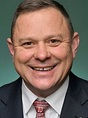
Matt Burnell Spence, Australian Labor Party
4:06 pm
When I saw today's MPI, I honestly found it quite funny that the Leader of the Opposition would pose a question about providing national leadership. So I did something simple. I googled, 'What makes a good leader?':
A good leader inspires, empowers, and guides a team toward a shared vision while acting with integrity and empathy.
The member for Riverina might like to stay to listen to this:
Essential qualities include clear communication, decisiveness, resilience, and the ability to build, mentor, and trust their team to succeed. They lead by example, are self-aware, and prioritize continuous learning.
I'll give the Leader of the Opposition this: he has certainly inspired, empowered and guided his mates towards a shared vision of sitting on that frontbench together, no matter who is in their way. When it comes to integrity and empathy, Australians have long memories. How much integrity and empathy were shown to the Hon. Sussan Ley, the first female leader of the Liberal Party, when she was knifed in the back? When it comes to communication, what we hear from those opposite is plenty of noise but very few solutions to the issues—slogans without substance, week in and week out. When it comes to decisiveness, we see hesitation, we see backflips and we see a party that cannot settle on what it actually stands for, as we saw just this morning in this chamber. On resilience, a resilient team or coalition does not fracture the moment pressure is applied. Yet, time and again, that is exactly what we see from those opposite. On building, trusting and mentoring a team and backing your colleagues, the revolving door on that frontbench tells its very own story. Leadership is not about who you stand next to when it's convenient; it's about who you stand by when it's difficult. And times are difficult; let's make no mistake.
We do have a great leader in the Prime Minister. If we really want to talk about national leadership, then let's talk about what it actually looks like in practice. Cutting student debt by 20 per cent, delivering relief to more than 19,000 people across my electorate of Spence—that is good leadership. It looks like strengthening Medicare. Opening an additional 50 urgent care clinics so Australians can walk in, get treated and not have to worry about the bill, with nearly two million Australians benefiting, is good leadership. It looks like backing first home buyers, giving them the chance to enter the market with a five per cent deposit. That is good leadership. Easing pressure on energy bills with 30 per cent off home batteries and helping households take control of their costs while we build a more sustainable and connected energy future—that's good leadership. It looks like investing in skills, in workers and in the future of this country, with free TAFE, opening doors for hundreds of thousands of Australians, and with up to $10,000 in support for housing apprenticeships, because, if you want to build more homes, you need more tradies to do it. It looks like backing families, expanding paid parental leave to 24 weeks with super, lifting wages and delivering cheaper child care, including a three-day guarantee, which families in Spence are already calling life changing. That is what good leadership looks like. It is about making decisions that improve people's lives, even when those decisions are not easy. It's about governing with purpose, not just opposing for the sake of it.
When I look at this government, since it came to office, I see consistency, discipline and a clear focus on everyday Australians. I see colleagues in this House and in the other place who are out there in their communities, listening, engaging and delivering—not chasing headlines or internal power struggles but getting on with the job they were elected to do.
Leadership is about responsibility. It is about outcomes, and it's about who you choose to stand with when it matters most. On this side of the House, we choose to stand with Australians. We choose getting on with the job and delivering for communities like mine, while those opposite are still fighting. They've got no sense of direction. They are like a ship with a broken rudder—stuck going around in circles and getting nowhere. On this side of the House, we are focused on leading for everyday Australians to ensure that tomorrow is better. I thank the House.
Sharon Claydon Newcastle, Australian Labor Party
The time for this discussion has concluded.