
House debates Matters of Public Importance
Albanese Government

Milton Dick Speaker
3:10 pm
I have received a letter from the honourable member for Gippsland proposing that a definite matter of public importance be submitted to the House for discussion, namely:
In the middle of a national fuel crisis, the Prime Minister's broken promise to govern for all Australians.
I call upon those honourable members who approve of the proposed discussion to rise in their places.
More than the number of members required by the standing orders having risen in their places—
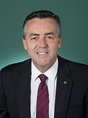
Darren Chester Gippsland, National Party, Shadow Minister for Veterans’ Affairs
3:11 pm
Australians are hurting, Australians are angry, Australians are frustrated and, after four years of this incompetent Albanese government, Australians are worse off. This last fortnight tells you everything you need to know about a government that simply doesn't care about regional people.
We've had the energy minister with his head up his own—battery. First, he denied there was a fuel supply problem then he said we were scaremongering and then, a few days later, he said it was a national crisis. The biggest crisis right now is the crisis of incompetence in the cabinet room, because we then had the agriculture minister telling every peak body that she knows more about farming than they do.
The deal with the European Union is a free trade agreement for the rich and famous—cheaper EVs and fancy cheese at the expensive local dairy industry workers. I'll come back to that later, but we also have this Prime Minister, who promised to govern for all Australians, happily sinking the boots into one of our most important export sectors—the agriculture industry—just so he could get another photo opportunity with a world leader.
The Prime Minister said no-one would be held back and no-one would be left behind. If I could just capture that bulldust coming out of their mouths, I could fertilise the entire country and solve the other crises our regions are facing now.
The Prime Minister has fundamentally broken his promise to govern for all Australians. The European Union free trade agreement is just the latest example. It was all about that photo opportunity with the world leader rather than a good deal for our farmers. Yesterday I asked the minister for agriculture whether she actually really believed it was a good deal for Australian farmers. Amongst all the waffle, all the spin, all the Labor talking points, she said: 'What I would say to the member opposite is that we're strong advocates on this side of the House for farmers and producers, and that's what you've seen from us since we've been in government.' The minister herself couldn't even say it was a good deal. I give credit to the minister. She's not stupid. She wasn't going to say it was a good deal, because she's been reading the same feedback that I've received. Here's what the peak agricultural bodies have been saying. Let's start with the VFF president, Brett Hosking, who said:
At a time when farmers are getting smashed by devastating water buybacks, skyrocketing fuel and fertiliser costs, we've been hung out to dry for the sake of getting the deal done.
It's pretty embarrassing. For farmers, no deal would have been better than what we've been dealt.' NFF president Hamish McIntyre said:
Australian farmers are extremely disappointed. They will now pay the price for this subpar EU deal for decades to come.
Then we have the Cattle Australia chair, Garry Edwards. He said:
… we have been misled by an apparently disingenuous trade negotiation, with amateurs playing a game against professionals.
The deal that has been struck is simply appalling for agriculture and regional Australia …
It goes on; it just keeps on coming. The chair of the Australia-EU Red Meat Market Access Taskforce, Andrew MacDonald, said:
To land a deal so far below what other suppliers have secured is genuinely bewildering.
Unidentified interjection - Hansard doesn't record who said this
Government Member:
A government member interjecting
Darren Chester Gippsland, National Party, Shadow Minister for Veterans’ Affairs
Speak up! You didn't speak up yesterday about the European Union free trade agreement. Speak up now—any time you like. You can go straight after me. You can come straight after me and tell me why all these farming groups are wrong and you're right. From the suburbs of Perth, you tell me why you were right and all these farming groups are wrong!
Now, the Australian Dairy Industry Council chair—

Sharon Claydon Newcastle, Australian Labor Party
Excuse me, Deputy Leader, just direct your comments through the chair, unless that—
Darren Chester Gippsland, National Party, Shadow Minister for Veterans’ Affairs
But the member—sorry, Deputy Speaker—
Sharon Claydon Newcastle, Australian Labor Party
I don't want interjections, and I do not want you referring directly to members.
Darren Chester Gippsland, National Party, Shadow Minister for Veterans’ Affairs
I understand, Deputy Speaker. The member for Hasluck was offering some free advice for our farming people, and I just took up the opportunity to point out that every peak body that has written to us has raised their concerns about the EU free trade agreement.
Now, the Australian dairy industry council chair Ben Bennett said that it's unfair on many fronts and that they're being asked to give up established commercial freedoms without securing meaningful market access. Sheep Producers Australia CEO Bonnie Skinner said:
Australia's sheep producers have been sold out.
CANEGROWERS's CEO Dan Galligan said:
This is a horrendous outcome for Australia's cane growers …
It's a capitulation to protectionist European sugar interests, plain and simple.
These aren't our words. These are the peak bodies'. We've been 'sold out'. It's a 'horrendous outcome'. It's 'unfair on many fronts'. It's 'bewildering'. They're not happy.
And there's more. Australian Meat Industry Council CEO Tim Ryan said that the outcome was a kick in the guts to the Australian red meat industry. AgForce's general president, Shane McCarthy, said:
This is shaping up as a perfect storm for producers.
Australian Lot Feeders' Association president Grant Garey said:
By any measure, the Government's report card on this deal is a failing grade, delivering one of the weakest free trade agreement outcomes for our sector to date …
Dairy Farmers Victoria board member Ben Vagg said:
It's not free trade, it's just more market access for the EU …
They dump their produce into Australia, at a cost, because of the protectionism of their domestic market.
Why on Earth would the minister or the Prime Minister pretend it's a good deal when all of the major agricultural organisations in our country have come out and slammed this arrangement? Why do these members of parliament, from their city based seats, think they can tell our farmers how to run their businesses? Why do they think that? It's because they simply don't understand and don't respect the regional people in this nation.
This dates right back to this Prime Minister's promise to govern for all Australians. It's 30 years this month since the Prime Minister was first elected. He is the most institutionalised member of parliament in this place. He is the ultimate Canberra insider bubble boy because he's defined himself with one quote in 2012—his most famous quote. It says:
I like fighting Tories. That's what I do.
This guy likes fighting Tories. He's never been interested in building a consensus in this country. He is the great divider of Australian politics. After the last election, what was the first thing he did—this prime minister, who says he believes in the parliament, believes in democratic processes? The first thing he did was cut the staff of the coalition—because you wouldn't want to have any transparency. You wouldn't have any accountability! That was his first decision. He divides Australians at every opportunity into two camps—Labor voters and non-Labor voters—because he's made a career out of it for 30 years. The Prime Minister is the great divider of Australian politics. He has no interest in a consensus. That's why he divided Australians with the Aboriginal and Torres Strait Islander Voice. That's why he divided Australians with his decision to recognise Palestine. He is dividing Australians with his 100 per cent renewables plan. It is tearing apart families in regional areas, and the regional communities are paying the price of this prime minister's approach to energy.
Everything this prime minister has done since he came into office has widened the divide between city and country people. We've seen it most obviously with grant programs that used to provide opportunities for regional communities to do the hard work, develop projects and then seek funding from state and federal governments to improve their own communities. Regional Australians have been punished every day since this Prime Minister came to office in 2022. Is it any wonder that last year he was chased out of Ballarat by farmers on tractors?
Let's not forget that he has cut the Building Better Regions Fund. He has cut the Roads of Strategic Importance program. Who would cut a program that's designed to improve productivity and save lives? He has cut the Local Roads and Community Infrastructure Program. He has cut the Stronger Communities Program. The program that was going to replace them all was the Growing Regions Program. They cut that as well! They cut their own program! Once they finished cutting our programs, they cut their own program. The only regional grant program available right now on the department's website is closed to anyone who isn't invited to apply, and you're invited to apply if you got a grant during the last federal election campaign. It's a fund to pay for election promises.
Dividing Australians into those who voted for Labor and those who support the coalition is just the way this Prime Minister does business, because he is the bubble boy. He is so institutionalised after 30 years in this place. It's all he knows to do when it comes to Australian politics. It is shameless. It's disgraceful for our regional communities, and it explains why Labor is absolutely loathed in our regional communities. It also explains why he hasn't got the guts to run a candidate in the seat of Farrer. If he were going so well as a prime minister, maybe he'd turn up and test his vote. But, no. After four years of the Albanese government, Australians are worse off and the nation is heading in the wrong direction. Only the coalition is working to protect our way of life and to restore the standard of living for all Australians.

Peter Khalil Wills, Australian Labor Party, Assistant Minister for Defence
3:21 pm
I was really hopeful that maybe I would hear some facts or some perspective from the member for Gippsland in this MPI rather than personal pot shots or partisan political points, but maybe I was being too hopeful. I'm going to try to address some of the facts in relation to this MPI that they've raised. It is a fact that Australians are following the events in the Middle East, and they're seeing and feeling the consequences of this. Australians have been feeling the pressure at the pump over the last few weeks, and that's going to continue because, the longer this conflict in the Middle East goes on, the more significant the impact will be on the global economy and on the Australian economy. This is being felt around the world. That's just a fact.
The fact is that 20 per cent of the world's oil passes through the Strait of Hormuz. That's significant. That's a fact, and it has an ongoing impact on people's lives. However, I can say that it's a fact as well that Australia's oil imports have been fairly robust in this context—very robust, in fact.
I'll take the interjection because it's just a fact that, even though those on that side made a big song and dance about six out of 81 shipments of oil being cancelled in the past month—as was stated in question time by the minister, and I'll repeat it and point it out—all six of those have been replaced. In fact, as the minister informed the House today, in addition to replacing those six cancelled shipments, three cargo ships over and above the normal contracted deliveries for April and May are going to be added to the fuel supply.
It's a fact that we're dealing with an issue around demand. Why is that? For context, it takes about a month for oil to leave the Middle East and make its way through the Strait of Hormuz to Asian countries like Singapore that refine the crude into petrol. Then it's shipped to Australia, it gets trucked to your local petrol stations and it makes its way to the bowser and into your car. It takes more than a month for all of that to occur. Given this context only started four weeks ago, what we're dealing with, factually, is an increase in demand. The bulk of the issues we're dealing with have been caused by spikes in demand.
Demand for petrol has doubled due to—well, the best way I can describe it is this. My mum called me the other day, and she was upset. She said she went to the petrol station to fill up her car, and the bloke in front of her filled up his car and then filled up five jerry cans. She said, 'Why is he doing that?' I wanted to make a partisan point and say, 'Because some of those in our parliament are encouraging people to panic buy in this way. It's not necessary, mum. You just fill up with what you need.' Most Australians just need to fill up with what they need. It's not necessary, Mum. You just fill up with what you need. Most Australians just need to fill up with what they need. There is plenty of fuel supply. This is an issue around demand. It's an issue around getting the message across to the bloke at the petrol station who, selfishly, in front of a pensioner, is filling up five jerry cans and not thinking about the community around them. It's important that the messaging to Australians, the responsibility that you have as members of parliament, is not encouraging people to panic buy in your commentary like the Leader of the Opposition has in some of the statements he's made. It's actually to take the responsible position and say to Australians: 'This is what's happening; these are the facts. The fuel supply is intact; it's coming through. We've increased the number of cargo ships, and all you need to do is buy the fuel that you need for you and your family and not fill up jerry cans.'

Alison Penfold Lyne, National Party
A constituent of mine had to sell his assets to buy fuel!
Peter Khalil Wills, Australian Labor Party, Assistant Minister for Defence
But, unfortunately, as we can hear now with the interjections, they can't even bring themselves to conduct that kind of responsible statement on behalf of their constituents. That's not what we're doing. As a government, we are taking that very seriously and making sure that we get the right messages across to people about buying the fuel they need.
More than that, as a government, we are also very responsibly making sure that we increase supply to meet that increase in demand and that there is no profiteering during this period. We've boosted the fuel supply by releasing up to 20 per cent of the baseline minimum stockholding obligation for petrol and diesel. In addition to that, we've had two more agreements that have been struck, with 757 million litres now flowing—released—to regional Australia. We've appointed Anthea Harris as the Fuel Supply Taskforce Coordinator to support coordination across governments and sectors across the country. Ms Harris will lead a new fuel supply taskforce that will be established by the Department of Prime Minister and Cabinet.
We've also convened roundtables with the fuel industry, the transport industry and the agricultural sector, doing substantive work to coordinate our efforts during this period. We're not making pot shots, not doing personal pot shots like the previous member was, not making interjections and not carrying on, but we are doing the responsible work that the government needs. We've convened the National Oil Supplies Emergency Committee. We've held six meetings since 1 March, and we've activated the National Coordination Mechanism, which has now met twice.
Sharon Claydon Newcastle, Australian Labor Party
Member for Lyne, if you intend to participate in this debate, you will be thrown out at any moment.
Peter Khalil Wills, Australian Labor Party, Assistant Minister for Defence
That might be a bit boring for those opposite, but it's the work of a responsible government. You probably don't know what that is. We're driving the coordination between the Commonwealth and the states and territories on fuel security and supply chain resilience.
Sharon Claydon Newcastle, Australian Labor Party
Stop it. Honestly, you'll be gone if you do it again.
Peter Khalil Wills, Australian Labor Party, Assistant Minister for Defence
We're hosting a national cabinet and special energy ministers meetings as well. That's how we're ensuring that there's no profiteering and that there's fair competition. That's how we're ensuring that we get more supply into the system, given the spikes in demand that I just touched on. We need to ensure that petrol is being priced fairly. That is really important for people in Australia. It would be very disappointing if we were to discover that these companies are trying to make a quick buck off the back of this situation. They should know that the government is watching what they're doing very, very closely. That's why new information-gathering powers have been given to the secretary of the department as well as additional information about supply and demand and fuel distribution terminals around Australia being given to the relevant agencies, and that includes empowering the ACCC to protect motorists from unfair price rises as well. We'll hold those suppliers accountable for any anticompetitive conduct and allow conditional coordination across the supply chain to address shortages.
As the Assistant Minister for Defence, I think it's important to let the public know, too, that, within Defence, I've been in contact with our department and the ADF around our plans during this period. It is important to also state clearly that Defence's fuel supply is secure. In fact, Defence, since 2022, has doubled the amount of fuel that it holds in strategic reserves. We've done the real work of government, the responsible work of government, to actually make sure of those contingencies. We've committed billions of dollars into the Defence fuel resilience program—$3 billion, actually—and that stands in comparison to the previous government, which had committed just $1 billion over a 30-year timeframe. Our first phase of the strategic fuel reserve has now been delivered, making our Defence Force more agile and secure. That includes investment in infrastructure, additional fuel stores and transport mechanisms. That is important for our men and women in uniform.
But, yes, there is pressure on everyday Australians around the fuel crisis, and we've got, obviously, this period with cost-of-living pressures and so on. That is why the Treasurer has quite rightly pointed out that, even though the new inflation numbers for February are somewhat lower—there's been a little bit of an easing—they're still higher than we would like, and he continues to do the work to bring inflation down. The government understands that many Australians are feeling that cost-of-living pressure, and that's why we're rolling out cost-of-living relief on a continual basis. Again, it might not be as exciting as the pot shots that those opposite are throwing around, but we are doing the real work.
This side actually cares about our communities and our constituents. We're making sure that we've got the tax cuts for every taxpayer. The pay rise for minimum and award wage workers is happening under Labor. There's paid parental leave; the bonuses for housing apprentices; the percentages off home batteries to cut power bills; the paid prac for teachers, nurses and social workers; the boost to Medicare; and the Medicare urgent care clinics that we are building right across the country. All of this makes a real, substantive difference to the people that we represent, and that's why we are doing it.
We're taking responsibility as a government to make sure that Australians are looked after. In difficult periods the Albanese Labor government is putting practical, substantive policies in place that make a real difference to people's lives. I understand the need in this place for some theatrics and all the rest of it, but there are facts and realities that go over and above the partisan points that are being made, and I have set them out clearly in this MPI. There is more fuel supply in our reserves today than there has been for a long time, and we are doing what is necessary to look after Australians every single day.

Anne Webster Mallee, National Party, Shadow Minister for Regional Development, Local Government and Territories
3:31 pm
I just cannot start this speech without responding to the member for Wills and his extraordinary narrative there, particularly his point that the coalition are basically whipping up the panic buying. I take absolute exception to that. It is complete rubbish. What we have is farmers who need 20,000 litres of fuel in order to spray their hectares and 30,000 litres of fuel to seed their crops. They need fuel and they need urea. These are facts that the minister did not refer to. This is not about the coalition whipping up panic buying. People need fuel to live their lives.
'Nobody held back, nobody left behind'—that's what the Prime Minister has said over and over again. Do you know what? If it was true and that was actually happening, we would be very supportive, but the fact of the matter is that that is not what is happening. People in regional centres in particular are being left behind every day, and because I have the Minister for Health and Ageing sitting right here I have to begin with health. We still have workforce shortages in regional areas. We have urgent care clinics—the member for Lyne is constantly talking about Taree. What about Taree? We still don't have an answer from the minister about that. We have people who cannot get the care they need and people who cannot get the aged care they need. Now we're in a fuel crisis, and we heard today in question time from the Minister for Aged Care and Seniors: 'Look, we've kind of got a plan to get workers out to see people who need home-care packages. We just haven't really got any boots on the ground yet. We haven't got any actual solutions.' People are being left behind every day. We've got childcare deserts, we've got terrible roads and we've got shire councils struggling to stay afloat—in fact, they're not staying afloat. It is a cost-of-living crisis that is worse out in the regions. There are mobile black spots and grey spots. Honestly, I could go through almost every portfolio represented by the government. In every one of them, we are being let down in the regions, but I particularly want to focus on the EU trade deal.
Yesterday the government was spruiking the EU trade deal as being the best thing since sliced bread. Newsflash: it's not. It's absolutely not, and, as the shadow minister for agriculture mentioned earlier, people out in the regions know it. The primary producers know it. The sector is standing up—every member of the ag sector, whether it's the NFF, whether it's the VFF, whether it's the cattle people. I have a farmer in Mallee, Andrew Weidemann, who has said this:
… exactly what I thought might happen. It's trading away—
that's the government—
our right to farm and we, as grain growers, livestock producers will just be taxed more to meet the green economy.
Now, why would that be so? It's because this EU trade agreement is actually connected to the Paris Agreement, and it's connected to the EU standards, which, frankly, don't work in Australia, and to the renewable rollout in Australia, which is harming our farmers already. In regional Australia, we cop the brunt of these great ideological dreams that Labor have thought up and the EU are part of, and now they're going to be trading away farmers' opportunity to farm. Brett Hosking, Mallee farmer and VFF president, said:
At a time when farmers are getting smashed by devastating water buybacks and skyrocketing fuel and fertiliser costs, we've been hung out to dry for the sake of getting the deal done.
That says everything about this EU trade deal. Garry Edwards from Cattle Australia said:
The deal that has been struck is simply appalling for agriculture and regional Australia and delivers nothing to address the trade imbalance to the EU.
When have you heard a peak body call a deal 'appalling'? It's that bad.
Farmers are smart. Farmers are very smart. They have got a handle on trade. They have got a handle on their own businesses. They know what this fuel crisis and this trade deal—and every other idea that comes out of Labor—is actually doing to their industries.
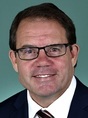
Luke Gosling Solomon, Australian Labor Party
3:36 pm
I welcome the opportunity to speak about the Albanese Labor government governing and delivering for all Australians. We are continuing to build on delivering cost-of-living relief for Australians as our No. 1 priority, while working to set Australia up for the long term. It is powerful, I think, to list just some of the measures the Albanese Labor government is delivering for cost-of-living relief for Territorians and Australians.
There are tax cuts for every taxpayer, including another tax cut in July this year, and pay rises for all minimum and award wage workers—there are those words 'every' and 'all'. Paid parental leave has been expanded to 24 weeks, on the way to 26 weeks, with super now paid on all government paid parental leave. There are $10,000 bonuses for housing apprentices; 30 per cent off home batteries to permanently cut power bills; and paid pracs for all nursing, teaching, social work and midwifery students—helping with the cost of living.
There's record hospital funding for Territory hospitals. We've expanded five per cent deposits to all first home buyers, there are pay rises for child-care and aged-care workers and we've expanded bulk-billing. For Territorians, people in my electorate of Darwin and Palmerston, 70 per cent of GP practices are now registered as Medicare bulk- billing practices. We're cutting student debt by 20 per cent. There's free urgent care in the Medicare clinics. For Territorians, that means that no appointment is necessary at Palmerston and the soon-to-be-open urgent care clinic in Darwin, as well as the other urgent care clinics in the Northern Territory. There's been the biggest cut to the cost of medicines in the history of the PBS. All PBS medicines will be $25 or less and, for concession card holders, just $7.70. And that helps with the cost of living.
We understand that all Australians are following the events in the Middle East closely and are feeling the consequences here at home. Our government is looking at every practical measure required to shield our nation and the household budgets of Australians from the worst of this global uncertainty, ensuring our regional communities and the services that all Australians rely on can continue to access the fuel that they need.
Across the board, the Albanese government has been working through and planning for the impacts of this crisis and protecting Australians from the worst of this global challenge. Some key measures include that we have empowered the ACCC to protect motorists from unfair price rises as well as to watch airlines and airfares and to watch grocery prices. We've launched an enforcement investigation into allegations of anticompetitive conduct by each of the major fuel suppliers—Ampol, BP, Mobil and Viva—and are investigating reports around independent wholesalers and distributors that service regional and rural Australia. We've boosted fuel supply by releasing 20 per cent of the baseline minimum stockholding obligation for petrol and diesel, and that is helping with supply. We're getting more fuels into the Australian market by temporarily amending some of the fuel standards. We're working closely with industry and the states, as well as the territories, to ensure this fuel gets to where it's needed most, particularly regional communities.
This is a global challenge, and Australia's international relationships have never been more important. We have reaffirmed our commitment with Singapore to strengthen energy security, to support the flow of essential goods, including petroleum oils, such as diesel, and liquefied natural gas, between our two countries and to notify and consult each other on any disruptions with ramifications on the trade of energy.
Our government, the Albanese government, will continue to work with our partners to ensure we're doing everything we can to shield Australians from the worst of the challenges coming from the Middle East and ensure that truckies and transport operators are better protected from fuel price rises. Government amendments to the Fair Work Act will allow truckies and road transport businesses to make an emergency application for a contract chain order to deal with the current spike in fuel prices caused by the war in the Middle East. Our government is looking at every practical option to shield Australians and businesses from the worst effects of this current crisis.
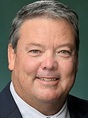
Andrew Willcox Dawson, Liberal National Party, Shadow Assistant Minister for Manufacturing and Sovereign Capability
3:41 pm
I'm very pleased to speak on the member for Gippsland's motion about 'in the middle of a national fuel crisis, the Prime Minister's broken promise to govern for all Australians'. At the outset, let's look at the Prime Minister's form. He's got a lot of form for breaking promises. Does everyone remember the $275, where the Prime Minister got up and said, 'If you vote for us, we will take $275 off your power bill'? How many times did he say that? Does anyone know that? Anyone? How many times?
Andrew Willcox Dawson, Liberal National Party, Shadow Assistant Minister for Manufacturing and Sovereign Capability
Ninety-seven—thank you very much, Member for Lyne. He said it 97 times and then just totally broke the promise. What about the holding up of the green Medicare card? Remember that one? It was just before this election. He held it up. The Prime Minister looked the Australian people in the eye and said, 'If you vote for us, the only card you will need at a doctor's is this green Medicare card.' But I can tell you something right here, right now: the people in Dawson aren't buying it. They know that, unless you've got your Medicare card and your credit card, you are not seeing a doctor and you are not getting served. That's the reality. This Prime Minister has the credibility of a vegetarian shark.
Let's look at the latest stunt—the mismanagement of fuel. The Minister for Climate Change and Energy has said: 'There's nothing to see here. The supply is right.' But the people in rural and regional Australia know that either the supply is not right or the distribution is not right, because the simple fact of the matter is that fuel is not getting where it's needed most. We did hear today in question time, to his credit, the Minister for Climate Change and Energy say there are 500 servos without fuel. It would be very interesting to see the breakdown of that. How many of those would be in rural and regional areas? I reckon it would be the lot.
Here's a newsflash for those opposite: you're supposed to be running the country. You're not standing in the tuckshop line, looking down and wondering if your gym boots are going to do the miles. You've actually got to do the work to provide the fuel where it's needed most.
In my part of the world, we're about to start the horticulture crop in the Bowen-Gumlu area, and that's a three-quarters of a billion dollars crop. So there's going to be a lot of diesel being burnt for discing, ripping and making sure that the plastic's laid and the trellises are done. This area has crops like tomatoes, capsicums, beans and corn. It's the salad bowl of Australia for the winter. If these farmers don't get the diesel that they require, then Australia's going to go hungry. It will go hungry under the Albanese Labor government's watch. It is simply not good enough.
The cane farmers are coming into the time when they plant their cane. Again, they're going to need diesel for their planters and their tractors. Then, in June, not very far down the track, there'll be the harvest times. Fuel is going to be needed for the harvesters and the hauling operators to get it done.
What about our truckies? Our truckies need the diesel. When this government lets the fuel supply run short for trucks, it affects all of rural and regional Australia, because that's how we get our supplies up from the city, and it's how farmers get our produce to market. It's simply not good enough.
What about our tourism operators—in particular, our marine tourism operators? In the Whitsunday, we've got 74 beautiful islands and we are the heart of the Great Barrier Reef. I note that the member for Leichhardt enjoyed that. I know that you have made visitation to the Great Barrier Reef as well, but you're welcome to come to the Whitsundays and have a look. With 74 beautiful islands, we are the heart of the Great Barrier Reef, but marine tourism needs diesel to take people out to the reef, out to the islands, to enjoy themselves.
There are also the grey nomads. We have very good grey nomad years, when they come up and travel through our area. We are very concerned that this fuel shortage and lack of distribution is going to upset the grey nomad season.
Folks, only a coalition government will protect Australians' way of life and restore their standard of living. We need to stop the rot from Labor. The coalition has the answer.

Justine Elliot Richmond, Australian Labor Party
3:46 pm
I'm very pleased to be speaking on this matter of public importance, particularly to highlight how this government, the Albanese Labor government, governs for all Australians. That's been our commitment since we were elected to government—from day one—particularly when you look at our long list of cost-of-living relief measures, and I will outline them soon. All of those measures were voted against by the Liberals and Nationals. They have consistently voted against every measure we have had for cost-of-living relief for Australians who desperately need it. We have seen that time and time again from them.
Now what's really disappointing is that the Deputy Leader of the Nationals puts forward this matter of public importance and plays cheap politics, as we've consistently seen with the issue of fuel security, misleading people all the time. This is a time for bipartisanship. It is a time for everyone to work together, given the global uncertainty that we all face. Instead, we see cheap political games from the Liberals and Nationals yet again. They should be on Team Australia with all of us—all of us on the same page. But I think Australians have come to learn that all we get from the Liberals and Nationals is constant chaos, all the time. But Australians know they can rely on the Albanese Labor government when it comes to cost-of-living relief and when it comes to governing this country in the best interests of all Australians.
Today, we were all reminded that it was only a year ago that the Liberals and Nationals voted against tax cuts. No wonder Australians rejected them. They have no interest in the benefits for Australians, particularly those in regional and rural Australia. Those tax cuts have made a huge difference for those people in regional Australia. Time and time again, we see them voting against the best interests of all Australians.
Now, of course, we are all very closely following the events in the Middle East and seeing and feeling the consequences here at home. The longer that conflict goes on, the more significant the impact will be on the global economy and the Australian economy. It is front of mind for the entire government. We are looking to have in place every practical measure required. We're focused on shielding Australians from the worst of the Middle East energy crisis and building our energy resilience.
We have taken very positive action to shore up fuel supply and ensure consumers get a fair go at the petrol pump. We've already boosted fuel supply by releasing 20 per cent of the baseline minimum stockholding obligation for petrol and diesel and we've unlocked new sources of supply by amending the fuel standards. We've worked with the ACCC to authorise major fuel suppliers to get fuel to where it is needed in the regions and to ramp up fuel price monitoring. We've set up the forums that are really needed for a coordinated response, including convening National Cabinet, tasking the National Coordination Mechanism and establishing the Fuel Security Taskforce. We have immediately done these actions because we know we need to have an absolute focus on this issue.
This week, we'll be empowering the ACCC by doubling penalties for false and misleading conduct and cartel behaviour—up to $100 million per offence. This government is acting swiftly because of the concerns. There is massive global uncertainty, but this government is acting swiftly because we need to have this in place. We have been indeed working around the clock—looking at all practical options that are available—ever since this conflict began.
The opposition is very well aware of this, and, as I said, they've chosen to play politics rather than be productive and get on board team Australia. That's what they should be doing, not playing politics. It's irresponsible and against the Australian interest for both the Liberals and Nationals—and One Nation, in fact; they're all one and the same now, aren't they?—to be spreading falsehoods about fuel security. It is irresponsible to be constantly doing that—for those Australians who are concerned. It's against the interest, particularly of regional Australians too, to be pushing damaging falsehoods just to get some cheap political gain. But I think people are seeing through it and seeing through the fact that it's just cheap political agendas that they have.
We're working to ensure that fuel flows at affordable prices as a supply chain comes under pressure and there's a massive increase in demand. We're closely monitoring that situation and working with the states, the territories and industry as well, every single day. We've heard here in question time from the Prime Minister and from the relevant minister exactly what is going on about this.
What I found appalling is that the previous speaker made reference to health. We all remember their previous government when it came to health. They wanted a GP tax. They cut millions from the health budget. They walk in here and have the audacity to lecture us about cost-of-living measures when they made every single cut that hurt Australians. In particular, regional and rural Australians hurt the most under the Liberal and National government. Since we've been in government, we've had a massive range of programs to provide cost-of-living relief when Australians desperately need it. We are working day and night when it comes to the very important issue of fuel security.
Sharon Claydon Newcastle, Australian Labor Party
Is somebody from the opposition rising? No. Okay! The member for Leichhardt.

Matt Smith Leichhardt, Australian Labor Party
3:52 pm
I'm honoured and surprised to be going this early! In 10 minutes, you can listen to 'Welcome to the Jungle' and 'Sweet Child o' Mine', or you can drive from Craiglie to Port Douglas, or, in the member for Gippsland's electorate, you can't quite get from Sale to Maffra. Ten minutes is 600 seconds. It's not a long time, but it is the time allotted for matters of public importance. During this matter of public importance, the member decided to talk about his staff. He doesn't have enough staff. That was a matter of public importance. In 10 short minutes, that was what he chose.
I, and my staff, made hundreds of phone calls across my electorate on Thursday to make sure that people were prepared, that they knew that Severe Tropical Cyclone Narelle was coming, that they were safe and that they had what they needed. On the hundreds of phone calls that we made, not a single person said to me, 'Gee, does the opposition have enough staff?' They were concerned about real life.
Then to have the gall to talk about the bubble—'All Australians' means the people of the cape. 'All Australians' means the 14 million Australians who have received tax cuts. What that means is putting money back into their pocket, rewarding the work that they're doing, getting ahead, feeling like the government is on their side. On the PBS, it's the reduction in price to 2004 levels. I didn't have children in 2004. It was very, very different world. But they will experience cheaper medicines. It's the ability for women to get contraceptives over the counter and the investment in women's health and the endo clinics—half of Australia, not quite all but half, a half that had been ignored for way too long. It's more bulk-billing. There are 49 bulk-billing clinics across Leichhardt now, whereas, before, there were 36.
You see, Leichhardt—and I said this during my first speech—is the embodiment of Australia. It's the most Australian place in Australia because of its diversity, because of what it is. It is a city. It is mining. It's tourism. It's the outback. It's Aboriginal and Torres Strait Islander communities. It is all of the best parts of Australia in one place. So, when we talk about all of Australia, we'd just as soon be talking about Leichhardt. I know this government delivers for all of Australia and for the people of Leichhardt.
We have some different challenges up there—challenges that many other members on our side have and that some from the opposition have as well—in terms of distance. We are heavily reliant on airports. Currently the cape is cut off. It happens every year. It's going a bit longer this year because the wet arrived late and, of course, because of Cyclone Narelle. We are now heavily reliant on our airports. This government recognised that and invested $25 million into our remote airports, making sure that our communities can get the health care they need and the education they need and that the medicine comes in, the food comes in and the fuel comes in, because it had to be done. These airports didn't suddenly fall apart. They'd been neglected for many, many years, and it is our responsibility to rectify that. It's our responsibility to look after the regions. It's our responsibility to look after all of Australia.
Things are tough at the moment. Fuel prices are hurting people. It's widely acknowledged that supply chains are making things a bit more difficult. That is why 20 per cent of the reserve has been released—on the condition that it goes to rural and regional Australia. Rural and regional Australia is Australia. The cities are Australia. All of it is encompassed here. All of it is represented on this side of the House. We're not worried about the bubble. We're worried about Australians and making this country the best that it can be.
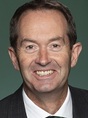
Andrew Wallace Fisher, Liberal National Party
3:57 pm
This issue is of great importance to my electorate and rural and regional electorates around the country. Those opposite in government are laughing about the fact that people in my electorate can't get fuel. They are laughing about the fact that businesses, like my fishermen on the wharves of Mooloolaba and my transport companies in Fisher and on the Sunshine Coast, can't get fuel. And, if you can, you're paying north of $3 a litre for diesel. Those opposite might think that's funny, but I can tell them that people are having to be laid off as a result and I can assure them that those people don't think it's funny. The government comes in here and says, 'Nothing to see—there is no shortage of fuel.' Why, then, are there more than 600 petrol stations without fuel in this country? Why is that?
I have had fishermen contact me today and say that they can't get diesel, again, on the wharves. I've had farmers tell me that the price of urea has gone up—how much, do you reckon, in the last three weeks? I'll tell you how much. The price of urea has gone up 50 per cent in just three weeks. That's going to have an impact on farmers and their ability to fertilise their crops. And that's going to have an impact on—you guessed it—food, because it doesn't just come from the supermarket; it comes from the farmers.
An opposition member: It doesn't grow in the aisles.
It doesn't grow in the aisles.
One of the other issues that is a sleeper issue in this fuel security crisis is the fuel security for our Australian Defence Force. In 2021, I led an inquiry in relation to fuel security for our Defence Force. That committee, of both Liberal and Labor members, recommended to the government that they needed to take a very close look at fuel security for the Australian Defence Force. You know what this Labor government's response was? 'Noted'—not 'accept', but 'noted'.
We have got a looming issue here, in a world where the geopolitical environment is the most uncertain since 1945. We have seen a war in Europe that still rages. We now have a war in the Middle East, and God forbid we should see another war in the Indo-Pacific. But if we do, our Australian defence forces are at grave risk of not being able to provide fuel to our Navy, to our Army and to our Air Force.
The committee was told by the ADF, once again, 'Nothing to see here; everything will be alright.' But the committee said: 'We don't think that's right. We are gravely concerned about our fuel security in this country, particularly for the Australian Defence Force.' This Labor government's response was 'noted'—not, 'We're going to get more fuel here, build more fuel bunkers and build more opportunities to store fuel and refine fuel.'
Who could forget the Prime Minister's personal promise, in the lead-up to the 2022 election, of his domestic shipping facility—his domestic ships that he was going to build. Where are they? Where will they be, if we see a conflict? They haven't even been on the marine architect's drawing board. This country is hopelessly prepared from a military defence perspective in relation to fuel. This government needs to get its skates on and fix it.

Trish Cook Bullwinkel, Australian Labor Party
4:02 pm
I rise to address this matter of public importance. The opposition loves to use the phrase 'governing for all Australians' as a slogan, but for the Albanese Labor government it is our daily mission. You only have to look at the map of my electorate of Bullwinkel to see why. Minus the beaches, my electorate is a microcosm of this nation. We have the foothills. We have young, diverse families in High Wycombe looking for a fair go. In the hills we have an older generation in Mundaring relying on Medicare. Out in the Wheatbelt we have farmers in Northam, Toodyay, Beverley and York, who are the engine room of our economy. When we govern, we don't just pick and choose; we deliver for everyone.
The opposition's motion mentions a national fuel crisis. But let's be clear what this is: we are seeing a global spike in uncertainty causing excessive demand driven by the conflict in the Middle East. While the opposition continues to exacerbate that fear and uncertainty, this government is playing Team Australia. We have released 20 per cent of our fuel reserves to address regional shortages. We have appointed Anthea Harris as the Fuel Supply Taskforce Coordinator to work with the states to ensure that fuel gets to where it is needed, especially to our regional communities. We are also taking the fight to those seeking to profit from pain; the ACCC is currently investigating major fuel suppliers for anticompetitive conduct.
To our farmers, we understand and we get the uncertainty. But this isn't just about inflated prices at the pump; it's about the viability of their seeding season and the entire season to follow. I know the farmers in the Wheatbelt are looking at their diesel tanks, wondering if they'll have the fuel they need to start their seeding soon. On top of that, we have a cyclone which is bringing rain early, causing some complications. But our government is acting now to ensure they can get fuel.
We are also increasing supply specifically for the Great Southern, the Wheatbelt and the Geraldton and Esperance agricultural regions. We're supporting the seeding and prioritising independent distributors. We're ensuring extra volume above forecasts is supplied into the Goldfields, Busselton and Karratha. And we're not just monitoring the situation; we're redirecting fuel to where it is most needed. To the truckies in Bullwinkel: we have your back. We are amending the Fair Work Act to allow for emergency contract chain orders, ensuring that you aren't forced to shoulder the burden of the global price spikes alone.
It is a bit rich for the coalition to lecture us on fuel security. When they were in power, they oversaw the closure of four fuel refineries and put our strategic reserves of fuel in Texas, United States. Today, under Labor, we are holding over 1.64 billion litres of petrol and 2.8 billion litres of diesel on Australian soil, and we are undoing a decade of infrastructure neglect to ensure that governing for all means actually having the resources to protect everyone.
Governing for all means also looking at the household budget, where we know cost-of-living relief is desperately needed. In Bullwinkel, this means tax cuts for every single taxpayer in the electorate, which were opposed by those opposite. It means cheaper medicines. No Australian is paying more than $25 for a script, and that's $200 million back in the pockets of Australians. It means energy relief, a 30 per cent discount on home batteries to permanently slash power bills in the hills and the regions. And it means cutting student debt by an average of $5,500, giving our young professionals the breathing room they need to save for a home.
The opposition want to focus on broken promises, but the only thing broken is their record on national security and economic resilience. This government is focused on the here and now for everyone. Whether it is freezing draught beer excise for the local pub, boosting Medicare with $1.8 billion in hospital funding or ensuring our Wheatbelt farmers can get the diesel that they need for seeding, we're working hard to ensure supply. We're shielding our nation from global uncertainty and building a future where every Australian, regardless of where they come from, is supported.

Tom Venning Grey, Liberal Party
4:07 pm
I rise today on behalf of the people of regional, rural and remote South Australia, and, indeed, on behalf of every Australian who lives beyond the reach of a Metro bus or a train line. When the Prime Minister stood on the podium on election night, he made a solemn vow to the Australian people to govern for all Australians. It was a tidy phrase designed for a city sound bite. But, nearly four years later, that promise has been exposed. The hard truth is that this prime minister has forgotten the regions. He's governing for the inner city cafes and high-rise boardrooms, while the families and farmers who grow our food and haul our produce are being treated as an afterthought in the midst of a fuel crisis. Look at the chaos at our bowsers. As of Tuesday, nearly 10 per cent of bowsers in SA are out of fuel. Of course, they are all in the regions. National prices have hit record highs. For a family in Sydney, this is a budget strain. For a fisher or a farmer in my electorate or a truckie moving across the Nullarbor, it is a threat to their very livelihood.
We have a full-time COP president and a part-time energy minister in Chris Bowen. He appears to be asleep at the wheel. On one day the government tells us there is no problem. On the next, there's a national crisis. This confusion is shredding public confidence. If stocks are as strong as they claim, then this is a staggering failure of supply chain management. Instead of blaming farmers and businesses, the government need to level with us. Where are the daily updates? What is the plan to get fuel to the regions, where it is desperately needed?
The neglect does not stop at the fuel tank. Our national food security is under a silent mounting threat. Australia relies on the Middle East for roughly 60 per cent of the urea imports, the lifeblood of our crops. Shipments are being delayed or cancelled. Experts warn that the window to avoid impacts on the 2026 season is closing fast.
The coalition saw this coming. We committed $250 million to the NAIF to kickstart domestic urea production via the Perdaman project near Karratha. We acted to ensure we weren't at the mercy of global instability. This government, however, has no plan for domestic production or a serious national food security strategy. If our farmers cannot access fertiliser, the cost of living in the cities will skyrocket. But it is the regional producer who will go bankrupt first.
Finally, we look at the EU free trade agreement—free trade that's not so free. Free trade is central to our prosperity, but it must be done right. The deal Labor is currently shopping around offers no commercially meaningful access for our agricultural exporters. It is a surrender of sovereignty. Since when did we decide that the Europeans should dictate what we call our own products? Labor calls it a reprieve that we can still use names like prosecco. I call it a failure to stand up for Australian interests.
The message from the country is loud and clear—we are tired of being ignored. Reports that the states are begging for direction from Anthony Albanese are deeply concerning. This reveals a vacuum at the top when clear national resolve is needed most. Instead of stepping up, the Prime Minister is passing responsibility back to the states. That is not leadership; that is deflection. Outsourcing this crisis to a taskforce coordinator only reinforces the chilling sense that no-one is firmly in charge of this crisis. Under Labor, inflation is higher, interest rates are tighter and fuel is running out. The Prime Minister cannot claim to govern for all Australians when he has turned his back on the country. It is time to stop deflecting and start showing real leadership because, if the country stops, the city starves.
Sharon Claydon Newcastle, Australian Labor Party
This discussion has now concluded.