
House debates President of the European Commission
Address to Parliament
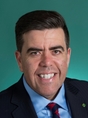
Milton Dick Speaker
12:01 pm
On behalf of the House, I welcome, as guests, the President of the Senate and honourable senators to this sitting of the House of Representatives to hear an address by Her Excellency Ursula von der Leyen, President of the European Commission. Serjeant-at-Arms, please escort our guest to the chamber.
Her Excellency Ursula von der Leyen having been announced and esc orted to the chamber—
Your Excellency, I welcome you to the House of Representatives. Your address today is a significant occasion in the history of the House.
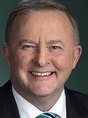
Anthony Albanese Grayndler, Australian Labor Party, Prime Minister
12:04 pm
President von der Leyen, my friend, on behalf of the people of Australia, it is my great honour and pleasure to welcome you and your delegation to our national parliament. You will shortly become one of only a handful of international leaders to have addressed our parliament, adding your name to a short list that, among others, includes President Obama, Prime Minister Modi, President Widodo, President Xi and Prime Minister Abe. Crucially, you are about to make history as the first woman international leader to address this parliament—an honour that will be forever yours.
Your visit is a defining moment in our bilateral relationship. The Australia-European free trade agreement will be a once-in-a-generation achievement that will create jobs and prosperity for generations to come. This was a logical step for two natural partners, but, as we know, it was not inevitable. It took hard work, it took constructive engagement and it required both sides to see the bigger picture—the wider horizon of shared opportunity. That is instinct that defines us and binds us.
The European Union and the Commonwealth of Australia are both proud, modern democratic creations built on ancient foundations—both born in a spirit of unity, in the understanding that we are better and stronger together. That is the story of the brighter future that Europe chose to seize in the final decades of a century shaped by the devastation of global war and shadowed by the menace of the Cold War. It has been the story of our ancient continent, too, which offered a home and a future for so many diasporas from so many corners of Europe. Through generations of hard work, aspiration and a deep love of this country, European immigrants and their descendants have enriched and shaped modern Australia, and, in so many ways, they are a living link between our continents.
Collectively, the member states of the EU represent the world's second-biggest economy, and you are currently Australia's third-biggest trading partner, with two-way trade already more than $109 billion. Now, thanks to years of patient negotiation, that is set to grow, making you our second-biggest trading partner. Yet there is so much between us that is beyond measure—unquantifiable yet undeniable. Ours is a friendship born out of instinct, a mutual admiration built on respect, values and ideals that Europe gave to us and Australia made our own—ideals that Australians went to fight for alongside Europeans when your great continent was under the shadow of tyranny, ideals that we continue to fight for.
There is so much in the bond between us that cannot be counted but can always be counted on. We turn to each other as friends and the closest of partners not because we have to but because we choose to. As the world grows ever more uncertain, our best way of navigating the new reality is for us to do more together not merely as a safeguard against present volatility or future uncertainty but as the foundation for our future prosperity, resilience, security and stability.
Right now, we're all dealing with the challenges thrown up by the conflict in the Middle East and Russia's illegal and immoral invasion of Ukraine, which has brought war to the very edge of the European Union. Every global shock underscores the importance of the second milestone moment in your visit—the signing of the new Australia-European Union Security and Defence Partnership. The partnership will bolster our collaboration on defence industry, maritime security, cybersecurity, countering terrorism and combating hybrid threats such as disinformation. It speaks for our shared commitment to stability and security, anchored in sovereignty.
The challenges the world holds for us are numerous and ever-evolving, but we do not shy away from them; we work to shape them. To that end, Australia will join this round of Horizon Europe, the world's largest pooled fund for research and innovation. It will bring together the best minds of Australia with those from Europe as we work on new technologies, advanced computing, climate and clean energy, health and critical minerals—research that boosts our resilience, strengthens our economies and makes us more secure, research that builds our future.
Madam President, I'm proud that Australia has helped lead the world with our social media ban for under-16s, and I am grateful that you strengthened this effort with your support and with your leadership. Your attendance at the event that Australia hosted at the United Nations—your being there to hear the story of the wonderful Emma Mason, who took heartache and grievance into campaigning to ensure that other parents don't go through what she went through—to witness that extraordinary courage of parents channelling their personal grief into a call for action, and for you to speak as a mother and grandmother as well as a president, was a powerful statement heard by the world. It was proof that, when we work together, there is nothing that is beyond us. That is the truest spirit that binds us and which unites us.
Madam President, you honour us with your presence. You are always welcome in Australia as a partner and, above all, as a friend.
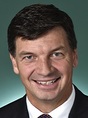
Angus Taylor Hume, Liberal Party, Leader of the Opposition
12:11 pm
Your Excellency, on behalf of the coalition and federal opposition, it's a privilege to welcome you here to the parliament, and it's a pleasure to welcome you back to Australia. To your 'guten tag', I say 'g'day'.
Yours is a historic visit. It's the first time a president of the European Commission has addressed the Australian parliament, as we've heard, and, on such a historic occasion, it's important to acknowledge the historic achievement of Europe that is Western civilisation. After all, Australia is part of that civilisation—an heir to the European achievement. We too are the beneficiaries of democracy, born in ancient Greece, and the laws, civics and engineering feats of ancient Rome. We too are the beneficiaries of the great transformations of the Renaissance that spread from Italy and of the Reformation that spread from Germany. We too are the beneficiaries of Christianity's influence on values and science's influence on reason. We too are the beneficiaries of the great changes that arose from the revolution in France and from the Industrial Revolution in Great Britain. And we too are the beneficiaries of the imagination of European builders and painters and the inspiration of European composers and writers. When Europeans set sail on treacherous seas to discover and settle unknown lands, they brought legacy with them—some good, some not so good—but Australia has been gifted with the institutions and ideas of an enlightened Europe.
Madam President, with your presence here today, we express our gratitude for the European achievement that is Western civilisation, and we acknowledge the contributions that European migrants have made to Australia over many generations, especially after the Second World War. Many people displaced by conflict in Europe found a new home in Australia. They took up tools, and they became nation builders. They also became proud Australians. Hydroelectric schemes in the Snowy Mountains and Tasmania were amongst the labours of love for European migrants who cherished their new home. The legacy of postwar European immigration can be seen across Australia today in the infrastructure constructed, the businesses started, the homes built, the food we eat and the people we are. Australia became a new home for many Jewish Europeans who survived the horrors of the Holocaust. I commend their many contributions and express our solidarity with Australians of Jewish faith. May all of us who cherish our way of life work to expunge the cancer of antisemitism that has afflicted our societies.
Madam President, Australians and Europeans today aren't just the beneficiaries of that way of life; we are the custodians. In these precarious times, we must defend and protect the inheritance we cherish. And, as you appreciate, there are many threats—authoritarian regimes whose behaviour has exposed the rules based international order to be wishful thinking of a more benign and bygone era, regimes committed to conquest, coercion and control. The only deterrence to such authoritarian regimes is Western strength.
Madam President, unquestionably, you are one of the unfaltering champions of Ukrainian freedom. I commend all you're doing to lead Europe's support for the heroes of Ukraine. Australia steadfastly supports Ukraine too as it strives for a strong peace. As the European parliament has declared, a threat to one democracy is a threat to every democracy. A failure to deter the enemies of democracy in Europe will embolden them the world over, including the Indo-Pacific. That's why the coalition applauds the signing of the Australia-EU Security and Defence Partnership. We stand together with clarity about what must be defended and what is worth fighting for. So, Madam President, I also applaud the joint statement of nations who are willing to lend support to restore safe passage through the Strait of Hormuz. It was commendably signed by no less than 15 European nations, and I'm pleased the Australian government has now signed this statement too.
Another mutual threat is Islamic extremism. In Europe and in Australia, the generosity of liberal democracies has been exploited. We've opened our doors to some people who don't want to embrace our culture, who want to erase it. The doors must be shut. Our culture can only survive by putting our values at the very centre of our immigration policies.
A third threat is dependency. Europeans and Australians have become dependent on trading with nations in critical supply chains where there are real risks. But the age of free trade has not ended. Our goals of greater resilience, greater self-reliance and re-industrialisation are best served by working more closely with true and trusted friends. We believe in free trade. We know a good free trade agreement underpins mutual economic prosperity, and we must stand united against tariff barriers.
The coalition has a notable record in delivering high-quality free trade agreements. I think of the Australia-UK Free Trade Agreement that we signed in December 2021. That agreement removed tariffs on more than 99 per cent of the goods exported to the UK. In any free trade agreement, Australia must not trade away its sovereignty. It must not limit its ability to make decisions in the national interest or protect our way of life. While the federal opposition will scrutinise all aspects of the free trade agreement between Australia and the EU, we commend the spirit in which it has been made. I acknowledge Mathias Cormann, Australia's former finance minister and now secretary-general of the OECD, the founding father of this agreement.
Madam President, we welcome you to our parliament and we welcome you to our country we are all so proud of.
Milton Dick Speaker
Your Excellency, it gives me great pleasure to invite you to address the House.
Members and senators rising and applauding—
HER EX CELLENCY Dr URSULA VON DER LEYEN (President of the European Commission ) (12:18): Mr Speaker, Prime Minister, President of the Senate, Leader of the Opposition, honourable members and senators, distinguished guests, indeed, my visit to Australia this week constitutes many firsts. I am the first president of the European Commission to visit Australia in more than a decade. I am the first president of the European Commission to address a joint sitting of your parliament, and I am honoured to be the first woman leader invited to address this joint session of parliament. It's a great privilege and one that I hope many more women will experience far sooner than my address has taken.
Mr Speaker, dear Prime Minister, thank you for the invitation. Europe is in a dangerous moment. War has raged in Ukraine for four years, and there's little prospect of this ending any time soon. In the Middle East, a new conflict rages. Countries that build economic models on the very premise of the stability and safety they provide are facing a new reality. The world we live in is brutal, harsh and unforgiving. It feels upside down. What we knew as certainties are in question. The comfort blanket of yesterday is ripped away. It is confronting. But the world we are living in is also a more honest one. We are saying out loud what has changed and how we are changing.
Against this backdrop, my visit is not a symbolic trip. What we signed today will unleash a new era of economic and security partnership. Europe, a continent of 27 member states and 450 million people, is changed. We're not just open for business; we're here to begin a new epoch in our relationship, rooted in the spirit of friendship.
It takes longer to cross Australia than to fly anywhere within Europe. Your far horizons, identified so eloquently by the iconic Australian poet Dorothea Mackellar is a reminder that the distance has traditionally been a barrier to our relationship. But, today, geography is no more our destiny, and distance is no longer a protection or a luxury. The world has changed, but we get to choose how to shape our responses, and we do this without losing sight of our culture and our connections. And they run deep, built on the foundations of the postwar surge of migration into Australia. These millions of Europeans carried the same dream: of hope, opportunity, prosperity and a better life for the next generation. While we have not always maximised this potential, our kinship has always bound us and our cultures have always understood one another. I'm looking forward to drinking my first flat white on Australian soil, and I'm also looking forward to sampling a pavlova. Or do I have to wait to visit New Zealand to try that delicacy?
Standing here in this majestic chamber, modelled after the British House of Commons but rendered in this eucalypt colour, I'm reminded of how young and vibrant your democracy is, but linked to our enduring democracy in Europe, born in Greece thousands of years ago. But your history is even more ancient, and I acknowledge all Aboriginal and Torres Strait Islander peoples and the world's oldest continuing culture.
Honourable members: Hear, hear!
HER EXCELLENCY Dr URSULA VON DER LEYEN: Our continent owes so much to Australia. You fought for our safety, for a free Europe. As defence minister, I visited your War Memorial. It was a solemn reminder of how much your country gave and of the everlasting obligation Europe owes to your men and women who sacrificed their lives for our common freedom. We have a duty not just to preserve their legacy but to fortify it. Today this task has a new urgency. I recently said that Europe could no longer be custodian of the old world order. This just reflects the reality of our changing environment. But this does not mean giving up on who we are, on our values. That matters. Whether you are Europe or a regional power like Australia, accepting the world as it is simply means making choices sooner and smarter both as governments and institutions. I stand here today proud to tell you that Europe is changed, and you can see that with how much ambition I have for this relationship.
One of the indulgences of past decades has been to think our world and our interests can be defined by our neighbourhood. Nowhere proves that more false than Australia. It can take us more than 24 hours to fly here, but so many of the issues that challenge you in Perth are the same as in Paris. Take energy prices: none of us is immune to the shocks, both geopolitical and economic, that the war in Iran brings to our populations. Pain at the pump is hard for our citizens and just another reminder that building our resilience is today's job.
We in Europe have been reckoning with our dependencies, particularly with Russian gas. There were warning signs, and we learned the lesson in the hardest of ways in February 2022. For context, imagine, for example, if here in Australia you were forced to stop selling your iron ore overnight. In a way, this is what we have had to do in Europe. Russian gas—a no-go overnight. After our societies had already withstood so much, first with the financial crisis, then the pandemic, then the beginning of the war in Ukraine and now a second energy, gas and oil price shock, diversification was and remains a necessity. This is why I am proud that we have made decarbonisation a defining pillar of our free trade agreement. It is hard-headed common sense.
In my six years as president, I have witnessed first-hand how climate change is ravaging our continent from floods in Valencia to the wildfires in Greece, which Australian firefighters came and helped put out. We all know what we are seeing is more severe. Dorothea Mackellar wrote of Australia's droughts and flooding rains affecting your sunburnt country. But the point is, these climate events have become more frequent and more intense, and it is our common responsibility to find solutions to power the planet we leave our children. This is why I am so pleased that Australia is considering entering Horizon Europe. Horizon is the world's largest research and innovation program, so joining this will put Australian researchers alongside Europe's to create tomorrow's technologies. Whether in clean tech, quantum or dual use capabilities, our brightest minds are coming together.
With geopolitics at a boiling point, we know firsthand that the more you build home-grown energy, the sooner you get independent and thus can shield yourself from energy price shocks. We are in a race to electrify our economies, and this is what future generations will judge us on.
But the war in the Middle East is not just contained to the economic costs. Today's world shows that security threats are no longer restrained by distance, but are enabled by technology. Malicious actors are able to reach into our borders without ever leaving their own. Europe, like Australia, doesn't choose how threats come to us, but we all suffer their fallout. What happens in Ukraine matters in Unley. Australians have always understood this, which is why you have remained steadfast in support of European security.
It should not be lost on anyone that the same surveillance plane that flew over Poland to help protect Ukraine is now in the gulf, helping defend our partners under attack from Iran. Equally, it should not be lost on anyone that Ukraine has rushed to the aid of the Gulf States to help them defend their skies against the same Iranian Shahed drones that have been killing Ukrainians from the sky for years. Their cooperation has deepened, and there is no clearer example than the unimaginable sight of North Koreans fighting Ukrainians on European soil.
We in Europe have also been battling attempts to undermine our democratic societies, and foreign malign interference is just another example of the threats we face converging. As our adversaries adapt to cooperate together, we too must respond together, because when we stand side-by-side we are stronger. And this is why I am so pleased you have accepted our offer of a security and defence partnership. This is what we have just signed today, creating a new defence industrial base so that we are ready to keep our people safe, because, for us in this chamber, this is our No. 1 duty.
In the same way that Australia understands that Europe's security is integral to its own, Europe knows the reverse is also true. Stability in the Indo-Pacific is our common goal, and this is why, when I went to India in January, we also signed a defence and security partnership. With these agreements we can bring together our expertise to secure our maritime routes, collaborate to counter cyberwarfare and build new defence technologies together.
Another of the realities that this new world has shown us is that dependencies can be weaponised. Australia knows this all too well. Europe too has been challenged by its dependencies, not just on Russian energy but also for our reliance on imports from a single supplier. We cannot and will not absorb China's export-led growth model and its industrial overcapacity. Last year, for the first time, every single EU member state ran a trade deficit with China. Both the threat to our supply chain security and the shock to our industrial base need urgent responses, and these are responses we can only devise together.
For both Europe and Australia, getting China right is a strategic imperative. This is why bringing to life our critical minerals partnership will be crucial to our success. We cannot be overdependent on any supplier for such crucial ingredients, and that is precisely why we need each other. Our security is your security, and, with our new security and defence partnership, we have each other's back.
The Europe I am representing is very different to what you have known. It has been hard yakka, but we finally got there. Today we finally conclude our trade deal, and we mean it when we say it. The trade deal is good to go, and I'm so proud that we got this done, because it's a fair deal and one that delivers for your businesses and one that delivers for our businesses. I think you call that 'hitting it for six'. It is a trade deal many thought we might never land, but this reflects Europe's changing approach, from Latin America to India too, and, I'm so pleased to add, Australia. When it comes to trade, Europe is open for business. We are rearming. We are decarbonising. We are preparing. We are becoming an independent Europe and this means a more outward Europe, and this is why I am here today, because showing up matters.
This is my second visit to Australia. Last time, I was enchanted by your kangaroos and koalas and, I must admit, I love to see them once again—yesterday in Taronga wildlife park, maybe today in the bush capital. But my overriding impression of Australia was its pluckiness. You are a country that likes to give things a go, and we are watching closely your world-leading social media ban. As a mother of seven children and a grandmother of six, I feel acutely the responsibility of protecting our children. It is we parents who must raise our children and not predatory, addictive algorithms, and Australia's example is one for all of us. Your social media ban was a community-led effort, bipartisan and is up and running. We wish you every success. Several of our EU member states are looking to follow, and earlier this month I convened for the first time my panel of experts. They are examining how Europe can implement possible restrictions in our union. When it comes to the safety of our children, no-one should be surprised that we are so like-minded and willing to stand up for ourselves and the kinds of societies that we want to live in. These things are precious. If the volatile world shows us anything, it is that they are worth protecting collectively.
Looking at a map, it can feel like the distance between us is enormous. But I have to say, being in your country feels like being among friends—or mates. Let us take this friendship further than ever before and turbo charge a new age in Australia-Europe relations showing that democracy has no distance. In every one of my speeches I finish with 'long live Europe', but today I would like to add long live Australia and our friendship. Thank you so much.
Your Excellency, on behalf of members and senators, I thank you for your address. I wish you a successful and enjoyable stay in Australia. I thank the President of the Senate and senators for their attendance. I now invite the Prime Minister to escort our guest from the chamber. The chair will be resumed at the ringing of the bells.
Sitting suspended from 12:52 to 15:00