
House debates Bills
Defence Amendment (Parliamentary Joint Committee on Defence) Bill 2024; Second Reading

Tania Lawrence Hasluck, Australian Labor Party
3:40 pm
Defence is a primary duty of government. In September 2022, as one of our first actions, the Albanese Labor government asked the Joint Standing Committee on Foreign Affairs, Defence and Trade to inquire into how Australia makes decisions to send service personnel into international armed conflict. Of course, we do have oversight already through parliamentary debate and Senate estimates processes plus the foreign affairs, defence and trade committee. However, that committee, chaired by my colleague the member for Bruce, judged that these processes are not sufficient. The committee saw a need for the parliament to be able to examine Defence projects and strategy in detail within a classified setting.
Recommendation 6 of the seven recommendations of the committee's report was for the establishment of a new, dedicated statutory committee focused on Defence, the Joint Standing Committee on Defence, which is of course the subject of the Defence Amendment (Parliamentary Joint Committee on Defence) Bill 2024. The coalition members of that committee supported the recommendation. Indeed, this isn't the first time the foreign affairs, defence and trade committee has made this very recommendation. In 2018, when the committee was chaired by Liberal Senator Jim Molan, the same recommendation was made. Senator Molan called it a 'sensible and critically important' reform and recommended that strategy should be its focus. I agree.
Fortunately, the new committee will indeed have a strategy on which to have its focus, because an overarching Defence strategic review was commissioned by the Albanese Labor government as one of its first actions when coming to power. The review by his Excellency, Professor the Hon. Stephen Smith and former Chief of the Australian Defence Force Sir Angus Houston was released in April 2023. The 2024 National Defence Strategy, based on the review, directs that the Australian Defence Force must adapt to meet contemporary threats—to shift from a balanced force to a focused force and to be more capable, more lethal and more integrated. The strategy is one of denial that envisages an ADF fulfilling five tasks: defence of Australia and our immediate region, deterrence through denial, protection of our trade connections, investment in our regional relationships and contribution to a rules based order. But to quote Jim Molan again:
Defence is not the province of the military alone—it is a whole of nation obligation led by the government.
… … …
With effective oversight, the parliament and the nation would not have to rely on leaked, potentially sensitive, details to the media. Points of contention could be debated while maintaining the appropriate level of secrecy about sensitive programs. And, perhaps most importantly, such a parliamentary committee could assist in bringing the nation to a realisation of the relative importance of defence and security, compared with other demands on the nation's purse and attention.
I turn to the provisions of this bill and the powers of the proposed Joint Standing Committee on Defence. Clause 110ABB sets out the functions of the committee. These express functions go further than those held by the current Joint Standing Committee on Foreign Affairs, Defence and Trade. Subclause (e) describes as a function 'to examine and be appraised of war or warlike operations, including ongoing conflicts'. Decisions to go to war will not be made by the parliament or by the committee. The power to commit our ADF to conflict will remain within the power of the government of the day. This is a constitutional power.
Recent examples of commitments of troops other than for peacekeeping operations are for Afghanistan in 2001 and the Second Gulf War in 2003. This committee provides a way for the parliament to afford appropriate scrutiny of the decisions taken by the government in relation to war and warlike operations. Governments may, moreover, decide to engage the committee prior to a commitment. Sometimes a commitment of troops is fairly unanimous in the parliament and in the community. But there have been other occasions when the commitment of troops has been a contested space. The commitment of forces by Prime Minister Howard in 2003 to Iraq is an example of a contested decision. In retrospect, much about that decision can be faulted, and it is hard to draw a line between that war and Australia's national interest. Labor voted against a motion in the House which supported the commitment of troops. Since that time, it has been broadly recognised that greater parliamentary scrutiny of Australia's military actions and preparedness is warranted from the point of view of allowing for better accountability in a parliamentary democracy and also because greater scrutiny can be expected to create an environment where better decisions are made, knowing that greater scrutiny will be applied.
The bill provides the proposed committee with a host of other important functions. Examining war under subclause (e) will be a rare action by the committee. Many members will come and go from the committee without ever having to inquire on that topic. Most of the functions of the defence committee relate to defence preparedness. The committee will review Defence agencies and their budgets, consider strategy documents and scrutinise capability development and acquisitions. On the subject of acquisitions, the Deputy Prime Minister and defence minister stated yesterday in an interview that Defence contracting is the space within government where you have the greatest exposure to the private sector. He was speaking with reference to the Thales matter that has been referred to the National Anti-Corruption Commission, where there were allegations of kickbacks for a contract. Defence contracts are always serious decisions and often involve huge amounts of money. They are the biggest single spends we see. The defence committee, under subclauses (a) and (c) of the bill, will be charged with reviewing expenditure and scrutinising acquisitions. This function will add to the necessary, robust processes that the Deputy Prime Minister and defence minister stated is essential to provide public confidence.
Other committees cannot fully fulfil this function. This month, the Joint Committee of Public Accounts and Audit reported on the Defence major projects from 2021 through to 2023, including an examination of the Hunter-class frigate project. The recommendations make it clear that greater scrutiny and timely reporting are needed, but the public accounts and audit committee manage their work without the special access to classified information that the defence committee will have. Having held a security clearance in a past role, I can attest that anything classified is worth knowing. Being able to scrutinise whether our spending on defence will produce a national capability that can deter conflict and, when it's deployed, is able to win requires ongoing and consistent consideration and oversight.
Around ANZAC Day this year, I published an article on the Battle of Rabaul in 1942, which I've referred to in this place. I was driven to write on that battle for a number of reasons: the fact that it was a pivotal but largely forgotten defeat that set the stage for the attack on Darwin; my own interest, having served in the Army Reserve; my father's and grandfather's service; and also the fact that my husband grew up there. Over all of this, I felt that the Battle of Rabaul serves to remind us now, at this point in time and in this global environment, of the need for forward posture. Our interests extend far beyond our borders and mingle with the interests of our neighbours. Preparedness for conflict in today's world is built on cooperation and with a care that extends well north of Australia. The defence committee will play a role in ensuring that this is not forgotten or minimised and is reflected in our long-term decision-making.
The bill provides the committee with a number of other functions in relation to both preparedness and personnel. Subclause (d) covers matters relating to Defence personnel and veterans. Our preparedness always depends on our people, and the defence committee can be another way in which we ensure that each and every enlisted person has the best support in place to enable them to fulfil their duty and love their career. I'm particularly pleased to see that Veterans' Affairs is included, as the interests of our personnel after their service is complete needs to be an integral part of how we think about the ADF as a whole. The committee will also, under subclause (g), examine the reports of any relevant royal commission.
Australia has a really proud history of joint exercises with our neighbours and partners. Likewise, we are proud that Australia has been represented in every UN peacekeeping operation since the UN itself was established, and the committee could review these. Members may be surprised to learn that the ADF has over 20 operations and engagements currently deployed around the world. Examples include Operation Aslan, the Australia Defence Force contribution of personnel to the UN mission in South Sudan. Another is Operation Paladin, the ADF's support to the UN Truce Supervision Organisation, whose activities are spread across Egypt, Israel, Jordan, Lebanon and the Syrian Arab Republic. Also Operation Southern Discovery, which is the ADF's contribution to the Australian Antarctic Program. These operations and activities are essential to the furtherance of peace around the world and part of the way in which we, as a country, take part as good global citizens. They are also part of the way in which we train and prepare our ADF. The defence committee would have a role in reviewing the efficacy of these contributions.
This bill should be passed. The coalition members of the committee supported the recommendation to create this new committee, so it was disappointing to hear of their late opposition. I've read the member for Canning's odd justification for their position. The coalition want to amend the legislation to target and obviate a particular political party and particular independents. How does the member for Kennedy feel about this amendment? The member for Calare? The member for Monash? There is some collective memory in the walls of this place that the coalition would like to ban the Communist Party as well. Maybe they should add that to their amendment. The member for Canning should not come into this place with an amendment that he knows is undemocratic and merely political. The safeguards around the operation of this committee are such that it will operate within an environment congruent with that of the Parliamentary Joint Committee on Intelligence and Security. The member for Canning knows this. He knows that committee well enough; he's on it, and he's chaired it. He knows full well that the provisions of section 28 of the Intelligence Services Act are being repeated here for this bill, and he needs to treat this bill with the seriousness it requires and support it.
The coalition spokesperson on defence, the member for Canning, actually understands the importance of the legislation because he has spoken in favour of it many times. In 2020, the member for Canning said, 'parliamentary scrutiny of Defence is broken and needs fixing' and, further, 'There is no independent Joint Defence Committee where tough questions can be asked'. Of course, the member was a member of a governing party then, which for nine years could have created this committee. The opposition talk a big game on defence matters, but are apparently a little lukewarm when it comes to actually improving our defence forces and the decisions with better scrutiny.
In any event, placing the word 'opposition' in legislation, even if it could be defined, is fraught. We know who the opposition parties are today, but we don't know the future. Perhaps after the election next year there will be a split of the Liberal Party, where we'll have a conservative party and a real liberal party will emerge. You are smiling at that, Mr Wolahan. You like that! One of those perhaps won't even support nuclear power. Perhaps the Nationals and the Liberals won't be in coalition anymore either. Prescribing which parties or mix of parliamentary members should be represented is undemocratic. The longstanding composition of the Intelligence and Security Committee has stood the test of time, and it works. The coalition knows this. The same composition is proposed in this bill for the defence committee. Dr Dominique Dalla-Pozza of ANU stated in 2020, in relation to the composure of the Intelligence and Security Committee, that in its formal terms, the IS Act sets up a committee that has the potential to be quite independent of government control. Dr Dalla-Pozza recognised that the way membership was constituted meant that the minor parties were not represented but also recognised the view that such membership meant that the recommendations of the committee to the executive were more likely, in this case, to be bipartisan, and more likely to have the support of the executive.
I began my speech with the Defence Strategic Review and the fact that we now need to adapt to meet contemporary threats, which involves shifting from a balanced force to a focused force—more capable, more lethal and more integrated. Integration is vital and it also betrays the fact that conflict is in a more complex space than it has ever been. Greater scrutiny needs to be part of ensuring that we are ready for the world as it is, and also for how it is changing. This committee, which many members have sought to create for some time, is now needed more than ever. The bill should be passed.

Keith Wolahan Menzies, Liberal Party
3:54 pm
I rise to speak on the Defence Amendment (Parliamentary Joint Committee on Defence) Bill 2024. I have a memory that's as clear as day from when I was in Tarin Kowt, in Afghanistan. I stood in front of a clerk and saw on the screen a debate in this place about the war in Afghanistan. It was quite a surreal moment, because I remember seeing members that I recognised speaking about it. This isn't a criticism of any member—many spoke from the heart—but it felt like there was a disconnect between what we were seeing on the ground there in Afghanistan and some of the speeches given here. The speeches felt like they were more appropriate for the time just after September 11 but hadn't moved with what had happened on the ground.
I've thought about something which has been said to me again and again. People say, 'You don't want to hear my opinion on defence or national security; I haven't served.' I totally reject that, because there is no requirement, in passing effective judgement on the deployment of men and women in uniform, to have done it yourself. There is no requirement. All you need to bring are your ears, your head and your heart, and many members in this place and in the Senate do that. Indeed, that is key to civilian control of the military.
I'm old enough to have seen the movie Starship Troopers, and maybe even old enough to have read the book! In that book, there was a requirement for the citizenship to have served. That isn't what we have here; there is no ticket to be a citizen in this country—anyone can. And we can say that while fully honouring and acknowledging those who have served. But it is the good judgement and good character of the people in this place and in the Senate that is required. I have seen that on many occasions.
This committee is a key aspect of civilian control of the military. Indeed, again and again, we have often seen that the best decisions in the national interest have been made by civilian members who have then served in this place and in the other place, and who have the best interests of the nation at heart. That's why this is such an important committee. It's an important committee because we have a lot of work to do to be where we need to be to keep our nation safe.
In many respects, and as difficult as it was, the announcement of the AUKUS agreement was the easy part. The delivery of AUKUS will be extremely hard. There will be many ups and downs and there will be many challenges. Governments will change across the three partners, some sooner than others. In fact, there are elections on this year for two, maybe three, and AUKUS needs to survive through that. This committee needs to be one that has members and senators who will serve over many terms and see that project, amongst many others, through to its completion. There is no other way for AUKUS to work without that. There is no other way.
In many projects in Defence we have seen, for want of a better word, middle management 'kill' things. You don't have to have served in defence to know how middle management can kill a project through delay, confusion and extra red tape, or just by things being put on the backburner. For AUKUS to be delivered, it needs a bipartisan commitment from this place and from the Senate to keep relevant ministers, no matter which political party they are in, and the relevant military personnel—whether they're in the civilian chain of command, in the department, or they're in the uniformed chain of command—with their feet to the fire to deliver it. That's going to be a multidecade endeavour. Indeed, a committee like this will see members and senators form relationships with their peers in the United States and the United Kingdom. They will have frank and honest discussions about the challenges in the various democracies and how we can do our best to overcome them. That takes a committee that is full of members and senators who put their priorities in this order: the national interest, and then some other interests, and down the list their party interest. Your party interest should not walk into that room at all. It shouldn't be a part of that room. As the Prime Minister quite rightly noted today, when you open up the doors in this building, from his office you can see through the Members Hall and out the entrance, to our War Memorial, with its 103,000 names of Australians who have died while serving their country. It would be doing them a disservice and a dishonour to ever put party interest—or, certainly, self-interest—above the national interest. It must never happen.
It does concern me to look at the particular announcements of a particular party, namely the Greens political party. It's important to acknowledge them. The Greens' plan, on their platform, states that they will cancel Defence contracts and cut Defence spending at a time when we need the exact opposite to happen. Their platform notes that they will:
Renegotiate the US alliance to secure a new relationship focused on making us a better global citizen
Now, that is a fine statement to make but it doesn't reflect the reality of the world that we actually live in. The platform says they will:
Reduce military spending to 1.5 % of GDP …
This is a grossly inadequate number. Finally, it says that they will:
Close all military bases that foreign militaries have set up in this country
That would include facilities like Pine Gap and the Marine Rotational Force in Darwin, amongst many others.
Great exception has been taken to that criticism by the coalition. It has been described as undemocratic—somehow, noting the Greens' position is not acknowledging the democratic reality of this place. Indeed, if the Greens were to take many more Labor seats, it might be something we have to revisit, but, in all of the parliaments to date, and in the current parliament that we have, that is not the state of our democracy, and it is not the composition that the Australian people have sent to this place.
I have been surprised, in a good way, in my interactions with members on both sides in that, on the issue of national security and defence, there are goodwill and good intentions. I can quite honestly say there are patriots across both sides, as you would expect and as you would hope for this place. This is the parliament that we are in, and this is the composition that the people have sent here. So the coalition is well within its rights to note that this particular bill, which allows for the Greens to be on the committee, would undermine the committee's whole purpose. It would undermine its purpose because the committee requires those who are on it to be exposed to not just confidential briefings but also secret and top-secret briefings. For those who have served, whether in an intelligence agency or in uniform, there are two limbs to national security documents. One is whether you have a classification, and for that committee you would presume that members and senators on the committee had been granted one, in the same way as the secretariat would require one. But the second part is the need to know. Do you need to know? For the Greens political party to make pronouncements on defence, they don't need to know the ins and outs of the most important agreement, the AUKUS agreement. That agreement will face enough hurdles and enough challenges before we consider that those who mix their politics with a form of student activism will be seeking to use the committee to undermine the national interest. To do it in that way would risk making the committee totally ineffective, because we know how the department and those in uniform would react. They would pull back from being full and frank in their disclosures to the committee, which would mean that it wouldn't be able to do the work that it needs to do. It is not a given that AUKUS will be delivered without hard work, goodwill and enormous pressure and dedication from multiple generations of parliamentarians in this place and in the Senate, and this committee is a key requirement for that to happen.
We welcome the committee. I particularly want to thank those who have recommended this in previous parliaments, including the late Senator Jim Molan. He advocated for this from a very early stage, including not just for the delivery of a great national project like AUKUS but also for the consideration of where and how this nation will deploy its men and women in harm's way.
I think back to that moment in Tarin Kowt where I stopped for a moment, looked up at the TV—at this place—and pondered about the debate that was happening so far away on the other side of the earth about the place that we were standing in. I would like to think that future men and women in uniform will one day stop to read a digital newspaper or look online to hear that a committee has had their interests at heart, the national interest at heart, and that, in particular, the parties who have had a tradition of being in government, the Labor Party and the coalition, have put their best efforts to put the national interest first, and, with that amendment, this bill is to be welcomed.

Matt Burnell Spence, Australian Labor Party
4:06 pm
Before I start I would like to take a moment just to acknowledge my friend, on the other side, the member for Menzies. I acknowledge his service and thank him for it as well. I rise to speak in support of the Defence Amendment (Parliamentary Joint Committee on Defence) Bill 2024. This bill represents a step forward in our commitment to ensuring transparency, accountability and robust oversight within our national defence framework, and a step towards bringing about recommendations made by a number of inquiries—namely, as part of the inquiry into international armed conflict decision-making, which was tabled by the Joint Standing Committee on Foreign Affairs, Defence and Trade last year.
The proposal for the Parliamentary Joint Committee on Defence is not by any means new. Its creation was also made as a recommendation of the Joint Standing Committee on Foreign Affairs, Defence and Trade in its report titled Contestability and consensus during the 45th Parliament in 2018. Though diverse in their reasonings, these reports held some constants as to the reasoning behind recommending such a committee to be established. The rapidly changing nature of our strategic environment has certainly necessitated a thorough parliamentary review to ensure our defence policies align with Australia's national interests.
The Defence strategic review of 2023 underscored the rapidly evolving security environment, characterised by intense competition among major powers and the increasing likelihood of conflict impacting our national interest. As stated in the review, intense China-US competition is the defining feature of our region and our time, and Australia now faces the prospect of major conflict directly threatening its national interest. Effective national defence is not solely the remit of the Defence department or the Australian Defence Force. It requires the involvement and oversight of all branches of government, including the parliament, to ensure our strategies and expenditures are carefully considered and aligned with the national interest.
This bill seeks to establish the Parliamentary Joint Committee on Defence, a statutory committee designed to provide rigorous oversight and scrutiny of defence related decisions. This committee will play a role in enhancing public trust in our defence policies by ensuring they are transparent, accountable and subject to comprehensive parliamentary review. The PJCD will be tasked with reviewing high-level policy documents, capability development programs, acquisition and sustainment initiatives, defence personnel and Veterans' Affairs and other matters referred by the minister or parliament. This purview extends to monitoring the government's response to the findings of any royal commission that is germane to the defence of Australia—the Department of Defence, the ADF or another Australian defence agency.
One of the key features of the PJCD is its authority to access classified information, akin to the powers held by the Parliamentary Joint Committee on Intelligence and Security, which is similarly provided for within provisions of the Intelligence Services Act. This will ensure that committee members are well informed and capable of decisions based on comprehensive and accurate information. The PJCD will also have the power to conduct hearings and inquiries, providing a platform for stakeholders to present their views and for the committee to gather comprehensive insights into defence matters. The establishment of the PJCD addresses current gaps in parliamentary oversight by providing a dedicated forum for examining defence issues. As the Joint Standing Committee on Foreign Affairs, Defence and Trade has noted, robust parliamentary oversight is essential for ensuring that our defence policies are not only effective but also align with the national interest.
That efficacy starts by addressing expenditure, both at the micro and macro levels. Given the size of Australia's defence expenditure, establishing a robust oversight mechanism through the PJCD will promote fiscal responsibility within our defence framework. By scrutinising defence expenditure and procurements—and thus ensuring that they are not only justified but remain aligned with our strategic priorities—the PJCD will help optimise our defence investments. This fiscal oversight is particularly important in the context of the significant increases in defence funding outlined in the 2024 National Defence Strategy. Moreover, the PJCD will play a crucial role in safeguarding the human rights of defence personnel and civilians affected by defence policies. By examining matters relating to defence personnel and veterans, the PJCD, with increased powers, will ensure that our defence strategies uphold the values and principles our defence establishment is tasked with protecting. This aspect of the committee's work is particularly important in light of recent inquiries into international armed conflict decision-making. These highlighted the need for greater transparency and accountability in this area.
The strategic context of this bill is defined by the rapidly changing nature of our security environment. Australia now faces the prospect of playing a part in the maintenance of the global rules based order, particularly within the bounds of our neighbouring Indo-Pacific region. In response to these challenges, the 2024 National Defence Strategy outlined a series of strategic adjustments and investments designed to enhance our defence capabilities. The establishment of the PJCD is a critical component of our response to these strategic challenges. By providing a dedicated forum for examining defence issues, the PJCD will ensure that our defence policies are informed by comprehensive analysis and debate. This will enhance the effectiveness of our National Defence Strategy and those proposed and released by government, moving forward, ensuring that we are better prepared to meet the challenges of the future.
In addition to its oversight responsibilities, the PJCD will also facilitate greater engagement between the Department of Defence and parliament. This engagement is essential for fostering a deeper understanding of defence issues among parliamentarians and for ensuring that defence policies reflect the perspectives and priorities of the broader Australian community. By providing a platform for dialogue and collaboration, the PJCD will help to bridge the gap between the defence department and parliament, promoting a more cohesive and coordinated approach to national defence. This shift promotes a culture of accountability within the defence department, encouraging better decision-making and more efficient use of resources. The PJCD's role in facilitating greater engagement between the defence department, other agencies and the parliament is essential for fostering a deeper understanding of defence's issues among parliamentarians.
The committee's mandate will extend to reviewing the Defence white paper, the Defence strategic update and other pivotal strategic documents that guide our national defence posture. By thoroughly examining these documents, the PJCD will ensure that our defence strategies are not only well founded but also adaptable to the rapidly changing global security environment. This level of scrutiny is essential for maintaining a defence posture that is both resilient and responsive.
Furthermore, the PJCD's role in overseeing capability development programs is particularly crucial. The acquisition of advanced defence capabilities is a complex and often contentious process, involving significant financial investments and strategic considerations from the initial decision to commence a procurement process throughout the delivery and beyond. Across those stages, the PJCD will provide a critical oversight function, ensuring that these investments are made judiciously and that the capabilities acquired align with our long-term strategic objectives. This oversight will help prevent the cost overruns, delays and other issues that have historically plagued defence procurement processes.
The committee's mandate also extends to the oversight of acquisition and sustainment initiatives. Ensuring that our defence assets are not only acquired efficiently but also maintained and sustained effectively is vital for our national security. The PJCD will scrutinise these initiatives, providing a layer of accountability that will help ensure that our Defence Force is always ready and capable of responding to threats. This oversight is particularly important in the context of the significant investments outlined in the 2024 National defence strategy, which include advanced technologies and critical infrastructure.
Defence personnel and Veterans' Affairs are another critical area under the PJCD's purview and the broader remit of work and investigatory oversight activities that the committee can be empowered to undertake both at its discretion and at the direction of the minister from time to time. Our ADF personnel are the backbone of our national security. Their welfare and wellbeing must be a top priority and must remain a priority once they have concluded their service to our nation.
The PJCD will play a key role in examining policies and programs related to defence personnel management, training and support services. This includes ensuring that our veterans receive the care and support they need after their service. By providing robust oversight in this area, the PJCD will help ensure that our defence personnel and veterans are treated with the respect and dignity that should always be afforded to them.
The operational procedures and powers of the PJCD are designed to ensure that it can carry out its mandate effectively. The ability to summon witnesses, request documents and hold in camera sessions will provide the committee with the tools it needs to conduct thorough and comprehensive reviews. The support of the secretariat and staff with the necessary security clearances to handle classified information will ensure that the committee can access all relevant information while maintaining the integrity of our national security.
The operational procedures and powers of the PJCD include the ability to summon witnesses, request documents and hold in camera sessions. The PJCD will also enhance transparency of Defence operations by providing regular reports to the parliament and the public. These reports will detail the committee's findings and recommendations, providing a clear and comprehensive overview of Defence activities and policies. This transparency is essential for maintaining public trust in our defence policies and ensuring that the Australian people are informed about the decisions that impact their security and wellbeing.
In addition to its oversight and transparency functions, the PJCD will also play a key role in promoting a culture of accountability within the defence department by scrutinising decisions and holding officials accountable for their actions. The committee will help foster a culture of responsibility and integrity within the department. This will encourage better decision-making and more ethical behaviour, ultimately enhancing the effectiveness and credibility of our defence policies.
The establishment of the PJCD is also an important step in strengthening our democratic institutions. By involving parliament more directly in defence oversight, we are ensuring that our defence policies are subject to the same rigorous scrutiny as other areas of government policy. This will help ensure that our defence strategies are not only effective but also democratic and accountable to the Australian people. This integrated approach will enhance the coherence and effectiveness of our national policies and help ensure that our defence strategies contribute to the overall wellbeing and prosperity of Australia.
Effective parliamentary oversight ensures that defence policies are not only strategically sound but also transparent and accountable to the Australian people. It promotes a culture of accountability within the defence department, encouraging better decision-making and more efficient use of resources. It aligns with the international best practices and reflects a commitment to upholding the highest standards of transparency and accountability in our defence policies. By providing a dedicated forum for examining defence issues, the PJCD will ensure that our defence strategies are robust, effective and aligned with our national interest.
The PJCD will ensure that our defence policies are subject to continuous review and improvement. In a rapidly changing strategic environment, it is essential that our defence strategies remain flexible and responsive to new challenges and opportunities. The PJCD will play a crucial role in this process by regularly reviewing defence policies and recommending adjustments as needed. This continuous oversight will help ensure that our defence strategies remain relevant and effective in the face of evolving threats and challenges. Transparency in defence operations is crucial for maintaining public trust. The PJCD will enhance this transparency by providing regular reports to parliament and the public, detailing its findings and recommendations. This transparency will ensure the Australian people are informed about the decisions that impact their security and wellbeing, fostering greater trust in our defence policies, frameworks and apparatus.
The PJCD is also a significant step in strengthening our democratic institutions. By involving parliament more directly in defence oversight, we are ensuring that our defence policies are subject to the same rigorous scrutiny as other areas of government policy. This will help ensure that our defence strategies are effective, democratic and accountable to the Australian people. By conducting hearings and inquiries, the committee will offer a platform for a wide range of stakeholders, including defence experts, industry representatives and community groups, to present their views and contribute to the development of defence policy. This approach will ensure that our defence policies are informed by diverse perspectives and are responsive to the needs and concerns of the Australian community.
Enhancing our national defence relations is another crucial function of the PJCD. By scrutinising international defence agreements and partnerships, the committee will help ensure that these arrangements are in Australia's best interests and aligned with our strategic objectives. This will enhance our international standing and ensure that our defence policies contribute to regional and global security. Aligning our defence policies with broader national objectives is essential for coherent governance.
The PJCD will examine the links between defence policy and other areas of government policy, such as economic policy, social policy and foreign policy. This integrated approach will enhance the coherence and effectiveness of all of our national policies. By establishing the PJCD, we are ensuring that our defence policies are subject to rigorous parliamentary scrutiny.
I commend this bill to the House.
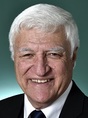
Bob Katter Kennedy, Katter's Australian Party
4:21 pm
I get appalled often in this place, but I listened to the previous member of parliament passing judgement upon men that go out there and put their lives on the line. And they're going to be subject to review by the likes of you. I bet you've never fired a rifle in your life!

Sharon Claydon Newcastle, Australian Labor Party
Member for Kennedy! Member for Spence, I'm taking this up right now. Member for Kennedy, you must direct your comments through me as the chair to avoid personal insult and injury. And I can hear you perfectly well, so you do not have to yell at me.
Bob Katter Kennedy, Katter's Australian Party
Most people talking on this bill have not actually fired a rifle, let alone fired a rifle in anger. They've never actually fired a rifle, and yet they're going to stand in judgement—
Sharon Claydon Newcastle, Australian Labor Party
Okay, Member for Kennedy. I've now got a point of order, I believe, from the member for Menzies.
Keith Wolahan Menzies, Liberal Party
I ask that the member of Kennedy withdraw and apologise. The member for Spence has served in uniform and has fired a rifle.
Sharon Claydon Newcastle, Australian Labor Party
Member for Kennedy, you have caused offence—
Bob Katter Kennedy, Katter's Australian Party
He makes a point that a member of parliament has fired a rifle.
Bob Katter Kennedy, Katter's Australian Party
Well, good on you, mate! There's one bloke in here that's fired—
Bob Katter Kennedy, Katter's Australian Party
I'm sorry, Madam Deputy Speaker.
Sharon Claydon Newcastle, Australian Labor Party
Member for Kennedy, it really would assist the House if you would withdraw that comment from earlier on and move on with the substance of what you would like to talk about.
Bob Katter Kennedy, Katter's Australian Party
What comment, Madam Deputy Speaker?
Sharon Claydon Newcastle, Australian Labor Party
I believe offence has been taken by the member for Spence—

Luke Gosling Solomon, Australian Labor Party
You are without honour, Bob.
Sharon Claydon Newcastle, Australian Labor Party
I've just taken a point of order from the member for Menzies, who was also offended by your comment directed towards the member for Spence. It would help the House if you would withdraw that.
Bob Katter Kennedy, Katter's Australian Party
I apologise for whatever it is, because I want to move on. Please can I move on?
Bob Katter Kennedy, Katter's Australian Party
Alright, there might be a person who has fired a rifle. But, when we were at war with Indonesia, I and probably half a million other Australians knew my country was at war and that we had to fight. The number of people in here that would have had that before them I think would be minimal if not negligible. And yet you're going to stand in judgement upon those people that volunteered to put their lives at risk to defend this country. What right have you got to judge those people?
I take the interjections from the ALP.
Luke Gosling Solomon, Australian Labor Party
What the hell are you talking about?
Bob Katter Kennedy, Katter's Australian Party
I am getting continuous interjections when I'm talking about men sacrificing their lies to defend their country. And he keeps interjecting. I don't know what you're objecting to, my friend—
Bob Katter Kennedy, Katter's Australian Party
but you better watch out, because I'll send that to your local papers.
Sharon Claydon Newcastle, Australian Labor Party
Member for Kennedy, please direct your comments through me. You've managed to upset a number of people now, and I would like to avoid that. So talk to me and forget them.
Bob Katter Kennedy, Katter's Australian Party
It is my privilege to offend people in this place. That is my right as a member of parliament.
Sharon Claydon Newcastle, Australian Labor Party
Not if it offends standing orders.
Bob Katter Kennedy, Katter's Australian Party
Madam Deputy Speaker Claydon, you've had more of my time than I have, so could you please give me a go.
Sharon Claydon Newcastle, Australian Labor Party
If you could proceed, that would be helpful.
Bob Katter Kennedy, Katter's Australian Party
I'm just taking down how many times you've interrupted me, Madam Deputy Speaker. The Army is run by a person who I found to be a little bit effeminate. I'm not necessarily saying that's a bad thing. I'm not necessarily saying that's a bad thing, but it just seemed to me to be fairly unusual to have a person like that at the top of the Army. He paid himself and his wife $1.2 million a year. All of those things are forgivable. But, when you spend $40,000 million dollars of taxpayers' money to buy 15 machine guns—my platoon of 32 men had 15 machine guns. We did not cost the taxpayers $40,000 million. We spent it on patrol boats and drones. Each patrol boat has a machine gun. So he put out $40,000 million to buy 15 machine guns.
Ukraine has demonstrated that we clearly need artillery pieces and artillery shells. Everyone on earth believes that you need a missile fortress; we would need maybe 200,000 missiles. I doubt whether we've got 200 missiles. Yet this place, which has made those decisions, has the hide to pass judgement.
When the head of the armed forces pulled Roberts-Smith over the coals and took his medals off him and took them off the SAS as well, Jacqui Lambie immediately went before the cameras. As far as I know, she, one member of the ALP and I are the only three who have ever worn a uniform. She was there, and I tripped going down the stairs. I thought I'd broken my leg trying to get down to support her and Heston Russell in defending the people that were defending their country.
I pray that we do not get in a conflict. People say, 'It's very patriotic, and my dad went to war.' Well, my dad went to war too, but it isn't patriotism. When we were at war with Indonesia, I joined up because, when your country is at war, you join up. I don't mean to denigrate people that make the decision; I'm one of them. But it's not about that. When your country is at war, you join up. But, when you join up, you have to take the orders, and you're placed in the most dreadful situations.
To try to bring home to you what war is about, Deputy Speaker, we took bayonet drill. The idea was that you let out a bloodcurdling scream, charged at a dummy, shoved your bayonet right in to the hilt into the dummy and pulled it out again. Then you were on guard, and you would charge at the second dummy. It was 'in, out, on guard'. Obviously, we were not going to do bayonet charges in the year of our Lord 1962—or 1964 or whatever it was. That wasn't going to happen. So why were we doing that? Because we were training a person to kill without thinking. If he starts thinking in warfare, then the whole platoon could be dead. You can criticise us for that, and you probably will. You'll probably throw us in jail for that. But we had to defend our country, and that was the way that it was done. And this was done 20 years after the Second World War, but it gives you some idea of what it was like.
One of my relatives—and Heaven only knows I think 20 or 30 of my relatives fought in the Second World War—fought at Milne Bay. I said, 'So what was it like?' 'We're going over there, and it's going to be pretty bad. We're up against a country 20 times our size.' They have been wonderful neighbours to us, Indonesia. I wish I could say the same thing about us being wonderful neighbours to them. But there was an aberration, and we were on our way to fight in Indonesia, a country with a population 20 or 30 times the size of Australia's and backed up by the communists at that stage.
This was happening in the context of communism. Mao Zedong, it's quite clear now, was responsible for the death of 48 million people. When I was at university, 5,000 marched against us being in Vietnam. But the jury is in now on Vietnam. The communists never took another country after Vietnam; the cost was too great. So it was the turning point at which communism was turned back. Just how bad was communism? Mao Zedong, it's quite clear now, was responsible for the death of 48 million people. Stalin was responsible for the death of 28 million people. That's 76 million people, if you add it up. In all of human history, not even Tamerlane or Genghis Khan would be up there with these two blokes.
But we had to fight to stop them, and Vietnam was a tough call because overlaid on the issues there were national independence and the French. But you don't know whether the cause is right or wrong. Up till about 10 years ago I wouldn't have said that I knew whether the cause was right or wrong. Your country says, 'We're at war,' and you go off to war. Now, when you get there, there are people trying to kill you and kill your friends, and, if they succeed in doing that, then we have the Japanese and the Rape of Nanking. Do you want that to happen to your people?
Do you want what the Germans did to the Russians, and then what the Russians did to the Germans in Berlin? You're passing judgement on people that have watched their families be wiped out. You can say the Russians were dreadful for what they did in Berlin. Yes, well, half of them had their families wiped out. There would hardly have been a single soldier that didn't have a relative murdered by the Germans. So it was payback time. You're going to pass judgement on these people, are you? You're going to pass judgement on them?
All I can say to you is Jacqui Lambie did wear a uniform as a full-time soldier. Heston Russell was a full-time soldier. I was not a full-time soldier, but we were on a 24-hour call-up to fight. The country was on a war footing. So I near enough was a full-time soldier. So that's three people that really had to face up to war as soldiers in this place. We united in absolute rage at the treatment of Ben Roberts-Smith and others, and the standing down of the whole SAS battalion. Now, the head of the Army said, 'You're guilty until innocent.' He immediately punished all these people, without finding out whether they were innocent or guilty. They were just hung, drawn and quartered by him in the public arena, and there's me nearly breaking my leg trying to get down to back up Jacqui Lambie and Heston Russell.
At Milne Bay—I asked this relative, who was a sergeant who was at Milne Bay. He said, 'So you want to know about the butchers of Milne Bay?' He said, 'Our commander said, "Out there's the sharks, in there's the cannibals and there's the airstrip. We take the airstrip or we die." When we came to find the first evidence of battle, the Japanese had used our soldiers, Australians, as bayonet practice. They'd been tied to trees, tortured and then killed. Our blokes went crazy.' He said, 'We cut the heads off the Japanese in the first line of trenches we took and then threw the heads into the next line of trenches. That was really successful because they jumped out of the trenches and we could kill them easily.' Obviously, the story is wildly exaggerated, but it'll give you some idea of the savagery of warfare.
Don't you people, sitting here in your nice, air-conditioned, comfortable, protected place, with a big fence around you and security guards everywhere, pass judgement on people that have put their lives on the line for this country. Don't you pass judgement on them.
Wellington, the hero of Waterloo, voted for the independence of Ireland. He was a highly conservative flag-waving colonialist, and everyone was quite staggered that he voted for the independence of Ireland. But he had fought with the guerrillas in the Spanish campaign, and he said, 'I will never, ever see that happen to any English person ever again,' because he could see what was going to happen in Ireland. There would be a guerrilla warfare.
So here is one of the great warriors of human history. He defeated Napoleon, the greatest commander in human history. He won 32 major battles. And Wellington beat him. But here he is voting for the independence of Ireland rather than facing up to another war. So, if you're out there and you've seen these things happen, then you have the right to pass judgement. If you haven't, quite frankly, I don't believe you have a shred of right to pass judgement upon these people. Their own soldiers can pass judgement upon them, but you people in this place and the broader legal fraternity—I didn't see too many of them going off to war—don't.
I want to pay tribute to the men that have defended this country. I was in the 49th Battalion when we were at war with Indonesia. I was on 24-hour call-up to go over there. We had to list two of our next of kin, and we all know why that was. I was the unit historian. I went and saw the colonel. I said: 'Colonel, in the Second World War, it was pretty negative. We fell back, we failed to hold ground, we wilted under fire—it was all pretty negative.' He said, 'What do you want to do, Katter?' There were about a thousand men in a battalion. As I said, I was the unit historian. I said, 'Well, we might have been a fall-back battalion, but then again we might not.' This was only 19 years after the Second World War had ended. 'I'm going to go down to the local RSL and just ask. Maybe we were a fall-back, but maybe we weren't.' So I went down there and I yelled out, 'Does anyone here know anything about the 49th Battalion?' They were one of the three battalions that were sent to New Guinea to stop the invasion of Australia. They were one of the three battalions that were sent up to stop the Japanese invasion. We had to hold them up so that the divisions in the desert could come back. (Time expired)
Luke Gosling Solomon, Australian Labor Party
4:37 pm
I rise to speak about the Defence Amendment (Parliamentary Joint Committee on Defence) Bill 2024. Just in case you've been listening to parliament and you just heard the member for Kennedy talk for 15 minutes on everything but that, that is what we're addressing in the chamber at the moment. I want to pay credit to both the member for Spence, who has served in uniform, did serve in an Australian Army infantry battalion and, quite frankly, didn't deserve the carry-on and the pure misinformation that came from the member for Kennedy.
Bob Katter Kennedy, Katter's Australian Party
On a point of order: I apologise—

Steve Georganas Adelaide, Australian Labor Party
The member for Kennedy hasn't got the call yet.
Luke Gosling Solomon, Australian Labor Party
Furthermore, I want to pay credit to the member for Menzies, who got to his feet and corrected the record.
One thing in that 15-minute spiel that the member for Kennedy did not talk about was the defacing over the weekend of memorials on Anzac Parade. I went past there this morning because I'd heard reports over the weekend that some of those memorials had been defaced. I saw it with my own eyes. On the Vietnam memorial and on the Korean War Memorial, vandals had spray-painted all sorts of rubbish, frankly, on there. As I said in a doorstop this morning to the media, that is an absolute disgrace and dishonours the men and women of the Australian Defence Force who have paid the ultimate sacrifice, as well as their families and all those that have served. I'm glad that the Prime Minister so strongly spoke to that in question time.
The need for this bill—what this bill is about—is the creation of the Parliamentary Joint Committee on Defence. I don't need to tell honourable members that our strategic circumstances have become far more serious in recent times. That has been confirmed through a number of reviews. The Defence Strategic Review and the National Defence Strategy are just two of the documents. We understand that there has not been a time in recent history where strategic circumstances have been so unsure without an appropriate level of strategic reassurance from, in particular, China, which has increased spending on its military by 75 per cent. That's a meteoric expansion of defence capability and, as I say, with no reassurance about the strategic intent. Obviously, that becomes a concern to countries like ours which want to maintain a strategic equilibrium, as the foreign minister Penny Wong has said, and which want to ensure that countries, large and small, can enjoy their sovereignty within the framework of a rules based order.
It is important that this parliament is able not only to examine Defence projects to build capability but also to have the opportunity in a classified setting to ensure that there are appropriate safeguards in place, because we will be increasing our defence spending so that we have a capability that will be able to deter those that might seek to coerce us in the future. When we talk about an expansion of Australia's defence spending, it will expand from 2.04 per cent of GDP in the last budget to 2.4 per cent of GDP over the next 10 years in order to ensure that we've got the capability to back up our words. Capability and intent are important for deterrence, which the Defence Strategic Review made very clear is so essential for these uncertain times.
Of course, with civilian oversight of the military, as we have in our great democracy, we need to ensure that there is an appropriate level of parliamentary scrutiny so that there's good decision-making and a really efficient and prudent use of those taxpayer funds but also that there is a more informed parliament and, by extension through us, public. I would just mention that last week, here in Canberra, Richard Marles, the defence minister and member for —how do you say it?
An honourable member: Corio
The member for Corio launched a paper that I've written for the Lowy Institute around AUKUS that went exactly to the requirement for AUKUS and, in particular, pillar I—the SSNs, the submarines—as part of our deterrence. It also spoke to the environment and times in which we live. That parliamentary scrutiny that I've talked about and the reason that we need to be writing and speaking about Defence strategic policy is part of that educational process of the public as well. What we want is a more informed parliament and good decision-making, but we also need to bring the public along with us so that there's sensible strategic decision-making for the future, not kneejerk, reactionary, performative politics that unfortunately we see more and more of these days. That is not helpful. We need evidence based public policy in Defence like we do in every other area.
The reason for our creating this Parliamentary Joint Committee on Defence, which will be established by the bill, is to inject a greater level of parliamentary transparency, accountability and oversight into the Defence portfolio in line with the Albanese government's commitment to transparency and accountability, evidenced by the fact, and this is just one example, that the National Anti-Corruption Commission has now been going for a year—not something those opposite were interested in seeing happen, like this committee, actually, in the past. I do acknowledge the supporters of this defence committee on the other side, but it certainly wasn't always the way. Whilst in government the coalition did not want and was on the record as not wanting this increased parliamentary scrutiny.
This committee will build on the useful and necessary scrutiny of Defence, particularly the major capability projects, where so much of defence funding is spent. The Senate estimates process obviously provides a level of transparency, but further scrutiny will be there by modelling this new defence committee, the Parliamentary Joint Committee on Defence, on the Parliamentary Joint Committee on Intelligence and Security, which I'm proud to be a member of and is fantastically chaired by the member for Wills, who happens to be in the chamber with us. The member for Wills does a fantastic job on that committee, maintaining a bipartisan focus on the national interest, and that is what we have all hoped would again be the case with this Parliamentary Joint Committee on Defence.
This committee will supersede and enhance the defence related functions currently undertaken by the Joint Standing Committee on Foreign Affairs, Defence and Trade but put it up a level in its scrutiny and access to information. Establishing this committee is a priority of our government. We are very much committed to passing the enabling legislation as soon as practicable. To support the establishment of the committee we provided in the budget $17.5 million over a decade for the effective running of that committee to ensure it's resourced appropriately.
Just quickly, on the origins of the bill, it was a recommendation of the Joint Standing Committee on Foreign Affairs, Defence and Trade's inquiry into international armed conflict decision-making, which followed a referral from the DPM, the Deputy Prime Minister, the member for Corio. The inquiry was initiated to deliver a commitment of the Australian Labor Party's national platform. Previous inquiries have recommended the establishment of a statutory committee on defence. That was recommended back as far as 2018. As I mentioned, the Leader of the Opposition and many other members on the front bench opposite were members of that former government in 2019. But they disagreed with the creation of this statutory committee, and they said:
There are already substantial Parliamentary oversight measures in place for the Department of Defence. Australia has enjoyed a long period of broad bipartisan agreement on Defence policy, operations and force structure and additional measures to enhance bipartisanship are not necessary at this time.
That wasn't long ago. Where the former coalition government were unwilling to take this up, the Albanese government is acting—on the leadership of the Prime Minister and the Deputy Prime Minister, in particular.
This bill will create the committee responsible for reviewing, monitoring and reporting on the administration and operations of all Australian defence agencies, including the Australian Defence Force, the Department of Defence, the Department of Veterans' Affairs, the Defence Intelligence Organisation, the Australian Geospatial-Intelligence Organisation and the Australian Signals Directorate. Those organisations will remain subject to oversight by the PJCIS. Just to clarify that: the ADF, the Department of Defence and the Department of Veterans' Affairs will be under the new PJCD committee, whilst DIO, AGO and ASD will remain subject to oversight by the PJCIS.
I could speak more on this, but I have another commitment in another place, and there are other speakers here to continue to outline why this is important and also some concerns that the bipartisan support for this may not be there. We need a bipartisan approach to this committee, as we do for the intelligence and security committee. We need a bipartisan approach for the testing of ideas, and also a bipartisan approach on the national interest.

Peter Khalil Wills, Australian Labor Party
4:51 pm
Parliamentary scrutiny is absolutely vital in ensuring the best decision-making and the most efficient and prudent use of taxpayer funds, along with a more informed parliament—and, by extension, through us in this place, a more informed public, because that's part of our responsibility.
The Albanese Labor government is committed to the continued improvement of our national security laws. I can attest to that, having spent the last two years as chair of the Parliamentary Joint Committee on Intelligence and Security. This is to ensure that our agencies—our law enforcement, security, and intelligence agencies—are best equipped to continue their work to keep Australians safe and to protect our way of life. The new Parliamentary Joint Committee on Defence, the PJCD, established by the Defence Amendment (Parliamentary Joint Committee on Defence) Bill 2024, will inject greater parliamentary transparency, accountability and oversight into the Defence portfolio, in line with the Albanese government's commitment to transparency and accountability. It is necessary to ensure that parliament can also examine the defence projects and Australia's defence strategy in greater detail and, of course, in a classified setting, where required, with the appropriate safeguards in place.
The Albanese Labor government takes these duties very seriously. We have heard previous speakers on this, like the member for Solomon, who spoke eloquently around the point of bipartisanship and the importance for a consensus around what are critically important national security issues for this nation. Let me just expand on this approach for a moment. What we mean by that is that it's not just agreeing on everything all the time; there is a contest of ideas. There are differences of views right across this place and in the other place—even within parties, as well. What we mean by a bipartisan approach is checking the partisan politics at the door when it comes to the work that we do. For example, in the intelligence and security committee—and I would hope in the parliamentary joint defence committee—we park partisan politics at the door and in good faith, after vigorous debate, analysis and engagement, seek to try to reach a consensus on what we consider to be critically important for the national interest in and around our national security. That is a really important approach. It means not playing politics with such important issues but, in a genuine, good faith effort, seeking to find the best possible set of recommendations, the best analysis and the best understanding of what is required for the government to put in place.
This approach is more crucial than ever, particularly in the challenging and complex strategic national security environment that we find ourselves in currently. The establishment of the PJCD implements a recommendation of the Joint Standing Committee on Foreign Affairs, Defence and Trade's Inquiry into International Armed Conflict Decision Making, following a referral from the Deputy Prime Minister, the Minister for Defence. That inquiry was initiated to deliver a commitment in the Australian Labor Party's national platform. The PJCD is modelled, as we've heard, on the Parliamentary Joint Committee on Intelligence and Security, the PJCIS, and will supersede and enhance the defence related functions currently undertaken by the Joint Standing Committee on Foreign Affairs, Defence and Trade.
As I mentioned, as chair of the PJCIS I'm very cognisant of the important role the PJCIS has always played in doing the necessary work, the extremely rigorous and methodical work—and bipartisan when necessary but certainly the work done in an atmosphere conducive to the national interest coming first and foremost, rather than partisan or temporary political gains, reaching consensus where it is possible in the national interest. That has meant the membership is by appointment, and the structure of the PJCIS has been agreed upon. The intelligence security committee, which the PJCD is modelled on, vigorously scrutinises bills and debates those bills as national security bills in a classified setting, mainly, and comes to agreed positions and recommendations. Then we write up, usually, a joint report that is bipartisan from all members, no matter what side of politics they are on.
The PJCD is modelled on the PJCIS structurally but also in the context of the manner in which it should go about doing the very critical and important national security work it will be tasked with doing. That is just as important as the elements in the bill—the structural elements, the foundational set-up of the PJCD. It is that understanding of the critical nature of the work that is being undertaken and the importance of members of that committee undertaking that work in good faith, regardless of what side we are on in politics. In a sense I'm making a case for not playing politics with very important matters, especially the matters that pertain to national security and the security of Australians.
Those opposite me would know that this type of good-faith arrangement, this type of effort, this bipartisanship—when it's possible—in the PJCIS makes us stronger and safer as a nation. With the PJCIS, which I chair, the Prime Minister, in consultation with the Leader of the Opposition, appoints the members of the committee, and will do so for the PJCD. They will be a majority of government members, and non-government members will make up the rest, from both houses of parliament. The arrangements for information handling are closely modelled on the PJCIS, and the committee proceedings will be conducted in private and appropriately secure settings—unless the minister has authorised public hearings to look at certain bills. This would be with the exception of the committee's consideration of the annual reports of defence agencies. That is to ensure that sensitive information can be adequately assessed and analysed by committee members.
Unfortunately, we still see the coalition, those opposite, not able to resist the temptation to play politics with the establishment of this very important defence committee. They are playing politics with Australia's national security. While we are focused squarely on keeping Australians safe, squarely on our national security, squarely on our national interest, they have decided to oppose this bill. I say to those opposite that I've seen this story before. They ran this argument with respect to the PJCIS increasing its numbers. The Prime Minister already has the power to appoint any member of parliament to the PJCIS; that is done in consultation with the Leader of the Opposition under the Intelligence Services Act, and, as I said, the PJCD will be modelled on the PJCIS. That is a longstanding process, and it will be no different for the Parliamentary Joint Committee on Defence; that process will be the same. It's quite galling because previous inquiries have recommended the establishment of a statutory committee on defence; we've seen that in this place. The Defence Subcommittee of the Joint Standing Committee on Foreign Affairs, Defence and Trade recommended, in 2018, the creation of a similar joint statutory committee. When the former government, the Morrison government—the coalition—responded to this recommendation in 2019, they disagreed with it, saying, 'There are already enough substantial parliamentary oversight measures in place for the Department of Defence.' Okay. So they knocked it back in 2019 on that inquiry's recommendation. When they were in government, they rejected the establishment of the PJCD. It is a committee that will allow for more scrutiny, so they are knocking back the need for more scrutiny. When they were in government, they dodged accountability, they reduced transparency and they rejected scrutiny—clearly, from their own statements.
Those opposite me engaged in grandstanding and used fearmongering about national security and defence. They do it all the time, but then they refuse to accept the recommendations that would actually improve both—provide transparency and accountability. Now they're back in opposition, and there's still this aversion to greater scrutiny by the parliament. I don't understand it except for the politics—again, playing politics with this. Where the former government was unwilling to take this up, this government—the Albanese Labor government—is actually acting on those long-standing recommendations and establishing this defence committee.
I would say those opposite would have to explain their position for themselves. It is not just disappointing but frankly, I think, irresponsible. Given the current strategic circumstances that we face, there is a critical need for a committee such as the PJCD, which can provide effective parliamentary scrutiny of Defence in a classified environment. Everyone agrees upon that and everyone has agreed upon that and then, at the eleventh hour, those opposite have decided to say no. We've been clear from the beginning as a government that this committee recommended it be modelled on the PJCIS and that's long enjoyed bipartisan support. It's particularly disappointing because, as I said, everyone has agreed to it. Even those opposite have agreed on it. The shadow minister for defence, the member for Canning, said in March of this year, 'I think that would be a really important development for a lot of parliamentarians who care about our troops and want to see the best for them.' That was in relation to the establishment of this defence committee. As far back as 2020, the shadow minister for defence wrote an opinion piece where he called for a joint defence committee and said: 'Parliamentary scrutiny of Defence is broken and needs fixing. If we are serious about increased transparency and accountability then we need proper parliamentary scrutiny of the Department of Defence and Australian Defence Force.' That's the shadow minister for defence.
I wonder what happened in the opposition party room last week. Were all of those statements suddenly forgotten and then they decided, 'Well, hold on, we don't want more scrutiny, we have changed our minds'? They said it when they were in government, they said it when they're in opposition and now, at the eleventh hour, when we're about to put forward the bill, they oppose it.
The PJCD will be responsible for reviewing, monitoring and reporting on the administration and the operations of all Australian defence agencies, including the ADF, the Department of Defence and the Department of Veterans' Affairs and all of the intelligence organisations—the Defence Intelligence Organisation, the Geospatial-Intelligence Organisation—while the Australian Signals Directorate will remain subject to oversight by the PJCIS. There are going to be a broad range of functions that will be established by this bill to act as standing terms of reference for the PJCD and provide for greater oversight, transparency and accountability in significant areas within the Defence portfolio: reviewing admin and expenditure; reviewing defence agencies including annual reports; considering white papers, reviews and other policy documents; strategy, planning and contingency; scrutinising Australia's defence capability; development acquisitions and sustainment; considering matters relating to personnel and veterans affairs, examining and being apprised of war or war-like operations, including ongoing conflicts; monitoring the involvement of Australian defence agencies in significant non-conflict operations, domestically and internationally; reviewing the implementation of the government's response and monitoring the findings of any royal commission inquiring into matters relating to the defence of Australia or any agency; and considering the operation, resources and performance of the Inspector-General of the Australian Defence Force. These are critically important tasks that need to be taken up, and those opposite are delaying and blocking this bill.
As Australians, we are fortunate to have a level of peace, security and stability that countless others around the world are not able to appreciate. It can often be easy to take this stability and this security that we enjoy for granted, to think it's just this permanent fixture of Australian life, but the reality is that upholding and protecting that standard of security requires a constant level of vigilance.
The creation of the Parliamentary Joint Committee on Defence is just one element, and a very crucial element, of the Albanese Labor government's national security and transparency agenda. This bill puts forward those elements of vigilance to do our job, and the government is committed to continuously updating our systems and our security infrastructure to pre-empt and overcome challenges to keep Australians safe and our national interests upheld. That is my task, as the chair of the Parliament Joint Committee on Intelligence and Security, and I take that job especially seriously, as do the members of my committee. The Parliamentary Joint Committee on Defence will take this important responsibility, this sacrosanct responsibility, just as seriously. I urge the opposition to stop playing politics with this bill and to support it, as they have in the past, so that we can pass it through this place.

Andrew Gee Calare, Independent
5:06 pm
I rise to support the Defence Amendment (Parliamentary Joint Committee on Defence) Bill 2024. I do so because I believe that the new committee can make an important contribution towards oversight, accountability and transparency on decisions and policies relating to defence and also security matters.
Proposed section 110ABB sets out the functions of the committee, and I note they include:
(a) to review the administration and expenditure of Australian defence agencies, including their annual reports;
(b) to consider white papers, reviews and other policy documents dealing with the strategies, planning and contingencies of Australian defence agencies;
(c) to scrutinise Australia's defence capability development, acquisitions and sustainment;
(d) to consider matters relating to defence personnel and veterans' affairs—
very important—
(e) to examine and be appraised of war or warlike operations, including ongoing conflicts;
(f) to monitor the involvement of Australian defence agencies in significant non-conflict operations domestically and internationally;
(g) to monitor and review the implementation of the Australian Government's response to the findings of any Royal Commission … that inquires into a matter relating to the defence of Australia, the Department, the ADF or another Australian defence agency;
(h) to consider the operations, resources, independence and performance of the Inspector-General ADF;
(i) to inquire into matters referred to the Committee by:
(i) a Minister; or
(ii) a resolution of either House of the Parliament;
(j) on the Committee's own initiative—
it may—
… inquire into other matters relating to one or more Australian defence agencies;
When you go through and review the functions of the committee, it is very obvious that they really do ensure that oversight, accountability and transparency on decisions and policies relating to defence matters are improved. This is a really positive thing for our country and a very positive thing for decision-making. Hopefully, it will lead to better outcomes for the men and women who serve our nation in uniform and also for veterans and their families.
Proposed subsection 110ABA(2) sets out the proposed membership of the committee, and it provides that the committee can have up to 13 committee members and must be composed of at least eight members: two senators who are government members, two members of the House of Representatives who are government members, two senators who are non-government members and two members of the House of Representatives who are non-government members. Members from the House of Representatives are nominated by the Prime Minister and members who are senators are nominated by the Leader of the Government in the Senate.
I should note that crossbench members are not excluded from membership of the committee under the proposed legislation, so I was very surprised to hear that the member for Canning is proposing to move an amendment effectively banning crossbench members from sitting on the committee. As I heard those words, I was taken aback by the sheer undemocratic arrogance of that move. It smacks of the old 'the sun will never set on the empire' view of Australian politics that some in the major parties still adhere to. Politics is changing. Poll after poll, election after election, demonstrates that support for the major parties is slipping away. Every day, every week, every month, every year, every election, support for the major parties ebbs. The crossbench continues to grow. The sun is setting on the old political empires of the major parties, and that's the cold, hard truth. Representation on committees such as this can't be denied. It's undemocratic and just plain wrong.
The foreshadowed amendment suggests that coalition MPs are somehow more trustworthy than crossbench members on matters pertaining to defence and national security. Well, let me talk about some of the coalition trustworthiness that I can speak to. I have been in coalition partyroom meetings where I have been able to read, almost in real time, in the digital media what was happening in those meetings and who was saying what.
Steve Georganas Adelaide, Australian Labor Party
Order, the member for Calare will resume his seat. The member for Cowper on a point of order.

Pat Conaghan Cowper, National Party, Shadow Assistant Minister for Social Services
The point of order is relevance. The information that the former member of the Nationals received in partyroom meetings is not relevant to the debate on the Defence Amendment (Parliamentary Joint Committee on Defence) Bill.
Steve Georganas Adelaide, Australian Labor Party
Thank you, Member for Cowper. The Assistant Minister for Competition, Charities and Treasury.

Andrew Leigh Fenner, Australian Labor Party, Assistant Minister for Competition, Charities and Treasury
On the point of order, I'd like to thank the opposition member for drawing people's attention to the matters the member is raising. They are highly relevant to the bill and to the amendment which has been moved.
Steve Georganas Adelaide, Australian Labor Party
The assistant minister will resume his seat. I'll make the observation, whether it was a point of order or not. The member for Calare will continue speaking. He is being relevant in talking about the reasons he thinks that crossbench members should be privy to the discussions about being on the committee. He's giving his reasons as to why he thinks so, so I think he is being relevant. The member for Calare in continuation.
Andrew Gee Calare, Independent
I'll just caution those opposite on making too many objections, lest the public think that it may have been one of those members who was doing the leaking. Seriously, I have been in joint coalition partyroom meetings where you could have sworn that the media had a real-time transcript of what was happening in those meetings. In fact, there were so many partyroom leaks that I don't even think an in-house plumber could have plugged them all. I would also, from time to time, read in the media about what was happening in cabinet, taking leaks and untrustworthiness to a whole new level. I also note that in 2022 the current Attorney-General reportedly wrote to the former Prime Minister and member for Cook to tell him—you guessed it—to stop leaking. He was leaking!
The opposition should spare us all the sanctimonious and self-serving nonsense that only those in major parties can be trusted with respect to important matters of defence and national security. I will support this bill. I'll be opposing the opposition's undemocratic and unmeritorious amendment, and I hope that those opposite, when they consider the amendment, will remember that they need to get a plumber to do something about those leaks.

Josh Wilson Fremantle, Australian Labor Party
5:14 pm
I support the Defence Amendment (Parliamentary Joint Committee on Defence) Bill 2024. It will make a significant change to the quality of scrutiny, oversight and, ultimately, decision-making when it comes to some of the gravest matters that the government has responsibility for, namely defence and military operations, particularly any decision that involves the commitment of Australian service people to conflict, which has generally been conflict overseas. It's a really welcome change that has been delivered through a characteristically thorough and substantial process. I'll talk a little bit about that, and I also want to acknowledge some of the people who have worked to get us to this point in the parliament and in the broader community. But, at the outset, I think in a week when there are lots of things going on—as is always the case here—it is important to say that, by creating a dedicated committee on defence which has the ability to receive classified information and briefings, the quality of parliamentary engagement on defence decision-making will be materially improved. As I said, when we think about that kind of decision-making, there aren't decisions that government makes which are more grave than the decision to involve this country in war or in warlike operations.
In her speech this morning, the new Governor-General, Sam Mostyn, spoke about the three big building blocks that are the foundation of Australian life: our First Nations heritage—we have the longest continuous civilisation on Earth; the British institutions that form the basis of our style of government and our way of life in other respects; and, of course, the waves of migrants that have produced the incredible multicultural dynamism and diversity that is such a strong part of Australian life today. But, if you take those institutions—we're fortunate to be the inheritors of the British democratic system, with a parliament and other features like free press and an independent judiciary and so on—it has always been the case that the decision to involve the country in war or warlike operations is the prerogative of the executive. In the early part of the life of this nation, that was subordinated to the decisions made in the United Kingdom but, certainly, going forward from the time of the World War II they have been decisions that have been wholly made by the Australian government. They are made through executive prerogative—through a Federal Executive Council process that results in a decision by the Governor-General.
The involvement of the parliament in that decision-making has been limited. The extent of parliamentary involvement has been provided through a range of parliamentary conventions and norms. One of them has been that, where Australia does make a decision to get involved in military conduct, the Prime Minister will bring a motion to the parliament that will allow the matter to be debated—that's something that has occurred. But there is no formal requirement that parliament be involved in sanctioning that kind of decision, and there are good reasons why that has not been the case—part of it has to do with timeliness; part of it has to do with the sensitive nature of the material that would be considered in making that decision. And there are some other factors too. I point out to those who advocate, quite reasonably, for the consideration of parliament being involved in deciding whether or not a country goes to war, that it's worth remembering that if that were to be the case then once that decision is taken, in effect, the parliament has given assent to that course of conduct rather than occupying a position where it can, rightly, scrutinise the course of that conduct as it goes forward.
But what has happened in this case is that we have recognised that the decision-making framework and processes in relation to defence, military and security matters—particularly when they involve war or warlike operations—should always be capable of improvement. We should never stop and take our democratic institutions, processes and culture for granted. We've seen around the world how those things can grow weaker over time and how they can become ill suited to the circumstances of a changing world. It's absolutely right that we're prepared to, from time to time, have a look at the institutions, the structures, the processes and the culture around that kind of decision-making and ask ourselves if they are fit for purpose and if they can be improved. That's what we were prepared to do in this case.
I want to recognise it's a conversation that has been carried by lots of people in civil society, particularly groups like Australians for War Powers Reform led by Alison Broinowski, the Independent and Peaceful Australia Network, the Medical Association for the Prevention of War and a number of other groups. It's a healthy part of our democracy that we have civil society groups like that, which address these kinds of serious matters, consider what's going on in other countries around the world and foster a lively and robust debate about how things sit in this country, whether they have drifted—which I think was the case with some of the conventions around the discussion of military engagement in this place—and how we might improve them.
The outcome we have here is the creation of a new committee dedicated to that purpose, covering all of the things the member for Wills and the member for Calare mentioned: reviewing administration expenditure, considering white paper reviews and other policy and strategy documents, scrutinising Australia's defence capability acquisitions and sustainment, looking into matters related to the broad wellbeing of defence personnel—and former defence personnel, in terms of Veterans' Affairs—and examining and being appraised of war or warlike operations.
The creation of this committee started with a resolution in the Labor platform. I can't remember at what particular conference it was moved in the past, but it was refreshed in 2021. I moved that motion, and the member for Bruce seconded that motion, which was to ensure, in the next term of parliament in which Labor formed government, that there was a committee inquiry on the question of war powers—that essentially a future Labor government would refer the issue of how Australia makes decisions to send service personnel into international armed conflict to an inquiry to be conducted by the Joint Standing Committee on Foreign Affairs, Defence and Trade.
That's exactly what happened when we were elected. That referral came from the Minister for Defence to the Defence Subcommittee of the Joint Standing Committee on Foreign Affairs, Defence and Trade. It was very ably chaired by the member for Bruce. It was a very interesting, thorough and substantial inquiry. We had public hearings and submissions and all of the things that inquiries should consider. I particularly acknowledge the evidence we heard from veterans Mr John Phillips and Mr Cameron Leckie. They said very clearly to us that they wanted to see greater parliamentary involvement. They wanted to see change occur that would sharpen up and deepen the way that the parliament is able to engage on these things in order to deliver scrutiny, oversight and contestability—all the things we know are hallmarks of quality decision-making in a democracy.
Then, through the inquiry and its report, one of the key recommendations—there were a number of them—was the creation of this committee. The Minister for Defence received the report and responded to the committee in quick time, and the best evidence of that is the fact that here we are, about to make a significant change to the parliamentary committee architecture in a very meaningful way. The member for Wills, with whom I serve on the Parliamentary Joint Standing Committee on Intelligence and Security, described how valuable and important that committee is and the way in which this new Parliamentary Joint Committee on Defence will in many ways mirror the way that committee is established, is structured and works.
I've covered the terms of reference, but, of the two further things that will be critical to the way this committee will do good work, one is its capacity to consider classified information briefings. It's in the nature of defence and security that a lot of the material is highly sensitive, and that makes it difficult to create an appropriate way in which parliamentarians can engage with that. But it's important that we do. It's vital we don't slip into a set of circumstances where those kinds of matters are regarded as so sensitive and so much the special preserve of some defence and security elite that they don't get tested by the broader engagement of those sent here as representatives of the people. I completely agree with the member for Calare when he says that it's quite right that the membership not be restricted in a way that would exclude one group of parliamentarians or another. Ultimately, the choice of the committee membership is a serious one, like with the PJCIS, and it's a matter for the Prime Minister to determine through the appropriate forms of consultation.
But, in addition to its ability to receive classified material and in addition to its terms of reference, the third most—or, as you could argue, the first most—important quality will be the culture of the committee. The culture of the PJCIS has a core of bipartisanship in the way that committee works. There is a commitment to the intensity and seriousness of the workload involved. And there's a genuine application by all members of the committee to give their best service in that committee membership, to take that work seriously and to try to deliver improvements and solutions to problems and issues that arise. I'm confident that this new defence committee will set off in that same vein and have those same qualities. If that is the case, it will make a really important difference to the quality of defence and security decision-making in Australia, and that's no small thing.
There were other recommendations from the inquiry report that led to the creation of this new committee. They're important too, and I'll cover a couple of them, because I think they flesh out the value of being able to look at this area and consider how we improve it as we go on. The other recommendations included seeking to formalise to a greater degree the expectation that, where there are major military operations, the responsible minister or the Prime Minister will table a written statement identifying the reasons for and objectives of those operations and the legal basis on which they've occurred. It will be a more formal recognition that it would make sense in those circumstances for parliament to sit as soon as it possibly can so that an appropriate motion can be moved and debate can occur. That has been one of the conventions in the past, but it has tended to be used, I think, in a less timely way than is desirable.
Those are some of the further changes that, along with the creation of this committee, will actually make a meaningful difference to how the parliament understands, comments on, scrutinises and debates some of these incredibly serious things. They're matters and endeavours that inevitably cost Australia a great deal not just in terms of the resources that go into them but, most importantly, in the lives that are affected by those comments. I do note that, to the extent that some opposite have queried whether this change is really valuable, there was the 2018 bipartisan committee report—Contestability and consensus: A bipartisan approach to more effective parliamentary engagement with Defence. It recommended we create a committee like this. The Morrison government said, 'No thanks,' which I think was a shame. This is one example of how the Albanese Labor government, while doing a whole bunch of really important, substantial things for people's broader wellbeing, are also making lasting changes to the quality of our parliamentary democracy.

Allegra Spender Wentworth, Independent
5:29 pm
I rise to support the Defence Amendment (Parliamentary Joint Committee on Defence) Bill 2024. First, I want to reflect—my feeling and what I think is the feeling of many in the parliament—that the first job of government and of parliament is to keep people safe. Defence and our defence capabilities really go to the heart of that. For me, this is a bill that increases the accountability of Defence and the transparency of Defence to the parliament, which I think is absolutely critical. Certainly when you look at the times that we are entering—where you're looking at increased spending in defence, but also the difficult defence environment that we are facing as clouds gather around the world—it's even more timely and more appropriate that Defence has greater parliamentary oversight, which this bill supports.
The other piece I'd like to note in relation to parliamentary oversight is the role of community engagement. I was concerned by a recent poll by the US Studies Centre, at the University of Sydney, which found that only 42 per cent of those polled thought the AUKUS submarines were worth the cost while 32 per cent actually opposed acquisition of nuclear powered submarines. I note this, not because of the merits or non-merits of the AUKUS agreement, but to make the point that if the community is not with the parliament and the government on its defence activities, then there is a real danger that these defence plans, which are many years in the making—often decades in the planning—are vulnerable.
It is critical that we do level with the community, that we really engage with the community on some of these major strategic defence questions that have arisen. I will cite, for example, AUKUS. Because it has support from both of the major parties there has not been a great deal of debate in the parliament about this. This has been an area of concern for members of the public, not least because they haven't had the opportunity that I think many would like to understand the reasons, the alternatives and why AUKUS was, and still is, the preferred approach for the government as well as the opposition. I've always said I support AUKUS, but I do believe that the community needs to have better engagement on this issue. I feel that this is an opportunity, through this parliamentary committee, to further do that.
I'd like to very briefly talk about the composition of the committee since this is an issue that members of the coalition such as the member for Fisher have brought up. His concern is that members of the crossbench could be contemplated as potential, though not necessary, members of this committee. I call on the coalition to reflect on what has been happening over a significant period of time and really culminated in the last election: 30 per cent of the country did not vote for a major party, and that has led to the largest crossbench in recent parliamentary history. I think the lesson from that election is really that people are concerned with what the major parties are doing in terms of building their trust, and they are looking for alternatives. I think that's really the message that the member for Fisher should take from this and consider separately: Why has a significant part of the community said they do not trust the major parties on the major issues? They would prefer an alternate to represent them, so why shouldn't that representation be borne out in a defence committee.
I note that members of the coalition have said, 'You can't trust the members of the crossbench not to leak or to not behave inappropriately.' I'm going to finish my speech with the observation that I'm a member of two committees—the economics committee and the Joint Standing Committee on Migration—and note that there's been one leak from one of my committees, the economics committee, and that was extremely concerning to me. But the one person who I know did not leak from that committee was the member of the crossbench—myself—because I wasn't there on the day of the leak. I wasn't there for the private hearing with the RBA and the Governor of the Reserve Bank of Australia. Notes from that meeting were leaked to the Financial Review, and the one person who couldn't have done that was me because I wasn't there. I wasn't able to attend that day. I think that, when the coalition is particularly keen on calling the ethics of the crossbench to account, they perhaps might reflect on that experience and consider whether it is fair in that case and others and whether that is an accurate representation of the likely outcomes of these pieces. Certainly, I and members of the crossbench take our parliamentary duties extremely seriously, including the confidentiality of the committee process. Frankly, I was appalled to see that a committee would leak something like that, but that wasn't me. It was definitely the majors.

Graham Perrett Moreton, Australian Labor Party
5:35 pm
I rise to speak on the Defence Amendment (Parliamentary Joint Committee on Defence) Bill 2024, which, put simply, is creating a new committee to have parliamentary oversight of defence matters in this building that would be able to deal with classified material—top secret material.
This morning, we saw something that I don't think I've ever seen in my 16 to 17 years in parliament when we have welcomed a Governor-General, commencing their term on 1 January. We saw something that we don't see very often, which was the Great Hall open and all the doors open so that, if you stood under the flagpole, you could look north all the way through the building out to the front, under the Great Verandah, past the First Nations area and all the way up to the War Memorial. One of the design features of this building is that north-south line, where the public can theoretically go straight through the building all the way to the Prime Minister sitting at her or his desk. The other line of power is obviously, Deputy Speaker Vamvakinou, through your chair—the Speaker's chair—through the building, through the chamber, under the flagpole and then out to the Senate on the other side.
We don't see the building open like that very often. But, as the Prime Minister mentioned in question time today, it reminds us of the things that must be on the minds of the parliament, the executive and the Prime Minister in making a decision to send people into harm's way in the service of our nation. Obviously, that other line of power is because the Governor-General is actually the Commander-in-Chief of the Australian Defence Force. I'll just touch on some of those duties. The Governor-General's duties as commander-in-chief are, through the Federal Executive Council, to appoint the Chief of the Defence Force and the service chiefs; to commission officers in the Navy, Army and Air Force; to present colours, banners and other honours to military units and personnel; to visit military units to acknowledge the service of service personnel; and to lead Australia's response, celebration and acknowledgement at commemorative events. So the Governor-General does have that significant role in terms of engaging with Defence, and it was great today to hear the Governor-General, Her Excellency Sam Mostyn, acknowledge her 90-year-old father, who was there, who's also been a member of the Defence Force. It was quite a symmetry.
Whilst the Governor-General is the commander-in-chief, Australia has that strange tradition where it's not the Governor-General who declares we are going off to war or into a conflict. That would be the executive. It has changed over time, obviously, from when the colonies combined to form that country called Australia on 1 January 1901. There has been a gradual change from World War I, where, basically, because the United Kingdom declared they were at war, Billy Hughes said, 'We are at war.' He said that because the British parliament declared they were at war. Prime Minister Menzies, at the start of World War II, took the same approach. But things have changed, obviously. It's important that we look at that relationship between the ability to go to war and what the defence committee will do.
I see the deputy chair from the public works committee sitting opposite, and recently we had the chance to visit one of our great Defence facilities down in southern New South Wales, where we make some of our explosives—

Graham Perrett Moreton, Australian Labor Party
Nearly all of our explosives, yes. That part of the world has a big military footprint. We were able to go there as part of a Defence project being looked at by Public Works, which, as the name suggests, does not deal with top secret material. We were only dealing with military matters that are in the public domain.
I found out something that I hadn't realised about Australia when it came to the Australian contribution in World War II. The US paid for a lot of military input around the world in World War II. Countries had to pay back the United States after World War II. Obviously, they worked out some arrangements through the Marshall Plan where they were investing in democracies, trying to combat the rise of communism, throughout Europe in particular. But I hadn't realised that after World War II, whilst a lot of countries around the world owed the United States, the United States actually owed Australia money because of our significant military contribution.
Things have changed since then. The world still has a superpower like the United States, but it has become much more complex. We know that Australia is responsible for 11 per cent of the earth's surface with a population of less than 27 million. We're also seeing a global competition for resources. In fact, by any analysis, you would say that there's the greatest military build-up since World War II occurring right now. One of our major trading partners, if not our major trading partner, is part of that competition for resources. So we need to have a parliament that reflects the modern world and the challenges that come with that. We need a parliament that can examine Defence projects and Australia's defence strategy in greater detail, and to do so in a timely manner. We don't have time to wait for a steamboat to send a message out from the King back in Buckingham Palace. We now need to deal with the changing circumstances, things that can change in the blink of an eye.
The modern reality is we need to be able to do so in a secure environment, a classified setting where appropriate safeguards have been put in place—where phones are secure, where people can speak freely and where Defence officials or government officials can speak freely—and where the parliament can still do its job of scrutinising whatever that might be, whether that's a maritime project, a land project, an air project, a space project or a cyber project. We know that there are countries in that global competition that don't always respect our boundaries. Establishing the parliamentary joint committee on defence is a priority of the government, and we want to pass this legislation. We know that the money's already set aside for it. We want the parliamentary committee to become operational as soon as possible. Obviously, we still need to do all those normal things like diplomacy, deterrence and defence investment, but we also need to have that important part of a Westminster democracy which is parliamentary oversight.
This will give increased transparency, accountability and oversight into the defence portfolio. As I have noticed in the public works committee, there are significant amounts of money involved. Everything costs a lot in defence and not just because of the wedding-type prices that are handed out for anything to take place in defence. Establishing the committee builds on the first commitment of any government which is to keep Australians safe—and to do so in an atmosphere of transparency and accountability. We do so in the reality mapped out in a couple of reviews, but, particularly, I would like to thank Angus Houston and Stephen Smith for that strategic review. There are some scary things in that report. The reduced strategic warning time is obviously a big part of it. We don't have time just to sit around and send a drone over and see what's happening. Things can happen very quickly.
The culture of this proposed committee would be very much modelled on the Parliamentary Joint Committee on Intelligence and Security, which has effectively been running for a decade. It will do some of the defence related functions currently being undertaken by the Joint Standing Committee on Foreign Affairs, Defence and Trade, a committee I have been on for a long time. But, as I mentioned earlier, that committee doesn't have the capacity to see secure material. We have the money. We just have to get through the parliamentary process of establishing the committee, which is a committee that came out of a recommendation of the Joint Standing Committee on Foreign Affairs, Defence and Trade, a committee that has a lot of wise heads, heads that have corporate knowledge, both parliamentary and defence, and that benefits from those views. The committee undertook an inquiry into international armed conflict decision-making after being referred by the Deputy Prime Minister and Minister for Defence. So we obviously need a committee that has that parliamentary oversight.
I do suggest to the opposition, who have always been happy to recommend to me that I cross the floor on a particular matter, that this is something where they can exercise their free will.
Graham Perrett Moreton, Australian Labor Party
Member for Hinkler, I was over that side of the parliament today, but it was only to sit with the member for Grey on a diabetes motion. It has been suggested that it is reckless and undemocratic, but let's be realistic. If you are a party of government, you are not someone who will sit around and sing 'Kumbaya'. If military intervention is coming over the horizon, you are not going to send a strongly worded letter, as some parties would suggest. We need to be realistic about the world that we live in. As I said, the largest military buildup since World War II is occurring right now.
We thought the Parliamentary Joint Committee on Intelligence and Security model would be taken over to this new committee because there has been a long history of bipartisan support for it. I see the member for Canning is here. He formerly supported the establishment of the defence committee, saying, 'I think that would be a really important development for a lot of parliamentarians who care about our troops and want to see the best for them.' In fact, he wrote an opinion piece back in 2020 where he called for the committee, saying, 'Parliamentary scrutiny of Defence is broken and needs fixing.' The member for Canning also wrote: 'There is no independent joint defence committee where tough questions could be asked in a classified protected space. Parliamentary scrutiny these days is surface level. This is an area of urgent reform.'
On Friday I was in a meeting of the Foreign Affairs, Defence and Trade Committee. The Defence establishment were there saying, 'Well, we can't talk about that. I would love to talk about that but I can't talk about that because we are not in a secure facility.' So we do need that accountability and transparency.
I know that the committee will work well. It will include the ADF, the Department of Defence and the Department of Veterans' Affairs. The committee will have a broad range of functions that will be the standing terms of reference. It will provide greater oversight, greater transparency and accountability on significant areas of the Defence portfolio that are so needed. And it would have 13 members, with no more than seven from government and six non-government members from both houses of parliament. For those listening, that mirrors the Parliamentary Joint Committee on Intelligence and Security, as do all of the arrangements for information handling. All of the proceedings would be conducted in a secure and private setting.
I particularly commend the secretariats that work in those committees. I know it is incredibly difficult work, because things can change so quickly. I know that the Intelligence and Security Committee had—if you remember, Deputy Speaker Vamvakinou—that raft of security legislation that had to come through and be processed by the poor old secretariat. I think the member for Canning would agree that the poor old secretariat had to deal with incredible amounts of information in that process, and the secretariats that serve this parliament do an incredible job.
The culture of such a committee would be important. I think the starting culture must be bipartisan support. This is an opportunity for later speakers to indicate that. There is a saying from Trotsky: 'You may not be interested in war, but war will be interested in you.' For those that want to just say: 'We don't need any AUKUS. We don't need any defence. We can just sit around and sing kumbaya and send off a couple of petitions if we get in harm's way,' that's not a realistic understanding of the world we live in, in 2024. I urge all members of this parliament to support the legislation.

Matt Thistlethwaite Kingsford Smith, Australian Labor Party, Assistant Minister for Defence
5:50 pm
I thank all members who have spoken on this important bill, the Defence Amendment (Parliamentary Joint Committee on Defence) Bill 2024. The Parliamentary Joint Committee on Defence, established by this bill, will play a vital role in injecting greater parliamentary transparency, accountability and oversight into the Defence portfolio. The government believes this enhanced scrutiny, in a classified setting, is critical, given the strategic circumstances our nation faces.
This should be something on which everyone in this parliament agrees. We need unity. We need consistency on this issue in parliament. Indeed, the shadow minister previously described parliamentary scrutiny of defence, in 2020, as 'broken and needs fixing', and said, 'This is an area of urgent reform.' But when the opposition had a chance to fix this, through this bill, they showed they are inconsistent, indecisive and weak. That comes from the fact that the member for Canning has foreshadowed a motion to amend the membership provisions of this bill.
This bill derives from a report of the Joint Standing Committee on Foreign Affairs, Defence and Trade, on their inquiry into international armed-conflict decision-making. Recommendation 6 of that report was to establish a joint statutory committee on defence—the subject of this bill. Paragraph 3.86 of the committee's report states:
The Committee is of the view that a statutory committee on Defence matters should be modelled on the PJCIS to provide similar levels of oversight and accountability for Defence as applies to intelligence agencies, including scrutiny of annual reports, strategy and planning for capability development, acquisitions, and contingencies.
That was the bipartisan view of the committee that recommended the establishment of this very important committee.
The Liberal members on that committee accepted and supported that recommendation. So that is what the government has done; the government has accepted the recommendation of the Joint Standing Committee on Foreign Affairs, Defence and Trade, and has modelled the membership provisions of the Parliamentary Joint Committee on Defence exactly on the same provisions that exist in schedule 1, part 3 of the Intelligence Services Act, which establishes the Parliamentary Joint Committee on Intelligence and Security. The provisions relating to the appointment of members are exactly the same—that, in the House:
… the Prime Minister must consult with the Leader of each recognised political party that is represented in the House and does not form part of the Government.
There is a similar provision for the Senate.
There you have consistency between the Parliamentary Joint Committee on Intelligence and Security and this proposed committee, the Parliamentary Joint Committee on Defence—accepting and adopting the recommendations of the bipartisan report. Yet we've had some Liberal members come in and say they now want to change that—that they don't accept that recommendation of the Joint Standing Committee on Foreign Affairs, Defence and Trade in their report. In fact, the amazing thing is that two of the members who spoke in this debate, in support of the amendments about to be moved by the member for Canning, were actually members of that committee and supported a different view when they put their names to the report from which this committee is derived. I'm referring to the member for Fisher and the member for Riverina, who came in here and said: 'Ignore what we said in the committee report. We've now changed our view, and we're going to go with the view of the member for Canning.' That is inconsistent and it is indecisive, and the one thing that Australia cannot afford now in the Defence portfolio is inconsistency and indecisiveness, because that equates to weakness and Australia cannot afford to be weak, given the current strategic circumstances that we face.
That is why I can indicate that the government will not be supporting the opposition's proposed amendments, which seek to exclude, in legislation, a section of the parliament, is not representative of the parliament and certainly does not represent this bill and this committee operating in the exact same way as the Parliamentary Joint Committee on Intelligence and Security.
This bill was a product of a bipartisan report from the Joint Standing Committee on Foreign Affairs, Defence and Trade, and we believe that that bipartisanship must be maintained in the approach to this bill and the membership of this proposed committee. We cannot be inconsistent when it comes to membership of this committee. This is not a bipartisan approach that's been proposed by the opposition, and that inconsistency will be a weakness. That is why the government will not be supporting the amendments from the opposition and why we will act to be consistent with the recommendations of the Joint Standing Committee on Foreign Affairs, Defence and Trade and adopt the exact same provisions as those that exist with respect to the Parliamentary Joint Committee on Intelligence and Security.
I commend this bill to the chamber.
Question agreed to.
Bill read a second time.