
House debates Parliamentary Representation
Valedictory
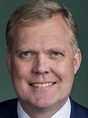
Tony Smith Casey, Liberal Party
4:20 pm
On Wednesday 13 February 2002, I began my first speech just after 1 pm from this very desk. Twenty years, one month, two weeks and four days later, I begin my last. A final speech is a time to say thank you, a time to reflect on what has been and a time to offer some perspectives on the challenges that lie ahead for the next, 47th Parliament and beyond. I began that first speech by thanking the electors of Casey for the faith and confidence they had shown in electing me. I thank them on this last day for supporting me at six subsequent elections. Representing them has been an honour and a privilege.
I couldn't have embarked on this endeavour two decades ago without the support of Pam, my mum, my late father and my sisters. I thank them and my two sons, Tom and Angus, for all those times they've shown support and understanding and for the times when the burdens of this job were also endured by them.
I thank all of my friends outside the parliament who have always supported me, be it at a function or an election day. I particularly thank one of them, Peter Costello, who took a big chance and hired me when I was just 23 years of age, and we remain the closest of friends 32 years later. I also thank former prime minister John Howard, who I first met when I was active in the Melbourne University Liberal Club in the late 1980s. I was honoured to later serve as his parliamentary secretary. Our nation continues to benefit from the structural reforms of the Howard-Costello government, and it was a great privilege to work with both of them.
At this point, I also thank my loyal and longstanding friends who have been through all the inevitable ups and downs from my earliest days as a Liberal student: Harvey Kalman, Alex Hay, Scott Ryan and Julian Sheezel. Julian and I met in the late 1980s, and he has dedicated himself fully to my eight campaigns—my first preselection campaign and seven subsequent federal election campaigns in Casey. He has done so in his capacity as a mate, as a state director and as deputy federal director of the Liberal Party.
I also want to thank friends Gerry Wheeler and Tony Nutt, who have always been there to offer advice and support at each election. I also thank longstanding friend Trevor Burns. I thank my longstanding friend who I met working at Dennys Restaurant in Doncaster, Rebecca Skinner, who for years has also been my Canberra landlord.
When I stepped down as Speaker, I thanked my friends on both sides of the House. I thank you again, as I do former colleagues who remain friends. I thank the Liberal Party of Australia for giving me the opportunity to represent our party in this House of Representatives.
I particularly thank the branch members of Casey for all that they've done; many have also become friends. I stand here and remember those of them who did so much to assist me over the years who are no longer with us. You'll be pleased to know I won't list every party member locally who has helped, because I've been fortunate to have so much support. I wouldn't have been elected and continually re-elected so many times without so many doing so much for so long. So I thank all of them through three people, the three people who have served as chairs of the Liberal Party in Casey over my journey: the late David Martin, Annette Stone and Fran Henderson.
In my last speech as Speaker, I thanked my incredible team in the Speaker's office, led by the formidable Cate Clunies-Ross. I do so again, and today I extend that thanks to the many former staff who have shown dedication and commitment. To my long-serving staff, Nadia, Jill, Heather and Tim: thank you. To my former longstanding and outstanding office manager Denise Jeffs: thank you. To the wonderful community and volunteer groups in Casey: I thank you for the opportunity to work with you over so many years for the betterment of our community.
Twenty years ago, Australia was reaping the rewards of then-recent major reforms by both sides of politics. The contentious issues of tariffs and the goods and services tax had been settled, and for the better. In my first speech, I made the point that the debate about tariffs was as old as Federation itself and that I was glad the argument was no longer about how high tariffs should be but, rather, how quickly they could be phased out. Whilst the phase-down in tariffs was bipartisan, at times there were difficulties in sticking to the planned reductions. Twenty years on, no serious parliamentarian would advocate for reinstating high tariffs. The introduction of the GST was not bipartisan, of course, but, 20 years on, former opponents of the goods and services tax would never contemplate scrapping it to reinstate higher income taxes and a cumbersome wholesale sales tax, at multiple rates on multiple goods but not services, along with a bevy of other inefficient, nuisance taxes.
Twenty years ago, Australia's budget position was strong. More than half the $96 billion of net government debt that the Howard government inherited had been paid off with successive surpluses. Four years later, all net government debt had been repaid and the debate quickly switched to how large budget surpluses could or should be. That put Australia in a strong position to deal with future unforeseen shocks and challenges, like the global financial crisis and the recent pandemic. If Australia had instead continued down the path of continual deficits, driving ever-escalating debt, we wouldn't have had the fiscal firepower to deploy that we have.
It's often said that our debt is low by international standards, and this is true. But it's only because of the fiscal discipline of the mid- to late-1980s, under Labor, and from 1996 until 2007, during the Howard years, which ensured our net government debt never rose to nosebleed levels. The starting base for increasing debt in 2008 was what they call 'net negative'—that is, there was $45 billion in the bank. Although debt is relatively low by international standards, it's a lot higher than it was, as we all know, and no-one should see the gap between our net debt position and that of the highest-indebted nations in the world as a reason for future easy spending.
Twenty years ago, the first intergenerational report was released, projecting the fiscal challenges of the future that would arise from our demographic destiny. These, combined with important new spending commitments in recent years and the future spending necessary in defence, for example, have to be paid for in the future, on top of the pandemic borrowings. So, while I strongly defend the spending and the government's actions, which have been necessary during this pandemic—and I commend it for its economic management—we must all recognise that in future parliaments there will have to be a return to a far-reaching reform agenda. For those in their first term here, if you stay for two decades—a little longer than me—you'll need to, in your time, develop a range of reform priorities, prosecute the case against strong opposition and vested interests, and implement them to deliver a stronger economy and budget.
Colleagues, I came to politics and then to this parliament during the reform era. I worked in the Howard government with Treasurer Costello on major taxation reform, with a tight-knit team including Niki Savva, Mitch Fifield and Richard King—lifelong loyal friends, who I now also thank. It was hard. It took a long time. There were lots of ups and downs. It was never popular, but it was achieved against the odds. Budget reform was the same year after year. The dividends were lower taxes, greater prosperity and greater opportunity.
As I've said, I support the necessary decisions that have been made in providing pandemic assistance and the other recent major spending on permanent programs. In fact, before I was Speaker, I voted for them all, and I would have if I had had a vote and were not Speaker. I don't want future parliaments to think it's without cost to continue borrowing to fund future recurrent spending. It has been necessary now, but this would not be a new way forward in future normal times. It would be an old way backwards.
Reforms that deliver greater efficiency, higher productivity and budget improvements will need to occur over the next decade. The composition and priority are for future parliaments to consider. Those who might be tempted to think nothing is required in the future years and in the next decade would be mistaken to think a decision to simply do nothing is costless. In fact, a decision to do nothing is an active decision to see things deteriorate and to consign future generations to an Australia with fewer opportunities.
Of course, it's always important for governments to balance political risk with policy daring. That said, policies must be about purpose, and in the years and decades ahead, after the turmoil and the economic dislocation of this pandemic and after the need for the additional borrowing is well behind Australia, whoever is in government will need to make the tough decisions to secure the future. The necessity of reform will need to be clearly communicated to the Australian people, and there will need to be a reasonable level of cooperation and consent from the opposition of the day. This will involve a range of policy areas and approaches. None of this is a criticism of the government or the opposition today; it's just an acknowledgement of what has had to occur as well as the reality of what lies ahead for future parliaments.
There is a long menu of policy areas I could discuss in detail. They include the opportunities for simpler and more efficient tax and excise collections in the evolving digital world. I commend the government and the Treasurer for the income tax cuts that have been delivered and are legislated for the future. Looking to the immediate years ahead, beyond this pandemic, there will need to be another wave of comprehensive tax reform no matter who is in government. The history of tax reform demands that the system is comprehensively reviewed at least every few decades. Major changes to income tax occurred in World War I and World War II. The wholesale sales tax was introduced during the Great Depression. Treasurer Keating undertook major tax reform in the mid-1980s. Of course, as you all know, Treasurer Costello did in the late 1990s, with the new tax system taking effect in the year 2000. I'm not saying anything needs to be done today or tomorrow, but I am saying it will need to be done. This should occur following another considered and detailed review that can inform a comprehensive set of proposals for which a future electoral mandate can be sought prior to implementation, as occurred last time.
COVID showed how we could deliver government payments and services faster and more efficiently, and how much better we can do with further investment in digital technology in the future. Future skilling of our workforce in a rapidly evolving world should be a focus, as should attracting, training and retaining quality teachers to help lift academic achievement and, thereby, our national expertise and productivity. I believe this must involve a big investment in higher pay for a new category of expert teacher leaders who can mentor incoming teachers, work on their development and ensure our students of the future get the best possible education. Boosting enterprise and innovation always involves a suite of reforms, but I do want to single out the budget announcement on expanded access to employee share ownership benefits as a big winner for Australia.
Colleagues, there must be an essential recognition of the role and limits of government. This is not a criticism of my government. I made this point in my first speech, and I want to reiterate it in this last speech. I think it's something all members of the House should think about every day. Two decades ago, I stood right here and said:
Too often there is pressure for government to have a role in areas where it cannot provide the solution and all too often this pressure is put on government itself, thinking with good intentions that somehow, by the mere bureaucratic process of devoting funds to an issue or a problem, it will automatically have the intended positive effect. The easiest thing for governments to do is to think and promise that they can solve every problem, but when government succumbs to the temptation to try and solve problems it cannot solve, fix things it cannot fix or do things that are better done by other organisations, far from serving the nation, government harms the nation, desponds the electorate and deludes itself.
To me, the first principle of government should be a recognition … about its true capacity and its limitations. This does not mean that governments do not always have a role; sometimes it is just important to recognise that government does not always possess the only solution to every problem.
Recognising this requires a fundamental understanding that, while governments have key roles and responsibilities, they must necessarily be limited. Australia is a better country, which creates more opportunities, when our governments don't unnecessarily interfere in the lives of citizens or overregulate business.
Today I've confined my remarks to domestic policy. I just want to say we can all see clearly the foreign policy and defence challenges that have emerged and will persist. This is a reminder that democracy is rarer than a lot of people recognise and will always be challenged and must always be defended. I simply reiterate the vital importance of the Australia-US alliance and our relationships with other great democracies that share our values, liberties and freedoms.
I want to finish with some observations about our democracy and our parliament. Australia's democratic story is a remarkable one, the first nation created by a vote of the people. In our first decade there were frequent changes of government as the parties evolved and emerged. In our second decade the First World War was declared in an election campaign, during which the government changed. The new democratic nation survived the horror of the war, including major divisions when Labor split, leading to a new government on the floor of the House, and two divisive referenda on conscription. The first Electoral Act of 1902 was by no means perfect. It didn't allow our First Nations people the right to vote, but by world standards it was nonetheless pioneering in giving women the right to vote and stand for parliament. Those who voted to create our nation and determine its course in those early elections knew they were all democratic shareholders in a grand new endeavour.
As a young nation we led the world in so many democratic advances. We need to constantly nourish and invest in our democracy. The spirit that created our nation needs to be handed on from generation to generation. That our democratic freedoms, which deliver human dignity and a high quality of life, are not automatically self-evident to all should be no surprise if the history of how we got here is not properly taught. For younger generations, teaching our history is vital. We must seriously invest in civics education throughout a student's entire education—not just for a few weeks in grades 5 and 6—years and years before students consider and exercise their precious right to vote.
Today, there are many challenges to democracy. I won't diagnose them all; I've tried my best in the past 20 years. However, there are a couple of parting suggestions. One of them is better communicating the role of parliament. Those outside this place that seek complete bipartisanship on every policy issue must be reminded that we are a representative democracy of elected members with differing philosophies and views and different policies and pledges. Those who believe the House of Representatives should be as silent as a church or a classroom need to be reminded it's neither. It's a robust debating chamber where the battle of ideas and ideals takes place to determine the future course of our nation. The House was designed to be robust electorally and, as you look around this chamber, architecturally. However, as I said when I was first elected Speaker, it need not be loud or rude as a matter of course. Can I also say, in the conduct of debate, you can be both robust and civil at the same time. Further, to some of you—I won't name you—can I say there's no point in needlessly and consistently shouting, particularly in a near empty chamber. The volume of your voice never increases the quality of your argument.
Rediscovering and fostering more civility in parliamentary conduct would improve respect for our House. If this House regularly demonstrates poor behaviour, it diminishes members and dilutes public respect. Better to promote to the public the great work of the committee system, where members work cooperatively with each other on detailed policy proposals and analysis, which would do a great deal to enhance the standing of our parliament. Committees are at their best when members from all political perspectives are thorough and firm in their recommendations to government. I will always look back fondly on my time chairing the Joint Standing Committee on Electoral Matters, which delivered a unanimous report to improve our democracy by reforming Senate voting practices. Governments of all persuasions would also help themselves and at the same time enhance our democracy if they better valued the work of committees and considered their recommendations in a more thorough and timely manner. There have been many times a committee have genuinely attempted to save ministers from themselves.
In recent decades, the relative decline in the combined primary vote share of the major parties in House elections, from a little over 95 per cent in 1975 to a little under 75 per cent at the last election, is often cited as one key indicator of dissatisfaction with the way politics is conducted. The major parties need to consider how to address this because they have been vital in giving stability and certainty in the formation and the conduct of government in our parliamentary democracy. I don't say this out of any disrespect at all to the crossbench, who need to be congratulated for overcoming enormous obstacles to get elected. I simply make the point that I don't believe, if there were 151 independents in this House, we would have stable, predictable or workable government. These are just some ideas for reflection.
One hundred and twenty-one years ago, on Friday 29 and Saturday 30 March 1901—121 years ago budget day and yesterday—Australia had its first and only election over two days, to elect its first parliament. In a short time, we'll have an election to elect our 47th. To be one of only 1,205 people in our nation's history to have been elected as a member of this House of Representatives is a special honour I share with all of you. To be the longest serving member for Casey is, too, a special honour. To have served in seven parliaments, five in government and two in opposition, is also a rare honour—and I must say in passing it's a ratio that demonstrates the general good sense of the Australian people! To have been chosen unanimously by you, by members of this House and previous houses, on three consecutive occasions to be your 30th Speaker has been the greatest honour of my life.
I stood right here, on this spot, on the floor of this great House of Representatives, at the dawn of the 40th Parliament and said hello. As the sun sets on this 46th Parliament, I say thank you. Good luck. Goodbye.