
House debates Condolences
Beahan, Hon. Michael Eamon, AM
Madeleine King Brand, Australian Labor Party, Shadow Minister for Trade
4:31 pm
I rise today to pay tribute to Michael Beahan AM, the 19th President of the Australian Senate. Michael Beahan was a true Labor man and a great Australian. His story is one to which so many of us can relate in some way. Like a third of Australians, Michael was a migrant, coming to Australia as a 16-year-old, and he worked at a factory manufacturing electrical equipment. He got an apprenticeship as an electrician and established his own small business. In his late 20s, Michael went back to study as a mature student. He obtained an arts degree and an education degree from the University of Western Australia and became a secondary school teacher. It was this combination of factory-floor background, trade qualification and teacher education that led Mike Beahan to become WA Trades and Labour Council's first ever education officer and later the Trade Union Training Authority's Western Australian director.
In 1981, Beahan became WA Labor's state secretary. He led Labor's successful win from opposition to government at the 1983 state election and then won again in 1986. He also led the WA campaign for the 1983 federal election, again winning government from opposition and turning the erstwhile blue seats of Canning, Moore, Perth, Stirling and Tangney a deep shade of red. Perth has remained a Labor-held seat ever since under the stewardship of that great hockey player and champion Ric Charlesworth, another great hockey player Stephen Smith, Alannah MacTiernan, Tim Hammond and the incumbent, Patrick Gorman. 1983 was also the year in which Wendy Fatin was first elected to parliament as the member for Canning. Wendy, of course, then became the first member for Brand when the seat of Brand was created in 1984. Michael Beahan also led the WA Labor campaign in the 1984 federal election, at which not a single newly won Labor seat was lost to the Liberals. Nor were any WA Labor seats lost in the 1987 federal election, when Beahan was not only state secretary but also elected as a senator for Western Australia.
Michael Beahan's principal legacy during his time as state secretary was the modernisation of WA Labor's campaigning infrastructure, practice and culture. He brought new techniques and a new approach to campaigning. Beahan saw the value of modern campaign technology, from imagery to lines and themes—things that all of us here in this place would know now as common tools in the campaign arsenal. In the 1980s they were new and innovative. Michael Beahan championed campaign innovation and training and ensured that those who followed him would be best placed to steward the Labor Party forward.
Much will be said of Beahan's time in parliament as a senator. Unsurprisingly, he became a leader within the parliamentary party and of the Senate itself. Among Michael's lasting legacies is the art collection of the parliament and the acquisition program that he was responsible for creating. When he arrived in this parliament there was little art from Western Australia, Queensland or the NT and no urban Aboriginal art at all. This has changed. Now the corridors and our offices see art from everywhere in the nation, including art by many emerging artists. When I was first elected in 2016, I was very keen to see what was hidden in the basement of the parliament, where the collection is carefully stored. It is a wonderful treasure trove, and I thank the curator for facilitating a tour a number of years ago. It's a very great honour and a privilege for each of us to be able to select art for our office walls. Members and senators get to see a trolley load of art. Those who look after this collection come and see us in our offices and offer us these great gifts to mind for a while, and we should be very grateful for them. That is all thanks to Michael Beahan.
I often reflect in this place on how interrelated we all are, particularly in politics. I never met Michael Beahan, nor worked with him within the movement, but his successor as WA Labor state secretary was Stephen Smith, with whom I worked at the Perth USAsia Centre at UWA. From what I understand, Beahan, like Smith, was a big fan of Paul Keating's prime ministership. Moreover, Michael Beahan used his influence within the ALP to ensure the election of Gary Gray as national secretary from 1993 to 2000. Gary was, of course, my predecessor as the member for Brand and remains a valued political mentor to me and many members in this place—and now is also the Australian Ambassador to Ireland, based in Dublin, and I hope he is well.
So there is no doubt I owe my presence in this chamber today in no small way to this man whose life we are commemorating in this condolence motion. It is an honour to stand on the shoulders of giants like Michael Beahan. I express my sincere condolences to his family and loved ones; I hope your memories of Michael provide you solace and comfort in these challenging and sad times.
Peter Khalil Wills, Australian Labor Party
4:36 pm
Yesterday I had the chance to speak very briefly about Michael Beahan's extraordinary life, in the House, and I appreciate the opportunity again here—among, in particular, some of my Western Australian colleagues—to speak about a wonderful man who made such a wonderful contribution. He was a dear friend to me. He was kind. He was generous. He was gentle. He was very generous with his time in offering advice to me as a new MP, particularly and throughout the last couple of years.
Kindness and generosity are not usually associated with politicians, Deputy Speaker, as you know, but Michael was nonetheless known for his kindness, and he was no less effective for his gentle nature and his kindness. He actually left a formidable legacy of service to the Australian community and to the Labor Party that he loved so much. He served as Western Australia's state secretary of the ALP, and during that period he put in a number of processes. In fact, I think he was instrumental, really, in ensuring electoral victory in Western Australia during those years. He then served as a Labor senator for WA from 1987 to 1996 and as President of the Senate from 1994 to 1996, during the Keating Labor government. We can all see, in the corridor here at Parliament House, his portrait when we walk past. After parliament, though, he remained deeply committed to the Labor Party and deeply committed to working for others and for his community. He was a very strong advocate for the role of neighbourhood houses in local communities, for health services and many other local social justice projects.
As I said, he was one of those really, genuinely lovely people who grace this planet from time to time and whom the rest of us, frankly, have the good fortune to know and to befriend. He was a very good politician and a very good public servant in the truest sense of those words. He was a good man. He was never about his ego; he was always about helping others.
But I'm just one of the many, many lives he has enriched, and many members of the local Brunswick Labor branch, which he was a member of, and the wider Wills electorate Labor family have met and spent a lot of time with Michael over the years, lucky enough to share in his wisdom and his passion for social justice. I reached out to them and asked to hear their stories about Michael. Here are just a few. I quote first his friend Michael Petit in Brunswick, who says: 'When Caroline and I first came to Australia 40 years ago, we both read a wonderful book, a now treasured book, A Fortunate Life by Albert Facey—a life lived honestly, humbly, and a sense of purpose and concerned beyond self. That was Michael. He was a Western Australian of the highest principles and character and he was our friend and good mate. I'm not going to comment extensively about Michael's stellar political career. He was a true believer, and that was made clear from the top down. But what I will comment on is his friendship, characteristics that made him a person you just wanted to spend more time with. I never met a man more generous with his time and devoted to making life better for all around him. He was a skilled speaker and advocate for causes, but also a ready listener to other voices. In short, he was somewhat of a national treasure. His death a few weekends ago was tragic for all of us and his friends.'
Michael Petit goes on to say: 'But you are never really gone when you live in the hearts and memories of so many.' He also says: 'I will revise the Facey book title to say, 'Vale Michael Beahan AM, a most significant life' and he would insist that we now toast one another with a really good shiraz.'
This from Malcolm Harding: 'I can't say that I knew Michael that well, but we did work together for a time when for his sins he managed to have himself appointed to the role of chair of the Celtic Club's disciplinary committee.' That must've been quite a job, disciplining Celts! 'I'm a barrister and I was appointed as adviser to this committee. Michael was given the gig, I suspect, due to his expertise in dealing with fractious behaviour. Michael brought a quiet calm to a querulous situation. He was hellbent on being fair and being seen to be fair, despite provocation.'
His good friend Ann Taylor said that 3½ years ago Michael was a board member of Merri Health and it was coming up to time to renew his position. But instead of running again, he said he wanted 'a good woman to stand'. He approached Ann, and Ann tells me this in and of itself was a huge honour. But he was also not the sort of person to handball anything and just let it go. He worked hard to mentor Ann and supported her through the election. Ann recalls that Michael was always there when she needed him. And she remembers he had one of those oodle dogs, named Millie, and boy did she adore Michael, as we all did. No-one was allowed to disturb their time together on the couch! He loved that dog, and I'm sure Millie will miss him too.
Mark Higginbotham, former mayor of Moreland, had this to say: 'Michael always had a lot to contribute. He made Brunswick his home and loved being a part of the Brunswick community. I will remember Michael as a very inclusive individual. He gave encouragement to women, to multicultural groups, was passionate on Indigenous affairs and LGBTIQ+ issues. Anything, you name it, Michael was a part of it. He was a true believer. He was truly admired and loved by all at the Brunswick branch.'
It's clear that he will leave a legacy that will endure for those of us who were fortunate to know him and, much broader than that, for the community that he impacted. I again extend my condolences to his partner, Margaret, his children, Daniel and Kate, his stepchildren, Georgia and Michael, and their families. I will very much miss Michael and the times that we spent together talking and the advice that he gave me and his insight and wisdom. He was a special person. Vale, Michael Beahan.
Patrick Gorman Perth, Australian Labor Party, Shadow Assistant Minister for Western Australia
4:43 pm
Today I join with other members in recognising the contribution of an Australian Labor Party stalwart, Michael Beahan—I was going to say he was a Western Australian stalwart, but it's clear from all of the contributions that he is loved across the party and across the states. I start by acknowledging Michael's family: his wife, Margaret; his children, Daniel and Kate; his stepchildren, Georgia and Michael; and his grandchildren. I'd also like to acknowledge Michael's brother, Terry, a long-serving member of the Joondalup branch in Western Australian. Terry still attends branch meetings and volunteers to elect Labor governments wherever he can. I know this is very sad news for the Joondalup branch, and for Terry and friends in particular.
Like Michael, my career path into this building included sometimes serving as the state secretary of the WA branch of the Australian Labor Party, something that Stephen Smith and Chris Evans also had the privilege to do. And like Michael, I was proud to help deliver WA Labor electoral success. But Michael's challenge when he started as state secretary was that the Western Australian Labor Party had won just one of the previous eight state elections. He turned that around. He elected a solid long-term state government and at the same time made a huge contribution to the election and re-election of the Hawke government. In that office, which has moved around a few times over the years, there still remain reminders of Michael's time in that role, as well as of the party machine that he helped build and of the electoral success that he helped deliver.
He came to that role having had a life that was as diverse as the policy interests which he pursued in this place. He was born in London on 21 January 1937. He migrated to Perth in 1954 with his parents and three of his four brothers. He worked as an apprentice, an electrical fitter and then as an electrician for 10 years. Following quite a tragic car accident, he retrained as a teacher. While teaching in Bunbury, he became active in politics, becoming a member of the great Bunbury branch of the Australian Labor Party. The Bunbury branch is still a powerhouse of the Australian Labor Party in Western Australia. He was elected president of his local branch and grew its membership, through legitimate means—which was how we did things back in the day—from 30 members to 150.
He really inspired people to the cause of Labor. He worked as an education officer in the union movement and served as the state secretary of WA Labor, then the Australian Labor Party WA branch, from 1981 to 1987. He was a strong advocate of the rights of rank-and-file members. That wasn't something that he just believed in to get himself to one position or another; it was something that continued throughout his entire time as an active member of the Labor Party, in Western Australia, in this building and in Victoria. He believed that our policy was better and stronger where it had been developed in consultation and in partnership with party members and the trade union movement.
That consultative and collaborative approach is probably why, when he entered the Senate in 1987, he became heavily engaged in the committee system. In his work on the Joint Standing Committee on Electoral Matters, he supported the full disclosure of all political donations. He believed that was vital to the integrity of the political process. In other committees he advocated for stronger regulation and to ensure a more level playing field for small investors, and, earning the respect of his colleagues, he was elected in 1994 as the 19th President of the Senate, serving until 1996.
As others have said, he was at times critical of the Senate, and he had long memories of the Senate's role in the events of 1975. But his experience overcame those criticisms and that scepticism, to where he eventually said, 'Much useful work is done in scrutinising and critically appraising the decisions and activities of government,' as he backed in the important work of the Senate committee system. Recognising also that they were there to do work, not to play dress-ups, he was influential in the Senate advocating for the removal of wigs and gowns.
After leaving politics he married his second wife, Margaret, and together they moved to Victoria. He remained active in a number of roles, including with the Pharmacy Guild, continuing his passion for making sure that people have access to health care and health services. In 2011 he was appointed, rightly, as a Member of the Order of Australia for service to the Parliament of Australia as well as service to the promotion of international bipartisan political debate, to the pharmacy profession and to the community.
He was, as we've heard in speeches by the member for Wills and the member for Brand—and I'm sure we'll hear this from the member for Burt—so much more than that. As I mentioned before, in the WA Labor offices there are many things that remind party members of the time that he ran the party organisation. Similarly, through the art collection in this building, there are many things that remind us of Michael's time in this place. As he said in his valedictory speech:
I was very pleased … with the support of the Speaker and others, I was able to introduce the art acquisition program to redress an imbalance that was created by the budget cuts … There was almost no Western Australian art, very little Queensland art, no urban Aboriginal art, and very little Northern Territory art.
Every day that we wander through this building we can be reminded of the broad, diverse impact that Michael Beahan had not just on the building but also on the fabric of Australia. Vale, Michael Beahan.
Matt Keogh Burt, Australian Labor Party, Shadow Minister for Defence Industry
4:49 pm
I rise to pay tribute to former Senator Michael Eamon Beahan AM. He was a former sparky, unionist and state secretary of the Australian Labor Party in Western Australia, and, notably, he was a former senator, pivotal in ensuring the WA branch of the Labor Party won government in 1983 and was re-elected in 1986. He played a role in the successful federal campaigns in 1983, 1984 and 1987.
When he entered federal parliament as a senator for Western Australia during the Hawke-Keating era he made it clear in his first speech to the Senate that he was concerned with getting things done, and that he did. He was committed to parliamentary committee work and worked to modernise the parliament in the role of Senate President. He took on the almighty challenge of lifting the standards of question time in the Senate, recognising that the televising of question time had a significant impact on the public perception of the work of the parliament overall.
As a good adopted Western Australian, Senator Beahan advocated for our state. One of the most memorable was the recognition that the parliament reflected almost no Western Australian history and art, as well as Queensland, Northern Territory or urban Aboriginal art. Rightfully now, the portrait of him in this building plays tribute to his work in establishing an art collection that is more reflective of our federation.
Senator Beahan played an important role in the modernisation of the Western Australian Labor Party and the Australian Labor Party nationally, and that cannot be overemphasised. That contributed greatly to its electability through the 1980s and 1990s. Of course, his contribution helped make our parliament what it is today. I extend my deep condolences to all of his family. Vale, Michael Beahan.
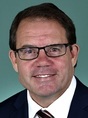
Luke Gosling Solomon, Australian Labor Party
4:51 pm
I just want to acknowledge the previous contributors. Being from WA they have an excellent understanding of the impact and legacy of Michael Beahan. But of course, as honourable members have heard, he came from the UK. He had Irish parentage. He made his way to Perth, as many fine Australians have over the decades, including some friends of mine who I served with in the Australian Defence Force, including some of those who defended Darwin. So many great Australians have made that trip across the oceans and have made our country better. Michael Beahan certainly made this parliament and the body politic in our nation better.
Being a sparky, he brought life experience to his work in this place. In manufacturing, getting an apprenticeship and working as an electrician obviously gave him an excellent understanding of what working people were doing in their lives every day. He was in an East Perth factory.
Also in Perth he did some compulsory military service—three months full-time and two years part-time service with the 13th Field Squadron of the Royal Australian Engineers. I know exactly where he served. During my time in the forces I served with the 13th Brigade. In fact, a good mate of mine was the OC of the 13th Field Squadron. It is a great outfit with a great history. I didn't know that about Michael Beahan's history. He would have learnt a lot there.
He decided to go back to study. Like some of my colleagues, he had a great education. In Michael's case it was arts and education at the University of Western Australia. From the education he received at the time he became a teacher. As he became more involved in the unions he represented teachers. Having had the experience of being not only a sparky but a teacher, he was well placed to become the state secretary of the Western Australian Branch of the Labor Party. It was great to hear a former state secretary of the Western Australian Branch talk about Michael Beahan. I won't go over a lot of that material, but I did want to focus on another thing about him and his time in this place that I think is very important. With some defence experience, he would've made great contributions to the foreign affairs, defence and trade committees, and also the Commonwealth Parliamentary Association. Having come from part of the Commonwealth, he would have enjoyed that.
But I just want to focus a little bit on his contribution to the art collection, because it involves people from the Northern Territory as well as WA. I think it's important to note that, nowadays, due to Michael Beahan's insistence, there is a lot of outstanding First Nations art in this building. I've done some research with the good folk down at the collection, and I want to thank them for their assistance. They pointed me to several pieces in the collection that are a direct result of Michael Beahan's insistence that we broaden out the scope of the art here—in particular, to get some representation from WA, the NT and Queensland.
One piece—which I've now got my eye on well and truly and hope to have in my office at some time—is by the artist David Malangi Daymirringu. A Yolngu man born in central Arnhem Land in 1927, he was moved to the Milingimbi mission, until that was bombed in World War II—and we're coming up to the 80th anniversary of those bombings. When I was with NORFORCE, I served with a Daymirringu, Norman, who still serves our nation with NORFORCE today—a proud family, and an awesome artist. It's great to know that that history and his depiction of the Arafura Swamp is in our collection because of Michael Beahan.
Also there are several pieces from the Pintupi people, including one here from Ronnie that won the Alice Springs arts prize in 1988—and I'll provide Hansard with the spelling of his surname, Tjampitjinpa, because I didn't have the opportunity to sit down with Warren Snowdon and work out how to say it properly, so I won't have a go at it. But there are really strong lines in this art piece. As I said, in 1988, the bicentenary year, it won the arts prize in Alice Springs, and that's in our collection, thanks to Michael Beahan.
Another Pintupi artist—and these people are from the Western Desert of Western Australia but they also live in the western areas of the Northern Territory—is Joseph Jurra, an incredible artist. He's had his artwork shown from Papunya to New York, and his work, because of Michael Beahan, is in our collection. Also there's Gloria Petyarre from Central Australia, who, unfortunately, died last year. She created so much amazing art, and, again, because of Michael Beahan, it is within our collection here at Parliament House. I just wanted to flesh a couple of those out. The people who made the design behind this tie that I'm wearing now are from the Simpson Desert, from the Western Desert. Those people's artwork, because of Michael Beahan, now hangs on the walls of our offices and in our collection. It is said about Michael Beahan that he had, politically, great influence beyond his numbers. But I would put it to all honourable members that, particularly through the artwork, he has had significant influence in terms of the artwork and the telling of Australia's stories in this place well beyond his years.
I think Michael Beahan would be happy with modern Labor these days, striving for a better country where there is secure work, good living standards for working people and—as a former sparky and manufacturing guy, a welder—a future made in Australia. Vale Michael Beahan.

Adam Bandt Melbourne, Australian Greens
5:00 pm
Like many people who grew up in Western Australia, as often happens, I first met Michael Beahan on a beach in Bali. I was probably about 14 and my family was having a holiday, as were the Beahans. We met each other there for the first time and had a few dinners together and played with their children. And, as is the way in Bali—and you may know this, Mr Deputy Speaker—many people go there and think, 'I've got to haggle for everything and drive it down to the lowest possible price.' In talking with my mum and dad about that holiday and that trip that we had there, one of the things they remember that stood out about Michael was his insistence in coming to us and saying: 'I've spoken to all of these people who are living here, trying to make a living out of selling us things, and I found out how much they get paid. For heaven's sake, don't haggle. They need a living wage. Pay them a fair price.' That was something that stuck with our family and with me for a while.
When I moved over to Melbourne, we obviously lost touch, drifted apart, but I was really delighted when, much later in life, after being elected as the member for Melbourne, I got an appointment one day in my office to talk about an issue to do with a local neighbourhood house, and who should turn up but Michael Beahan. Having enjoyed a very distinguished career in this place, in the Senate, which didn't overlap with my time, he continued, after moving over to Melbourne, to make enormous contributions to the community, not only in respect of his involvement in Merri Health but also his involvement with Neighbourhood Houses. Neighbourhood Houses, as many members in this place would know, are absolutely critical for binding together communities. We found out, especially during COVID, that that is where the fine-grain work of looking after people and tying together communities is done. Through his involvement with health, and also with Neighbourhood Houses, he continued giving an enormous amount, including to the people who live in Melbourne.
So it's not only on behalf of the Greens that I want to extend my thoughts and condolences to all his family and to all who are missing him, and not only personally, as someone who remembers that time spent on the beach together, but also on behalf of my community for the work that he continued to do that made a big difference to the lives of people in Melbourne. Condolences to his family and to all those who are mourning his passing. Vale Michael Beahan.
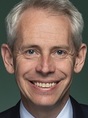
Andrew Giles Scullin, Australian Labor Party, Shadow Minister for Cities and Urban Infrastructure
5:03 pm
I certainly didn't meet Michael Beahan on a beach in Bali. I met him after his parliamentary service had ended, when he was going about the work that the member for Melbourne touched upon in his community, and more broadly in Melbourne. I will return to that in a minute. I think his public life is something that is worth touching upon, as was done in the chamber and has been done here by other speakers.
As someone who came to this country as a migrant, like so many, he built a life for himself as a tradesman and as a teacher and made an extraordinary contribution to my political party—his political party—as reforming state secretary of the Western Australian branch and then in this place as a senator for Western Australia, where he made a very significant contribution in the things he did in his time in the other place, most notably as President. People have touched upon the living imprint of his desire to see this building accurately reflect the country and all of it as it is, not simply to see it frozen in time. I think that's something that all visitors to this place appreciate, and it's something that I do, too, cherishing the notion of this building as something belonging to every Australian.
Michael also made a significant contribution in his committee work and in the way he went about his work as a senator. He was always a strong Labor partisan but went about his work without rancour and in a collaborative spirit. When I met Michael, it was those qualities that were most immediately apparent.
Many people who serve this country and their party in public life are not seen so often in community life after that comes to an end, but I think Michael Beahan must have been as active in that latter stage of his life as at any other time. He made an extraordinary contribution to community, and I echo every sentiment expressed by the member for Melbourne about both the important role of neighbourhood houses and the role that Michael Beahan played in sustaining the great movement that enables neighbourhood houses to do the great work they do in so many communities around my city and around our country.
Michael also continued to serve the party he loved, and which I love. I know that the members of the Brunswick branch in particular, but also Labor members across Melbourne and Victoria as well as back in the west, will be thinking of the extraordinary imprint he had on our movement, knowing that that imprint will endure. It was remarked in the chamber by the Leader of the Labor Party that his very image conveyed kindness. I think that's true. His personal qualities were remarkable, and it is those that I will be thinking of as I also think of his family and all those who loved him and are missing him. Vale, Michael Beahan.
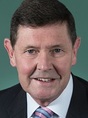
Kevin Andrews Menzies, Liberal Party
5:06 pm
Mr Deputy Speaker, could I add a few words in this motion of condolence for Michael Beahan? I didn't know Michael well, but I was the deputy leader of a delegation to the United States and Canada with him. I think it was in about 1995. He was President of the Senate, so that opened doors that might not ordinarily have been opened, including to the White House to meet with then Vice President Al Gore and to a very memorable meeting with the oldest serving senator in the US Congress, Strom Thurmond. He had a four-star general as his aid, and he passed him a set of notes which we could all read from either side as to what he said to us as members of a visiting delegation.
It was an interesting delegation because of some of the characters on it. They included Mal Colston—who in this place, I suspect, is probably better forgotten than mentioned! Also, Alan Griffiths was a member of that delegation. Despite our differences, which are part of these delegations, we worked very well together, and that was in part because of the leadership of Michael Beahan. He was well informed, he was a gentleman, and he didn't hog the limelight on the delegation but shared around the tasks and the opportunities to say thank you to our various hosts in different parts of the country. We went to Chicago and New York. We went to Columbus, Ohio. You might ask: why Columbus, Ohio? It was because there was a potential US presidential candidate there, the then Governor of Columbus, Ohio, and the embassy thought it was a good opportunity for them to meet the gentleman concerned.
Throughout, Michael was remarkable in the leadership of the delegation that he showed. I met him on and off in this place over the years and bumped into him in a number of places after he left the Senate. He was always friendly and always had very informed commentary about things that were going on. Could I add to the comments, particularly those by his colleagues from the Labor Party, in extending my condolences to his family. May he rest in peace.
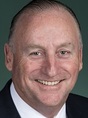
Steve Irons Swan, Liberal Party
I understand it is the wish of honourable members to signify at this stage their respect and sympathy by rising in their places.
Honourable members having stood in their places—
I thank the Federation Chamber.
Kevin Andrews Menzies, Liberal Party
5:09 pm
by leave—I move:
That further proceedings be conducted in the House.
Question agreed to.