
House debates Matters of Public Importance
Social Cohesion
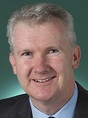
Mr Tony Burke Watson, Australian Labor Party, Leader of the House
3:24 pm
I very rarely speak on an MPI. But I saw the words that the member for Bradfield put before us, and I thought it was important that I be here to contribute, given my role in the House, and I want to thank the member for Bradfield for bringing this forward for discussion. The concept of matters of public importance is that they are meant to be the issue of the day. The MPI doesn't always tick that box in terms of what is put forward, but today it certainly does, and government members were very pleased, when members were asked to stand in support, that it was much more than the crossbench standing for this. So I thank the member.
I want to go through some of the concerns that people have raised and hopefully help chart a way through, which many of us may follow and some of us inevitably won't. But I start with this: the first role that makes me believe I have to contribute to the debate is not that I've got that over-the-top job title of Leader of the House—which is a bit insane, given everyone else in the room—but the fact that I'm the minister responsible for the Australian Federal Police. I spend a lot of my working day looking at threats to people who work in this room, regardless of their politics. And people on the crossbench here and in the other place, people in the opposition here and in the other place, and people in the government here and in the other place have all had phone calls from me at different points where we have made various risk assessments.
The risk assessments where we get worried about someone's safety go to two main areas: either (a) where there is—and thankfully this is rare—a specific known threat against someone or (b) where the temperature is really high, with the online level being one of the arbiters, but not the only one, and is disproportionate to what's happening to others, and the police have been alarmed and Home Affairs have been concerned and wanting to make those decisions. At the moment it's been a very limited number of people for whom we've been able to provide that extra layer. And the Prime Minister made clear in our meeting today, which I also reported out, the way we are working through these issues, because there is an understandable need that more needs to be done.
So it's for your own security in this House that I look at this issue so often. But of course that issue of the temperature is not only an issue about the safety of each other. It's a safety issue about what it's like to live in Australia. As others have said, the risk is not only to people in public life. We are particularly targeted; that's true. But it has changed what it is to work in a hospital. What it is to work in retail or hospitality is different now. It has always been risky deciding that you want to be a sworn police officer, but it is different now to what it was. These issues of the temperature of the debate are real.
And this is not a partisan issue:
… "What we need is not to disagree less, but to disagree better."
Not disagreeing less, but disagreeing better.
When we disagree better: we engage with respect, rather than questioning each other's integrity and morality.
That was Scott Morrison talking there. Also: 'There should be long-term stability and certainty on the issue of national security' and 'I think everyone needs to lower the temperature.' That was Julie Bishop talking. In the same way:
It does have a direct correlation to what we see in terms of threats and abuse, and sometimes it's very immediate.
That is what the Australian Federal Police Commissioner, Krissy Barrett, said on Insiders on Sunday, echoing words we have been hearing for a long time from Mike Burgess, ASIO's Director-General of Security.
Sometimes, in defence against turning the temperature down, people say, 'Oh, but we need robust debate.' No-one is saying we don't need robust debate. Absolutely no-one is saying that. You won't find someone who enjoys robust debate more than I do. I think it matters that the issues that are debated, in this chamber in particular, are real. Differences have real consequences for the people who we come here to represent. The sense of frustration will be real, and emotions will occur. I would hate to be in a parliament where those emotions didn't occur.
I think what we are talking about is what questions we ask ourselves and what levels of self-censorship, not censorship elsewhere—maybe not even self-censorship; maybe we just say decency and restraint, yes—we're willing to provide. I've been toying with these thoughts and trying to work through it for a long time but probably fairly intensely over the last week or so. I don't want to pretend that this is final. Others will look at this and come up with other options. I've tried to look at examples of ways we describe things, ways we disagree. They'll be across the board. This is not me claiming that no-one on my side has ever or even that I have never done any of this, but I think in the future, with where we're at, we need to caution against this.
Obviously, anything that goes against what we would refer to in antidiscrimination law as someone's attributes, the full range of those, is sort of obvious, but also to associate someone with terrorism—there are things that language can do that effectively imply someone is unworthy of the other protections of a democracy: associating someone with terrorism, claiming that someone is a supporter of war crimes or genocide, calling someone a traitor, calling someone criminal, accusing someone of treason. That sort of language actually, in its undertone, says, 'You are not worthy of the democracy.' We need to think not how that sounds in the debate or how we might actually intend it to be. I think we need to take very closely the advice of Phil Haines when he addressed us yesterday, which is to also think about how the person on the edge will hear it. There are more people on the edge than there used to be, and that whole temperature of the debate means that we can't pretend they're not there.
All around the world now, people are dealing with angrier populations. All around the world now, people are dealing with basically what is the end of the water cooler conversation. I remember, when I was first at the workplace, people would talk about the water cooler conversation. You had a physical place where everyone at a workplace would gather at different points during the day, and you all would have watched the same TV shows the night before. There were only four or five to choose from. That's not how people get their information anymore. The capacity for people living in silos is higher, and the likelihood that those silos are telling people that they're not understood and that they should be angry and are guiding them to who they should blame is real. It's just fact. That is how an increasing number of people now get their information—in ways that 20 years ago it was not possible to receive information. That must leave us with an extra layer of responsibility.
The list that I went through—I don't propose to change standing orders or anything like that, but I do ask that we think, because, when I went through the attributes at the start, that also is our guide for who's most at risk. Part of the increased risk profile that is happening for members of parliament is because we have had a great outcome in having a parliament that looks more like Australia. But you are more at risk of this sort of vile abuse if you are a woman. You are more at risk if you are Muslim or Jewish, if you are a person of colour, if you are gay. Whatever the attribute might be, it all compounds to a higher level of risk. I think, in terms of what we have here in the urgent need to prevent political violence and to foster constructive and respectful public discourse, we do need to understand that any language that says someone is unworthy of the rights of citizenship carries consequences for the risk of that person. It might be someone we know. It might be someone we don't know. But it is someone where our words will carry a layer of responsibility. If we expect the media to do it, it's on us to do it as well. I'm really grateful we're having this conversation.
No comments