
House debates Bills
Online Safety Amendment (Digital Duty of Care) Bill 2026; Second Reading
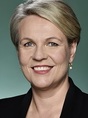
Tanya Plibersek Sydney, Australian Labor Party, Minister for Social Services
4:53 pm
I want to thank the member for Flinders for that contribution, because I think she made a number of compelling points based on her experience in the industry. Can I suggest to her that the minister herself has said on multiple occasions she is very keen to have specific amendments from the opposition to do what I hope we all want to do, which is provide some protection from the way that the online environment is harming particularly our children at the moment.
Right now, we have an information environment which is force-feeding billions of people a steady diet of outrage. It monetises hate. It drives division. It severs social connections, and it spreads the kind of disinformation that makes us all less safe. Nearly 39 per cent of Australians aged 16 to 24 experience a mental illness every year, according to ABS data—figures that have risen sharply when you compare them to the pre-smartphone era. It takes just 23 minutes for an account mimicking a 16- to 18-year-old boy to be fed misogynistic content on social media. The tenor of public discourse is now so vitriolic that nine in 10 female politicians in this country are experiencing persistent abuse or violent threats on a regular basis. These are just some of the examples that people have been canvassing in recent days, but the point is clear. Social media platforms are deriving enormous profits from unsafe products—products that harm our children, our democracy and our health while eroding any sense of common ground and pushing our community to extremes.
Our Online Safety Amendment (Digital Duty of Care) Bill 2026 will change that. It will ensure that tech giants are held to basic safety standards, just as toy manufacturers are, just as car makers are and just as food companies are. No-one should be able to sell faulty products in Australia that harm consumers or promote criminality. It will force platforms, gaming sites and AI chatbots to protect under 18s in particular from violent pornography, from hostile ideas about women and gender equality, from content that encourages eating disorders and from content that glorifies criminal activity or causes serious distress, including abuse and bullying. Of course, our greatest focus is on those under 18s because we know that they are the ones at greatest risk, but all Australians should be protected from content which depicts, encourages, promotes or incites child sexual abuse, which promotes sexual or gender based violence, which circulates fake nude material created without consent or which promotes or incites extreme violence or cruelty or involves explicit threats of violence, including death or rape threats. As we've been discussing these issues in recent days and weeks, I think most Australians would be shocked to know some of the content that we are proposing to deal with. They wouldn't believe that such things exist on the internet.
The other crucial thing that this bill does is give back users control over what they see in their feeds. Some of us are old enough to remember what social media was when it was first introduced. It was a great place to catch up with what family members were doing, particularly if they were in different parts of Australia or around the world. It was a great way to catch up with friends, particularly friends who'd moved away, or check out whether your high school boyfriend was now single. But, in recent years, it has really morphed into an environment where algorithms are shoving violence, misogyny and body dysmorphic content down users' throats. Research consistently shows that content that's divisive can radicalise users and prey on their most intimate insecurities. The bill seeks to give Australians back their agency online by allowing them to either opt in or opt out of recommender systems.
Many of those opposite are trying to pretend that this is somehow the government controlling what people see. It is the exact opposite. This is allowing people to choose the people they want to follow, the businesses they want to follow and the organisations that they care about—their local footy team, the coffee shop down the road, the community group that they're part of or their local church. They can choose who they receive content from. They don't let absentee oligarchs in Silicon Valley make that choice for them. That's what's happening now, with no transparency around it at all. Anyone in this chamber trying to frame this choice as censorship needs to ask themselves the question: what am I so determined for people to see online without giving them the choice that they can opt out of seeing it? Algorithms are built by tech bros who have no concern for Australia or for Australians. They themselves—those tech bros—are not champions of free speech. They use free speech arguments when it suits them, and then they use billions of dollars to shut down criticism whenever it criticises them. They're not champions of free speech. They're champions of their own speech. They worship at the altar of profit and they have proven time and time again that there is no low they won't sink to in order to keep eyeballs glued to screens.
Social media, of course, can be a tool for good. The member for Flinders was providing great examples of where it can be used for good. It can be a source of connection. It can be a way to enhance community. It can be a way to celebrate self-expression. If you're a small business, it can be a way to get connected to new markets and new buyers. But, as things stand at the moment, we have not got the balance right.
Our world-leading social media ban for under-16s has gone a long way already in shielding young Australians from the harms that some of these platforms inflict, while giving them back their childhoods. We're hearing great stories about kids playing in the playground more and talking to each other more, but technology changes rapidly. A digital duty of care will ensure that every Australian is entitled to safety online; that products, websites and platforms which violate those standards face consequences; and that users choose what they see on social media, not billionaires based in Silicon Valley.
The legislation has my full support because we know that online harms are rapidly spilling into the real world and because, in the words of Molly Bannister, who lost her beautiful 14-year-old son Olly to suicide after he was constantly and ruthlessly fed body-dysmorphic content on social media, Molly said:
For too long we've asked everyday people and parents to somehow outsmart the most sophisticated technology companies in the world.
This bill changes that. It gives more power back to parents. It gives more power back to social media users. As the minister in charge of the next plan to end violence against women and their children and as a mother, I back that. I implore those opposite to join with us to put the needs of children first, to put the safety of Australians first and to back our digital duty of care.
No comments