
House debates Bills
Private Health Insurance (National Joint Replacement Register Levy) Amendment Bill 2026; Second Reading
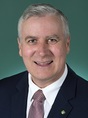
Michael McCormack Riverina, National Party
5:15 pm
Oh, 39? Okay, well, you've given your age away. I would never suggest to give a woman's age away! But, anyway, I'll just take that interjection. She's a long way from getting knee and hip replacements, I hope. It's her reference, not mine. Please don't think I'm doing anything wrong here. But, rest assured, there are older Australians who thankfully do have—
A division having been called in the House of Representatives—
Sitting suspended from 17:27 to 17:36
As I was saying before the division, when the member for Barton is doorknocking around Kogarah, Banksia and Bexley North, I do hope that her knees hold up; I certainly do. That's genuine. Older members of her community who need health care fortunately will have it in spades. But it's not that easy—the further you go from the bright city lights, the harder it gets. I appreciate that the assistant minister for health, who sits opposite, understands that too. She in fact was at Associate Professor Fielding's address in March this year and heard the good orthopaedic surgeon from Wagga Wagga detail just how difficult it was for country people, particularly older regional people, to access those health services.
It wasn't that long ago that the NSW Council of Social Services put out a report. They commissioned it. It was conducted by the University of Canberra. It was entitled Access denied: Australians locked out of quality healthcare, and it revealed an alarming situation in primary health in my home state. Since the last NCOSS report in 2020, the Riverina has had a more than 330 per cent increase in people who can't afford to visit a GP, let alone a specialist, let alone a specialist who may well have to replace a hip or a knee or another joint. More than one in three people, 37 per cent in fact, delay or avoid seeing a specialist due to cost, an increase of over 180 per cent since the previous report in 2020—admittedly, this was a 2024 report, but the situation hasn't improved—whilst almost a third of people, 32 per cent, visited the emergency department in the Riverina because their GP wasn't available. This is higher than the New South Wales state average of 23 per cent.
NCOSS chief executive Cara Varian said the report found that patient experiences with vital health services, including general practitioners, specialists and dentists in New South Wales, had gone backwards since its 2020 report, and regional areas were more heavily impacted than metropolitan areas. This quote really, sadly, sums it up:
This report illustrates that the health system is broken.
I refer to what I said earlier. Our health system is very good, but we can do a whole lot better. We can do a whole lot better for the sake of country people, who, as the associate professor said, provide the food and the fibre and the mining and the resources, and help our balance of payments. The obligation and the commitment and the duty of care is on governments at all levels to make sure that they do better, certainly for regional Australians.
No comments