
House debates Bills
Interactive Gambling Amendment (Gambling Reform) Bill 2026, National Self-exclusion Register (Cost Recovery Levy) Amendment Bill 2026; Second Reading
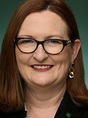
Louise Miller-Frost Boothby, Australian Labor Party
9:08 pm
Addiction is the business model. 'The business model of gambling companies is addiction.' That was the evidence of one of the lived experience witnesses at the inquiry into online gambling chaired by the late Peta Murphy, the former member for Dunkley. She went on to say, 'It's not incidental—it is their business model. No-one is a better customer than an addict.' This woman had lost her young adult son to suicide. After his death, she found out about his massive gambling debts, and she believes that this was a factor—perhaps the defining factor—in his decision to take his own life.
You may have a flutter from time to time—maybe you bet on the Melbourne Cup every year, or in an online footy tipping competition—and not have a problem with your gambling. You are incidental to their business. Your money is welcome, of course, but you are not their target customer. Their target customer is the addict—that is their business model.
The gambling companies make their money by turning Australians into losers. They make their profits—and every business must make profit to survive. They make their profits when you lose. If you were winning all the time, then they would have gone out of business. So, no matter what you think you're betting on, no matter how much of a sure thing you think it is, the gambling companies are betting on you being a loser. Australians are the biggest gambling losers in the world. While other countries consider they have a gambling culture—China, the UK and the US all think they have a gambling culture—Australians lose more money than any other country. The statistics from the 2023 report quoted $25 billion every year. It's probably around $36 billion now, or about $99 million a day.
I was a member of the Standing Committee on Social Policy and Legal Affairs, chaired by the late Peta Murphy, the former member for Dunkley, which undertook the inquiry into online gambling and its impacts on those experiencing gambling harm. This was the inquiry that resulted in the You win some, you lose more report released in June 2023. As a committee member, this was a challenging and very impactful inquiry. We received 161 submissions and 26 exhibits and held 13 public hearings. We heard from all sides of this issue—from support services that help people experiencing problem gambling and from antigambling advocates and harm reduction advocates. We heard from people who told us that they were problem gamblers or had been problem gamblers, and we heard from family members of those with gambling problems, including some who'd lost a loved one to suicide. We also heard from gambling companies, from media organisations and from sports organisations.
The inquiry also looked into online gaming, including video games with gambling-like content which trains up young people to be addicted to the adrenaline hits of games of chance. There are other forms of gambling that are very harmful, including pokies, which are still the most harmful form of gambling. But online gambling is harmful, and it's growing, and it has some very unique aspects that make it even more dangerous. While some forms of gambling require you to leave your home and sit in a club, a racetrack or a casino—to be clear, problem gambling is found in all of these venues as well—the really unique difference of online gambling is that, now, we all carry smartphones with us all the time, and this form of gambling is available 24/7.
The committee heard from people losing tens of thousands of dollars or more in an overnight gambling session in the privacy of their own home or their own bedroom. Night after night, redundancy payments are gambled away. House sale proceeds are gambled away in the matter of a few weeks. In the privacy of your own home, your own bedroom, no-one necessarily knows what you're doing, so no-one can suggest that perhaps you should moderate your gambling. The privacy of a secret gambling addiction becomes shame, and reaching out for help means you have to tell someone what it is you've been doing, so you're trapped, and, even if you try to stop, the company pulls you back.
Each online gambler has an account. The gambling companies know them and can directly target them, individually, in real time. They know who they are. They have their phone number, their email address and their account. They know their gambling profile and preferences. They know what's worked on them in the past. So inducements can be targeted, individually, to the account holder, and they can be targeted at a time when inducements will be most effective. If you've been gambling for a few hours and you slow down or stop, you can be targeted directly, straight away, to come on back and try and recoup your losses. If you've self-excluded from a gambling company because you think you might have a problem or you just can't fund the losses, when your exclusion time is up, you might be welcomed back with a few thousand dollars of bonus bets. It seems generous—it's not really. The companies know they will never have to pay it out, because you're going to lose it and then lose some more. They wouldn't be doing it if it wasn't profitable for them.
At the recent ALP National Conference in Adelaide, the rank-and-file Labor members unanimously passed a motion to add the banning of gambling inducements to the ALP national platform, and I want to thank them for their work. This is an issue that Labor members are concerned about. It's something that the Australian public are concerned about.
Who's affected? Various reports to the inquiry quoted statistics of between 46 per cent and 67 per cent of gamblers being classified as being at risk of gambling harm in the past 12 months. One of the most vulnerable, or most targeted, groups is young men from their late teens to their mid-to-late 20s. These are the people targeted by programs such as the 'bet with your mates' promotion. 'Bet with your mates' sounds like a great way to share your love of sport with your mates, except, suddenly, this is the way you're engaging with your friendship group. If you have a problem and you want to stop gambling, if you drop out of the betting group, you're effectively exiting your social group and their shared activities, so you're trapped.
Those with gambling problems reported poor mental health, anxiety, shame, depression and suicidality. Social isolation, or the capture of social support groups around gambling activities, exacerbates the impact and makes it harder to release the trap in which some gamblers find themselves. So gambling is a men's health issue. It's also a mental health issue, and it's a public health issue.
One of the other lived experience witnesses we heard from was a man in, I'm guessing, his mid-20s, who told us he was a reformed gambling addict. He told us he loved sport, but, as a result of his problems with gambling, he'd had to change his entire life. He can't play footy at the local club, because they're sponsored by a gambling company and the adverts at the local club trigger him. He can't go and watch a game with his mates, because the stadium has gambling advertising. He can't go to the local pub, because it has pokies. He can't listen to the radio in his car or watch a game on TV—or any other TV shows or streaming services—because of gambling ads. His emails and his social media algorithms all target him with gambling adverts. His mates still play sport and go to the game together, so he's more isolated from his friends and his support group. He described himself as a gambling addict in remission. He is aware that his demons remain lurking, always waiting for him to slip just that once.
The Albanese government has done a lot since the You win some, you lose more report was released. It used to be that, if you decided you had a gambling problem and wanted to self-exclude, you had to hunt down each company and exclude yourself one by one from everyone. And, once you'd done that, magically—hey, presto!—you might suddenly find yourself getting offers from other gambling companies you hadn't heard of before, and then you'd have to exclude yourself from them. BetStop means that now there is a one-stop shop for self-exclusion, excluding you from all companies. Preverification of accounts means no longer can someone underage or someone on the exclusion register get an account and start gambling before their identity has been checked, and banning gambling with credit cards means you can't gamble with money you don't have. It's bad enough to lose what you have, let alone to lose what you don't have. These are all really meaningful ways that address gambling harm, and these are things that this government is already doing.
The thing is, unless you're a gambler, you don't know about any of these things, because they are invisible to the non-gambling public. The thing that is visible is gambling advertising. Now, I confess, I don't watch a lot of TV, but, on those occasions when I do, I am shocked at the in-your-face gambling adverts and their frequency. And that is the one thing I hear most about in the community, because, if you're not a gambler, that's the thing you see.
I've already talked about the impact that gambling advertising has on those people who have gambling problems. But the other really important thing about gambling adverts is they normalise gambling as a part of Australian society. When you grow up and turn 18, you enrol to vote, you can legally buy a drink and you can gamble—as if that's a normal part of being an Australian adult. When young children can talk about the odds when they're talking about a footy match, we know the gambling adverts are working—and of course they work. They wouldn't be paying for them if they didn't. Sport has so many benefits in our community: fitness, community connection, entertainment, volunteering opportunities, learning to work as a team. We want sport to be available and accessible to everyone. We don't want to train our children to think sport is about gambling. We must break that nexus.
As a member of the committee, I signed off on the You win some, you lose more recommendations, so my position on this is public. We heard a lot of evidence, as part of the inquiry, about the practices of the industry and the impacts on Australians and Australian families, and it was shocking. During last week's Senate inquiry, a lot of the evidence was being repeated in another public forum, so everyone else is getting to hear about some of the behaviour and practices of the gambling companies. Some of it's new—the former committee did not hear allegations about drugs and escorts—but a lot of what you're hearing now is the same as what we heard in the first inquiry, and people should be shocked. It is shocking. The practice is nasty, it's predatory, and it's predatory towards people who have gambling problems.
I think it's also really important that the gambling companies, the gambling industry, the sporting codes and media that are supporting the status quo pay attention to how this evidence sounds to the Australian public and to the reaction of the Australian public, because, like any industry, they need social licence to operate. This is direct feedback from the Australian public about the behaviour standards we expect and will tolerate. Peta Murphy actually said exactly this to some of the industry bodies and sporting codes during the first inquiry—that they should listen to the evidence from the other witnesses, their customers, the families and the Australian public and reflect on their own evidence in that light.
When the Prime Minister announced the next round of gambling regulations at the Press Club I was really pleased, not because I think the job is done in the social services field—the job is never done—but because this is another step forward. I and many of my backbench colleagues in this place who've worked together advocating for change are pleased at the progress.
The package includes a crackdown on illegal offshore gambling providers. It includes further work on strengthening BetStop and raising awareness of BetStop in the community. It includes addressing harm and emerging gambling products, including foreign matched lotteries, Pocket Keno, fake promotional lotteries and, importantly, a number of steps to limit advertising, including banning advertising on TV during all live sport between specific hours, establishing frequency caps outside those hours, and banning gambling promotion by celebrities, athletes and influence—and it is really important that this targets our children. It also includes banning stadium jersey advertising so that people such as the man who gave evidence at the inquiry can play footy with his mates or watch a game, banning ads on radio at school drop-off and pick-up times, and banning online advertising, including on social media, news websites, Spotify, podcast streaming services and YouTube via opt-out options.
I welcome this legislation as another step forward, and I welcome the minister's and the Prime Minister's commitment to continue to strengthen the bill to provide stronger protections for children and vulnerable people from exposure to advertising and predatory industry tactics. And I wish the minister and the Prime Minister all the best with these ongoing negotiations. This is a really important issue that Australians care deeply about, and I look forward to seeing where the negotiations land. I commend the bill to the House.
No comments