
House debates Bills
Export Finance and Insurance Corporation Amendment (Strategic Reserve) Bill 2026; Second Reading
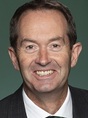
Andrew Wallace Fisher, Liberal National Party
5:17 pm
At the outset I'd like to say that this bill, the Export Finance and Insurance Corporation Amendment (Strategic Reserve) Bill, is welcome. But, as with just about everything this government does, it had to be dragged, kicking and screaming, to ultimately get around to doing it. The concept of liquid fuel security is so incredibly important in this country. You didn't have to be a brain surgeon to work out that a war in the Middle East, or a war just about anywhere in the world right now, was going to place significant pressure on our supply chains—but particularly a war in the Middle East.
This didn't just happen. Donald Trump didn't just wake up one morning and say, 'We're going to join forces with Israel and attack Iran.' These things were signalled for weeks, if not months. The US president moved a carrier battle group to the Middle East. He moved significant naval and air force assets into the Middle East. Yet this government continued to sit on its hands. This prime minister continued to sit on his hands in the same way that he refused to do anything in relation to social media, for example.
Now, to give this prime minister his dues, he is unbelievably excellent at taking credit for someone else's idea. The social media ban was Peter Dutton and David Coleman's suggestion. Yet you listen now to the Prime Minister, and it was all Labor's idea. There's nothing about the inquiry that the member for Flinders and I did going back several years, nothing about Peter Dutton's idea and nothing about David Coleman's idea. It was all his idea! The old phrase, 'Success has many fathers, but failure is an orphan,' is personified by this Prime Minister.
Then, of course, there was antisemitism. The Prime Minister sat on his hands for several years. There was the calling for a royal commission after Bondi. For 25 days the Prime Minister pushed back against the Australian community—it didn't matter whether it was the coalition, the business community, former attorneys-general, former governors-general or former chiefs of the Defence Force. It was Dawn Fraser, at the end of the day, who stood up and said, 'The government must call a royal commission into the Bondi attacks,' and, the very next day, the Prime Minister stood up and said: 'Australian people, I've got a great idea. I'm going to call a royal commission into Bondi.' That's the unbelievable guile of this Prime Minister. He has no shame.
He stood up in parliament today—in fact, before parliament—and said he's going to halve the excise and remove the heavy vehicle road user tax. What a brain surgeon! What a great idea! It is unbelievable that this prime minister continues to be dragged, kicking and screaming, on every important issue that faces this country. Deputy Speaker Young, the Prime Minister and those opposite must live in a different country to you and me in South-East Queensland. You and I both know our constituents, whether they be mums and dads who want to get their kids to school, people who want to get to work, tradies or farmers—you and I share a boundary, Mr Deputy Speaker. You've got plenty of strawberry growers, as do I. Our country's agriculture runs on diesel. My primary producers were telling me three weeks ago, four weeks ago, that we were heading into serious issues, and I've spoken about this nearly every day in parliament since then.
I talked about our fishermen in Mooloolaba and how they couldn't get diesel. I went and saw the energy minister and I spoke to him about this, and, to his credit, he assisted my fishermen to get some diesel. So thank you, Chris Bowen. But they're out of diesel again. They're out of diesel again, and there's no sign of it coming back any time soon. When they do get it, they are paying north of $3.15 a litre. My fishermen are telling me that it's got to a point where there's actually no point in going to sea because the catch that they get will be so expensive that people won't be able to afford their seafood. I want to send a shout-out to all my fishermen. They want to make it very, very clear—and for me to express—that, for those people who want Mooloolaba prawns at Easter, those Mooloolaba prawns are already in their freezers. They've got the seafood for Easter. Make sure you line up for it. Don't think that there's no seafood. There's going to be seafood for this Easter time. Please support your local fishermen. But the problem will be, Member for Goldstein: what happens after that? What will happen in April and May to my fishermen—and not just to my fishermen in Mooloolaba but to the fishermen up and down the eastern seaboard of Australia and, no doubt, on the western seaboard as well?
My farmers are also telling me that they are having immense trouble securing diesel. I spoke with a concreter the other day. He was telling me that, as a result of the inflationary crisis this government has brought on—the member for Goldstein is not required in relation to that, but thank you very much—the price of steel has gone up some 25 per cent and will potentially go up to around 45 per cent. There's the price of plastic pipes. Poly piping, sewer piping, and stormwater piping are all constructed and manufactured with petrochemicals. So, when the price of fuel goes up, the price of plumbing fittings and pipes will go up. That means the price of housing will go up.
I gave the minister a shout-out just a moment ago, thanking him for his efforts, but they're out of fuel again. I appreciate the efforts that you've made, but this is a real problem for the construction sector now. The construction sector is the largest employer in the country. Where steel and concrete and those costs rise exponentially, there will be significant problems for the construction sector. We could potentially see lay-offs of apprentices and tradies.
I prefaced my speech by saying that I thought this was a useful contribution on the part of the government, albeit too little, too late. The cost of energy in this country has absolutely skyrocketed under this government over the last four years, and that is not just as a result of the war. The inflation rate that is now 3.7 per cent in this country is not just because of the war. This government was mismanaging inflation long before the war. This government promised us $275 price reductions. We have seen increases in energy costs of around 30 per cent under this government.
Finally, I want to raise the issue of liquid fuel security for our military. The defence minister stood up in question time and answered a question on this. He basically said, 'Nothing to see here; there are no problems about liquid fuel security for our military.' Well, I'm having a little bit of déjà vu here, because that's what they told civilians about our liquid fuel security. The minister, the Prime Minister and all those on the opposite benches stood up here and said, 'Nothing to see; there are no problems'—they're still saying it—despite the fact that some 600 service stations in this country now either have no fuel or have at least a fuel or type of fuel that they've run out of. Excuse me for my cynicism when I say to the defence minister: I don't believe you; I don't believe you that this government has sufficient fuel stock for our ADF if the worst situation were to arise.
I did an inquiry in relation to fuel security for our ADF. That demonstrated to the defence committee and me that we have significant problems with our liquid fuel security for our ADF. If Australians think they're doing it tough now on fuel—if there were a war involving Taiwan directly and involving Australia, this country would not know itself in relation to the problems that we would experience with our fuel security.
No comments