
This is a proof (draft) Hansard, not the final version.
The Parliament had not yet published the final text for this day when we fetched it, so the wording, who said what and the results of divisions may differ from the final text.
Senate debates Adjournment
Artificial Intelligence, Trade with the European Union
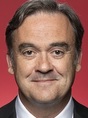
Andrew McLachlan SA, Liberal Party
8:15 pm
Francis Bacon said:
Art is man added to nature.
It means that human skill can bring about things that nature, left to herself, would not produce. An example that's so often given is that the potter moulds the clay and fires it. The shape of the mould is deliberate from the artist, but the heat in the kiln brings out the natural properties of nature and of the clay. For Bacon, human ingenuity works through nature, not outside of it. Nature and art are bound together in a wondrous embrace.
In the age of AI which is upon us, we need to reflect as a parliament on the importance of art to our communities and nation, the need to support our artists and the necessity to protect the natural world from the machines that need to be built to support AI. The AI companies must respect the copyright of artists. The rights of our artists must not be watered down to suit the convenience of the tech sector. To subordinate the rights of the artists over how their work is to be used is in reality, if it were to become so, a new form of slavery. The artist must not be disempowered. They should be empowered and enabled to negotiate their own form of compensation and to determine how their work is to be used. They must have a right to be paid and the right to say no to AI.
Bear in mind the painful struggle that is often the case to create great art. Maya Angelou said in an interview:
I try to pull the language in to such … sharpness that it jumps off the page. It must look easy, but it takes me forever to get it to look … easy.
I say, instead of asking artists to opt out, place the burden on the AI companies to secure the rights they need. Surely, we have not forgotten that property rights are foundational to a healthy democracy and strong economy.
With AI, they need data centres. I am not one to stand in the way of progress, but progress must not be defined to include the wilful destruction of nature. We need the natural world to survive. It is already under pressure. The expansion of large data centres needs clear rules on power, water and who is to pay for the infrastructure. AI provides amazing opportunities for our nation. If there are trade-offs, then the costs must be clearly articulated and understood. We should not be attracted to a world full of data centres being used to create virtual worlds for the next generation to show them what it's like to walk in a native forest which has been destroyed by our generation. I want the next generation to live and play in a real forest. Nature must be at the heart of all decision-making.
Acting Deputy President Grogan, I thought I'd take this opportunity this evening to set out some of the reasons why I support the European free trade agreement. I've been very vocal on this, but I am driven, as a proud South Australian like yourself, that this agreement provides our state, my state, with tremendous opportunities. I also appreciate it is in the national interest, but my loyalties do lie with my beloved state.
I thought, when preparing for tonight's contribution, of Mandela's quote:
If you don't intend—
to have—
… a compromise, you don't negotiate at all.
This negotiation was started by the coalition. This is a coalition project which has been completed in a bipartisan way by the Labor Party. It is as much our agreement—the product of our work—as it is the Labor Party's. So it is a surprise to me that there is some reticence.
I acknowledge that there are some sectors that would like more and that feel that they haven't been done well by, but you have to be in the agreement to facilitate rights for further negotiation. If you do not enter the agreement then you are giving a free gift to our competitors. There is no other option but to enter this agreement if you're committed to free trade, advancing our economy and pushing back at the winds of tariffs, particularly those coming from the US administration. Think of this: on full implementation, 98 per cent of the value of what we currently sell to the EU will be duty-free. The market has 450 million people. It's our largest trading partner with which we do not have an agreement. We should see it as an opportunity rather than a burden.
As someone committed to responding to the challenges of climate change, I am somewhat unusual in the modern coalition, so the terms of the Paris Agreement provide me with comfort rather than aggravation. I accept that some of my colleagues continue to deny climate change and its implications, but I point out this: my party's current policy is that we are remaining in the Paris Agreement, so this trade agreement imposes no additional obligations on us. The target for the Paris Agreement was set under Mr Abbott, our former prime minister, and ratified under Mr Turnbull, our former prime minister. It is in essence a Liberal target, as much as that makes many of my colleagues on this side uncomfortable. I think it is maybe, in recent times, our greatest achievement, but I am a lone voice on that one.
I come to the conclusion of this contribution. I come originally from the services industry, where I was a lawyer, and then I went into financial services. This agreement opens up Europe, and I implore my colleagues to think about all the young women and men professionals who are going to be given a gateway to not only learn but deliver services on the global stage, because Europe is still one of the major trading hubs in the world. Why would we deprive them of that opportunity? I do not believe—I've also said this publicly—that every sector has to do as well as each other. This is a negotiation and the outcome of a negotiation. As a Liberal—these days I call myself a true Liberal—I do not believe in collective punishment. That in effect is the seed of this argument. Not everyone has done as well as others. I'm not into a socialist-Marxist framework, which seems to have taken seed in some of the thinking on the benches on this side. I also want to give a shout-out to our winemakers, who are endlessly encouraging me to support this agreement from South Australia.
In conclusion, we must stay true to our certainties as a nation and be one that wants to befriend the world, seek friends across the globe and explore ways of mutual prosperity through trade and sustainable economies. You cannot expect other economies who are seriously attempting to address climate change to give us a free ride. I implore those that have reservations: read the agreement and reflect on your obligations to your nation and your state.

Karen Grogan SA, Australian Labor Party
Thank you for your contribution, Senator McLachlan—very enjoyable.