
Senate debates Questions without Notice: Take Note of Answers
Answers to Questions

Slade Brockman Deputy-President
3:04 pm
With the concurrence of the Senate, the clerks will set the clock in accordance with informal arrangements agreed by the whips.

James McGrath Queensland, Liberal National Party, Shadow Special Minister of State
I move:
That the Senate take note of all answers to all questions without notice put by coalition senators today.
What is disappointing about the responses we received to our questions today is that sincere questions were put to the government concerning the tax operations of Australian businesses, whether those were small businesses, those in the building sector or those in the farming sector, and what we found out from the government, in response to the concerns that have been raised by the stakeholders, is that the government did the political equivalent of shrugging their shoulders and saying: 'Yes, this is our policy. We don't care who it impacts. It's going to be in place in 2028. It only impacts a small number of Australians.' But this is the sad part: the taxes that the Labor Party are putting on these businesses are taxes on enterprise, taxes on aspiration and taxes on growth.
Most Australians want to be their own boss. Most Australians want to run their own business. They want to decide when they get up and when they go to bed. They don't want to be a company person. They don't want to have a boss shrieking at them or sending cranky emails to them at all hours.
What Labor have proven through their budget—and what we've proven again through the answers that came in question time today—is that the Labor Party actually doesn't understand how businesses operate. It's like a foreign language or a different country to them. You've got to remember that every single Labor senator in this place is essentially a former union official. In the United Kingdom, they've got the House of Lords. Well, here in Australia, with the Labor Party, we've got the union barons' house, with all these union barons over there, and their sole focus in life is making sure that unions and the vested interests connected with the union industry in Australia are looked after, at the expense of everybody else—particularly at the expense of the business community.
I'm not talking about big business; they can look after themselves. I'm talking about small businesses. I'm talking about how they operate. These are the businesses that don't have a HR department or a compliance department, where it's just a mum and a dad—or maybe just one person, a sole trader. These people are the lifeblood of the Australian economy.
Where does your food come from? In Australia, we produce enough food to feed three times the Australian population. That's because of the risks that farmers put on themselves every single day, whether there's rain or there's drought. That's what farming is about. It is a business.
And yet what the Labor Party have proven, through their answers to the questions put by coalition senators again today, is that they don't actually understand how farms operate. They don't understand the structure of farming in Australia. What we have also seen is that they don't understand how small businesses operate. They don't understand that small businesses don't have an in-house legal department. So now small businesses are going to have to go to another small business and get legal advice on how to structure their affairs concerning trusts, because Labor have put a 30 per cent tax on trusts. Yet so many small businesses across Australia run their operations through trusts. As to what Labor have done, through their budget, and despite the number of backflips since the budget—it is a war on small business; it is a war on farmers.
This is very, very dangerous for Australia. Where did all the big businesses in Australia come from? They came from small businesses at some point. We won't see business grow in Australia, and we will not see Australia grow, while this Labor Party continues its holy war against small businesses and aspiration. (Time expired)

Tammy Tyrrell Tasmania, Australian Labor Party
3:08 pm
The Albanese Labor government's reforms to the taxation of discretionary trusts are about one simple principle: ensuring our tax system is fairer and more sustainable and works for all Australians. At the moment, discretionary trusts allow some Australians to arrange their tax affairs in ways that simply aren't available to most working people and families. Treasury analysis has shown that families using discretionary trusts, on average, pay lower rates of tax than those who do not. That's difficult to explain when millions of Australians have tax deducted from every pay packet and have no equivalent opportunities to reduce their tax obligations. The tax system should treat people more fairly and consistently, and that is why these reforms will ensure income distributed through discretionary trusts is taxed more in line with the rates paid by working Australians.
Importantly, this reform isn't about attacking trusts or preventing their legitimate use. Trusts play an important role in succession planning, asset protection and a range of genuine business and family arrangements. Individuals and businesses will continue to be able to operate through discretionary trusts. What we're addressing is the tax advantage that has developed over time. The number of discretionary trusts has more than doubled over the last two decades. Multiple reviews of our tax system over the years have identified problems with discretionary trusts within the tax system. It's also important to be clear about who is affected. Over 95 per cent of Australians don't receive income through a trust. Most small businesses do not operate through a trust structure. In fact, the majority of trust income flows to the highest earning 10 per cent of families, and around 90 per cent of private trust wealth is held by the wealthiest 10 per cent of households. Maybe most importantly for Tasmanians, farming income will be exempt.
This isn't a reform targeted at ordinary Australians. In fact, it won't even impact the ordinary working Australian. This is about improving equity within the tax system while protecting legitimate arrangements. These changes won't take effect until 1 July 2028, providing plenty of time for individuals and businesses to assess their circumstances and make decisions that are right for them. There are also multiple options available for existing trust structures. Businesses that want to keep using discretionary trusts can do so. Trusts can elect to be exempt from the minimum tax without restructuring, providing their distribution arrangements remain consistent from year to year. Expanded rollover relief from 2027 will allow businesses that choose to restructure into a fixed trust or company to do so without facing Commonwealth tax consequences, such as the capital gains tax.
We've also excluded a range of trust types from these reforms, including fixed trusts, charitable trusts, special disability trusts, superannuation, deceased estates and testamentary trusts established for genuine testamentary purposes. I can understand the concerns about compliance costs. That's exactly why we've designed these reforms to minimise unnecessary disruption. The compliance impacts will be far lower than some claims have suggested, and around half of trusts are not expected to be affected in any given way. More broadly, these reforms form part of our agenda to simplify Australia's tax system and reduce compliance burdens. Most importantly, they strengthen the integrity and sustainability of Australia's tax system while helping fund tax relief for working Australians.

Dave Sharma NSW, Liberal Party, Shadow Assistant Minister for Citizenship and Multicultural Affairs
3:12 pm
If you're a small-business owner or operator in Australia, you are dealing with blow after blow from this Labor government. You're paying electricity prices that are higher than what you were promised. You are dealing with surging input costs because inflation is out of control. You're paying more interest on your debt than you were when Labor came to office. Your wages bill is soaring because wages are no longer tied to productivity. You've got weak consumer demand because per capita GDP is not growing and Australia has had the highest fall in living standards in the developed world. You've just found out that the Prime Minister is a new shareholder in your business. He's going to take anywhere between 23 and 47 per cent of your business at the exit. That's Anthony Albanese, the founder, the startup guy. Now you're being told that the legitimate way that you structure—especially family owned—businesses through a discretionary trust or a family trust is going to be hit with a new tax as well.
Small businesses are important for any number of reasons. They employ five million Australians and they account for almost one-third of our economy, but more importantly they are the source of innovation, entrepreneurship and dynamism in the Australian economy. They're the vehicle through which people with a new idea, ambition or aspiration go about realising that, and we are all the richer culturally and materially for that. Do you want to know what parts of the economy are the most innovative and the most dynamic? They are the small-business parts of the economy. What this tax does is threaten to put yet another hurdle in the pathway of anyone who's running a small business or anyone who has the dream of starting a small business. It's almost as if the government thinks small business shouldn't exist at all.
According to the Treasury's own consultation paper, this new tax on trusts is going to increase compliance costs. It's going to force business restructuring. It's going to create additional complexity. This is not an insignificant issue. There are about 800,000 discretionary trusts in Australia. There are about 930,000 individuals who declared trust income or who received income from a discretionary trust in the last financial year. This is going to be a significant impost on them. If you look at the estimates of figures, Treasury's own figures suggest there will be at least $1½ billion in compliance costs. That's just in compliance costs. CPA Australia expects that just the professional advice costs to deal with this are going to be between $2 billion and $2.8 billion. Others cite figures of up to $13 billion in costs imposed on business to restructure their affairs, to seek advice and to deal with this change.
What is this going to add to the economy? Is it going to make the economy more productive? No. Is it going to encourage new investment in Australia? No, certainly not. Is it going to unleash aspiration or ambition? No. Is it going to get our economy growing in any sense again? No. It's not going to do any of that. All this is is an additional impost on a part of the economy that Labor has no sympathy for, no regard for and no understanding for. Do you want to know why? It's because there is no-one in the cabinet with any small business experience and because there's a small business minister who 'knows nothing about small business'. I'm saying those words, but they're not mine. They're from a Labor member of parliament talking to a journalist earlier this week saying that the reason Labor is getting its policies so badly wrong is that there's simply no-one in the Labor cabinet who knows anything about small business and that there's the small business minister who doesn't get it. If you don't believe me, just have a look at the answers to questions in the House of Representatives this week. This is another blow to small business.

Raff Ciccone Victoria, Australian Labor Party
3:16 pm
I appreciate the opportunity today to take note of the questions from the opposition, although we probably should be taking note of the opposition's behaviour in question time today, to be frank, rather than substantive matters that were asked of the government, or the executive of the day. Quite frankly, it was just appalling to see the conduct of those, particularly, on the opposition front benches—the way that they were not only interjecting but also commenting about the answers that were given by ministers of this government.
I did want to talk today about the question that went to the skills system of this country, particularly around the reporting today in the media on the qualifications that go to the construction sector. It was worth noting, though, for the record what the government has been doing to fix the skills system mess that was left by those opposite when we first came into government. It's worth mentioning here in the Senate that this government has focused from day 1 on making Australia's skills system a lot more accessible, a lot fairer and a lot better aligned with the workforce needs for the 21st century and for this decade. The more responsive way to deal with the skills shortage that is affecting employers and essential industries—filling in the gaps is what this government is determined to do in its determination to fix our failed skills system that was left by the previous administration.
It's a good opportunity to outline some of those measures here today. First of all, the government is proud to have put TAFE back at the heart of the skills system—something that those opposite, the conservatives, have ripped out for a decade. We want to give Australians more opportunities to gain qualifications and help employers find the skilled workers that they desperately need. That is how we lift productivity in this country. We've also made free TAFE permanent, committing more than $1.6 billion through to the year 2034-35 and supporting at least 100,000 free TAFE and VET places a year from next year. This includes priority areas such as construction, health care, aged care, early childhood education, technology, agriculture and advanced manufacturing. Who would have thought? We are fixing those sectors that desperately need skilled workers.
The cost of training shouldn't be a barrier to building a career. That's why free TAFE is giving Australians a pathway into jobs in their communities and supporting their local economies. There have also been over 800,000 free TAFE enrolments, delivering the skills that Australia needs, since the program commenced.
The government is also proudly supporting apprentices and employers. The national apprenticeship data that was released in September showed that trade apprenticeship completions rose by 10 per cent, year on year. That is the highest level in a decade. The government's Key Apprenticeship Program also offers eligible new apprentices in housing construction and new energy industries up to $10,000 over the course of their apprenticeship.
The government has also established a national network of 20 TAFE centres of excellence, backed by a commitment of around $325 million under the National Skills Agreement. This includes four TAFE centres of excellence in Victoria, my home state, with the renewable energy centre at TAFE Gippsland's Morwell campus being one of them. It's somewhere that I've proudly visited. These centres focus on priority industries like clean energy, housing construction, care services, advanced manufacturing, digital technology and cybersecurity. It is so important that we place on the record—and counter the disinformation about it from those opposite—why this government takes skills so seriously. (Time expired)
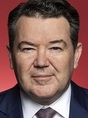
Dean Smith WA, Liberal Party, Shadow Assistant Minister to the Shadow Treasurer
3:20 pm
This Labor government is committed to punishing Australians for the consequences of its poor economic management. It is hard to find a group that has not been punished as a result of the government's poor economic management and its desire for higher taxes. It's punished Australian families and households with a cost-of-living crisis that it created. It has created an increase in inflation—it is now speculated that people will be pushed into higher levels of unemployment—and driven real wages down. And it has punished the charities and not-for-profit organisations that have been at the frontline of the cost-of-living crisis in Australia. Foodbank, the Salvation Army, Anglicare and many, many others have been appealing to the broader community for greater support because more Australian families are now having to go and seek the support of charities and not-for-profits to keep their livelihoods afloat. And, of course, the government has chosen to punish small businesses at a time when small businesses in our country need much greater support. Small businesses are being inflicted with higher operating costs, weaker margins and falling consumer confidence. As a result of the government's decisions, we are now at record levels of small-business insolvencies.
Now, Labor's changes to discretionary trust laws will make life more difficult for many of the small businesses that use them, remembering that 350,000 small businesses operate through discretionary trusts in Australia. Under the government's reforms, compliance costs are expected to be up to $13.3 billion for Australian small businesses as they start to contemplate new valuations, new engagements of advisers and stamp duty. It's revealing because, in the House of Representatives this morning, when the opposition said, 'Let's give this a much greater level of scrutiny and put the government's discretionary trust changes in front of the House economics committee,' what did the government do? It rejected the idea. Not only is it punishing small businesses; now, it wants to avoid scrutiny as well.
Most alarmingly, Australian charities are not off the hook. In comments today, charity legal experts have said that alterations to the fixed election regime contained in these laws mean that a business owner would be precluded from giving additional one-off tax-free distributions in response to natural disasters, for example, or from pressing benevolent needs such as in response to a flood in Nepal. They went on to say that the changes preclude business owners from varying their giving across years to take account of successful or lean years. So charities are going to be punished. They will continue to be punished as a result of the government's discretionary trust changes. How remarkable—at a time when people need charities, the government continues to punish them.
(Time expired)
Question agreed to.