
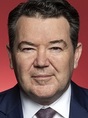
Dean Smith WA, Liberal Party, Shadow Assistant Minister to the Shadow Treasurer
7:22 pm
I move:
That the following matter be referred to the Economics References Committee for inquiry and report by 30 April 2027:
Australia's cost of living crisis, with particular reference to:
(a) housing costs;
(b) electricity and energy bills;
(c) household bills;
(d) food and grocery prices;
(e) insurance premiums;
(f) transport costs;
(g) childcare and education costs;
(h) health and medical expenses; and
(i) any other related matters.
When the Senate gets an opportunity to vote on this particular matter—the matter is whether or not the Senate itself should inquire into the Australian cost-of-living crisis that is now top of mind for every Australian in every Australian household—the spotlight will clearly fall on the other side of the chamber. The Labor government likes to say to Australians that it understands the cost-of-living pressures that they are enduring, but the government fails to deliver a clear plan that will tackle those cost-of-living pressures.
Importantly, it's also the first real test of the new Leader of the Australian Greens, Senator David Shoebridge. On his election, Senator Shoebridge said that the Greens, under his new leadership, would focus on material outcomes, that the Greens would be focusing on those challenges that Australians are enduring and battling through in this cost-of-living crisis. Those were Senator David Shoebridge's words. We'll watch closely to see whether or not the government will give Australians, Australian families, Australia's charities and not-for-profit sector, Australian businesses and others an opportunity to have their say on whether or not the government is managing this cost-of-living crisis as well as it can.
The cost-of-living crisis in this country is now top of mind. It takes the form of surging household expenses, it takes the form of widespread wage stagnation relative to inflation, and, most catastrophically, it's taking the form of increased demand for emergency food and housing relief, being faced by Australia's charities and not-for-profit sector. Rising living costs, wages lagging behind prices, housing and rental pressure, and poverty and welfare strain—they are the characteristics of the Australian cost-of-living crisis that is now impacting every Australian family.
Just recently, Ipsos released its issues monitor polling. That polling said 65 per cent of Australians rated the cost-of-living crisis as the most important issue to them. That won't come as a surprise to many people listening. What might come as a surprise to them is that housing issues, the second most significant concern to Australians, rated at just 39 per cent and immigration came in third at just 25 per cent. I think there is a very salient lesson in that. Cost-of-living issues are now the most significant and important concern for Australians. Unfortunately, news today from the IMF will just make more Australians nervous for their financial future. The IMF has said today it has downgraded Australia's growth forecasts for next year to just 1.6 per cent, it has forecasted increases in unemployment next year, falling short of just five per cent, and inflation is expected to continue at close to four per cent. It is catastrophic news for Australian families and businesses who are dealing with a cost-of-living crisis in our country.
The cost-of-living crisis has three elements: falling real wages; rising inflation; and, now, the spectre of rising unemployment. That is why the government and government members are increasingly nervous about the economic leadership that Prime Minister Anthony Albanese and Jim Chalmers are showing them. Just last month, the HILDA survey, the Household, Income and Labour Dynamics in Australia survey, a survey that is funded by the Australian government, a survey that surveys 17,000 Australians across almost 10,000 households—guess what it had to say. It said that Australians' expectations for their financial future have worsened since 2020—that is, they have worsened over the life of this government. It also said that financial wellbeing has declined for around one in four women and one in five men, housing stress has increased and food insecurity has risen from 13.7 per cent in 2020 to 17.9 per cent in 2024.
It also found that fewer Australians feel on top of their day-to-day finances. It said it had found significant increases in housing stress. And it said that 18 per cent of Australians experienced food insecurity in 2024, almost one in four private renters were in housing stress, almost eight per cent of Australians were unable to pay their rent or mortgage on time and half of Australians aged 18 to 29 are now living with their parents. Finally, it said that 23 per cent of private renters are experiencing housing stress across the mainland capitals and more than one-third of renters are now spending over 30 per cent of their disposable income on housing.
The cost-of-living crisis in this country is touching everyone in every city, every regional town, every family, every small business. So the question is this: what is the government's plan? They have no plan to tackle inflation. Rising inflation fuelled by excessive government expenditure forces the RBA to increase interest rates, which drive cost-of-living pressures for Australian families. So I think it's important that we listen to the voice of Australia's charities and not-for-profit sector. What are Australia's charities and our not-for-profit sector saying about the performance of the government and the experience of Australian families? Of course, what they say is particularly important because they are at the frontline, and, in fact, they've been at the frontline every hour of every day since Labor was elected in May 2022.
The 2026 Foodbankhunger report has found that one in three Australian households experienced food insecurity over the past year, 44 per cent of Australian households are struggling to put food on the table—

Raff Ciccone Victoria, Australian Labor Party
Senator, unfortunately I have to interrupt you. It being 7.30, we're now going to move into adjournment, but you will be in continuation, as you know.
Debate interrupted.