
Senate debates Adjournment
Heseltine, Sir William Frederick Payne, GCB, GCVO, AC, QSO, PC
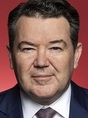
Dean Smith WA, Liberal Party, Shadow Assistant Minister to the Shadow Treasurer
8:00 pm
I rise tonight to pay tribute to one of Western Australia's most remarkable sons, Sir William Heseltine, GCB, GCVO, AC, QSO, PC, who died on 2 October at the age of 96. His was an extraordinary Australian story: from East Fremantle to Buckingham Palace, and, ultimately, to the position of Private Secretary to Her Majesty Queen Elizabeth II. He remains the only Australian ever to have held that office.
Born in 1930 to two schoolteachers, William Heseltine spent part of his childhood in Wyalkatchem, before attending Christ Church Grammar School in Claremont. He graduated from the University of Western Australia with first class honours in history, and began his career in Canberra. His abilities were quickly recognised. At just 25, he became private secretary to Prime Minister Robert Menzies, placing a young Western Australian alongside one of the towering figures of Australian political life.
In 1960 came an opportunity that would change his life. He was selected for a posting to Buckingham Palace as an assistant information officer. Sir William recalled responding: 'I've never had anything to do with the press.' The reply was wonderfully dry: 'They'll probably consider that an advantage.' He soon encountered a palace press operation firmly rooted in another era. Its formidable head, Commander Richard Colville, believed his job was largely to keep journalists at bay. His refusal of almost every request earned him a memorable nickname from the press: 'the Abominable No Man'. Sir William brought a different instinct. He recognised that changing times required the monarchy to communicate differently—not by diminishing its traditions, but by making them more accessible. As he later observed, the monarchy did not need to be 'too avant-garde', but it could not afford to fall too far behind the times. That philosophy would help shape the modern monarchy.
When Sir William became press secretary in 1968, he helped pioneer a new relationship between Buckingham Palace, the media and the public. He was instrumental in the groundbreaking 1969 Royal Family documentary, which offered millions of people an unprecedented glimpse behind palace walls. He also developed another innovation now synonymous with royal visits: the royal walkabout. Today these seem things seem unremarkable. At the time, they were regarded as revolutionary. Sir William understood that enduring institutions must know how to change without losing what makes them endure.
His career at the palace continued as private secretary, deputy private secretary and, finally, private secretary to the Queen from 1986 until 1990. He had travelled a remarkable distance from the young Western Australian who arrived in London with no experience of the press. Yet what distinguished him was not simply how far he rose, but how he conducted himself when he got there. He brought judgement, discretion, humour and integrity to one of the most sensitive positions in public life.
Between periods of royal service, Sir William also served as assistant federal director of the Liberal Party and maintained a lifelong interest in its fortunes. But he understood that absolute distinction between personal political belief and his duty to the sovereign. That was characteristic of the man: beliefs firmly held; duties faithfully discharged. After retiring from royal service in 1990, Sir William returned to Western Australia. He remained active in business and community life and served as president of the Royal Western Australian Historical Society.
He also remained in correspondence with the Queen until her death in 2022. After her passing, Sir William reflected that he always left conversations with the Queen feeling rather uplifted. It was a simple observation that spoke to a relationship built over decades on trust, respect and affection.
From Wyalkatchem and East Fremantle to Canberra and Buckingham Palace, he stood close to history without ever needing to place himself at its centre. He modernised without discarding tradition, he advised without seeking attention and he served without making service about himself. That is a considerable legacy.
In Perth this morning, Sir William was farewelled by family and friends at Christ Church, Claremont. Western Australia has lost one of its most distinguished sons, Australia has lost an exceptional public servant, and the Crown has lost a devoted and trusted servant whose contribution deserves to be remembered.