

Varun Ghosh WA, Australian Labor Party
4:56 pm
The Senate will now consider the proposal, under standing order 75, from Senator Cash, which is also shown at item 13 on today's Order of Business:
That, in the opinion of the Senate, the following is a matter of urgency:
The Albanese Government's staggering incompetence in pretending that banning credit card surcharges eliminates transaction costs, when those costs are merely hidden from consumers or passed on through higher prices, while the Australian Taxation Office refuses to absorb those same costs and instead plans to stop accepting credit cards, exposing how utterly clueless Anthony Albanese and Jim Chalmers are about running a small business.
Is consideration of the proposal supported?
More than the number of senators required by the standing orders having risen in their places—
With the concurrence of the Senate, the clerks will set the clock in line with the informal arrangements made by the whips.

Michaelia Cash WA, Liberal Party, Leader of the Opposition in the Senate
I move:
That, in the opinion of the Senate, the following is a matter of urgency:
The Albanese Government's staggering incompetence in pretending that banning credit card surcharges eliminates transaction costs, when those costs are merely hidden from consumers or passed on through higher prices, while the Australian Taxation Office refuses to absorb those same costs and instead plans to stop accepting credit cards, exposing how utterly clueless Anthony Albanese and Jim Chalmers are about running a small business.
Just when you think the Albanese government couldn't possibly demonstrate any greater ignorance as to how a small business in Australia runs, along comes the Prime Minister and the Treasurer of Australia, and yet again we are proved wrong. As a small-business owner said to me on the weekend, and I have no doubt that they were expressing the views of so many small-business owners across Australia, you cannot script this—insert your own expletive—show! These two economic geniuses, our prime minister and our treasurer, seem to now believe that they have discovered a new revolutionary principle of economics. It's this: if you ban a credit card surcharge, apparently the cost of processing that transaction simply disappears. Brilliant! So why is it that Australian small-business owners didn't think of this years and years ago? That would be because Australian small-business owners live in the real world. They wake up every day in the real world and they are smarter, without any doubt in terms of running a small business, than the Prime Minister of Australia and—God help them!—our hapless treasurer.
They understand that you're not waving a magic wand and suddenly these costs disappear. They understand that the processing costs don't disappear. The banks are still charging them. Somebody still has to pay them. And that's really worked out well for this government, hasn't it? At this point in time, the government have made this very clear to small business: 'We've hidden the cost. You can't charge it. You still have to actually pay the bank for the processing fee, and you will have to absorb it.'
You could not script, though, the fact that the ATO, the Australian Taxation Office, a government department, then came out themselves and said: 'Oh, good God! Well, the cost of absorbing these processing fees is so high that we are now going to ban credit card payments.' You could not script that if you tried. What did Mr Albanese and the Treasurer do? They smiled at the ATO and said, 'Well, you can have it your way?' And they looked at small-business owners, the men and women of Australia who get up every single day and do what we need in this country—run a small business, take risk and employ people—and said: 'It's bad news for you. You have to absorb it.'
Small-business owners are now saying, 'Well, that's great, but the bad news is this: we'll have to close down in some cases, which means our employees will lose their jobs.'
A business that has to close employs no-one. Sadly, Mr Albanese doesn't seem to understand that small fact. And here is the alternative. So much for Mr Albanese's cost-of-living measure, because what did other businesses say? 'Well, you know now what we're going to have to do: we will increase our costs.' So that coffee that was costing you $5.12 is now costing you $5.50, is now costing you $5.80. That is how quite frankly stupid this government is when it comes to understanding how small businesses in this country run.
Perhaps the Prime Minister and Mr Chalmers should just try running a corner shop for one week. On second thought, they probably shouldn't. And do you know why? This is how it would go. On Monday they'd have to hire three consultants to tell them how to actually open the front door to the business. By Tuesday they would have established a committee to understand why nobody was coming into their business. On Wednesday they would have introduced a new tax on customers coming into the business. On Thursday they would have said, 'Well, this isn't going well,' and then they would have looked to blame the previous owners. By Friday their small business, based on their record and their total and utter lack of understanding of how a small business in this country operates, would be bankrupt. The employees would be out of work. But guess what. The Treasurer would be there, holding the press conference, looking the Australian people in the eye and telling them how well everything was going.
Well, it's not going well for small businesses in this country. They deserve a government that understands the difference between running a business and running a press conference, and it is quite time the Prime Minister and the Treasurer started to understand that.

Ellie Whiteaker WA, Australian Labor Party
5:01 pm
I rise to speak against this motion. It's quite astounding for Senator Cash and the Liberal Party to come in here and say that they want Australians to pay more when they tap their cards. That's not something that our government agrees with. You know what's nice? You know what I think Australians will appreciate when they go to tap their card as they pay? I think they will appreciate that they don't have to pay a hidden surcharge—because it was always just a little bit sticky. Sometimes you'd go to pay and you'd think maybe your coffee was $4.50 or $5.12 or what Senator Cash said—I think she's buying expensive coffee in Perth's western suburbs—and then sometimes there'd be a charge added on top. That's sneaky.
We know that the vast majority of small businesses were not passing those charges on. I think something like 84 per cent of businesses were absorbing that cost themselves. And now our government has made it really clear that we don't want Australians to pay more when they tap their card. You shouldn't have to pay more if you decide to pay with your card than if you are paying with cash. It's of course not a small amount on its own, but, when times are tough, when Australian families are struggling with the cost of living, those small costs at the cafe when you're buying a coffee, at the servo, at the chemist add up. I think people just got used to it, perhaps accepting it as part of making a purchase.
I'm really proud of this change. I'm really proud that we have recommended that the RBA look into this issue, because there is no more important time for us to think about all the ways that we can help Australians who are struggling with the cost of living, and ultimately that's what this change is about. Card surcharges were costing Australians around $1.6 billion every single year—$1.6 billion being paid by ordinary families, by young people. That's $1.6 billion that comes out of a household budget for no reason other than they chose to use their card instead of cash. And we know cash is just not king anymore. I can't really think of anyone I know who carries cash around these days unless they're buying off Facebook Marketplace.
Now here's the part that Senator Cash and the Liberal Party like to leave out. These reforms are expected to save businesses $910 million a year. I'll help them along the journey because I think they need a bit of assistance.
In late 2024, our government said that we were prepared to ban surcharges on debit cards. We were clear that this would be a decision that would be subject to further work by the Reserve Bank and that there should be appropriate safeguards to make sure that both consumers and small businesses—ordinary Australians and small businesses—came out ahead. The Reserve Bank went away and did that work and decided that the best path forward was to remove surcharging on both debit and credit cards. That change, of course, kicked in just a few weeks ago.
The RBA is also—and this was left out, by Senator Cash, conveniently, in her contribution, and in their media blitz on this issue in recent days—lowering the cap on interchange fees, which are the fees that businesses end up paying every time a customer taps their card. Yes, you heard that right. You didn't hear that from Senator Cash earlier, did you? That's lower fees for businesses. On top of that, payment companies and the banks are now required to be more transparent about the costs that they are charging, so that small businesses can shop around and find a better deal.
When you put it all together, it's a pretty sensible set of reforms. It means Australians pay less when they go to the checkout, whether that's at a coffee shop or at a chemist. It means that small businesses are paying less to the banks when customers use their cards. It means lower costs for Australians and lower costs for small businesses. I'll remind you that 84 per cent of small businesses were absorbing this fee already. So those businesses will be better off under these changes, because they will see lower interchange fees from their bank.
Sometimes I wonder why those opposite are so determined to undo this—lower costs for shoppers; lower overheads for businesses; more transparency from the banks. But what I know is that the Liberal Party and Senator Cash want Aussies to pay more—more for their groceries, more for medications, more to see their GP and more at the checkout. We don't.
Vanessa Bleyer Tasmania, Australian Greens
5:06 pm
A family in Tasmania who owns a small business—a restaurant business named Stelo, at Launceston, that makes house-made pasta using Tasmanian produce—is losing sleep at night right now, and that's because they are staring down the barrel of closing down their business, due to not being able to use their credit card to pay the ATO. They're a seasonal business. There are plenty of seasonal businesses, not just in Tasmania but across the country, and the way that many of these seasonal businesses operate is that, during the quieter months, during the cooler months, they pay their tax by credit card, and then, in the warmer months, in the busier months, they can pay off their credit card and pay their tax out of their own pocket, and so the cycle goes on. This family is a dad, who's a head chef, a mum who is in charge of front-of-house at the restaurant, and three kids in primary school.
This is just one example of families who are looking at closing their businesses by this time next year as a result of not being able to pay their tax—as a result of not being able to pay their debts as and when they fall due—if the ATO sees its promise through and stops accepting credit card payments for tax from 1 July 2027. Then this Labor government will have been complicit in the closure of small seasonal hospitality and tourism businesses across this country.
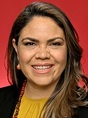
Jacinta Nampijinpa Price NT, Country Liberal Party, Shadow Minister for Skills and Training
5:08 pm
I stand in support of this motion. It is clear that the Albanese Labor government does not understand small business, as has been evident this week. Treasurer Jim Chalmers and the Albanese government have been forced, once again, to backflip on a poor policy decision. Surprise, surprise!
The credit card surcharge ban and the ATO credit card debacle are just the latest examples of Labor's inability to consider the consequences of their actions. Prime Minister Albanese promised Australians they would save money every time they tapped their cards. But banning a credit card surcharge does not magically make the underlying transaction costs disappear. These costs must still be paid by someone. That someone is either the small businesses wearing the cost or Australians ultimately paying more at the check-out. Small businesses are the backbone of our community. They deserve a government that recognises the realities of running a business, not one that leaves them struggling with yet another unnecessary bill.
Labor's lack of consultation is absolutely evident in the ATO's backflip, delaying these changes until 30 June 2027. This capitulation raises the obvious question: why wasn't industry properly consulted before these changes were announced? It feels like deja vu. Why didn't the Albanese Labor government actually listen to small businesses, who have been crying out for help and support from their government? Instead, this ATO credit card debacle has added unnecessary stress and angst when small businesses already have enough to worry about. For many small-business owners, the ability to pay a tax bill by credit card helps manage cash flow during difficult periods, as we just heard. Removing that option only makes an already challenging situation even harder.
The ATO has estimated that absorbing credit card processing fees would cost the government around $200 million a year and declared that it is not tenable for the ATO to absorb the costs associated with accepting credit cards on an ongoing basis. No kidding! It is also not tenable for small businesses to have to absorb these costs. A small-business owner, Glen, recently told me that some of his suppliers are now refusing to accept card payments. Surprise, surprise! This is called the knock-on effect. Some are adding new admin fees at 1.5 per cent, and others are saying, if Glen's business needs to use a card payment, the fees still apply. It's as clear as mud for some small businesses trying to do the right thing and play by Labor's rules and shifting goalposts, which they were not consulted about once more.
Small businesses need a government who knows the pressures of running a small business, not one that places even more burdens on them. The Labor government seems to have made a real habit of announcing first, listening second and backflipping third. Small businesses deserve better.

Tammy Tyrrell Tasmania, Australian Labor Party
5:13 pm
This coalition urgency motion is honestly pretty crap. It's so misleading. Thanks to the Albanese Labor government, Australians are no longer getting hit with surprise surcharges at the check-out when choosing to tap their card now that credit and debit card surcharging has ended. We've spoken a lot about this and so has the media. But what the coalition and the media have been awfully quiet on is that we've also lowered businesses' underlying costs for using the payment system itself. Alongside the removal of surcharging, we've lowered transaction fee caps and introduced new transparency requirements so that businesses have a clearer understanding of what they're paying. It means they can more easily compare providers and secure a better deal. These changes are expected to save small businesses approximately $910 million each year. To be clear, this isn't by shifting costs around; it's by reducing the cost of doing business.
This government has reduced the overhead costs for business. We've reduced the domestic interchange fee cap for debit cards from 0.2 per cent to 0.16 per cent and for consumer credit cards from 0.8 per cent to 0.3 per cent as a maximum, effective from 1 October 2026. That reduction means that card payments are cheaper for businesses to process. Business costs therefore go down under this policy, putting downward pressure on consumer prices. While advertised prices at merchants that currently surcharge may initially go up to cover their payment costs, consumer prices should end up being less overall as reduced payment costs for merchants flow through to lower prices. Sellers on plans where changes in most cost components flow through automatically, known as unblended plans, will automatically receive the benefit of lower interchange fees. The RBA estimates that 23 per cent of merchants are on this type of plan. For sellers on plans with a single advertised rate, known as single rate plans, several large providers have already announced reductions in pricing from 1 October. The RBA estimates that around 40 per cent of sellers are on this type of plan.
The major banks have already announced reductions in merchant fees. Westpac has cut fees by 41 basis points. The other major banks have cut by 10 to 15 basis points. Small businesses should talk to their service provider and see if they can now get a better deal. This is a real win for small businesses, lowering their overhead costs and putting downward pressure on the price they charge consumers. It's a win worth $910 million in savings to businesses and $1.6 billion each year in surcharge savings to consumers. That's a huge cashflow boost, almost $1 billion a year. It means small businesses will get a fairer deal from the big banks and payment providers. Eighty-four per cent of businesses didn't even surcharge before these changes. Those businesses are already benefiting from lower transaction fees.
That said, I recognise why some business owners remain sceptical and want to see those benefits materialise in practice. That's why, from 30 October 2026, payment service providers and card schemes will progressively be required to publish information about card payment fees and how reductions in interchange fees have flowed through to merchant service fees. The full reporting requirements will be in place from 1 April 2027. The new reporting arrangements are intended to provide greater visibility around where the lower interchange costs are flowing through to merchants, and the Reserve Bank will continue to monitor the implementation of the reforms.
While we're on the topic of fact-checking misinformation from the opposition, let's talk about the recent decision by the ATO to stop accepting credit card payments. What the coalition seems to ignore is that only around five per cent of small businesses use credit cards to make tax payments. We aren't talking about most small businesses; we're talking about five per cent. Regardless, this government is passionate about looking after small businesses, so we've stepped in to ensure that small businesses and other taxpayers have a longer transition period so that there's more time for the ATO to consult with small businesses. This will give them the time to get it right. I'm proud to be in a government that lowers the cost of doing business and isn't in the business of spreading misinformation to catch the seven o'clock news.

Slade Brockman Deputy-President
5:17 pm
When it comes to small business, the ignorance of those opposite simply knows no bounds. In fact, we found out today that the minister and the cabinet didn't even know about the ATO's decision not to accept credit cards until the ATO announced it. That's how across their policy they are. That's how across the impacts of their policy they are.
Senator Tyrrell talked about interchange fees. But the trouble is that small business typically pay their payment service providers at a bundled rate. There's absolutely no guarantee that, within that bundled rate, interchange savings actually flow through to small business. Senator Tyrrell actually admitted that herself. She admitted that herself by saying, 'Well, the RBA is going to keep an eye on this.' So there are no savings. These savings that Labor trumpets—savings for small business—are simply illusionary. They're simply a number plucked out of thin air and will never materialise.
Let me give you the case of Shelley, a small-business operator. She has operated two small businesses over 33 years. She uses credit cards to manage cashflow, including BAS liabilities and tax debt. This gives her, she says, approximately six weeks between paying a bill and settling the credit card balances, which she always pays in full. It's a cash flow management tool. She considers the cost of processing fees a small and acceptable cost for the flexibility. The withdrawal of credit card payment options risks removing an established cash flow management tool from businesses like Shelley's. Large quarterly ATO payments in particular are a massive concern in this challenging economic environment, an economic environment that Labor has completely mismanaged. She also fears—and this is something we have heard over and over again—that credit card payments will no longer be accepted by her suppliers and other creditors. This loss of flexibility puts her businesses under extraordinary pressure, and the ignorance of those opposite in trumpeting Labor's management of this issue shows no bounds. Small business is not just struggling; small business is closing its doors. And Labor seems to be doing everything it can to help close them.

Tyron Whitten WA, Pauline Hanson's One Nation Party
5:20 pm
Labor has a real problem with economics. Numbers and percentages don't seem to be their strong point. They think that, if you can't see a cost, it has vanished. They're like babies playing peek-a-boo. With hands over their face, they think you've disappeared. The adults in the room know that, just because you can't see it, it doesn't mean it's not there. These card surcharges don't magically vanish. The banks don't stop charging them. The bills still arrive in the mail. What changes is that consumers lose visibility of the costs. We all know that they're still there. Nothing got cheaper. But Labor still jumped on their social media telling Australians they had just saved them $1.6 billion. The public saw through that. It is no wonder they're trying to censor the internet! They are being absolutely roasted. The real victims here are the small businesses.
I started a business with my brother. I know what it's like to try to comply with mountains of regulations and government imposed costs. It costs precious time. It costs money—not the sort of money that Labor thinks grows on trees; real taxpayer money. It's the sort of money that owners and workers in these businesses had to get up early to earn by providing a service that someone else needed. These businesses take risks, find ways to be more productive and employ workers. Remember those people, Labor? Those costs are absorbed by these businesses until they can't afford it anymore. Then it is paid by the customer. If they can't raise their prices, we lose that business, and their employees lose their jobs. Under Labor, everything is suffering. Cash or card—it is more expensive. Small businesses are getting crushed under Labor. They now have to comply with payday super laws. They have to send in gender equality reports. They need to report on their carbon footprint. Their interest rate payments are soaring thanks to this big-spending government. And, when they go to sell their businesses, this Labor government is waiting to take a huge bite of their retirement with the new capital gains taxes. This ban is just another ridiculous Labor disaster.
When they realised that no-one was buying the spin on these charges, they shifted gear. This morning, Minister McBain was on TV claiming that the Labor government never said they were banning surcharges. Let's check the record on that. Stephen Jones, the then Assistant Treasurer, said in a 2024 ABC interview:
We will introduce a ban by the beginning of 2026 on debit card surcharges.
The Prime Minister told the National Press Club in April this year:
We delivered on our promise to ban surcharges on credit and debit cards.
This lot couldn't lie straight in bed! One Nation will make it easier to do business in this country, and it's time for this incompetent and dishonest Labor government to go.

Maria Kovacic NSW, Liberal Party, Shadow Assistant Minister for Women
5:23 pm
What a mess the Albanese Labor government is presiding over. But the problem is that the price is being paid by Australians and by Australian small businesses. Australians have spent years being told by this government that it understands the pressures that they're under and that it's providing cost-of-living relief—all of these kinds of things—and we know that's a load of rubbish. Households are having to make difficult decisions about what they can and can't afford—food, things for their kids, which school activities they can go on, how much petrol they can put in the car. All of these decisions are being made on a daily basis because of the actions of this government. Every time someone pays by card, there are costs associated with processing that payment. Those costs don't cease to exist for a small business because this government decided that they should no longer appear separately on your receipt.
The Prime Minister gloated about these changes. On 31 March this year, on social media, he said:
These small surcharges add up fast, and this will save you money every single time you tap.
That's what he said. On 30 September, again on social media, he said: 'Pay by card? From tomorrow, your morning coffee will be cheaper.' Wasn't that wrong—totally wrong. Either the Prime Minister lied to Australians or he doesn't know how our economy works, because costs don't disappear just because the Prime Minister says so. On 1 October, on social media, he said: 'Every time you tap, those little surcharges add up. Right now they're costing Aussies $1.6 billion each every year. But from today they're banned—saving you money every time you tap.' What a load of rubbish.
Assistant Minister Charlton defended the ATO when the ATO banned card payments. He defended them. He didn't defend small businesses. Nobody from that side defended small businesses, but they ran to defend the ATO. If the ATO cannot afford to absorb card surcharges, then explain to me how small businesses are meant to. Shockingly, today, the small business minister, in the other place, said she had no idea. She heard about the surcharge on the day that it was announced. They didn't even run it past her. They didn't even talk to the minister in charge of small business about the impact of this ban on small business. That tells you everything about how much this government cares about small business, which is less than zero. That's why they're crushing them.

Sue Lines President
The question is that the urgency motion as moved by Senator Cash be agreed to.