
Senate debates Bills
Online Safety Amendment (Strengthening Enforcement for the Social Media Minimum Age) Bill 2026; Second Reading

Tyron Whitten WA, Pauline Hanson's One Nation Party
11:11 am
I rise to speak on the Online Safety Amendment (Strengthening Enforcement for the Social Media Minimum Age) Bill 2026. Handing the eSafety Commissioner the power to demand documents from any person in relation to the social media ban was cause enough for alarm. That power already reached past the platforms; it reached into households. On the face of the drafting, that included children. Isn't all this hoo-ha about protecting the children?
When the government amendments came through, I could barely believe my eyes. Those documents demanded the power stay. On top of that, Labor now wants the eSafety Commissioner to be able to summon anyone and question them under oath. That includes our kids who might have snuck around Labor's weak under-16 ban. If someone doesn't want to answer, it's 12 months jail. There's a thousand penalty units or $364,000 fines sitting next to that prison term. This is compulsion backed by criminal law. This is Orwellian.
Labor made a hash of the first policy. The under-16 ban was sold as a clean shield for children. Platforms were told to keep kids off. Parents were told Canberra had it in hand. Then the plan met reality. Teenagers worked around the rules. So what does Labor do when the sales pitch fails? It doesn't go back to parents. It doesn't admit that the design was rushed. It demands powers to interrogate anyone who won't play along. The proposed amendments fundamentally change this bill. The chamber isn't being asked to vote on the bill that went to committee. It's being asked to vote on a different instrument—summons, oaths, private examinations, records of those examinations and jail for silence. It shouldn't pass without going back to committee. We can't pretend they scrutinised the power that wasn't in the text when the committee sat.
Let's talk about what this bill actually does. Yes, children should be protected online. Of course they should be. Exploitation is real. Criminal abuse is real. Predatory contact is real. One Nation doesn't pretend the internet is harmless. But this bill extends far beyond the remit of looking after kids. It's about power. It's about control. It's about giving government and its regulators more authority over what Australians do, see and say online. We've seen this story before. Governments introduce extraordinary powers and claim they're needed for a narrow purpose. They promise safeguards, then the scope expands. The exceptional becomes the normal. The temporary becomes permanent, and the power gets used for things that were never in the original sales pitch. That's how freedoms disappear—not always overnight but one amendment at a time.
These amendments bestow sweeping, enforceable powers on the eSafety Commissioner, including a new examination power to issue a summons to attend. There is a duty to give evidence, a duty to produce documents and a duty to answer questions under oath or affirmation. Examinations can be held in private. A record can be made, and refusing is a crime.
Labor have said they will provide immunity from self-incrimination, by applying use immunity to answers and not allowing them to be used in court. It doesn't fix the real problem: the state putting a child, a parent or a political opponent in a room and demanding answers of them under threat of a year in prison. When you strip out the noise, this is about freedom.
The under-16 regime already cuts into the rights of parents. Parents, not bureaucrats, know their children. They know their maturity, their circumstances and what's right for their family. A 15-year-old keeping up with sport isn't the same as a 12-year-old being groomed in a chat. This law swaps parental judgement for a national rule. Arm the parents with the tools they need.
Labor seem to think Canberra knows better. That's the habit of this government. They trust politicians and bureaucrats more than parents. Now they want to put even more power in the hands of regulators. The eSafety Commissioner was set up to deal with genuine online safety problems: image based abuse, child sexual exploitation and targeted criminal harassment. These are real wrongs, and they deserve a serious look, but we've already seen the eSafety Commissioner engaging in fights over speech and political expression well outside her intended remit. That should be a warning. The parliament needs to sit up and listen. Our overzealous eSafety Commissioner has already been in the courts and the tribunal, trying to police what Australians see and say online, and she hasn't come out of those fights well.
She went before the Federal Court to force X to hide the Wakeley church stabbing video from the entire world, not just Australia. Justice Kennett refused to extend the injunction. Geoblocking this country was one thing, but global censorship was a bridge too far. The case was then dropped but not before wasting $60,000 of taxpayer money.
She even drew the ire of the United States Congress, and I note this morning that the president is now showing his ire. House Judiciary Committee chairman, Jim Jordan, in a letter seeking her testimony, called her a 'noted zealot for global take-downs'. He said her reading of the Online Safety Act, including extraterritorial reach, threatened American free speech. One of our closest allies looked at an Australian official and saw someone trying to dictate what the rest of the world could watch. That should shame this government. Instead, Labor wants to hand the same office a summons book.
She issued a cyberabuse removal notice over a political post by Chris Elston, aka Billboard Chris, about a World Health Organization appointment. The Administrative Review Tribunal set that notice aside. Causing offence isn't the same as intending serious harm. The law required the latter, and she couldn't prove it. Speech that some people find confronting must remain free.
She decided Celine Baumgarten's post criticising a primary school 'queer club' wasn't cyberabuse, so she couldn't lawfully order it down. That didn't stop her sending X an informal complaint alert that got the post geoblocked anyway. The tribunal found that step was reviewable. She appealed to the full Federal Court. The full court dismissed her appeal—another $329,000 of taxpayers' money down the proverbial.
That's the record—aggressive overreach and lost cases. When the legal test wasn't met, the machinery was used anyway. Informal channels were used when formal power wouldn't stretch, and this bill gives the same office the power to summon under oath, demand documents and threaten 12 months of jail on a refusal to answer—man, woman or child. Labor wants to expand the machinery. That's dangerous because, once a government appointed regulator has broad power over online communication, the question isn't technical anymore. The question is: who decides what Australians are allowed to say?
That brings us to Labor's proposed digital duty of care. Labor has flagged forcing platforms and algorithms to prevent or reduce harm. Fine. Define harm. What is it? Who decides? Political disagreement isn't harm. Criticism isn't harm. Holding government to account isn't harm. Satire isn't harm. A parent arguing about what's taught in primary school isn't harm. A woman saying biological sex is real isn't harm. Yes, the government will reach for words like 'manosphere', as if a few billy goats on the internet explain every problem in the country. I have two points. First, the government can't even define 'man 'and 'woman', so it's going to have trouble finding the manosphere. Second, if particular men are threatening, stalking or abusing people, platforms already have rules and the criminal law already has offences. AFP, go out and get them.
Will the government and the commissioner go after the toxic femosphere with the same energy? I doubt it. Is toxicity a one-way charge? We've already heard the Prime Minister and the Minister for Communications say that this is mostly about children. 'Mostly' is doing a lot of work these days. 'Mostly' keeps the press release clean while the statute runs wider. 'Mostly' is how the child protection argument becomes an information gathering argument, then a summons argument and then a duty of care argument about harm in the adult public square.
Labor has already shown its hostility to political opponents. Labor treats One Nation as harmful. We've been called 'dangerous'. We've heard claims that bots and trolls explain our rise even days after a decisive electoral victory in Secret Harbour. It looks like those bots are voting! So forgive us for being sceptical when Labor says it wants to wipe out 'harm'. What happens when they decide criticism of Labor is harmful? What happens when an alternative political movement is tagged as harmful? What happens when a post about immigration, sex, religion, veterans or the cost of living is filed under 'unsafe' because it makes the wrong people uncomfortable? We cannot hand over these subjective definitions with real-life consequences to such highly politicised bureaucrats.
Look overseas. In the United Kingdom, people have had police at the door over social media posts and electronic messages. Britain doesn't publish a neat official total labelled 'arrest for a tweet'. Campaign groups and newspapers had to pull the numbers from police forces through freedom of information requests because—surprise, surprise—governments that want to control free speech hate transparency. Figures for 2021 to 2025 found at least 62,000 arrests under communications offences. About 18,500 were charged, and about 12,300 were convicted. Some of those cases will have been genuine threats, but the gap is the point—tens of thousands of arrests with only a fraction ending in conviction. In a free country, arrest is meant to be a step toward proving a crime, not a punishment that does the political work even when the charge later falls over. A knock at the door is enough. A night in custody is enough. After that, a lot of people never post again and self-censoring begins.
Once that becomes normal, once everyone knows what could happen, everyone else goes quiet to avoid being next. That should be a warning, not a model. Australia mustn't sleepwalk into a system where a growing bureaucracy decides what its citizens can say online. This isn't the slow creep. Big Brother is watching. It's always for the children. It's always for your safety. Safeguards get promised then drifted so wide they don't constrain the people they were meant to constrain. We cannot replicate the sort of system where people are silenced not always by a conviction in a courtroom but by making the cost of speaking higher than most people will pay. One Nation will not accept that. Australians will not accept that.
Of course there are things online that go too far. There are genuine threats. There is criminal abuse. There is exploitation. The criminal law should be used against people who prey on children. I'll go one further. Let's significantly increase the penalty for crimes against children. Let's go after the paedophiles. Our penalties need to be much more severe for those that go online to cause children harm or peddle child abuse material. Lock the paedos up and throw out the key, I say. None of that requires a summons pointed at any person or a year in jail for someone who won't be compelled to answer questions. The answer isn't to hand government sweeping powers over speech and to take control away from parents. Government controlled speech isn't safety—

Sarah Hanson-Young SA, Australian Greens
Do you know that he's accused of using child sexual exploitation material?
Tyron Whitten WA, Pauline Hanson's One Nation Party
Shush! The e-safety government has proven time and time again that they will act out of political interest. If that means silencing free speech, so be it!

Steph Hodgins-May Victoria, Australian Greens
Senator Whitten, please take your seat. Senator Hanson-Young?
Sarah Hanson-Young SA, Australian Greens
On a point of order, if Senator Whitten would like me to repeat what I said, for the record, I am willing to. If he's asking me to withdraw something, then he needs to say that. He can't just tell people to shush.
Steph Hodgins-May Victoria, Australian Greens
That's not a point of order.
Sarah Hanson-Young SA, Australian Greens
On a point of order, I would like to put on the record that Senator Whitten is talking about people who have been—
Tyron Whitten WA, Pauline Hanson's One Nation Party
The answer isn't to hand government sweeping powers over speech and take control away from parents. Government controlled speech isn't safety. The eSafety Commissioner has proven time and time again that they will act out of political interests. If that means silencing free speech, so be it.
Free speech is the most fundamental right we have. If you can't criticise the government, how do you hold it to account? If you can't challenge the prevailing story, how do you change the country? If you can't speak freely, how do you defend any other freedom? That's why One Nation will always stand for free speech. We'll stand for the right of Australians to debate, disagree, criticise and challenge those in power.
However, we do like a bit of respect when we're standing up talking and not have other people talk over us.
Steph Hodgins-May Victoria, Australian Greens
Senator Whitten, please be seated for a moment. Senator Hanson-Young, please allow the senator to speak in silence and avoid interjecting.
Tyron Whitten WA, Pauline Hanson's One Nation Party
We'll stand for the rights of parents, and we'll stand against the creep of government authority. Stop pretending that Australians must surrender their freedoms for their own protection. These powers are far too wide.
Sarah Hanson-Young SA, Australian Greens
What about the freedom to choose?
Tyron Whitten WA, Pauline Hanson's One Nation Party
They reach far beyond the people this legislation is supposed to target.
Sarah Hanson-Young SA, Australian Greens
You just want big tech to decide.
Tyron Whitten WA, Pauline Hanson's One Nation Party
They set a dangerous precedent: when a policy doesn't work, the remedy is always more compulsion.
Steph Hodgins-May Victoria, Australian Greens
Senator Whitten, please take your seat. Senator Green?

Nita Green Queensland, Australian Labor Party, Assistant Minister for Tourism
On a point of order, interjections are disorderly. I know that Senator Hanson-Young is very passionate about this topic, but she should let the—
Steph Hodgins-May Victoria, Australian Greens
I've asked Senator Hanson-Young to please refrain from interjecting, and I'll remind her to please allow the senator to be heard in silence.
Tyron Whitten WA, Pauline Hanson's One Nation Party
One Nation will vote against this bill. We will not vote to hand more power to bureaucrats with a penchant for attacking free speech.
These laws, along with their amendments, are a sledgehammer looking for free speech—the only way Labor knows how. One Nation will keep fighting these laws and will protect Australians' rights, because the cure for bad speech is more and better speech.

Jacqui Lambie Tasmania, Jacqui Lambie Network
11:27 am
We are debating the Online Safety Amendment (Strengthening Enforcement for the Social Media Minimum Age) Bill 2026 because this government is obsessed with rushing legislation through parliament, even when it comes to our children, before it has been properly debated and worked through.
This bill is supposed to strengthen enforcement of the social media minimum age. It is no surprise to me that we are already back here tightening up this legislation because it was so appallingly rushed through the first time around. We didn't even get a proper opportunity to debate it the first time around, because the government guillotined the debate. Karma coming back to bite you, eh? Rushing legislation through parliament does not save time. Rushed legislation is usually bad legislation. It wastes parliament's time because we have to come back and fix what the government should have got right in the first place: 'Instead of wanting to get a headline, we've done something about social media.' It was never going to be enough. I hope the headline was worth our Aussie kids!
I would like to thank, from the bottom of my heart, the Australians and parents who have pushed and pushed the government to make social media platforms do the right thing for our children. I would especially like to acknowledge the O'Brien family, who lost their daughter Charlotte, 12, to suicide after relentless bullying on social media. There are many more of those kids, unfortunately. As Charlotte's mum said, the social media ban is a good idea because it gives parents an easy way to talk to their children about the dangers on social media. But kids are getting around it, and once again we are making parents and kids carry the load when the responsibility to make online platforms safer should be laid at the feet of the social media platforms. They design these toxic algorithms that target our children. They are designed to addict our children. We know that in many cases those kids have not even had to try to get around the safety barriers because the safety barriers are never presented to them in the first place.
Mark Zuckerberg's Meta—Facebook and Instagram—just paid out $18 billion to stop a lawsuit brought on by 29 US states. He paid money out. You know why, Australia? It's not because he has a conscience—oh no. He doesn't have a conscience. He paid money out because they would end up losing. Ex-Meta employees told the US court that concerns about toxic content were raised repeatedly and ignored because, once again, Zuckerberg has no conscience. You have none. They said:
They knew … harm … was happening, but they were telling the world it wasn't.
Unconscionable, disgraceful—
Jacqui Lambie Tasmania, Jacqui Lambie Network
Parasites—thank you. This is not about free speech. This is rubbish by One Nation. It's not about free speech. This is about companies who are making products to addict our kids and make money out of. That's what this is about. Are the coalition and One Nation really standing up for the rights of the social media giants now? Is this how bad it has got in the Liberal Party? Is this how lost you are in the system of politics these days? You're not even standing up for our Australian children. Where are their rights? You're hoping this might bring in a bit more cash for you in political donations from the big techs, no doubt. Shame on you. Of course we'll see from the Liberal Party something that says 'we will never take money from big tech'. Let's see what you're made of this morning.
Zuckerberg has already agreed to reforms in the US, including safety measures that will no longer be opt-in but default, but these regulations that Meta have put on themselves only apply in the US. As another ex-Facebook employee revealed recently, Meta hunts for new consumers in countries that have few legal standards. Once again, Meta has no social conscience. It has no conscience at all. It hasn't today, it hasn't in the past—and you never will, Zuckerberg. You don't give a stuff about kids.
Back in 2024, I asked the minister: what algorithm changes have you told the social media companies to make? That was two years ago, and the government is only now deciding to do something about it—chasing your tail again now it has got more out of control. We could have been dealing with these toxic algorithms in this amendment right now. We could be doing that now—but oh no. If the government had got off its butt and acted back in 2024, our kids would have already been a lot safer online. Instead, we are back here strengthening the commissioner's powers to enforce a social media minimum age.
There is no point putting these safeguards in place if social media companies are not required to properly enforce them. We can't keep putting all the responsibility on parents while letting these companies profit off our children. It makes me sick to the gut. The government needs to make sure the ban actually works and that social media platforms face real consequences. They're worth billions. Start fining them in billions. That $18 billion that Meta paid out sounds like a lot of money to many of you out there, but to Meta that amounts to less than a month's worth of revenue while they're destroying your children. Oh yes, they've made money out of your kids. They have no shame.
It was announced this week that we will be back again to amend this legislation to deal with the algorithms. You might want to get on this, because the horse is bolting. Big tech companies are not our friends, and neither one of you major parties should be taking political donations off them—but I guess we will see. If the pattern continues and the government rushes this legislation through too, I have no doubt we'll be back fixing this up as well, wasting more of the Senate's time. There is a real pattern of behaviour here.
Back in 2024 I asked the minister about imposing a duty of care on social media companies. That was two years ago, and the government still has not figured it out. We were talking about this then and we are still talking about it now. I wonder how many kids have lost their lives, have taken their own lives, in the last two years while you've been sitting on your backside sleeping at the wheel.
We know tech addiction is a massive problem and we know these platforms are deliberately designed to keep them scrolling for as long as possible. We know these algorithms push harmful content into the social media feeds of the most vulnerable young people in our country. Legal action is being taken around the world over the damage these companies are causing, but this government continues to deal with the problem one small piece at a time. The horse is bolting over there. You'll be wearing that on your conscience if you don't get on with it.
An age limit is only one part of the solution. It was never going to be enough. It does not deal with the addictive design of these platforms. It doesn't even touch it sideways. It does not deal with the algorithms feeding our children harmful content, which is taking them out, and that's putting it politely. It does not place a proper duty of care on the companies making billions of dollars by keeping our kids glued to their screens.
The government has known about these problems for years. It has been warned about them for years. It needs to stop rushing legislation through parliament and start dealing with the whole problem instead of segments of it. Show some courage. You've got enough support in here. We're happy to support you. You've got it. You mightn't have it from that side over there, but you certainly have it from us. You have the numbers, so why is it taking you so long? Whether it's social media, online games or algorithms, these products are deliberately designed to keep our kids hooked and to hook them early.
Let's talk about those bloody loot boxes. They are a big part of this problem. They require players, often children, to spend real money without knowing what they will receive, and they are increasingly being recognised as a gambling related harm, let alone the harm they're doing to Mum's and Dad's credit cards when they steal them. That's what it's doing to our children. They teach kids to chase rewards, spend again and again. And, when they do not get what they want, they keep coming back for 'one more try'. It's like gambling: 'Oh, I haven't won. Keep going! I'm going to hit the big one!' My God, you're installing that in our kids from the time they get on screens. You should be ashamed of yourselves.
Other countries, like Belgium, already treat certain loot boxes as gambling. It's called courage, which is lacking over there. That is the problem with the Labor Party of today: you've lost your courage. And I'll keep calling you out for your lack of courage. When you strip away the bright colours and cartoon characters, that is exactly what they are—they are exposing our children to gambling-like behaviour before they're even old enough to legally place a bet. It is a gateway drug: there's a wake-up call for you.
The crux of this is that we already know what needs to be done to protect our Australian kids online, but this government is moving at a snail's pace. It's just waking up to the harm caused by algorithms and addictive online design, while our kids and some of us in here have been onto it for years. I'm glad the government is strengthening this legislation, but I can tell you that, if we had got this right the first time around, Australian children would have been much safer two years ago.
I want to talk about Matty French and the Youth Regiment for our children. A few years ago, I went up for my nine days. I wanted to see what this camp, a health and wellbeing boot camp, actually does for our children. I tell you it was an eye opener, after nine days. I watched these little, damage kids come in. By the way, over 75 per cent of them are now tech addicted, not drug and alcohol addicted. The biggest cohort on these courses is tech addicted children. These tech addicted children are so bad. When they tell their stories, they'll tell you: 'I was so out of control, I was pushing my sister or my mum up against walls. I was putting'—13-year-olds were telling me they were putting their hands around their sisters' or their mothers' throats to get back on their bloody computers and their screens. That's what they're doing.
I'll tell you what else it does to them. Here's a wake-up call. The day they arrive—they're called Webster packs. For Australians out there, it's like you see in aged care for a lot of medicines. They've got to have their certain medicines a day. These kids of 13, 14 or 15 are having 10 pills a day because, apparently, it's ADHD. It's called tech addiction. You want to have a look at this course, Australians. I can tell you it's not about being a boot camp; it's about turning these kids' lives around.
By the way, this boot camp, this health and wellbeing camp, has an 85 per cent success rate of getting these kids off their screens and getting these kids back involved in being a loving member of their family. That's what it does. The health and wellbeing camp gives them the tools to do that. That's what it does. I'll tell you, the most pleasant part of that course after nine after nine days, though, was when these kids got their bags back and their phones were in them. Not one of those kids went straight to their bag and picked up that goddamn phone. What else I saw from day 1 to that last day was smiles on their faces and their families showing up at their graduation saying, 'My God, I've got my children back.'
You want a wake-up call? I challenge any of you to go and do Matty French's Youth Regiment. Take a few days out and go and meet with these kids and see the change in them. It is phenomenal. By the way, those Webster packs—because we have a pharmacist during that course that's dealing with all the doctors and all the pills that they're on. Either their pills are reduced or they walk out with no Webster pack. How's that? How's that for greatness? We've got them off the pills because mum and dad are pulling their hair out that bad. The only way that they can deal with their children is by drugging them up because of tech. How sad is that? That is where we have got to.

Slade Brockman Deputy-President
11:42 am
Let me start by saying that, whilst I appreciate the passion from Senator Lambie and I know it's coming from a good place, I find it very difficult to understand how you can criticise the Liberal Party for opposing certain aspects of the government's legislation in this place while at the same time saying how bad that legislation actually is, how ill thought out it is, how it's rushed through this place in a way that doesn't actually reflect good public policymaking. I'm just not sure how those two things sit together, because the Liberal Party does have a strong track record in this area.
What the Liberal Party believes above all is that you cannot parent from Canberra. The social media ban is widely seen to have been largely ineffective. Anecdotally, talking to my children and based on what is happening with their schoolmates, you hear that it is just almost completely ineffective. The fact is that we need to empower parents. What they are getting from various levels of government and various parts of the Australian society are massive mixed messages. Let me just give you one example. All families are different, and all parenting styles are different. My wife and I decided that our children would not have devices. They range in age between 10 and 13. They go to public school, and, at their public schools, they are forced to have devices. It comes with its own acronym, BYOD—bring your own device to school—and it is part of the requirement of attending that school that children, including primary school children, have to bring their own device. Yes, how those devices are used is managed somewhat, I will say, in the classroom situation, but can't governments see that that kind of approach is sending massive mixed messages to children and huge difficulties to parents, who are trying to do the right thing by their kids and keep them away from parts of the internet which are extraordinarily harmful. Nobody in this place denies that that is the case. Nobody denies that is the case.
We need to sit back and take a long cold, rational look at what we are doing and asking if the sweep of what we are doing right across society is actually having the correct impact. You can go back to the Rudd government and, 'Every child will have a laptop in school.' How quaint does that look now at a time when increasingly educational institutions—and I note even the Minister for Education actually came out and said this today: we need a digital detox in schools. I think we will look back on this era, however long it's been since Kevin Rudd was prime minister, and say this was a failed experiment that we inflicted upon the young people of Australia. It is a failed experiment where we are forcing children to have devices and then, at the same time, saying, 'You're not supposed to use them in certain ways.' That is a huge difficulty for parents to negotiate when they have made a decision that social media and vast parts of the internet are not something that, particularly at younger ages—we're talking about primary school kids here—kids should be interacting with. It seems to me highly doubtful whether there is any safe use, particularly for younger children, because you cannot contain or regulate in any meaningful way, certainly not from Canberra, as to what people are doing and what tech savvy kids are doing in their own backyards.
I think we need to take a long, cold, hard look at what we are creating here for our children in society and whether we need to really rethink our approach on a whole lot of different levels. This is not just coming from the parents, though I speak to many parents about this issue. This is not just coming from the parents wanting to say: 'Ban it. Don't have any devices.' The fact is that, in a particular secondary school in Western Australia, they actually took the decision to say, 'Let's try, with the agreement of the parents and with the agreement of the kids, to have a year without devices.' A year 8 class undertook a year with no devices in the classroom. Specialised computer classes were obviously part of the curriculum, but it was a year of no devices in the classroom. Guess what happened at the end of that year. Both the parents and the student cohort said, 'We vote to continue that for the next year.'
This is not saying kids shouldn't learn about computers and shouldn't learn about the online environment. Of course they should, but it does need to be done in a way that actually benefits them and their education. I think those are the things that this place should be taking much, much more seriously, rather than legislating in a way that we fundamentally know isn't going to work.
Nita Green Queensland, Australian Labor Party, Assistant Minister for Tourism
11:49 am
I want to begin by thanking senators who've contributed to the debate on the Online Safety Amendment (Strengthening Enforcement for the Social Media Minimum Age) Bill 2026. Of course, I should reflect that it's been a wide-ranging debate, and that is understandable. This is a public policy area of great interest to all senators. And of course there was a significant announcement yesterday, with the government releasing the digital duty of care exposure draft, so there has been quite a lot of debate going and leaning towards that digital duty of care.
I'm going to speak about the bill in front of us and refrain from commenting beyond that and talk a little bit about what this bill does—to put it on the record and talk about why it is important that the Senate pass this bill. The bill amends the Online Safety Act 2021 to strengthen enforcement for the social media minimum age framework, a framework that was passed by this parliament. I want to thank the committee members who have participated in the committee process. I want to thank all the witnesses and organisations that provided submissions to that process.
The bill provides the eSafety Commissioner with additional powers to strengthen evidence-gathering capability and increase financial penalties that will act as a real deterrent to well-resourced companies. The bill also expands the commissioner's authority to seek information and documents from any person, not just social media platforms, where the commissioner reasonably believes that they hold material relevant to the compliance of the minimum age framework. This would include third parties, like age-assurance providers.
Further, the bill will give the eSafety Commissioner the power to require a person to give evidence and answer questions, providing an extra tool to support robust and effective investigations. This would empower the commissioner to examine decision-makers and executives of age-restricted social platforms. I believe government amendments have been circulated to that end, and I will seek to move those during the committee stage. These powers are important to understanding what processes platforms have put in place in regard to the social media age obligation to prevent under-16s from holding accounts—a law passed by this parliament that should be enforced. These changes are important, and they are urgent. There are still too many children on social media, and we know that big tech needs to do more.
The penalties that we are seeking in this bill include doubling the maximum civil penalties for noncompliance with the minimum-age obligations, bringing the maximum penalty up to $109.2 million for a body corporate. The bill also doubles the penalties for failure to comply with information-gathering notices from the eSafety Commissioner, with the maximum penalty currently equivalent to $1.82 million for a body corporate. Finally, the bill will increase the amount payable under infringement notices to one-fifth of the maximum penalty available for all civil penalty provisions in the social media minimum age framework.
I understand that political points will be made during this discussion and this debate, but this bill is about ensuring that the eSafety Commissioner is equipped to investigate rich, powerful companies and to make sure it has the tools and the powers to hold them to account for their obligations under our social media minimum-age law. It signals to social media platforms that they must take their obligations seriously and must comply with the laws passed by this parliament.
The previous speaker talked about looking back at this period of history, and I think we will look back on this period of history and we will look at all the work this government is doing to protect children online. And we will find out today, or possibly tomorrow, where the Liberal Party stands on that. I'm genuine in this—I think that, if, when we look back at this period of time, the Liberal Party was unable to support these amendments and continued to not support this policy going forward, they will have been on the wrong side. On one side, you have tech giants—big tech companies, foreign owned companies—and on that same side is standing One Nation. The One Nation senators in this place have made their position very clear. And it's really a decision for the Liberal and National parties—whether they will choose again to stand with One Nation or whether they will stand up for this law that was passed by this parliament.
The previous speaker also used a term used by a number of Liberal senators: we shouldn't 'parent from Canberra'. The ironic thing about that is that I am literally parenting in Canberra right now, with my small, 4-year-old daughter here in Canberra with me. It made me reflect on what it would be like to have been a parent standing in the Prime Minister's courtyard yesterday, talking about the loss a child. If anyone in this place or anyone in the community had an opportunity to see that press conference, they would know it was very hard not to be moved by the pleas from parents who, through the News Corp 'Let Them Be Kids' campaign, started campaigning for this type of law a long time ago, which led to the social media ban for under-16s, which is leading to the digital duty of care, and who are also calling for the parliament to pass these powers that give the regulator more power to investigate and to hold big tech to account.
I want to finish on the words of one of those parents. Mr Wayne Holdsworth, who spoke yesterday so very powerfully, also gave evidence to the committee on this bill. I want to read out his words because, really, they're better than any that we could have scripted ourselves. Any person who would try to put themselves in the place of a parent who's lost a child would know it's impossible. So I want to finish my contribution, before we go on to talk about the amendments that have been proposed, by reading out the words of Mr Holdsworth in relation to this legislation. He said:
I don't think that, unless you've gone through what Mia, Emma and I and hundreds of other parents here in Australia have gone through, you really understand what the urgency is about. We could just go back into our lives and not do anything, but we have chosen this pathway to influence people to make change today. Don't let us down. This will never be perfect; it's not supposed to be perfect, so don't let perfection get in the way of a magnificent idea that Australia started first that will save kids just like Tilly, Ollie and Mac. Don't wait.
Those were the words of Mr Wayne Holdsworth, and I thank him again on behalf of the government and on behalf of the Senate for the advocacy that he has shown in this incredibly important part of public policy.
It is incredibly important that we give the regulator the power to enforce, to investigate and to hold big tech to account for laws that were passed by this parliament. I look forward to talking a little bit more about the amendments that the government is proposing. I commend this bill to the Senate.
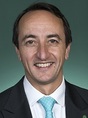
Dave Sharma NSW, Liberal Party, Shadow Assistant Minister for Citizenship and Multicultural Affairs
The question is that this bill, the Online Safety Amendment (Strengthening Enforcement for the Social Media Minimum Age) Bill 2026, be read a second time.