
Senate debates Questions without Notice: Take Note of Answers
Answers to Questions

Slade Brockman Deputy-President
3:10 pm
With the concurrence of the Senate, the clerks will set the clock in
accordance with informal arrangements agreed by the whips.
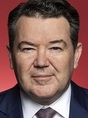
Dean Smith WA, Liberal Party, Shadow Assistant Minister to the Shadow Treasurer
3:11 pm
I move:
That the Senate take note of the answers given by ministers to questions without notice asked by Opposition senators today.
I say, then, to the people of Australia: Give of your best in the service of the nation. There is a place and part for all of us. Each must take his or her place in the service of the nation, for the nation itself is in peril. This is our darkest hour.
There would be one Labor luminary more than any other that would be turning over in his grave today if he himself were to have witnessed the performance of the Minister for Veterans' Affairs, Minister Keogh. That, of course, is the Labor wartime prime minister, John Curtin. Those are the remarks he shared with the nation when he declared that Australia would be at war with Japan in 1941—profound and understood how critical the depth of service and depth of conviction is.
He would have been more outraged, rolling again in his grave, to learn that this is the action this Minister for Veterans' Affairs has taken in what is a very significant and critical year of commemoration. Let me remind you that this is the 125th anniversary of the Australian Army and the Royal Australian Navy. Just last month, we commemorated the 60th anniversary of the Battle of Long Tan. Soon, we will celebrate 25 years of service in Afghanistan. This year we'll celebrate the 75th anniversary of national service, which saw 280,000 Australian men called to service in the period from 1951 to 1972.
What we have here in regard to Minister Keogh, the Minister for Veterans' Affairs, is not an isolated incident but another incident in his management of the Veterans' Affairs portfolio which points to lack of care and lack of attention. Just last week, I had the opportunity to host veteran leaders and veteran organisations in my office with the shadow minister for veterans' affairs, Michael McCormack. What they had to share reflects the concerns and frustrations and, in some instances, the fears that our veterans communities have in regard to this latest initiative to cap access to allied health services.
Let's be clear: this is not Minister Keogh's initiative; this is the government's initiative to save for itself around $700 million. That $700 million in savings comes from the anxieties, the frustrations and the fears of those in our veterans communities—and, I might add, their partners and their extended families. I'm curious to know how many government members have in their close proximity veterans, veterans' families— (Time expired)

Raff Ciccone Victoria, Australian Labor Party
3:15 pm
Today I want to take note of the question that was put to the government from the opposition with respect to illicit tobacco. The public debate on this issue seems to have lost sight of the achievements that have been made over many decades now. I particularly remember when Nicola Roxon was the health minister, when I was a very young member of Young Labor and someone who had just recently joined the party. I remember Nicola quite fondly as someone who represented the western suburbs of Melbourne very well and remember being very proud about her achievements while she was minister in the Rudd-Gillard years and was also the first health minister anywhere in the world to achieve significant reforms when it came to the decline in smoking rates in this country.
That was something that was applauded by both sides of politics back then. Unfortunately, I don't think the same can be said these days. We want to see a continuation of people not taking up smoking, regardless of their age. But the debate itself has lost sight of the achievements, and I say that because we want to see continuation of the reduction in smoking rates to the lowest anywhere in the developed world, something that I think Australians should be very proud of.
The National Drug Strategy Household Survey from the Australian Institute of Health and Welfare shows that fewer Australians are smoking now than ever before and that vaping rates have started to stabilise. I think that's another area that, as a parliament, we need to look at very seriously. The data shows that daily smoking has fallen to record levels, decreasing by 8.8 per cent in 2022-23 and down to 5.8 per cent in 2025-26 among adults. That is good news, and it should give reason for caution to anyone who is arguing that we should unwind the decades of bipartisan support for public healthcare policy that has got us to this point.
Smoking kills, and unfortunately it kills one in every two users and 66 Australians every single day. What a shocking statistic. Two in every three long-term smokers will die of smoking related illnesses, putting pressure on our healthcare system. Smoking is also still the leading cause of preventable disease in Australia. It causes 20 per cent of cancer diseases in Australia every year. Those costs are, unfortunately, overwhelmingly borne by the Australian taxpayer.
But Australians have a lot to be proud of when it comes to our nation's record in reducing smoking rates. I also want to mention that daily smoking rates among young people over the age of 18 have fallen to historic lows of 5.8 per cent, well below the government's 2025 target of 10 per cent, representing half a million fewer people smoking than there were three years ago. And when we take younger Australians into account, only 5.6 per cent of all people aged over 14 years are smoking daily, down from 8.3 per cent in 2022-23. So, after years of rising vape use among Australians over the age of 14, for the first time ever the daily vaping rate has stabilised at 3.6 per cent. The proportion of current vape users has lowered to six per cent in 2025, compared with the seven per cent reported in 2022-23.

Ross Cadell NSW, National Party, Shadow Minister for Water
3:19 pm
It's great to follow on from Senator Ciccone, a senator from Melbourne—or the home of the firebombing in the illegal tobacco wars, as we talk about. He talked about the rates that are continuing to be put up and the lowering of smoking. They're from statistics of normal businesses that sell these things. It's not normal businesses that sell them. I'm pretty sure the Alameddine crime family don't report their business statistics in their sales through these networks. I'm pretty sure the Hamad family syndicate don't put their sales through the Better Business Bureau and show up at the Melbourne business awards to collect their awards for being responsible people in their syndicates. I'm pretty sure that the Chinese crime families and the Haddara family don't put all their sales of illegal tobacco through the same networks that judge these things. What we're seeing in the sewage outlets—we're seeing this in sewage detection—is higher tobacco use. Why? It's because tobacco has become so cheap thanks to these things.
If we go back to law 101, which were three of the best years of my life, we can look at different rules of interpretation. 15:20:30 We have the mischief rule, and we talk about the rocks and the thing of putting this excise on to lower tobacco use. That is what it was there for. These taxes, these excises, were to lower tobacco use. They are no longer doing that because 80 per cent of the tobacco market is now illegal—no excise. So we go to that mischief. The mischief this was meant to do—it is no longer fit for purpose, and that is why we have come up with a way we can both get control of this situation again and get in front of these crime gangs by increasing the law avoidance.
They talk about the actions taken by states. Let me tell you about, in my home of the Hunter Valley, when the Rutherford tobacco store was shut. It was shut because they were selling illegal tobacco. They brought the shutters down. Three days later, it reopened—not 30 days, not 90 days. When it was shut down again a week later, they put a sticker on the front of the shop that you could scan and have the cigarettes delivered to you. That is the reality of what happens. It's not what we think or what we want; it is the reality of what happens in the world. We have seen more than 200 firebombings in Melbourne and more than 300 across Australia. We've seen 51 shootings in New South Wales. All of this is linked to the massive money that is made in illegal tobacco.
We've seen Premier Minns, a Labor premier, come out and say he supports this policy because he knows it's required to get on top of the gangs and because he's not living in gaga land. He's living in reality. He's living in a world where this happens every day. He's living in a world where we need an answer, where we need to be able to compete. We need to take the profit out of these criminals and get back in control. That's why this side, the opposition, will have a policy to reduce the excise—to do what? To get back to the mischief of lowering smoking and controlling the distribution. There's nothing more simple than that.
I note the answers today are in absolute disbelief of what the facts are. We go to the vaping. We talk about vaping numbers. I said yesterday in here that I—someone that looks like a narc, like me—went to a service station. I could buy a $30 vape six months ago. Now I've got to buy an $80 vape, but I can still get the same vape because illegal crime controls that. Vaping has been historically the No. 1 way that people have gotten off smoking. So the young people that want tobacco now who can't afford a vape are going to cigarettes because they're cheaper. This government, through its policies, is driving young people to cigarettes and driving that money to organised crime. Billions and billions of dollars are going to organised crime families like the Alameddines, like the Haddara family and like the Hamad syndicate. It is not good enough when you are driving billions and billions of dollars to the very worst people in society. That is why we will change it.

Charlotte Walker SA, Australian Labor Party
3:23 pm
I rise to take note of the opposition question regarding illicit tobacco. We have made a lot of really good progress on our smoking rates, and what we don't want to see is a new generation of Australians hooked on nicotine. As a young Australian, I, myself, am very concerned about the prospect of this happening.
We know that illicit tobacco is a global problem for countries around the world regardless of what their taxation policies are. I'm proud to be a part of a government that has invested $365 million since 2024 to crack down on illegal tobacco before it arrives. After years of backing the tobacco excise, the coalition has panicked because of their polls, thrown away decades of tobacco policy and landed on an 80 per cent tax cut. If this is their idea of being tough on crime, I'd hate to see them go soft.
The states and territories need to implement long-term closure orders and landlord penalties and to resource their compliance teams to shut down shops. There are good examples of states seeing their enforcement powers having a clear impact. South Australia is one example of this. They've closed more than 320 shops, and the SA government has indicated that the price of illicit tobacco is rising in SA. This changes the risk-reward equation for criminals.
It's important to remember that we've made so much progress to reduce smoking rates to amongst the lowest in the developed world. Smoking rates fell to 5.8 per cent in 2022-23. We've had decades of bipartisan health policy that got us to this point. Smoking is still the leading cause of preventable disease in Australia and causes 20 per cent of the cancer disease burden in Australia.
The coalition sees gangs making billions selling illicit tobacco and somehow thinks the problem is that cigarettes aren't cheap enough. We'd rather put the pressure on the criminals than give the tobacco industry an 80 per cent tax cut. I don't want to see hospitals full of dying and diseased Australians. I don't want to see the next generation hooked on nicotine. This policy is devoid of modelling and substance. We should reflect on how many billions of dollars we'd have to reinvest and divert into the health system from other things to deal with the health consequences of rising smoking rates.
It's also important to reflect on the work that this government has done in the area of enforcement. The Albanese Labor government created the National Disruption Group, which is led by the Australian Border Force. It brings together the Commonwealth, the states and the territories to co-ordinate a response to the illicit tobacco trade. The Australian Border Force has seen record levels of seizures at the border. The National Disruption Group has identified over 100 persons of interest associated with illicit tobacco. It is also important that we remind ourselves that vaping is not a safer alternative to smoking. There are clear links between vaping and cancer. People who vape are up to five times more likely to end up smoking.
The coalition is so desperate to chase One Nation voters that apparently decades of bipartisan public health policy can go right out the window. I'm proud to be part of a government that continues to crack down on tobacco and protects the health of Australians.

Jessica Collins NSW, Liberal Party
3:27 pm
I'm sitting here scratching my head listening to this. I'm absolutely scratching my head at 'cracking down on illicit tobacco'. What about the organised crime? What about the firebombings all across Victoria? What about the people that have been murdered? What's happening with the gangs? We heard this morning that the Assistant Treasurer, Daniel Mulino, had no idea that there was another firebombing in his own electorate just this very day. He had no idea when he was asked about that.
Think about that. We have reached the point where tobacco stores are being firebombed in the electorate of a senior economic minister, and he doesn't even know about it. We heard from the government today that they are focused on bringing down the numbers of people smoking. They think this is a health issue. This is not a health issue; it's a security issue for the good people of Australia. Businesses are being burnt down. Shopkeepers are being threatened and extorted. Organised criminals are making billions of dollars. Criminal gangs are making between $4 billion and $7 billion every single year.
Because of this illicit trade, there is drug trafficking, there are scams and there is other violent criminal activity, and we hear from the government that they don't want to get kids hooked on nicotine. They have their heads in the sand, and they focus on the wrong thing. It should be about the safety of the Australian people. This high-taxing government haven't dared face the reality of the situation, that their taxes have grown this illicit trade in Australia.
We in the coalition have put forward very sensible policy to bring down the tax of cigarettes to make it more affordable so that we don't drive people into this illicit trade. We propose an 80 per cent reduction in tobacco excise, which will destroy the enormous price advantage that organised crime has in our communities. It will disrupt their business model, which is what we need to do. But it is not simply about reducing excise. It's part of a broader package that will attack the illicit tobacco business model, strengthen enforcement and return control of this market to legitimate Australian businesses.
I want to touch on another set of questions that we asked the government today about the veterans that have visited parliament this week. I talked yesterday in this chamber about the harrowing moment yesterday morning when our veterans handed their medals back to the government. It was harrowing. We asked the government today about the consultations that they'd had with veterans groups and who the minister had consultations or meetings with, and all we got back was the group of veterans that visited. We asked whether the Prime Minister would admit that he's got it wrong on the allied health cap, making it more difficult for veterans to get the healthcare that they need. There was no answer on that and no answer on whether they will walk that back. But I can tell you right now that it is having such a grave impact on our veteran community that— (Time expired)
Question agreed to.