

Deborah O'Neill NSW, Australian Labor Party
5:23 pm
Senator Dean Smith has submitted a proposal, under standing order 75, today, which is shown at item 13 of today's Order of Business:
Pursuant to standing order 75, I propose that the following matter of public importance be submitted to the Senate for discussion:
"Labor's plans to tax discretionary trusts leave charities, not-for-profits and sporting communities under a cloud of uncertainty, and risks Australian charities and not-for-profits being unable to respond effectively to Labor's cost of living crisis."
Is consideration of the proposal supported?
More than the number of senators required by the standing orders having risen in their places—
With the concurrence of the Senate, the clerks will set the clock in line with the informal arrangements made by the whips.
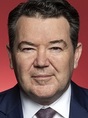
Dean Smith WA, Liberal Party, Shadow Assistant Minister to the Shadow Treasurer
5:24 pm
Labor's plans to tax discretionary trusts leave charities, not-for-profits and sporting communities under a cloud of uncertainty and risk Australian charities and not-for-profits being unable to respond effectively to Labor's cost-of-living crisis.
Labor is crazy. First, they want to tax widows. Now, they want to tax charities, not-for-profits, sporting groups and other community organisations. Labor's budget contained details that want to make it harder for religious charities to feed families, shelter the homeless and care for vulnerable Australians. Why would Labor want to do this?
A glimmer of hope just today—the Prime Minister admitted he got it wrong. He's going to fast-track and reverse his decision to tax widows, so let's hope tomorrow the Prime Minister wakes up and realises he got it wrong again and decides to fast-track to reverse his decision to tax charities, to tax sporting clubs, to tax not-for-profits and to tax community organisations. The government's budget proposes to tax these groups $4.9 billion. Charity experts say that is going to leave charities, community organisations and sporting groups and others $2.9 billion worse off. Why would Prime Minister Anthony Albanese want to do that at all?
Religious leaders have been pleading with the Prime Minister: 'Prime Minister, don't do this. This is crazy.' Community leaders have been pleading with the Prime Minister saying, 'Prime Minister, this is crazy. Don't do this,' and the leaders of organisations like World Vision, the Red Cross, Save the Children Fund are all saying: 'Prime Minister, this is going to bring additional administrative burden to our organisations. Why would you want to do this?'
As I said, the Prime Minister has recognised he got it wrong. He made a mistake. He's going to reverse his position in regards to taxing widows, so let's hope tomorrow we hear that the Prime Minister has seen the light and understood that it is wrong for him and his budget of broken promises to want to tax charities. Just think about this: if you are a volunteer or someone who benefits from the over 300,000 community organisations in our country—sporting groups, voluntary associations—Anthony Albanese, Labor and Labor senators want to make it harder for you not easier for you. Why would they want to do it? Why would they want to do it at all? Why do they want to do it in a cost-of-living crisis?
Everyone in Australia is talking about one thing: life has got harder for everyone. It's got harder for families. It's got harder for businesses. It's got harder for charities. Who are those people who are at the coalface of this cost-of-living crisis? Who are the people that are meeting the increasing levels of demand, who are finding it harder to organise and run their own charities? These are the people that Prime Minister Anthony Albanese wants to handcuff even further. This is a powerful demonstration that Labor is interested in raising taxes, spending more money and driving inflation in our economy. What does all that lead to? That leads to a life that is harder for Australians than it has been for a very, very long time. A life that is harder for charities, harder for community organisations and harder for sporting groups.
The clock is ticking for Prime Minister Anthony Albanese. Let's hear him say tomorrow morning that he got it wrong again and that he's going to reverse and fast-track this $4.9 billion tax on charities, community organisations and sporting groups. Why would he do it at all? Why would he do it, especially in a cost-of-living crisis? Tomorrow, we'll have an opportunity to interrogate the government and to ask them to explain why, in a cost-of-living crisis, when Australian families are already suffering, do you want to make it harder, even further? It's a good question for the Prime Minister, a good question for the Treasurer and a good question for Labor senators. Let's see what the Prime Minister has to say tomorrow.

Lisa Darmanin Victoria, Australian Labor Party
5:29 pm
Let's not pretend that this matter of public importance debate is motivated by a virtuous concern for the charity sector. Let's be honest about what's really happening here. Let's talk about what those opposite are not saying, because this debate is really not about charities. It's not about food banks helping families put meals on the table. It's not about legal centres supporting people who cannot afford representation. It's not about the thousands of volunteers who give up their time every week to strengthen their communities. What this debate is really about is the coalition's opposition to Labor's agenda for a fairer tax system.
At the heart of this argument is a simple proposition—wealthy individuals who have benefited from arrangements that are unavailable to most Australians do not like the fact that this government is asking them to contribute a little bit more fairly. Now we're being told that, if those individuals choose to withdraw support from charities because of these reforms, somehow that's Labor's fault. Just stop and think about that for a minute. Charities operate on tight budgets. They often have small teams, limited resources and enormous responsibilities. Every day, they step in where people need help most, and sometimes on the worst day of people's lives. They provide emergency relief, housing support, legal assistance, mental health services, community programs and countless other services that make life better for Australians.
What we're seeing today is an attempt to use charities as a shield in an argument that is really about protecting tax concessions. We reject that proposition. What this government is trying to do is make the tax system fairer. Discretionary trusts provide tax planning opportunities that are simply not available to the overwhelming majority of Australians who earn their income through wages and salaries. That is why this government has announced a minimum tax on discretionary trusts from 1 July 2028. Importantly, charitable trusts are not subject to this measure. Donations to organisations with deductible gift recipient status will continue to be tax deductible. And, perhaps most importantly, we are consulting on implementation details to ensure that charities and other tax-exempt entities continue to be appropriately supported. The apocalyptic claims we have heard from those opposite simply do not reflect the reality of what has been announced. They are just trying to distract from the real issue at hand—this government's determination to make the tax system fairer for Australians.
I can say this: if the coalition are serious about wanting to have a conversation about support for charities, they should be prepared to defend their own record. When Labor came to government, the charity sector was still reeling from the former coalition government's war on charities, from trying to axe the Australian Charities and Not-for-profits Commission through to silencing advocacy from charities, criticising the organisations for speaking up on behalf of the people that they serve and seek to help, and appointing a well-known charity critic to lead the Australian Charities and Not-for-profits Commission. Charities themselves were so concerned that they repeatedly wrote open letters to Liberal prime ministers asking them to stop treating the sector as a political opponent.
We have taken a different approach on this side. We engage with charities respectfully. We consult with them regularly. We listen to them and we back them with action. That is why we have lifted the minimum distribution to six per cent of net assets, which is expected to see an extra $60 million a year flow to charities. And we removed the gag order on charities, so they can freely advocate and not be punished as a result of the important work that they do on behalf of the community, some of whom are the most vulnerable. That is why we continue to work with the sector on reforms, including consultation on these ones, and that is why we are committed to ensuring Australian charities remain strong, independent and effective, so they can keep supporting those Australians who need them most.
Let's not pretend that Senator Smith's motion here is about standing up for charities. This government wants charities to prosper. This government has done more to support a strong and independent charity sector than those opposite ever did. What Senator Smith objects to is not support for charities; what he objects to is tax reform. Australians can see the difference between this argument and what those opposite are saying. We will continue to fight for charities with our record that is long and strong and proud.

Tyron Whitten WA, Pauline Hanson's One Nation Party
5:34 pm
The tax changes in the 2026-27 budget are truly horrendous. It's hard to imagine less popular, less effective reform if you tried. Labor said their CGT changes wouldn't result in property prices falling. It's been proven false. They said that rents wouldn't rise. That was false. They claimed they were trying to help out first home buyers, but the data is showing a slowdown in those numbers, too. Labor simply has no idea.
As Senator Smith points out in this matter of public importance, more than anything else, the Labor government has introduced uncertainty to the tax system—a system that is already overly complex and in desperate need of reform to make life easier. Instead, here we are, waiting for this clueless government to give us details on how they will dismantle trusts. Charities, not-for-profits and sporting communities have all been caught up. But there's another community that's going to suffer, and that is the 350,000 small businesses that operate through a discretionary trust in Australia. They have set up their business in a perfectly legitimate structure that provided asset protection, succession planning and flexibility around their tax arrangements. Small businesses are the backbone of Australia's economy, employing 5.16 million workers.
Labor has come through to smash them by moving the tax goalposts. The 30 per cent tax is the equivalent tax rate of earning $200,000 at marginal tax rates. Many of these small businesses are mum-and-dad operations, where one partner might be looking after the children full time, allowing the other to run a small business. In these cases, of which there are thousands, that small business would not be viable without a stay-at-home parent. In these cases, is it not fair for that parent who took on the huge responsibility of looking after children and raising our next generation to receive some of that small-business income? Are they not contributing to the economy?
One Nation recognises the vital importance of the family unit. We know that raising the next generation is serious business, which is why we would allow families with children to split their income. We know working families need a leg up. But here, we see Labor stripping families with small businesses of their ability to split income and recognise the economic input of their spouse. Labor's tax grab has struck at the heart of the small-business dream in Australia. It doesn't end there, either. Anyone who's owned a business and had to deal with restructuring knows that it is an incredibly tricky business. Labor is providing rollover relief only for the direct income tax consequences for the hundreds of thousands of businesses that will need to restructure out of trusts.
But these are just the tip of the iceberg in a costly restructuring process. Given the state of the Australian tax code, this is not something that can be done without substantial advice from a tax professional, and this is not cheap. It runs into the tens of thousands of dollars. This is time, paperwork and effort to understand new tax structures rather than spending that time and effort reinvesting in their businesses. What if the taxes are state taxes? What about stamp duty? What about land taxes? There have been no promises of relief for small businesses for these costs. These are businesses that are heading to the wall in record numbers, and, for many, these additional costs are going to be the final straw that pushes them over the edge, and for what?
What was the urgency behind pushing these trust reforms through? It's the same reason Labor always pushes new taxes: they can't control their spending, they can't balance their budgets, and they can't manage taxpayers' money, so they're coming for more. This government has shown time and again that it does not understand how real businesses operate. It does not understand the daily pressures faced by owners who already work long hours, carry personal risk and employ their neighbours. Instead of simplifying the system or providing genuine support, Labor has chosen to punish the very structures that have allowed so many Australians to build something of their own.
The uncertainty alone is enough to freeze investment and delay hiring. When you add the forced restructuring costs, the loss of flexibility and the higher effective tax rates, the damage compounds quickly. I urge the Labor Party to reconsider these changes. We know that a draft of new measures are on the way to fix the other disasters that have come out of the budget. You have time to reverse course on these trust changes. Stop trying to balance your budgets through higher taxes and instead cut your wasteful spending.

Paul Scarr Queensland, Liberal Party
5:39 pm
We heard from government senators earlier in this debate about charities with DGR status—charitable trusts. That is missing the point. The point of this matter of public importance proposed by my dear friend and colleague Senator Dean Smith is that, under the government's budget, distributions to not-for-profits and charities which do not have DGR status will be subject to the 30 per cent tax, and that has been estimated to have an impact of approximately $2.9 billion over the five years post implementation. That is the issue we're talking about. At the moment, billions of dollars flow to charities from discretionary trusts. Because those charities and not-for-profits are income-tax exempt, they are not subject to this 30 per cent tax. That is the issue, and that is the issue which Senator Darmanin did not engage with during the course of this debate. She didn't engage with it.
How many charities are we talking about? It's estimated that only 42 per cent of all the registered charities in Australia are recognised as DGRs. If you do the maths, there are 65,000 registered charities. That necessarily means 37,700 charities across Australia will be impacted by this Labor tax, because they do not have DGR status, and therefore there is a disincentive upon people making donations to them under the government's tax changes to discretionary trusts—37,700 charities without DGR status. That's even before we then move on to all the not-for-profit organisations: the local sports clubs, community associations and small volunteer groups that aren't formal charities and again do not have DGR status. In this case, we're talking about 300,000 organisations. Those organisations will be receiving distributions from discretionary trusts today that are not subject to 30 per cent tax. What's going to happen when this minimum 30 per cent tax is imposed on all distributions from discretionary trusts? A source of revenue is going to dry up. That's the reality.
It actually is beyond the realms of comprehension that the government didn't think about this consequence when it actually introduced this measure in the budget. The government is talking about consulting with the charity and philanthropic sector now. Why didn't you think about this before the budget, when you came up with your estimate of $4.5 billion of revenue from the trusts tax? Why didn't you consider the impact on the philanthropic sector? Why are you playing catch-up now, just as you had to play catch-up with respect to the so-called widows tax? As Senator Smith said, you capitulated on that today. You need to bring in changes to address this issue tomorrow. This has created so much uncertainty to those in the charity sector.
I want to quote to you from some members of that sector. These aren't the words of opposition senators. This is what people in the charity sector are saying. David Crosbie, chief executive of the peak body for charities, not-for-profits and community organisations, Community Council for Australia, in a submission to the Treasury, said:
… there will be a significant disincentive for discretionary trusts to maintain current levels of giving to these organisations as a result of the proposed Trust Tax.
It's very simple. That's not Senator Dean Smith's words. Those aren't my words. That's the leader of the peak body representing charities and not-for-profits. I have not heard an answer to that fundamental issue, because there is no answer to it. It necessarily flows from this minimum 30 per cent tax. So this is a case once again of Labor's tax proposals having—let's be gracious—unintended consequences throughout the community. (Time expired)

Marielle Smith SA, Australian Labor Party
5:44 pm
Our government has been clear that the proposed minimum tax will not apply to charitable trusts, and donations to organisations with deductible gift recipient status will continue to be tax deductible for discretionary trusts. Labor believes deeply in the contribution of Australia's charities across the sector. These are organisations that are creating stronger, more connected communities. That's why we've been reforming Australia's deductible gift recipient system, to make it fairer and simpler and to better support giving. We've streamlined the DGR system, created a new community charity category to encourage more local and place based giving, strengthened the role of the charities commissioner and expanded the Australian Charities and Not-for-profits Commission advisory board to be more representative of the sector. We're also continuing to consider the Productivity Commission's recommendations for broader DGR reform, with the goal of encouraging more Australians to give.
The same principle applies to our sporting communities. Sport is where children grow up in confidence, develop skills and build friendships, and sporting clubs are where families come together and where, for so many Australians, a sense of belonging is found. That's why we're providing certainty and support for sporting communities through programs like Play Our Way, our $200 million flagship sport inclusion program. I was so honoured to witness the tangible changes this program has made to clubs like the Jervois Bluds Netball Club in my home state of South Australia. This grant funding has meant so much to this community, and it is an important example of the way the Play Our Way program is supporting local communities. Whether it's investing in local sporting clubs, reforming the tax system so a young family can afford their first home or helping workers keep more of what they earn, these sorts of investments matter, and these are the sorts of investments being prioritised by our government. Indeed, these investments reflect the values of the Albanese Labor government and our value as it rests in investing in people.
That's what the broader tax reforms are all about. They are about building a fairer tax system that works for working Australians, a tax system that supports homeownership and a tax system that backs Australian businesses and strengthens the communities that we all call home. Our reforms will reduce the tax burden for more than 13 million Australians. They will help an estimated 75,000 more people into the housing market and deliver more than $3.8 billion in new measures to lower taxes for businesses and start-ups. This builds on what we've already delivered as a government—three rounds of tax cuts for every Australian taxpayer, making super fairer from top to bottom and ensuring multinational companies pay their fair share of tax.
On 1 July, more than 14 million Australians received another tax cut of up to $268. Under our combined tax cuts, a worker on an average income will pay up to $2,800 less tax than they otherwise would have. This is real money in people's pockets making a real difference. It is money that can go towards paying the mortgage, groceries, utility bills or just giving Australian families a little bit more breathing room. Our tax reform plan is about something much bigger; it's also about bringing homeownership within reach. It's about trying to ensure that more young Australians can realise the opportunity of homeownership, as the generations before them were able to do.
We know this is important to Australians and we know Australians are doing it tough. That's why our government is very focused on cost-of-living delivery. We've rolled out a tax cut for every taxpayer this year and next. We're investing in cheaper medicines, we're investing in more bulk-billing—which we're seeing increase across Australia—and we're investing in record hospital funding. We're helping Australians earn more by getting wages moving. We're providing support for parents, including extending to a full six months of paid parental leave. We're boosting social and affordable housing. We're providing relief for students, including through paid prac and free TAFE. We're slashing student debt, and we're expanding a fair go for consumers at the checkout with more power for the competition watchdog and making the Food and Grocery Code of Conduct mandatory—all at the same time as responsibly managing the budget, tackling key challenges including inflation and global volatility, and strengthening our economy. Under Labor, 1.25 million jobs have been created. We have the lowest average unemployment for any government in under— (Time expired)

Andrew Bragg NSW, Liberal Party, Shadow Minister for Housing and Homelessness
5:49 pm
In speaking on this motion from Senator Dean Smith, I make the general point that we have a massive problem here facing charities as a result of these new taxes. But it's not just the charities, of course; it's also small businesses and anyone who wants to see Australia's wicked housing problem solved.
More than 300,000 small businesses are using a trust at the moment to run their own affairs in order to minimise their compliance burden for succession planning and for a whole lot of business reasons. They'll now face higher taxes. This government has gone out of its way to make life hard for small business, principally because Labor doesn't understand that small businesses are just people. If the person who runs a small business doesn't go to work, there is no business. And so the way that they set up their affairs is to minimise their administrative burden. We don't want to have a country where people are disincentivised to engage in small business. All this is going to do is make it much harder for people to run a small business, which is going to hurt the lifeblood of our future creativity.
Then we have this housing disaster. We see the government having put in place the OECD's broadest and deepest taxes on income and capital gains. This is smashing housing, and so no-one should be surprised when they see in the paper today that rents are going to go up by 30 per cent. This is exactly what happens when you reduce the supply of something. This is a government which has a deliberate design feature to cut housing supply—it's in their own budget papers—by 35,000. So the cuts apply there. Then they come along and do a deal with the Greens to stop self-managed funds from borrowing to invest in property, thereby cutting off another stream of new housing. Now, because Dr Chalmers doesn't bother to do any proper analysis, he said, 'Oh, that will stop 4,000 houses from being built.' Why, in a housing crisis, you'd want to have one less house is beyond me, let alone 4,000 fewer houses. But, in fact, the 4,000 number is actually wrong. It's much more like 16,000 transactions a year.
We have a government that hates Australians. I think a lot of people would say: 'Why does the government hate me? What have I done wrong?' The answer is nothing, but we are stuck with these people for another 18 months. But it is a very strange thing to see these deliberate design features suppressing housing supply through taxes, cutting and banning people from building new houses. Thirty per cent of a pre-sale in many apartment buildings will be supplied by a self-managed super fund, so a lot of those buildings now won't go up.
I make the point again: this tax reform was a shambles. If Dr Chalmers were the CFO of a company, he would have walked the plank a long time ago. He's had two tax policies. They've both failed. Unrealised gains collapsed on him last year. He's come back this year with the capital gains tax—the world's highest capital gains tax—and it's collapsed in bits and pieces. We've seen the widows tax and the SMSF thing. I mean, this whole thing has been an absolute shambles.
When you look at the housing quagmire, you've just got to say to yourself, 'Well, we're going through this period of insanity when the government is trying to suppress supply.' That's why there are fewer houses and that's why rents are going up. If you look at the budget papers, they say rents go up by two bucks a week. It's not two bucks a week; it's going to be 200 bucks a week in Sydney. Rents will go up $200 a week because of these guys putting out this tax policy.
They worked through it with their marketers and their focus groups. They think they're so smart, so slick at politics. They thought this was going to be a very popular thing. I think what they're finding out, in fact, is that when the rubber hits the road, the new taxes cut supply, increase rents, make everyone's life harder and ensnare small business in layers and layers and layers of regulation—more than you can shake a stick at. The charities and everyone else are just afterthoughts, just roadkill. Charities, small businesses, houses, people who care about housing—the government don't care. They fiddle around with these things, and they're going to fiddle around with it again this week, but the fundamental point is that these taxes are totally wrongheaded. They're wrong for Australia. They are aspiration killers.

Richard Colbeck Tasmania, Liberal Party
The time for the discussion has expired.