
Senate debates Questions without Notice: Take Note of Answers
Answers to Questions
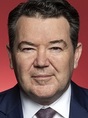
Dean Smith WA, Liberal Party, Shadow Assistant Minister to the Shadow Treasurer
3:06 pm
I move:
That the Senate take note of the answers given by ministers to questions without notice asked by Opposition senators today.
Today in question time, we have tested and exposed the Prime Minister's lack of integrity. The Prime Minister's integrity will be tested again in just 24 hours. Tomorrow is a big day for Western Australia. It's a big day and a big test for Labor premier Roger Cook. It's also a big day and a big test for Prime Minister Anthony Albanese.
Tomorrow, the Productivity Commission will release its interim report on the 2018 GST deal that corrected a great anomaly in the GST distribution system—a system that imperilled Western Australia; a new system that has finally liberated Western Australia and given it financial fairness.
It's a test for Roger Cook, because we will find out whether Premier Roger Cook has failed or succeeded in convincing the Productivity Commission to keep WA's GST deal. It's also a test for Prime Minister Anthony Albanese. Prime Minister Anthony Albanese, when that draft report is released, can and should do just one thing, and that is to reject immediately, tomorrow afternoon, every anti-WA recommendation in that interim report. It's just one thing the Prime Minister has to do tomorrow. It's a big test of his integrity. It's a big test for the Prime Minister about whether or not he really does back WA. Roger Cook has made lots of noise, lots of sound, about standing up for WA. Well, tomorrow we'll find out whether Roger Cook has been strong or weak in standing up for Western Australia.
Three key facts make the case for WA's GST deal. The first fact is that, relative to population, WA is still providing $2½ billion worth of subsidy to every other state and territory. The second fact is that no other state has ever fallen below 83c in the dollar. That makes the 75c floor very fair and very reasonable. The third fact is that every state has been benefiting from higher iron ore prices since the 2018 GST deal. It's estimated that every state and territory will benefit to the tune of a total of $31 billion. Think about that. Every state and territory will benefit to a cumulative value of $31 billion as a result of higher iron ore prices.
Tomorrow we'll know. Will Premier Roger Cook get an F for failing WA? Tomorrow we'll know. Will Prime Minister Anthony Albanese get a F for failing on integrity? So WA Labor senators—Senator Ghosh, Senator Cox, Senator Whiteaker, Senator Sterle and Senator Lines—are on notice. Are WA Labor and their senators capable of standing up for Western Australia and standing up for WA's GST deal? Tomorrow afternoon we'll know. The Prime Minister has to do just one thing tomorrow afternoon: reject in their entirety every anti-WA-recommendation in that draft report.

Slade Brockman Deputy-President
I will just raise this because this issue did come up yesterday. Whilst there was a tangential link to the topics under discussion, I would just remind everybody that we are considering the answers that are being taken note of. This issue came up yesterday in the other direction. We do need to link the contributions to the questions and answers provided. I'm not saying you didn't do that, Senator Smith. We do offer a fair bit of latitude, but I will remind all senators of that.

Josh Dolega Tasmania, Australian Labor Party
3:11 pm
Thanks, Deputy President, for your guidance there. The opposition today have shown just completely how out of touch they are with working everyday Australians. They have been focused on issues that average punters don't care about instead of focusing on cost-of-living pressures, the economy and jobs. We've just had absolute rabble repeating lines from the Sky News scribbles otherwise known as the Australian. That absolute rabble from that side are not focused on Australians.
Senator Hume asked earlier on about our promises that we made at the last election. We're really proud to talk about our promises that we made and what we have been delivering for Australians. We promised that we would open up Medicare urgent care clinics and—by God!—we've opened up 150 Medicare urgent care clinics throughout the country, including in Tasmania. When I go around my community and I ask people what matters, they tell me that access to health care and cheaper medicines are absolutely at the forefront of what they expect and what is important to them. We promised Medicare mental health clinics at the last election, and we absolutely have delivered them. In my home area, my duty electorate of Braddon, we've got Burnie and we've got Devonport. The community is absolutely stoked. Blokes are stoked that they can walk in and get help without having to make an appointment. All they need is just their Medicare card. Just today, I met with the Pharmacy Guild and talked about our cheaper medicines policy. They told me that in Tasmania, due to our promises to make medicines cheaper, Tasmanians have saved over $2.8 million in PBS medicine costs. That's due to our promise to deliver PBS scripts for $25 for everyday Australians and $7.70 for concession card holders.
We promised that we would protect penalty rates in law. People rely on their penalty rates to be able to fund things like their kids' birthday presents. We've locked that in. We've protected that and enshrined it in law. We've delivered record funding for our hospitals. At the last election, we promised that we would deliver more tax cuts for all working Australians. It's not just for me in the higher income bracket; we have delivered tax cuts for everybody. Tax cuts mean average working Australians are keeping up to $2,800 more, keeping more of what they have earned, due to Labor's tax policies.
We're helping deliver paid prac to people to get into medicine and allied health services, making an absolute difference to the cost of living. In Tasmania, we've delivered $80 million in extra funding for our hospitals. We've delivered over 1.3 million jobs that we've created. Three out of five of those jobs have been full-time, and five out of six of those jobs have been in the private sector. We've got the lowest average unemployment rate of any government over the last 50 years. So when Senator Hume asks us about the promises that we've made and delivered, I tell you what, we're bloody proud of them.

Paul Scarr Queensland, Liberal Party
3:15 pm
I rise to speak about the answers to two coalition questions and, in particular, the question I asked the Minister representing the Prime Minister in relation to the impact on philanthropy of the Labor government's changes to the taxation of discretionary trusts. I recognise this is not Senator Wong's portfolio area, and Senator Wong is acting on advice given to her. However, it deeply disturbs me that the Labor government doesn't seem to understand the scope of this issue, and I want to set it out very, very clearly.
The issue is that, at this point in time, before Labor's changes to the taxation of discretionary trusts, income generated through discretionary trusts is being donated to charities and not-for-profits. Because Labor is proposing to change the taxation of discretionary trusts and impose taxation of at least 30 per cent, money which would otherwise be given to charities and not subject to that 30 per cent tax is in jeopardy. It's in jeopardy because 70 per cent of the donations given by Australians to charities, not-for-profits and income tax exempt entities are not tax deductible donations. They're not tax deductible donations—70 per cent of them are not tax deductible donations. So you don't get a deduction on your tax when you actually make the donation. If the donation is coming from a discretionary trust and you're not paying tax on that distribution, it doesn't matter—because you're not paying tax on that distribution. But as soon as you introduce the 30 per cent tax on all distributions from discretionary trusts, there is a huge disincentive for people to make donations to not-for-profits and charities which do not have deductible gift status. That's the issue.
It's been estimated that the potential impact over the next five years will be $2.9 billion—$2.9 billion, which is currently going to organisations without DGR status. They include charities with a human rights focus and charities with the focus on prevention of disadvantage, social welfare charities engaging in advocacy, religious institutions, educational organisations, community service organisations, cultural organisations, educational organisations and health organisations. The list goes on. These are organisations where, if you make a donation, you don't get a tax deduction for making that donation. Under the existing law impacting discretionary trusts, that doesn't matter because you're not paying tax on that income. You're distributing it to the not-for-profits. But once you introduce that 30 per cent tax on all distributions from discretionary trusts, it makes a huge difference.
The estimate is from Dr Mark Fowler, who is probably one of Australia's leaders in terms of the law of charities. Based on his analysis, going through the percentage of donations to those with DGR status and those that don't, he's estimated a $2.9 billion impact over five years. So I really do request that the Labor government looks deeply into this issue. Senator Wong said that consultations are continuing, but we do not want to see these community organisations doing such good work impacted by this tax change.

Richard Dowling Tasmania, Australian Labor Party
3:19 pm
To go to the direct point that Senator Scarr was just making, I would encourage you to participate in the Treasury process, because it's very much still open. I understand exactly the point you're making, and I think the point has been made in the consultation paper that feedback is sought on the treatment of distributions to income tax-exempt entities. That is the exact question that the consultation is seeking to address. It's very important, and I agree that we want to continue to incentivise charitable giving. That's really what this consultation process is about; it's so we make sure that our overall policy objectives are around trust and that there's a better equalisation between trust in other forms of income, without having unintended consequences.
Charitable trusts overall, though, are, obviously, expressly exempt from the minimum tax of 30 per cent. Parliament has also amended the minimum tax on capital gains to preserve incentives for deductible charitable donations. There is also a further question about distributions from discretionary trusts to tax-exempt charities and not-for-profits, and that really is the question being dealt with right now. The government is very aware of that issue, and that's why we're consulting on it. Treasury has expressly asked for feedback, and that is exactly what the consultation is about. We identify an issue, we listen, and then we get the details right.
In terms of those opposite, on tax, there have been a lot of claims and a lot of fearmongering. Let's just get the facts right: there's no charity tax, and the government is not abolishing trusts. There are legitimate reasons for Australians to use trusts. They run businesses and plan for succession. We're changing the unfair tax advantage because Treasury analysis shows—and this is what the overall debate is about—that families using discretionary trusts face an average tax rate of around four percentage points lower than families on similar incomes without a trust. That is the equity argument at play. You have four percentage points lower tax if you have a trust than if you just earn ordinary income.
From July 2028—so these are not being rushed; there's plenty of time to fine tune this—discretionary trusts will face a minimum tax rate of 30 per cent of taxable income. More than 90 per cent of small businesses will not be affected by this change, and rollover relief will be available for those that take the choice to restructure. But the basic proposition is this: Australians earning similar income should make a reasonably similar contribution. A nurse, teacher, electrician or hospitality worker in Tasmania cannot split their salary through a discretionary trust. Their tax comes straight out of their pay packet. Their work deserves the same respect from the tax system as any other form of income.
Fact three: there is no so-called widow tax. Death, divorce and family violence are very serious matters. They deserve better than a scare campaign. We said these circumstances would be dealt with in the next tranche of legislation. That's exactly what's happened. Draft legislation released on 4 August ensures that a property acquired from a spouse through inheritance or relationship breakdown retains access to negative gearing where it was owned on budget night. That is clear. That means a widow or widower inheriting their partner's property. It means someone going through a separation or divorce. And, critically, it means someone who needs to leave a violent or unsafe relationship. For someone escaping family or domestic violence, the tax system should not put another obstacle in the way of rebuilding their life, and those facts need to be put on the table.

Leah Blyth SA, Liberal Party, Shadow Assistant Minister for Defence Infrastructure
3:23 pm
Well, it was an extraordinary question time today. We have a Prime Minister here in Australia who has difficulty in telling the truth and keeping the promises that he makes to the Australian people. This is a Prime Minister that promised the Australian people that they would save $275 in their power bills. Now, I don't know about everyone else out there, but I'm still waiting to see that saving. Instead, my power bill has gone up much, much more than the $275 deduction that this Prime Minister promised.
This prime minister fell off a stage and told everyone that he didn't, even though there was video evidence showing him falling off the stage. This is a prime minister who said over 50 times that there would not be changes to things like the capital gains tax. Then, just as recently as the budget in May, the Prime Minister did it again and said, 'Oh, no. I've had a change. That wasn't really a promise,' and took a very different approach to the capital gains tax. This is a prime minister who, when he does the wrong thing, doubles down rather than owning up and saying: 'You know what? I've made a mistake.' He will do anything he can to make sure he is not held accountable for the things that he says and the promises that he makes.
What we've seen in this chamber is extraordinary. Senior leading women in Labor have come out and defended in what, in my view, is indefensible. We've got a prime minister who, I would say, showed a lack of judgement by going on a podcast and who made revolting, derogatory comments about women. But he has also brought the Japanese prime minister into that. Rather than owning up and saying, 'I probably didn't say the right thing,' or, 'I was clumsy,' he said, 'Well, I talk with my hands.' There is video evidence of the Prime Minister using quite grotesque sign language as he's talking.
That is a problem because we've got a prime minister who is responsible for things like gas deals with Japan and who is responsible for giving the Australian people confidence, and he is out there basically making fun of women in a way that I find, quite frankly, offensive. Then he's rolling out senior women in his own party to defend these actions, and they are blindly going along with it. It just makes you wonder: What matters to Labor? Does actually telling the truth matter, or is it all about spin for them and they will pretty well go out there and say whatever they are told to say by this prime minister? It seems to be the latter.
Today, when the Prime Minister was asked at a press conference to comment on what the media are now calling melongate, he needed protection from the New South Wales Premier. It is quite extraordinary that he won't even go out there and front up and answer questions. What was really, starkly obvious in question time today was that not one single Labor minister or member jumped in to defend him. They've clearly gone: 'Maybe this isn't being spun very well out there with the Australian public. They're not buying this particular spin that we're putting on this, so we probably have to roll it back.' But it's difficult—isn't it?—when you've got a prime minister who doesn't want to roll anything back and who can't admit when he's wrong. Anything that comes out of his mouth is not the truth. The Australian people deserve better and so do our Japanese partners and friends.
Question agreed to.