
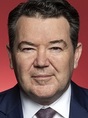
Dean Smith WA, Liberal Party, Shadow Assistant Minister to the Shadow Treasurer
12:29 pm
Today, King Charles III continues that tradition of service with dignity, intelligence and quiet purpose. His Majesty has come to the throne after perhaps the longest apprenticeship in modern history. For decades, he immersed himself in public life, charitable work, interfaith dialogue, environmental stewardship and engagement across the Commonwealth.
More recently, we've seen the important role a constitutional monarch can still play on the global stage. Whether opening the Canadian parliament at a time of anxiety about sovereignty and democratic stability or addressing the United States Congress with warmth, humour and subtle wisdom, King Charles III has consistently reinforced the enduring values of democracy, the rule of law, pluralism and constitutional government. Importantly, he has done so not through partisan intervention but through the unique moral authority that constitutional monarchs can exercise precisely because they stand above day-to-day politics. Royal meaning is often inferred rather than declared outright. But the message has been unmistakeable: democratic institutions matter, alliances matter, constitutional restraint matters, and freedom and self-government must never be taken for granted. At a time when democracies around the world face growing pressure from authoritarianism, polarisation and declining trust in institutions, those reminders carry significant weight.
Australia's constitutional monarchy has served our nation with distinction for 125 years. It has evolved with the country, adapted to changing times and helped provide the stability within which Australian democracy has flourished. Today, under King Charles III, that enduring tradition of duty, service and constitutional stewardship continues.

Penny Allman-Payne Queensland, Australian Greens
12:31 pm
In the Governor-General's address to parliament, Her Excellency said:
The government recognises the dream of homeownership feels out of reach for many—particularly young people and aspiring first home buyers.
But the government isn't doing what needs to be done to make sure that everyone has a home.
On any given night in Queensland, right now, 22,000 Queenslanders are experiencing homelessness. Of that number, roughly 20 per cent are young people aged 12 to 24. That's 4,454 young people experiencing homelessness in Queensland on any given night.
The Greens have been advocating since we came into this place for a massive build of public housing. The only way we're going to address the housing crisis is to actually build homes for people to live in. After the Second World War, the Australian government was building roughly 30 per cent of the housing stock in this country, and people were proud to live in a home built by government. Since that time, successive governments have done what governments do: they let those assets run down; they sell them off; they turn them into something that no-one wants to live in, so that there's no demand, and then they vacate the field.
The Greens think that the federal government needs to get back in the business of working towards building more public homes, because everybody needs to have a home. The incoming prime minister from the UK Labour Party, Andy Burnham, said in a speech earlier this week that he thinks that the way for the UK to come back to prosperity is to have a massive build of public housing—to take a housing-first approach. Finland has had a housing-first model for more than 15 years, and they are one of the only European countries that registers decreasing homelessness numbers. It's not rocket science. If you want to house people, you need to build houses, and the government should be playing a leading role in building high-quality, accessible public homes for everyone, to tackle this housing crisis.
We need genuine investment in social and affordable housing. And we need to have continuing support for renters, because rents are still going up right across the country. We need a renters' protection authority to step in and make sure that renters have rights that are protected. We still have states that have no-grounds evictions. The federal government needs to be taking a leading role to make sure that they are abolished. We need to stop unlimited rent increases by limiting increases to two per cent every two years. The Labor government says it can't do that because it's a state issue. Well, there are plenty of other things where the federal government has stepped in. They did it for gas. If you can step in for gas to make sure that people have supply, then you can step in and give incentives to the states to cap rents.
They also need to regulate the banks to deliver fairer, lower mortgages. The five per cent home deposit scheme is simply funnelling more money to the banks, as more and more younger people have had to take on massive mortgages, with 95 per cent borrowings, where the extra interest—$200,000 on average—goes back to the big banks.
We're in a cost-of-living crisis. People are struggling to put food on the table and to keep a roof over their head. This Labor government came to power, came to parliament, with a massive majority, and the people of Australia looked to the government to make real progressive reform, to tackle the issues that are impacting them. Yet this government continues to tinker around the edges.
It should not be the case that one in six kids is living in poverty. Many of them are those same young people in Queensland who are homeless. It should not be the case that people can't afford for their kids to go to school. This government says it cares about young people and education. They like to tell everyone that they fully funded our public schools, but they haven't. All of the bilateral agreements are backloaded. Money doesn't finally flow fully until 2034, and, even then, we will have loopholes that will still remain that will let states spend that money not on kids in classrooms but on things like teacher registration bodies. It's just another example where the Labor government want the community to think that they've fixed the thing when they've only gone halfway or partway there.
Right around the country, teachers are overworked, underpaid and lacking in resources, and yet we've seen in the Comms Declare report that fossil fuel companies, gas companies and coal companies are infiltrating our schools, taking advantage of the fact that schools don't have the resources that they need to do their jobs well. There's so much opportunity wasted. Government likes to talk about the need for kids' school results to improve. How does a kid who either is homeless, is hungry or has a family that's experiencing family and domestic violence—a family which can't get help because the frontline services aren't properly funded—meant to do well at school?
It's public-school teachers who carry the burden of helping those kids because we know that public-school teachers teach 85 per cent of kids who have some kind of complex need. Yet we still have a situation where virtually every private school in this country is overfunded, and 98 per cent of public schools are still not at 100 per cent of their full funding—yet the government wants you to believe that the job is done. It's frontline workers, it's parents, it's carers—particularly women—who are carrying the load in this country for the issues this government won't fix. It's women who are carrying the burden when they can't find care for their older parent. It's women who are carrying the burden as their NDIS supports are being cut off. Yet when the government needs to find money for submarines and war, it's no questions asked, no accountability. When parties that aren't part of Labor or the coalition try to get transparency around that, we just get a brick wall. We've got big data companies like Palantir getting massive contracts, being invited in. We've got big corporations wanting to build their data centres right near people's homes, being invited in. Yet everyday people want their voices to be heard, and they feel like no-one is listening.
The Greens are listening. We understand what it means for you when you can't afford the rent. The Greens understand what it means for you when your kids' public school doesn't have the resources it needs. The Greens understand what it means for you when your NDIS supports are being cut. The Greens understand what it means for you when your older parent gets assessed by a computer and no-one can override the decision when it's wrong. So much good can be done if the government has the political will and the courage to stand up to powerful and vested interests. It is big corporations that get a say in this place more often than the people we are all elected to serve.
This morning we saw the Senate doing its job, holding the government to account, putting up legislation that will right a wrong—and it passed in this place. We will now see a bill that makes sure every single older person who needs an assessment for care can have a human make the final decision—not just people who are deemed the exception, but everyone. That bill passed in this place. But you watch it sit languishing in the lower house, where the government has a massive majority. They could fix that problem today.
It's always people doing it toughest. It's always the services that care for people where the government wants to make cuts—put an algorithm into aged care to reduce costs, kick people off the NDIS to reduce costs, make public schools wait until 2034 to reduce costs, make frontline DV services continue to wait to be fully funded for the level of need that they say they have for people wanting help. Yet when big corporations don't want to ban gambling ads because they'll lose money, and coal and gas companies say, 'Don't you dare stop giving us subsidies for our fuel, because our profits won't be so big', and when big corporations come into this place and lobby governments, they get their way. No wonder people are frustrated. No wonder people want their politicians to do better.
When asked, most people think that the cause of, or the No. 1 reason for, the cost-of-living crisis they are experiencing is politicians—and who could blame them? This government has the power to make price gouging across our economy illegal, but it voted it down when the Greens put it up. This government has the power to end fossil fuel subsidies, end billions of dollars in subsidies to big corporations, but it won't do it. This government has the power to fully fund our public schools, not by 2034 and with loopholes but this year, but it won't. The Greens are the ones in this place who are continually putting things on the agenda and waiting for the government and the opposition to catch up.
It is a real honour to represent the people of Queensland in this place. As your Greens senator for Queensland, I am committed to continuing to advocate for decent, dignified aged care for older people at the time that they need it, not a system that continues to ration care. I am committed to continuing to advocate for our students and our teachers and our parents and our public schools, because they should have a system that they are proud of and that is fully funded—not in a decade but now. I am committed to continuing to advocate for people on social services, people who are on income support, who continue to be subjected to a cruel and inhumane targeted compliance framework that the government isn't even sure is lawful. And I am committed to continuing to advocate for the people across northern Australia, who, despite governments talking the talk, continue to experience a lack of the services that they deserve.

Leah Blyth SA, Liberal Party, Shadow Assistant Minister for Defence Infrastructure
12:46 pm
I rise today to respond to the Governor-General's speech and, in doing so, to reaffirm the enduring value of the institutions that uphold our constitutional monarchy. The office of the Governor-General and His Majesty the King's representative in Australia carry great responsibility and symbolism. I thank Her Excellency for the dignity in which she discharged her role in the opening of the 48th Parliament and for reminding us all of the solemn duty that we have to serve the Australian people.
The Governor-General rightly observed that many Australians remain under significant pressure. The cost of living is the No. 1 issue across homes across the nation, and rightly so. Prices are up, wages are stagnant and essential services are harder to access than ever before. Australians expect their government to respond not with slogans but with a coherent plan to erase these burdens, yet what we have seen from the Albanese government is a pattern of high-spending, high-taxing policies that offer little relief and even less reform. Their plan to tax unrealised gains in superannuation accounts above $3 million is a prime example. It punishes those who save, complicates the tax system and opens the door to further encroachments on Australians financial security. Instead of encouraging thrift and responsibility, the government seeks to penalise it.
What Australians need is not more government overreach but more opportunity. The best way to reduce cost-of-living pressure is to restore productivity, to rein in inflation and to address energy insecurity. Policies that reward work, that encourage private enterprise and that enable families to make choices for themselves are the foundation of a stronger economy. Creating greater dependence on the state is not value for money; it is a trap that risks diminishing personal responsibility, initiative and aspiration. Behind every economic figure lies a family budget. Behind every fiscal decision is a household trying to stay afloat. Every Australian family deserves the dignity of choice and the freedom to chart their own course. That requires economic stability and a government that trusts its citizens more than it trusts the bureaucracy.
Turning to health care, we hear the same tired refrain from Labor—that they alone are the custodians of Medicare—but this is simply not true. Support for Medicare is bipartisan, but good stewardship of it requires more than throwing billions of dollars at a broken system. Despite record health spending, outcomes remain stubbornly poor. Emergency rooms are overcrowded; waiting times are up; general practice clinics are closing, particularly in our regions; and bulk-billing rates are falling. Some Australians are delaying or avoiding seeing a doctor because they simply cannot afford it, despite the Prime Minister's broken promise that Australians would need only their Medicare card to see a doctor.
Labor has announced $1.1 billion for mental health programs, but results remain elusive. According to the National Mental Health Commission, outcomes have not improved in any meaningful way. One in five Australians now delays mental health care due to cost. Among young people, the rate of mental illness has surged to nearly 39 per cent. These are not abstract figures; they are the daily struggles of everyday, real Australians. It is not enough to fund mental health services. We must address the root causes of the mental distress: social isolation; economic insecurity; lack of purpose and opportunity. That requires policies that build strong communities, encourage connection and give people a reason to hope.
On housing: the government promises to build 1.2 million new homes by 2030, but Treasury's own advice suggests this target will not be met. The question is not whether Australians want more housing—of course they do. The question is how this government is proposing to deliver it. Announcing a target is really easy; meeting it requires practical action: faster planning approvals, cooperation with states and the removal of barriers for private development. With what Labor is doing and their policies, rents are soaring; mortgage repayments are unaffordable; we now have Australians with negative equity in their homes, after the disastrous five per cent deposit scheme; and young Australians are locked out of the housing market. The government's $43 billion housing promise will mean little, unless it actually delivers roofs over heads. Australians are tired of announcements without results.
Child care is another area where government spending is skyrocketing, but outcomes are not. Billions of dollars in new subsidies have been pumped into the system, yet families continue to struggle with affordability. According to the ACCC, many childcare operators have raised fees beyond the value of the new subsidies, and, as a result, out-of-pocket costs for families have increased by almost 10 per cent in the last year alone. There is no such thing as free child care; it is paid for by either the parents or the taxpayers. And, when the government subsidises costs without introducing competition or efficiency, prices rise. Families are being short-changed, and children are not necessarily receiving better or safer care as a result. There's a one-size-fits-all system that offers families no choice or freedom to decide what works best for them. It is also silent on unpaid care work.
At the same time, our education system is underperforming. Australian students are falling behind on international benchmarks in maths, science and literacy. Our 15-year-olds today are nearly two years behind where they were two decades ago in mathematics. Only 28 per cent of year 10 students meet the minimum civics standards. That means most students are graduating without a basic understanding of the system of government that protects their rights. This is not just an educational failure; it is a democratic failure. We cannot expect young Australians to value and defend our democratic institutions if we have not taught them how those institutions work. Education reform must focus on restoring rigour, respect for truth and civic understanding. Our students deserve far better.
The Governor-General's speech referred to building a more resilient economy. But words from this government must be backed by action. Under this government, Australia now ranks last in the OECD for economic complexity. That means our economy is dangerously undiversified and heavily reliant on a narrow range of exports. We are vulnerable to global shocks, and we are falling behind in advanced industries. Real resilience comes not from more regulation or subsidies but from encouraging innovation, attracting investment and backing Australian enterprise. Labor's industrial relations changes have created uncertainty and imposed burdens on small businesses at the very time we should be helping them grow.
On energy, the facts are sobering. Despite another Labor broken promise, to lower bills by $275, the average household is now paying over $300 more. Under this Labor government, emissions are rising again for the first time in a decade and our electricity grid is becoming less reliable, with AEMO warning of supply shortfalls as early as next year. This is all while Labor is spending hundreds of millions of dollars of taxpayer money on legislated renewables targets that are never going to be reached. We must ensure that our transition to a low-emissions future is pragmatic and affordable. That means investing in firming technologies, protecting energy security and ensuring that households and businesses are not left to bear the cost of poor planning. This government's obsession with net zero by 2030 has driven manufacturing offshore, impacted Australia's sovereign capability to have smelters that can stand alone without taxpayer funded bailouts, and driven families and businesses to the brink—for a target that will never be achieved. They are driving agricultural, manufacturing and economic poverty, and we must abandon the net zero fantasy.
National security is another area where ambition must be matched by delivery. The government says we face the most dangerous strategic circumstances since the end of the Second World War, yet our defence spending remains inadequate. AUKUS is a landmark partnership that should be supported, but nuclear submarines that arrive in the 2040s won't protect us in the 2020s. We need to invest in sovereign capability now. That means missiles, drones, cyberdefences, shipbuilding and workforce recruitment. Our defence industry are under immense pressure to deliver, but the support they receive is patchy. If the threats are real—and they are—then our response must be real too. National security cannot be a part-time priority. We must pursue peace through strength in our region.
Finally, I am dismayed that the Governor-General's speech made no mention of the disturbing rise of antisemitism in our country. Synagogues have been attacked, Jewish owned businesses vandalised, and families threatened and targeted. This is unacceptable in any democracy, let alone in a country like Australia that prides itself on tolerance and respect. We must stand unequivocally with our Jewish community. The failure to mention these issues in the government's agenda is not just an oversight; it is a signal—a signal that some threats are just not politically convenient to confront.
I see very little in the government's agenda that speaks to aspiration, to enterprise or to national unity. Instead, I see slogans over substance, division over any kind of community cohesion and dependency over dignity. The coalition will continue to stand with the forgotten people. We will fight for policies that make life better for families, safer for communities and stronger for the nation. We will hold this government to account and we will offer Australians a better way.

Peter Whish-Wilson Tasmania, Australian Greens
12:58 pm
I rise to take note of the Governor-General's speech. It's an opportunity to do this nearly 12 months after the federal election—of course, the Governor-General gives the speech after our election—and, looking back over the last 12 months at the political landscape, the economic landscape and the developments in international spheres, make some really important observations.
Before I do that, I want to focus on the comments from the previous speaker about this 'net zero fantasy' that the Liberal-National coalition just can't seem to let go of. I totally agree that net zero is a terrible policy. It's nowhere near enough to act on the climate emissions that are polluting our planet and disrupting our economies, our agricultural communities and our communities right around the country. We need to do much better on climate action. Net zero is a very weak policy and was always, in my opinion, designed to be a failure.
Let's look at the economy to start with. We've just passed some budget reform. I've lost count of how many speeches I've done in my 14-plus years in this place around getting rid of perverse incentives that have rigged the housing market in this country, largely to the benefit of the wealthy—perverse incentives like a capital gains tax concession and negative gearing that allows some Australians to have hundreds of houses at the expense of those who are trying to get into the housing market. The government has used its mandate and has changed that. I am grateful for that. It is a small step in the right direction. After many years of the Greens pushing the government to do this—obviously, Mr Shorten attempted to do this in the 2019 election—good on Mr Albanese and his government for changing these perverse incentives that have been so unfair for so many people.
However, we would love to have seen the government go a lot further than that and change this inequality that is still locked in, because everyone who's got access to these benefits has got to keep them. Of course, some young Australians are asking, 'Why didn't I get access to these incentives so that I could own multiple properties?' But, luckily, there are so many Australians out there that are grateful that the housing market now will be more accessible and, hopefully, more affordable, and that will occur over time.
However, the Greens were very disappointed that the last budget had nothing for renters in this country. It's something that we've fought for for many years. My colleague Senator Barbara Pocock has been doing fantastic work in this area, and, of course, prior to this parliament, Mr Max Chandler-Mather, from the other place, did some amazing work to raise the awareness of this political issue in this country. There are so many renters out there that need our assistance. Of course, investing in housing supply will make a difference, but, at the end of the day, this government could have done a lot more to help renters in Australia.
We've pushed hard to make price gouging illegal, particularly that by the big supermarkets. I want to give a shout-out to Senator Nick McKim from the Greens who's been leading on this issue for many, many years now—and, by the way, he achieved some fantastic outcomes in the last budget to help our economic system be much fairer.
We need to tax the gas companies in Australia. Once again, I suppose the privilege of being here for many years is I've seen all the debates we've had over the years about changing the petroleum resource rent tax and trying to claw back some money for the Australian people who own the resources that these companies have exploited. It is a very popular campaign that has been run by parliamentarians including, once again, my Greens colleague Senator Hodgins-May, who's been tirelessly campaigning to get a tax on gas, a 30 per cent minimum tax, and that's not going away. That is not going away. This has resonated with so many Australians who want to see big resource companies pay their fair share. Imagine what we could do with the tens of billions of dollars of revenue if we actually tax these big multinational corporations, many of whom are polluting our planet and aren't paying for the damage that they're doing.
As I leave this place, I say watch that campaign build until it gets to a point, like getting rid of negative gearing and capital gains tax concessions, it's going to be too hard for the government to ignore. There's no way that these companies that make billions of dollars in profits and are ruining our planet should be getting away with not paying a fair share on the resources that they extract that the Australian people own.
The Greens would like to see free public transport. It's another thing we've been fighting for at state level, at federal level and at local government level, all around the country—especially in a cost-of-living crisis—to do more to try and help Australians. We encourage them to use public transport not only because it lowers our emissions profile and it's good for the environment but also because it's a lot cheaper and a lot more efficient. That's something that we'll continue to campaign on.
Free child care and mental health care, getting mental health into Medicare and getting dental care into Medicare—once again, these are campaigns that have been long running that we will tirelessly continue to campaign on till we get there. And, of course, we want to see the billionaires in this country taxed. Tax the one per cent, who not only own this colossal amount of wealth but seem to be quite happy to spend their wealth on manipulating our political system. The Greens think it's long overdue that these billionaires pay their fair share of tax. That's something that is also very popular and very doable that we will continue to campaign on.
At least I'm part of a party that is not just defined by what we don't like. I just listened to the previous speaker from the LNP talk about all the things the Liberals oppose. I've just given you 10 things that the Greens want to see, constructive policies that will make a difference. But there are some things we do oppose that we are very concerned about, like the billions of dollars that are going towards AUKUS submarines. I want to give a shout-out to my colleague Senator Shoebridge for all the great work he's done over a long period of time to raise this with the Australian public. We are spending this money on submarines and tying ourselves to a US alliance that clearly can't be trusted. There are so many other things we should doing in this space without spending that kind of money.
I'd also like to give a shout-out to Senator Steele-John for the amazing work that he's done, in very difficult circumstances in recent months, to highlight the plight of those in this country on the NDIS who are facing cruel cuts and why we can find the money to support our most vulnerable in this community from other places, like cancelling AUKUS. It's not that hard if you've got the political backbone.
Since the election we've seen a couple of interesting and very alarming things occur. We've obviously seen a war in Iran. Let me say here, today, that the Greens were the first and the only ones who stood up in this chamber the day this happened and said that this war, just like the war in Iraq nearly 20 years earlier, is doomed to fail. It was based on a lie and disinformation; the evidence is clear on that now. There was no plan and no strategy. It was doomed to fail. It was going to be cruel and was going to put us all in a lot more hot water. And that's exactly what's happened. I think the world has now woken up to that. Whether Mr Trump has woken up to that is another matter, of course, entirely. Nevertheless, it's been very hurtful, especially to Australians doing it tough.
Only recently, I was visiting remote and rural Australia with the rural and regional affairs committee. Out in places like Kununurra in Western Australia, there was no-one on the roads and no-one in the caravan parks. Businesses were going bust because of the price of fuel and concerns about the availability of fuel. This has flooded all through our supply chains. It's impacting inflation and it's hurting Australians. And why? Because of some maniac running a foreign country who has no-one around him—clearly there are no adults in the room—to try and prevent this kind of thing from happening. Where it goes from here is anyone's guess. That kind of uncertainty feeds into markets; it feeds into financial markets; it feeds into people's households and their decision-making; and it will continue to impact our economy until this mess is sorted out. Of course, the Greens have called on the Labor government to do a lot more to distance itself from the US and to take a leadership role on the international stage.
The same goes for the atrocities that we've been seeing in Gaza and in Lebanon. I'd like to give a shout-out to Senator Mehreen Faruqi for all the work she's done in just fearlessly raising these issues—that, once again, are now largely supported by the international community, including the key institutions that we rely on for peace and stability in our world, who are calling this out for what it is. And many countries have joined in, too. Once again, we were the only ones in here doing that—the Greens showing leadership, another time. This is why people should vote for the Greens. This is why we're needed, in this chamber, to hold any government to account.
We've also seen the political anomaly of the very rapid rise of One Nation—an unprecedented rise in the polls, never seen before in Australian political history. I've talked about this in recent weeks: a 400 to 500 per cent rise in the polls has never happened to an established political party in Australian political history.
I am very concerned about what is behind this rise. This is a party that's had the same old tropes for 30 years. We have had a community that has wanted politicians to do better and is railing against the system. They know the system's been corrupted; they know it doesn't represent them—and that's been the case since I've been here. We've seen the vote shift away from the major parties in the last 15 to 20 years. But, suddenly, One Nation's votes are up by 400 to 500 per cent in a very short period of time. We've got a lot of work to do, to look at foreign interference in Australian democracy and what's behind this rise—an army of bots and trolls and shady interests, influencing Australia's democracy. We all should be very concerned about this and what the long-term impacts of this are going to be.
But there is a message here for all of us. The kinds of AI slopaganda and the rubbish that has been flooding social media platforms that are almost completely unregulated that have led to this have touched a raw nerve with many Australians. I accept that. Suddenly, they've noticed it, because they're being overwhelmed with this tsunami of misinformation and disinformation promoting Pauline Hanson. We need to learn from this and understand that many Australians do want better. And we need to act to do that.
I think I've outlined some of the key things we can do to help struggling ordinary Australians, but it will take political courage to do that. Business as usual is not going to be an option in this chamber. It shouldn't be now, but I can tell you what: it's not going to be in the future. I'm not going to be here. But the world is changing rapidly.
The political world is changing rapidly. The information environment that dictates just about everything we do is changing so rapidly, with the advent of AI and the power of these foreign influence campaigns—and some of them, by the way, are out of the United States of America; I'm not just talking about Russian or Chinese influence, or troll armies in Vietnam. This is where it's at right now, and we need to wake up to this.

Slade Brockman Deputy-President
1:13 pm
I, too, wish to contribute to this address-in-reply. If you go back, over a year now, to the beginning of this term of parliament, there were a few aspirations that the Labor government set out. I remember very clearly the focus on transparency, and the focus on trust: 'My word is my bond.' Now, how deeply disappointed the Australian population have become in the failures of this Labor government to live up to its word—to abide by its word. It is now widely considered to be the least transparent government and one of the most dishonest governments of all time.
I look at where we are economically—and I have a relatively long economic memory—and it comes to me that, actually, some pretty significant comparisons can be made between our current situation and that of the early 1990s. In November 1990, the then treasurer, Paul Keating, said those infamous words about the 'recession we had to have'. What caused that recession, that dreadful pain, for Australians? You had a government and an economy with excessive spending. You had a current account deficit of $4 billion. The current account deficit is something that's not talked about anymore, is it, Senator Scarr? It was one of the key economic metrics back then in the eighties and early 1990s that was talked about not just in economic circles but in the wider discourse of the Australian population. You had a problem with the current account deficit then sitting around $4 billion. Of course you had inflation and you had interest rates out of control. Is anyone starting to notice any parallels?
Today, Jim Chalmers, someone who was mentored by Paul Keating, is Treasurer. We've had a per capita recession for quarter after quarter after quarter. The majority of the time, in fact, that the Labor Party has been in government we have been in per capita recession. Government spending is out of control, fuelling inflation and fuelling interest rate rises. The current account deficit, again, is not a figure that's talked about much these days, but for the first quarter of 2026 it hit a record high of $27.1 billion. Going back to the 1990s, that quaint $4 billion number does seem quaint now, when we've currently hit $27.1 billion. You have to ask yourself, in that circumstance and knowing the history of the Labor Party, whether the recession we had to have is the unspoken bit at the moment, and whether Labor's deliberate policies of increasing government spending at a time of high inflation, to keep inflation higher for longer, forcing up interest rates, is not a bug but actually a feature. This is actually the government's plan. It's not incompetence; it's deliberate strategy.
The Labor government is inflicting this pain on every Australian family. Every Australian family is worse off after four years under the Labor government. They talk about tax cuts when in fact they've massively increased taxes within the economy. Bracket creep has smashed take-home pay; inflation has crushed Australia's standard of living. Interest rate rises mean that the pressure that families are under today to make mortgage repayments is worse even than that point in the 1990s, when interest rates were sitting at 17 per cent. The actual impact on family budgets is greater because people have had to borrow more to get into their house. So you've got some very serious economic challenges confronting Australia and confronting Australian people—and, quite frankly, the Labor Party is just not up to the job of fixing those challenges.

Paul Scarr Queensland, Liberal Party
1:19 pm
I think I'm the last on the list of speakers on this item of business, which is to respond to the Governor-General's address when our wonderful Governor-General—and I think Her Excellency is doing a fantastic job, with the support of Simeon—opened the parliament following the last federal election. This is an opportunity for all senators to say something in response to the Governor-General's address.
The first point I'd like to make is that, since Her Excellency the Governor-General gave her address, I've attended a number of functions hosted by the Governor-General in both Sydney and Canberra, and I want to thank the Governor-General and Simeon for their generosity of spirit. They so welcoming. I've seen people from all parts of the Australian community come together at the Governor-General's residence and be treated with warmth, be treated as individuals, be made to feel welcome and made to feel that they're really part of our Australian story. So I commend Her Excellency with respect to the discharge of her responsibilities.
The second point I want to make is that democracy is a wonderful thing. I'm co-chair of Parliamentary Friends of Refugees. Last year Australia welcomed its one millionth refugee since World War II. It's absolutely extraordinary. So many of those people have now contributed so much to the Australian story. Also, many of those people bring with them to Australia an appreciation of how important institutions like this—our parliament—are: the fact that we have elections every three years and the fact that every person in this place has the mandate of the people from their home state or territory. That is not the case in much of the world. Many of the people who come to this country as refugees have a deep appreciation and understanding of the importance of our freedoms and of our liberties. Those are things that we must always remember. We are extraordinarily fortunate to live in this beautiful country.
The Governor-General's address also gives us an opportunity to review some of the things that have happened in the last 12 months. I'm afraid to say that I'm now, after my warm introductory words, going to change tack a bit, but that's the way it goes. When the Governor-General addresses the parliament, the Governor-General is basically giving a message from the incoming government—setting out the foundation for the incoming government—in this case our friends on the other side, the Labor Party. I note that on the second page of the address—and this was 12 months ago—it said, 'The government will work to repay the trust Australians have placed in it.'
So we now have the opportunity, 12 months after those words were spoken, to assess whether or not the government has repaid the trust Australians placed in it, and the report card isn't very good reading. We all know that in the last budget the Labor government breached that trust. In the Prime Minister's own words, '50 times' before the last election the Prime Minister said there would be no change to capital gains tax and no change to negative gearing. That was the basis upon which the Prime Minister went to the Australian people before the last election. But in government, in the last budget, he has broken that trust. He has done the opposite of what he said he would do before the last election.
That's on the record, in the legislation that's been passed in this place over the last 12 months with the support of the Greens. The Greens supported that breach of trust perpetrated by the Labor government. The Greens supported it, hand in glove with the Labor government. We should reflect on that. And we should reflect on another statement contained in the address, and that is that the re-elected government would continue building on the foundation of its first term: 'aspiration and opportunity, shaping an economy that rewards effort and innovation'. That was in the address about 12 months ago and yet what do we see? We see tax changes that are going to drive entrepreneurs, especially young entrepreneurs, overseas. Why would you start a business in Australia and pay punitive rates of tax in relation to capital gains when you can go to Canada and pay half as much or you can go to New Zealand and pay less? You could go to Singapore and pay less. That is my deep concern coming out of the government's performance over the past 12 months, that it's actually taxing ambition, taxing the entrepreneurial spirit and taxing those people who want to create wealth and prosperity for themselves, for their families and for the Australian people. That is a grave concern.
I come from the mining industry originally. The exploration industry is so important to mining in this country. We have a tradition in this country of people—small shareholders, retail shareholders—investing in exploration companies, supporting their activities to find the new mineral deposits, critical minerals or whatever it is that may become the next mine and provide hundreds and thousands of jobs. We have that tradition. But the changes to capital gains tax will actually have a devastating impact upon our exploration industry. That's what we're hearing from those small mining companies that are out there exploring, looking for the next opportunity to build wealth for our country. That's what they are saying. Again, they have options to move overseas. They can go to Canada. They can go to South America. They can go overseas and take those opportunities with them. That's what really does concern me.
I want us to be a country where the next Seek Ltd—we all know Seek Ltd. That's where people go online and find their jobs—politicians always have to keep their options open after each election—so we know the value of Seek Ltd. That is a business that has grown exponentially. It was founded in this country in the 1990s, but the founders of Seek Ltd have actually raised the issue of the tax changes and how it is going to provide a huge disincentive to innovation and building new businesses in this country. And now is not the time to do that. We need to be able to harness all of the energy, all of the creativity, all of the talents we have across the Australian community. We need to harness that for the benefit of the Australian people and reward the effort that goes into building new businesses.
Debate interrupted.

Glenn Sterle WA, Australian Labor Party
It nearly being 1.30 pm, we'll go to two-minute statements.