
Senate debates Statements by Senators
Economy, Grayden, Hon. William Leonard (Bill), AM
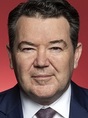
Dean Smith WA, Liberal Party, Shadow Assistant Minister to the Shadow Treasurer
12:35 pm
I've come to Canberra to remind the Labor government of Anthony Albanese and Jim Chalmers of the very real cost of living pressures facing Western Australians and how those pressures are being made worse by Labor governments that remain too slow, too reactive and too out of touch. In Western Australia, the cost of living is not abstract. It is immediate, intensifying and, for many families, unsustainable. Last week, the Reserve Bank lifted the cash rate by another 0.25 percentage points, to 4.35 per cent. It was the third rate rise this year and the 15th since Labor came to power. That means higher mortgage repayments, growing borrowing costs for businesses and more pressure on families already stretched to the limit. The Reserve Bank has warned that Australians face a difficult period of higher inflation, weaker growth and rising unemployment. That should concern every countryman in Australia.
While the Reserve Bank is trying to reduce inflation by cooling demand, governments continue spending in the opposite direction. When spending remains high, inflation stays higher for longer, locking in higher interest rates for households and businesses. Western Australians are already feeling the consequences of this. Analysis of Australian Bureau of Statistics CPI data shows Perth families have experienced the highest increase in consumer prices of any capital city over the past five years. Perth prices have risen by 27 per cent since 2021 while wages in Western Australia have grown by just 18½ per cent. Real wages have gone backwards, but families are working harder and falling further behind. Basic essentials in Perth have surged. Eggs are up 38.4 per cent. Coffee, tea and cocoa are up 39.4 per cent. Bread is up 31.2 per cent. Milk is up 28.3 per cent. Electricity prices have risen by 25.4 per cent over the past year while fuel prices surged by 32.8 per cent in March alone—the largest monthly increase on record.
Western Australians are being hit hardest where it hurts most. That's at the checkout, at the bowser and in their mortgage repayments. Housing pressures continue to worsen. The cost of building a new home in Perth has surged by almost 72 per cent over five years—the fastest increase of any capital city—while Perth rents remain above $700 a week. Consumer confidence in Western Australia has fallen to its lowest level since March 2023. More than half of households are already cutting back spending, and more than a quarter expect economic conditions to worsen. Now those pressures are compounding on WA families and businesses.
Across regional Western Australia, businesses, farmers and industry are also feeling the impact of diesel shortages while communities across the North-West continue dealing with cyclone damage, disrupted infrastructure and strained supply chains. Tourism operators are facing cancellations due to high fuel prices while regional businesses absorb yet another economic hit. We've already seen how fuel shortages linked to the Middle East conflict forced a WA gold miner to stand down workers, exposing how small miners in my home state are being squeezed. That means jobs on hold, investment delayed and confidence shaken. Western Australia is the engine room of the national economy, but that engine runs on diesel. Mining accounts for more than a third of diesel use across Australia. When supply is disrupted, the effects flow through communities, through small businesses and through families. Farmers entering seeding season face delays that threaten a national grain crop worth around $20 billion. Businesses are being forced into impossible choices, absorbing higher costs or passing them on to consumers. This is a cycle that is now taking hold—higher costs, higher prices, weaker confidence and households falling further behind.
The recent Western Australian state budget only reinforces those concerns. At a time when the Reserve Bank is warning governments to show restraint, the Cook Labor government has delivered billions in additional spending and short-term cash handouts. The WA budget projects a headline surplus, yet state debt is forecast to climb to almost $45 billion over coming years. That's not fiscal discipline; that is spending today while sending the bill to future generations to Western Australians. Ultimately, households pay the price through higher interest rates, higher rents and higher everyday costs.
This crisis is more than just economics; it is about whether families can afford groceries, whether young people can buy a home, whether regional businesses can survive and whether working Australians are getting ahead or simply treading water. Western Australians deserve governments that understand that disciplined economic management matters, that energy security is economic security and that backing productivity industries is essential to keeping this country running, because the test of economic policy is simple: does it make life better for Australians or does it make them go backwards? Right now, for too many Western Australians, the answer is that they are going backwards.
I rise to pay tribute to William 'Bill' Grayden, AM, soldier, parliamentarian, author, advocate, husband, father, grandfather, great-grandfather and one of the truly great Western Australians. Bill Grayden lived to the remarkable age of 105, but the measure of his life lies not simply in its length but in its service, courage, independence of spirit and extraordinary contribution to Western Australia and to our nation.
Born in Perth in 1920, Bill Grayden belonged to a generation for whom service was not a slogan but an obligation. His father had served at Gallipoli with the 16th Battalion, and when the Second World War came, Bill was determined to follow that example. Rejected at first because he was too young, he changed his name from Wilbur to William, adjusted his age and enlisted. He would go on to serve with the 2/16 Australian Infantry Battalion in the Middle East, New Guinea, Borneo and the Celebes. He fought on the Kokoda Track, endured unimaginable conditions and at one point was even reported killed after being knocked unconscious by shellfire. In typical Bill Grayden fashion, he later returned to battalion headquarters and corrected the record.
His wartime service shaped him, but it also deepened his understanding of duty, resilience and practical action. After the war, he became a journalist, and in 1947, at just 27 years of age, entered the Western Australian parliament as the member for Middle Swan. Two years later he resigned to contest the federal seat of Swan, becoming part of Robert Menzies's historic 1949 government, one of the Liberal 49ers who helped shape postwar Australia.
In his first speech, Bill Grayden spoke of Western Australia's vast distances, small population, vulnerability and need for development. He understood what remains true today: that Western Australia carries immense national responsibilities and deserves a fair hearing from Canberra. He argued that Western Australia could prosper only if fair financial relations were established between the Commonwealth and the states. Bill Grayden never saw Western Australia as a distant outpost. He saw it as central to Australia's future.
After his federal service, he returned to state politics as the member for South Perth, serving from 1956 until 1993. Across state and federal parliaments, he served for more than four decades, making him Western Australia's longest-serving parliamentarian. He held ministerial responsibilities in labour and industry, consumer affairs, immigration, tourism, education and cultural affairs, yet one of the most significant contributions came through his advocacy for Aboriginal Australians.
In 1956, he chaired the Select Committee on Native Welfare Conditions in the Laverton-Warburton Range Area. His work exposed conditions that many preferred not to see. The film he shot during that inquiry helped build momentum for the 1967 referendum and brought national attention to the treatment of Indigenous Australians.
Those who knew him described him as a doer, not a talker. He was independent minded, straight talking and fearless. He did not enter public life to be fashionable; he entered it to make a difference. He was also a man of great curiosity and energy. He wrote extensively, including A Nomad was our Guide and Kokoda Lieutenant, preserving stories of war, endurance and the Australian spirit.
Above all, Bill Grayden was devoted to his family. With his wife, Betsy, he raised 10 children. He leaves a legacy of 36 grandchildren and 50 great-grandchildren. In 1994, he was appointed a Member of the Order of Australia for service to the Western Australian parliament and to the broader community. Today I, like so many others, honour him as a soldier of courage, a parliamentarian of conviction and a Western Australian of rare distinction. May he rest in peace.