
Senate debates Bills
Appropriation Bill (No. 3) 2025-2026, Appropriation Bill (No. 4) 2025-2026, Appropriation (Parliamentary Departments) Bill (No. 2) 2025-2026; Second Reading

Andrew Bragg NSW, Liberal Party, Shadow Minister for Housing and Homelessness
10:05 am
I rise to make a contribution in relation to the Appropriation Bill (No. 3) 2025-2026, Appropriation Bill (No. 4) 2025-2026 and Appropriation (Parliamentary Departments) Bill (No. 2) 2025-2026. The main point to make is that the nation's finances are no longer within the control of the government. We are now looking at a situation of an almost $40 billion deficit this year and a well over $100 billion deficit over the forward estimates. The reality is that public finances in Australia are completely broken. They're completely broken because the government has decided that it wants to spend at beyond pandemic levels on an ongoing basis—at 27 per cent of GDP—and, as a result, it has needed to find new tax revenues.
The other point to make is that the government has completely debased the integrity of public finances with its commitment to significant off-budget funding. When you look at the overall position of the Commonwealth government, we can talk about the deficit, we can talk about the structural deficit, we can talk about the spending and we can talk about the overreliance on a small number—a shrinking number—of Australians for the tax base. But I think one of the biggest problems is this issue of integrity. This government has sought to provide all sorts of different boondoggle funds, like the Future Made in Australia fund, the housing fund, the rewiring fund and the reconstruction fund—I'm still not sure what we're reconstructing from—but all of these funds are off budget. None of them come into the main picture when the Treasurer hands down the budget.
It's a pretty sad state of affairs when, at one level, you look at the budget deficit and you think, that's a pretty bad position—$40 billion this year, $100 billion over the forwards, at least, and we're approaching $1 trillion in debt. The budget itself, even in the way the government presents it, is extremely sick. But then, when you build all of the off-budget items into the picture, you realise that it is actually beyond sick and that we are never going to recover our position unless we are able to significantly rebalance the budget.
I think it's reasonable to say that the Australian people are, rightly, frustrated with politicians. I think they're frustrated with the fact that the offerings they get at elections look more like bribes than proper stewardship of an economy. If you go back in time, I think it's reasonable to say that the Liberal Party in the early nineties, with its Fightback! program, was at that time very committed to putting together a program that was going to address some of these underlying structural problems. The question is: what is leadership of today going to do—the leadership of all parties—to arrest the decline the nation is in?
You can measure the decline that we're in by virtue of looking at the absolutely busted budget. You can look at the way the Australian people are struggling because the government has failed on the supply side in relation to energy and in relation to housing. The fact that Mr Chalmers says he's read this book called Abundanceit can't be true, because if he'd read the book Abundance he would've discovered that supply-side reforms are necessary in this country if we're going to unleash the energy abundance that we need and the housing abundance that we need. We need to see a position where we get more of everything. We need to see more housing and more energy—all forms of energy—because we need to have more stuff.
I think the Australian people are rightly frustrated. They look at the position that we are in as a nation, and they say: 'Well, I can't get a house. I can't get fuel in the car. The federal budget is stuffed and will never be fixed. I've got to pay higher taxes. Maybe I'll have to pay more taxes if Mr Chalmers—or Dr Chalmers or whatever he calls himself—wants to fiddle around with the tax settings.' I think that they're rightly frustrated. I understand that that leads to people thinking, 'The political system is broken, and so we're going to try and do something to shake it up because we can't get even basic stuff right.'
I think the fact that a person on an average income really has no realistic prospect of being able to buy a house in some of the capital cities is hugely disappointing, frustrating and upsetting. People will feel anger about that. You've done the right thing. You've trained yourself as a tradesperson, or you've been to university. You've worked and you've saved, and you still can't make that happen. Then, beyond that, there's this current fuel crisis. I think this has completely exposed the frailties of the nation and the fact that we are so reliant here, at the bottom end of the supply chain, in the South Pacific, with an abundance of resources we haven't bothered to dig out or suck out of the ground. These are some of the reasons why people quite reasonably say, 'Why are we paying you people to go to Canberra and argue with one another and sometimes with yourselves?' I think that's a reasonable question.
So the job for all of us in a debate on an appropriation bill around the quality of public finances is to reflect on that and to think, 'Are we doing everything we can to put forward the most ambitious program that we can muster?' And I think the answer is, invariably, no. I think the answer has been no. The government, although it has some well-meaning, nice people in it, effectively runs on the basis that the people that they're close to—the unions and the super funds and all the other people that they're mates with—write their policies for them and they say, 'This is a good idea; we'll do that.' But there's no broader vision about what they can do for the country. There doesn't appear to be any ambition.
Dr Chalmers has been the Treasurer for four years. He gave a speech last week and said he'd done tax reform. This was one of the funniest speeches I'd ever heard. His idea of tax reform is bringing back bracket creep, increasing taxes on small business, fiddling around with Future Made in Australia, which is a boondoggle, and increasing the tax compliance burden. What tax reform has Jim Chalmers, the Treasurer, done? What has he done? I'm none the wiser. I don't think anyone knows. Certainly he has said that he likes Paul Keating. I think Paul Keating did a lot of good things for this country. I think he was very brave and had ambition for this country. If Mr Chalmers wants to model himself on Mr Keating, he needs to study that former treasurer, who did some actual reform. He did some actual things. Yes, he was good at politics. I worry that, when he read Paul Keating's memoir, all he learnt was how to do the political spin. That's what I think happened. He read Paul Keating's memoir, and all he was able to retain was the political spin, not the economic reform. That is ultimately what the country is going to need if we are going to recover this position.
In the spirit of a contribution to the appropriation bill debate, of course, the appropriation bills are the government's expenditure. There's no question that at 27 per cent of GDP, when we're already living in a country which has got a high tax burden on people in particular, the government is spending too much. So the question for all the members of the Senate and the House of Representatives over the next couple of years as we get closer to the election is, 'Are members of the parliament going to be honest with the Australian people about the sustainability of public finances?' because, after four years of Labor, the budget trajectory is never going to recover. They have broken the budget. Public finances in Australia are stuffed, and that's why the high taxes have to be considered in the budget.
The only way to get the country back to work on a sustainable basis is to also look at spending. I get that politicians are very scared about the idea that people won't vote for them if they say they're going to cut something, but this is lowest-common-denominator stuff—the fact that we don't have more means testing and that, in relation to programs that are available in Australia, we don't consider restricting them to Australian citizens. I think there are a lot of things that we can do to rein in spending, and I commend anyone who is prepared to make a serious policy contribution even if I don't agree with that, because I think that's the job of being a parliamentarian and a policymaker. I commend the member for Wentworth, Allegra Spender, for at least doing something. She has done a terrible tax policy, but at least it is a tax policy, and it's more of a tax policy than the government has done in four years.
We are living in a time of low ambition for our country, and you can see it in the budget trajectory, which is completely cactus, and in the quality of the tax debate. I mean, fair dinkum! You have people in this place who say, 'Well, we can fix the housing crisis with more taxes and we can fix the energy crisis with more taxes.' It's absolutely insane. People who are members of the Labor government who say they've read the book Abundance are lying, because that is against the grain of the supply-side theory that is expounded by Klein and Thompson in their book.
Ultimately, it comes down to a pretty simple equation. How are we going to reduce the amount of public spending below 27 per cent of GDP? How are we going to have that honest conversation about how the country has its backside out of its pants and cannot afford to spend at this level on an ongoing basis? We cannot continue to run on the basis that our budget deficit will exceed $1 trillion. It will be $1 trillion very soon, and Dr Evil will not be here to save us. We'll have to bail our way out of this in some way. It is a tax on future generations. The younger people of today—those people who are under 40—should take notice. When we tick over to $1 trillion of debt this year under Labor, they should take notice. The younger people of Australia should be very aware. They should switch on and keep a close eye on this, because, when we tick over to $1 trillion of debt this year, that will be a tax on them. They will be paying higher taxes in the future unless we restrain spending and get back on track today. It's that simple.
You also have to look at the broader question about the tax system very seriously, because the burden on people who are working is absolutely unbearable. The idea that the working person in Australia has to pay such a high degree of their ordinary salary and wages off to the taxman is absolutely soul destroying, and it cannot be sustained. It is a hard country to do business in and a hard country to be a worker in, unless we get serious about these facts around the sustainability of public spending, the broken tax system and the necessity of supply-side reform. If you want to fiddle around with the tax system, fine, but you have to do it on a basis of actually reducing the heaviest burdens on people and companies. We've got to be realistic. We are living in a market—in a world—where there is competition for capital. If people can mine things in other jurisdictions at a lower tax rate, they will, and that's where those jobs will go. If a company can build houses and make money out of it in another jurisdiction, they will. These are the facts. We cannot pretend that we're living in some socialist utopia where we can continue to tax the backside out of the country and effectively run programs which are unsustainable and unaffordable.
These are the questions for Australian people to ask their parliamentarians: What ambition do they have for our country? Where do they see fixing public finances on the list of the priorities? Surely, we can do a better job than running a $40 billion deficit, $100 billion over the forwards and a never, never, never return to surplus which is only going to result in higher taxes on future generations.

Anne Ruston SA, Liberal Party, Shadow Minister for Health and Aged Care
10:20 am
I too rise to speak on the Appropriation (Parliamentary Departments) Bill (No. 2) 2025-2026, the Appropriation Bill (No. 3) 2025-26 and the Appropriation Bill (No. 4) 2025-2026. Collectively, these appropriation bills provide legislative authority for additional funding to the consolidated revenue fund for the government. Obviously, they are part of implementing the decisions of both the budget and MYEFO, and there's a significant amount of money attached to these bills. They seek approval of $12.5 billion in appropriations, including for ordinary and non-ordinary services and for parliamentary departments.
Let's be clear, offering our support for these bills is the normal practice of the opposition when it comes to appropriation and supply bills. It doesn't mean to say that we agree with everything that is contained in these bills or the policies that have driven the need of these appropriations. As Senator Bragg has just quite articulately put on the record, we are at a stage in this country where the spending of government is completely out of control and is driving our economy to a place that is going to be a place where our children and their children are going to wear the consequences of the recklessness of this current government's attitude to taxation and to the economy.
Since coming into government, this government has added $100 billion to the national debt, which is now heading towards $1 trillion. That's $1 trillion that's on the credit card. That's $1 trillion that is going to have to have the interest repaid on it. That is $1 trillion that future generations are going to have to wear the consequences of. As we sit here at the moment, with the instability that we're seeing in our domestic economy courtesy of the actions of this current government and with the added implications of a volatile international situation, we are in a very precarious position. Most other times when we've headed into times of uncertainty and times of crisis, there has been a buffer in the bank. There is no buffer in the bank because government has already spent it, and so we head into uncertain times—rising interest rates, global uncertainty, a fuel crisis that is still being denied by those opposite that is, quite frankly, impossible to deny when you drive around and want to fill your car up or when you speak to a farmer who is trying to fill the tractor up or get a fuel delivery onto their farm. It is not a crisis that is to be ignored.
The point of these bills today is to provide additional funding to the government, and the point that we and the opposition will continue to make is that the fiscal management of this country is what should be the No. 1 objective policy priority of every government after keeping its citizens safe. That is the other job a government has to do—manage the economy in the best interests and for the best welfare outcomes for Australians. Spending growth at the moment is actually running at four times the growth of the economy. Anybody who has got any idea about economics knows that that is going to be a problem when it comes to stimulating inflation in the economy. This is the highest spending rate outside of a pandemic in over 40 years, so, quite frankly, right now, inflation in this country is too high, and there is only one place to lay the blame for that inflation being too high, and that is the high levels of government spending. Responsibility sits with the government.
The ABS has confirmed, in the last 12 months to January 2026, inflation was at 3.8 per cent—and it's rising—with trimmed mean inflation at 3.4 per cent. Both these figures are well outside the band that is stated as an appropriate target by the Reserve Bank. The result of this is everyday Australians are seeing everything they rely on and everything that they have to pay for going up, such as the increasing cost of housing and the fact that we are now seeing a generation of Australians fearing they will never own their own home.
Previous generations—my generation and generations before—have always almost taken for granted that, if you work hard, you will always be able to afford to buy your own home. That is not something that the younger generations feel anymore. There's an everyday immediacy when it comes to the cost of food going up, the cost of health care going up, the cost of insurance going up and quite frankly the incredible increase we've seen in the amount people are paying for their houses—those of us who are lucky enough to have been able to buy one. This is hurting everyday Australians, because the cost-of-living pressures are singularly the most impactful thing that is happening in the lives of everyday Australians right now.
The government is refusing to accept, in everything it's saying, the fact that its actions are reducing the living standards of everyday Australians. It's really quite terrifying when you hear authoritative figures say that the next generation will be the first generation of Australians whose living standards will be worse than the previous generation since the Second World War. So every generation since the Second World War has been the beneficiary of productivity and growth from the responsibility of successive governments in managing the economy, but this next generation will be the first to inherit a worse living standard than the last.
The other thing, too, is that we have seen an absolute propensity of the spending of this government to be very much focused on things that exist in terms of increasing the size of the government. We on this side of the chamber don't believe in bigger government; we believe in better government. We believe in a government that supports Australians getting ahead. We believe that Australians should not be bearing the burden of government policy. We believe Australians should be the beneficiary of government policy by having them be able to get ahead by working hard and being rewarded for what they do. This is not the policy of this government.
One area I want to focus on in a little bit more detail is the absolute explosion of not just the costs in the healthcare sector but the accessibility and the implications of the policies of this government in terms of the outcomes of the health of Australians. There is absolutely no doubt when you speak to Australians that they are concerned about the cost and access to health care. We have seen, over recent years, an increasing level of concern about the accessibility and affordability of health care, and the result of that is that people are not seeking to engage with the healthcare system. They are saying they simply cannot afford to do so.
There is absolutely no doubt that, during the last election campaign, the Prime Minister tried to avoid his responsibility for the burden that he has placed on our healthcare system from successive policies by running around and telling Australians that the only thing they would need when they went to the doctor would be their Medicare card. Well, the lived experience of Australians is very, very different to that, because right now Australians who have out-of-pocket costs when they go to see their doctor are paying in excess of $50 every time. So it's never been harder or more expensive to see a doctor than it is right now.
As I said, out-of-pocket costs are in excess of $50. That is higher than it has ever been before. This is forcing Australians to make the really hard decision as to whether they're going to see the doctor or put food on the table. They're choosing to put food on the table, which is a quite reasonable response, but as a result of that they are finding themselves getting sicker and sicker, and the result of that is they are entering into a health system at a much more acute stage of illness, which is where it is more expensive and why we are seeing such a burden being placed on our hospital system.
When it comes to the increased incentives that have been put in place, we absolutely welcome anything that is able to get Australians more affordable and easier access to health care. But the reality is that we are not seeing a change on the ground. Then, when you have a look at the impact of the more acute stages at which people are entering into our healthcare system, we are also seeing our hospital system completely and utterly overburdened. We're seeing ramping around the country at the worst it has ever been. In my home state in South Australia last year, we saw the worst level of ramping that we have ever seen, double what it had previously been. Elective surgery waiting lists—we probably shouldn't use the term 'elective surgery'. These are surgeries that are essential; they're just not life saving. It could be somebody who has been living with chronic pain for many, many years. The wait time for elective surgeries in this country has completely and utterly blown out. That's before we even start talking about the aged-care system, where we see over 3,500 older Australians stuck in hospital beds because of the failure of this government in relation to preparing appropriately for aged care.
We've seen private health premiums go up again. Next week, we will see an over four per cent increase in health premiums across the board for those Australians, those 15 million Australians, who choose to insure their health in the private system. That is going to be the biggest increase in over a decade. The most disturbing thing about that is what the likely implication is going to be for Australians in terms of their ability to maintain their private health insurance. It's their private health insurance and their access to the private health sector that take the pressure off our public health sector. We saw just recently the government having to chuck another $25 billion—$25 billion extra dollars—to the states and territories for their hospital systems because they are overburdened because of the policies of this federal government. We've seen spending on the PBS, the Pharmaceutical Benefits Scheme, at some of its lowest, lowest levels. We're seeing the government use cost-containment mechanisms at the moment by rationing care and access to health care to try and help their budget bottom line.
This is an absolute indictment on this government, because, if you listen to what they say, everything is okay. I would say to Australians: don't listen to what the government says; actually look at what they are doing. What they are doing is sending you backwards. As I said, in the aged-care sector, we have seen some terrible, terrible changes. We've seen wait lists blow out from just on 28,000 people waiting for a homecare package to over 130,000 people as we sit here now, and that's not accounting for the over 100,000 people that are waiting to even be assessed for a package. We're seeing older Australians stuck in hospital beds because they can't get residential care or they can't get the homecare packages that would enable them to go home. We have seen wait times blow out. They got down to around three months, but we're now seeing 10, 11 and 12 months of waiting for aged-care packages. When they do get their aged-care packages from this government, eventually, they're receiving them at 60 per cent of the value that they had been assessed as needing. That means, for older Australians who have been assessed as needing a level of care, this government is giving them 60 per cent of the care that they have been assessed as needing. This is just another broken promise by this government—a broken promise to older Australians, who are having their care rationed by this government because the budget bottom line seems to be more important than the health and wellbeing of older Australians.
To add insult to injury, we now find out that the government has introduced an algorithm to assess what kind of care older Australians are going to get, an algorithm that is proving to be throwing out some of the most unkind, unfair and terrible results for older Australians. We've seen people who have had a massive deterioration in their health and have sought to have their aged-care packages reassessed for greater support have their packages decreased and, in some instances, removed altogether, at the whim of a robot. So, right now, we have got a government who is more focused on headlines and spin and not on delivering. We see a government that's more worried about their budget bottom line than about Australians who have got health challenges, particularly older Australians, who are assessed as needing care and have been denied it because of the rationing of care by this government. In health and aged care, this is a national crisis of the government's own making. It is their responsibility, and they will be held to account by the Australian public. To use older Australians and the access to care of older Australians as a budgetary tool, I think, has got to be one of the cruellest actions I've ever seen of any government ever. These bills here today highlight the scale of government spending and the consequences of poor fiscal discipline. Whilst I said we will be supporting these bills, as is practice, it goes no way towards suggesting that we support the actions of this government.

Slade Brockman Deputy-President
10:35 am
I too rise to speak on Appropriation Bill (No. 3) 2025-2026, Appropriation Bill (No. 4) 2025-2026 and Appropriation (Parliamentary Departments) Bill (No. 2) 2025-2026. Appropriation bills, for those listening along to this debate, are very important bills when it comes to the framing of a government's priority and agenda.
As with previous appropriation bills from this government, unfortunately what we see here again is a government that has its agenda and its priorities all wrong. It's a government that has not been upfront with the Australian people for four years. We have seen over that period 14 interest rate rises. We have seen over that period a government that has been using its monetary policy and its fiscal policy in direct contradiction to the monetary policy outcomes sought by the Reserve Bank. We've had a government that's been pouring money into the economy at a time when the Reserve Bank has been seeking to put downward pressure on inflation.
As we enter this period of global turmoil, where inflation is on the rise, Australians should absolutely always remember that inflation was already trending up before the conflict in Iran started to affect the markets. Inflation was well above the Reserve Bank's band and was trending upwards. So we had a government that was pouring money into the economy, fuelling inflation and fuelling interest rate rises, with no serious plan on how to rein in its own spending.
In fact, when we question the government on its spending priorities, all the government is capable of saying is, 'Well, what would you cut?' I'm sorry, Labor, but you are in government. It's actually up to you to determine your priorities and determine how to manage the Australian economy to the benefit of Australian families, to the benefit of Australian small businesses and to the benefit of the Australian economy as a whole. Labor simply cannot be upfront with the Australian people in that regard. The economy is fundamentally weak, and that's what we now see with the pressure being put on it by external events.
External events happen. Global shocks happen. A good government prepares and makes the Australian economy resilient in the face of those events. A good government prepares and makes sure our spending is sensible, contained and responsible. A good government doesn't come into this place day after day, when it is bleedingly obvious to every Australian that there are issues in our fuel supply market, and say, 'There's nothing to see here.' A good government, when it recalls diplomats' families from the Middle East on 25 February, starts to think about the impact a potential conflict in the Middle East could have on Australia. One of the blindingly obvious things, even well before 25 February, was that an outbreak of conflict in the Middle East would have an impact on the availability and the price of fuel, both diesel and unleaded petrol. Yet, day after day in this place, when asking the minister representing the minister for energy, we heard the same thing: 'There's nothing to see here. The opposition is merely stoking fear. The opposition is encouraging panic buying.'
Australians were blamed. The government blamed Australians for panic buying. Well, I'm sorry, but, if my business runs on diesel, then it is not panic buying to try and protect my business by filling up a tank. If I'm a farmer in the Wheatbelt of Western Australia and if my business is getting the seed in the ground this year to ensure that I actually have cashflow, that is not panic buying. If my business is driving, for whatever reason—and many tens of thousands, if not hundreds of thousands, if not millions of Australians rely on driving for their income—and if I decide to fill up my tank and perhaps even have a little bit of reserve on hand, that is not panic buying. That is risk management. Those are entirely sensible decisions that businesses and individuals are making for their business and their family, given the global situation, given it was bleedingly obvious that there was an issue coming with the Australian fuel supply and given that the government was asleep at the wheel, sitting on its hands, doing absolutely nothing—in fact, saying, 'There is nothing to see here.'
How is it possible that we had a minister who, for so many days in the House of Representatives and in being represented here, effectively said, 'There is no issue'? Well, that simply wasn't the case, and it was very obvious that it wasn't the case. This shock—and, yes, there are factors outside this government's control. I'm more than happy to concede that. Every Australian is more than happy to concede that. But it came in the face of a government that had bad priorities and was overseeing a weak economy where inflation was already on the rise, where interest rates were already on the rise. The government, the Labor government, did not prepare the economy.
Fuel is so fundamental, particularly diesel, to the Australian economy, whether you want to talk about the mining industry in my home state of WA, the agriculture industry in my home state of WA or whether you want to talk about filling up the supermarkets, whether you want to talk about moving goods back and forth across the Nullarbor, which is very important. Diesel makes Australia run. It is literally required by every single industry in Australia. Without diesel, Australia stops. So the first obligation of the government in the circumstance where it is obvious that there is a risk of a conflict in the Middle East is to ensure that requirement for diesel is maintained and strengthened, and there is absolutely no evidence on the table that this government did a thing to strengthen and increase our reserves in the face of an imminent shock.
Australians are hurting as a result. In the latest release of information something like 500 petrol stations across Australia have run out of at least one type of fuel. Obviously, that is one sort of pain. The other sort of pain is, if you are a business reliant on fuel to run, then you are now paying over $3 for a litre of diesel. I have been speaking to an earthmoving contractor in the south of Western Australia regularly over the past few weeks. His business runs on diesel. If he cannot get diesel, then his business will stop. He will generate no income. He will have no income to pay his employees. Luckily, overnight, he did get some fuel to keep going. Literally, he was down to his last day of fuel in his machinery, and last night, thank goodness, he did get some fuel to keep people on the job, to keep people working in this country, to keep his machinery moving. That's great news.
The difficult thing—the very, very difficult thing—for his business is that, rather than the around $1.80 or $1.90 a litre that he was hoping to pay for that diesel, he was paying over $3 a litre for that diesel. Again, this is a business where—as so many businesses do in Australia—energy input costs are a key input to the business and are a key cost to the business. You now see the economics of this particular business, as with so many businesses, are fundamentally altered by the current situation. If you are paying $3 or $3.10 a litre for diesel, the economics of earth moving are vastly different. He still has employees to pay. He still has insurance to pay. He still has maintenance on his vehicles to pay for, and one of his key input costs has gone through the roof, and that's why, from his point of view, he would have liked to have seen a government that was much more proactively responsive to the risk of this when it was very, very clear—people have been talking about the risk of this oil shock if something happened in the Middle East. We've seen it before. We've seen it so many times before. When there is conflict in the Middle East, there is an oil price shock. Everybody knows that's a risk.
We've got Australians hurting. I've spoken to so many farmers over the last few weeks who are worried about how they are going to manage their season. Seeding is underway in Western Australia, and that is proceeding, and that is good, but the lack of certainty, particularly around fertiliser, is now becoming a very, very serious concern in terms of the particular application of nitrogen through the season. We have risks to overall yields.
Western Australia has done an amazing job in terms of yields over the past four years—three crops in excess of 20 million tonnes; three record crops over four years. When I worked in the grains industry back in 2009 and 2010, an average crop in Western Australia was considered 10 or 11 million tonnes. Now, we've had three crops over 20 million tonnes—one of them 26 million tonnes—in the last few years. That is extraordinary efficiency and extraordinary productivity gain from our farming sector. Yet, this year, farmers are completely uncertain as to the ability to generate income and their ability to get key inputs, like fuel and fertiliser, and, therefore, their ability to feed the world is under question, because that's what the grain farmers of Western Australia do. Ninety-five per cent of the Western Australian grains crop is exported to help feed the world. It is a key part of so many international supply chains, and I have spoken to so many farmers who are dreadfully worried about the year ahead. And what did they hear from this government? Week after week, we sat in this place, we asked questions about the fuel situation, and we heard that there were no issues at all. This is a government that has lost control. It had no plan. It is now racing around trying to formulate one. It is a government that has let down the Australian people.
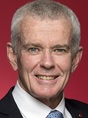
Malcolm Roberts Queensland, Pauline Hanson's One Nation Party
10:49 am
In accordance with the arrangements made with the whips of the major parties, I seek leave to continue my remarks, and I express my regret that I wasn't here at the start of the debate.
Leave granted.
I'll continue my speech from the other night. Decarbonisation now extends right through the bureaucracy and agencies. There are decarbonisation offices in every government department, plus the net zero reporting, government grants to industry and academia to research this made-up problem. It really is a fabricated nonproblem; a monstrous, calamitous fabrication that is costing the Australian people dearly. Some of these grants are substantial, including $444 million to the Great Barrier Reef Authority to counter the effects of climate change. I'll talk more about that in a minute. The further we get into the pointless, disastrous 'transition', the more that the burden of funding of these measures will fall on the taxpayer through direct payments, loans and sovereign guarantees, not to mention the inefficiencies—sorry, Siri is trying to talk to me.

Deborah O'Neill NSW, Australian Labor Party
Siri doesn't have the call, Senator Roberts!
Malcolm Roberts Queensland, Pauline Hanson's One Nation Party
I'll pay that one!

Dorinda Cox WA, Australian Labor Party
You were caught out at estimates doing that. Come on, now.
Malcolm Roberts Queensland, Pauline Hanson's One Nation Party
You've got a fertile imagination. Conspiracy theorist, is it? These measures will cost so much in the years ahead that, ultimately, the government of the day will be faced with a choice of social security, free health and education or saving the planet from a natural trace atmospheric gas that's essential to all life on earth. One Nation does not worship the sky god of warming. We know the climate varies naturally and inherently and that nothing in the current data suggests the variation is outside of normal cycles.
Honourable senators interjecting—
Malcolm Roberts Queensland, Pauline Hanson's One Nation Party
We have 24,000 datasets from around the world, including CSIRO and BOM, and they prove no change in climate at all, just natural, inherent variation superimposed on cycles. A One Nation government will terminate net zero measures and withdraw from international agreements which provide the heads of power the requirement on our government to spend this money—not necessary. We will immediately suspend all government activity associated with net zero and review all expenditure and loans to see what can be clawed back legitimately under the contract terms. I suspect noncompliance with contract requirements—especially around supply agreements—is widespread, so it shouldn't be too difficult. We will terminate all ongoing subsidies where that option is available under the contract, and we will renegotiate contracts where it's not. This will save around $10 billion a year in recurring expenditure, which we will put towards eliminating the deficit—$10 billion taken out of this year's budget figures.
I foreshadow my amendment No. 3662 in the committee stage to return these bills to the Treasury to have net zero spending removed and ask for the Senate's support. It's time to call out this parasitic net zero nonsense and get back to the real business of government: making people's lives better, not harder, as net zero measures currently do.
Deborah O'Neill NSW, Australian Labor Party
Just before you resume your seat, Senator Roberts, it would assist the Senate if you would move your motion. I believe it has been circulated as a second reading amendment.
Malcolm Roberts Queensland, Pauline Hanson's One Nation Party
I move:
Omit all words after "That", substitute "further consideration of the bills be made an order of the day for the first sitting day after amendments are circulated removing all funding for net zero measures and the administration of net zero measures".

Malarndirri McCarthy NT, Australian Labor Party, Minister for Indigenous Australians
10:53 am
I thank all senators for their contribution and commend these bills to the Senate.
Deborah O'Neill NSW, Australian Labor Party
The question is that the amendment moved by Senator Roberts be agreed to.
Deborah O'Neill NSW, Australian Labor Party
11:01 am
The question is that the bills be read a second time.