
Senate debates Bills
Appropriation Bill (No. 3) 2025-2026, Appropriation Bill (No. 4) 2025-2026, Appropriation (Parliamentary Departments) Bill (No. 2) 2025-2026; Second Reading

Malarndirri McCarthy NT, Australian Labor Party, Minister for Indigenous Australians
11:38 am
I move:
That these bills be now read a second time.
I seek leave to have the second reading speeches incorporated in Hansard.
Leave granted.
The speeches read as follows—
APPROPRIATION BILL (NO. 3) 2025-2026
Today, the Government introduces the 2025-26 Additional Estimates Appropriation Bills. These Bills are:
These Bills underpin the Government's expenditure decisions made since the 2025-26 Budget that relate to the 2025-26 financial year, including decisions made in the 2025-26 Mid-Year Economic and Fiscal Outlook (MYEFO).
Appropriation Bill 3 seeks approval for appropriations from the Consolidated Revenue Fund of $9.2 billion. This provides funding for the 2025-26 financial year costs of measures announced since the 2025-26 Budget, and ensures there is sufficient appropriation to cover variations in existing programs, for example, due to changes in costs for demand driven programs.
The Bill provides funding to support the following significant items.
The Department of Climate Change, Energy, the Environment and Water will receive over $2.9 billion, predominantly to continue support for the Cheaper Home Batteries Program.
The Department of Health, Disability and Ageing will receive over $1.5 billion for various programs to improve the wellbeing and social and economic participation of people with disability, continue to ensure access to medicines, deliver evidence-based health policy, improve access to comprehensive and coordinated health care, and protect the health and safety of the Australian community. Funding includes $876 million for the National Disability Insurance Agency to provide reasonable and necessary supports for National Disability Insurance Scheme participants. The Department will also receive $101 million to support Strengthening Medicare reforms.
The Department of Defence will receive over $1 billion, including $985 million brought forward for updated expenditure requirements to implement the 2024 National Defence Strategy and 2024 Defence Integrated Investment Program.
The Department of Home Affairs will receive $881 million to implement various programs to ensure Australia's security, prosperity and unity by safeguarding Australia's domestic interests from crises and threats, supporting the Government Response to the Antisemitic Bondi Terrorist Attack, and delivering on the Government's 2025 federal election commitment to maintain Australia's cohesive multicultural society.
Full details of the proposed expenditure are set out in the Schedule to the Bill, the Explanatory Memorandum, and the Portfolio Additional Estimates Statements.
I commend this Bill to the chamber.
APPROPRIATION BILL (NO. 4) 2025-2026
This Bill seeks approval for appropriations from the Consolidated Revenue Fund of $3.5 billion for the 2025-26 financial year. These appropriations will support the following significant items.
The Department of Defence will receive over $2 billion, including $1.5 billion brought forward to support the delivery of capabilities prioritised within the 2024 National Defence Strategy and 2024 Defence Integrated Investment Program.
The Department of Climate Change, Energy, the Environment and Water will receive $411 million, mainly to fund further voluntary water purchases to support water recovery targets under the Murray-Darling Basin Plan.
The Department of the Treasury will receive over $325 million to provide loans to Housing Australia to support social and affordable housing projects as part of the Housing Australia Future Fund (HAFF), including HAFF Round 3, which was announced in the 2025-26 MYEFO.
Full details of the proposed expenditure are set out in the Schedule to the Bill, the Explanatory Memorandum, and the Portfolio Additional Estimates Statements.
I commend this Bill to the chamber.
APPROPRIATION (PARLIAMENTARY DEPARTMENTS) BILL (NO. 2) 2025-2026
Appropriation (Parliamentary Departments) Bill 2 provides additional appropriations of $9.2 million for the operations of Parliamentary Departments, specifically the Department of the House of Representatives and the Department of Parliamentary Services, for the remainder of 2025-26.
Full details of the proposed expenditure are set out in the Schedule to the Bill, the Explanatory Memorandum, and the Portfolio Additional Estimates Statements.
I commend this Bill to the chamber.

Claire Chandler Tasmania, Liberal Party, Shadow Minister for the Public Service
I rise to speak on Appropriation Bill (No. 3) 2025-2026, Appropriation Bill (No. 4) 2025-2026 and Appropriation (Parliamentary Departments) Bill (No. 2) 2025-2026, which, for the purpose of this debate, I will refer to collectively as the additional appropriation bills. At their core these additional appropriation bills are a blank cheque for yet another round of Labor government spending on top of an already bloated budget in deficit. The Albanese Labor government is the highest spending government outside of a pandemic in 40 years. That means they are the highest spending government outside of a pandemic in my lifetime.
While the opposition will not stand in the way of government funding, that doesn't mean that we are going to stay silent about what this spending in these appropriation bills means. We will not oppose these bills. We will not delay these bills. But that cooperation should not be mistaken for a waiver of scrutiny or accountability, because Australians want to understand exactly what is going wrong under this government, and they only need to look at where the money is going to figure out why. The fastest way to understand the failures of this government in terms of its economic management and its budget management is to follow the money through these additional appropriation bills that we are debating here today. When you do that, a very clear pattern begins to emerge.
Taken together, these three bills add more than $22 billion to spending in a single financial year. Appropriation Bill (No. 3) alone loads around $12 billion onto the budget, while Appropriation Bill (No. 4) adds close to $10 billion more on top of what was already approved at the budget last year. Even the parliamentary departments bill adds hundreds of millions of dollars in extra funding. Let's be very clear. This is not fine-tuning. This is not restraint. This is a government that cannot keep its spending promises to Australia. This is a government that has a spending problem. This is a government that is unable to exercise fiscal discipline to try and get its budget under control. The largest increases in funding are the result not of new priorities announced at the budget but of substantial revisions to the government's original spending estimates, which demonstrates just how far those projections have shifted within a single financial year. Each of those decisions might be defensible in isolation, but, taken together, they tell a very clear story about a government collecting record revenue but spending record amounts and still running record deficits.
This is why inflation remains entrenched throughout the economy, why interest rates are remaining high for longer and why Australian families are paying more at the supermarket and more on their mortgages. Just last week, we saw the 14th interest rate rise under the Albanese Labor government. We know that inflation is being grown at home. Yes, there are concerns about what is happening currently in the Middle East, and, that will undoubtedly have an inflationary impact on our economy as we see petrol prices go through the roof. But the reality is that this government was overspending long before then and that that overspending was contributing to inflation. The RBA have said that themselves. That is why it is time for this government to take responsibility and admit that it has a spending problem.
These bills that we are debating here today do not show a government in control of spending. They do not show a government that can exercise fiscal discipline and make the hard decisions around the cabinet table. These bills show a government that is lifting its spending limits first and confronting the fiscal impact later. Despite collecting record levels of revenue from Australian taxpayers, the government is delivering record spending and continuing to run large deficits. That places the budget in a vulnerable position when productivity growth remains weak and revenue gains are not being driven by stronger underlying economic performance. In particular, it places the budget in a vulnerable position when we are dealing with external factors beyond our control, as we currently are with the national fuel crisis as a result of the conflict in the Middle East. That reality completely shatters this government's carefully crafted narrative.
I note that the Treasurer, Dr Chalmers, talked about restraint. He has said, or at least backgrounded publicly, that the upcoming budget in May will be one where government spending gets under control. But, as I've said previously, I have serious doubts about this government's ability to do that. You only need to look at their track record to know that they can't exercise fiscal discipline, and nothing in these bills or the broader budget resembles restraint in practice. The Treasurer has been telling Australians that the government has found savings and is exercising restraint, but, if that were true in any meaningful sense, the government wouldn't be here today asking parliament to authorise more than $22 billion in additional spending. You cannot credibly claim restraint while simultaneously lifting your own spending limits halfway through the year. Any savings that the Treasurer talks about have clearly been more than swallowed up by new and higher spending, because otherwise these bills simply wouldn't be necessary. The government isn't just asking for more money; it is conceding that its original deficit and spending projections were not credible.
The consequences of that disconnect are now being felt across the entire economy. Inflation in Australia is not a mystery. It's not an accident. It is a direct result of deliberate government spending choices. Australians are experiencing inflation in their daily lives because of this government's budget decisions and this government's inability to get its own spending under control. Australians pay for it when they fill their trolley at the supermarket, when they open their power bill and when they try to make their mortgage payment each month. These inflationary pressures flow directly through to higher interest rates, leaving families paying more not just today but for years to come. This is the true cost of the Albanese Labor government's spending addiction. Australians are paying more today through higher prices and higher mortgages. Future generations, Australians my age and younger, will be left to shoulder higher debt because this government refuses to live within its means. It seems abundantly unfair that, at a time when all Australians are tightening their own budgetary belts, this government seems incapable of doing the same.
In conclusion, again, these additional appropriation bills aren't a technical adjustment; they are a clear admission that the government's spending has once again exceeded its own promises. While the opposition is not going to stand in the way of funding government services, we are not going to simply pass these bills through this place today without calling out the consequences of the choices of this government and the consequences within these bills.

Fatima Payman WA, Australia's Voice
11:46 am
I rise to speak on Appropriation Bill (No. 3) 2025-2026, Appropriation Bill (No. 4) 2025-2026 and Appropriation (Parliamentary Departments) Bill (No. 2) 2025-2026. Australians want a government that works for them. When the budget is predicated on poorer productivity forecasts, Australians know that means living standards will stay lower for longer. Combined with low growth, rising inflation, rising interest rates, the recent fuel crisis and the general cost-of-living crisis, Australians are not optimistic about the future. Polling from Ipsos in February found that 56 per cent of Australians think the country is on the wrong track. The budget in May must turn that around. It must address inequality in as many ways as possible. It must change capital gains tax and negative gearing and work towards changing housing from an investment back into a place to live. It needs to look at spending and say, 'Is this value for money?' If it isn't, that money needs to be deployed where it can do the most good.
Here's one example: last year, wage theft became a criminal offence, and I'm proud to say that I supported this reform. Wage theft has been a big problem in Australia—at the Commonwealth Bank, in the university sector and in many other sectors. In fact, it still is; $49.5 million over four years was allocated to empower the Fair Work Ombudsman to investigate wage theft cases and, where they meet the threshold, refer them to police. For over a year, an office of 16 full-time equivalent workers has been investigating criminal wage theft cases. Over $10 million has already been spent funding this office, but not a single case of wage theft has been referred to police. Is that value for money? It's really disappointing, given how prolific wage theft has been and still is in Australia. Thankfully, the Senate yesterday supported my referral of this matter to an inquiry, which is due to report in June. Then, yesterday, we learned that the contractor that turned the BoM's, the Bureau of Meteorology's, $4 million website redesign into a $96 million downgrade is back for more. A $16 million contract was awarded to Accenture to build a platform for the Australian Climate Service. How is that company, which went 2,400 per cent over budget, even allowed to bid for Commonwealth contracts, let alone win one, so soon after such a massive blowout? If the budget for the contract is blown out by as much as the last one, taxpayers will be on the hook for $384 million. Anything less than that is a huge improvement.
The government is very reluctant to give up on contractors. Last year, Deloitte produced a $400,000 report that was littered with AI generated mistakes. When this was revealed, Deloitte paid only part of the fee back and then released a new report, which had even more AI generated errors. The bar is on the floor, but I'm confident that Accenture will somehow be able to squeeze under it.
Speaking of AI, I would like to turn to the government's AI policy. The policy, which runs across the whole Public Service, is administered by the Digital Transformation Agency, which sits in the finance portfolio. The policy for the responsible use of AI in government requires more agencies and departments to publish statements about how they use AI and how they manage the inherent risks of AI, as well as appointing a high-ranking officer to serve as the accountable official for AI.
Dozens of agencies have failed to publish AI transparency statements and appoint officials responsible for AI by the deadline. According to DTA correspondence, released under an OPD, bodies that fail to meet the deadline include the Future Fund Management Agency, the Federal Police, the Federal Court, the Australian Research Council, the Tertiary Education Quality and Standards Agency and the Australian Law Reform Commission.
There is such little interest in this policy that some organisations have given evidence in estimates that conflicts with DTA records. The Organ and Tissue Authority, the Australian Transport Safety Bureau, the Commonwealth Grants Commission and the Office of the Inspector-General of Aged Care have all claimed to have appointed an accountable official within the deadline, but DTA's records list them as having been non-compliant some time after that deadline. The National Health Funding Body, the Commonwealth Grants Commission again and the Royal Australian Mint claim to have published an AI transparency statement on time, but, again, DTA's records disagree.
Conversely, the Australian Centre for International Agricultural Research openly admitted to not meeting the AI transparency statement deadline and refused to explain why. In the case of the Australian Accounting Standards Board and the Auditing and Insurance Standards Board, the Digital Transformation Agency wasn't even able to speak to either organisation about their obligations. Throughout March 2025, DTA attempted to reach out to the two boards, but to no avail. The most extraordinary case was the National Competition Council, which did not know the policy existed until more than six months after the deadline passed.
Version 2.0 of the policy came into force in December, requiring agencies and departments to develop a strategic position on AI adoption by June. I'll be keeping an eye on this during estimates later in the year, because it is really important for us to see what takes place. We've seen artificial intelligence technology advanced at a very terrifying pace. When the government makes the rules around artificial intelligence optional, there are serious consequences. We do not want another robodebt.
It was recently reported that the AI advisory body will no longer be going ahead. This followed a 15-month recruitment process, which cost nearly $200,000. The government is preaching fiscal responsibility in the lead-up to the budget, and yet massive sums of money—of your money, of taxpayer money—are being wasted. Not only has that money gone to waste, but we'll no longer have an AI advisory body. As the AI revolution is going on all around us in our workplaces, in our schools and in our homes, the regulation is not keeping up. We won't have an AI act. We won't have specialists advising an AI policy. The government doesn't even comply with their own policy. It would be funny if it weren't so dangerous.
I'll now pivot from one cancelled agency in the industry and innovation portfolio to another. In February, it was announced that the Australian Space Agency Advisory Board, which had spent a year with no meetings and no members, would be dissolved. The board had its members removed in 2024 after a review into the Australian Space Agency's governance began. After another lengthy recruitment phase, the government gave up and got rid of the board entirely. That's more taxpayer dollars down the drain. Katherine Bennell-Pegg, the first Australian to qualify as an astronaut under Australia's space program, was Australian of the Year this year. What is the next generation of young Australian astronauts meant to think as they watch this government slowly strip away the very infrastructure of our space industry before it's even had a fair go?
These advisory bodies have had millions of dollars allocated to them. The money for the AI Advisory Body was allocated in 2024. If the government wasn't going to use the money, it should have put it somewhere else. Instead, it ummed and ah-ed about what it was going to do before shutting these boards. I think a lot of Australians are expecting a budget that doesn't tinker around the edges but that engages in wholesome reforms which set Australia on a path towards higher living standards and a lower cost of living. The whispering and leaking campaign of doublespeak is all well and good within the Canberra bubble, but Australians around the country shouldn't believe it until they see it. We need more action from this government in this May budget.

Maria Kovacic NSW, Liberal Party, Shadow Assistant Minister for Women
11:56 am
Australians are struggling. Young Australians don't feel confident in the future, and that makes me very sad, because they should. It is our job to ensure that we hand over to the next generation a life and a country that are better and easier than the ones we have had, and we're not doing that. Our legacy for them is for it to be harder for them, for them to have a greater debt burden, for them not to be able to own their own home and for them to have to work more to be able to maintain their standards of living. That's not okay.
This Labor government hasn't been upfront with Australians. Our economy is weak. We've seen every single day further confirm that fuel supply in our country is not guaranteed. In my home state of New South Wales, we're hearing different reports today from the premier of between 500 and 600 petrol stations without fuel. That's from the New South Wales Labor premier. That's not from the Liberal Party. It's not from the opposition. It's from the New South Wales Labor premier.
Australians are hurting because of the actions and the inactions of this Albanese Labor government, and enough is enough. Australians are working harder but falling behind. We have had the largest collapse in living standards in the developed world. That should be something that is front and centre for this government in terms of its actions with the upcoming budget. Think about that. We have had the largest collapse in living standards. We have fuel instability. We have a weak economy. We have interest rates that went up a couple of weeks ago because our inflation is higher than our contemporaries. And what is this government focused on? Are they focused on solving these problems? I don't think so.
My understanding is, at the moment, they're working very hard on plans to expand our parliament, to put more politicians into this building both in the Senate and in the House. The view of the coalition is they should be working to bring down inflation, they should be working to bring down interest rates, and they should be working to ensure productivity increases and that the living standards of Australians increase.
Australians have now endured 14 rate rises under this Albanese Labor government in some four years—14 rate rises. As will often happen, there will be the pushback from the other side that will talk about interest rates that they inherited—every story you can imagine. However, let's be clear, these 14 rate rises from this government are completely out of line with our global contemporaries. This is the legacy of this government, but there's another side to this. There have also been three rate reductions under the Albanese Labor government—14 rate rises, three rate reductions. But guess what? The Prime Minister and his Treasurer are more than happy to take credit for the rate reductions, but they don't want to be held responsible or accountable for the rate rises. Can somebody explain that to me? I'd really like to understand that.
Families are paying around $27,000 a year more on a typical mortgage. Despite working harder and harder, they just keep going backwards. That's not rhetoric, that is a fact. That's $27,000 a year on an average mortgage that Australians have to pay because of the decisions of the Albanese Labor government. Our inflation here is higher than every single major advanced economy, and it is being driven by the decisions made by this government in this place, not just by global events. Because of this, our consumer confidence has fallen to its lowest levels since records began, stretching back over 50 years, since 1972. I was two years old in 1972, so that was a really long time ago! It's even below the COVID-19 pandemic low of 2020. That is the legacy of the Albanese Labor government.
Our country is heading for a lost decade of productivity, leaving every Australian around $35,000 a year worse off. Productivity has declined under this government by about five per cent. Who is going to pay for that? Young Australians, young people who will likely never be able to afford their own home. So they have the legacy of declining living standards, they have the legacy of declining productivity, they have the legacy from this government that they can't own their own home, they have the legacy of an increased debt burden into the future. No wonder young Australians are fed up and sick and tired of the people in this place.
We are focused on three imperatives: cutting unnecessary regulation, beating inflation and getting energy prices down. That is our job. That is what we have to do in order to improve the lives of Australians. This government is running deficits because record levels of revenue are being outstripped by record levels of spending. That leads to the concerns I raised before. We have higher inflation and higher interest rates in significant part because of the spending of this government. The Treasurer talks about restraint regularly, but he doesn't demonstrate restraint. We don't need words, we need action. This is setting up the next generation to have to pay off the debt of this Albanese Labor government.
I spoke about increasing interest rates. The RBA has had to raise rates in part because of this government's high spending. That's a reality. Inflation in Australia, in the 12 months to January 2026, was 3.8 per cent. In the UK, it's three per cent. In the US, it's 2.4 per cent. In Canada, it's 1.8 per cent. In Japan, it's 1.5 per cent. In Germany, it's 1.9 per cent. The government cannot point to global factors because global factors do not impact Australia in isolation. What do impact Australia in isolation are the poor decisions of the Albanese Labor government. That is what impacts Australian primarily. That does not have an impact on those other economies.
Senator Chandler made an important point that this was the highest spending government in this country in 40 years outside of a pandemic. We may laugh, but it is a reality. It is a sad reality.

Don Farrell SA, Australian Labor Party, Minister for Trade and Tourism
Tell the truth. Don't tell lies.

Slade Brockman Deputy-President
No, no, no. Senator Farrell, you're experienced enough to know that that is not an acceptable interjection. Please withdraw.
Could you please withdraw on your feet?
Don Farrell SA, Australian Labor Party, Minister for Trade and Tourism
Sure. I withdraw on my feet.
Maria Kovacic NSW, Liberal Party, Shadow Assistant Minister for Women
I'll quote then from some of Australia's most eminent economists. AMP's chief economist Shane Oliver said:
A lot of the factors driving (inflation) relate to government spending.
That's not me making it up. That's not the opposition making it up. That's one of Australia's top economists. I have another one for you. IFM Investors chief economist Alex Joyner said:
We already have fiscal policy getting looser, but it could be even looser than we expect. The fiscal guard rails have come off.
The government has even lost support from its friends from the industry super sector. But I have more. HSBC chief economist Paul Bloxham said yesterday:
… the primary driver of the pick-up in inflation is not strong demand. To the extent that demand is playing much of a role, it is that public demand growth has been strong, due to government spending.
Again, that's not me. That's yet another economist.
That is the legacy of the Albanese Labor government—spending growth running at four times the rate of the growth of this economy and debt set to reach $1 trillion. Since coming into office, this government has added $100 billion to the national debt. Despite what those on the other side think, this government cannot escape the laws of economics. High government spending always results in higher inflation, and higher inflation demands higher interest rates. Australians are paying more when they have to pay their mortgage and when they have to pay their rent because this government is spending much more money than they have. The impacts to Australians are such that their standards of living have crashed to amongst the lowest in the developed world. The Prime Minister and his Treasurer have a lot to answer for, but ultimately what we need them to do is start doing their job and start protecting Australians' way of life because Australians cannot take any more of this. Australians are struggling. Our economy is weak, our fuel supply isn't guaranteed and Australians absolutely are hurting.
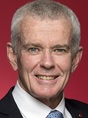
Malcolm Roberts Queensland, Pauline Hanson's One Nation Party
12:08 pm
The government has advanced a suite of appropriation bills covering an additional $9 billion of spending for this financial year. These appropriation bills provide allocations of taxpayers' money to maintain the government's recurring expenditure on operational matters and on the many, many, many schemes the government is using to funnel taxpayers' money into the pockets of their donors and friends in the net zero scam, the parasitic net zero scam.
Of the approximately $9.2 billion in spending in these bills, $2.9 billion is for net zero measures—one third. Of that, $130 million is for additional departmental expenses and the rest is funding projects. This is on top of the $1 billion allocated in the previous appropriation bills for departmental expenditure and on top of $5 billion for funding projects this financial year. And this is on top of the $24 billion that has been spent so far in off-the-books expenditure for net zero measures and the additional $9 billion which has been allocated to fund projects in the near future, for a total off-the-books spending of $33 billion. For clarity, these figures are to date, not just this financial year.
Off the books is an accounting trick the uniparty has come to rely on. It's based on the premise that, if the government borrows money and then on lends that money to other people, that is not a budget expenditure and, as such, does not form part of the budget spending or contribute to the deficit. Now, $33 billion is a huge amount of money to have sitting off the books, much of which will result in financial loss to taxpayers when these projects fail and their mates' projects fail. If these projects were any good, private enterprise would be building them. The fact the government has had to stump up $24 billion so far, with another $9 billion expected over the forward estimates, suggests the private sector knows something the government doesn't know—that is, that these projects are boondoggles which will never recover their full or lifetime cost.
This includes not only the cost of the solar panel, the wind turbine, the battery transmission line and such like; it includes the installation cost, maintenance cost and replacement cost—batteries last 10 years; solar panels last 15 years, being generous; and wind turbines last 15 years. This means every piece of net zero generation and storage we have in Australia right now will have to be replaced before 2050, some twice, and replaced three times before 2060. The cost won't end in 2025; it keeps going forever and ever, because these things have to be replaced. They have short, limited lifespans. In addition, lifetime costs include the thing net zero idealists never talk about: the disposal and remediation costs. New wind turbines are massive to tear down. They're up to 250 metres tall, and the installation cost per turbine is over $1 million. Plus, removing them when they are damaged, catch fire or reach the end of their life costs $1 million each.
If a company wants to open a new mine in Australia, it must put aside money or a surety to cover the cost of remediation: a bond. This bond payment has been law in mining for years, and it should be there. No such law, though, exists for wind and solar installations. I can understand why. Blowing the top off a mountain to create the flat area necessary for the massive footprints these things require is permanent environmental damage. No remediation can fix it. One can't come along after the projects have been shuttered and glue the mountain back together again. The damage, the vandalism, is permanent. In these appropriation bills, the government has made provision for subsidising the build of these things, although not removing and remediating afterwards.
Nobody has added all these expenditures together to compile a whole-of-government cost of net zero. One Nation has asked the Parliamentary Budget Office for that figure, so stay tuned. The total economic cost of the transition out to 2026, government and private sector, has been estimated at between $7 trillion and $9 trillion. These people in the government do not even know, and these people in opposition did not have a clue when they started this transition. This information is from the independent Net Zero Australia, a project of the universities of Melbourne, Queensland and Princeton. Bloomberg puts the figure at $2.4 trillion out to 2050. Net zero spend is up 400 per cent under this government, between 2022 and 2026. The expectation is that this government will keep throwing money at an imaginary, confected problem for as long as the public think humans can change the weather on a global scale. This is insane.
Decarbonisation now extends right through the bureaucracy and agencies. There are decarbonisation offices in every government department plus the net zero reporting, plus government grants to industry—
Slade Brockman Deputy-President
Senator Roberts, you will be in continuation. It being 12.15, we will move to senators' statements.
The Senate transcript was published up to 12:15. The remainder of the transcript will be published progressively as it is completed.