

Slade Brockman Deputy-President
6:20 pm
The Senate will now consider the proposal, under standing order 75, from Senator Tyrrell, which is shown at item 13 of today's Order of Business:
Pursuant to standing order 75, I give notice that today I propose to move "That, in the opinion of the Senate, the following is a matter of urgency:
The need to address the damage to Australians' cost-of-living caused by the conflict in the Middle East; proving that Australia needs to reduce its reliance on oil and global supply chains; by properly taxing gas exports; supporting the responsible transition to renewables; and reinstating Helium to the Critical Minerals List."
Is consideration of the proposal supported?
More than the number of senators required by the standing orders having risen in their places—
With the concurrence of the Senate, the clerks will set the clock in line with the informal arrangements made by the whips.

Tammy Tyrrell Tasmania, Independent
6:21 pm
I move:
That, in the opinion of the Senate, the following is a matter of urgency:
The need to address the damage to Australians' cost-of-living caused by the conflict in the Middle East; proving that Australia needs to reduce its reliance on oil and global supply chains; by properly taxing gas exports; supporting the responsible transition to renewables; and reinstating Helium to the Critical Minerals List.
Ordinary Australians shouldn't be punished at the bowser for a conflict started halfway across the world. Our reliance on oil and our exposure to global supply chains have meant we've seen petrol prices skyrocket. Groceries will be even more expensive from higher transport costs, and Australians are at risk of losing basic healthcare essentials like MRIs.
Tasmanians know that I've been advocating hard for a 25 per cent gas export tax on gas companies. It's outrageous that we raise more from the tax on beer than we do from the multinational corporations exporting our natural sovereign resources. We should be taxing our gas exports to fund our sovereign wealth fund and to have better health care, education and housing. We would raise enough money to fix our debt whilst providing better services and providing cost-of-living relief. The government's excuse that it's scared to get the policy right isn't good enough to deprive Australians of a better quality of life and better economic conditions. We're one of the top three gas producers in the world. We shouldn't have high energy bills. The tax on gas exports should start now and stay in place permanently to benefit generations to come.
But we could also easily expand this 25 per cent tax so that it would be much higher during times of conflict, when the oil price skyrockets and the oil companies earn superprofits. The government should also implement a time limited tax on the windfall superprofits of oil and gas exporters—specifically those generated by the Middle East conflict. Every dollar raised by this tax would be used to make fuel cheaper by reducing the fuel excise. That means cheaper fuel for Australians, funded by un-ordinary windfall superprofits of multinational gas companies. This is a commonsense and budget-neutral solution to the current fuel crisis. With the conflict in Iran causing petrol prices to skyrocket, it is fundamentally unfair that multinational corporations are pocketing record profits from global instability while regular Australian struggle to fill their tanks.
But let's remember that it was One Nation that pushed hard for a war in Iran, knowing full well that such an action would lead to skyrocketing petrol prices for Australian. They hate and vote against solar panel rebates, but then their own leader uses them for her personal residence. Talk about hypocrisy! Maybe it's something to do with making more money for the mining billionaires who fund their party, all at the cost of working Australians. Their priority is the mining industry, not ordinary Australians. My priority is and will always be helping Tasmanians—all Tasmanians, not just the rich ones, not just the white ones and not just the ones in the major cities.
An additional superprofits tax during times of oil price crisis would lower petrol prices and reduce broader transportation costs for food and goods, putting downward pressure on inflation and interest rates. Yes, it would help keep inflation down and keep our interest rates from soaring as we have seen them do in the last few weeks. That means lower grocery prices and lower mortgage repayments. But the conflict in the Middle East hasn't just shown our reliance on oil and driven up inflation; it has also shown the need for sovereign capability for critical resources like helium.
As the President of the European Commission said today, dependencies can be weaponised. Australia is entirely dependent on importing helium, with no domestic commercial-scale production, despite possessing significant geological reserves. This places us in an extraordinarily vulnerable position. Our hospitals, our defence industry, our high-tech manufacturers and millions of everyday Australians who depend on MRI screenings are entirely at the mercy of a volatile global supply chain dominated by a handful of geopolitically sensitive producers. The conflict has caused helium production in Qatar to halt, which supplies approximately 30 per cent of the world's traded helium, causing a doubling of helium prices. If we lose supply, our MRIs stop, our datacentres overheat, and our AUKUS agreement is in jeopardy. Helium meets every reasonable test of a critical mineral. It cannot be substituted. It is essential for defence and health care. Its supply chain is totally vulnerable to disruption, and Australia currently produces none of it domestically. While the government celebrates Minerals Week, we don't even have a critical minerals list that reflects the minerals that Australia needs to survive and prosper. So let's urgently prioritise helping Australians' cost of living. Let's impose a 25 per cent tax on gas exports to fix our debt and provide better services for generations to come. (Time expired)

David Pocock ACT, Independent
6:26 pm
In politics, we tend to focus on left versus right, and the media focuses a huge amount on left versus right. But the more time you spend in this place the more you start to realise that, actually, there are so many issues that we're not getting action on and that aren't actually left versus right; they are up versus down. They are vested interests—with the hold that they have on some of our political parties in this country—versus the Australian people. We're seeing this play out. We are seeing more and more Australians looking at the decisions that are made in this place and saying: 'Hang on. That doesn't make sense to me.' We're one of the biggest gas exporters in the world, and, every time the global LNG price goes up, we struggle. Aussies get smashed. Electricity prices go up. This is gas that is belonging to all Australians and being exported, and we haven't had the political will from either side of politics in the major parties, from Labor or the coalition, to actually say to gas companies: 'Hey, you're exporting Australia's gas. That belongs to all Australians. It actually belongs to future generations of Australians. Surely, we should be getting a fair return so we can pay for the services that Australians want now and ideally put some away for the future.' So this is just another one of those issues where you actually see, amongst the minor parties and Independents, there is such broad agreement. We should have a 25 per cent tax on gas exports in this country. Had we had the political leadership and foresight when Russia invaded Ukraine to introduce that, we'd be sitting on over $60 billion worth of revenue from the sale of our gas, and that would rightly be in the hands of the Australian people, held by the government to spend money on the things that Australians need and, as I said, to hopefully put some away for future generations. So I thank Senator Tyrrell for bringing this motion forward.
We have to deal with this as a country. We can't keep getting distracted by culture wars or by left-versus-right politics, when, actually, at the core of so many of the issues we face are vested interests and their stranglehold on the major parties, meaning that we're not getting the action that Australians want.

Fatima Payman WA, Australia's Voice
6:29 pm
I don't know about you, but it feels a bit 'Let them eat cake' to attend a lavish party hosted by a billionaire while parts of the world literally burn and while regular Australians are facing a cost-of-living shitstorm.
There are Western Australians living out of cars, showering in their workplaces, and soon those people will not be able to drive their car to work because fuel, if you can get it, will likely exceed $3 a litre. That is the reality on the ground for so many Australians, and it lays bare a deep growing inequality between those accumulating wealth and those barely keeping their heads above water. In the meantime, we have the people in this chamber, and in the other place, entertaining, meeting and jetsetting with literal billionaires. Those same people are conveniently, and unfortunately with great success, pointing at migrants and saying, 'They're to blame for your woes,' while cynically sucking on the teat of Rinehart, Pratt and others.
In a vacuum of leadership, it has become incumbent on the crossbench to prosecute the ideas that sit gathering dust in Labor Party platform documents across the country. Sensible policy ideas like 25 per cent tax on gas exports, capital gains tax reforms and making sure billionaires and foreign based multinationals are paying their fair share in tax are a good start. Then we could explore the reinvigoration of manufacturing and the diversification of our economy, away from the 'dig up and ship off' we've become so accustomed to. And none of this is revolutionary. These are all things that the Labor Party have proposed in one way or another, but, when they are handed the baton, they put it in the too-hard basket.

Ellie Whiteaker WA, Australian Labor Party
6:31 pm
We understand that Australians are doing it tough. We are not immune to the international pressures on fuel supply and cost, and that is why our government is looking at every practical measure to shield our nation and household budgets from the impacts of this global uncertainty.
In moments like this, Australians want to know who is actually helping and who is just talk. Australians want to know who is standing in the way of meaningful, practical cost-of-living relief. While this government has been committed to that real, practical cost-of-living relief for many years, since coming to government, the coalition and One Nation have stood in the way of every single one of those measures. And let's be clear about what that means. They've opposed measures that would put money back in the pockets of ordinary Australians. They've opposed the action that we have taken to boost wages and reduce pressure on households. They've opposed reforms that make essential services more affordable.
This is not the approach that our government has taken. We know that Australians are feeling the pressure, and we are continuing to roll out cost-of-living relief for Australian households. Our No. 1 focus is easing pressure on Australian families, and that means taking practical action to help Australians with the cost of living. We've delivered tax cuts for every taxpayer, and there's another one coming in July. We have supported a pay rise for minimum and award wage workers, with total increases now over $9,000. We've expanded paid parental leave to 24 weeks, and super is now paid on top of government parental leave.
We're cutting the cost of medicines, with PBS medicines now costing $25, the lowest they've been since 2004. We're strengthening Medicare so that more Australians can see a GP for free. We're opening more Medicare urgent care clinics right across the country so that Australians can walk in and get urgent care with just their Medicare card.
We're taking action to bring down energy costs for households, with our 30 per cent off home battery rebate, which will permanently cut the cost of Australians' power bills. We're helping renters, with more than one million households benefiting from our increases to rental assistance. More than one million Australians are receiving higher social security payments thanks to our government. We're giving more support to single parents and to pensioners. We're helping Australians into homeownership, with five per cent home deposits, saving first home buyers tens of thousands of dollars on lenders' mortgage insurance. We're supporting apprentices with $10,000 bonuses. We've cut student debt by 20 per cent. This is real, meaningful support so that Australians can get ahead. We are making sure that no-one is left behind. This is real cost-of-living relief because our government wants Australians to earn more and keep more of what they earn.
But the truth is that every one of those measures has been opposed or delayed or undermined by the Liberals and the Nationals and One Nation. They opposed our measures to increase wages. They opposed our measures to cut the cost of health care. They have opposed our reforms to making housing more affordable and building more homes. In fact, they took a plan for higher taxes to the last election. Labor has always been and always will be the party of fairness in Australia. We know the importance of this work to bring down pressure on households right across this country.
Those opposite want to talk down our economy. They want to amplify uncertainty, and that is their choice. But Australians should be clear about what that means, because if the Liberals and Nationals were in government, Australians' power bills would be higher, they would be paying more for medicines, they would be paying more to see a doctor and they would be paying more to get into their own homes. Labor is the only party that is easing cost of living for Australians.

Richard Dowling Tasmania, Australian Labor Party
6:36 pm
I think this urgency motion does go to a real and legitimate anxiety of Australian households. People are watching the events in the Middle East. They're seeing pressures on global energy markets, and they're wondering what it means for their fuel bills, their grocery bills and their broader cost of living. We heard from the head of the International Energy Agency, in the last day or so, that this crisis is more than both the 1970s oil crises combined. It's a significant scale.
When conflict disrupts international markets, the effects don't stay neatly contained overseas. They move through shipping, freight, fuel and supply chains, and, before long, they arrive at the kitchen tables of homes right across the country. That is why the right response is not panic; it's practical action. As my colleague Senator Whiteaker outlined, this government does understand that Australians are still under pressure. There is no denial of that. That is why cost-of-living relief remains an essential priority.
We have delivered tax cuts for every taxpayer, and we have another round to come in July. We've backed wage increases for minimum and award workers. We've reduced the maximum cost of PBS medicines to just $25. We've expanded bulk-billing, opened Medicare urgent care clinics and provided more funding for public hospitals. We've increased rent assistance, strengthened income support and cut student debt by 20 per cent. We've expanded low-deposit pathways for first home buyers and backed more housing apprenticeships to help build the homes Australia needs. We're also helping households reduce ongoing energy costs, including through support for home batteries. These are all cost-of-living measures. They are all practical measures. They are not abstract claims. They are designed to take pressure off households, where families actually feel it.
At the same time, the government has acted swiftly on fuel security. We've empowered the ACCC to watch for unfair price spikes and anticompetitive conduct. We've moved to release part of the minimum stockholding obligation for petrol and diesel to support supply. We have acted to bring more fuel into the market. We have signed an agreement with Singapore, one of the country's biggest sources of refined petroleum, to keep supplies of diesel and petrol flowing. We are working with states and territories and industry to make sure fuel gets to where it is needed, especially in regional communities.
Following National Cabinet, the government also strengthened coordination through a Fuel Supply Taskforce Coordinator so that decisions are implemented quickly and supply chains keep moving. That matters everywhere, but it matters especially in my home state of Tasmania. Tasmanians feel freight and transport pressures more sharply than most. Regional communities feel disruption early. Farmers, small businesses, working families, cannot simply absorb endless shocks flowing from overseas conflict.
The motion put to us also raises the issue of taxing gas exports as though it is a straightforward answer to cost-of-living pressures. It's not. It's not a straightforward answer to cost-of-living pressures. Cost of living and taxes on our natural resources are two separate issues entirely. Resource taxation is a complex policy question that deserves complex consideration, and it has merit. It goes to investment settings, production decisions, long-term supply and energy security. Those issues should be debated carefully, not conflated with a cost-of-living crisis we are in right now that is driven by overseas conflicts. It is not a simple, quick-fix slogan solution. If we get the balance wrong and scare away investment, we'll risk reducing supply, and, when supply tightens, prices rise. That's not just a theory. That is the risk if we get this wrong.
So the objective is to ease pressure on households and businesses, and we need to be very careful about pretending that more tax on natural resources is some simple, consequence-free answer because it's not. Australians need steady policy, not slogans. They need government focused on the basics: wages, health care, medicines, housing and energy security. They need confidence that when global instability puts pressure on household budgets the government will act calmly, practically and in the national interest, and that is what this government is doing, because the cost of living is not an academic exercise. It is whether a parent can fill the car and still afford the weekly shop. That is what Australians rightly expect their national government to be focused on.

Barbara Pocock SA, Australian Greens
6:41 pm
I rise to speak to this urgency motion. Labor must do more to help Australians with the economic fallout of an illegal war which has included a fuel crisis and a cost-of-living spike, and they can start with a gas tax. The Greens are calling for a tax on gas exports of at least 25 per cent. This is a step, which is long overdue, towards fair compensation for our national resources. Gas companies have pillaged Australia's resources for decades and now stand to make billions more in blood money from a war-driven price hike. While ordinary Australians are paying the price of this illegal war, companies like Santos and Woodside pay barely any tax. To add insult to injury, 56 per cent of all Australian gas is exported without paying a cent in royalties—incredible.
We've just heard from Senator Dowling about how it's all very hard and nothing is simple. Well, taxing organisations for exporting our own resources is simple. Other countries do it every day. Why are we failing to do this? Why are we allowing super profits, war profits, to boost the bottom line for these companies while Australians miss out? These massive gas corporations take Australian gas for free, and they make obscene profits. Recent polling shows that an overwhelming number of Australians want a gas exports tax. They get it. They know it's doable. Only five per cent disagree. A gas exports tax could raise $17 billion in a single year. Think about what that could do to assist those dealing with a massive cost-of-living crisis. It would make public transport free—it would really help with our transport costs—and assist with health, education, aged care and the housing crisis. If this 25 per cent gas exports tax had been introduced in 2022, it would've raised more than $63 billion by now. That's $63 billion we could've used for the services Australians need. It's a sensible measure, it's a doable measure, it has support across the political spectrum, and it's very widely supported by civilian society.
The government needs to act now to stop this war profiteering and ensure Australians are getting their fair share of their own wealth. Last sitting week, Labor, the Liberals and One Nation teamed up to vote against a gas exports tax. The three war parties showed us exactly who they work for, and it's not for ordinary Australians. The Greens have written to the Prime Minister and have offered to pass a 25 per cent gas exports tax this fortnight. The government has the numbers with the Greens in the Senate to pass really good reforms like this that would make a huge difference. Australians have been crystal clear: they want to tax gas exports, and they want to tax them now.

Andrew Bragg NSW, Liberal Party, Shadow Minister for Housing and Homelessness
6:44 pm
I do understand why so many Australians hate politicians, because it is an irritating debate to engage in at times, because we have lived through a massive supply-side failure here. Now, the Treasurer and his cabinet colleagues assert that they have read the book Abundance by Klein and Thompson of New York fame. But I don't think that's right; I don't think they have read the book. If they had read the book, they would have known that the supply-side challenge which we face in Australia, and in other countries, like the US, is one which inhibits the growth that is needed to help people on average incomes actually achieve their goals.
Right now, in Australia, I would say that this shock has exposed that we don't have enough capacity—that we are at the arse end of the food chain, for want of a better expression.

Raff Ciccone Victoria, Australian Labor Party
Senator, can I just remind you of your language, please.
Andrew Bragg NSW, Liberal Party, Shadow Minister for Housing and Homelessness
I withdraw that.
Andrew Bragg NSW, Liberal Party, Shadow Minister for Housing and Homelessness
But we are at the bottom end of the supply chain, in many respects. So this has exposed vulnerabilities, and it has exposed the failure, on the supply side, to actually get enough resources into the market to ensure that Australians can avail themselves of reasonably priced resources to fuel their cars, and farmers can fuel their crops and businesses can maintain their actual function.
Now, we have the resources in this country. We've done a very bad job of mining them—and I make that point across the board. I mean, we should have had more oil and more gas; we should have had more uranium; we should have had more renewables. We should have more of everything. It's a massive supply-side challenge, in a country that is endowed with extraordinary potential. Renewables, fossil fuels—who cares? I mean, I don't think it really matters.
Right now, people are living in what the psychologist Maslow talked about—his hierarchy. People just want to put petrol in their car at a reasonable price so that they can get to work. Industry wants to be able to maintain its function, which it cannot do unless it gets access to reasonably priced diesel—or gets access to diesel in any respect.
So my point is that this has been a considerable supply-side failure. The red tape, the regulation—all the garbage that Canberra has done—and the tax burden have meant that it has been uneconomic, or not possible, to develop the resources that are underneath our feet, here in Australia, or, indeed, in the sky.
The same issue applies to the housing debate, which I note has been part of a lot of the contributions tonight. It's the same problem. It's a supply-side failure—a massive supply-side failure.
Again, the Abundance book actually documents how bad all these different regulations were, in the United States, in holding back the development of housing. This government has made all the mistakes that were made in California and other jurisdictions, about which politicians have said lovely, warm, fuzzy things, but which massively fail when it comes to actually delivering things.
What the Australian people want their politicians to do is to get them access to reasonably priced housing and resources, so they can have their lives, do their jobs, have a family—whatever. Who gives a rat's? It doesn't really matter. But the foundational components of this debate have been completely lost when people go to these kneejerk ideas like, 'Let's put more taxes onto housing,' or, 'Let's put more taxes onto resources.' I mean, it's insane. More taxes will result in fewer things happening, because we live in a competitive world where other countries also have resources and opportunities to do things. And the fact is that one of the reasons we don't have many houses being built in Australia is that people can't make any money out of it. It's uneconomic to build. So people who have resources have decided: 'Well, I'm not going to build houses. I can't make any money out of that. So I'll do something else.' This is how the market works.
We have had massive supply-side failures under this government. They have been there for four long years. They have cooked housing. They have cooked the ability for us to respond to this crisis in the Middle East, because we have no resources of our own. We're importing oil. We have heaps: we have 40 years of oil in Australia, that we could have had, right now—40 years of it. We could have had more renewables. We could have had more power. We're going to need more power, more stuff and more houses, and we won't get any of that, under this government, because they don't seem to know what they're doing. They say they've read the book, but I think they're actually telling a big whopper.
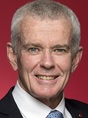
Malcolm Roberts Queensland, Pauline Hanson's One Nation Party
6:49 pm
I thank Senator Tyrrell for this motion, which One Nation supports. My comments go to the connection between helium and the quality of living in Australia. Helium was included on Australia's Critical Minerals List until this Labor government removed it in December 2023, the same month the government allowed our only helium plant to close. Not only did the government not do anything to save the Darwin plant; taking helium off the Critical Minerals List cleared the way. Now we import our helium from Qatar, the US, Algeria and Russia, three of whom are caught in the current war.
Helium is unique, meaning no other gas can replace it. It's needed in health care. Every MRI machine in Australia requires liquid helium to cool its superconducting magnets. Without it MRIs can't operate, disrupting diagnostics for cancer, neurological conditions and more. Running out is not an option; Australians will suffer. It is needed in semiconductors, electronics and quantum computing. Helium is essential for cooling, purging and atmosphere control in chip fabrication, which is a rapidly growing Australian industry that generates things this government hates: non-government jobs and financial independence. It is needed in data centres. The government is forcing more people into the digital economy, then it's taking away the gas that cools the data centres. What could go wrong? Helium is also needed in defence applications, the other thing this government doesn't want.
All the Albanese government can offer the Australian people is no petrol, no diesel, no fertiliser, no houses, falling wages, falling per-capita growth, falling wealth, falling productivity and falling prosperity. They have managed to freeze the economy at a complete standstill—no helium is needed now. One Nation will make the Critical Minerals List great again and produce everything on the list here in Australia. We have the minerals. One Nation loves this country, and we want everyone who's here to have a life of wealth, security and abundance.
Question negatived.