

David Pocock ACT, Independent
4:04 pm
I seek leave to move a motion relating to public transport and active travel, as circulated.
Leave not granted.
Pursuant to contingent notice of motion standing in my name, I move:
That so much of standing orders be suspended as would prevent me moving a motion relating to provide for the consideration of a matter, namely a motion to give precedence to a motion relating to public transport and active travel.
This motion is urgent because millions of Australians across the country are suffering the effects of fuel prices going through the roof as a result of the crisis in the Middle East. It is urgent because for many it's a grinding calculation of whether they can actually afford to fill the tank this week. It is urgent because we are facing fuel shortages in the regions and we are seeing farmers worrying that they are not going to get their winter crops in.
We have to do more as a country, and as communities across this country, to ensure that we provide public transport and better active travel infrastructure so that people who are able can leave their cars at home, can get public transport, can jump on their bike, can cycle off the road and arrive safely at work. It's obviously not for everyone, but there is a big chunk of the population in metropolitan areas who can and will use public transport if it is cheaper. And so there is an opportunity here for us to actually act, to do something that will make a difference. It will make a difference to the lives of people if they can have a 50c, or potentially free, fare to travel to work. And it will make a difference to the farmers that this frees up fuel for, farmers who need the diesel right now and into the future.
We have heard a lot from the government that the challenges that we're seeing across the country are a demand-side issue because Australians are buying more fuel than they need, are filling up jerry cans, and farmers, really concerned about what the next few months may hold, ordering more diesel than they usually do. If that is the case then we need demand-side solutions, and this is clearly one of them. It is one that is incredibly popular. So many Australians would like to catch public transport if it were cheaper. So many Australians would like to actually ride to work. Here in Canberra we have far too much cycling infrastructure that simply just ends suddenly. You're cycling along, feeling great, and then you're spat onto a road where people in cars are doing 60 kilometres or 80 kilometres an hour, and that is not conducive to people cycling to work. People want this. We have an opportunity; we have a time that actually calls for this kind of leadership, and I urge the federal government to step up here.
Earlier today I stood with Senator Waters and with colleagues from the legislative assembly here in the ACT—former Attorney-General Shane Rattenbury, Thomas Emerson MLA and Independent for Kurrajong, Fiona Carrick MLA—representing their communities and urging the Territory and federal government to work together. This is a practical, meaningful thing that we could be doing. We could be doing it now, working together, both levels of government, to fund or subsidise cheaper public transport and to see the kind of emergency actions that we've seen in other times of crisis. We could see pop-up bike lanes or pop-up bus lanes to ensure that people aren't sitting in traffic when instead they could be getting from Woden to Civic.
I thank Senate colleagues Senator McKenzie and Senator Waters for their assistance with this, and I urge the government that this is an opportunity for all. We're here, wanting to work with you and really push you on this to deliver for Australians in cities and to deliver for Australians in the regions. We have to look after farmers in this country.

Larissa Waters Queensland, Australian Greens
4:09 pm
I'm very proud, on behalf of the Greens, to be co-sponsoring this motion which calls on the federal government to fund public transport nationally while this fuel crisis is underway. This is the government that was the first to support this illegal war, and now ordinary people across the world, including here in Australia at the bowser, are bearing the pain. The least the federal government could do would be to make public transport free to ease that cost-of-living pressure on Australians. That would also help free up much-needed fuel for farmers and for families in regional Australia. I'm so pleased that our calls to make public transport free and support for them are growing. It just makes sense. People are being smashed by cost-of-living pressures. First it was the housing crisis, then it was the rising cost of groceries, and now it's the cost of fuel.
We called for the federal government to make public transport free ahead of National Cabinet last week. I wrote to the Prime Minister last week and offered the Greens' support in this chamber to pass a 25 per cent gas export tax which would raise the revenue to fund things like free public transport for Australians, who are desperate for cost-of-living relief. With the numbers here in the Senate, with the Greens, the government can pass progressive reform. It could be putting a minimum 25 per cent gas tax on those greedy gas corporations who are loving this war, whose profit margins are loving this war and who are laughing all the way to the bank while everyone else is genuinely suffering. I wrote suggesting that we could get that done this fortnight and offering the Greens' support to do just that. So where is the action on this? You have the numbers to do it. Where is your courage? Where is your spine? We're still trying to find it, or, rather, you're still trying to find it.
I was pleased that the Rail, Tram and Bus Union today backed in those calls, joining the Victorian Farmers Federation, who have likewise seen the good sense of making public transport free both as a cost-of-living measure and as a way of helping the fuel shortages in the regions. This is a commonsense call, and it's being backed by people at the pump and right across the spectrum. In the middle of a fuel crisis, this is a no-brainer. People are spending hundreds every week on transport, and this could save them serious dollars. It could also make sure that those regional servos are not, in fact, running out of petrol and diesel, as we hear in continued and increasingly disturbing reports. Free public transport is an immediate, straightforward way to give Australians cost-of-living relief. We've got the some of the most expensive public transport in the world. Let's make it easier and cheaper for people to leave their cars at home and to get on the bus or the train. Let's free up that fuel for use in the regions, where, sadly, they don't have public transport that's any good. We need to fix that as well in the long term.
Free public transport could be funded by that $17 billion that a gas export tax of a minimum of 25 per cent could bring in. Like I said, we have written to the Prime Minister and could not be clearer. We could get this done this fortnight. What are you here for? People are actually hurting right now because of a war that you backed in, and you've done absolutely nothing about it. We've got a bill that's coming in tomorrow that's not actually going to do what you're saying it's going to do. It's going to make it illegal for petrol companies to lie to you about ripping you off, but it's not going to make it illegal for them to actually rip you off. Again, we see the government doing the—I was about to swear then—inadequate thing rather than actually tackling the real thing.
Pass a gas tax. Make public transport free. It is not that difficult to work for people. Stop working for corporate profits and actually do your job to represent people. Instead of working for people, what we've heard is that the Treasurer is working on ways to cut support for electric vehicles in a fuel crisis. We're hearing that, rather than making EVs more affordable so that more people can have the benefit of them, which also helps the climate, they're moving changes to road user charges and fringe benefits tax. They're going to make the cheapest cars to run in a fuel crisis more expensive for people. Make that make sense! How does that get us off dependence on overseas oil? How does that get us onto clean, renewable energy? We need renewable energy independence. That is where our financial security will come from. That is what will help people at the bowser, and that is what will help nature and the climate. It is not rocket science, people. (Time expired)

Bridget McKenzie Victoria, National Party, Shadow Minister for Infrastructure, Transport and Regional Development
4:14 pm
The coalition will be supporting the suspension and the substantive motion because we believe that every lever should be available and used by this government, by National Cabinet and by state and territory governments to assist Australians with this fuel crisis.
For those listening at home, I will read the motion to the chamber. It says that we note the ongoing fuel security crisis as a result of the conflict in the Middle East is seeing volatility in global energy markets and that the significant cost-of-living pressures faced by Australian households are on top of the cost-of-living crisis created by Jim Chalmers and his ministers—prolific spenders that they are—that has seen the highest proportion of government spending across our economy in 40 years. The Reserve Bank governor made very clear last week that this was her prime focus when putting up interest rates for mortgage holders. The federal government needs to cut the spending at the upcoming budget.
This global energy crisis will see transport costs increase across our economy. We've seen our trucking industry concerned with how they will actually distribute goods across the country, from fresh food products to online postage. We've seen Australia Post put up their transport costs, as well. We need to build national fuel resilience, and we need to make sure fuel gets to where it's needed. Currently, it is a capital-F fail from the Labor government on ensuring that fuel is where it's needed.
Because Minister Bowen cannot do his day job—that has been evident over the last three weeks—they've convened National Cabinet, and now there is a blame game going on between state, territory and federal governments about who and how we are going to support Australians and our industries through this global crisis. It is absolutely the purview of state and territory governments to deal with public transport and active transport projects. It is not the job of the federal government to be examining whether or not to provide free public transport or whether or not to invest in active transport options. This is wholly and solely the purview of the state and territory governments. We do call on the federal government to work with state and territory governments around how to support households in this matter.
I would also call on the federal government to work with states and territories on a whole raft of issues, whether it's how to get data about where blockages are in the supply chain; whether it is about following Queensland and New South Wales with the ethanol mandates that they currently have and are not upholding; whether other states should also increase the amount of ethanol in their fuel supply; whether they should look at rationing, because we know that informal rationing is already occurring across the supply chain; whether states should actually take up—
Unidentified interjection - Hansard doesn't record who said this
Opposition Senators:
Opposition senators interjecting—
Bridget McKenzie Victoria, National Party, Shadow Minister for Infrastructure, Transport and Regional Development
Sorry, Deputy President, I can't hear myself speak at the moment.

Slade Brockman Deputy-President
Order in the chamber!
Honourable senators interjecting—
Bridget McKenzie Victoria, National Party, Shadow Minister for Infrastructure, Transport and Regional Development
It is my colleagues. Deputy President, I would ask you to call the chamber to order.
Slade Brockman Deputy-President
I would ask senators having discussions in the chamber to please keep it down a little.
Bridget McKenzie Victoria, National Party, Shadow Minister for Infrastructure, Transport and Regional Development
The other matters to resolve this crisis in the purview of states and territories are around rationing and actually around GST. They could forgo the GST, particularly when it comes to the trucking industry. That's also another suggestion that's been put forward by the transport industry. There are a lot of things that the federal government could be examining, with states and territories, to provide assistance and relief for communities at this time. Rather than point the finger at Australians for panic buying, they need to actually get on with putting things like biofuels onto the agenda of National Cabinet. So I would respectfully say the coalition will be supporting the suspension and the substantive motion, as the latter puts the responsibility where it needs to be—wholly and solely with state and territory governments.
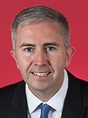
Anthony Chisholm Queensland, Australian Labor Party, Assistant Minister for Regional Development
4:19 pm
What a remarkable contribution that was from Senator McKenzie there—absolutely remarkable. She is someone who spent more money on sports rorts than she did on any public infrastructure when it comes to public transport. That's actually her record in government.
Slade Brockman Deputy-President
Minister, resume your seat. Senator McKenzie.
Bridget McKenzie Victoria, National Party, Shadow Minister for Infrastructure, Transport and Regional Development
I raise a point of order on reflection: former president Ryan made a ruling regarding that matter, and I would ask you, Deputy President, to ask the minister to withdraw.
Slade Brockman Deputy-President
Minister, I would ask you to withdraw that, please.
Anthony Chisholm Queensland, Australian Labor Party, Assistant Minister for Regional Development
I withdraw, Deputy President, but that's the reality of the situation—that those over there, when they were ministers, spent more money supporting their own electorates when it came to sporting infrastructure than they actually did on public transport.
We're actually used to Senator Pocock and the Greens coming in and performing stunts. We accept that. That's their role. That's what they do. But for the opposition to be supporting this and actually absolving themselves of any responsibility for being a responsible opposition is testament to where they are. We saw the result from South Australia on the weekend, where the Liberal Party went backwards. They have become the electoral bonsai tree: they keep clipping back their branches and getting smaller. That's actually not the way to get into government. If you continue to behave like this—if you continue to perform like this in opposition—the Australian people will see it for exactly what it is. They took a while to actually land on where they would vote on this motion, but it does show you the depths of opposition that they are in.
The government don't engage in stunts. We are actually dealing with the challenges that we're facing, and we're dealing with them in the immediate sense. We're dealing with fuel at the moment, and we have come up with a plan to ensure that we're doing what we can to support Australian people and industry in this regard. What have we, the Albanese government, done in terms of our broad range of actions on fuel? We are empowering the ACCC to protect motorists from unfair price rises, boosting fuel supply by releasing 20 per cent of the baseline minimum stockholding obligation for petrol and diesel, acting to get more fuels into the Australian market by temporarily amending the fuel standards, and working closely with industry and with states and territories to ensure this fuel gets where it's needed most, particularly in regional communities. So that is actually the record of what the federal government have been doing—dealing with the challenge that we face and using every apparatus of government to ensure we're doing what we can to support the Australian community.
But we also understand the long-term view of what we need to do to support infrastructure in this country and public transport in particular. I'm surprised Senator Pocock didn't mention the support that we've put into Canberra light rail: $343.9 million into stage 2A of Canberra light rail and $50 million for the planning of stage 2B. We have put in $5.6 billion for the Metronet in Perth, $5.1 billion for Sydney Metro to Western Sydney airport, and $2.2 billion for Suburban Rail Loop, with more to come. One billion dollars has been allocated to extend the rail network in Sydney's south-west. There is $659 million for the next stage of high-speed rail, along with $100 million through the Active Transport Fund, which I know, from talking to councils around the country, is very, very popular because they understand how important it is to have those options. And we have provided $115 million for tranche 1 of the Macquarie Park depot for zero-emissions buses and $100 million for the Western Sydney Rapid Bus Infrastructure Upgrade.
So we are an actual government that is actually delivering public transport infrastructure by working constructively with councils and states to ensure that we're delivering the things that are going to make a difference. When you look at what the government is actually doing, we're dealing with the immediate challenge that we're facing when it comes to petrol, but we also have that longer term view of the importance of public transport infrastructure in this country and doing what we can to work constructively with councils and state and territory governments around the country. That is the record of this government. It's a proud one, and we won't be lectured to by stunts from Senator Pocock and the Greens or, indeed, the hypocrisy from the opposition when it comes to this matter.

Sue Lines President
The question is that the suspension motion be agreed to.
David Pocock ACT, Independent
4:32 pm
I move:
That a motion relating to public transport and active travel may be moved immediately, have precedence over all other business and be determined without amendment or debate.
Sue Lines President
The question is that the motion as moved by Senator David Pocock be agreed to.
David Pocock ACT, Independent
4:36 pm
I, and also on behalf of Senator Waters, move:
That the Senate:
(a) notes:
(i) the ongoing fuel security crisis as a result of conflict in the Middle East and associated volatility in global energy markets,
(ii) the significant cost-of-living pressures faced by Australian households, including rising transport costs,
(iii) the importance of building national fuel resilience and reducing Australia's dependence on imported liquid fuels, including through use of biofuels,
(iv) the need to ensure fuel is being distributed to areas of need, including to ensure that regional communities and farmers have the fuel they need to produce food and fibre, and
(v) the environmental and public health benefits of reducing private vehicle use and increasing sustainable transport options; and
(b) calls on the Government to:
(i) work with state and territory governments through National Cabinet to deliver accessible, free or affordable nationwide public transport for the duration of the current fuel security crisis, and
(ii) work with the state and territory governments to significantly increase planning and investment to integrate active transport infrastructure to support walking and cycling projects across Australia.
Sue Lines President
The question is that the motion as moved by Senator Pocock be agreed to.